A Parliament Where Nothing Stands on a Pedestal

Jörg Reissner
PARLAMENT
JesuitenFoyer
Vienna, Austria
Gustav Schörghofer SJ
JesuitenFoyer Presents PARLAMENT by Jörg Reissner
There is a political argument embedded in how objects occupy space. Whether something is elevated, displayed behind glass, or placed on the floor already tells you something about the hierarchy it belongs to, and the one it enforces. What would a room full of things that refuse to be exhibits actually look like?
The philosopher Bruno Latour spent decades arguing that non-human things, rivers, soil, tools, offcuts, deserve a voice in democratic decision-making, not as metaphor but as institutional fact. His proposition of a parliament that included objects remained largely theoretical. Some artists have been staging it anyway.
When nothing in a room is hung or elevated, the space becomes a meeting rather than a display. The question isn't what the objects represent, it's what they're proposing.
The JesuitenFoyer in Vienna is not a neutral container. It carries the weight of Jesuit tradition, intellectual rigor, attentiveness to material culture, a long-standing negotiation between spiritual practice and the visible world.
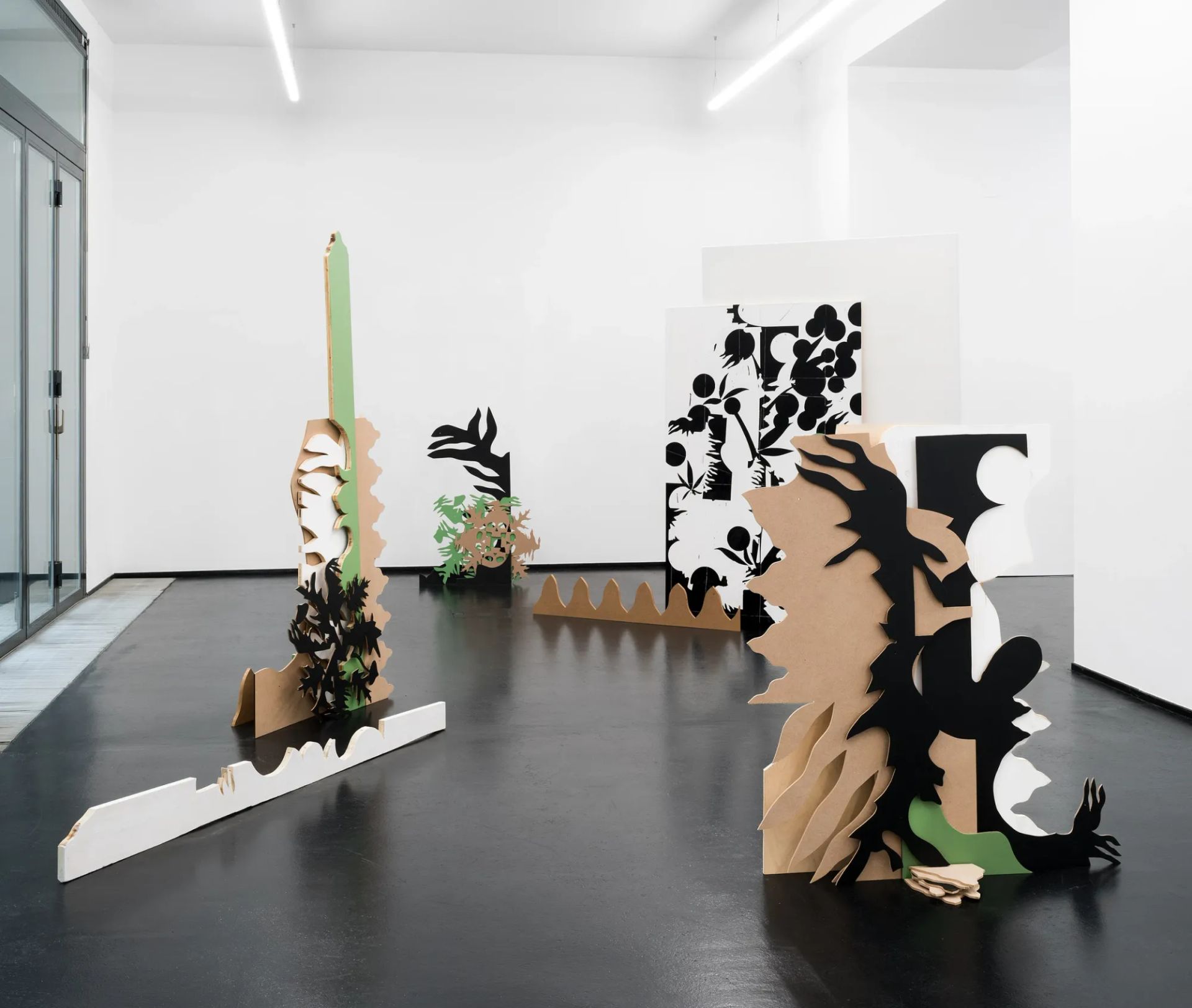
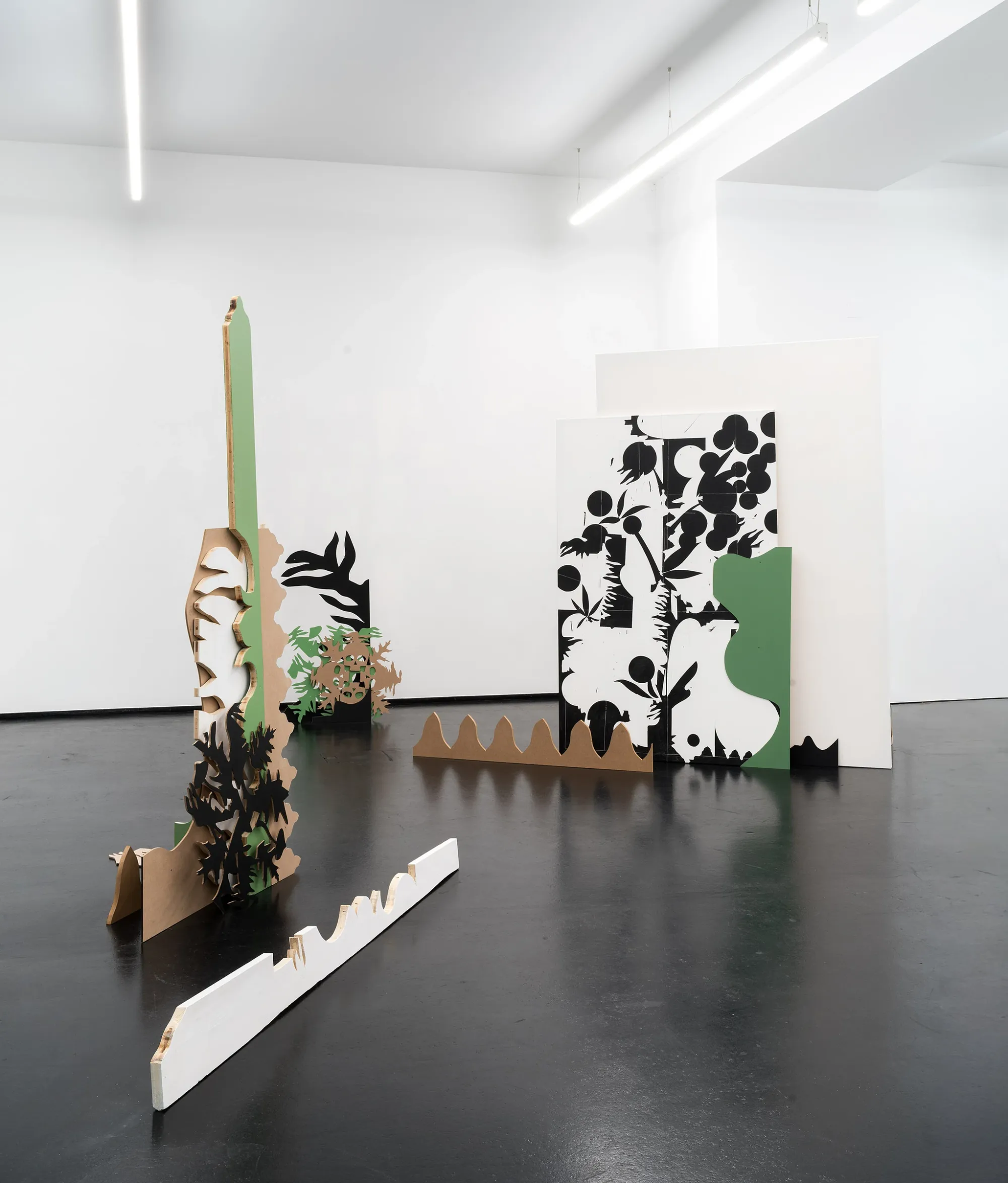
Jörg Reissner's PARLAMENT fills this space not as a response to its architecture but as a kind of quiet friction against it. Everything is placed, leaned, laid, or stacked. Nothing is hung.
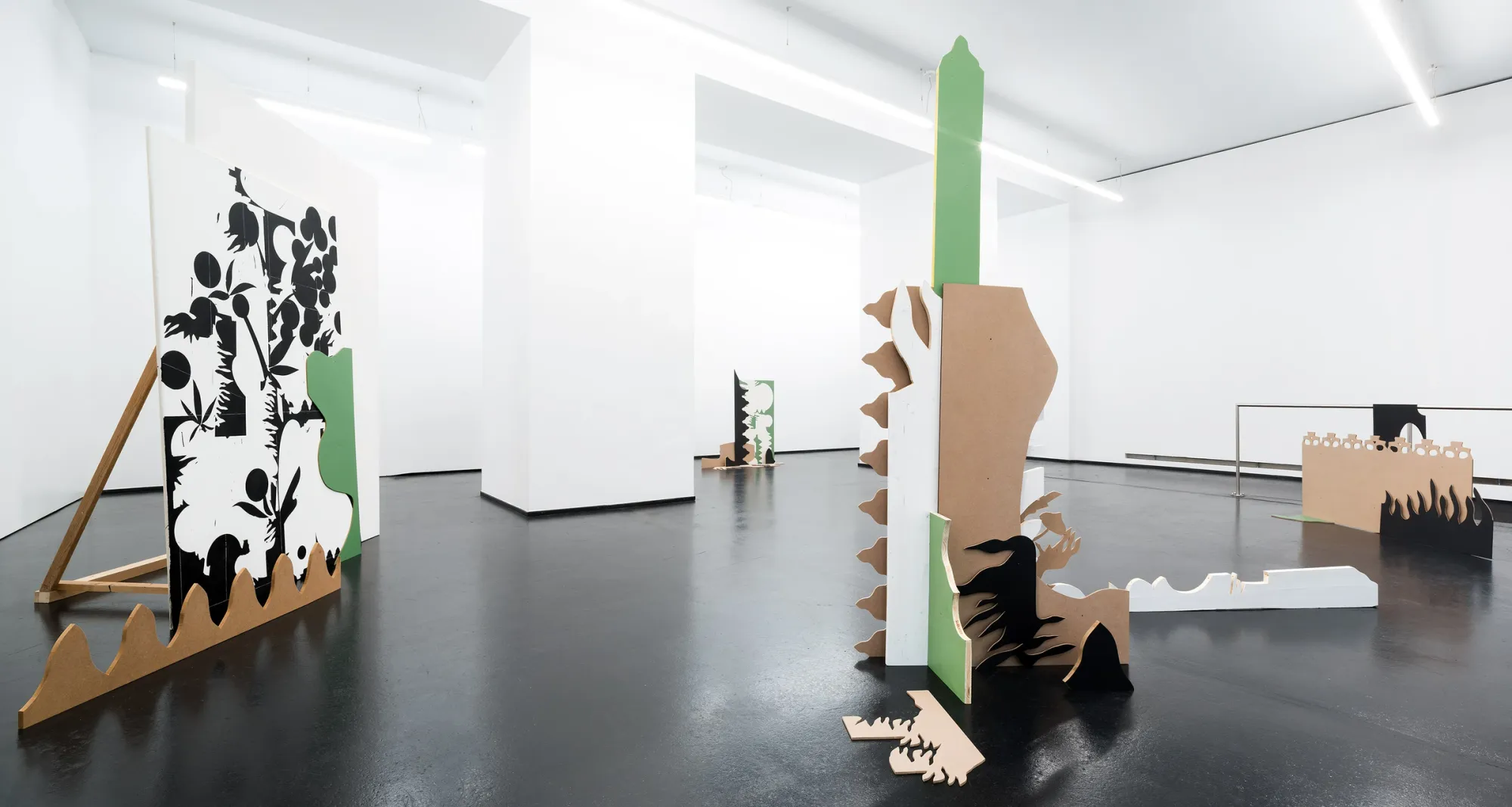
The objects are cut from MDF boards, plywood sheets, and canvas, consistently from scrap, from the offcuts and remainders of earlier work. This isn't incidental. The material carries the logic of the thing: these forms were already surplus before they became art. Their colors are restricted to black, white, and reseda green, a muted silvered hue that sits closer to absence than accent.
The shapes read as a taxonomy of cultural memory at low resolution. Silhouettes reminiscent of Scherenschnitte, paper-cut traditions from Central European folk art, alternate with outlines that suggest architectural ornament: battlements, domes, the decorative trim of rural farmhouses.
Elsewhere: flames, skulls, mushrooms, plant leaves. Accumulated, not arranged. Circled, not ranked. The forms hold references to both the living and the dead without distinguishing between them, and the circular groupings seem less like composition than like a vote that hasn't been counted yet.
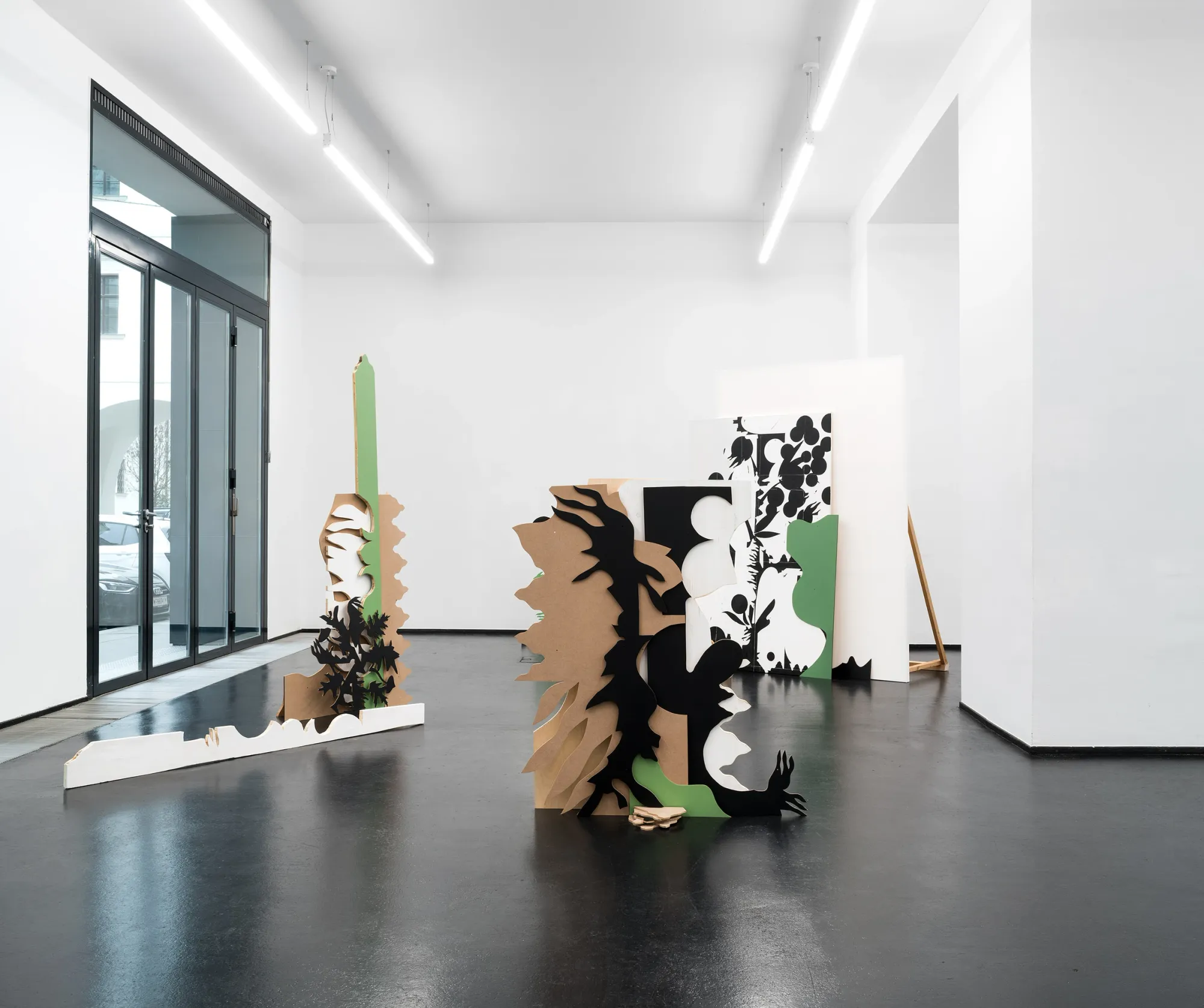
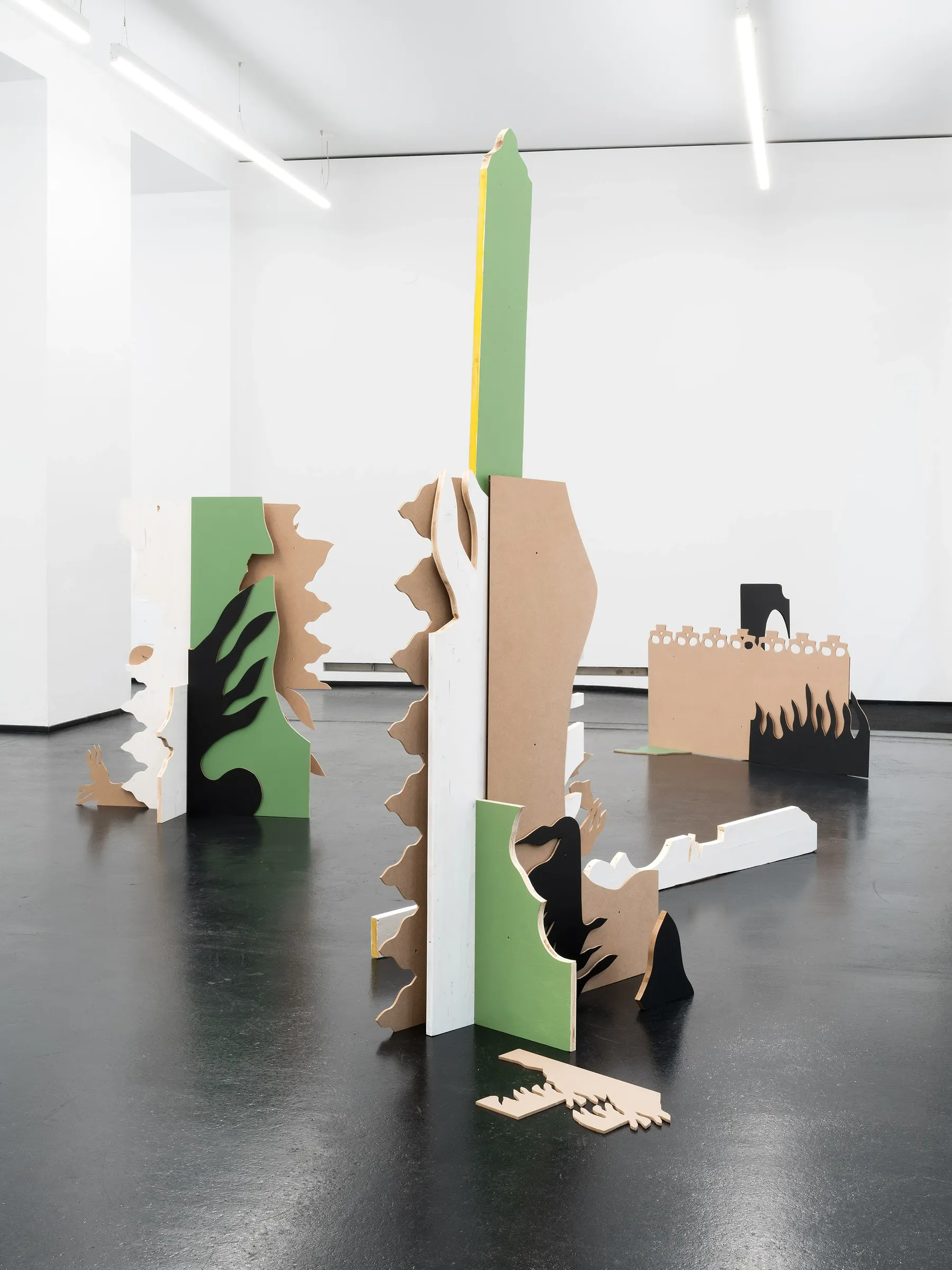
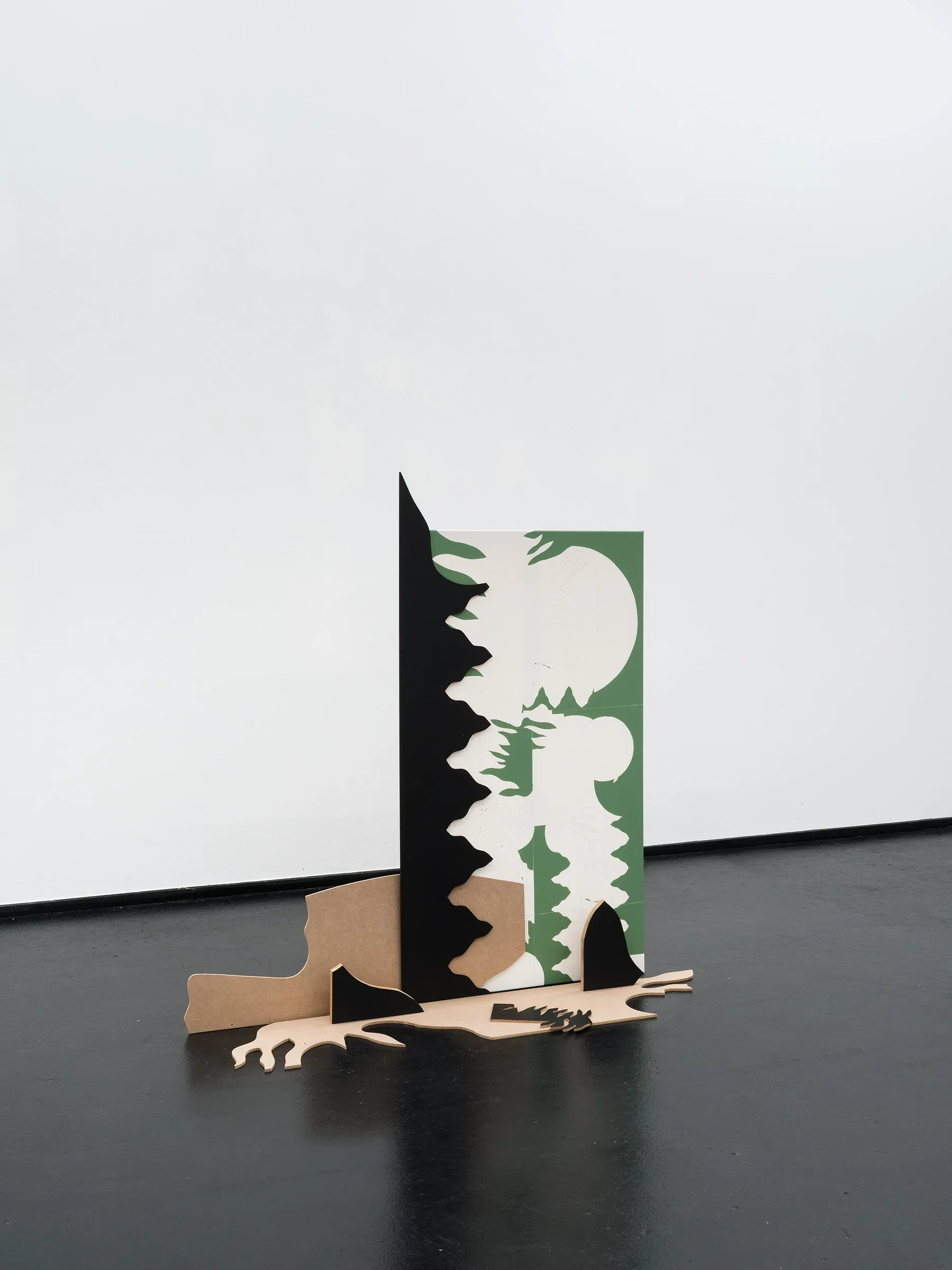
Jörg Reissner, PARLAMENT, 2026, installation views, JesuitenFoyer, Vienna. Floor-based sculptural configurations in scrap MDF, plywood, and canvas, forming unstable assemblies at eye level, Courtesy of the artist and JesuitenFoyer.
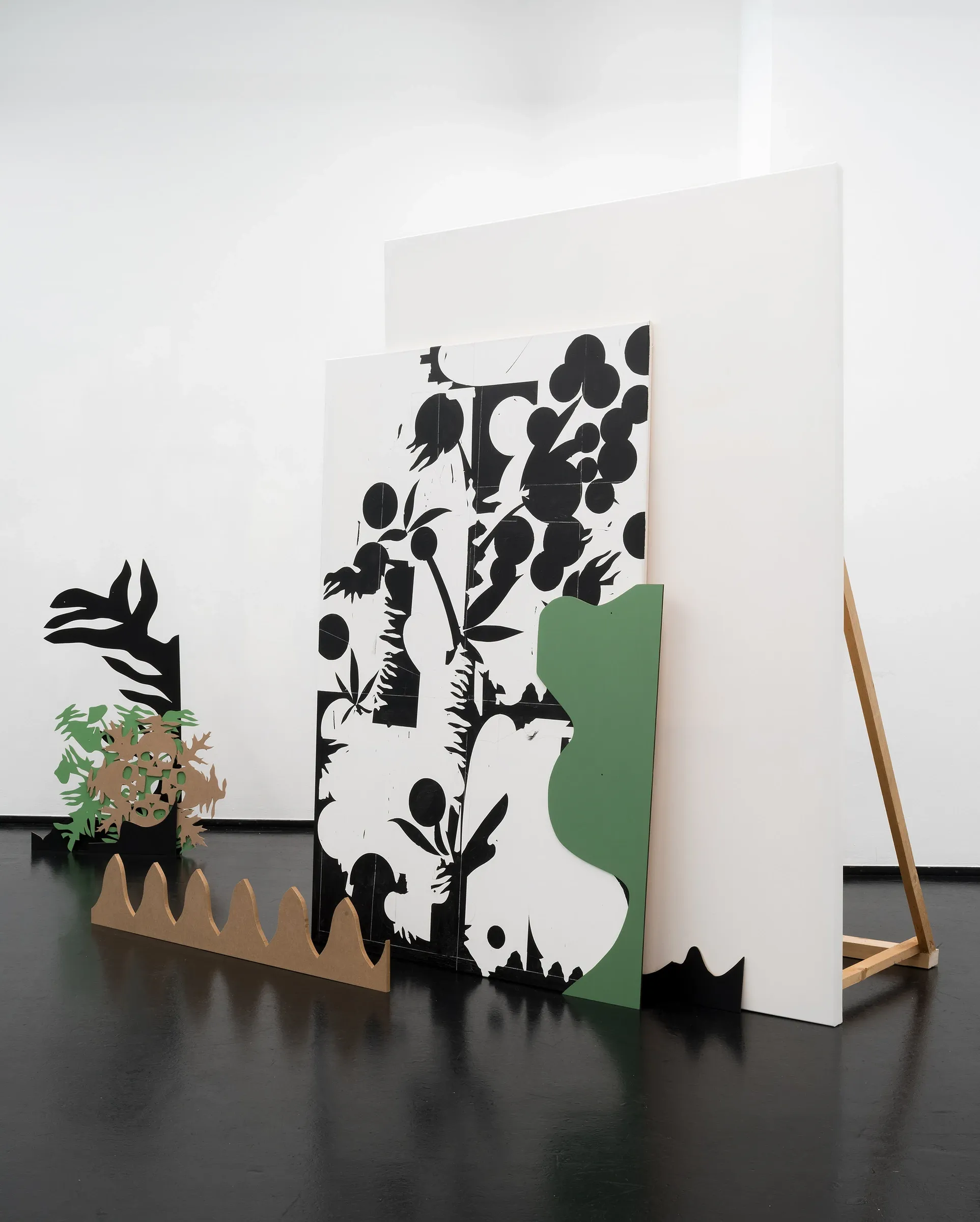
Jörg Reissner, PARLAMENT, 2026, installation views, JesuitenFoyer, Vienna. Floor-based arrangements of cut MDF, plywood, and canvas panels forming layered compositions without elevation, Courtesy of the artist and JesuitenFoyer.
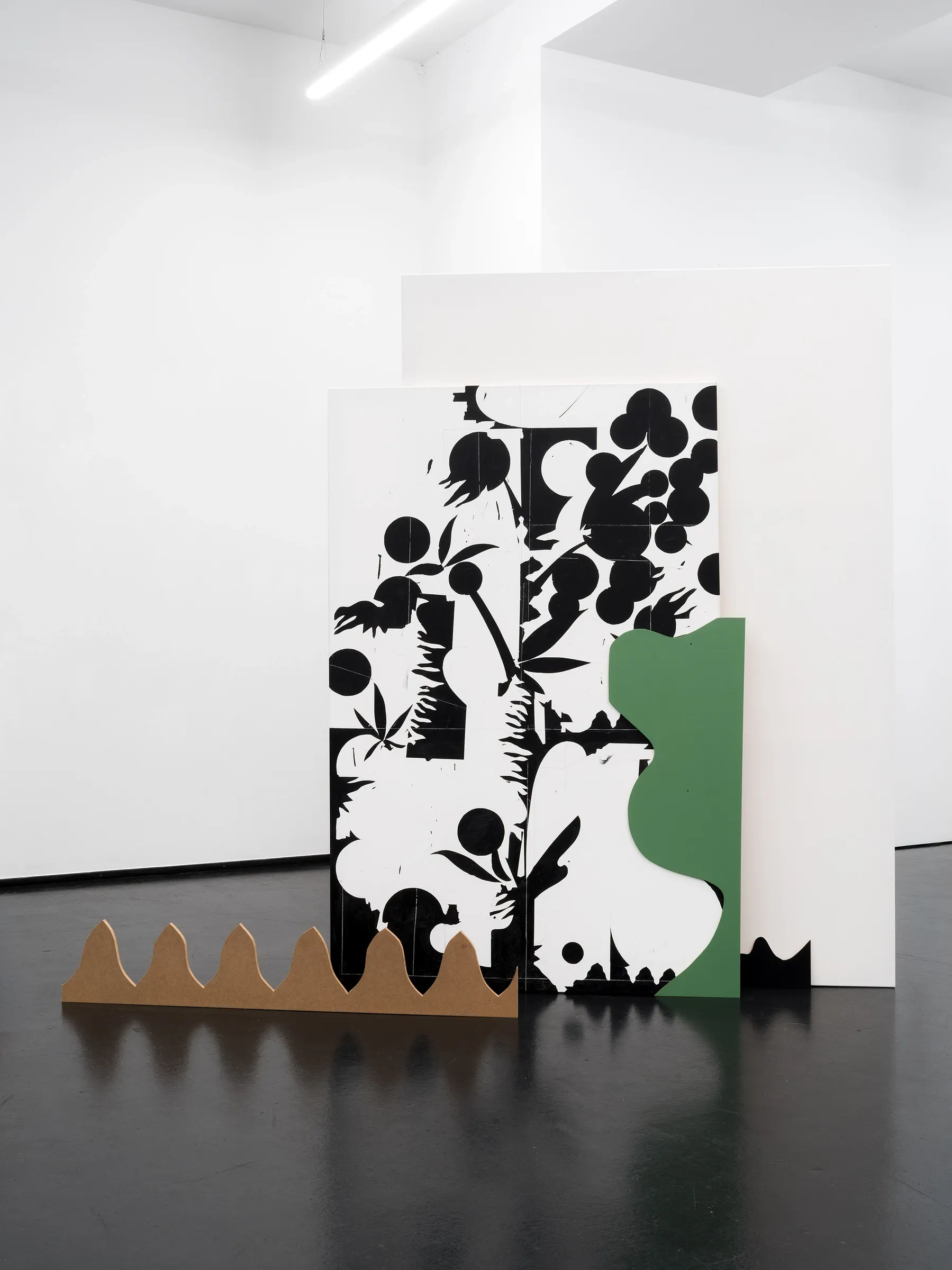
What matters most is what the works do together at this scale. At eye level, touching the floor, slightly unstable in their groupings, they create the impression of a civilization assembling itself, or possibly mid-collapse. The press text accompanying the exhibition holds both readings simultaneously: the world these objects build is fragile, and a little funny. That combination is harder to achieve than it sounds.
Latour died in 2022, and interest in his framework has sharpened since, partly as philosophical resource, partly as a provocation for art that wants to think about agency beyond the human. Reissner doesn't illustrate this argument. He installs it. The horizontal organization, the refusal of the pedestal, the consistent use of scrap that once would have been discarded, these are formal decisions that carry political weight without declaring it. The floor is not a default in this work. It's a position.
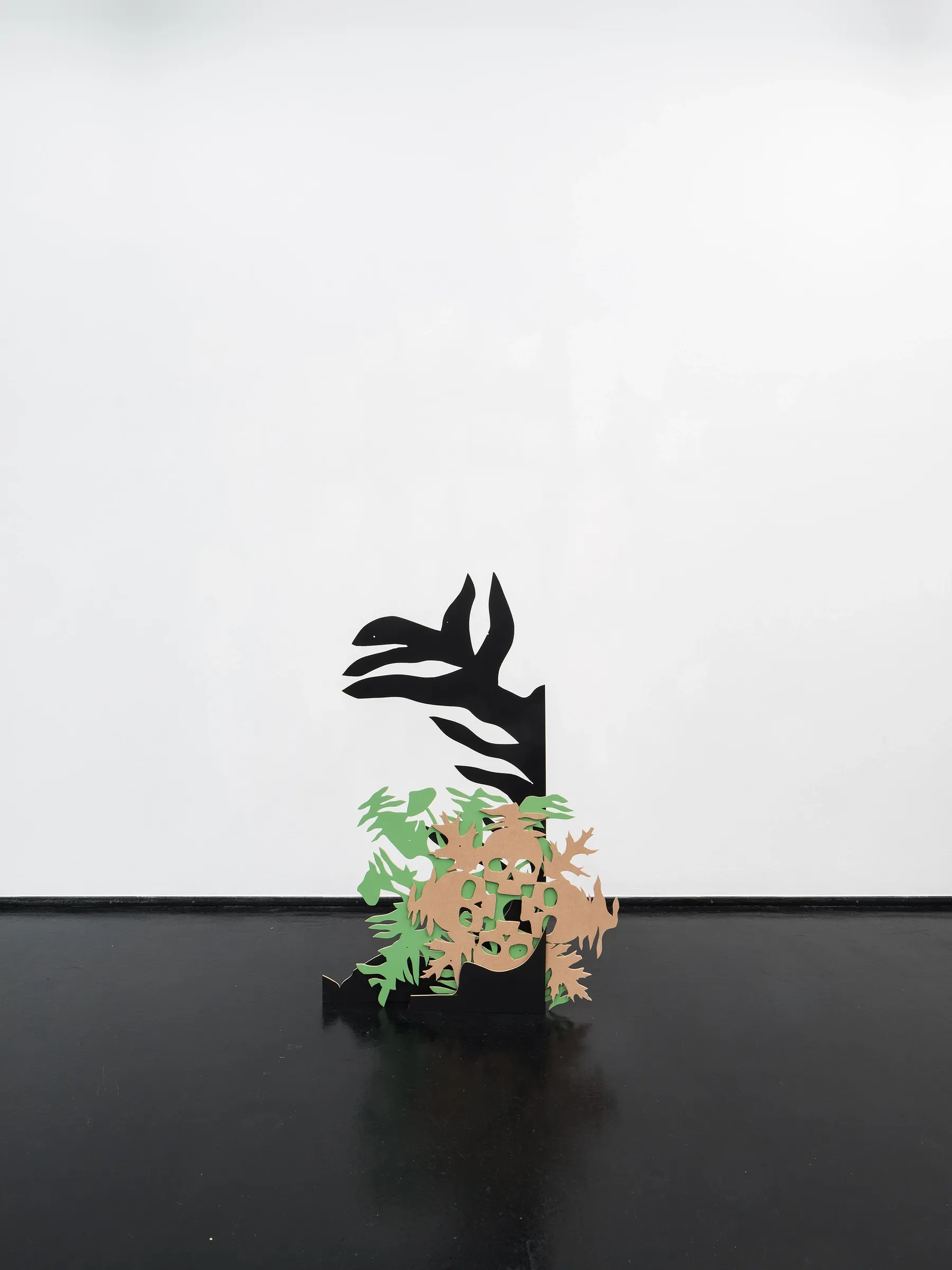
There is something unresolved about a room where everything competes for the same level ground. It feels provisional, like a meeting that hasn't yet come to order, and the work offers no resolution, only the ongoing fact of all these things insisting on being present.
Instagram Jörg Reisner
Read the Full Text by Gustav Schörghofer
About Catapult
This is an artist interview published by Catapult — an independent editorial platform for contemporary art, based in Vienna. We publish exhibition reviews, artist features, interviews, and critical context, with a focus on emerging and mid-career practices from Europe and beyond.
catapult.art
Want to be featured? Submit your work →