The Imprint Stays When the Figure Leaves

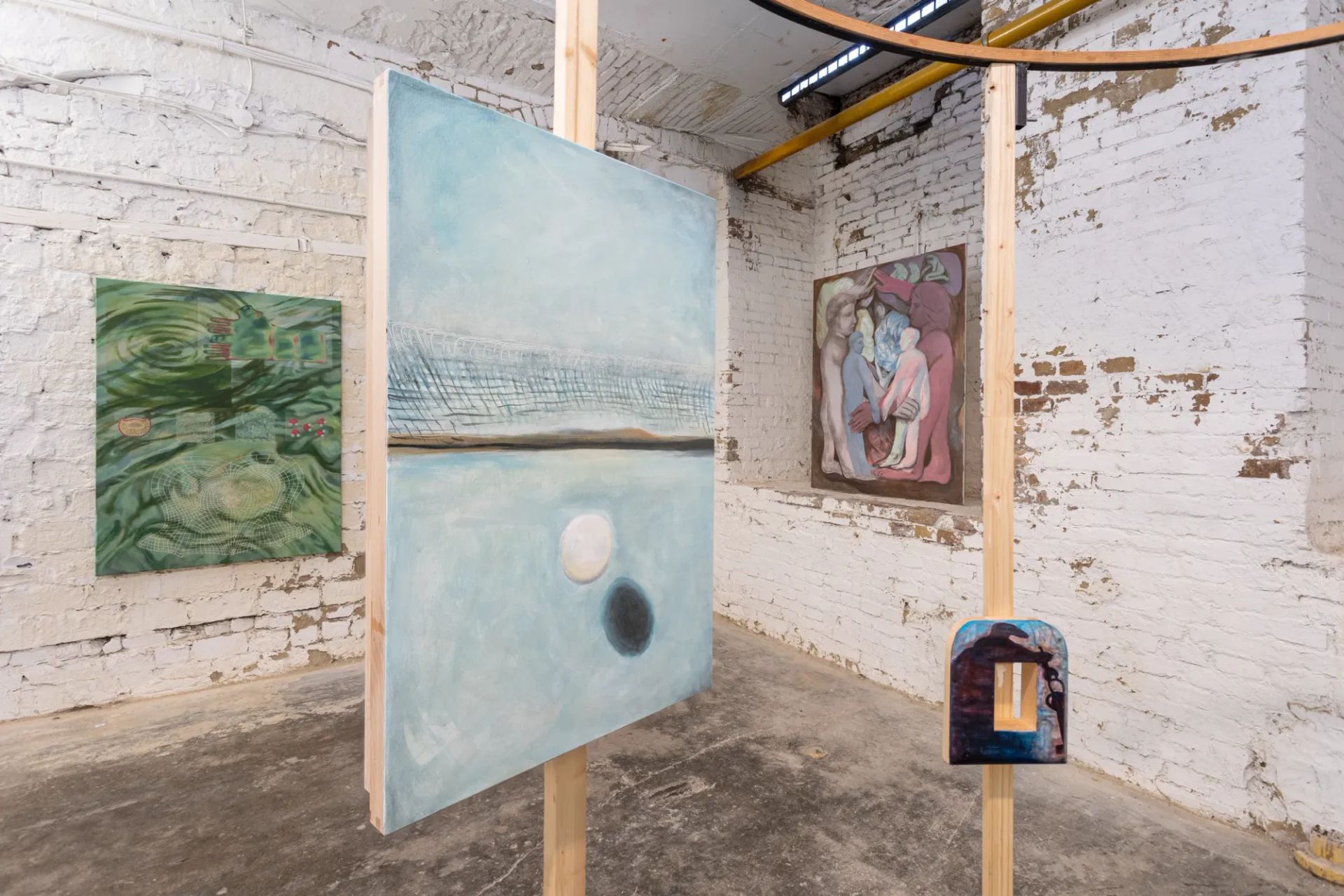
Emma Kling, Júlia Csapó, Eszter Kálóczy at Gallery Rechnitzer - Curated by Flóra Gadó
Gallery Rechnitzer presents Inner Spaces, curated by Flóra Gadó, with Emma Kling, Júlia Csapó, and Eszter Kálóczy, in Budapest.
Emma Kling, Júlia Csapó, Eszter Kálóczy
Inner Spaces
Gallery Rechnitzer
Budapest, Hungary
Flóra Gadó
Tóth Dávid
Courtesy Gallery Rechnitzer
There is a structure that exists between shelter and enclosure, designed for the body's transition, sited publicly but oriented toward privacy. The changing room holds the liminal interval without resolving it, and what Emma Kling has been asking, quietly, is what remains once the body moves on.
Inner Spaces positions three painters in productive tension around this question.
Júlia Csapó approaches from outside, through landscape, resonance, the body's permeability to the non-human.
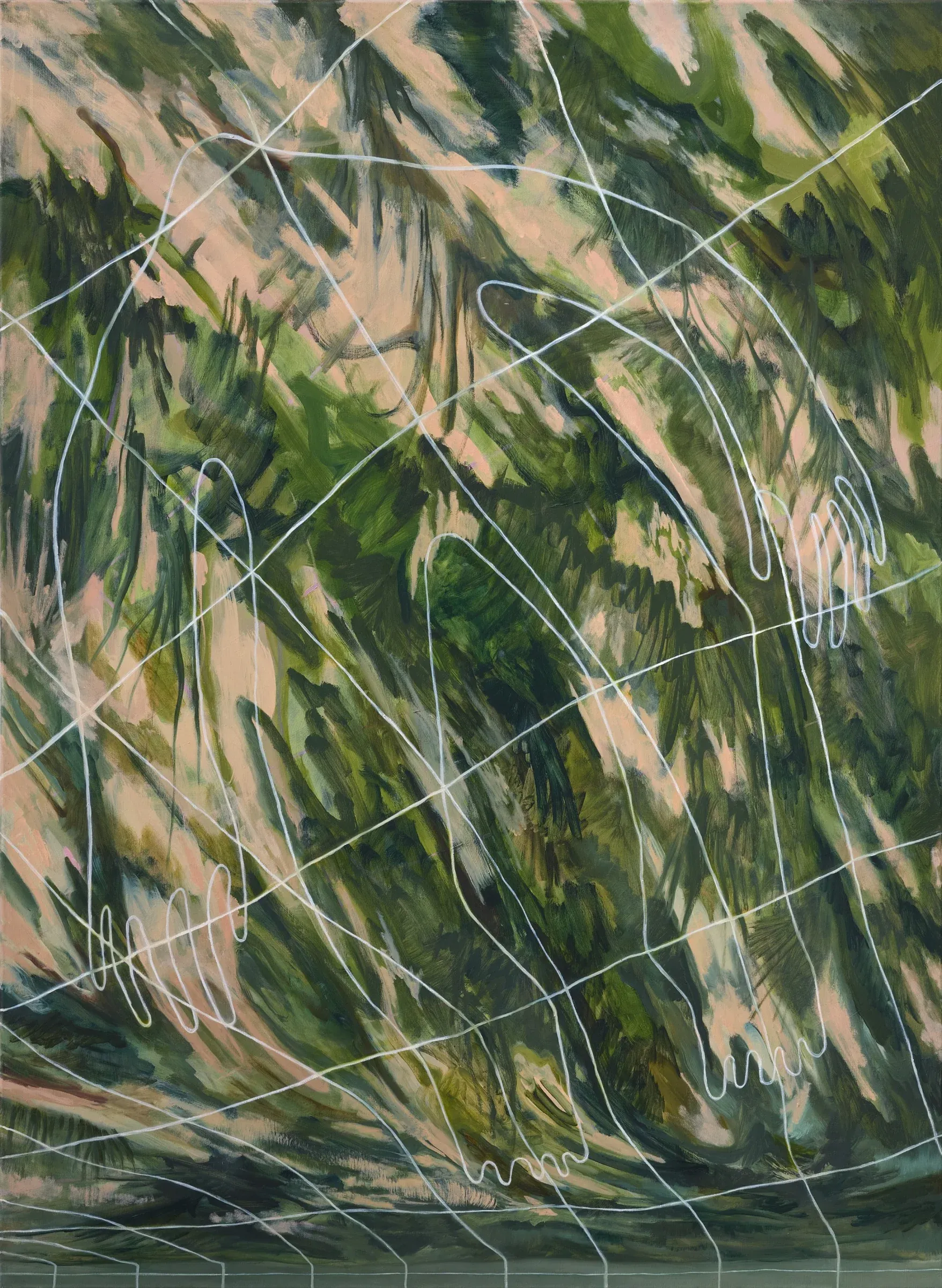
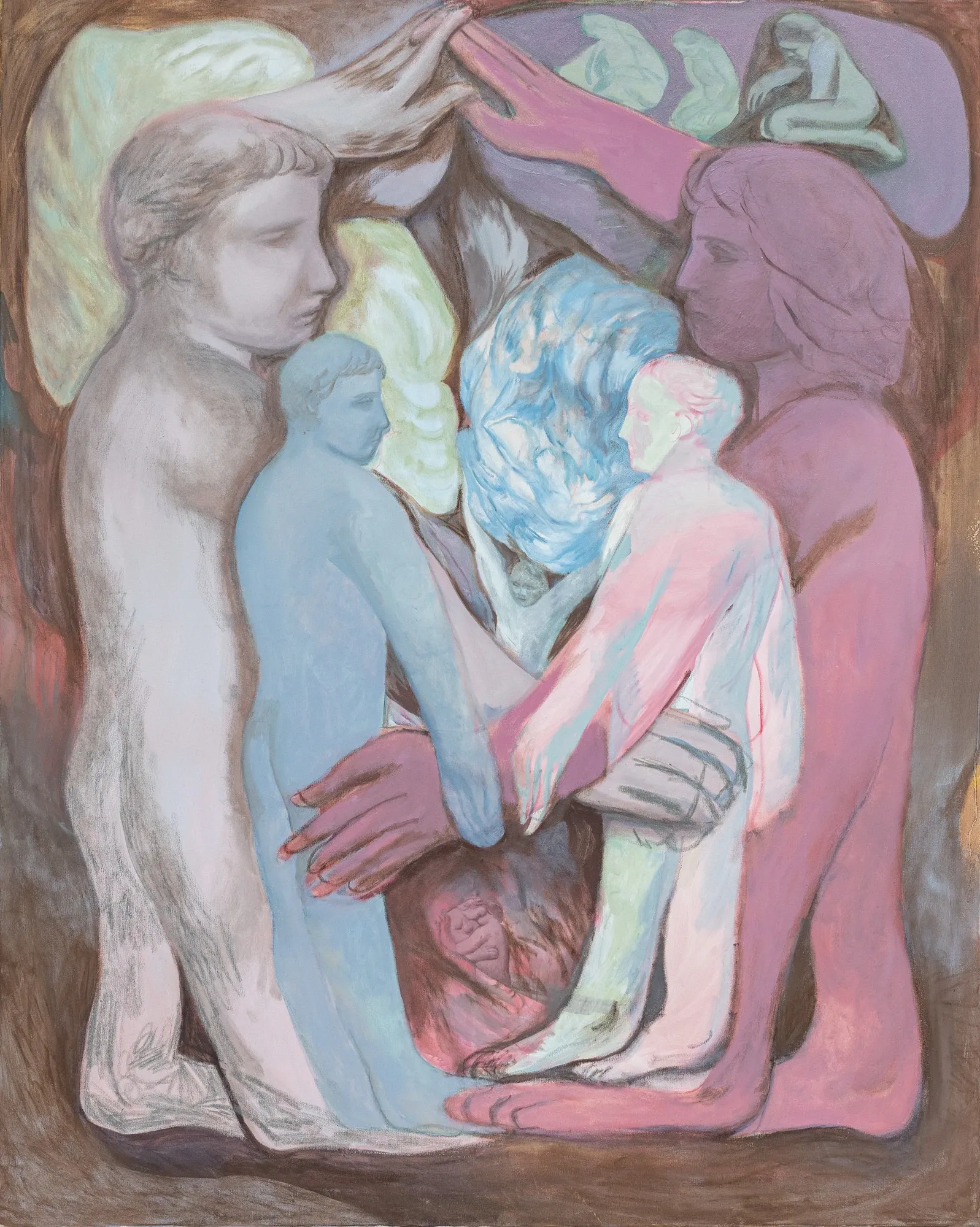
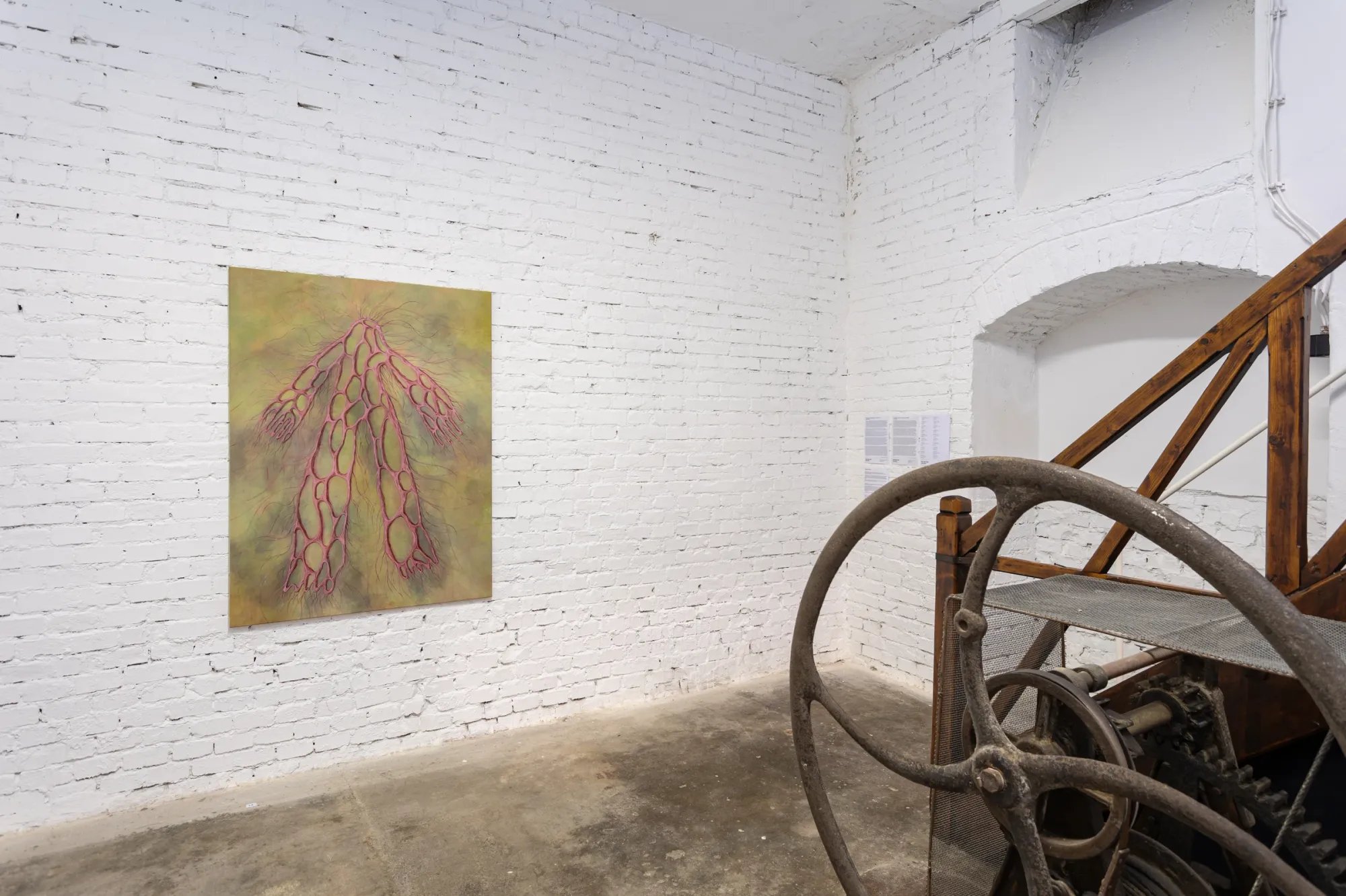
Eszter Kálóczy from within, from Surrealist cavities where forgotten memory surfaces and the fortress-mind attempts, haltingly, to open. Emma Kling occupies the threshold between these two positions, the place where interiority becomes legible to the outside and visibility turns complicated.
A shadow is also a kind of record. In Kling's practice, the absent figure carries as much weight as whatever remains on the surface, which is to say, the negative space is never quite empty.
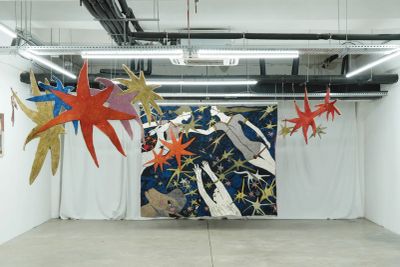
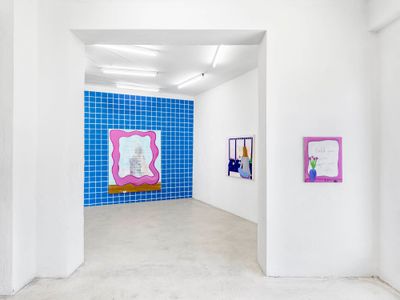
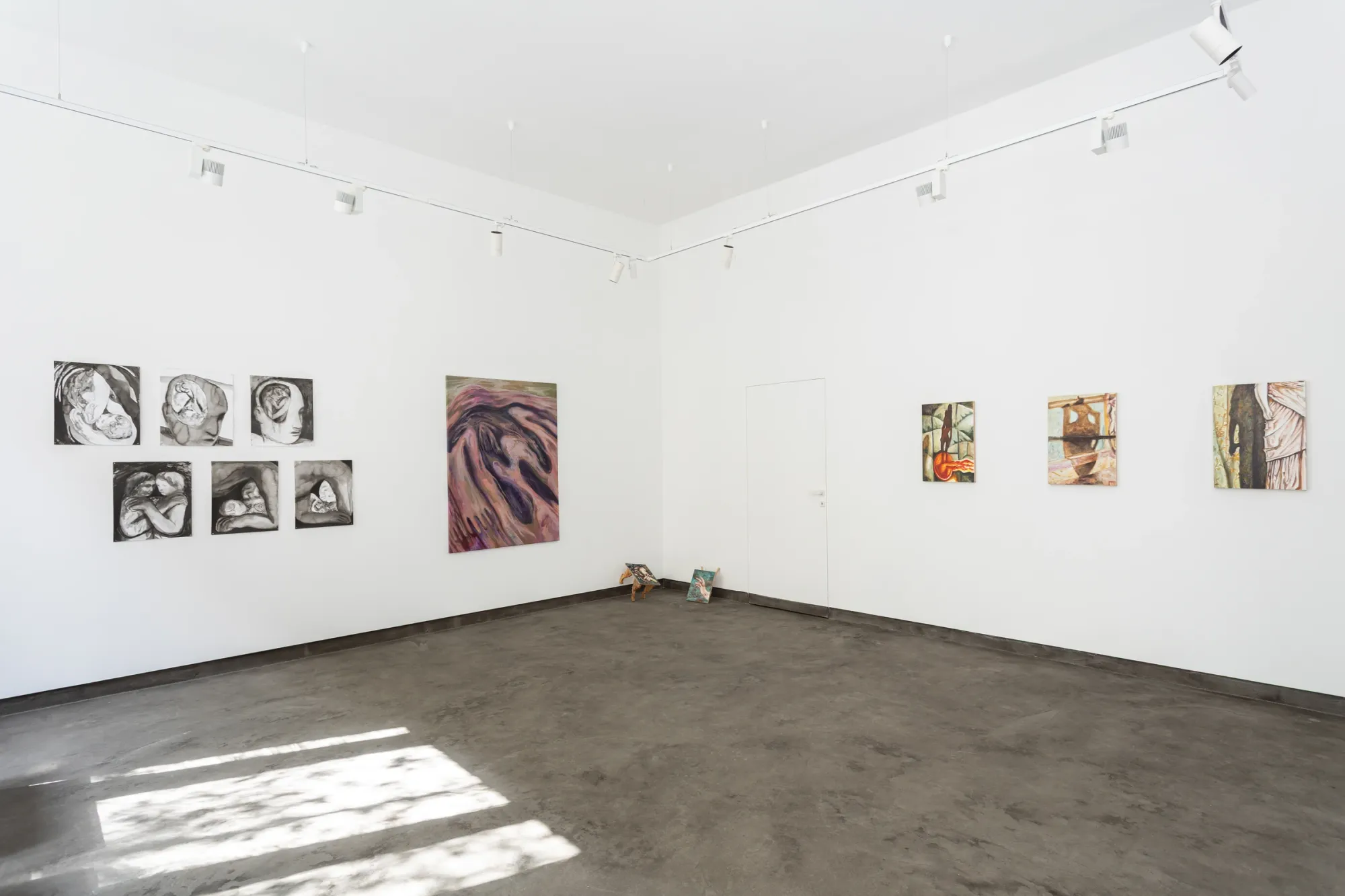
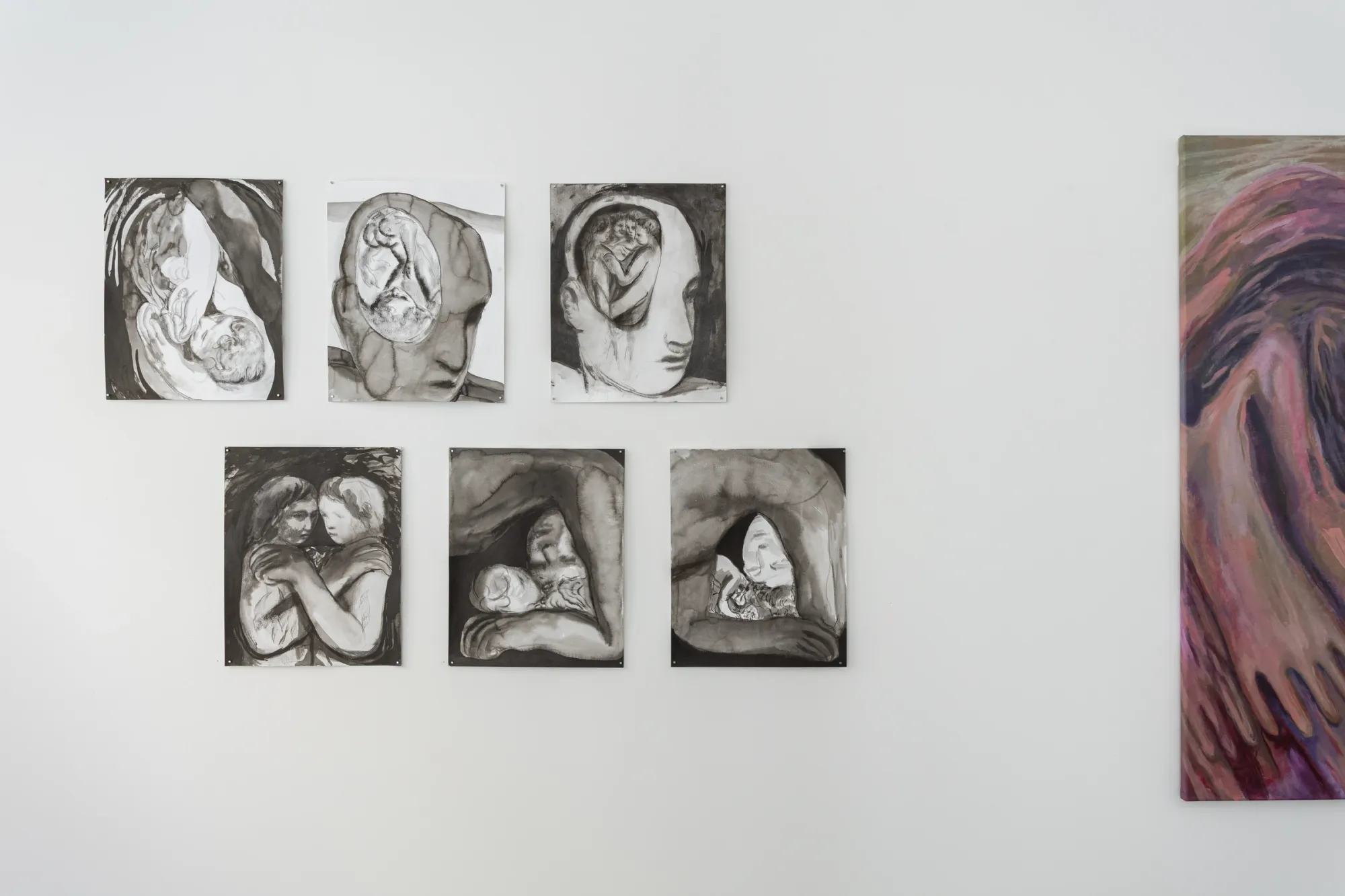
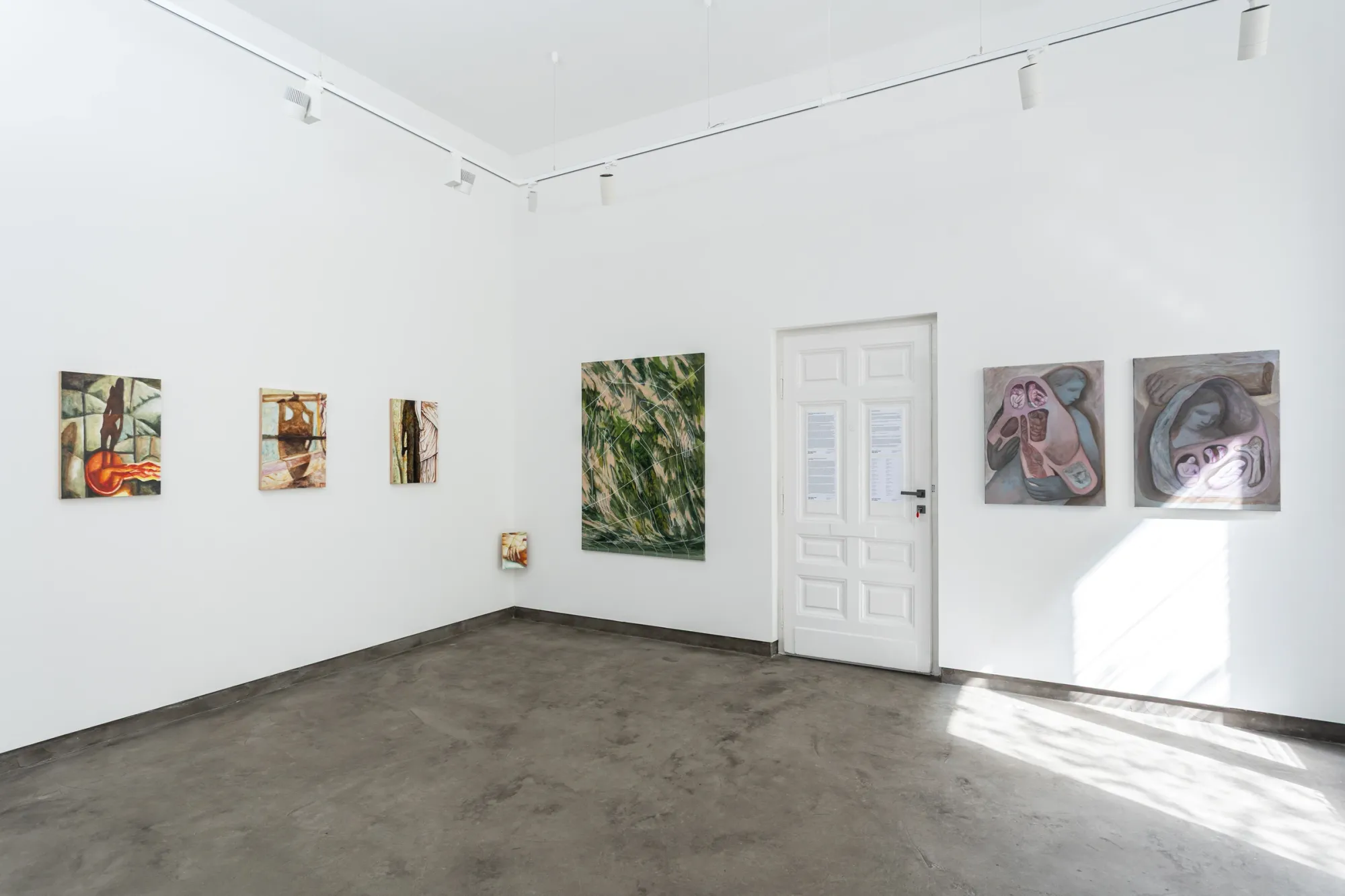
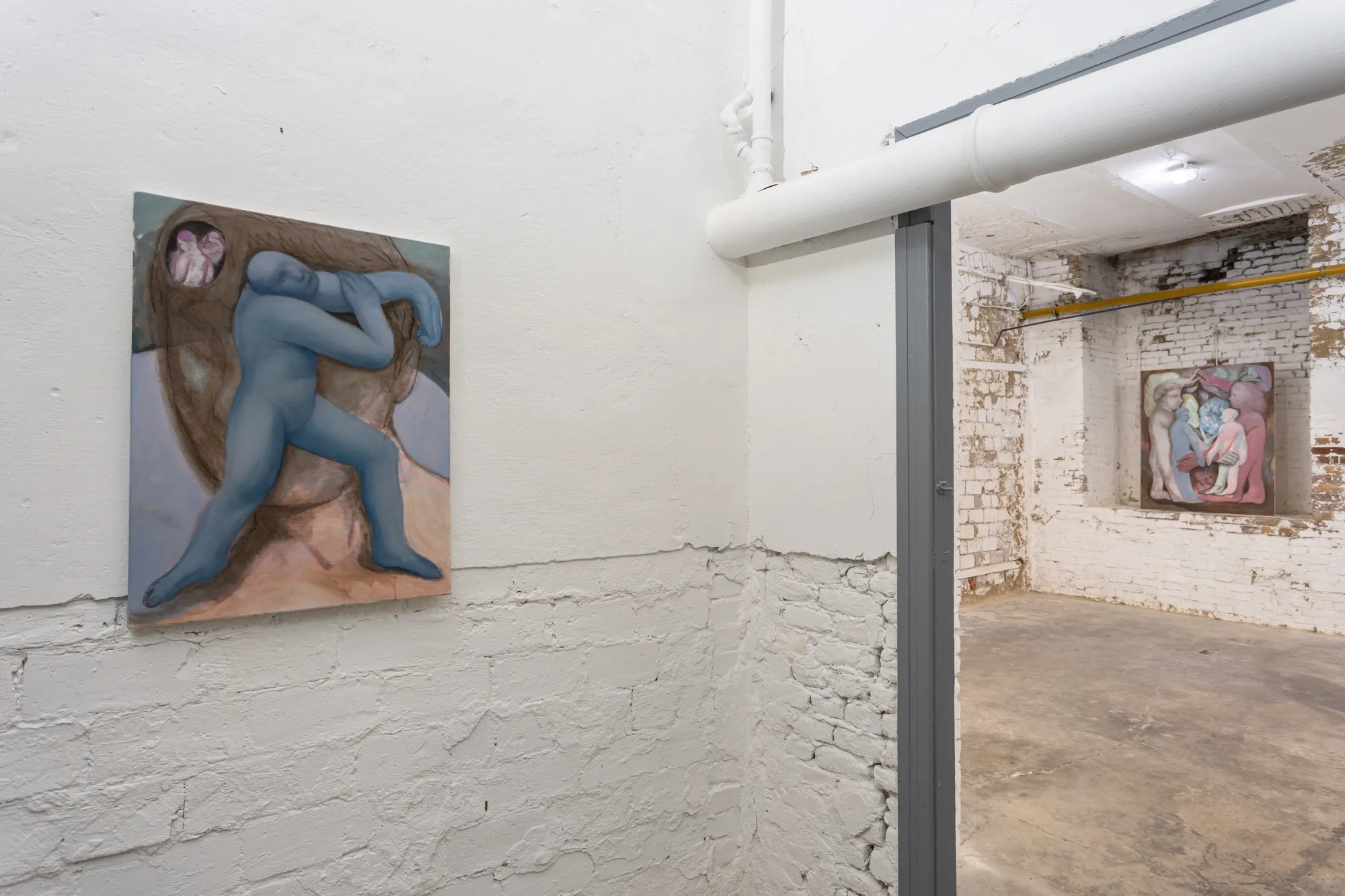
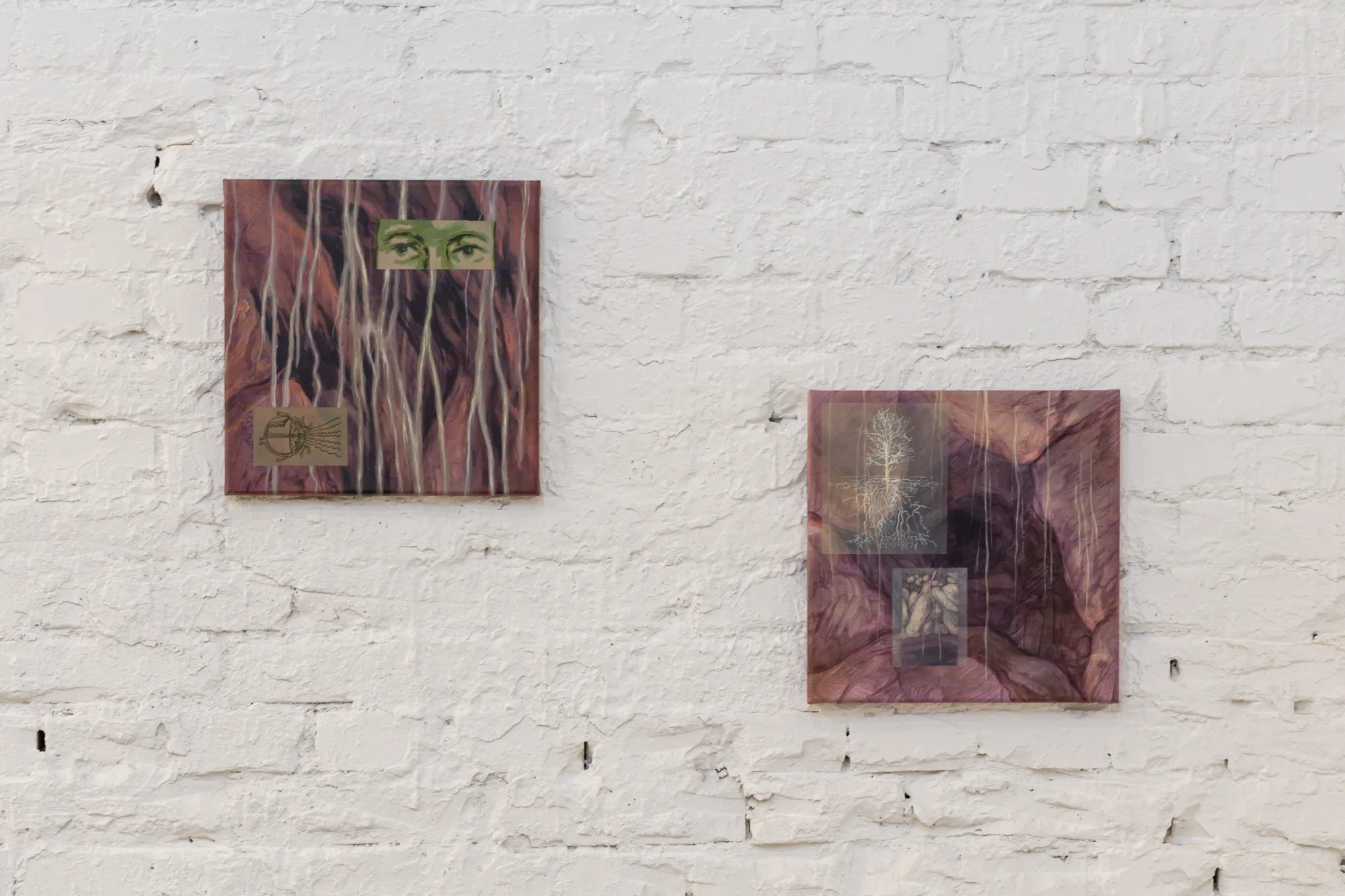
Gallery Rechnitzer operates across two registers in this exhibition. A light-filled white space holds Kálóczy's ink-and-wash drawings of figures nested within cavities alongside Csapó's large oil canvases, where translucent outlines move through dense natural foliage, and Kling's smaller paintings in earthy ochres and browns lined along the wall. A second space, raw brick, exposed pipe, the residue of an older use, is where Kling's installation claims its ground. The change of atmosphere is not incidental.
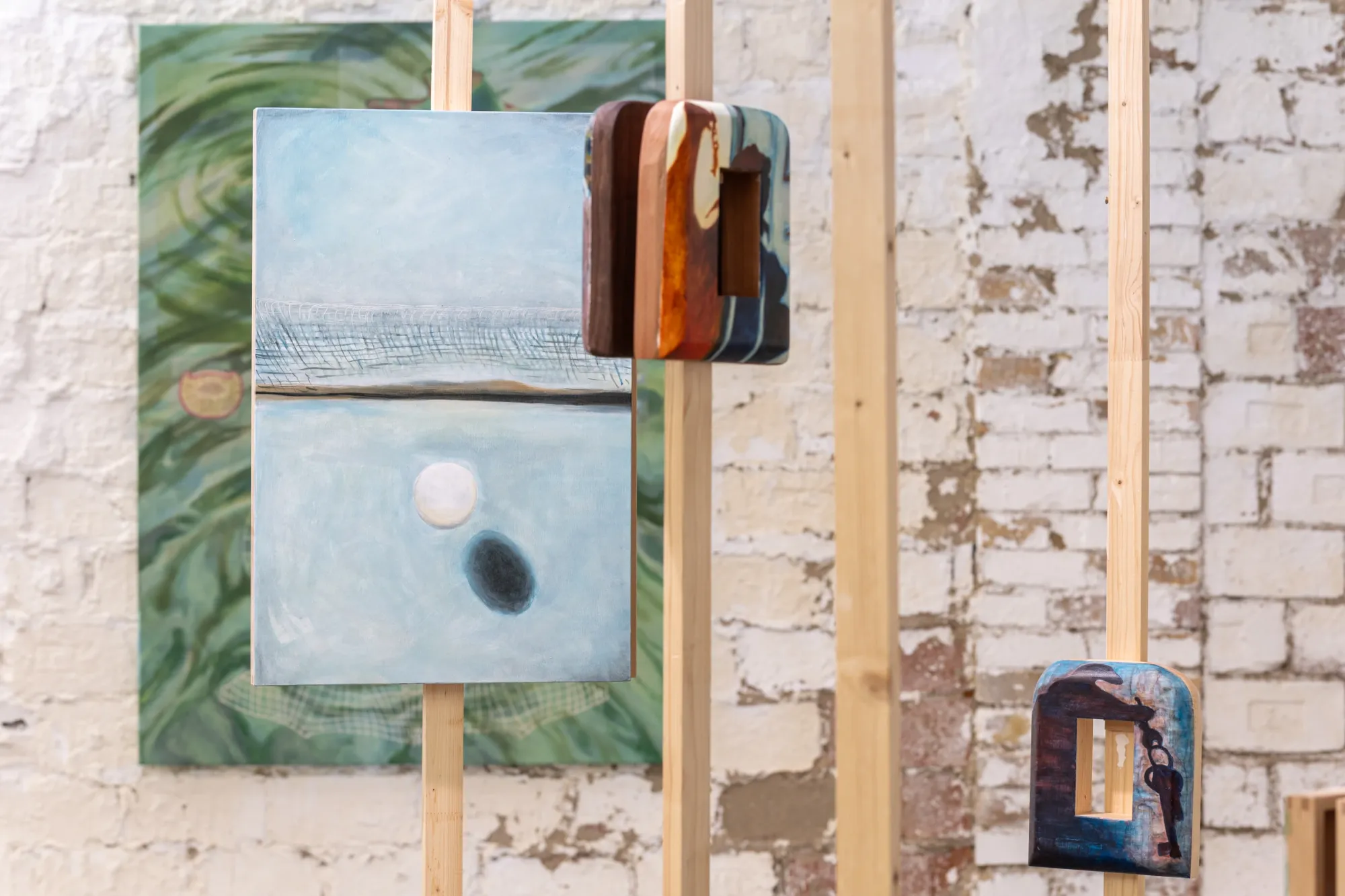
The central installation takes the snail-shaped changing cabin of Lake Balaton's shores as its structural model, stripped to bare lumber, curved top, open frame, a skeleton of the form Kling has returned to repeatedly.
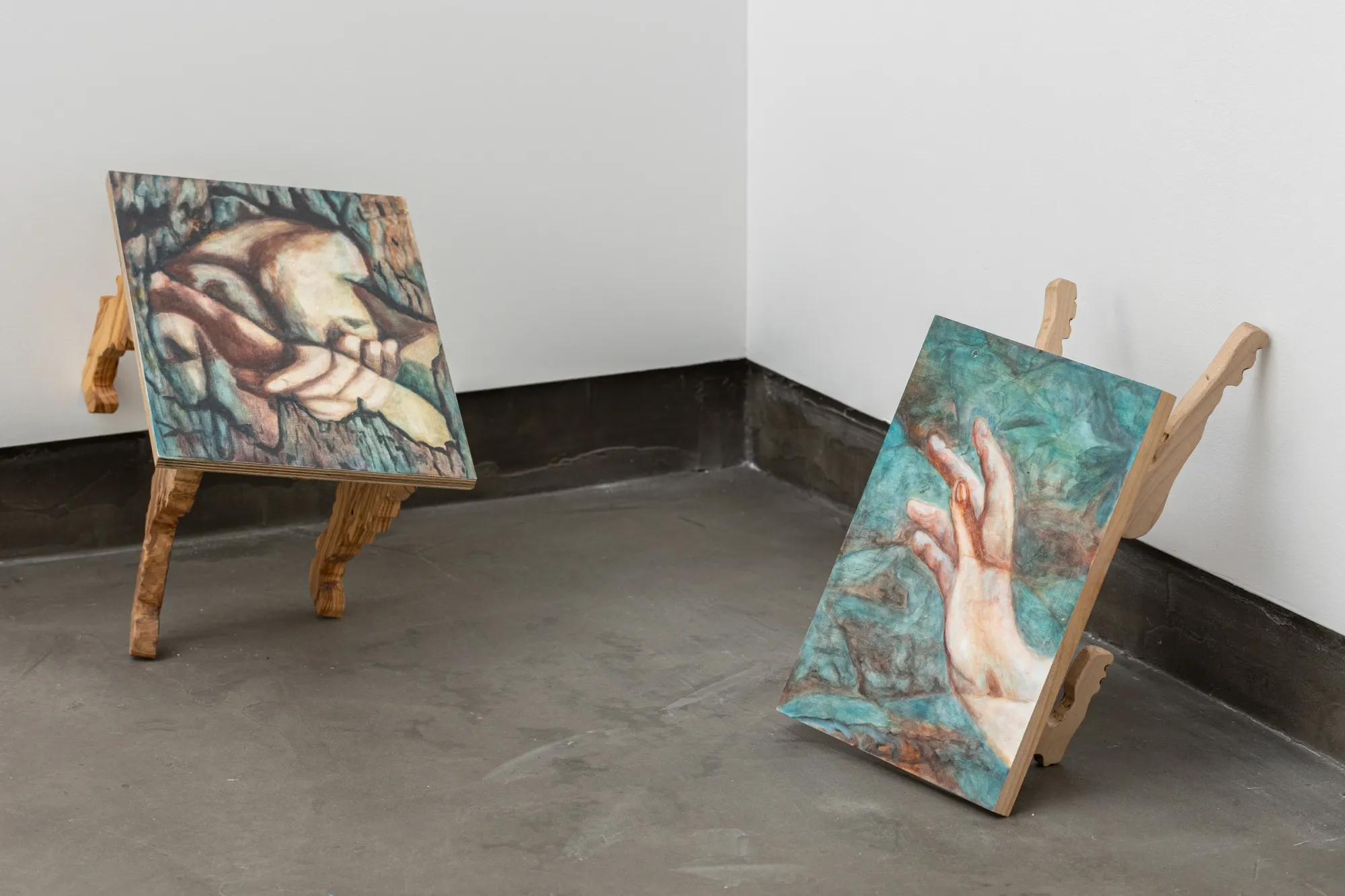
Small arched panels, Threshold Objects, oil on wood, hang from it and stand within it on ornate wooden supports that seem to have migrated from a different century, seeming to wait rather than be displayed. The arch repeated becomes a grammar, doorway, opening, the body's own apertures.
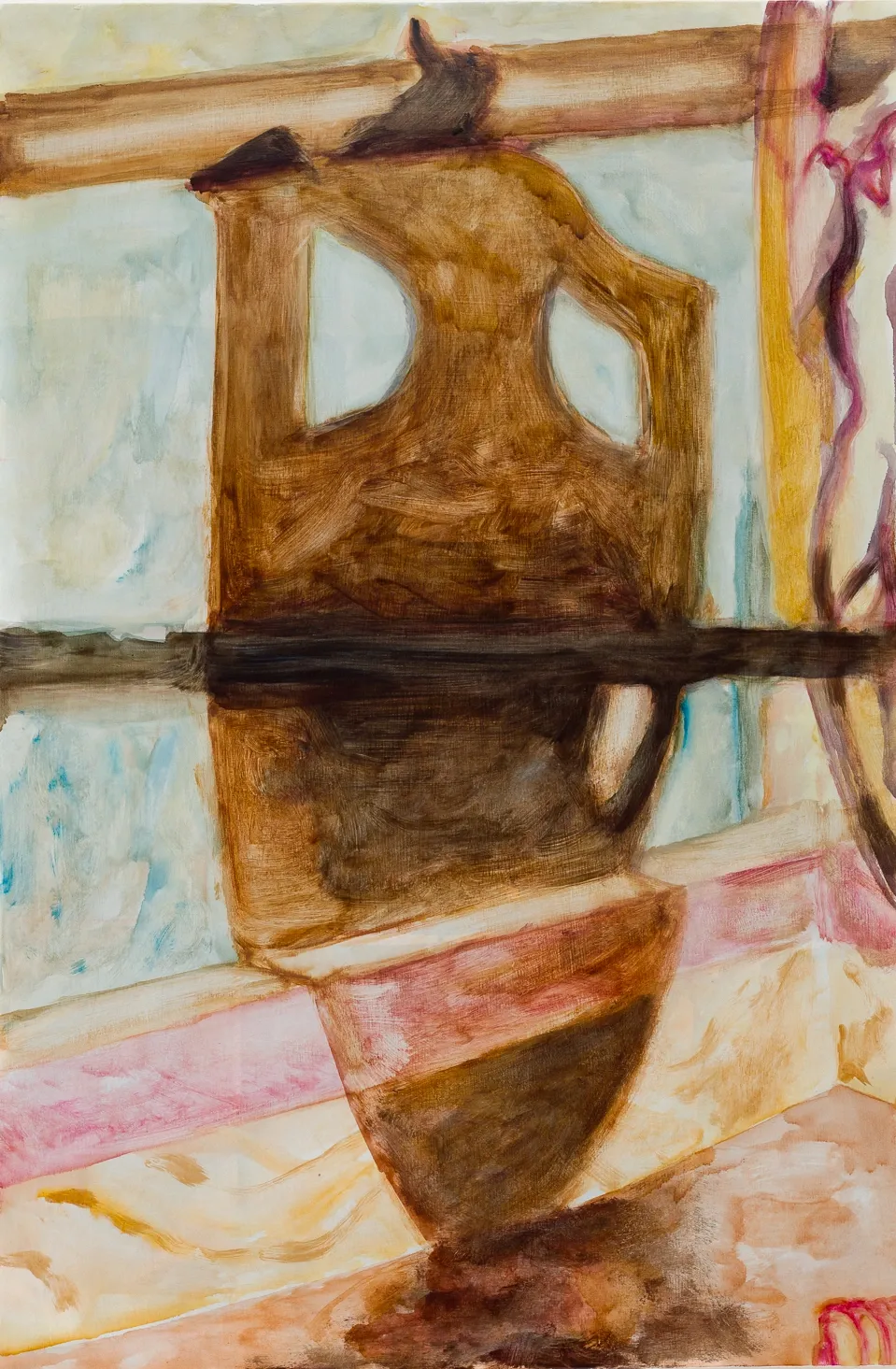
Threshold Object (oil on wood, 60 × 40 cm) holds this logic most directly. A figure, or a vessel, the ambiguity seems considered, appears through horizontal slats, its lower section reflected across a dark dividing band.
The paint is warm against a cooler ground, nothing settling into legibility. What the slats introduce is a surveillance logic, a body between states, observed without its knowledge or consent, the inside exposed by the architecture that was supposed to protect it.
Her wall-based works nearby carry a different register. In two small paintings on exposed brick, something peers out, eyes partially obscured by hanging forms, a window-cross dividing the picture into quadrants that hold receding figures. Shadow and negative form accumulate not as absence but as weight. Kling's interest seems to be less in what the body looks like than in what it leaves when it has moved on, the silhouette that remains, the shape cut against light.
The exhibition arrives as questions about invisible labor, work performed without entering the public record, gather renewed attention. Kling's shadow motif operates on both the psychological and social register at once, the interior dimension Jung named, and the work that does not count, does not appear, does not cast its own visible mark.
There is nothing didactic in how this is handled, the installation is too open for that, too committed to perceptual ambiguity to resolve into argument. Csapó and Kálóczy extend the frame outward and inward respectively, and it is the distance between all three positions that gives the show its room.
The changing room keeps standing after everyone has left.
Gallery Rechnitzer on Instagram
Emma Kling Instagram
Júlia Csapó on Instagram
Instagram Eszter Kálóczy
About Catapult
This is a exhibition review published by Catapult — an independent editorial platform for contemporary art, based in Vienna. We publish exhibition reviews, artist features, interviews, and critical context, with a focus on emerging and mid-career practices from Europe and beyond.
catapult.art
Want to be featured? Submit your work →