Care and Control Share a Vocabulary

Vivienne Sun
Liminality
Nürnberg, Germany
-
Courtesy of the artist and their respective authors
Vivienne Sun at (a.d.b.k.) Nürnberg with Liminality in Nürnberg
Most furniture makes a claim on the body. A hospital bed describes weight and duration; an examination chair specifies posture, compliance, access. These forms don't only accommodate, they organize. What distinguishes medical equipment from domestic furniture is not the function it serves but the degree of authority it holds over the body it receives. Care and control, within such structures, are rarely distinguishable from one another.
What Vivienne Sun's exhibition surfaces is the moment when that authority is withdrawn. Not dismantled, still present, still fully legible, but held in suspension. The equipment remains. The procedure does not begin.
The structures in Liminality are not broken. They are functionally complete and permanently pending, fixtures of an institution that knows exactly what it intends to do, and has not yet decided whether it will.
Shown across three days in February at a.d.b.k. Nürnberg, one of Germany's oldest art academies, a building that carries its own institutional weight, Sun's Liminality occupied a large, industrially lit space with floor-to-ceiling windows looking onto bare winter trees. The brevity of the exhibition is itself liminal: three days, long enough to be experienced, too short to settle. It existed in the threshold between announcement and archive.
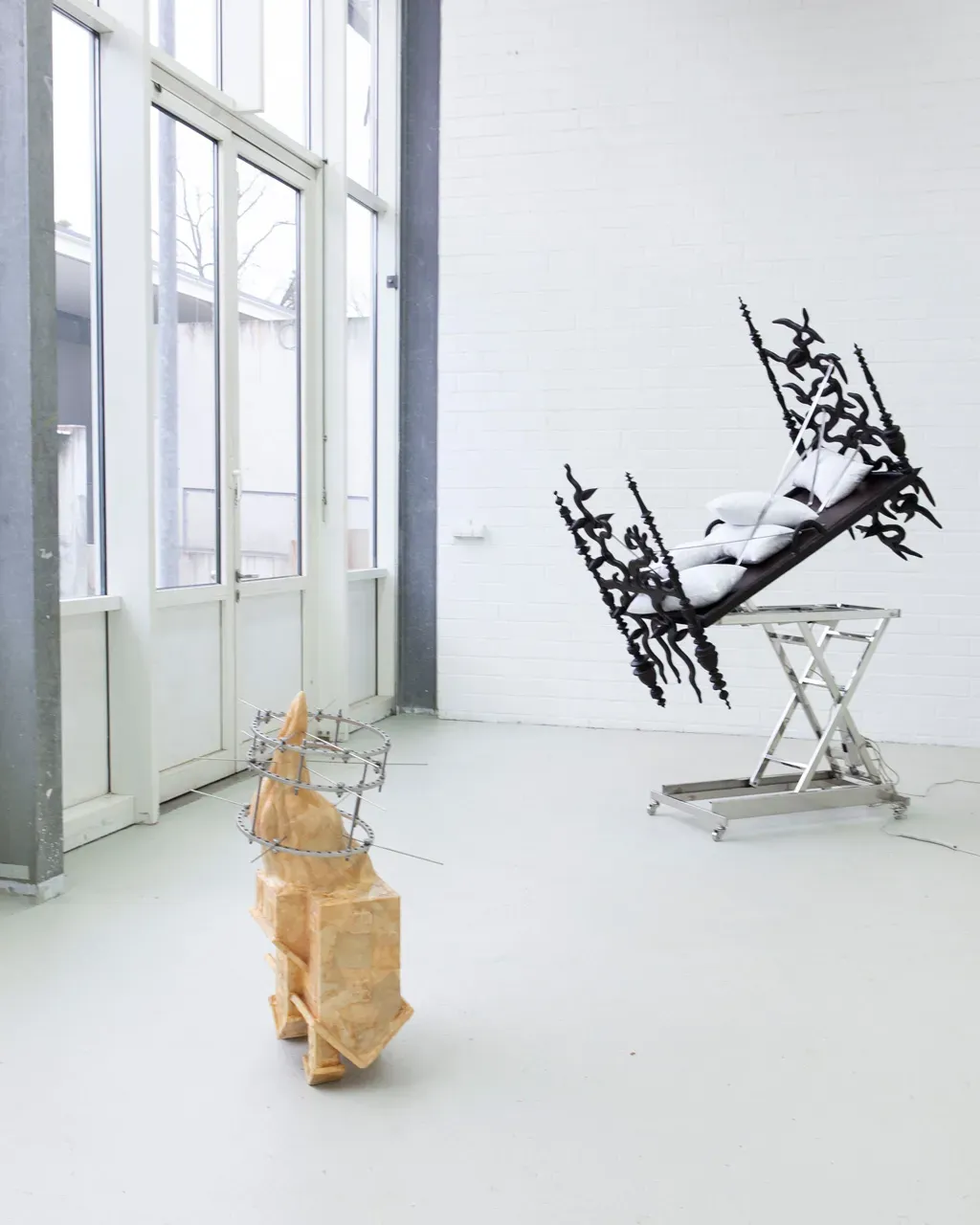
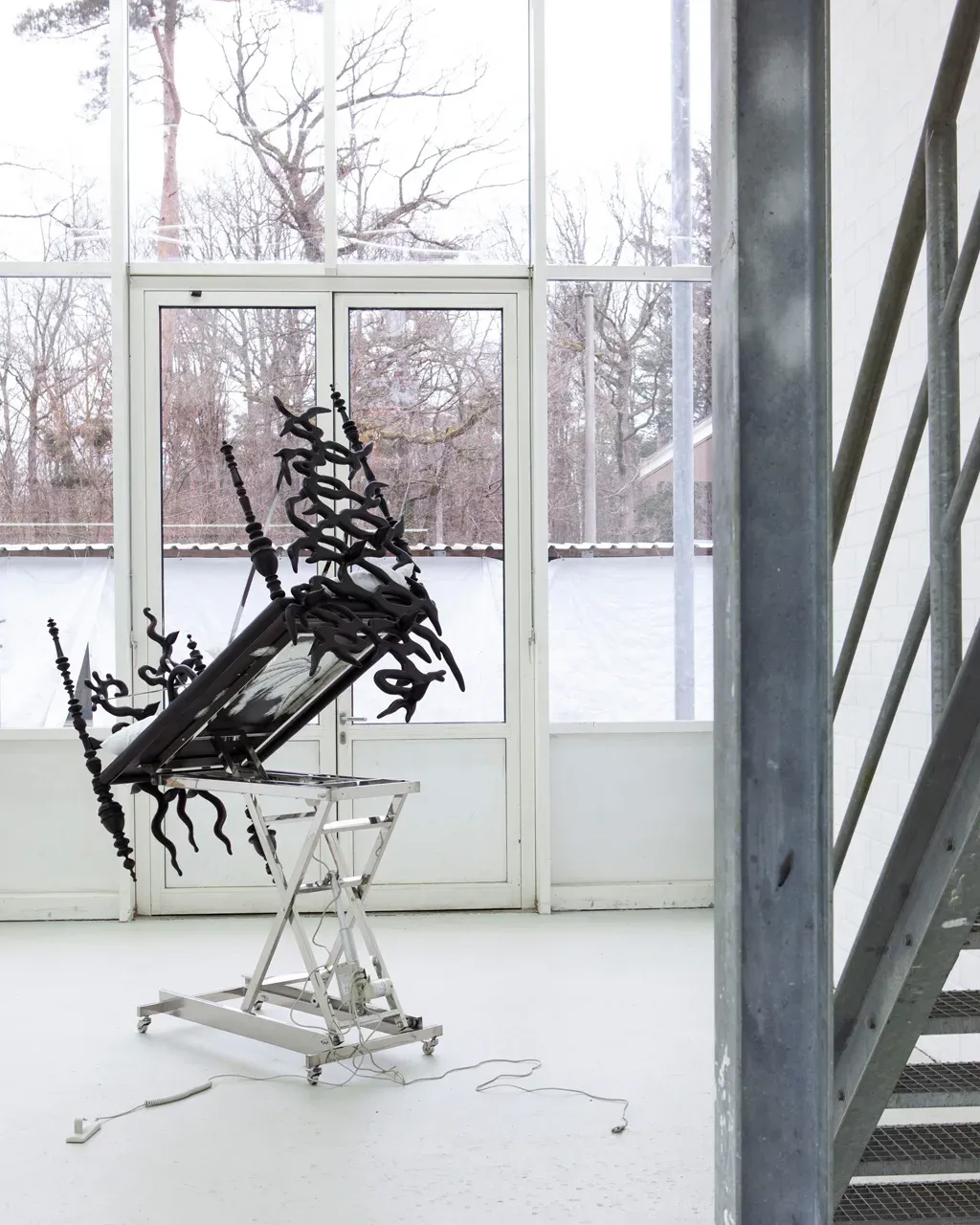
The central work holds the exhibition's argument most directly. A hospital-style reclining chair, adjustable, fully articulated, carries a proliferation of black organic forms: coiling, thorned, reaching structures that grow from the frame, the armrests, the back. White pillows remain on the seat. The chair is prepared for a body. To use it, a body would have to negotiate these growths, and the work seems to know, with some certainty, that it will not. Function is not removed; it is made conditional on a willingness to enter that never arrives.
A large green glass carboy, the kind used in laboratories and fermentation vessels alike, sits on a wheeled wooden cart, white textile draped around its base. The vessel appears sealed. The cart's wheels suggest transit; the cloth, containment or protection. Together they describe a preparation for a procedure that has been postponed indefinitely. The handmade quality of the wooden structure frames the industrial vessel without resolving the material difference between them; the two logics coexist without merging.
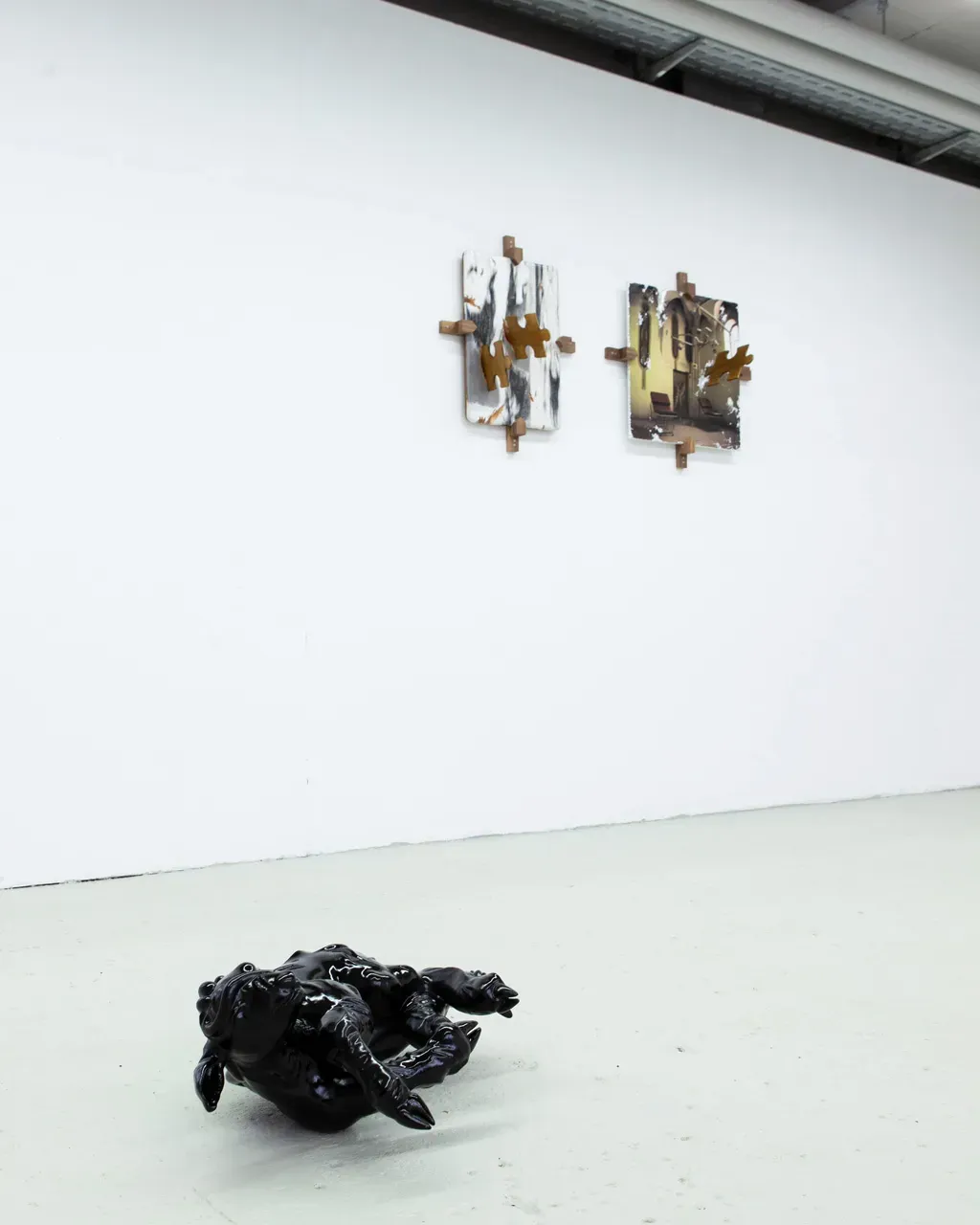
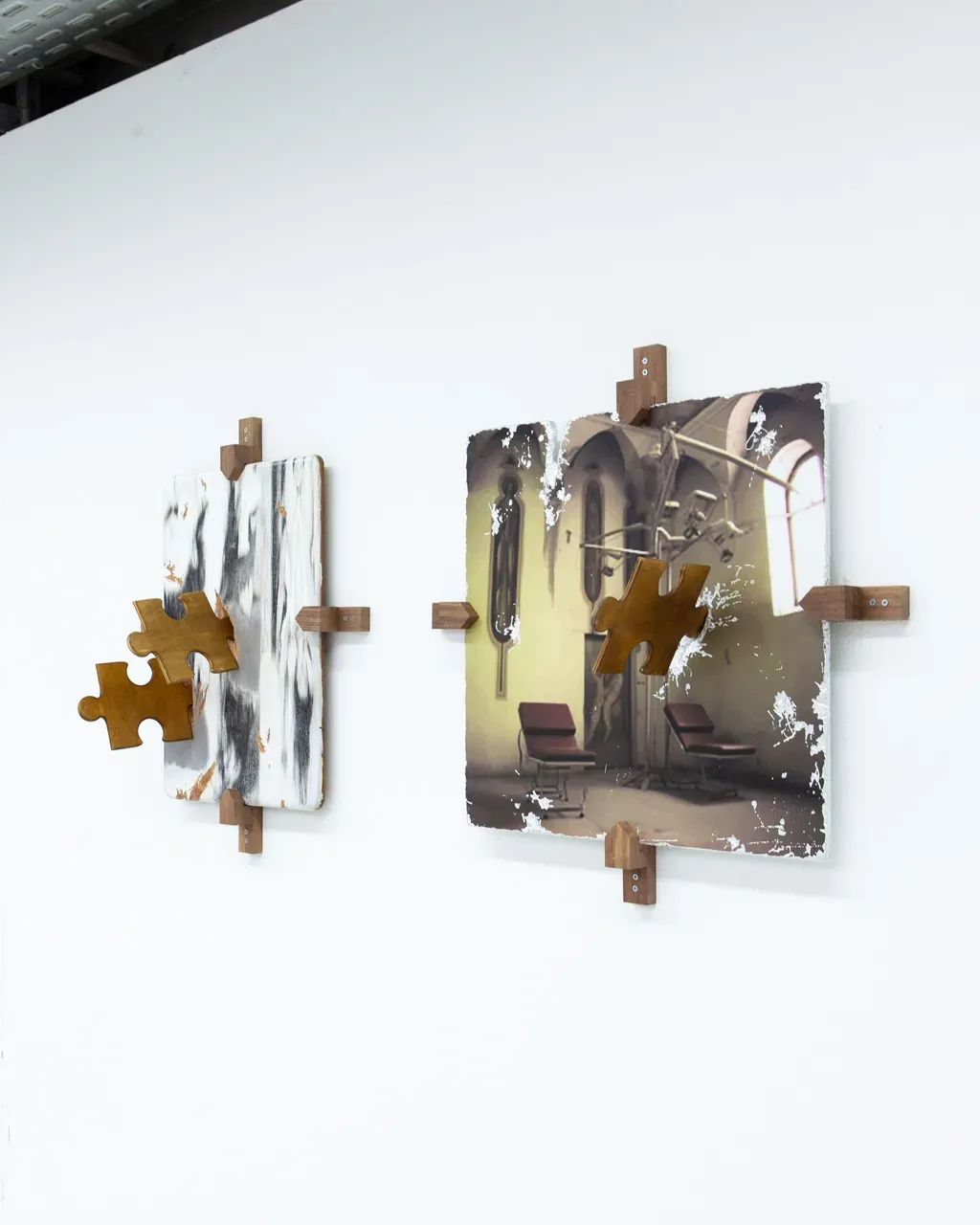
Two wall-mounted works bring institutional imagery directly into the exhibition's frame. Photographs mounted on golden-hued, puzzle-piece wooden brackets depict what appears to be a hospital interior, an institutional space reproduced within an institutional space. The supports are precise enough to be structural, warm enough in material to suggest craft. They hold the images at a slight remove from the wall, as if the photographs themselves are in transit between surfaces, not quite hung, not quite arriving.
The territory Sun works in is not unmapped. The body's management within medical and administrative systems has accumulated both a significant theoretical literature and a substantial artistic one. What Liminality adds is a structural argument: that the forms themselves, independent of any body actually present, already perform the condition.
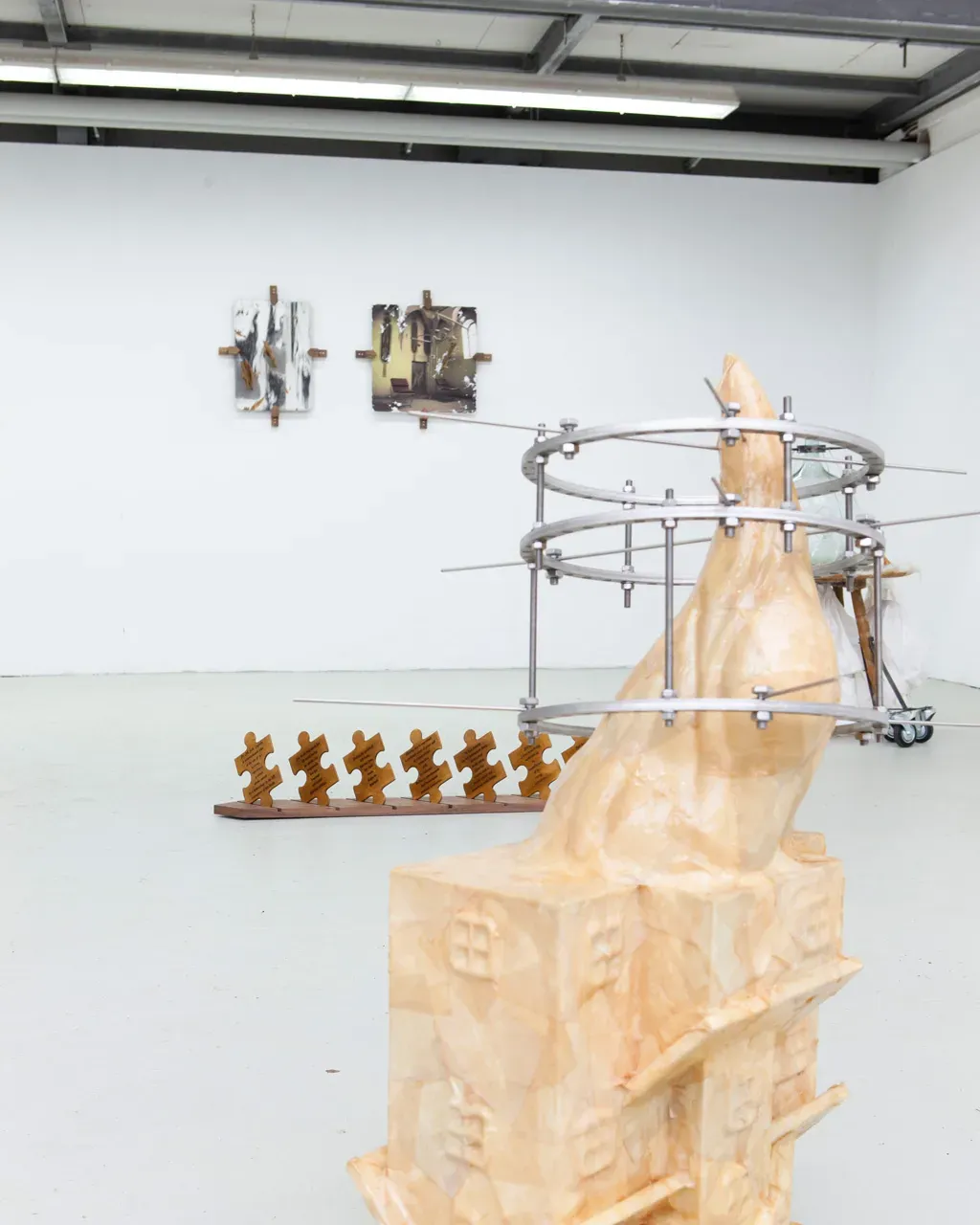
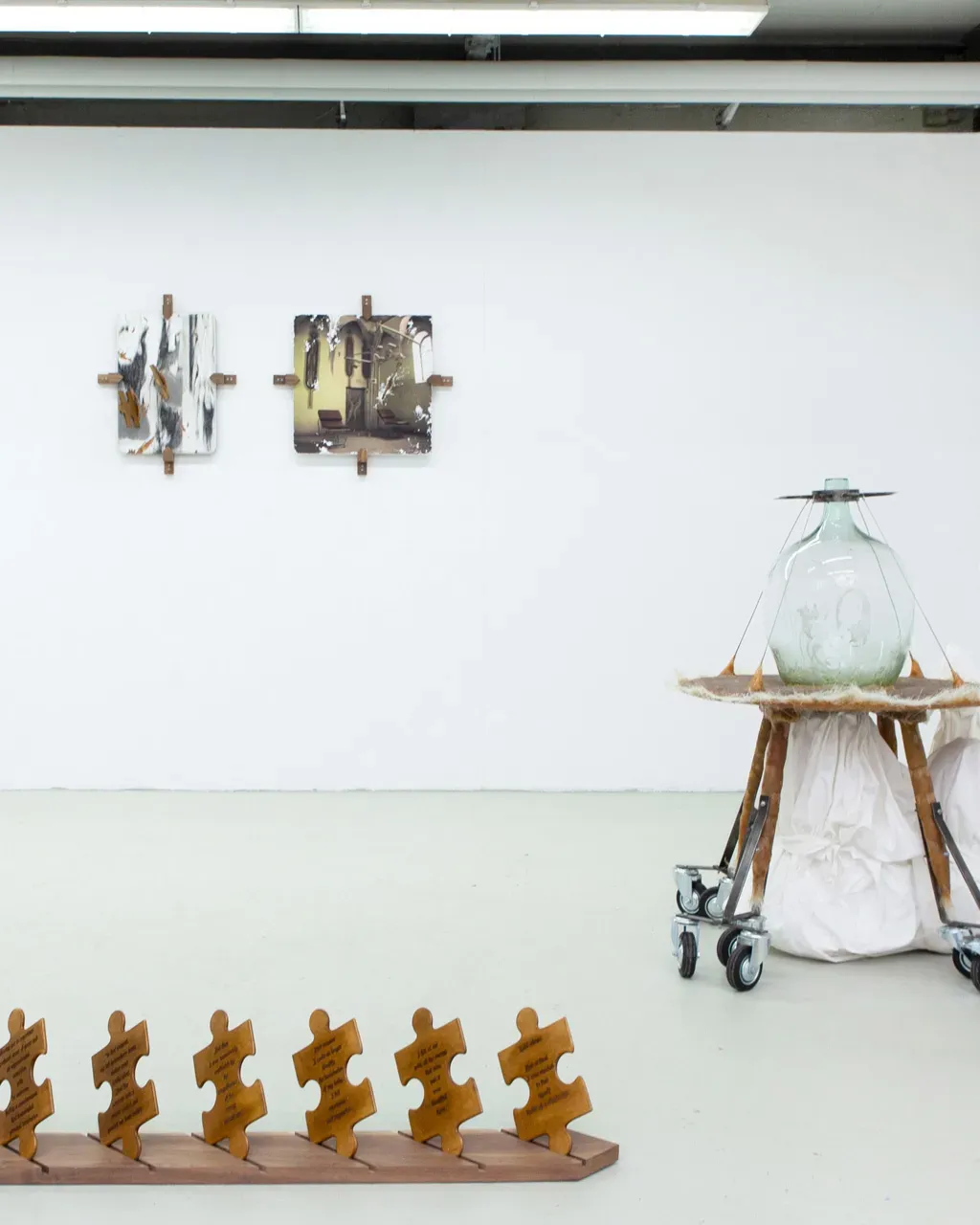
Vivienne Sun, Akademie der Bildenden Künste Nürnberg (a.d.b.k.), Liminality, Nürnberg, Germany, February 6 – February 8, 2026. All images courtesy of the artist.
A tilted bed with no patient is not an empty bed. It is a bed in a state of specific readiness, anticipation with nowhere to deposit itself. This is the condition Sun identifies as characteristic of the contemporary: institutions, systems of knowledge, structures of care that continue to operate while the terms of their operation remain permanently unsettled. Unable to return, not fully arrived.
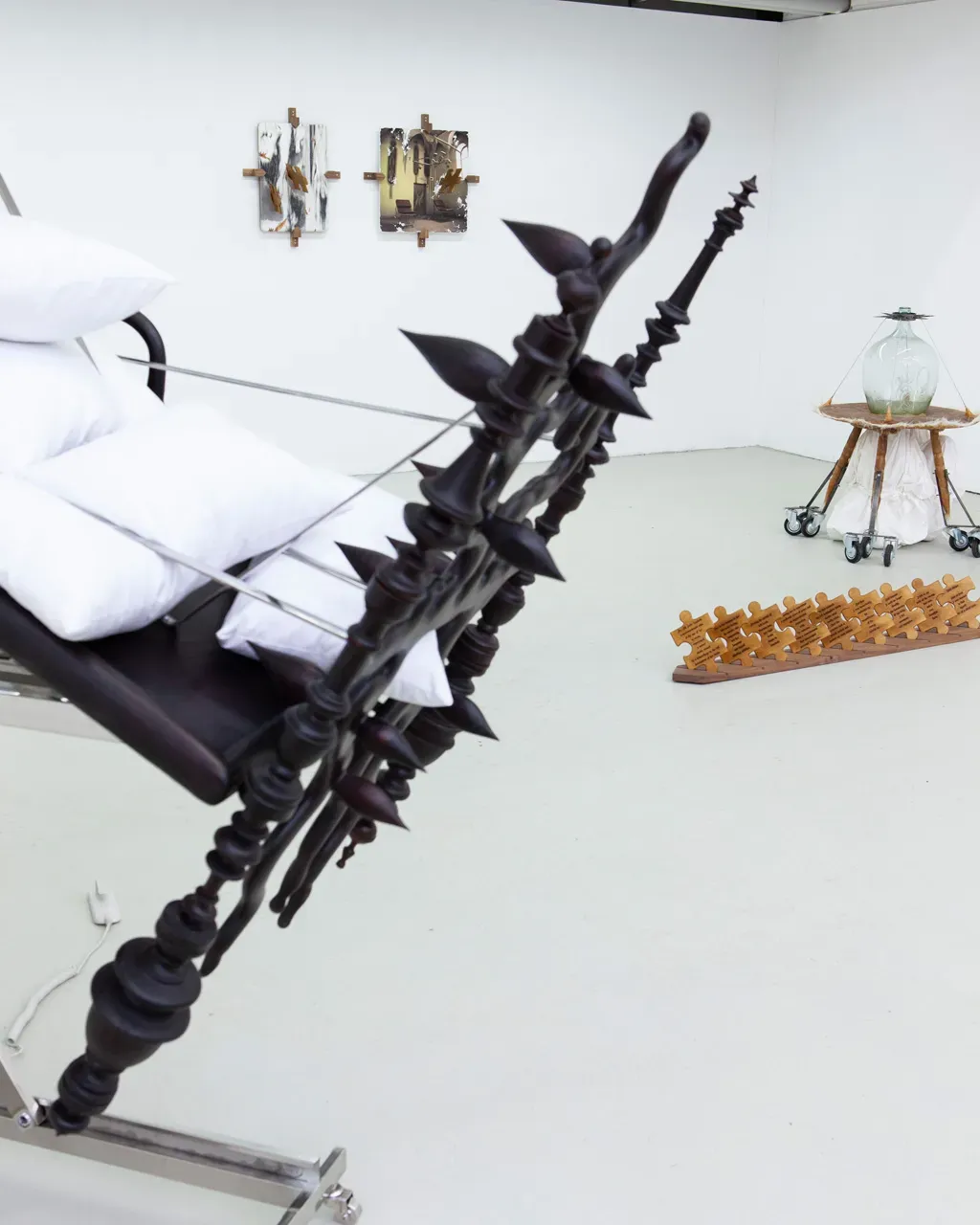
The windows in the space looked onto bare trees. The equipment is presumably in storage now, still articulated, still tilted, still prepared.
Instagram Vivianne Sun
Instagram Akademie der Bildenden Künste Nürnberg
About Catapult
This is an artist interview published by Catapult — an independent editorial platform for contemporary art, based in Vienna. We publish exhibition reviews, artist features, interviews, and critical context, with a focus on emerging and mid-career practices from Europe and beyond.
catapult.art
Want to be featured? Submit your work →