Ruo-Hsin Wu: Floating in the Dark

Where do you go when the world gets too heavy?
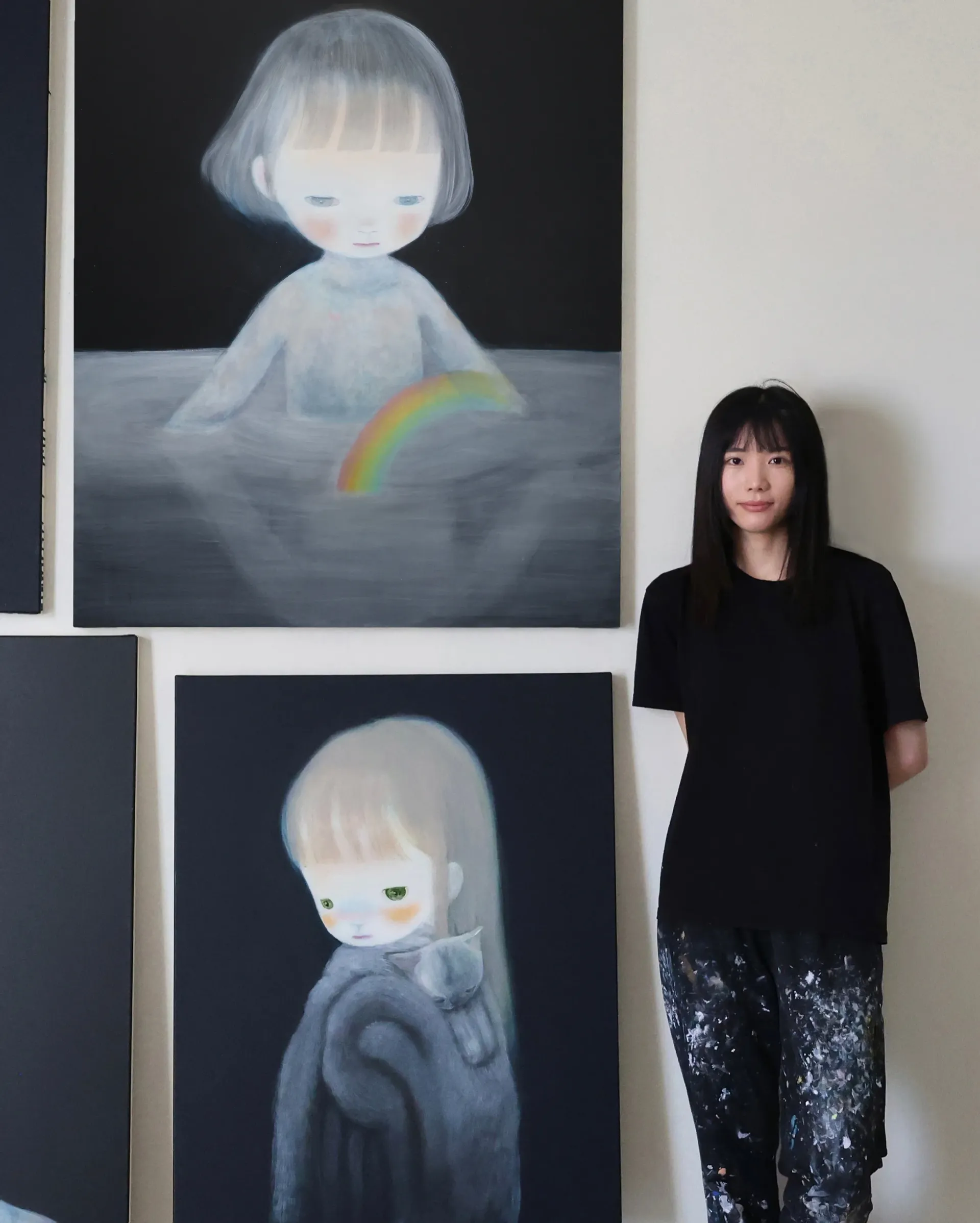
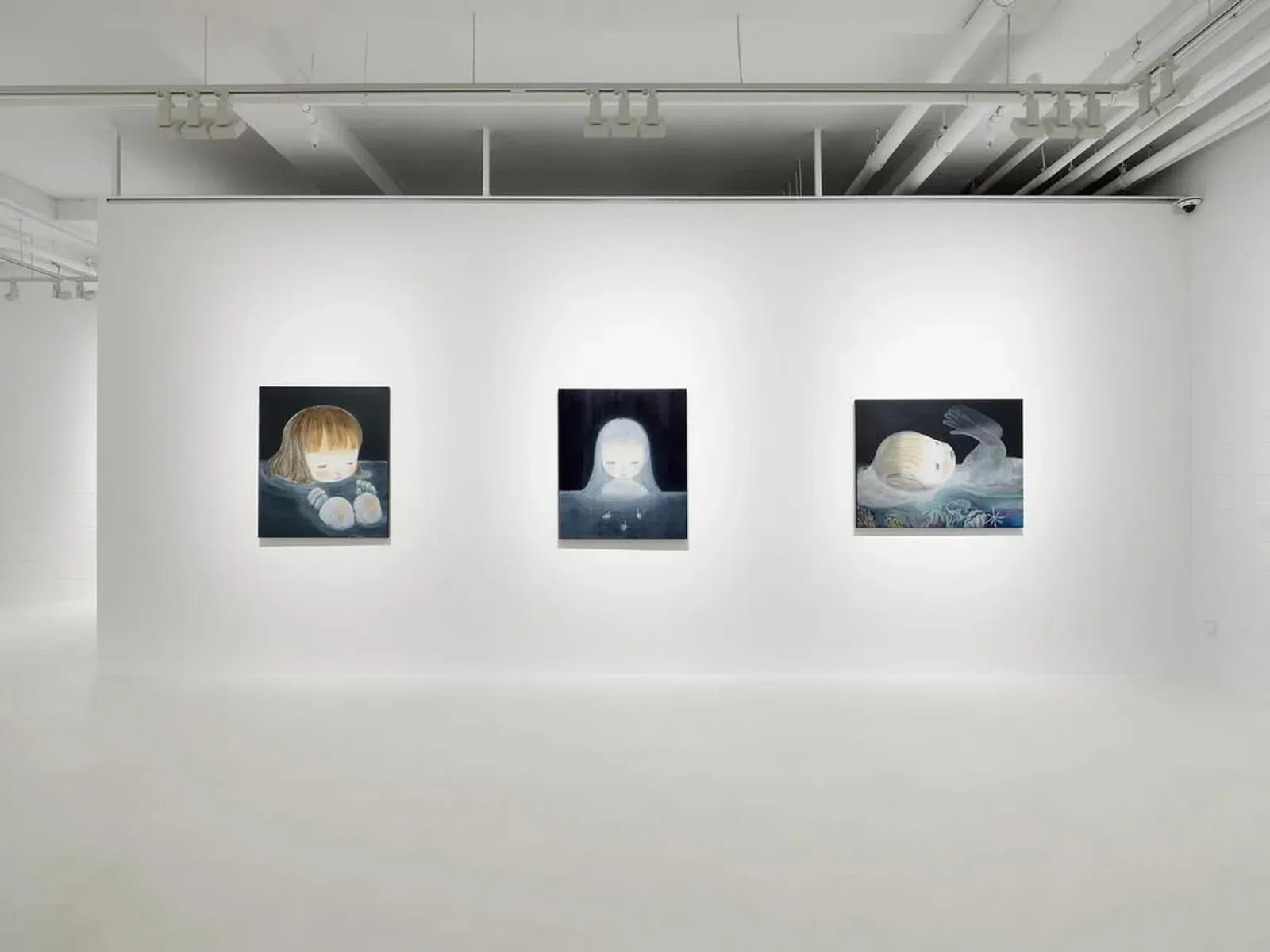
Ruo-Hsin Wu paints figures that look underwater even when they're not. Pale, elongated bodies suspended in pitch-black voids. No faces. No gravity. Just slow-motion drift and the physics of somewhere else. The figures aren't drowning. They're displacing. Finding the exact depth where pressure equalizes and breathing becomes optional.
THE VISUAL LANGUAGE
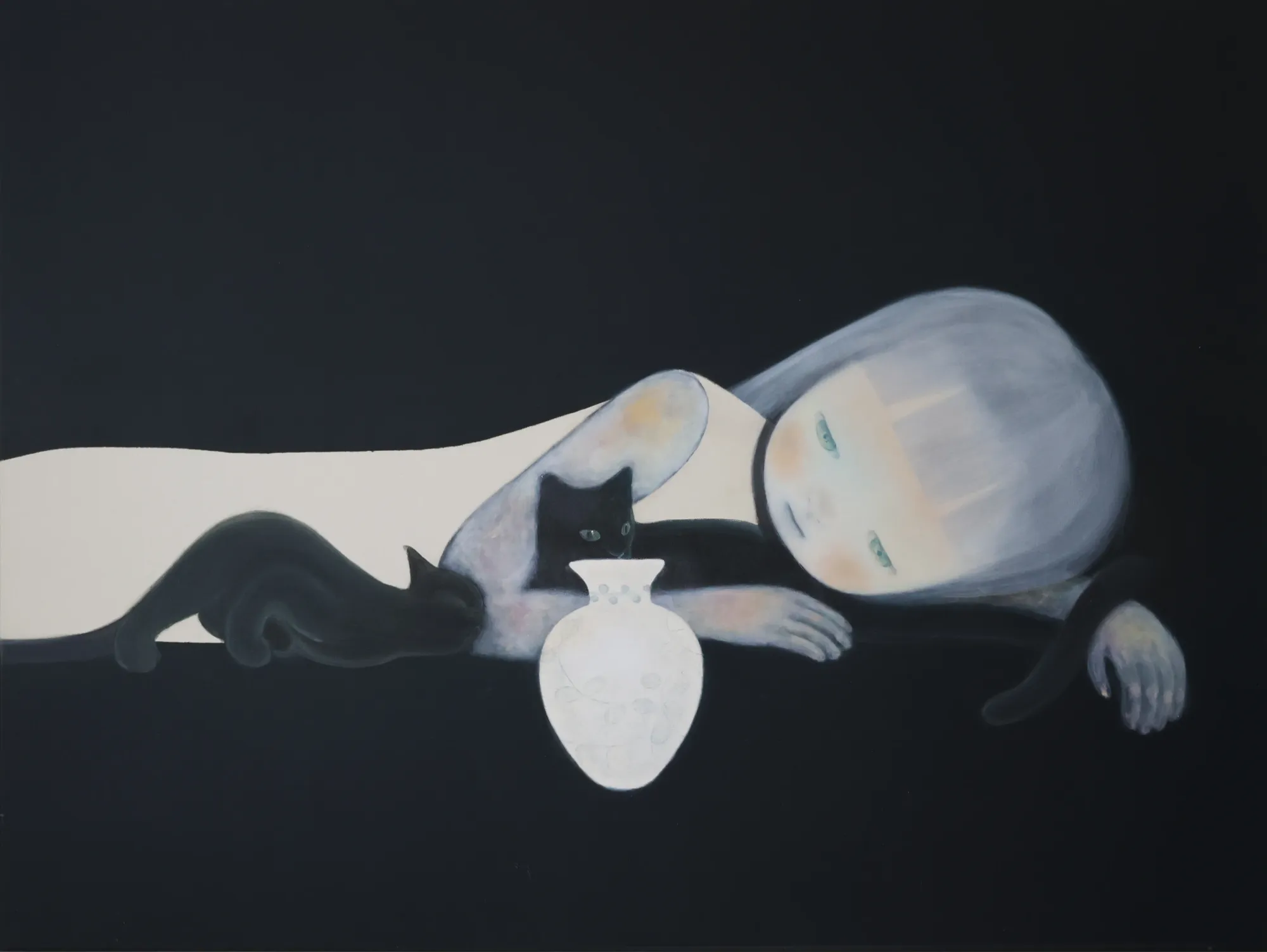
Wu's paintings operate through radical reduction. Monochromatic palette: glowing pale figures against absolute darkness. No background, no horizon line, no spatial reference. The blackness isn't empty space, it's dense, pressurized, physical. Like deep water or the inside of closed eyelids.
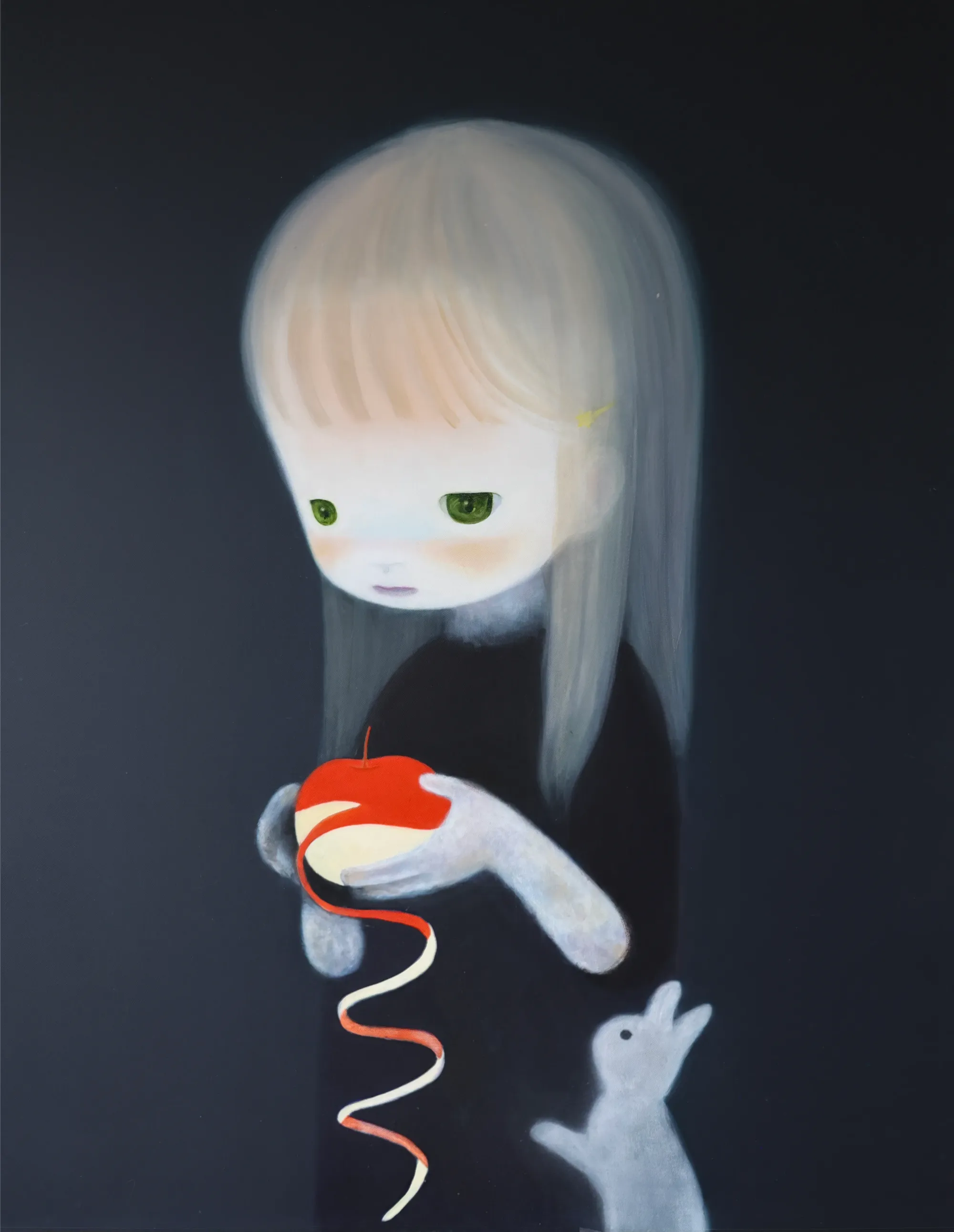
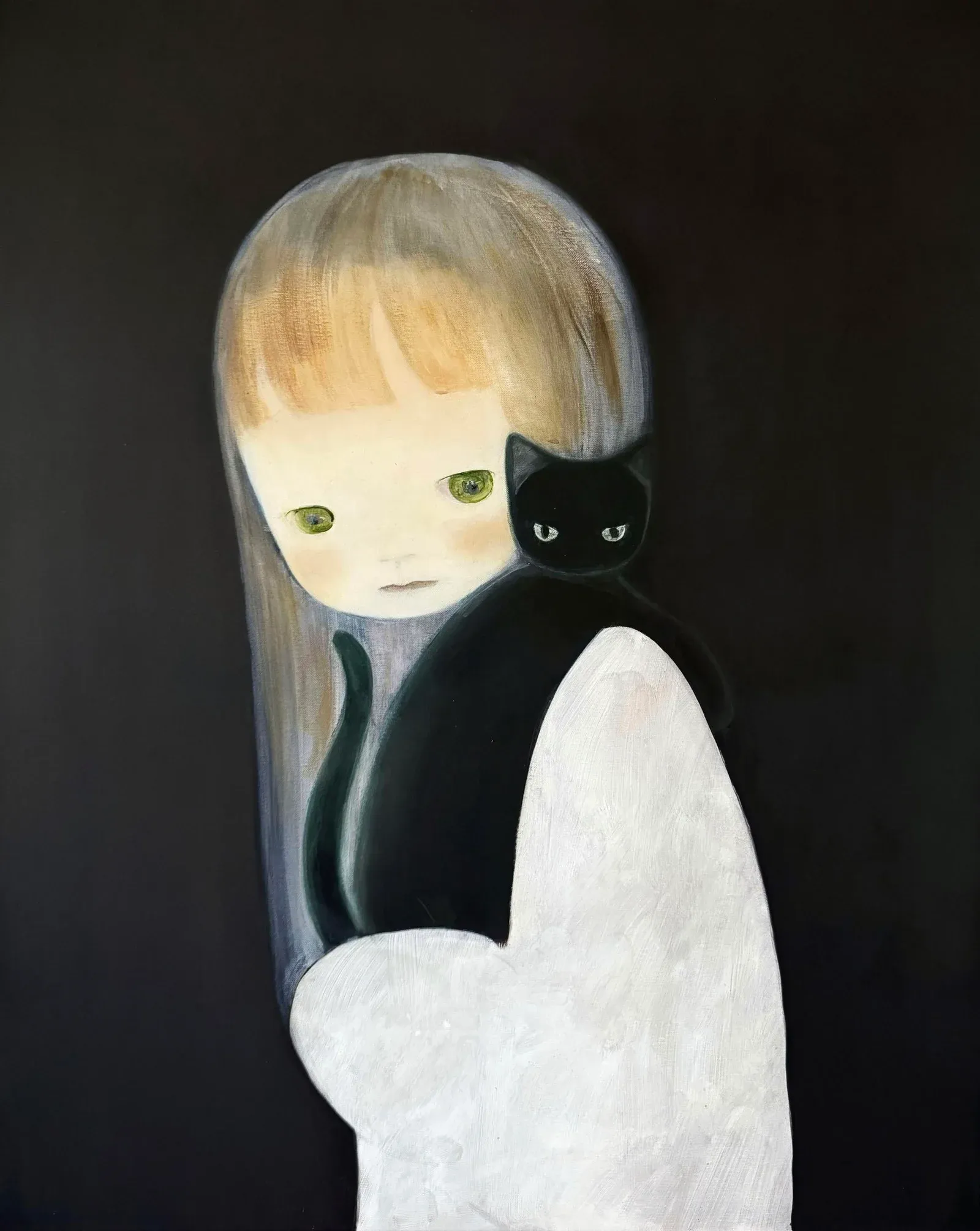
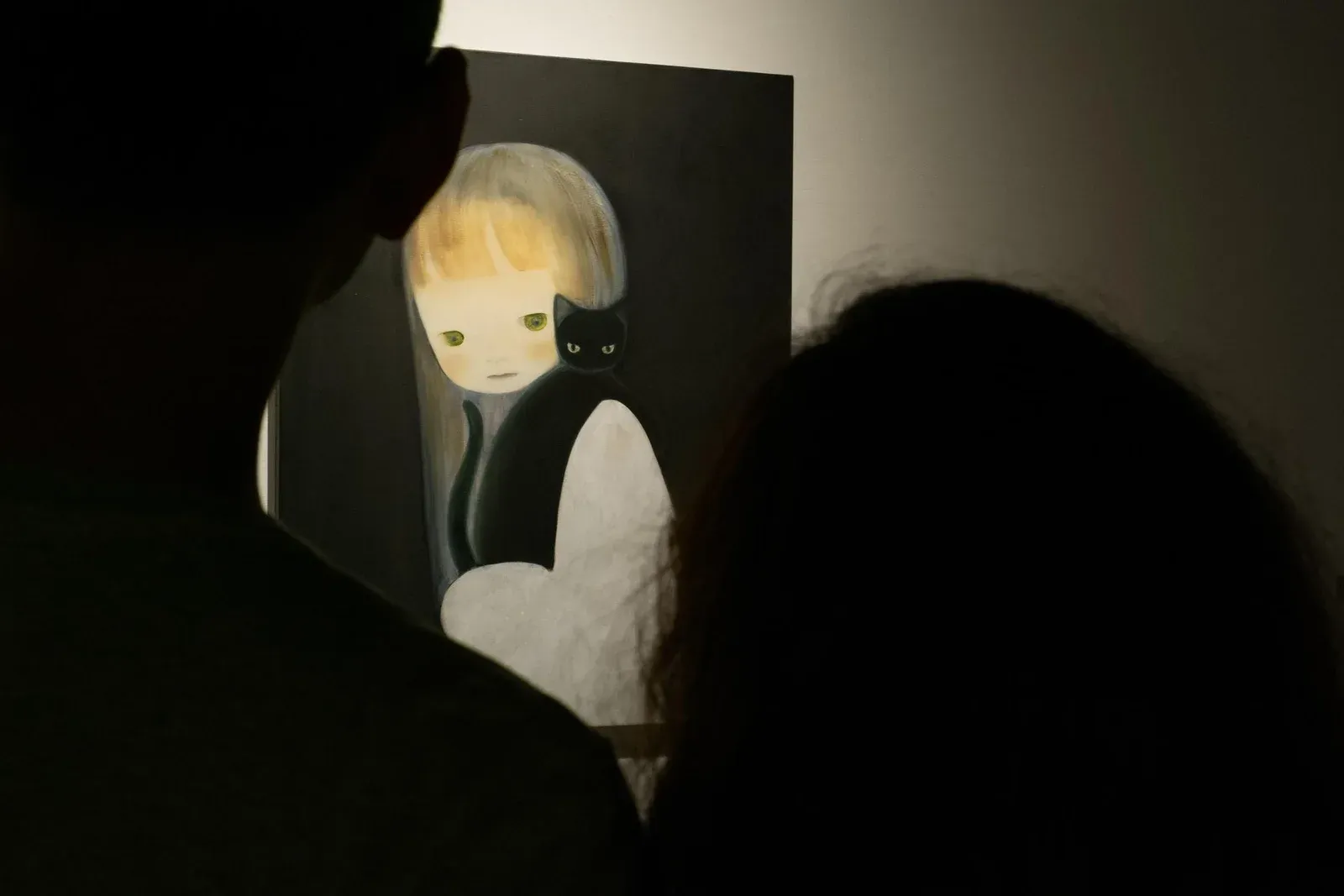
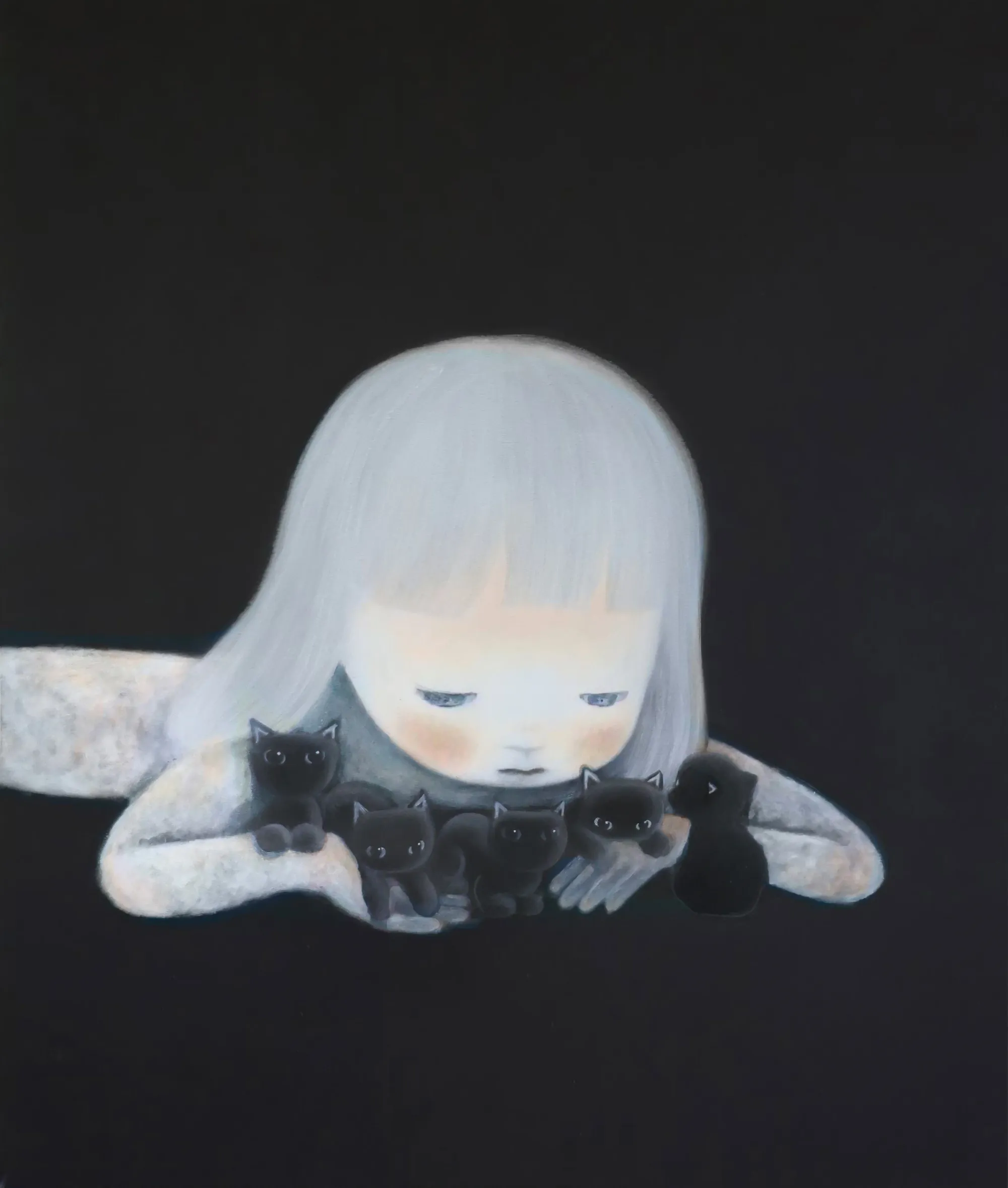
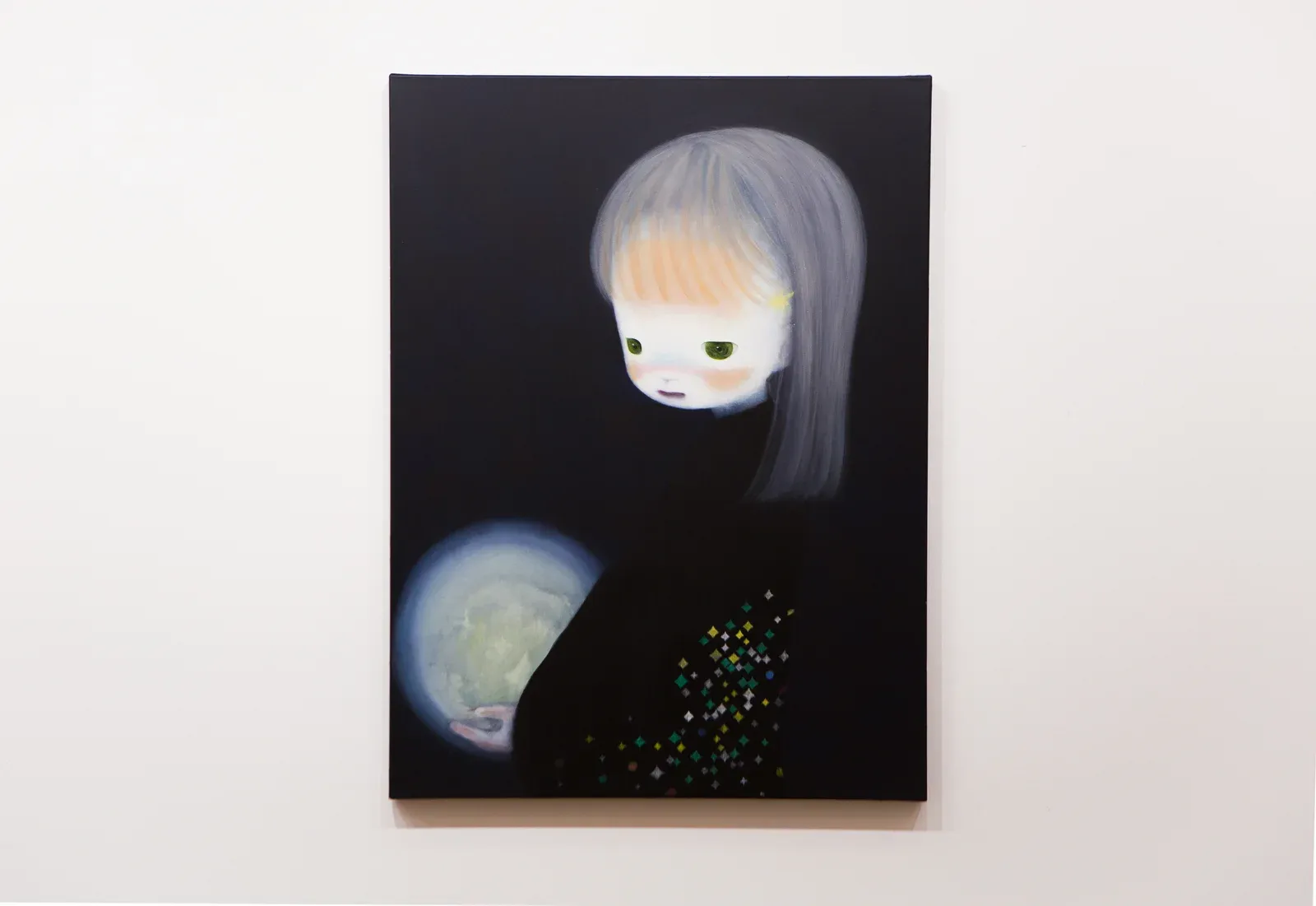
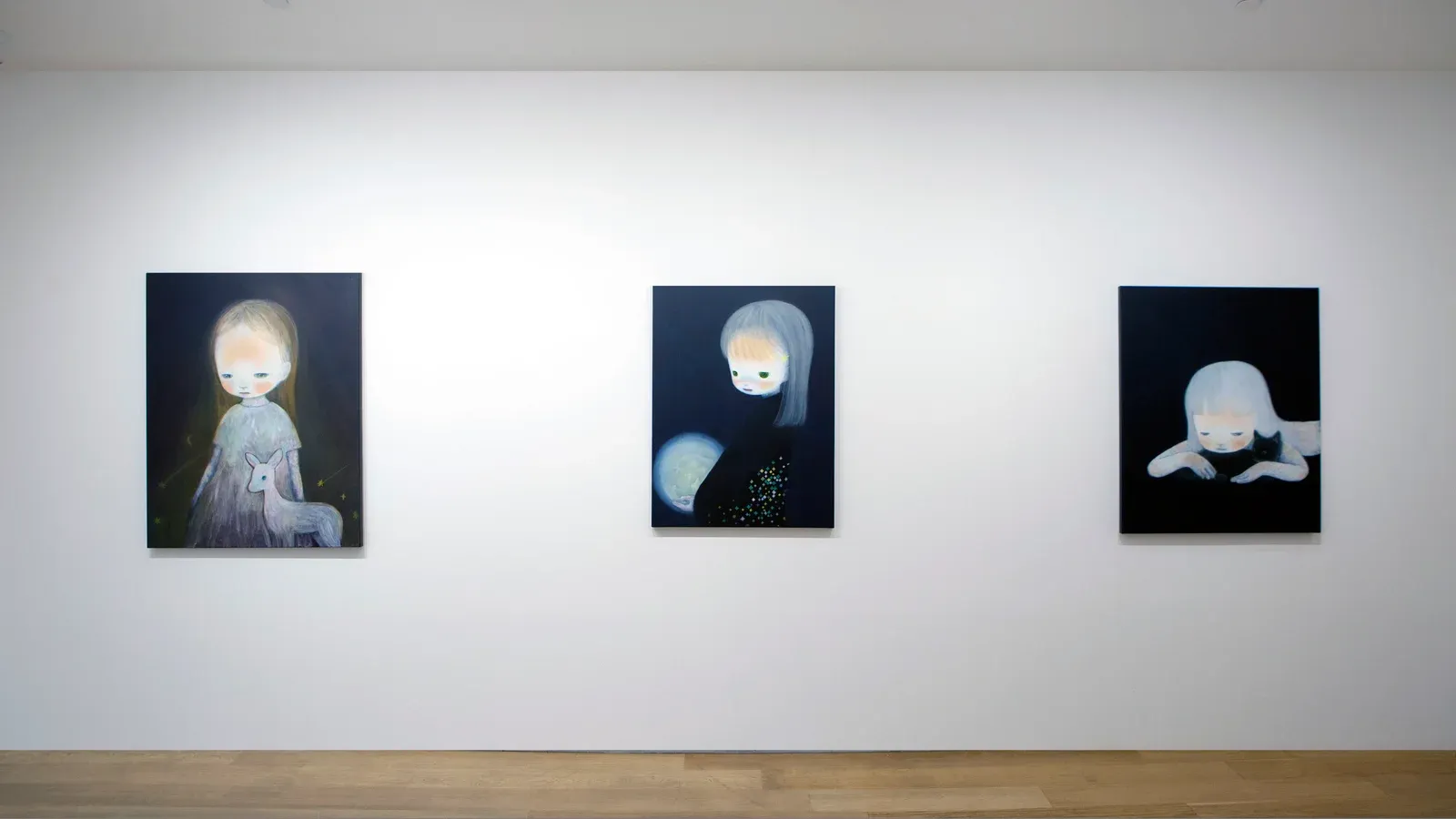
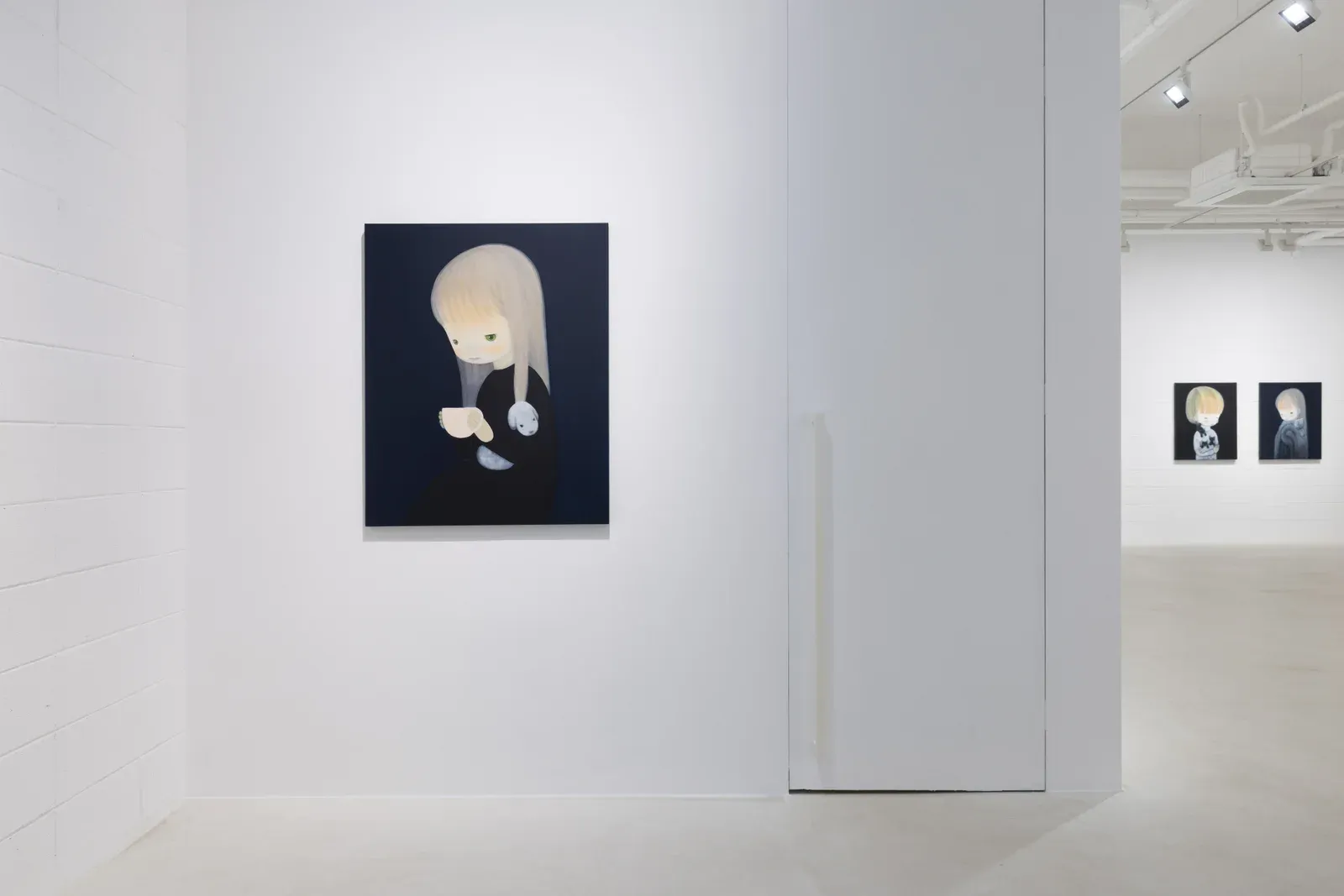
Ruo-Hsin Wu, Taste of Apple (left), 2025, Little Shadow (right), 2025 Acrylic on canvas, 100 × 75 cm and 100 × 80 cm Courtesy of the artist
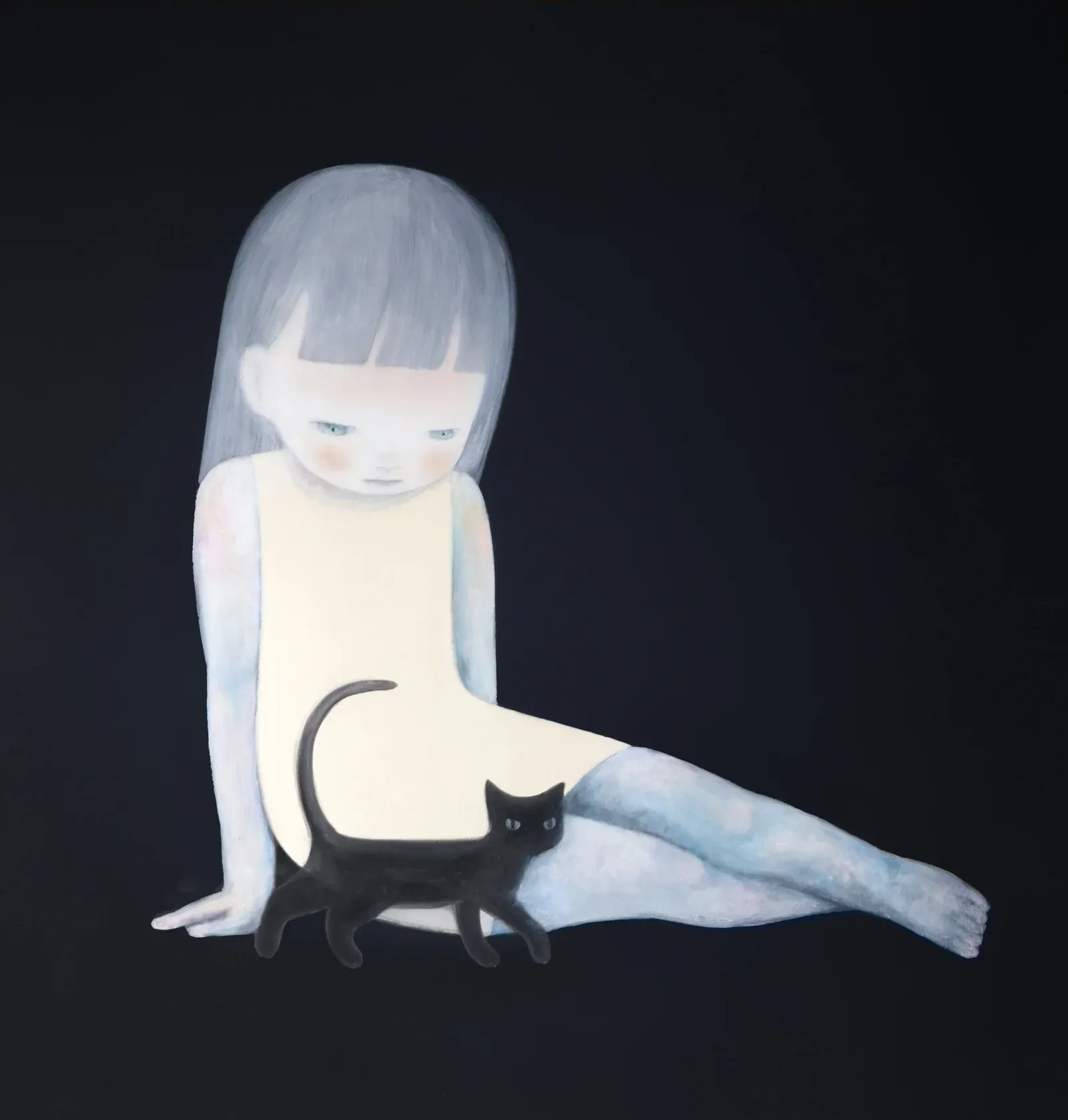
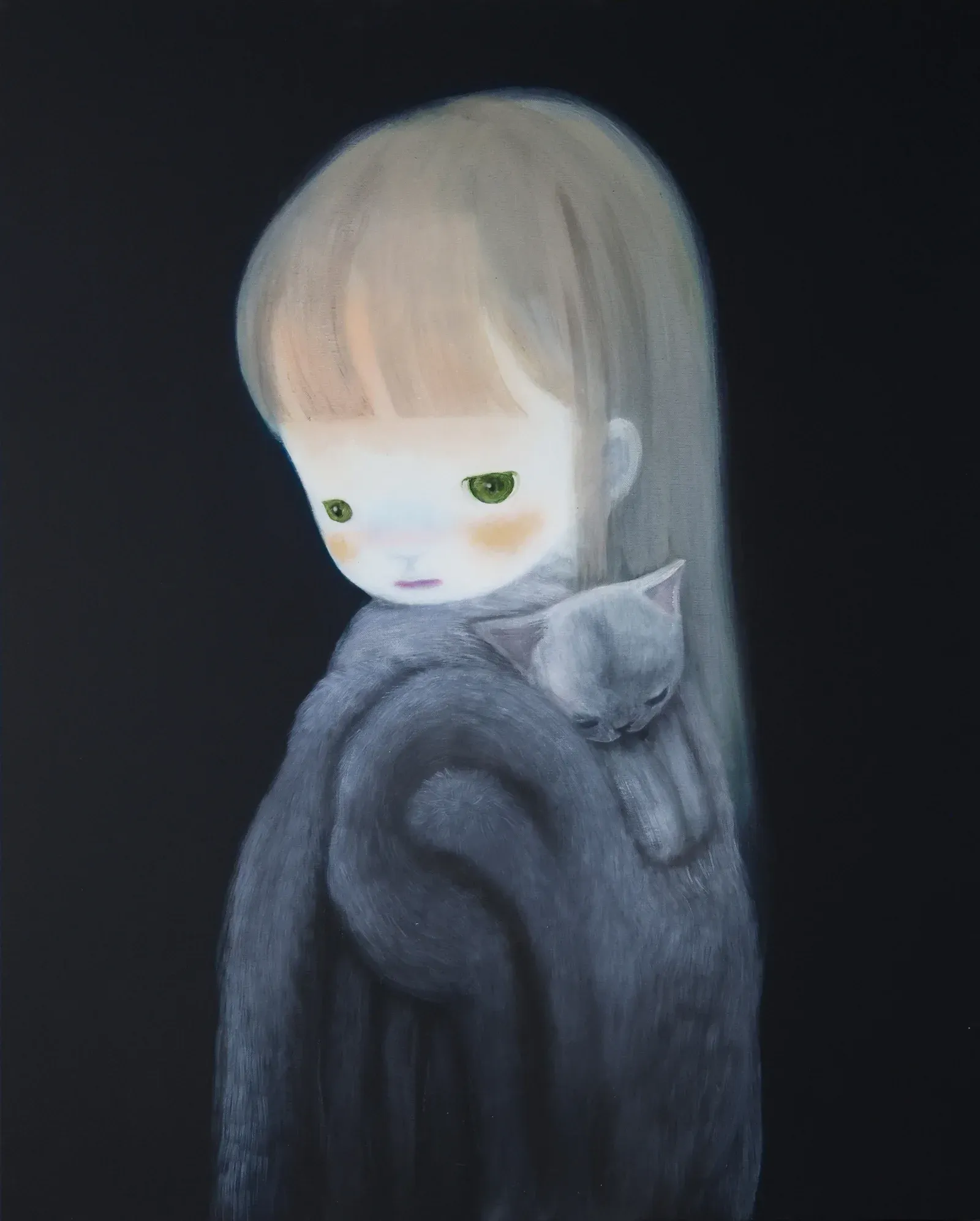
The figures themselves, child-like, sexless, faceless, emerge from this darkness with internal luminosity. Soft gradations from bone-white to shadow-grey. Hair rendered as solid shapes. Limbs elongated just past human proportion, creating the visual logic of bodies adapting to different physics.
No eyes. No mouths. No features to betray emotion or intention. Which means you project your own. The blankness isn't neutral, it's a mirror. What you see in these faces depends entirely on what you brought with you.
ALONE BUT NOT LONELY
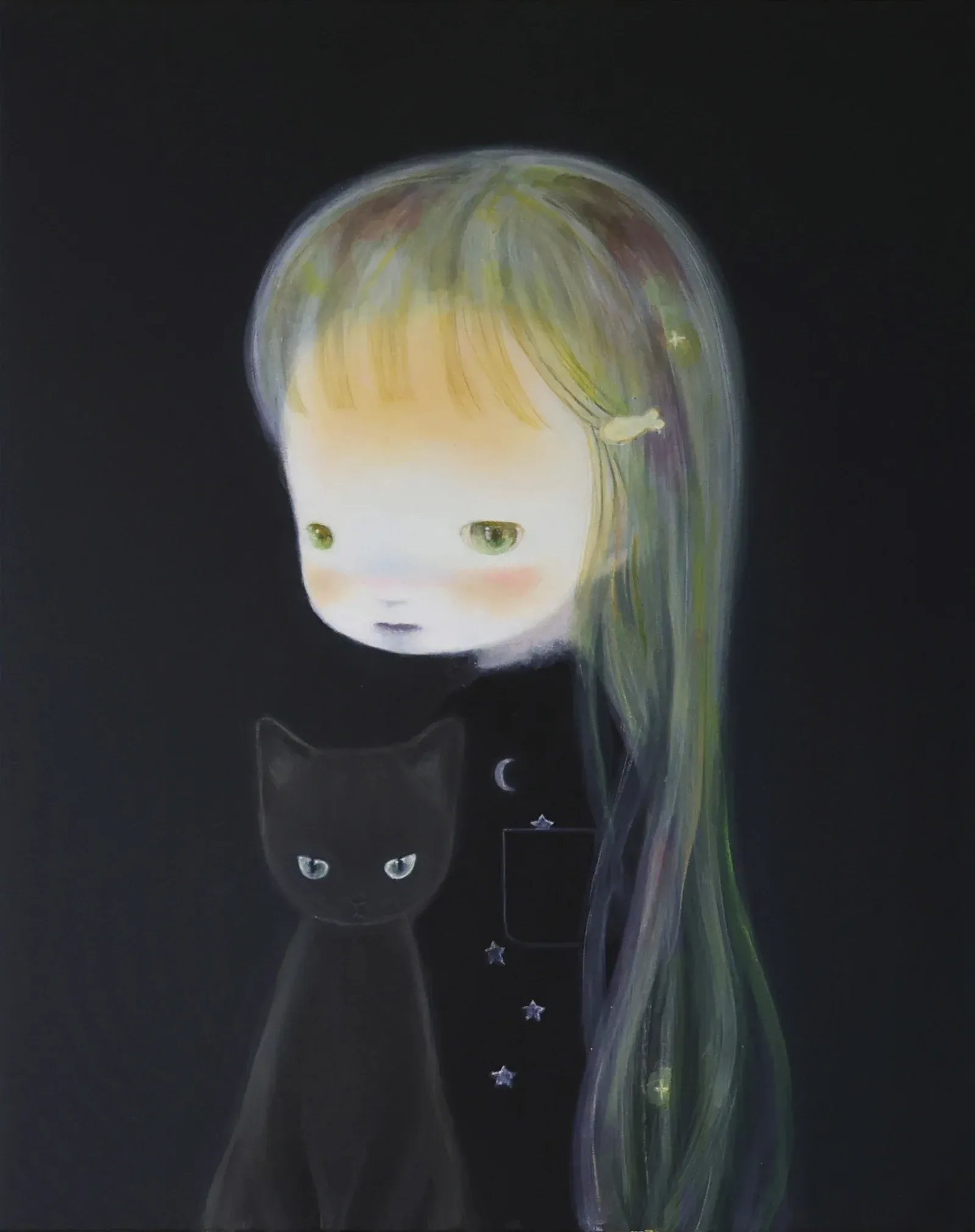
Almost every figure has something with them. A black cat pressed against pale skin. Fish circling in the void. Sea creatures drifting through the darkness. Small beings that establish scale and confirm: you're looking at solitude, not isolation.
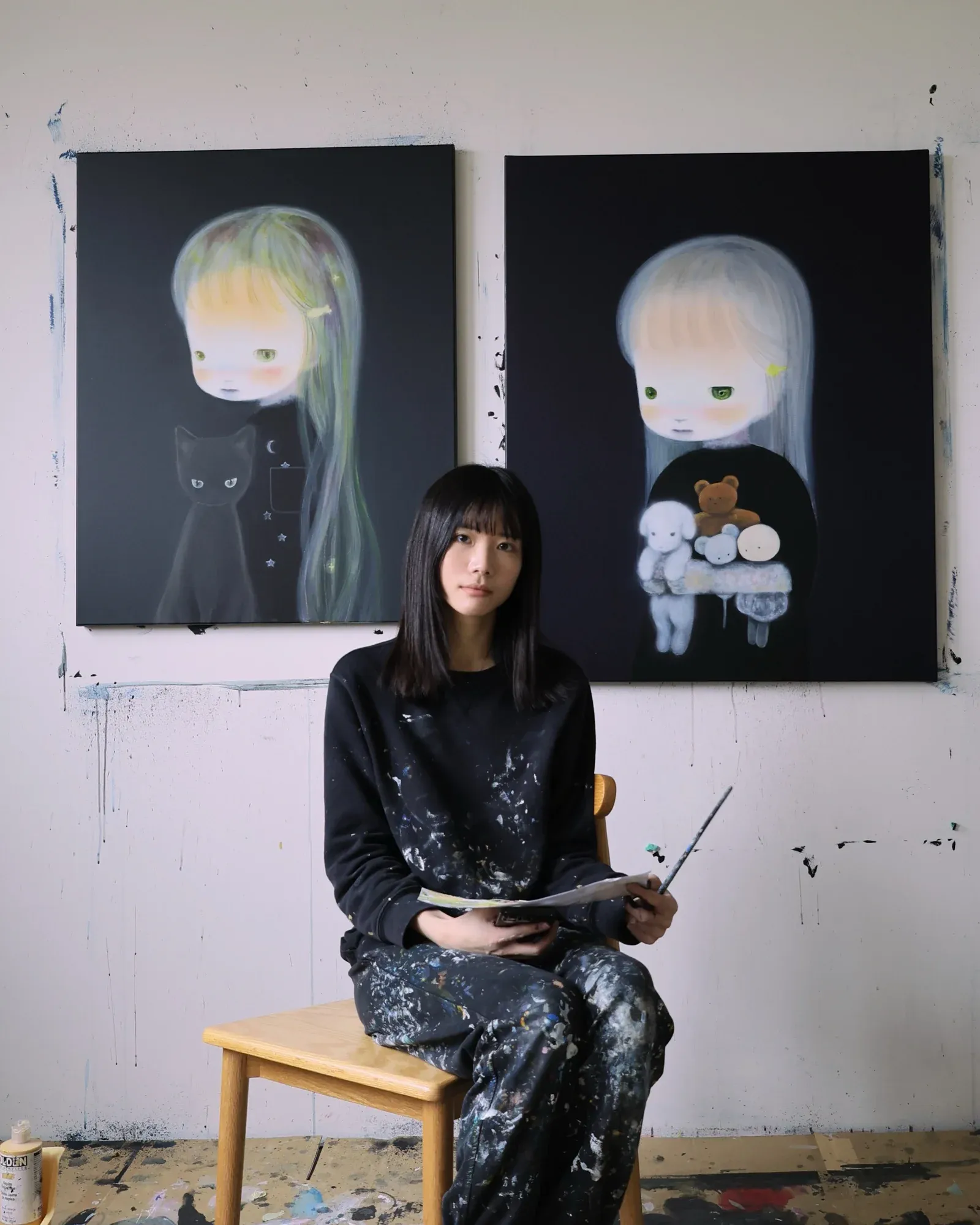
The distinction matters. Wu's figures choose to be alone. They're not abandoned or forgotten. They've found the exact distance from the world where companionship becomes optional but available. The cat in Little Shadow (100x80cm, 2025) isn't rescue, it's agreement. Two beings who understand that sometimes presence is enough.
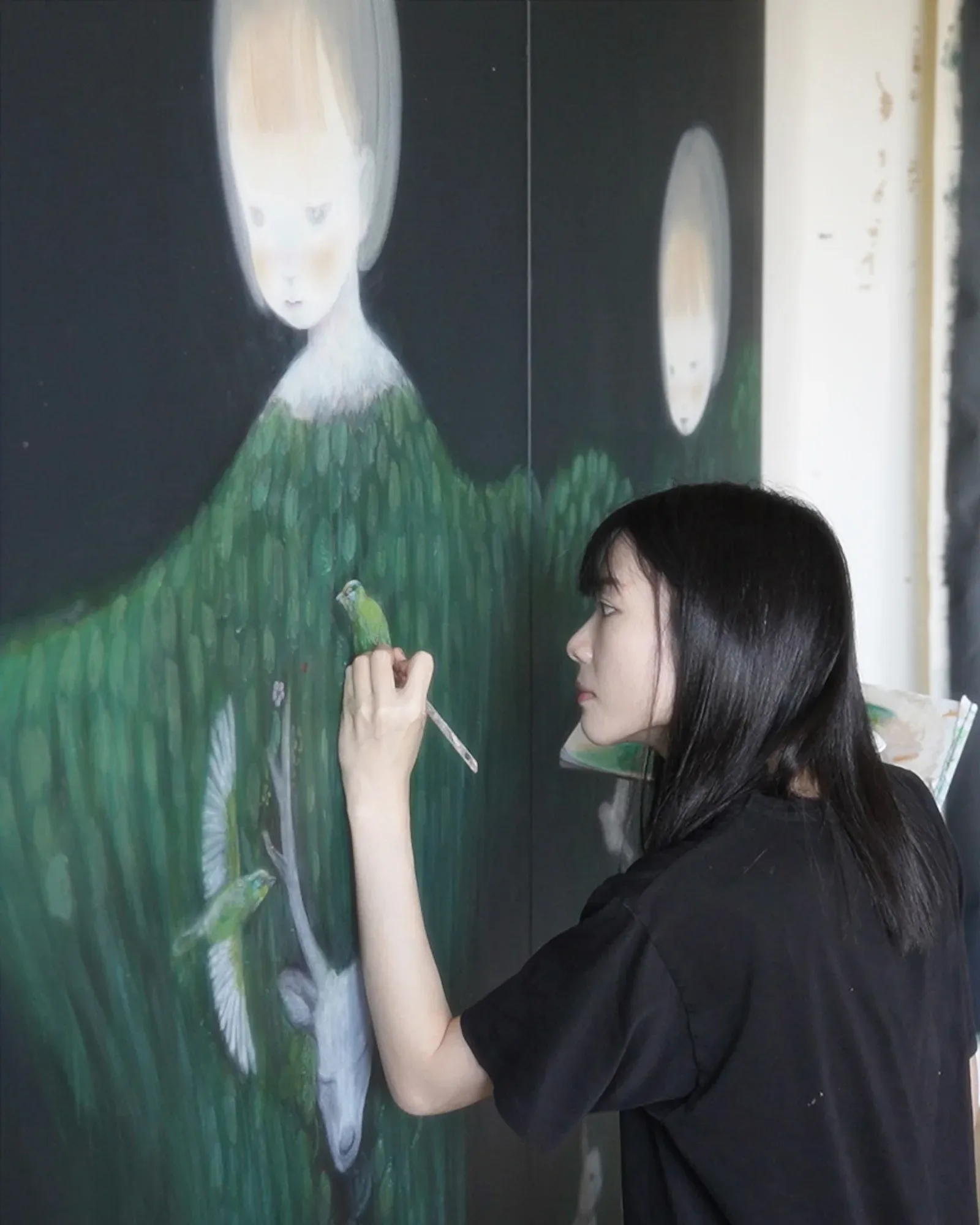
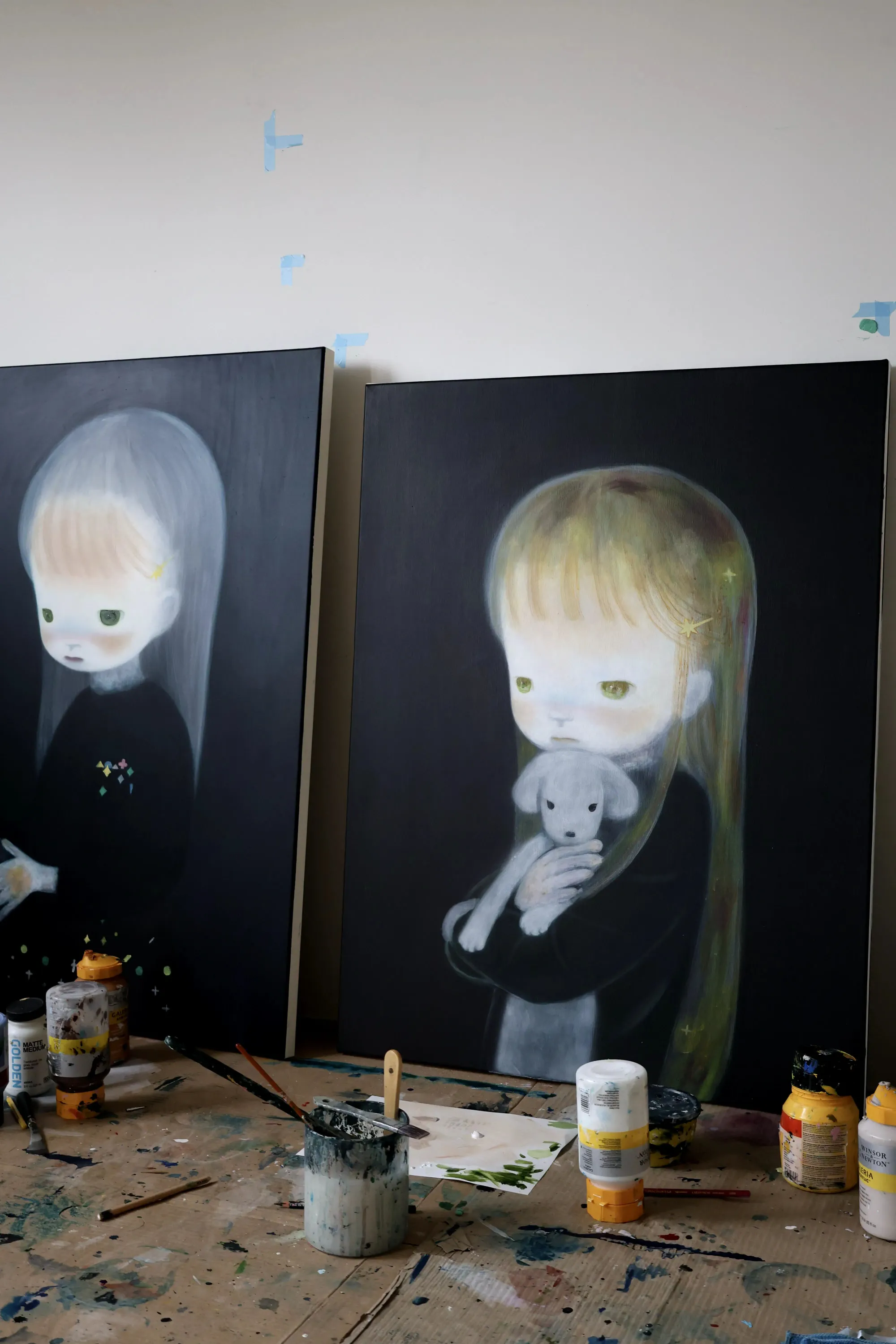
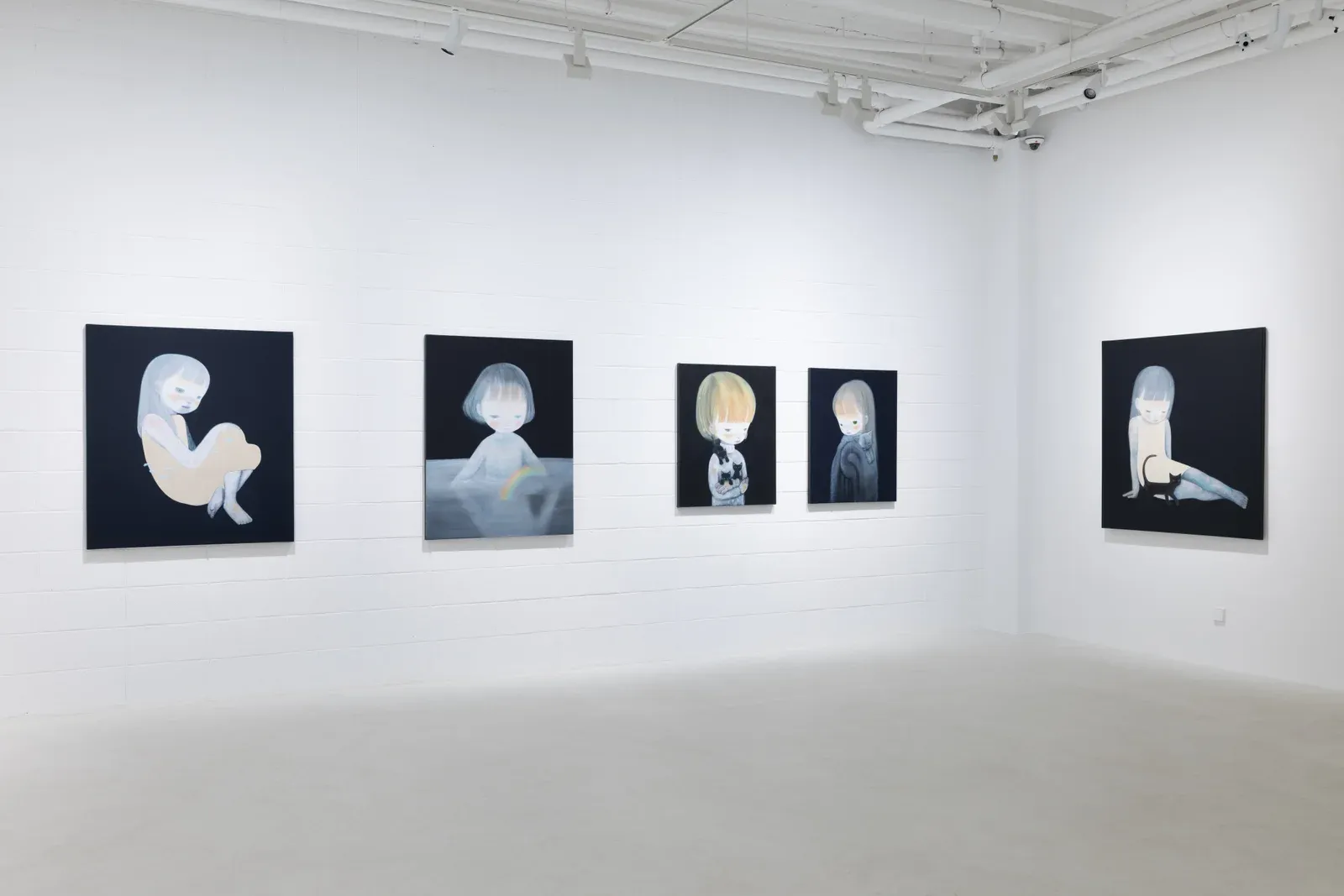
Ruo-Hsin Wu, studio views Left: the artist at work with an unfinished painting Right: studio view, Soka Art, Art Taipei Courtesy of the artist
This creates a paradox: the paintings feel deeply lonely and profoundly safe simultaneously. Because loneliness is being alone when you don't want to be. This is something else. This is finding the depth where you can finally stop performing.
MAKING LIGHT WITHOUT SOURCE
Wu works in acrylics on canvas, building luminosity through layering rather than contrast. The figures glow, but there's no light source. No sun, no lamp, no external illumination. The bodies generate their own visibility against the void.
This requires technical precision, too much white and the figure becomes opaque, loses the translucent quality. Too little and it disappears into darkness. Wu finds the exact threshold where a body remains visible while still feeling like it could vanish at any moment.
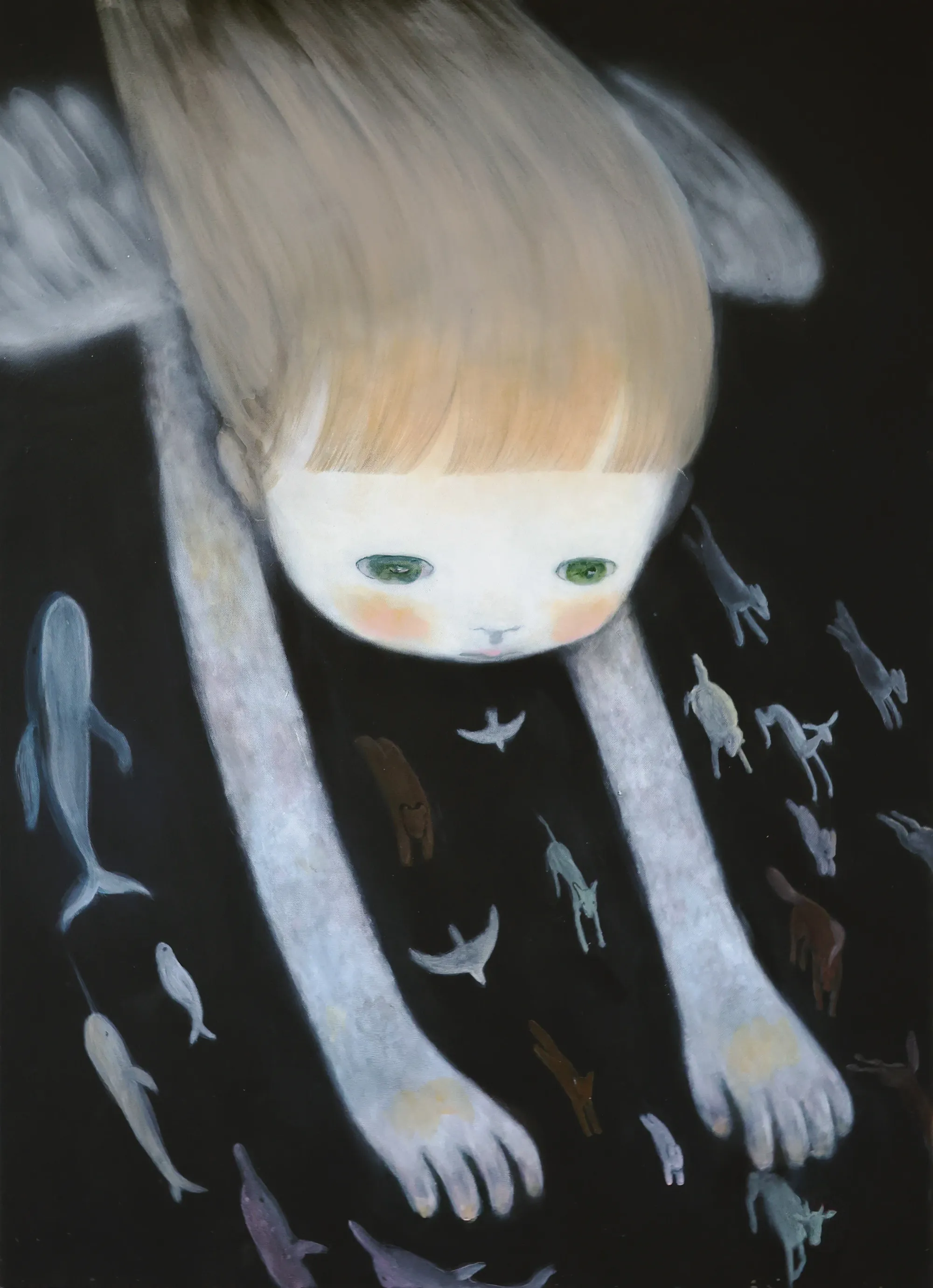
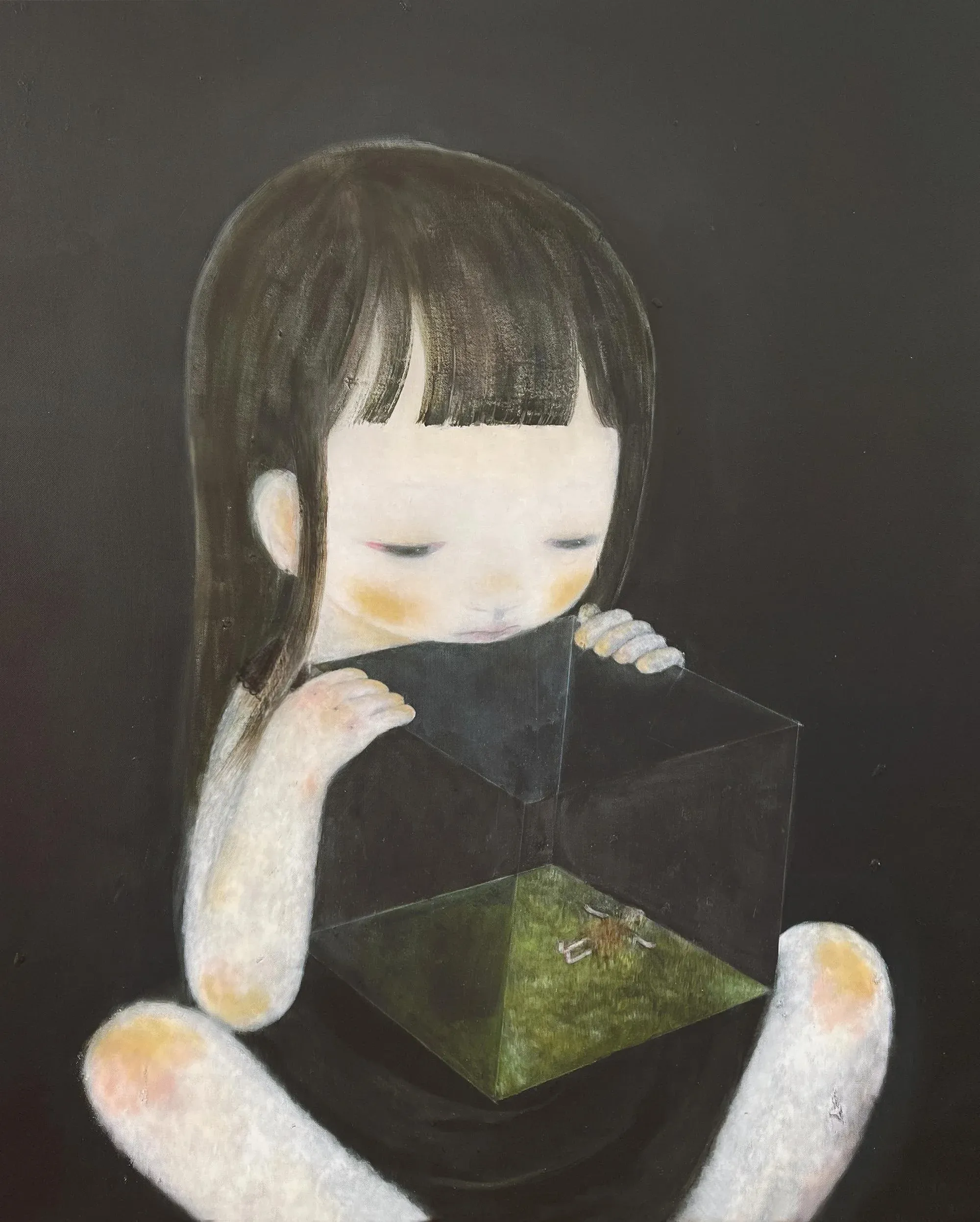
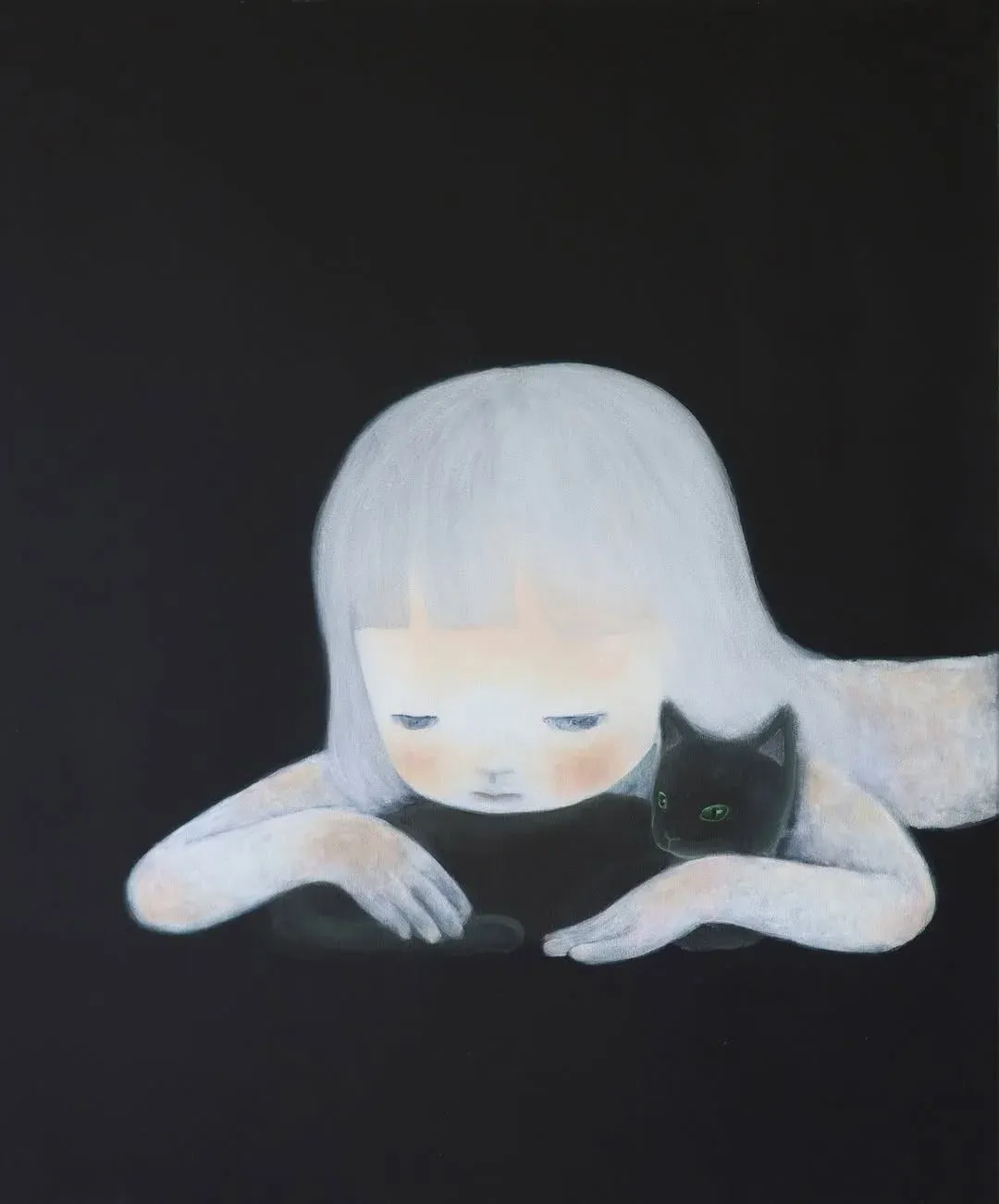
Ruo-Hsin Wu, Sunlight, Air, and Water (left), 2022, Summer Night I (right), 2024 Acrylic on canvas, 91 × 72.5 cm and 113 × 91 cm Courtesy of the artist
The darkness itself is worked. Multiple layers of black creating depth variation you can sense but not quite see. Like looking into deep water where you know there are gradients of pressure and temperature even though it all reads as one color.
WHY THIS MATTERS NOW
We're living through maximum connectivity producing maximum exhaustion. Every platform demands presence, performance, constant availability. Wu's paintings offer an alternative: what if you could just sink? Find the depth where light doesn't reach and pressure equalizes and nobody expects you to smile or speak or perform identity?
The facelessness matters. When you can't see your own face, you can't be seen wrong. The darkness isn't punishment. It's permission to stop being legible.
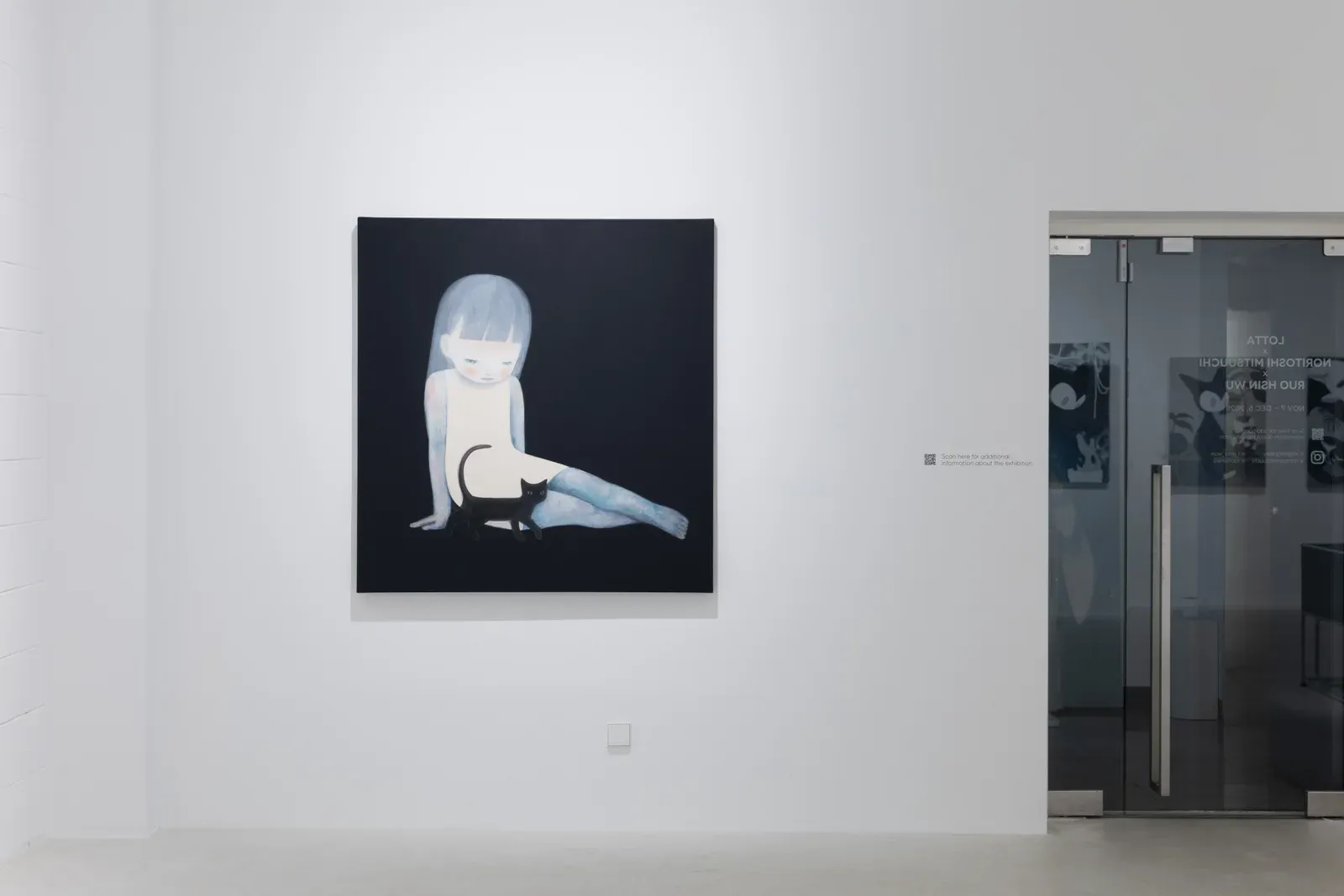
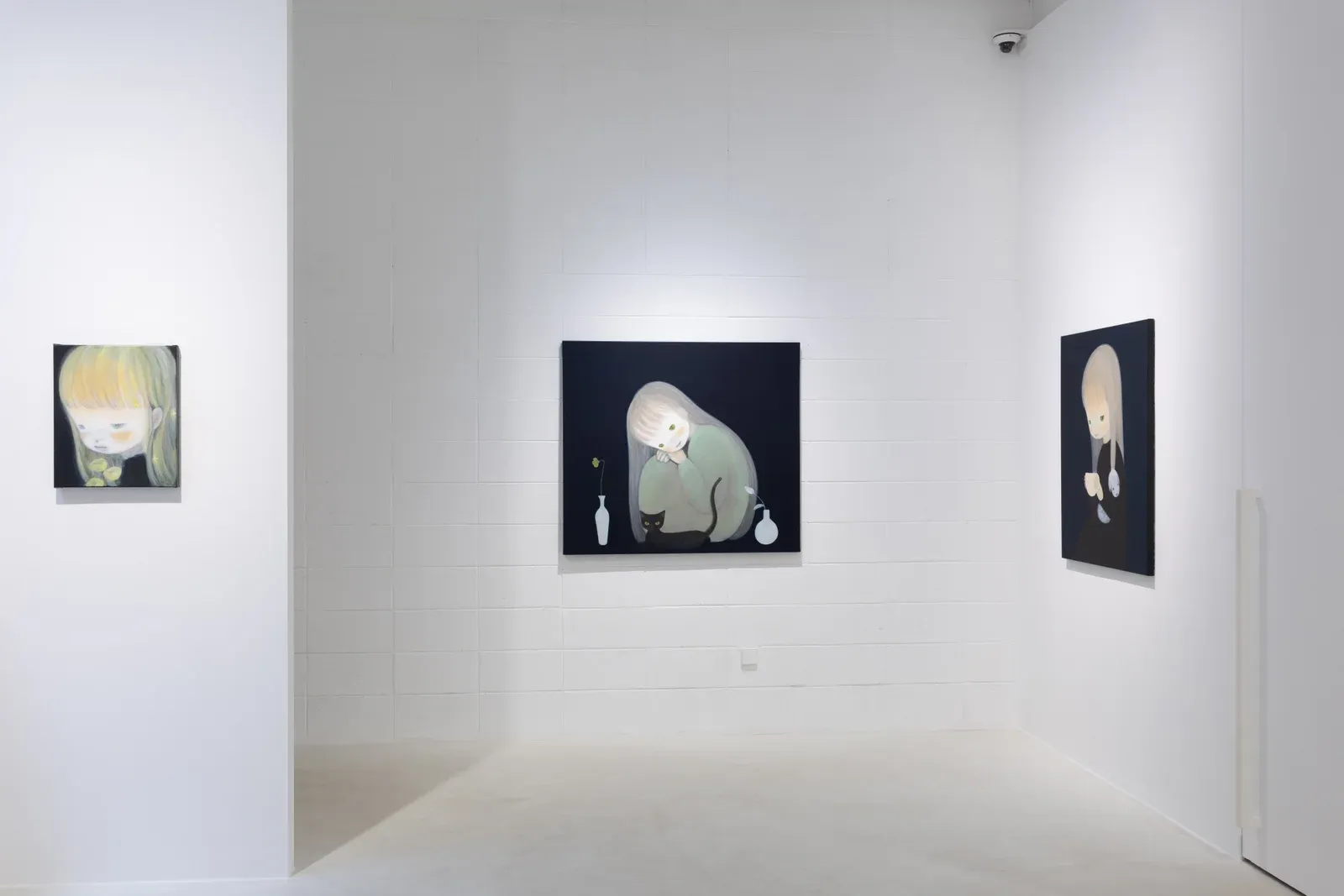
THE UNDERWATER LOGIC
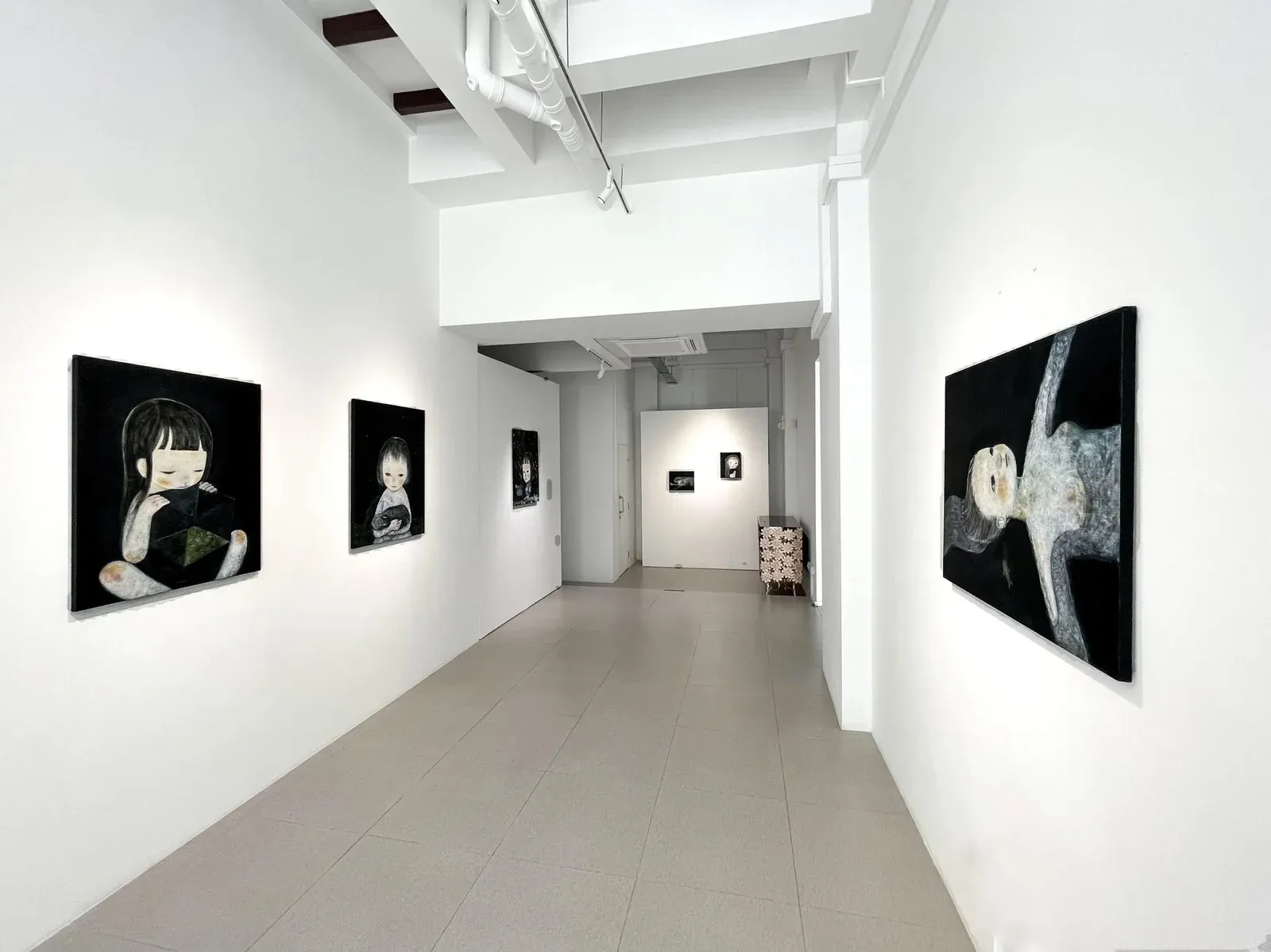
Bodies don't stand or sit, they float, suspended in poses only possible without gravity. Hair drifts upward. Limbs extend in directions that would collapse under normal weight.
Waves (116x91cm, 2024) makes this explicit: a pale figure floating horizontally, surrounded by sea creatures and coral forms. Not swimming. Not drowning. Just existing in a medium that holds you without asking anything back.
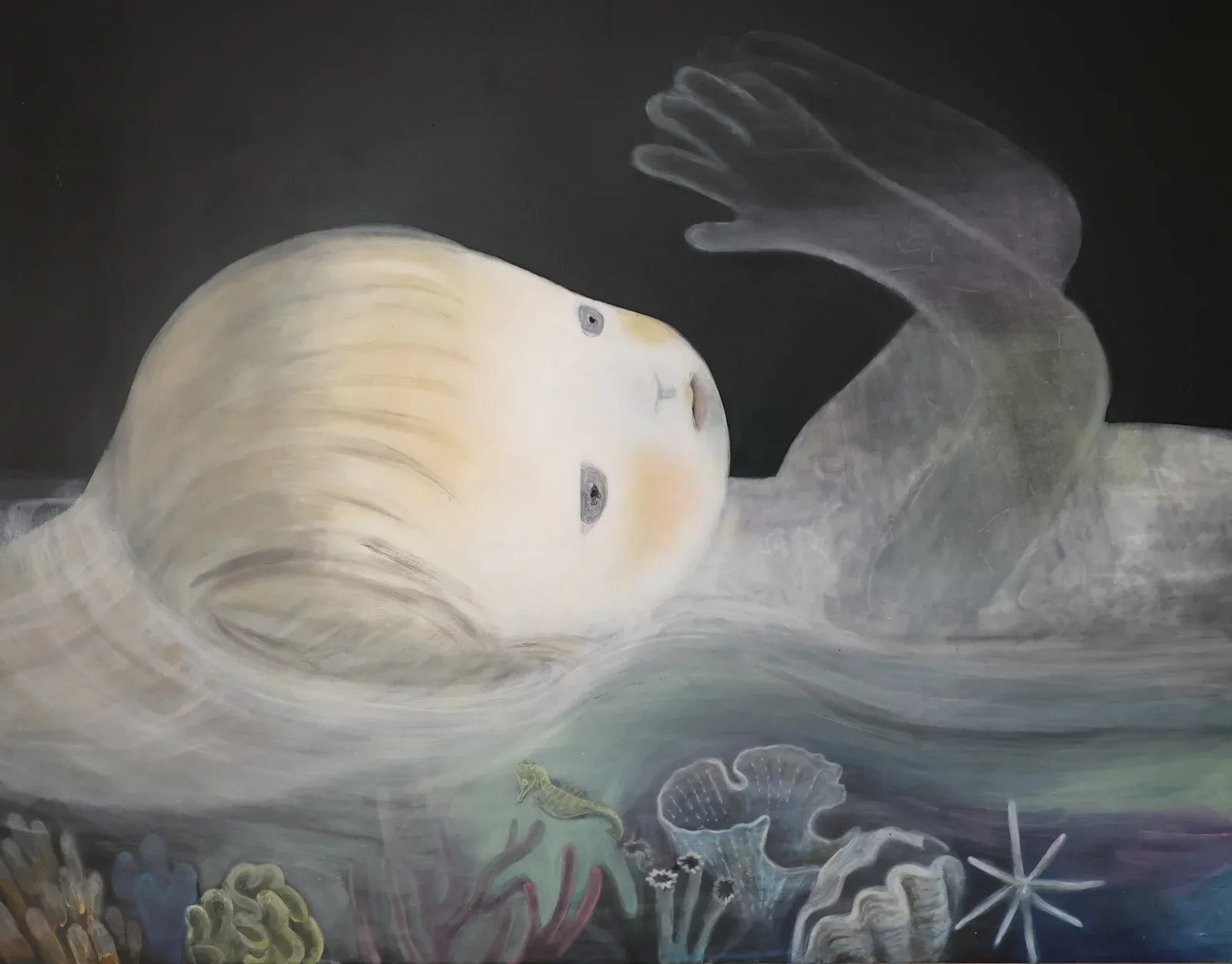
Summer Night I (113x91cm, 2024) shows a figure submerged in what could be water or darkness, the distinction becomes meaningless. What matters is the sensation: weightless, pressure-neutral, safe from the crushing demands of air and light and being seen.
CHILDHOOD FORMS, ADULT LONELINESS
Wu's figures read as children, the proportions, the vulnerability, the blank faces, but carry adult emotional weight. Because children don't choose solitude. They experience it as abandonment. These figures have made an active decision to find the dark and stay there.
The safety we associate with childhood, before identity hardens, before performance becomes mandatory, is only accessible now through active withdrawal. You can't go back. But you can sink to a depth where those pressures stop reaching you.
The black cats and small creatures aren't childhood companions. They're what remains when you strip away everything else. The beings who stay when you stop being interesting or useful or performatively present.
WHAT STAYS IN THE DARK
If you could stop being seen, what would you keep? Wu's paintings suggest: very little. A body. Maybe something small and warm. The ability to float. That's enough.
The work doesn't romanticize isolation. It documents a survival strategy for people who find the world's demands structurally unbearable. Not temporary exhaustion that rest can fix. Fundamental incompatibility with the speed and visibility contemporary life requires.
These aren't paintings about depression. They're paintings about finding sustainable depth. The exact distance from the surface where you can still breathe but nobody can see you breathing wrong.
THE REAL QUESTION
Where do you go when the world gets too heavy? Wu's answer: down. Find the depth where gravity releases you, where light stops reaching, where the only thing that matters is whether something small chooses to stay.
The darkness isn't the end. It's the depth where you can finally stop falling.
ABOUT THE ARTIST
Ruo-Hsin Wu is a Taiwan-based painter working in acrylics on canvas. Her work explores solitude, emotional interiority, and psychological states through faceless child-like figures suspended in darkness.
Currently showing at Eligere Gallery, Seoul (through January 16, 2026) and upcoming at Art SG, Singapore with Kaikai Kiki Gallery (January 23–26, 2026).
EXHIBITION DETAILS
Lotta × Noritoshi Mitsuuchi × Ruo-Hsin Wu Trio Show
Eligere Gallery, Seoul
November 7, 2025 – January 16, 2026
Art SG 2026 (Group Show)
Kaikai Kiki Gallery, Tokio
January 23–26, 2026, Singapore
VISIT / ENGAGE
Follow Ruo-Hsin Wu on Instagram for studio process and new work.
Think this resonates? Share with someone who understands the need to float. Tag @munchiesart.club and tell us: where do you go when gravity becomes unbearable?
More artist to watch
No spam, no sharing to third party. Only you and me.