Paul Riedmüller: Painting the Digital Hallucination
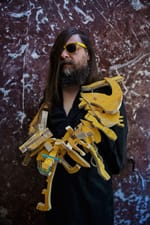
Paul Riedmüller Interview: AI, Airbrush & Hyperreality
Paul Riedmüller paints like someone decelerating a crash. His canvases begin as digital composites: AI hallucinations, 3D renders from Blender, stock photography scraped from the endless scroll. What emerges through weeks of airbrushing and oil painting is something that feels simultaneously hyper-familiar and strangely dislocated from reality.
Based in Vienna, Riedmüller reverses the usual flow. Untextured 3D models, meme-adjacent clipart, the kind of PNG files you would normally scroll past: these disposable artifacts of internet culture are granted the slow, meditative attention once reserved for aristocratic portraiture.
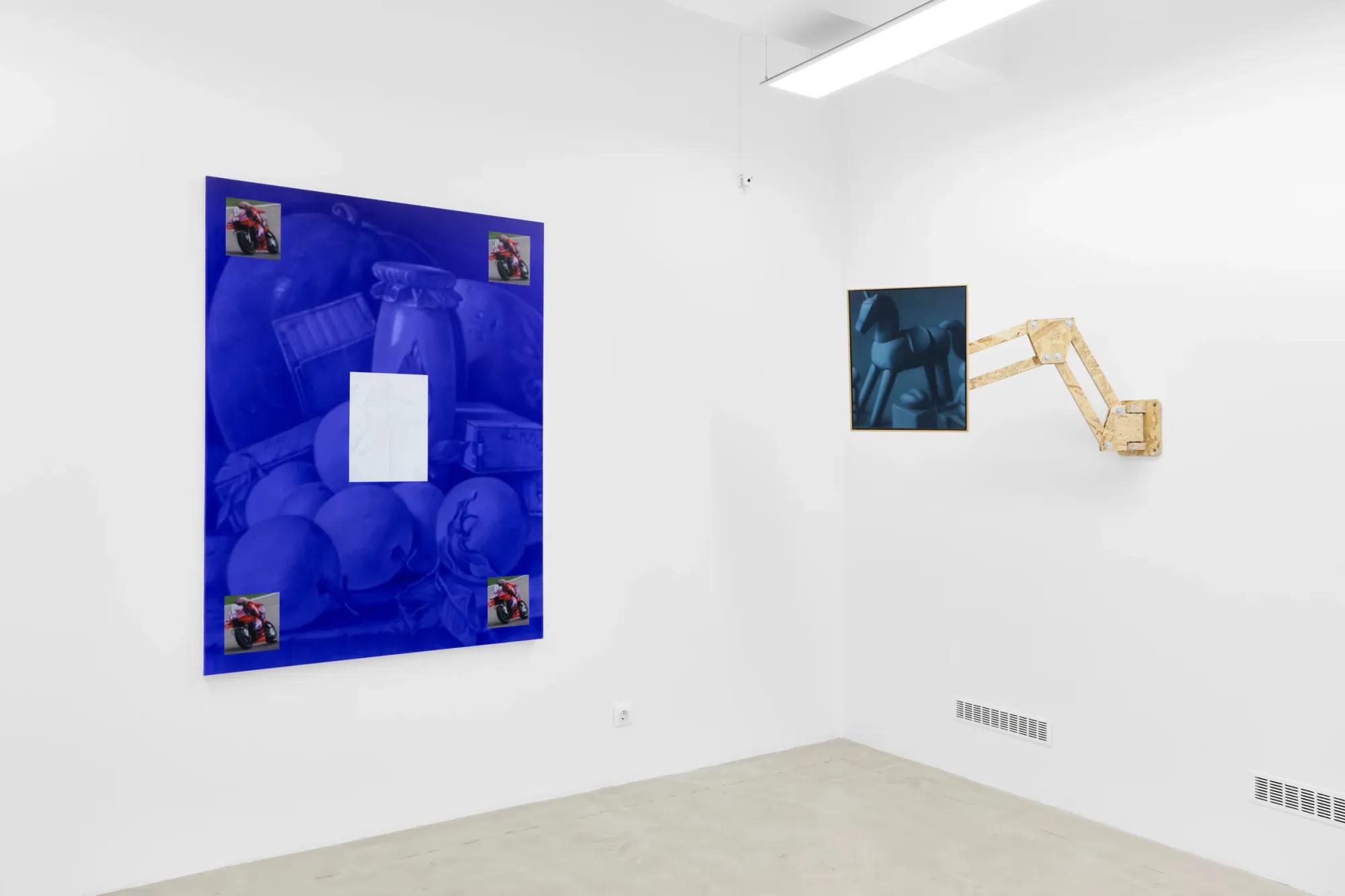
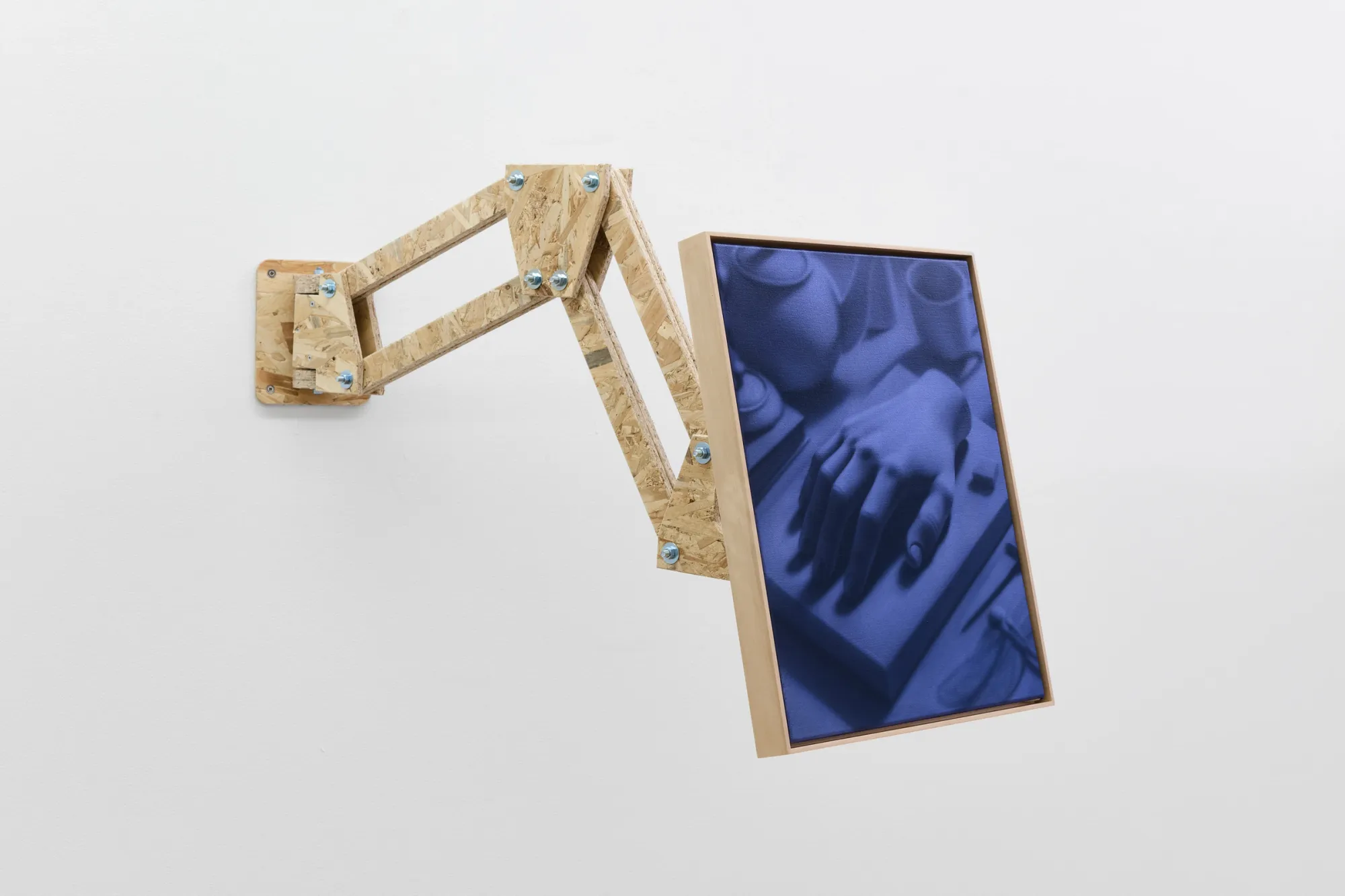
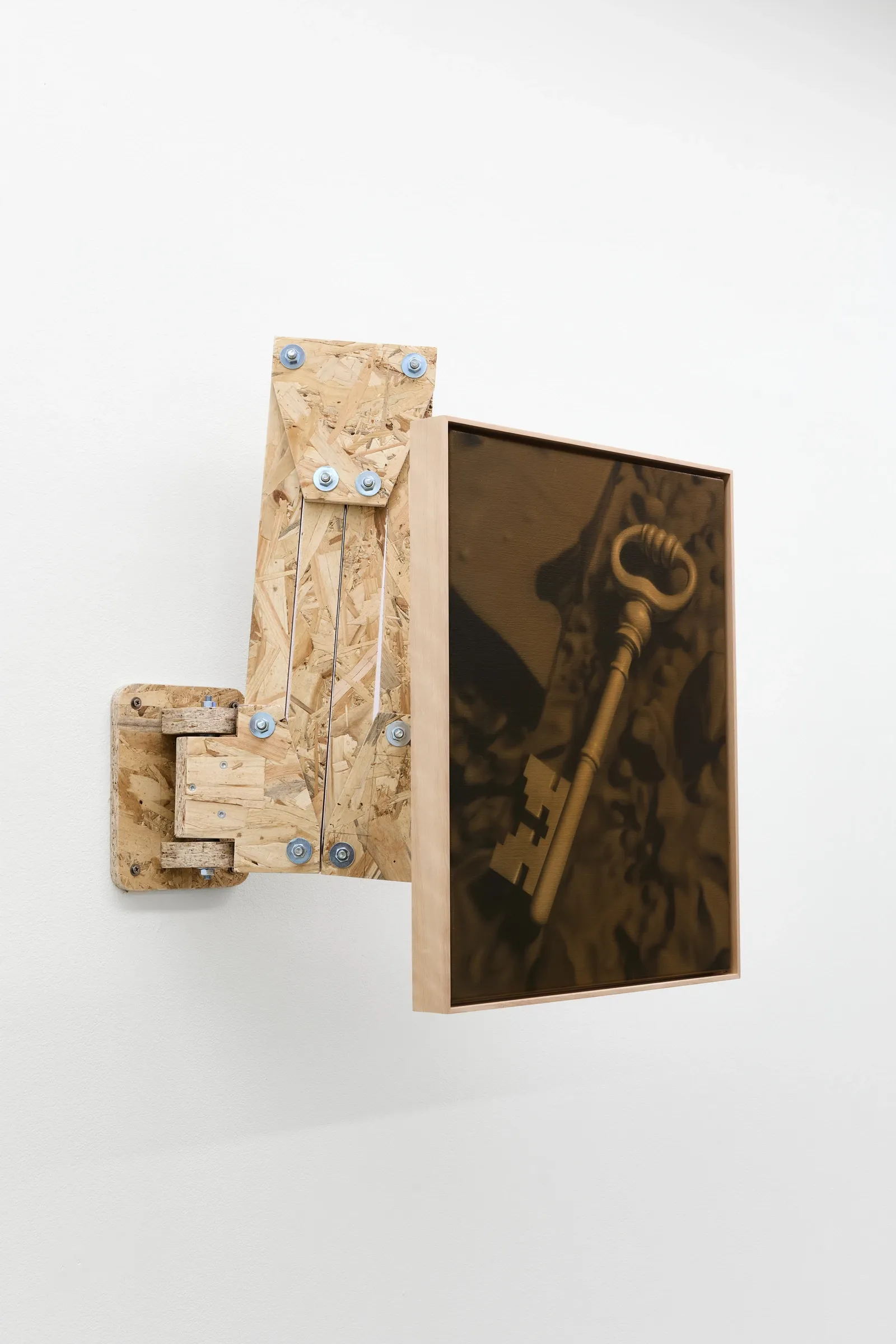
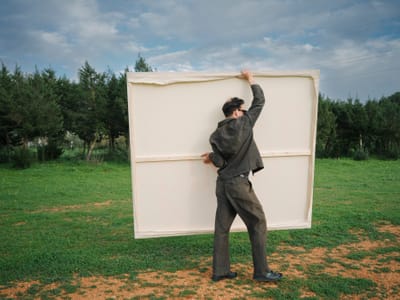
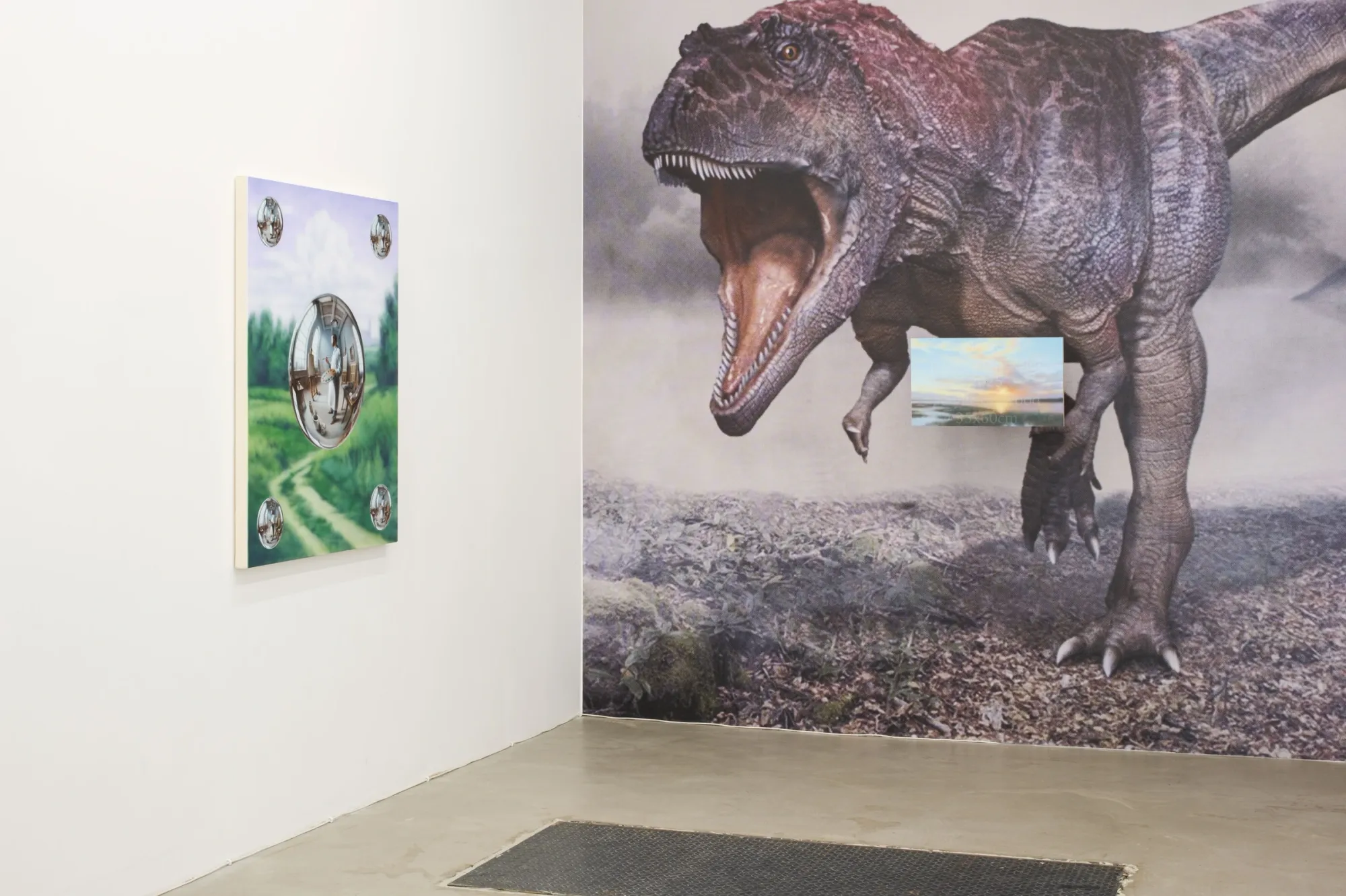
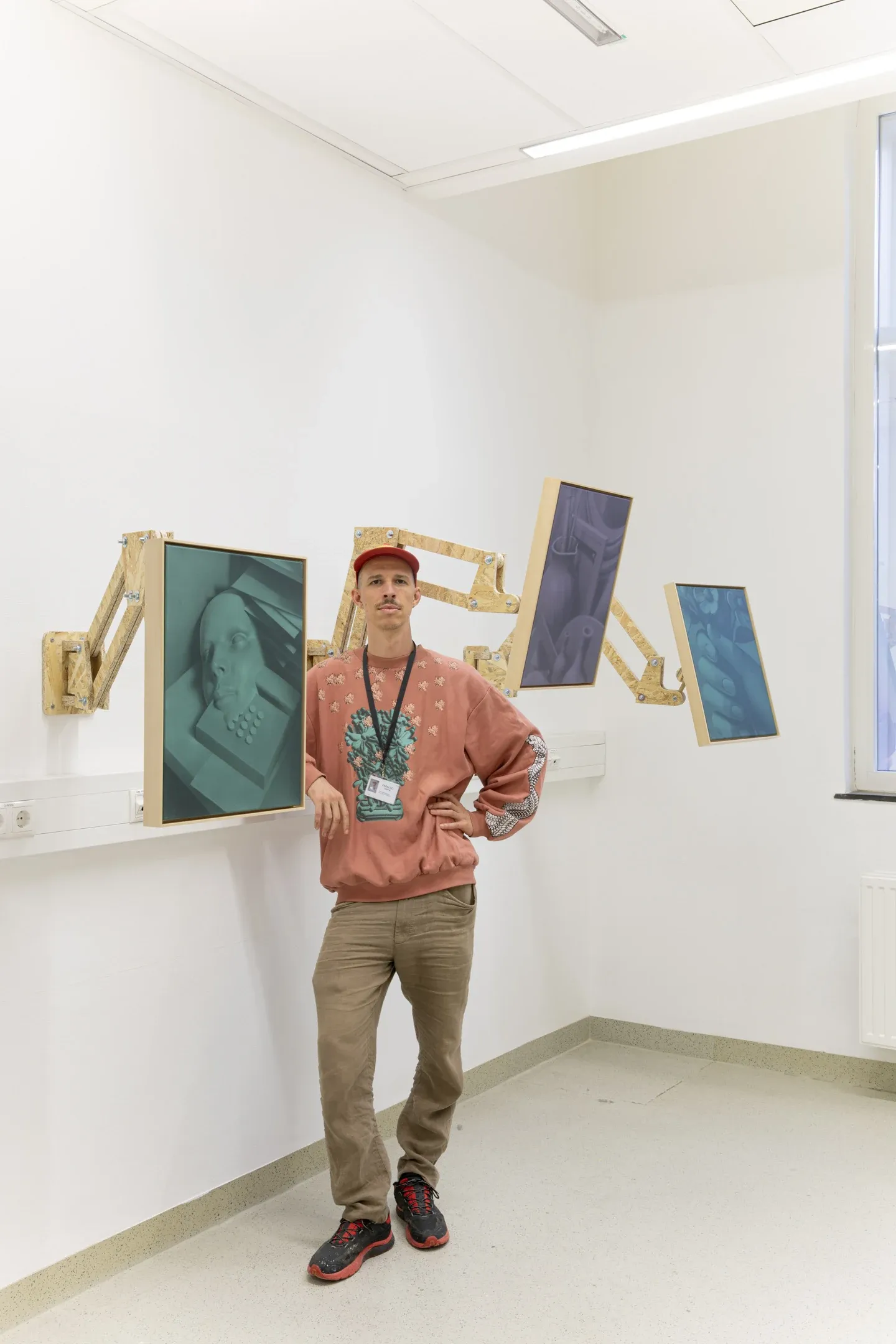
Paul Riedmüller: Installation view, Horizont Gallery Solo Show, Budapest. Photo by Dávid Biró. Image courtesy of the artist and Horizont Gallery.
What gives the work particular urgency is how seamlessly it moves between worlds. Images born from digital sources become painstakingly crafted physical paintings, mounted on wooden structures that extend into gallery space, before re-entering circulation as photographs on social media. The loop is not critiqued from the outside. It is inhabited from within.
In the following conversation, Riedmüller talks about reversing the flow from screen to canvas, the conceptual role of the airbrush, and what it means to paint at a moment when machine hallucination has become part of everyday visual culture.
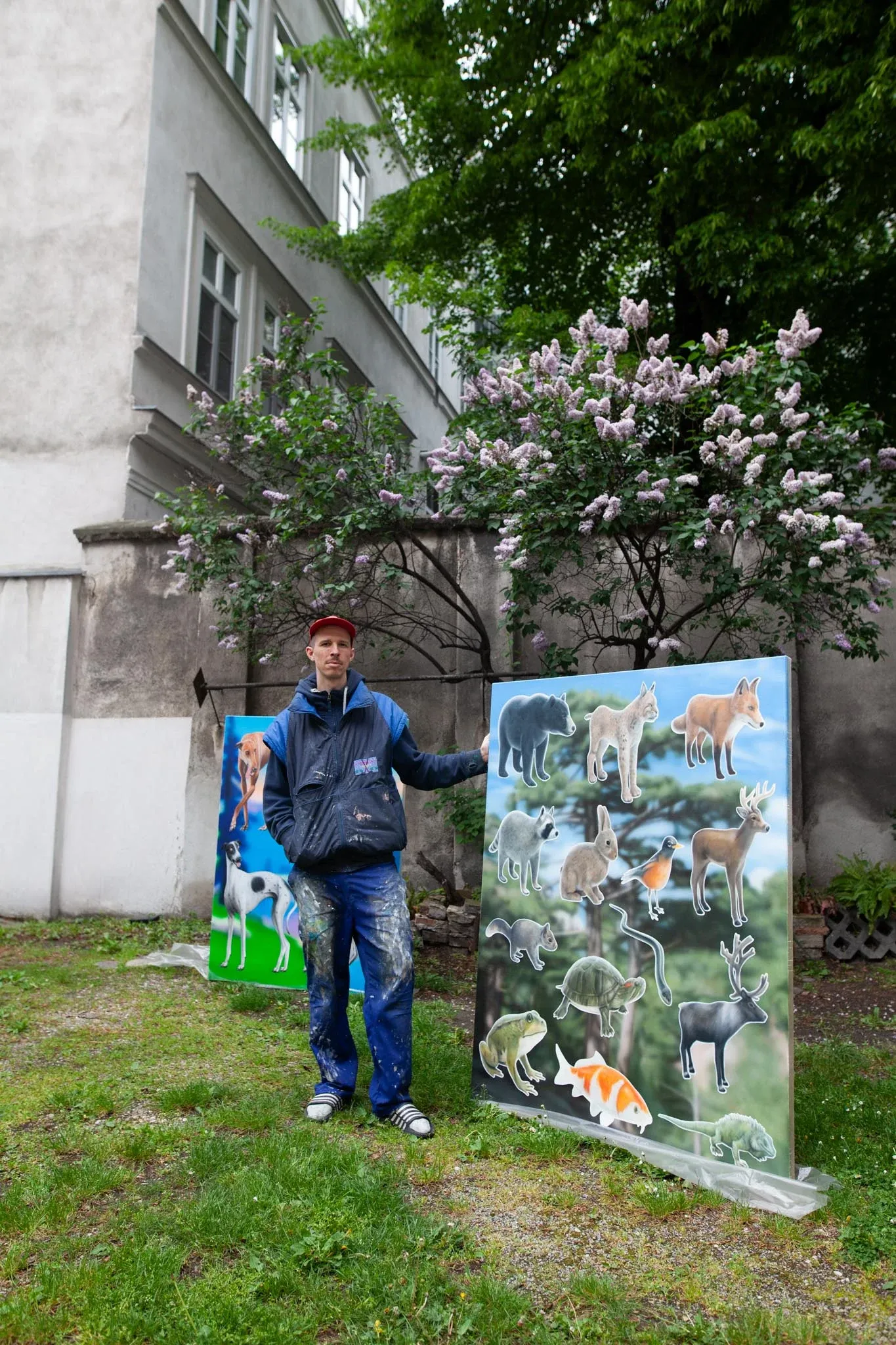
Interview with Paul Riedmüller
Opening / Practice
Your work lives in this gap between digital generation and manual painting, using AI image generators, Blender, and found footage before everything is translated back into paint.
What does this reversal from screen to canvas allow that the digital image alone cannot?
To be honest, a lot of what we see online feels like it has no weight. It’s just data that disappears the second you scroll past it.
By spending days painting these 'disposable' images, I’m giving them a physical body and forcing people to actually stop and look.
I love painting digital images because it messes with the viewer’s head. They expect a screen or a print, but they get a handmade object instead. It’s my way of slowing down the digital world and turning a quick 'click' into something real you can stand in front of.
When you are scrolling through AI results or the endless feed of online images, what makes you stop and think, “this one is worth painting”? Is there a specific kind of glitch, mood, or error you are drawn to?
I don’t really have a set checklist. It’s more about a gut feeling when I’m scrolling through random stock photos or 3D models. My eye is always hunting for these weird little details that are hard to describe, but I’ve trained myself to spot something interesting where others might just see junk.
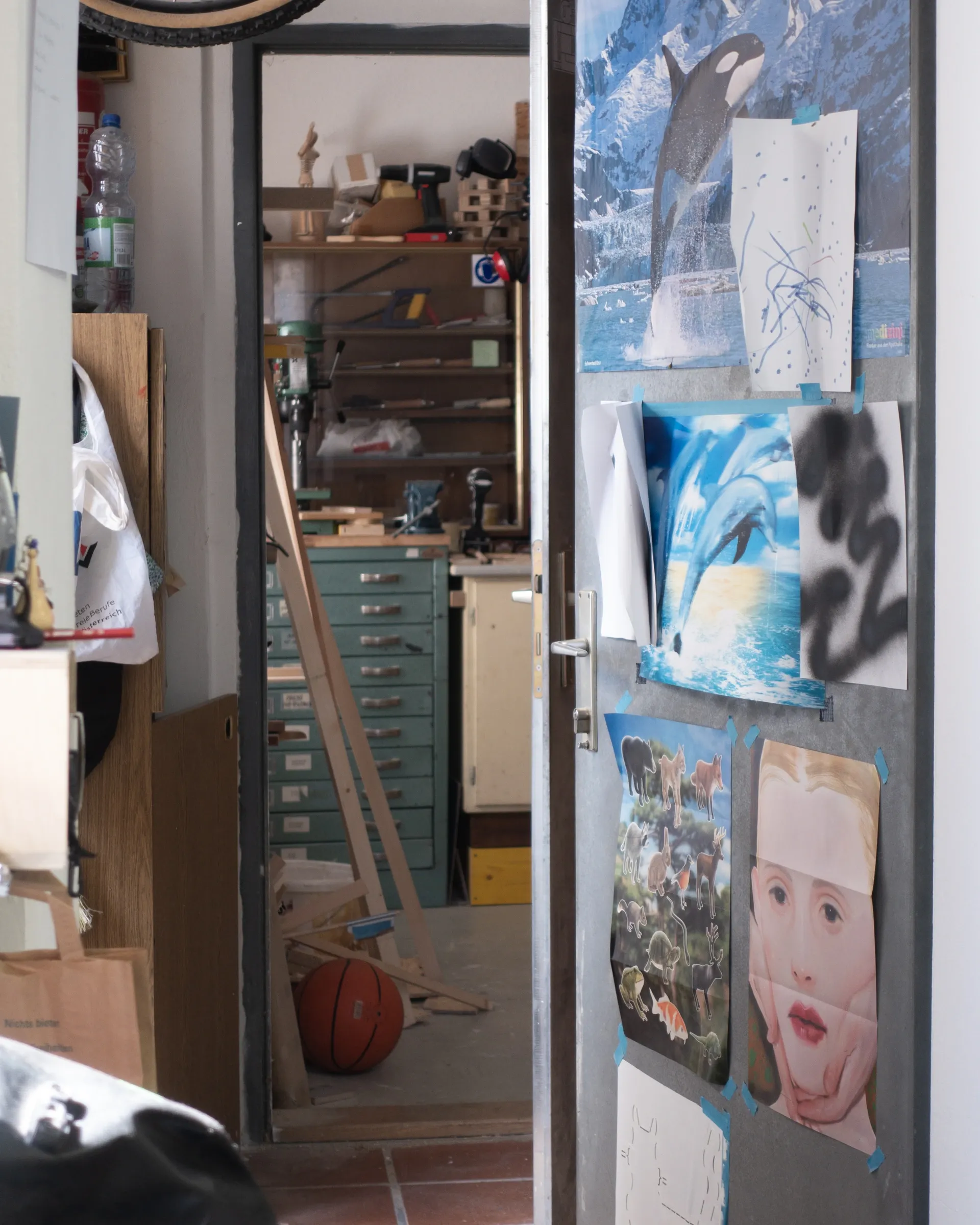
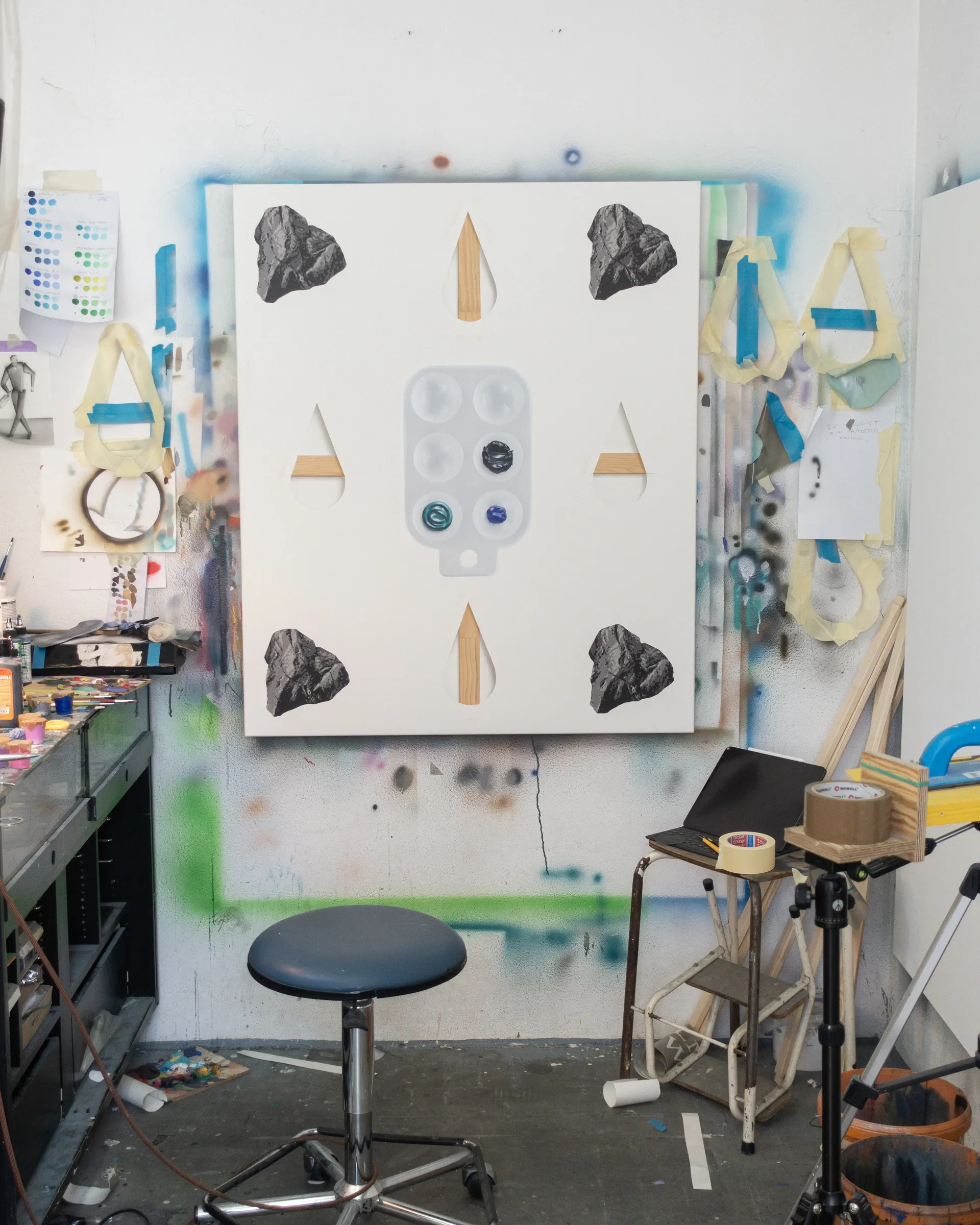
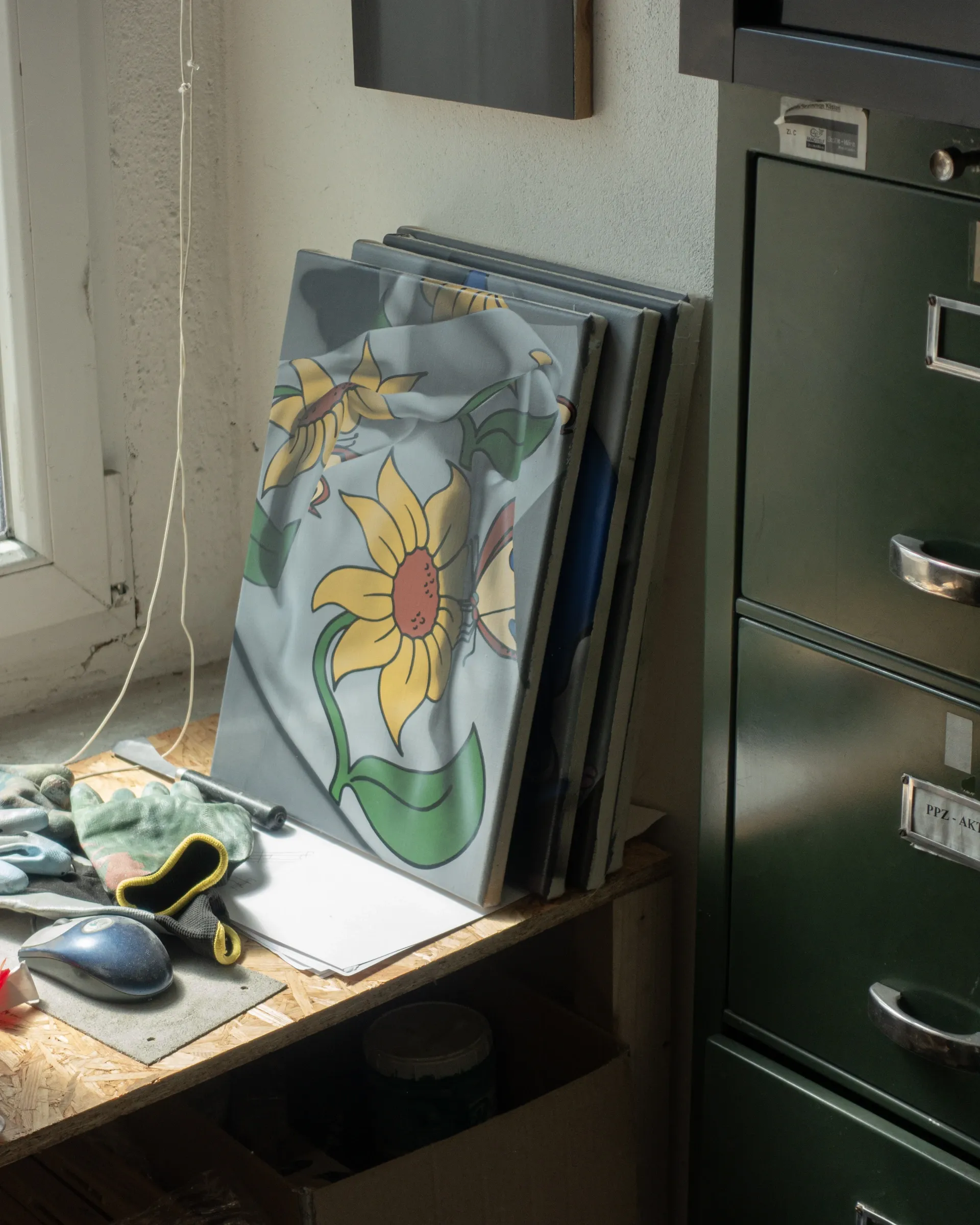
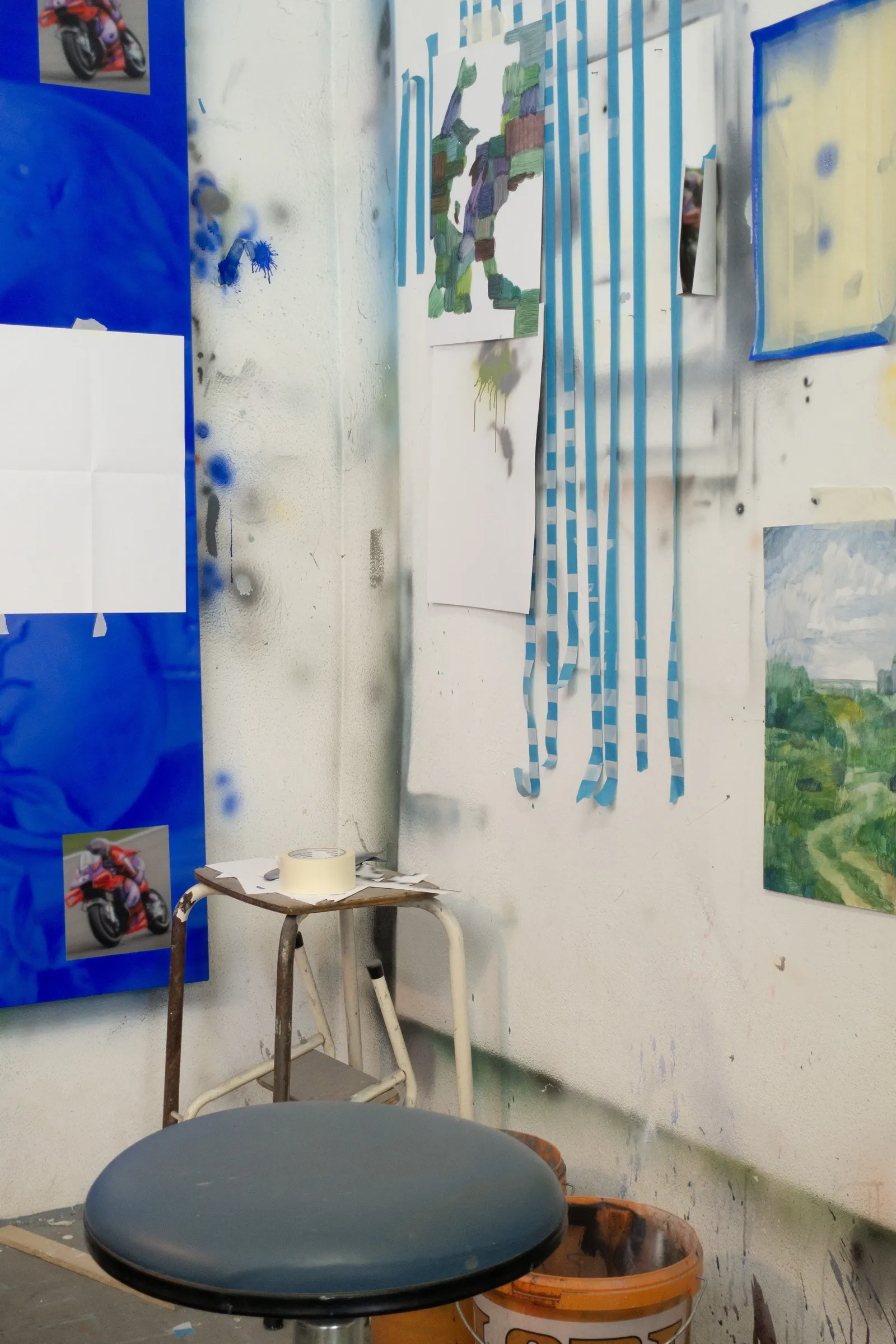
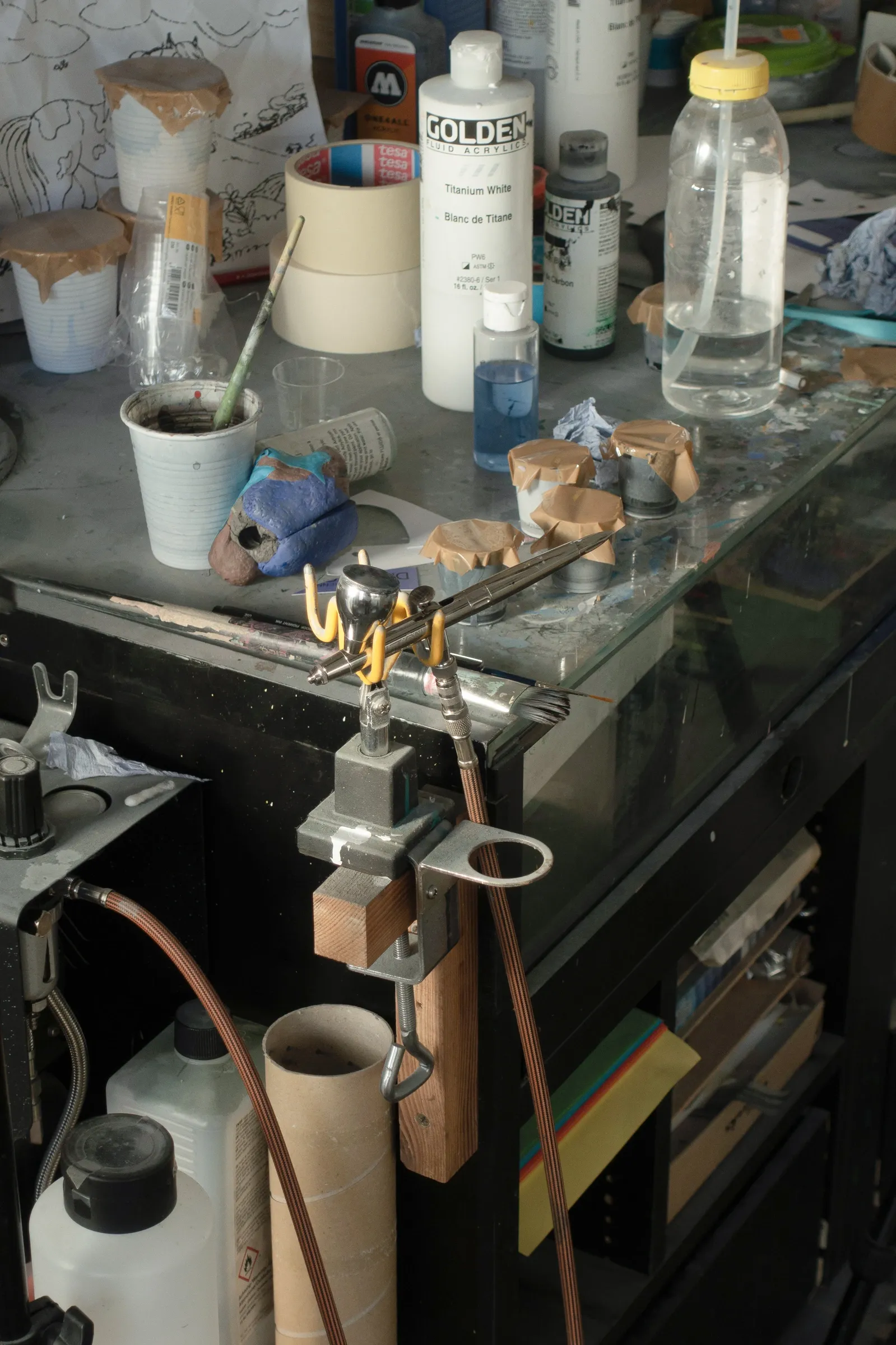
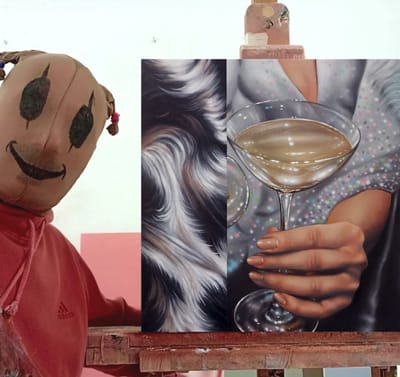
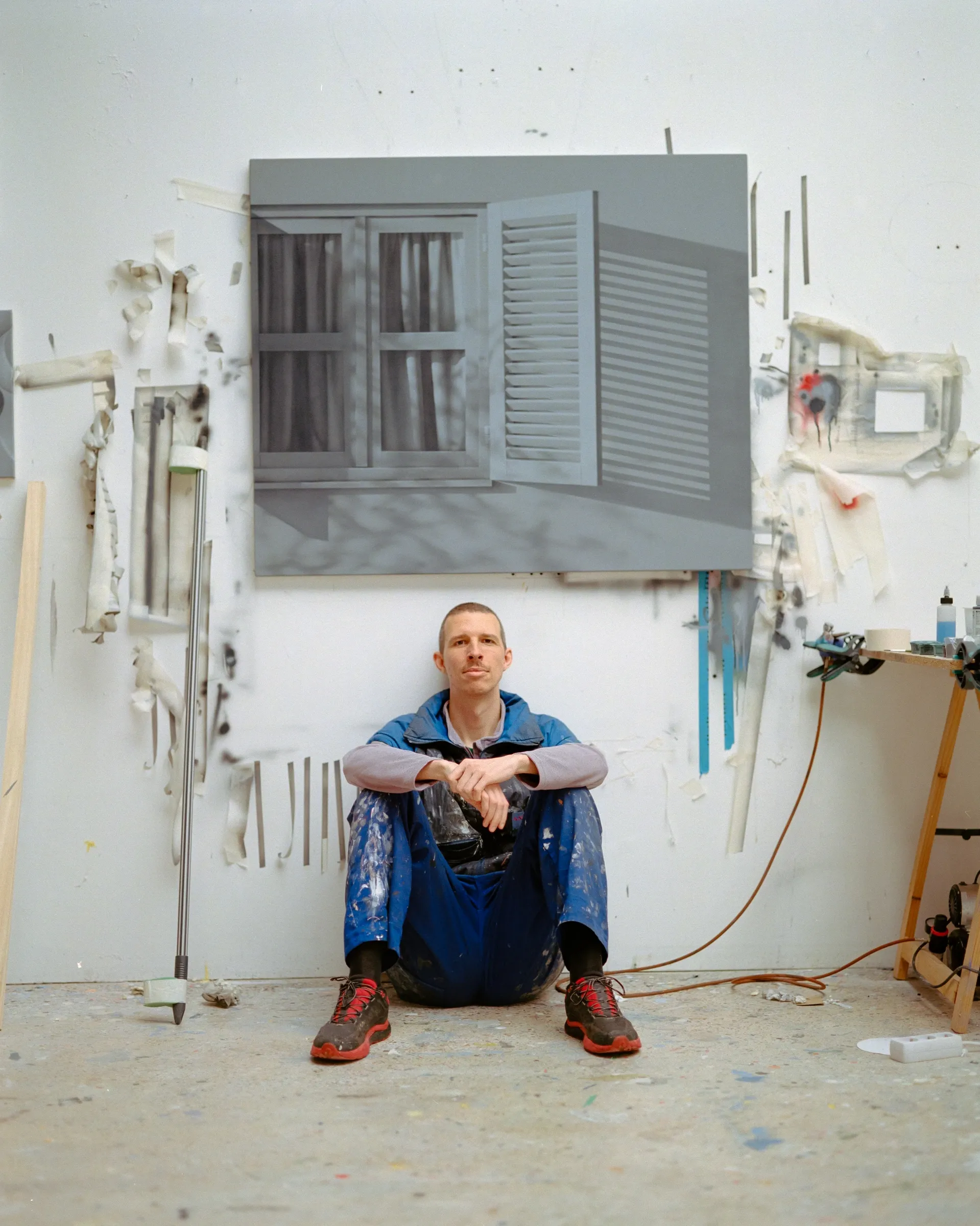
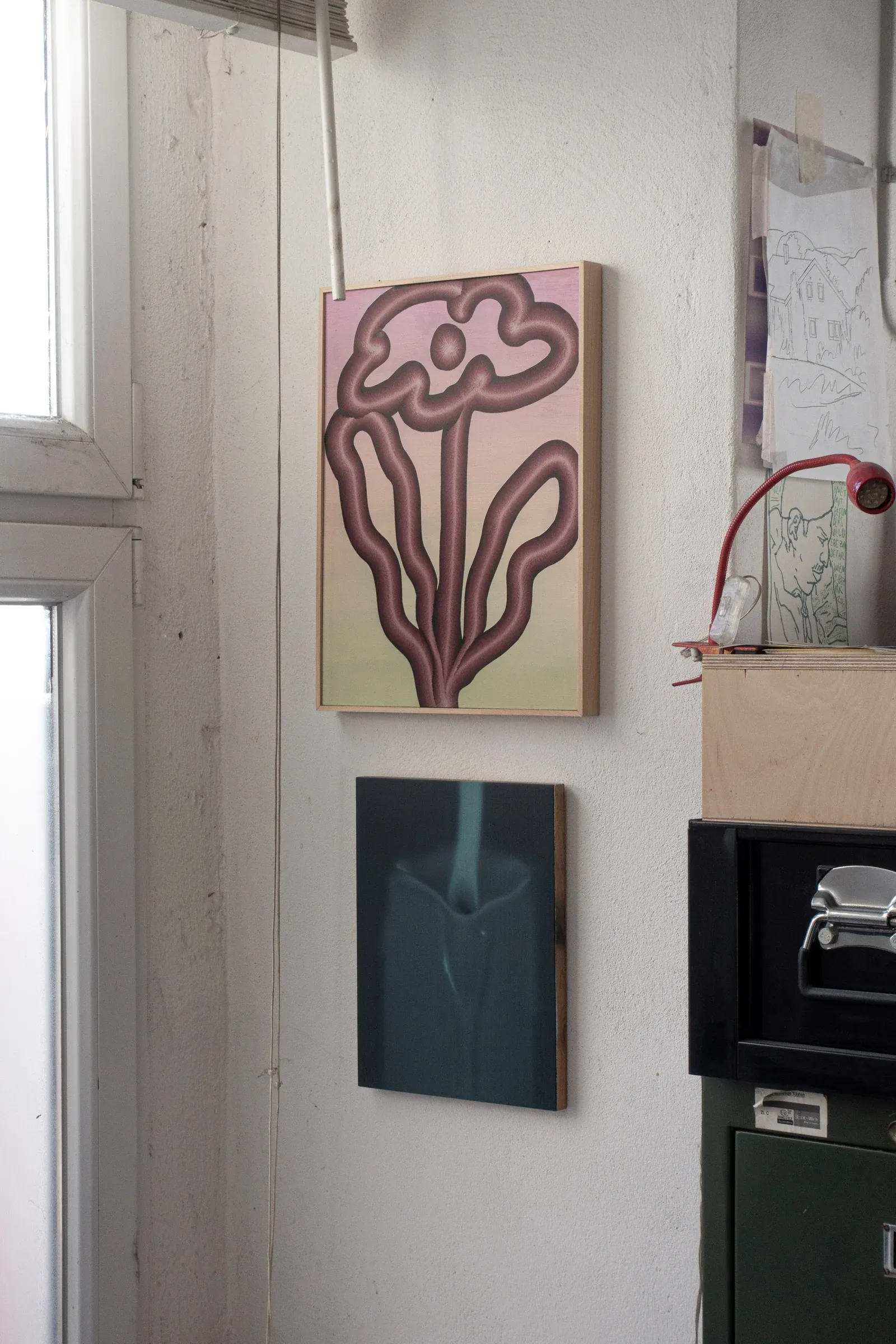
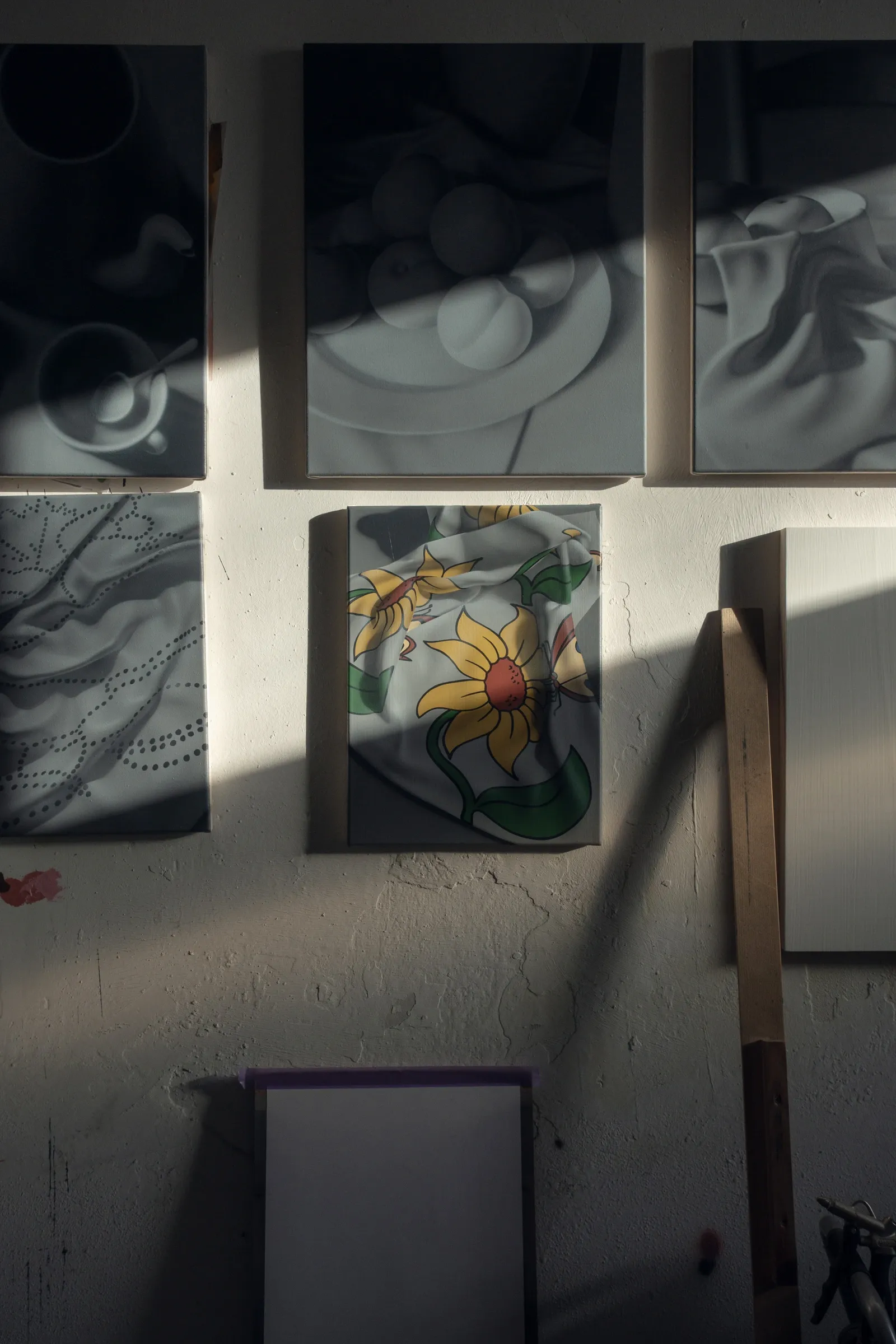
Paul Riedmüller: Studio views, Vienna. Photos by Paul Riedmüller. Image courtesy of the artist.
' The real trigger for me is asking 'How would this actually work as a painting?' I’m looking for a challenge. I am looking for something about the texture or the light that makes me want to spend days trying to imitate it by hand.
You have described painting as a meditative source of recreation. How does the slowness of airbrushing and layering change your relationship to images that originate in a fast, overstimulated digital environment?
By the time I’m done painting, the image finally belongs to me. It’s like buying something, but with my own time instead of money. I’ve always liked that kind of appropriation.
If I see a cool lamp, I immediately want to try and rebuild it myself with whatever materials I have lying around. Taking these fast, digital images and slowly 'reconstructing' them with an airbrush is basically the same thing. It turns a piece of overstimulated noise into a personal object that I’ve actually earned through the work.
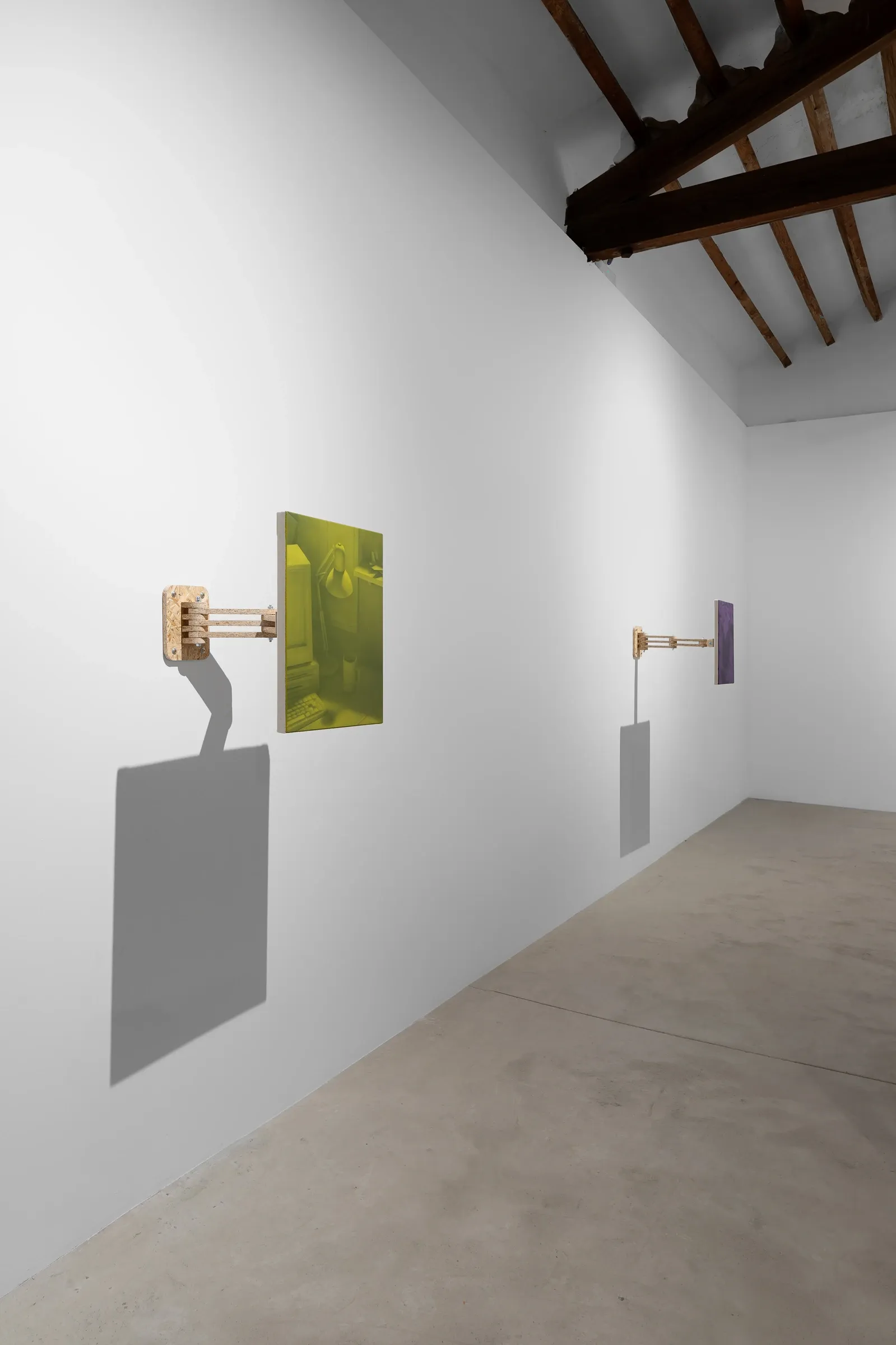
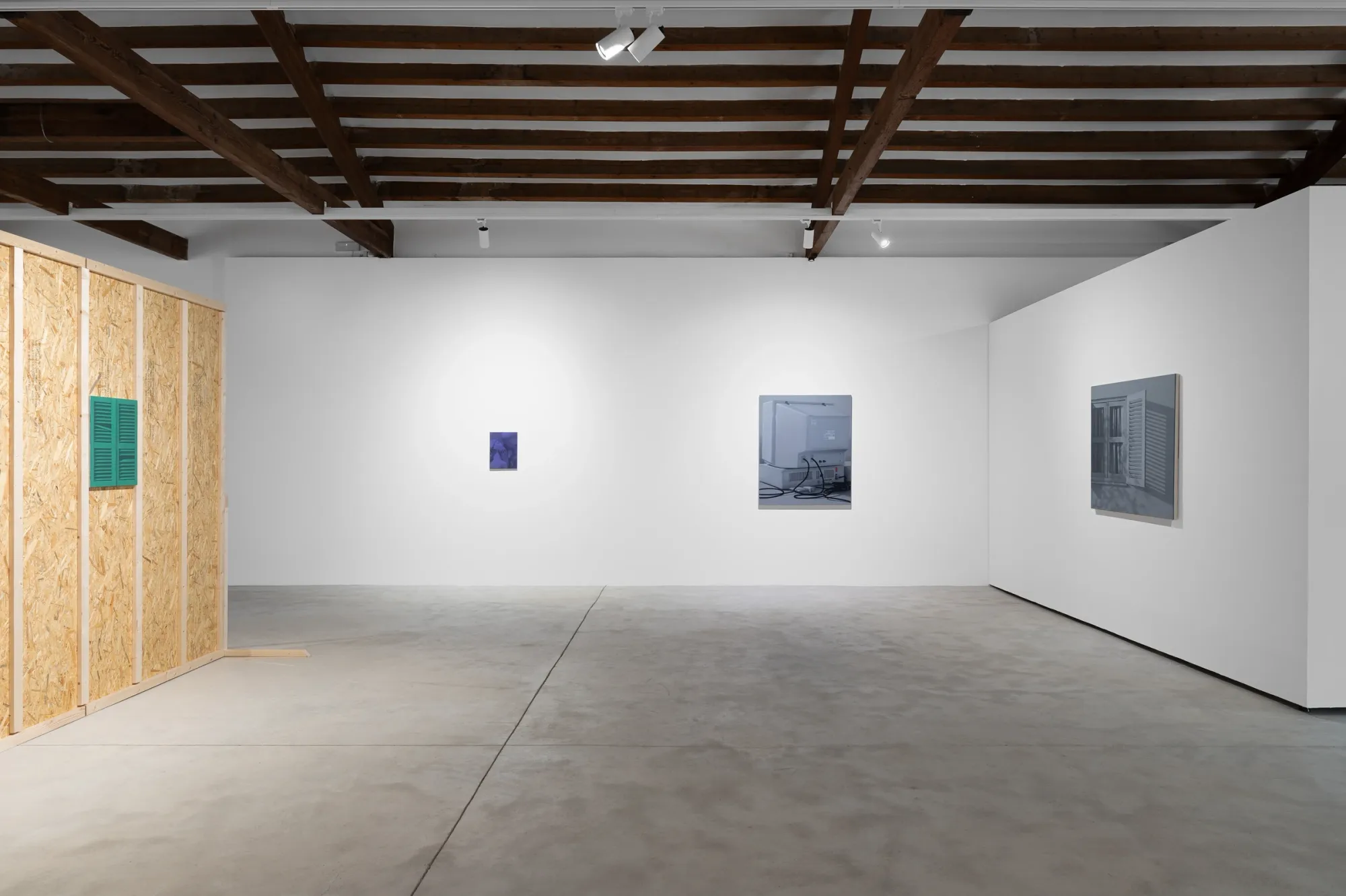
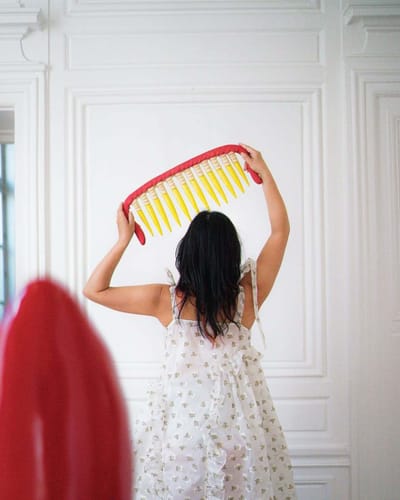
Installation view, Paul Riedmüller, Green Lemon, LA BIBI-Reus Gallery, Mallorca, Courtesy of the artist and LA BIBI-Reus Gallery, Photo by Juan David Cortés
Technique / Materiality
You have called the airbrush your vital tool. Beyond its surface effects, what role does it play conceptually in your work, especially given its associations with commercial imagery and digital illusion?
The airbrush is basically my analog version of a printer. It lets me get those smooth gradients and that mechanical flatness that look exactly like a digital print.
I love the technical paradox of making something that looks like it was just printed out, even though it actually took days of masking and spraying by hand. It is the perfect way to bridge the gap between a cold digital file and a handmade object.
Your paintings combine trompe-l’œil strategies with the visual logic of CGI and deepfakes. Do you see this as part of a longer history of pictorial deception, or as something specific to contemporary image culture?
I just see it as a natural evolution of how painters have always tried to 'trick' the eye. In the past, artists painted velvet or marble, but today our world is full of CGI, digital layers, and AI.
By using trompe-l'œil to paint a Photoshop grid or a 3D-rendered texture, I’m just capturing the 'materials' of our time.
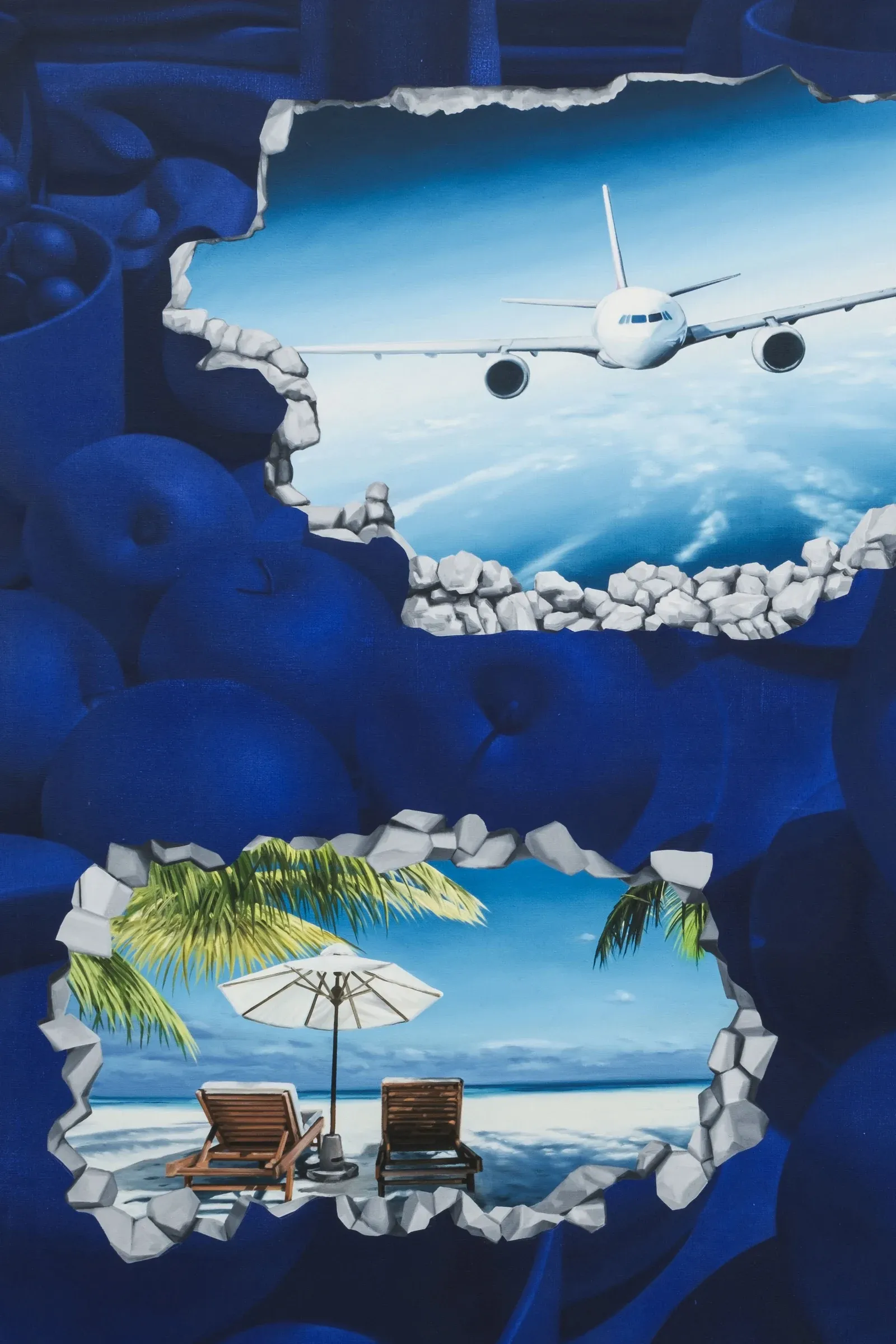
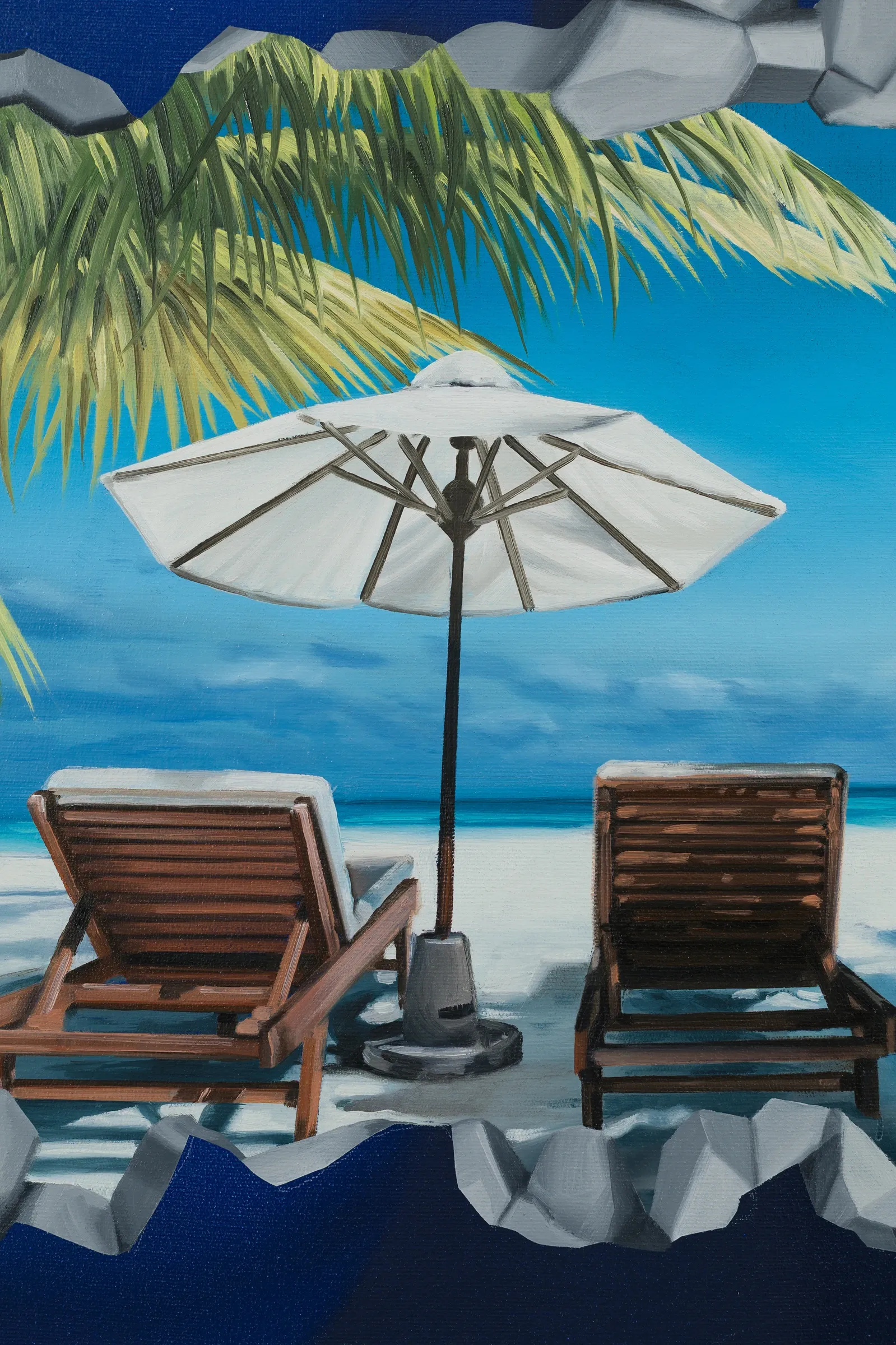
Paul Riedmüller: Holiday (detail), 120 × 100 cm, Acrylics and Oil on Canvas, 2025. Photo by La Bibi. Image courtesy of the artist and LA BIBI-Reus Gallery.
Many of your works are mounted on articulated wooden structures that push them into physical space. What changes when a painting behaves more like an object in the room than an image on the wall?
By building these wooden structures and pushing the work into the room, I’m trying to break that habit and grab a different kind of attention.
It forces people to stop, walk around, and actually look at the painting from different angles instead of just glancing past it.
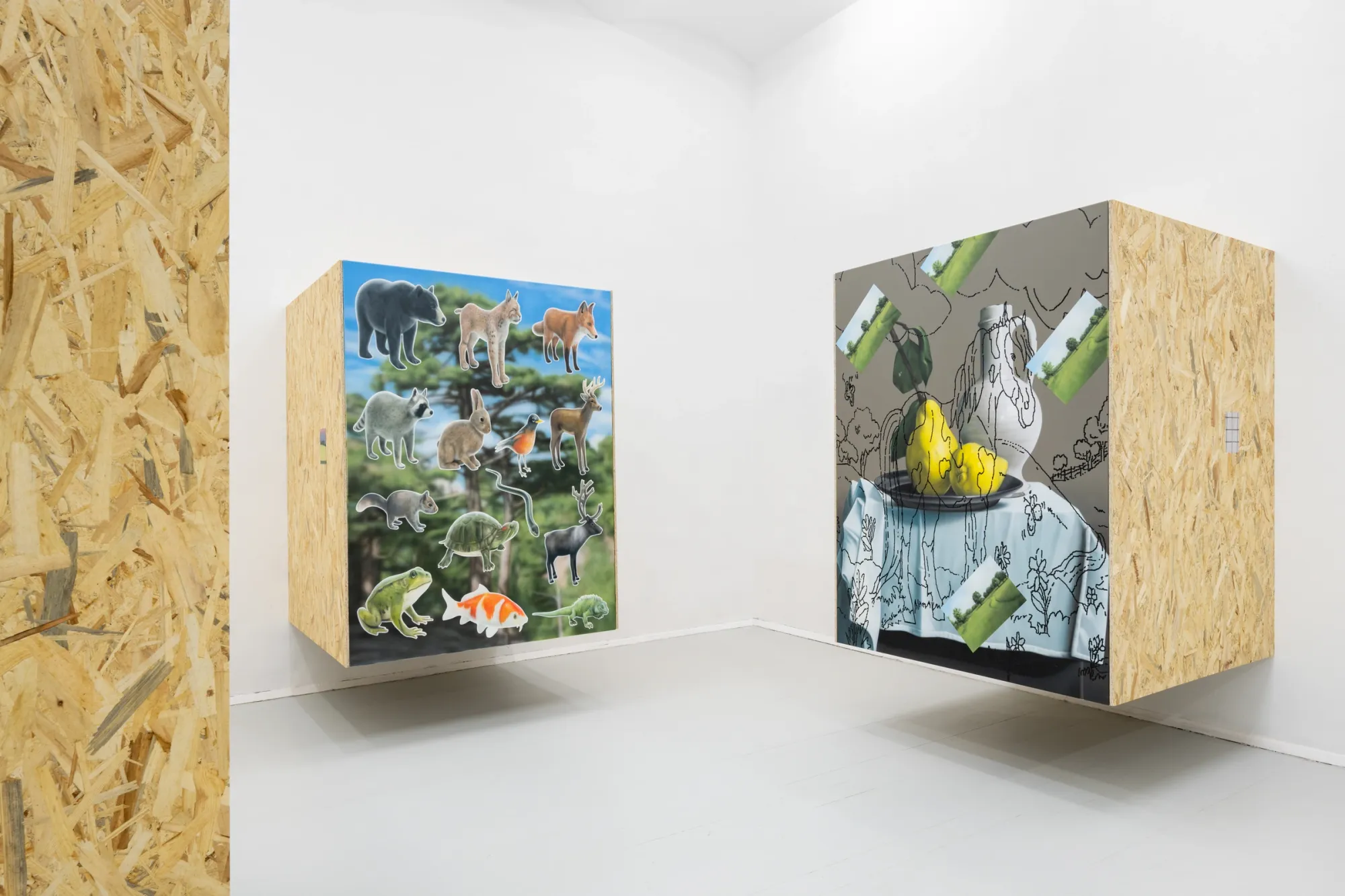
Image Culture / Content
Your source material often includes stock photography, clipart, and AI-generated imagery that is typically considered disposable. Do you see these images as disposable, or do they already carry a charge before you begin working with them?
I really relate to what Michel Majerus said. Once you’ve seen an image, you can’t 'unsee' it, and every repetition just reminds you of that first encounter.
These 'disposable' images like clipart or stock photos aren't just junk to me. They already carry a weird charge because they’re stuck in our collective memory.
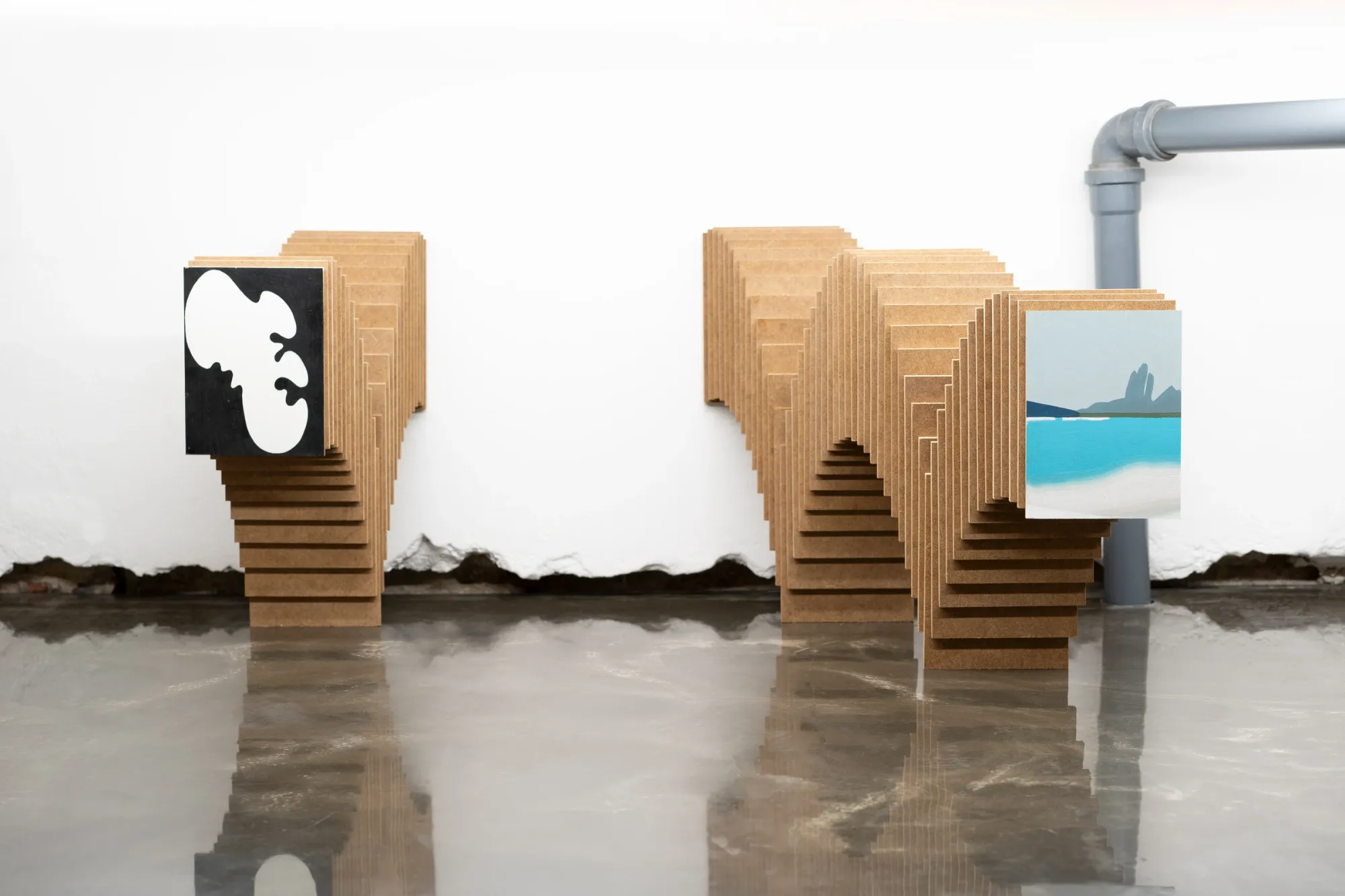
Recurring motifs such as animals, sticker-like forms, and architectural renders create the sense of an ecosystem of internet imagery. Is this taxonomy intentional, or does meaning emerge through recombination?
It’s not really a planned-out taxonomy. It’s more about how these random things start to feel like they belong together once they’re on the canvas. I like mixing something 'nature-based' like an animal with something totally fake like a 3D architectural render because it creates this weird new ecosystem.
The meaning usually comes from that recombination. It is about seeing how a 'sticker' and a 'landscape' react to each other in the same space. It’s about building a world out of the loose parts we all find online.
Social Media / Circulation
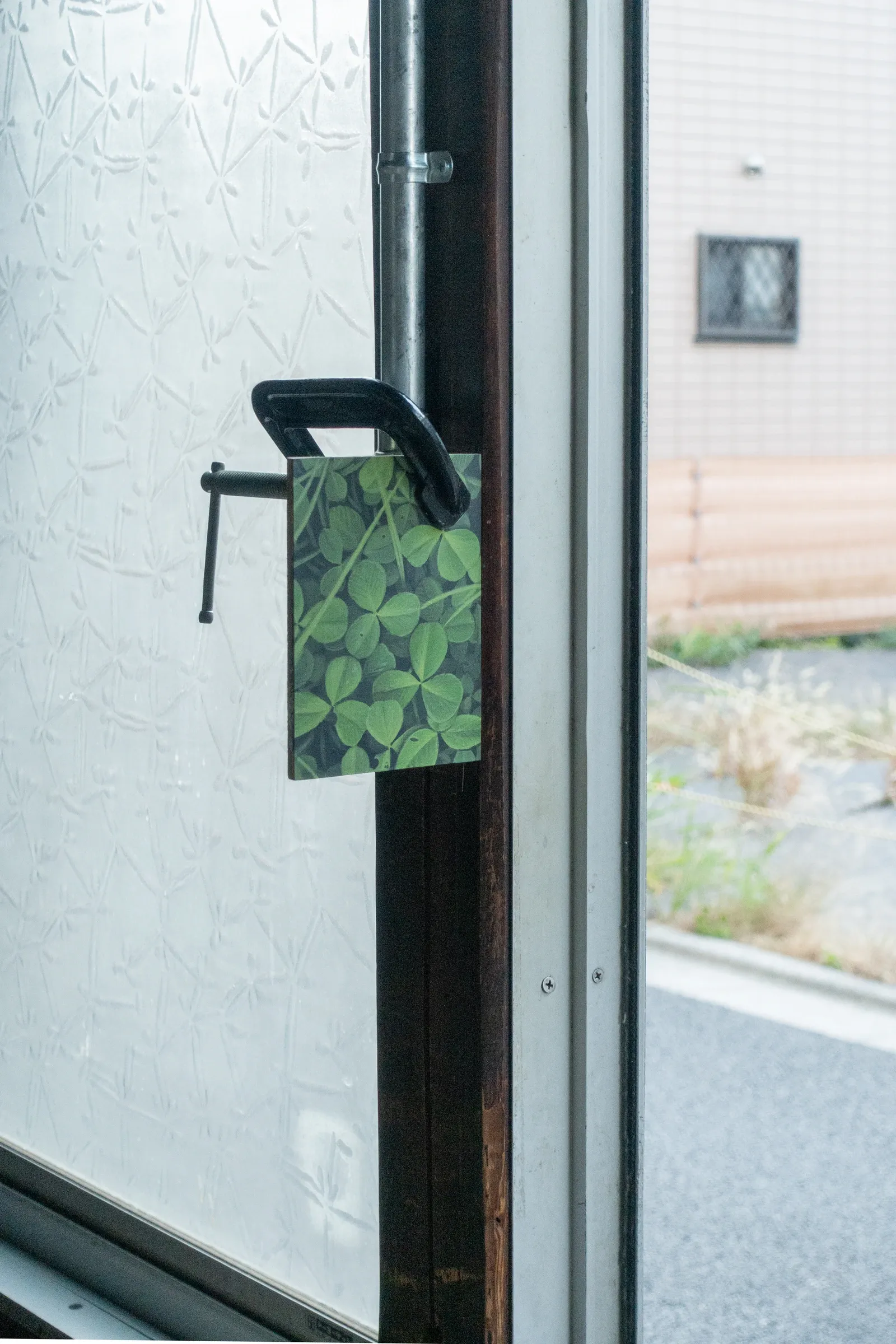
Your paintings circulate widely on Instagram. Do you think of social media as a promotional tool, or as an extension of the exhibition space and the work’s afterlife?
I see social media as a second life for the work, not just an ad for it. My paintings start as digital files, become heavy physical objects, and then turn back into digital images on a screen. It’s like a full circle.
There’s something funny and interesting about the fact that most people will probably 'consume' my physical painting of a digital lemon on their phone screen again. It’s an extension of the work itself, where the painting goes back into the flow it originally came from.
Through your involvement with micro-publishing, you also engage with reproducibility and distribution. How do you balance the singular painted object with the endlessly circulating image?
I’ve always loved micro-publishing because it’s fast, cheap, and gets the work out there without any gatekeepers. To me, a zine and a singular painting are just two different ways of 'holding' an image.
One is light and moves everywhere, the other is heavy and stays in one room. I don't really see a conflict between them. I like the idea that an image can be a disposable sticker one day and a massive hand-painted object the next. It’s all part of the same cycle of how we live with images today.
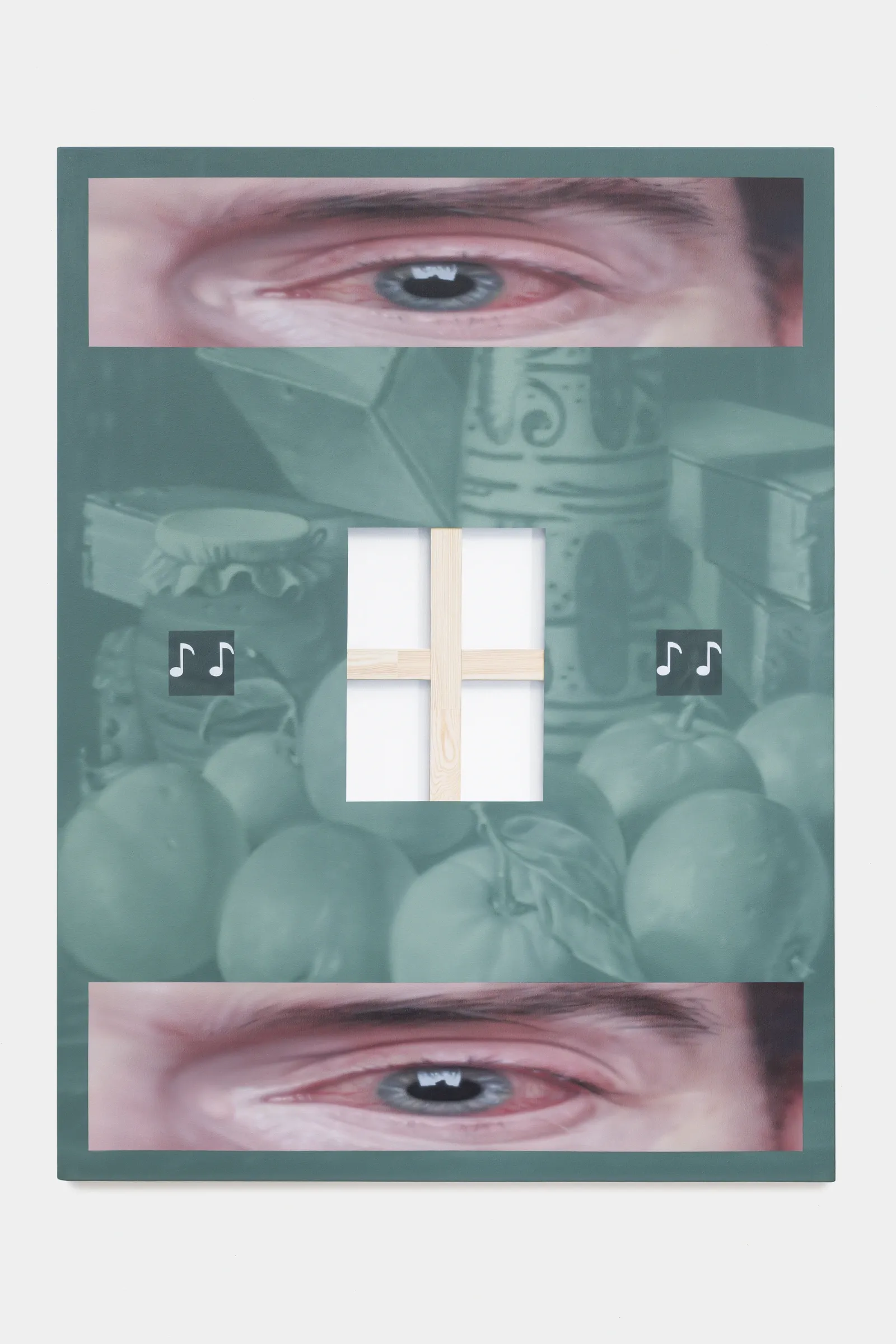
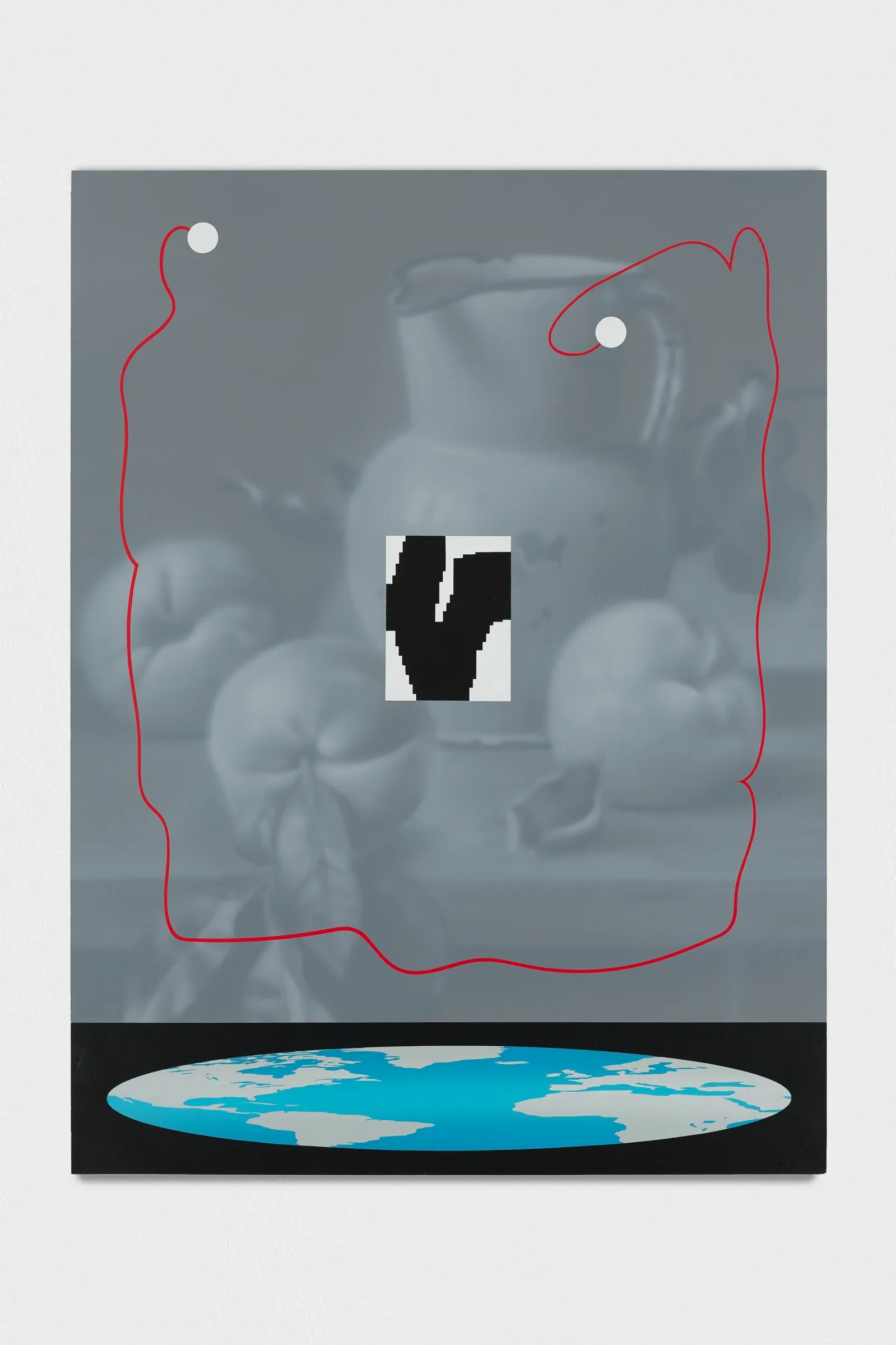
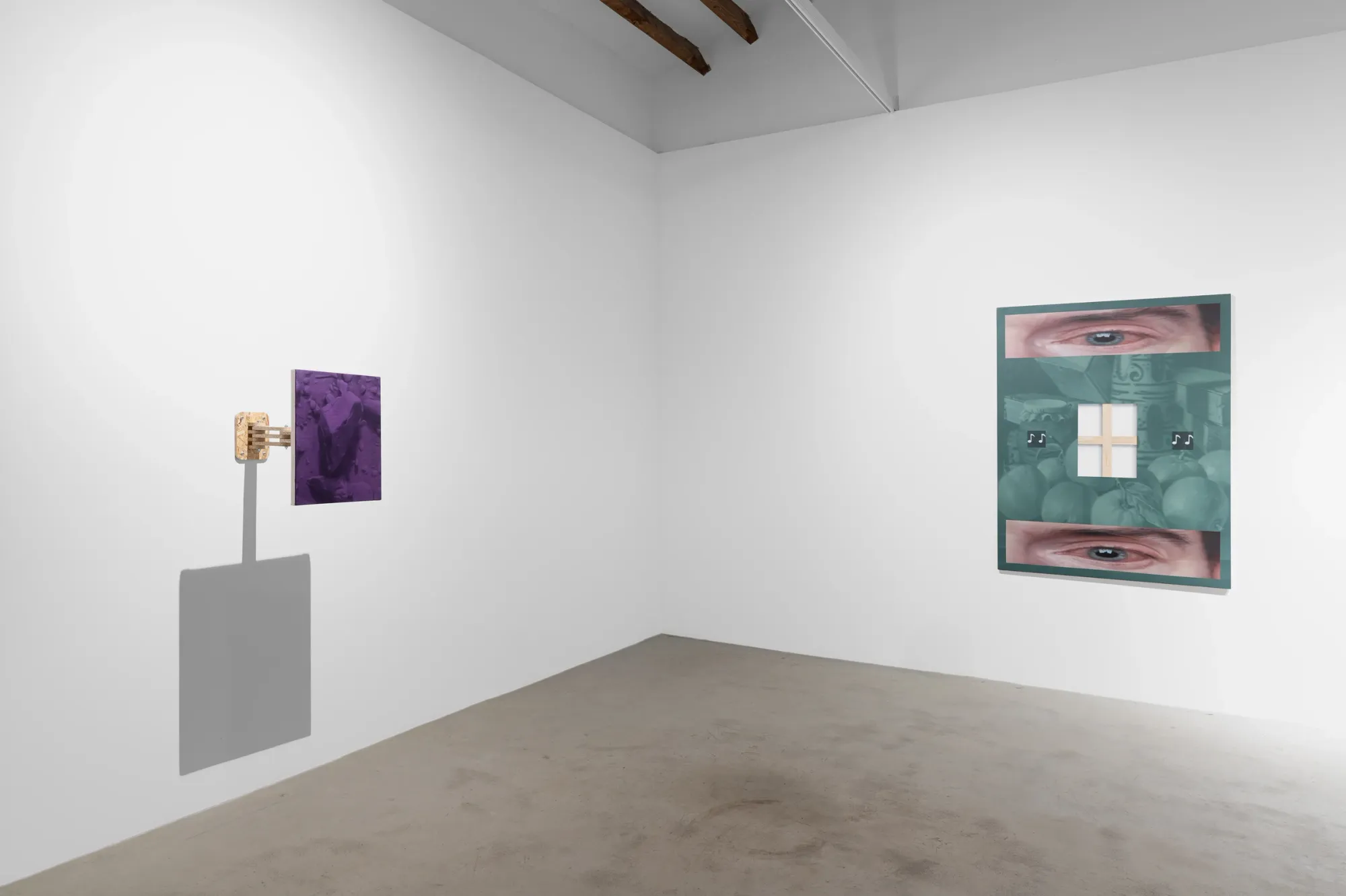
Paul Riedmüller: Left: background music, 120 × 160 cm, Acrylics on Canvas, 2025. Right: World, 80 × 60 cm, Acrylics on Wood, 2024. Photos by La Bibi Gallery. Image courtesy of the artist and LA BIBI-Reus Gallery.
Concept / Future
Writers often frame your work through ideas of simulacrum and hyperreality, yet you remain committed to making unique physical paintings. Do you see this as a contradiction, or as part of the condition you are describing?
I don’t see it as a contradiction. I see it as the only way to really talk about these digital ideas. If I just made more digital files, they’d get lost in the noise. By making a unique physical painting of a 'fake' or hyperreal image, I’m giving it a weight it wasn't supposed to have.
It’s like taking a ghost and giving it a body. That tension between the 'perfect' digital look and the 'imperfect' physical object is exactly the condition I’m trying to describe.
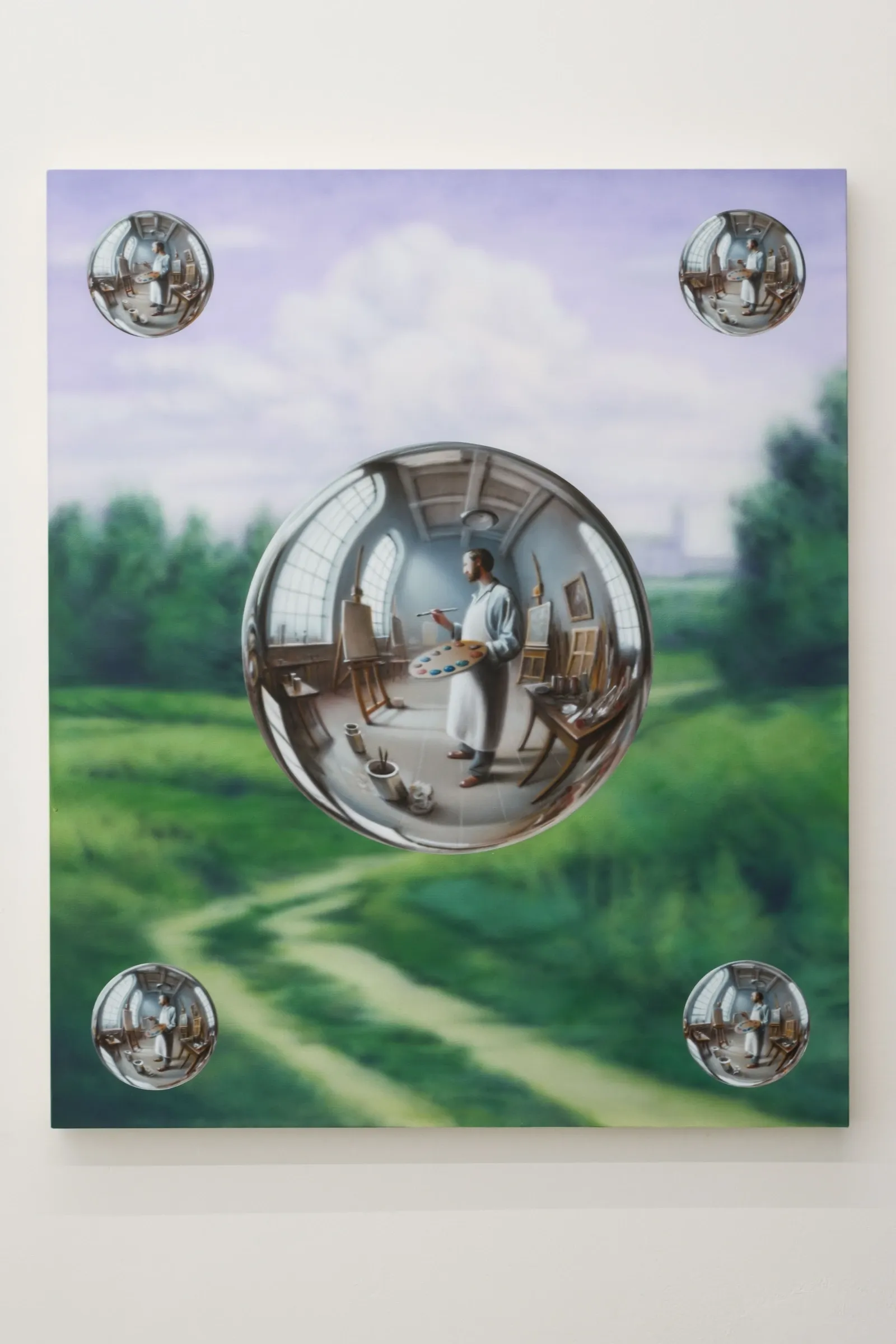
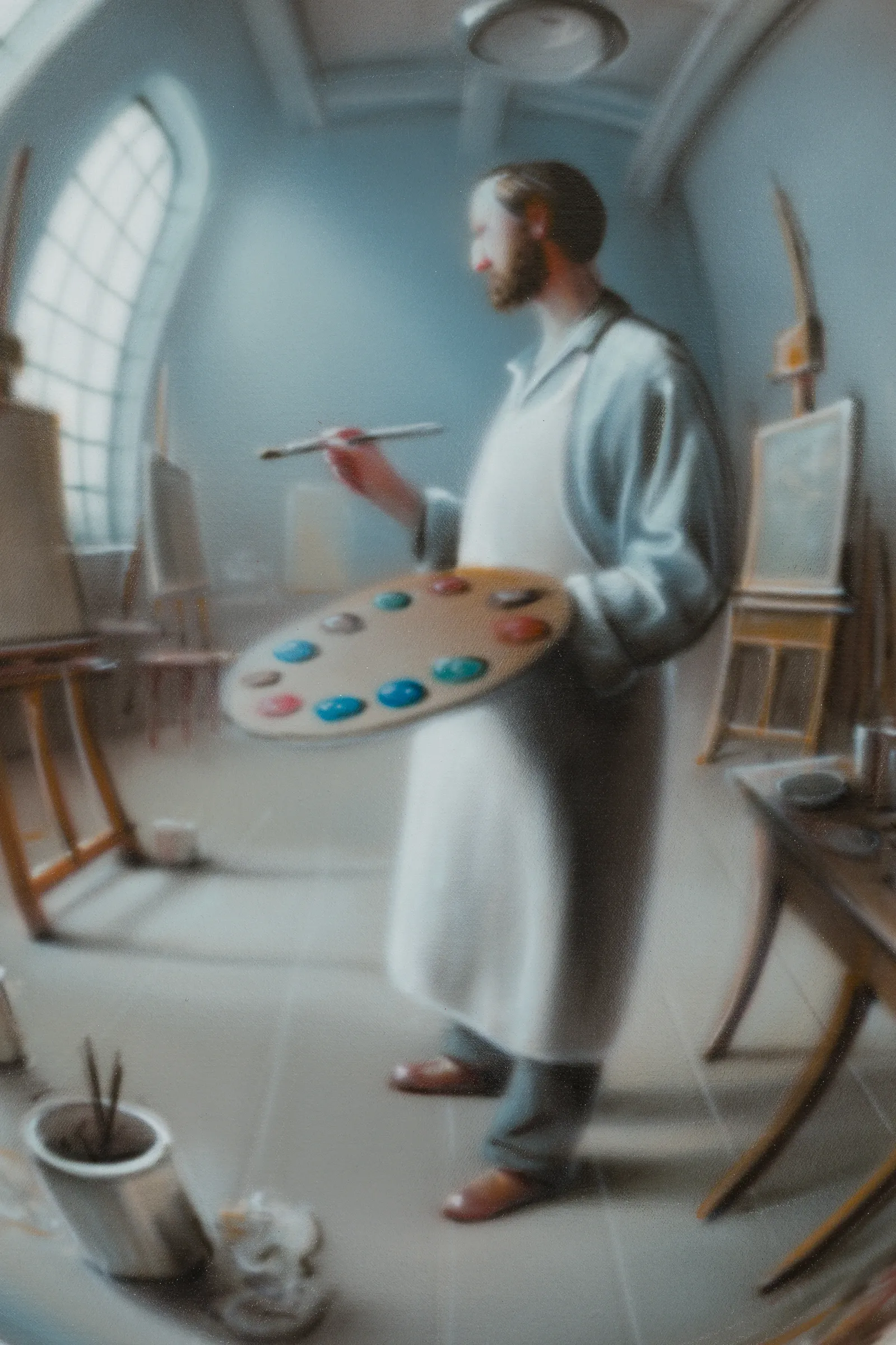
Paul Riedmüller: The Artist, 120 × 100 cm, Acrylics on Canvas, 2025. Photo by La Bibi. Image courtesy of the artist and LA BIBI-Reus Gallery.
As AI image generation becomes faster and more convincing, where can painting still go that screens cannot, and how does this acceleration affect the way you think about the future of your practice?
AI is incredibly fast, but it is also thin. It often only exists on the surface of a screen. Painting is naturally slow, and I think that is where its power stays.
A screen is always on and glowing, but it has no texture, no smell, and no real presence in a room.
As AI images get more convincing, the human labor of masking, spraying, and building these heavy wooden structures becomes even more important. It is about creating a glitch in the acceleration.
I am taking a 2 second AI generation and forcing it to exist as a permanent object that actually takes up space and demands you stand in front of it.
Upcoming Shows:
- Duo Show with Max Freund at Horizont Gallery, Budapest - May 2026
- Solo Show at Elektrohalle Rhomberg - September 2026
- Solo Show at Moosey Art - November 2026
Paul Riedmüller documents his practice closely. Riedmüller´s website functions as a comprehensive archive of exhibition views, individual works, and curatorial texts.
On Instagram, he posts works in progress, installation shots, and glimpses into his selection process, operating less like promotion and more like a real-time studio diary.
For an artist whose paintings interrogate how we see in the age of screens, the most revealing place to follow his thinking is not a single exhibition, but to watch where the images go next.
Related Readings
No spam, no sharing to third party. Only you and me.