Where Does the Skin End and the Fibre Begin? Soojin Kang with an Artist in Focus on Catapult
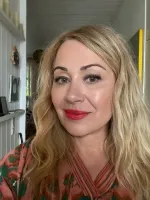
Seoul, South Korea, 1978
Kulmbach, Germany
Textile Sculpture, Installation, Site-Specific Work
MA Textile Futures, Central Saint Martins, London, 2009
Forgive yourself for everything, Galerie Khoshbakht, Cologne, 2024
To Be You, Whoever You Are, Gathering, London, 2023
Landscape, Ben Hunter, London, 2022
Victoria & Albert Museum, London (work Fall, acq. 2017)
Gathering, London
Rocio Chacon; Hannes Heinzer; Damian Griffiths; Gery Hutton; Ben Hunter
Courtesy the Artist and Gathering, London
Soojin Kang - Textile Sculpture and Installation
Thread begins here. Not as material to be shaped, but as something with its own logic, warm, vascular, already tending toward form. Soojin Kang works through weaving, knotting, winding and unwinding, not as craft technique but as a form of thinking: a process that presses raw fibre into structures it seems to already know.
Fibre arrives already knowing its direction. In Kang's hands, the question is not what to make of it, but how long to follow.
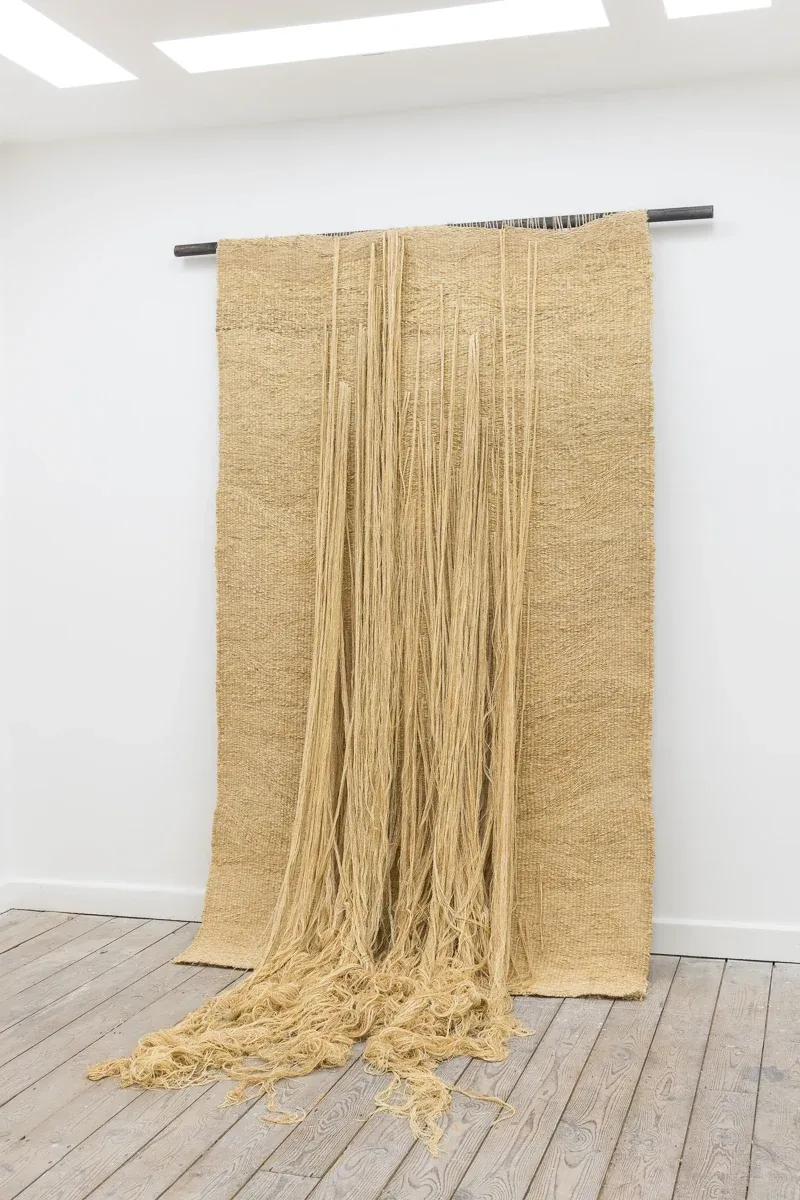
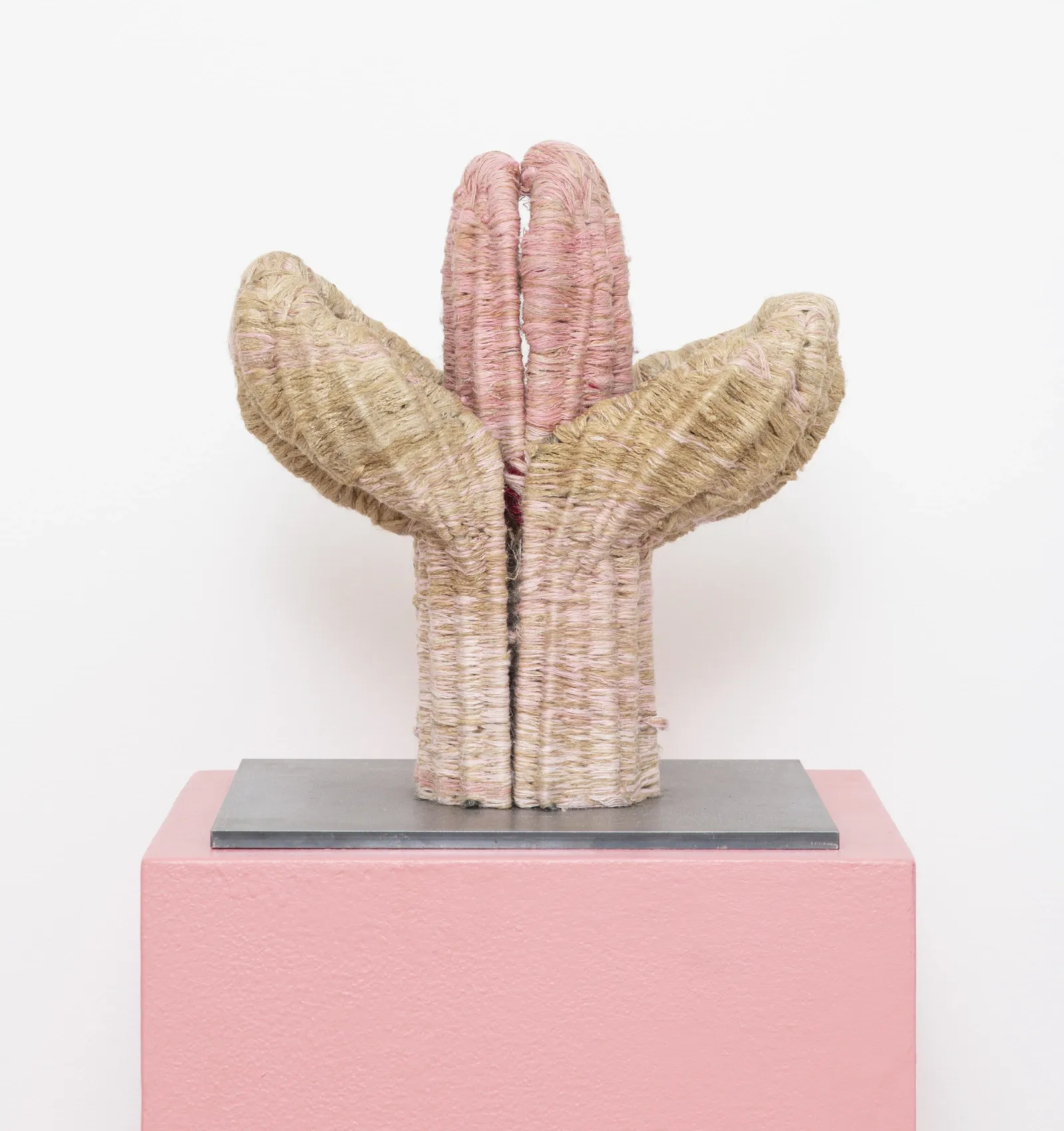
Working primarily with raw silk, hemp, jute, linen and cotton, often hand-dyed, Kang builds from fibre outward into forms that resist easy category. The works retain traces of their organic origins without resolving them: shapes that recall engorged anthers, swollen larvae, structures positioned somewhere between organism and relic.
The associations that handmade textile media typically carry, wholesome, domestic, nurturing, are cut through here with something adjacent to the monstrous. Raw edges, earthy pigments, and a scale that refuses comfort.
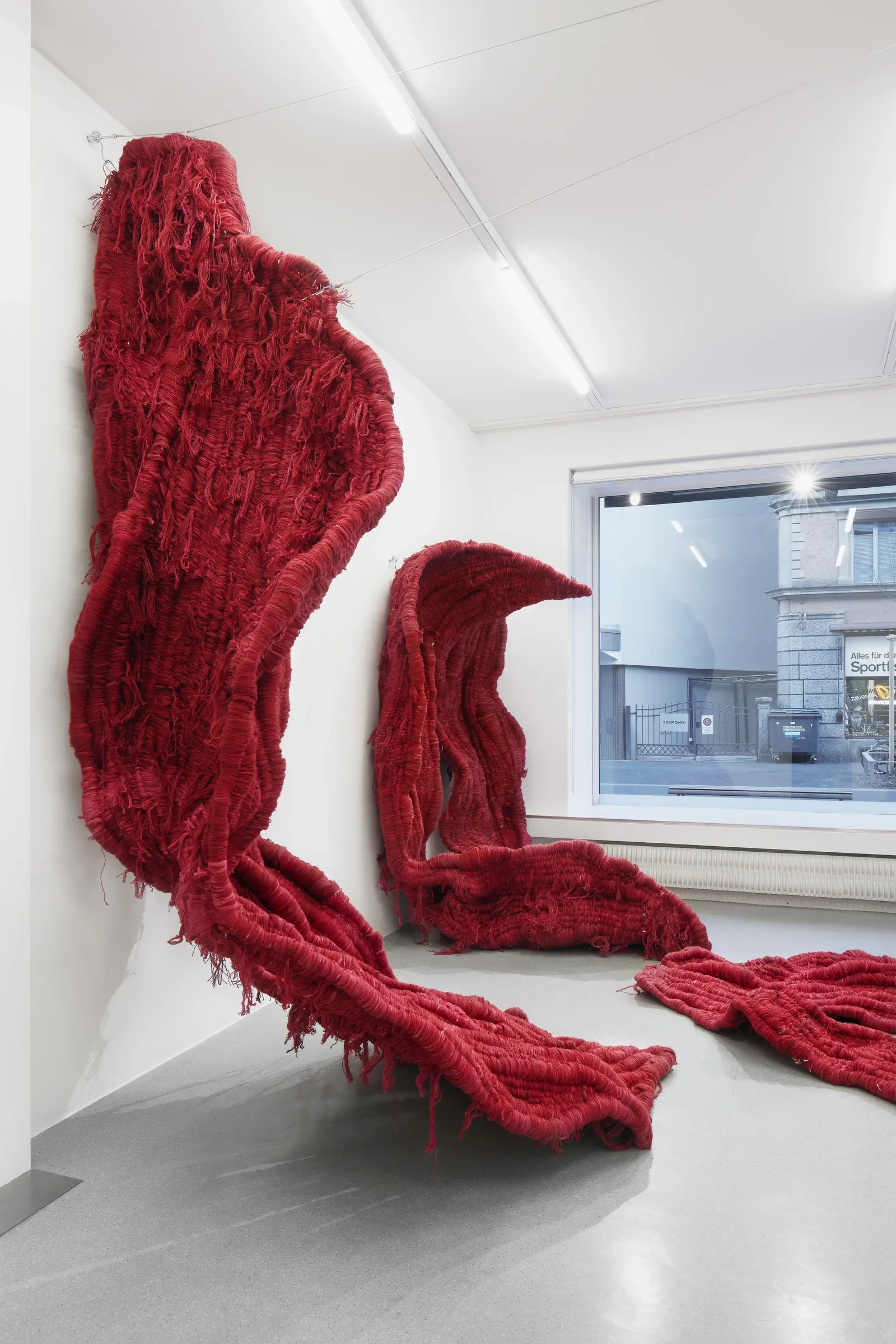
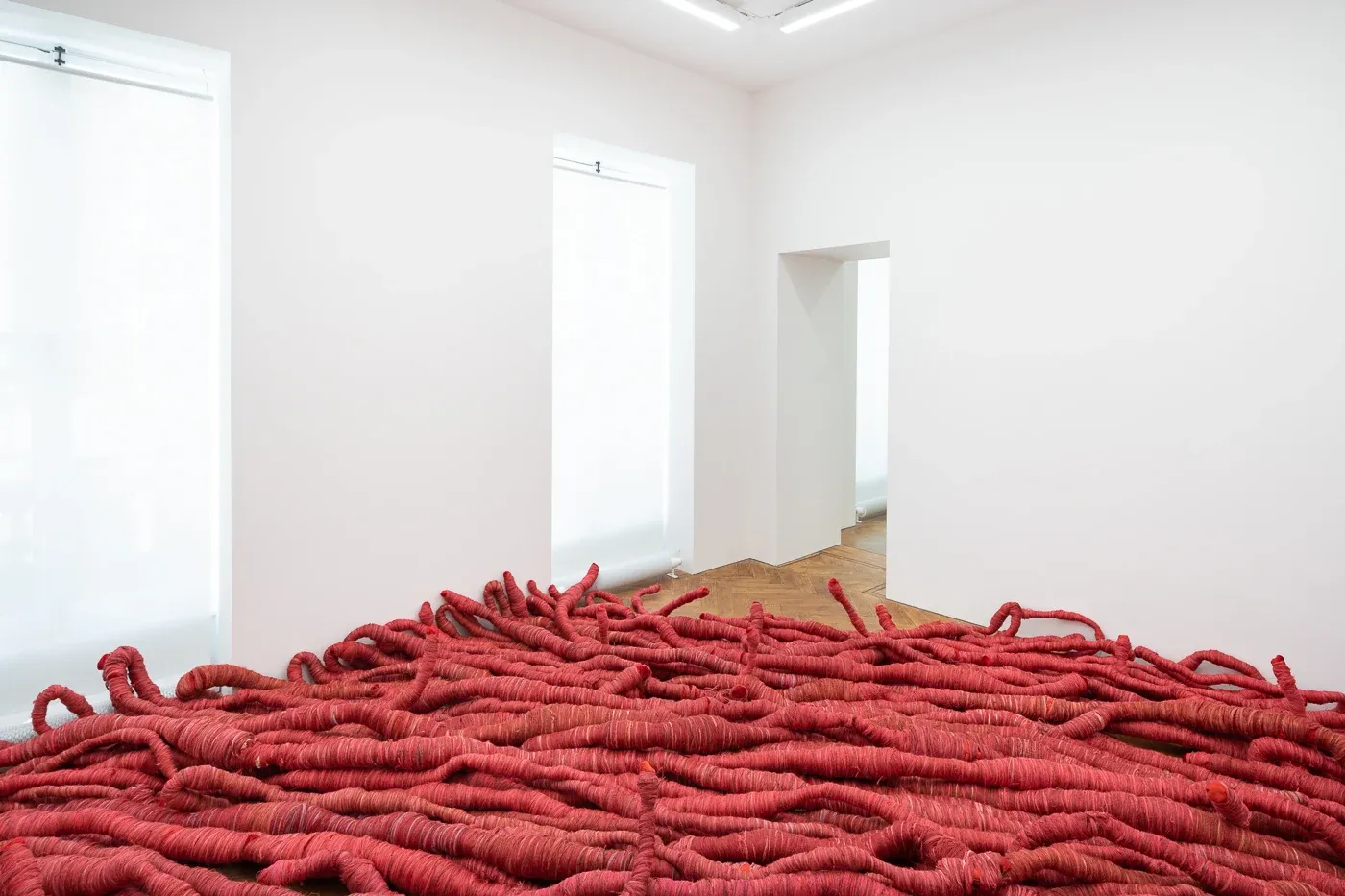
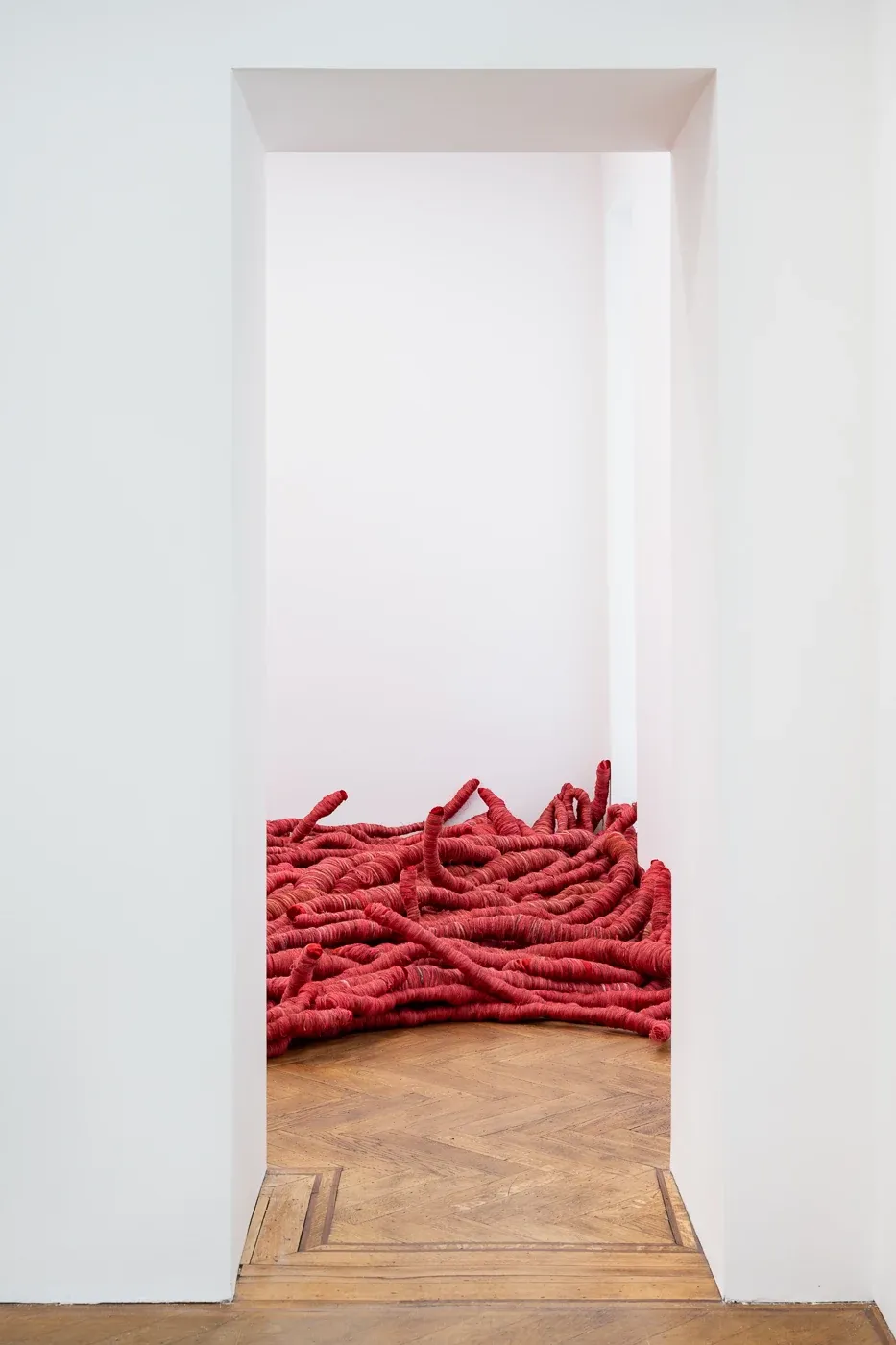
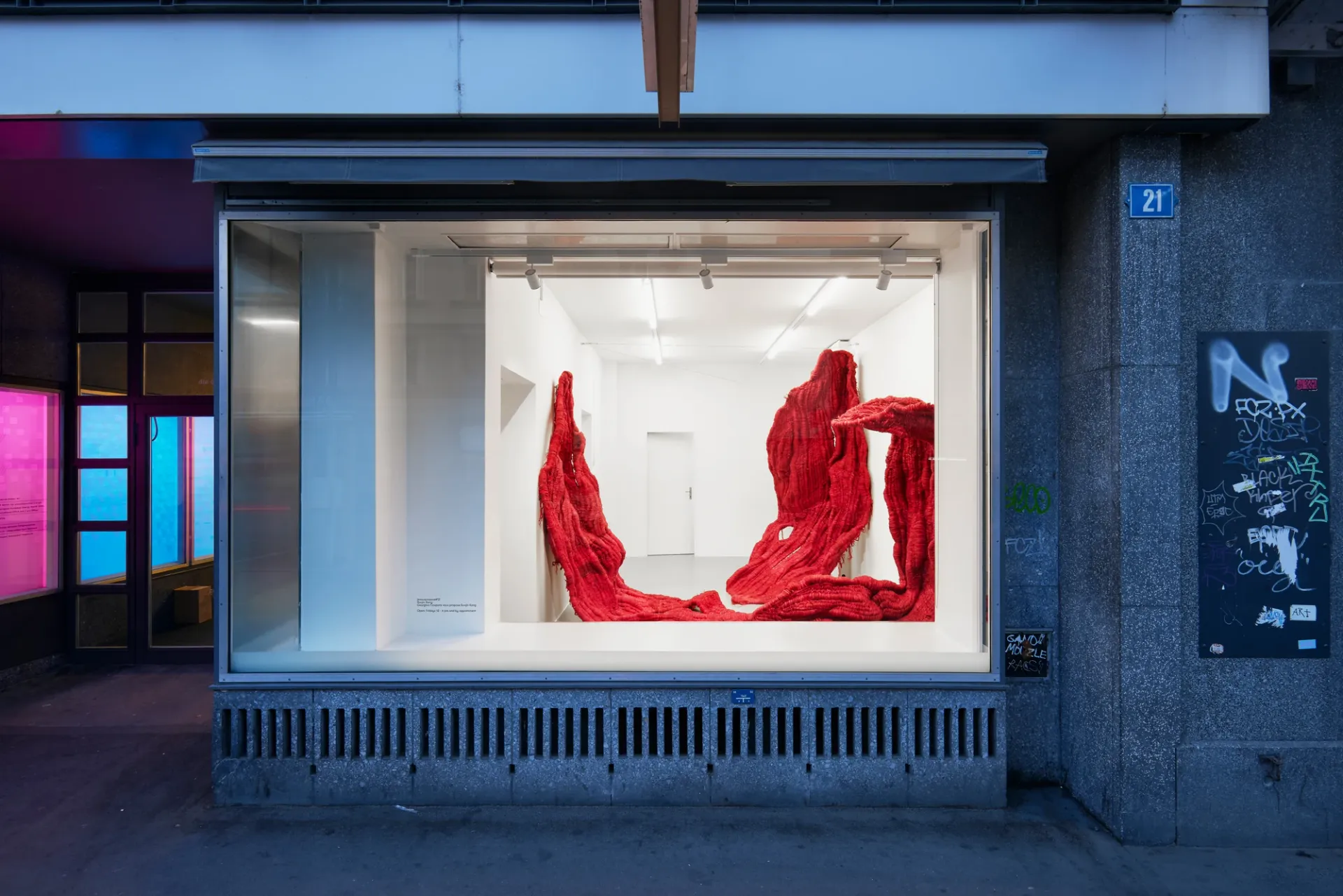
In Landscape (2022), shown at Ben Hunter, London, hundreds of coiled, crimson-dyed tubular forms mass across the gallery floor, 425 × 390 cm of hand-dyed jute, silk, cotton, linen and hemp that spreads like a sea surface or an interior organ system seen from above.
A concurrent wall piece from the same period pulls black fibre across a 250 × 280 cm form that buckles inward at its centre, its cavity revealing material from an entirely different register. Both seem to grow rather than arrive.
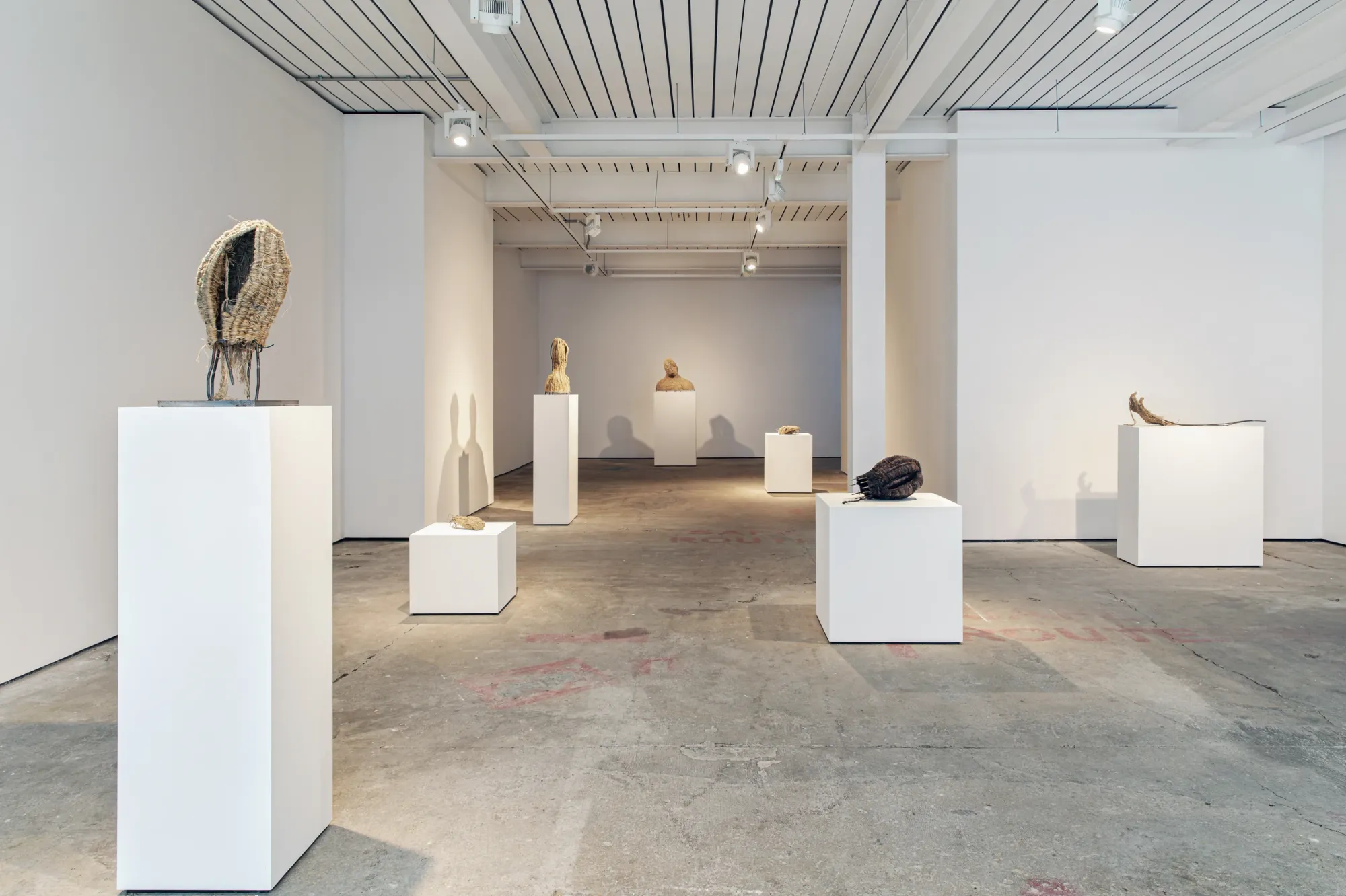
In To Be You, Whoever You Are (2023), presented by Gathering in London, Kang approached the human figure for the first time. Metal armatures wrapped in silk, linen, cotton, jute and hemp become figures larger than life-size, faceless, fraying at their edges, with steel extending beyond the textile into trailing wire at their feet.
They hold the proportions of bodies while refusing to be bodies. Devoid of recognisable features and disintegrating at the boundary between inside and out, these presences seem to exist like fragments of ancient statuary, artefact and organism at once, demanding recognition without offering resemblance.
More recently, Kang has introduced concrete, plaster and cement into her material language. In the Stand and Untitledworks shown at MiArt Milan and Galerie Khoshbakht, Cologne (both 2024), clusters of fibre erupt from molded blocks, pushing through like tree burls or keloid tissue. Kang has spoken of interest in "the parts of the body that we can't see": the shapes that form on interior surfaces through injury or sickness, following their own cellular logic toward the surface.
What holds across the span of the work, from the suspended seed-pod forms of Growth (2017) to the woven figures to the concrete-bound pieces, is a refusal to resolve the thing the fibre is doing. The material never fully becomes what it echoes; the form never fully loses the fibre it was made from.
The concrete holds the fibre. The fibre holds nothing back.
Noteable Artworks and Exhibition views:
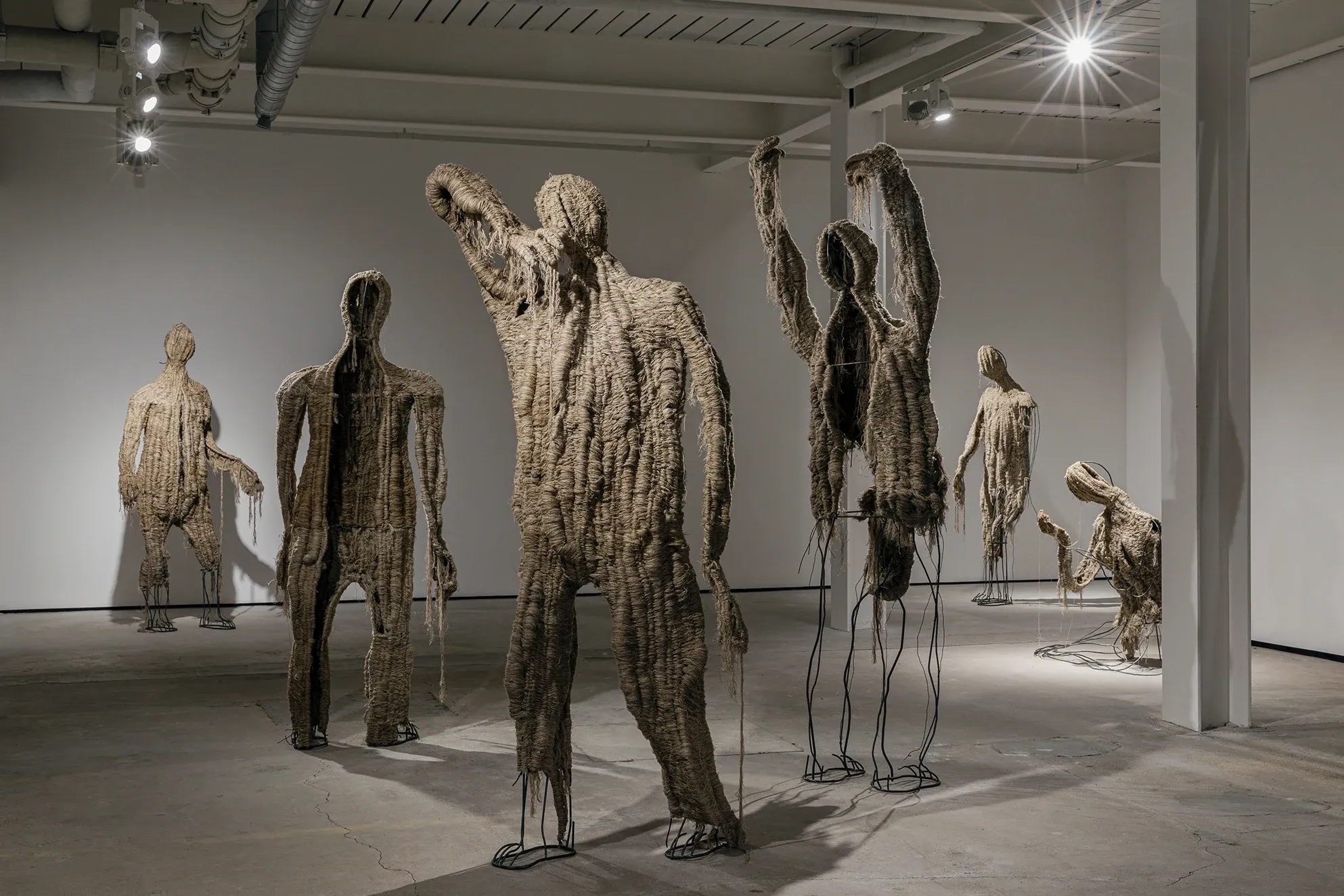
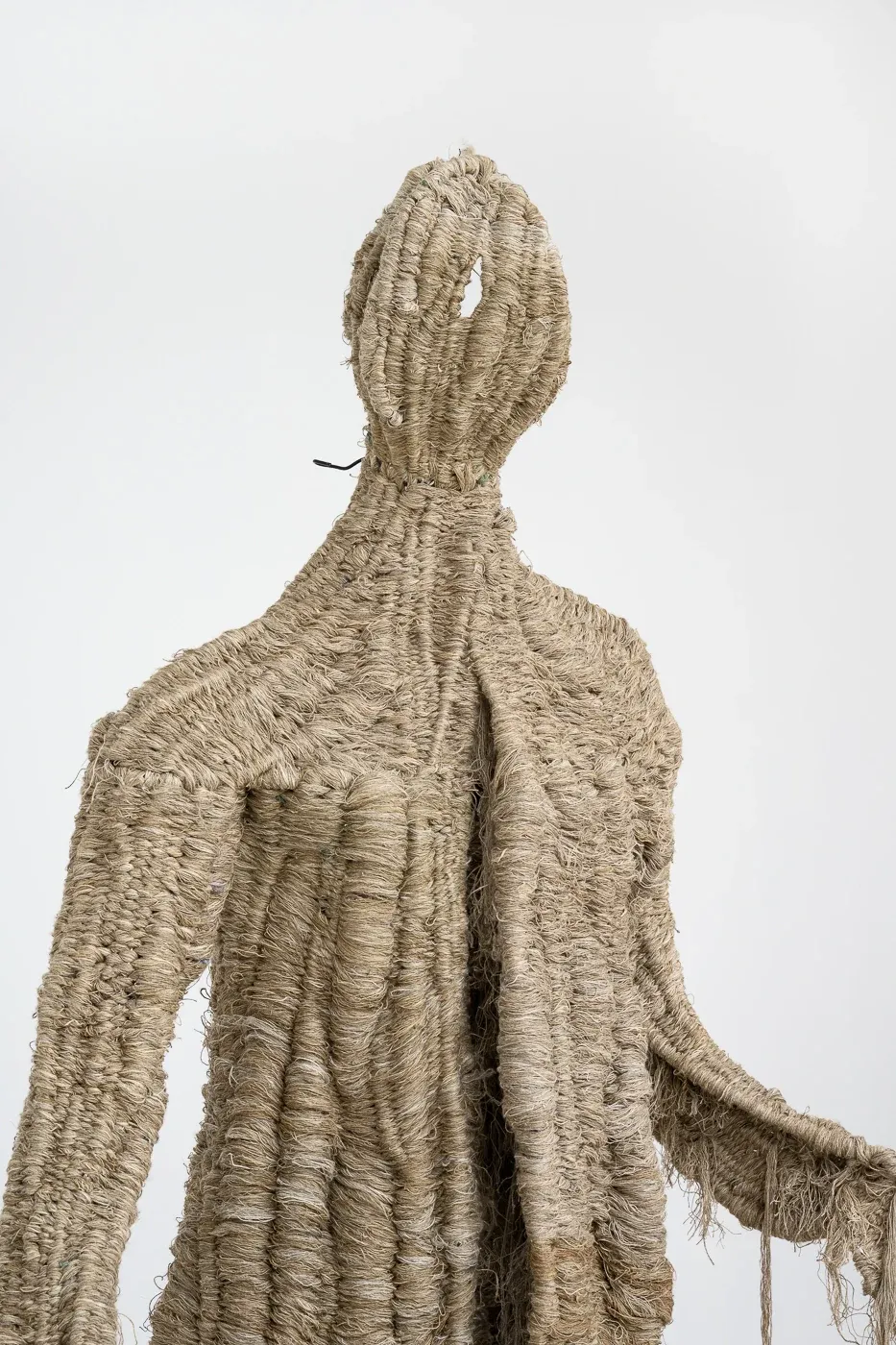
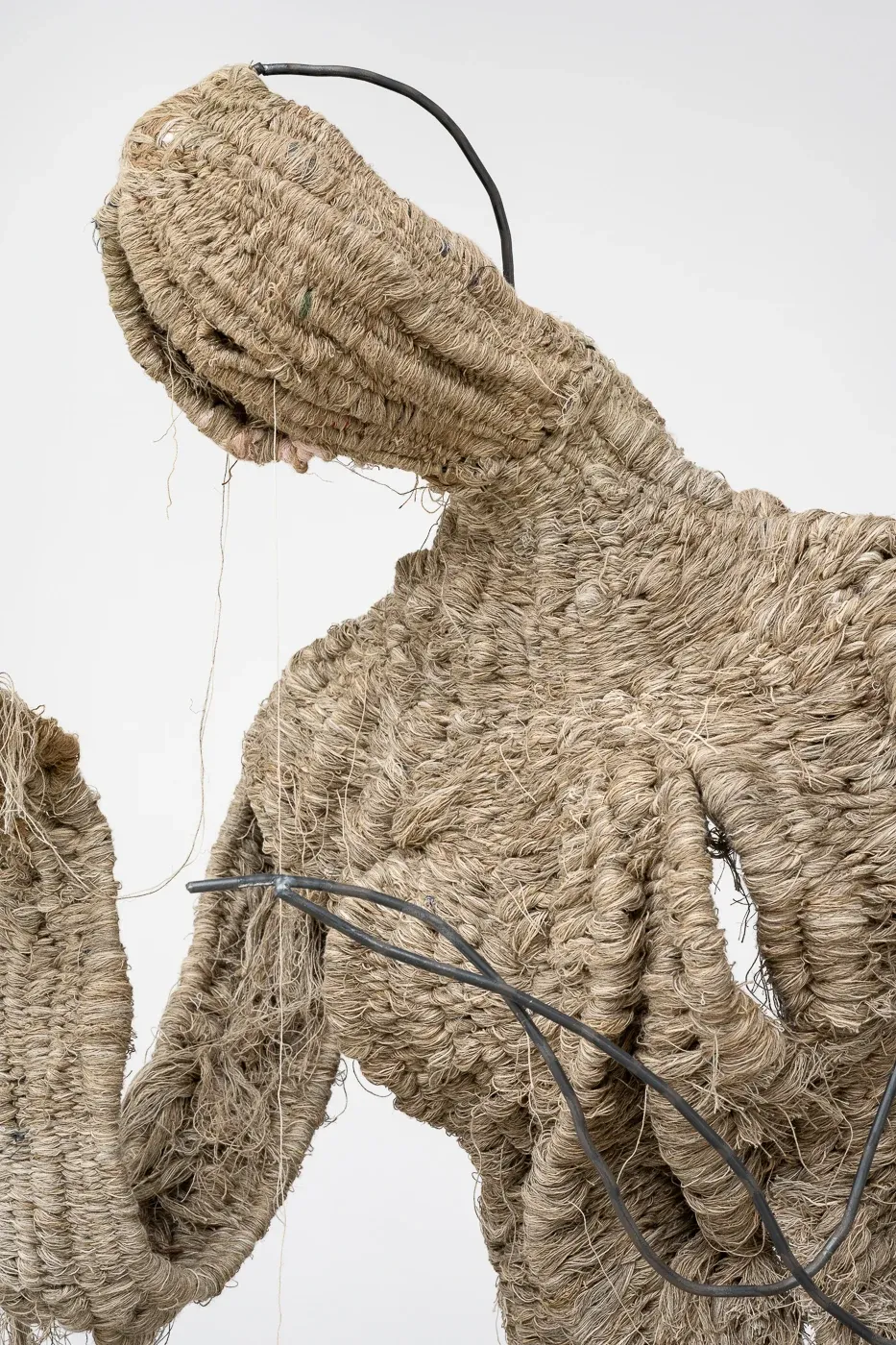
Soojin Kang, To Be You, Whoever You Are V and VI, 2023 Metal armature, silk, linen, cotton, jute, hemp, Courtesy of the artist and Gathering London, photo by Grey Hutton
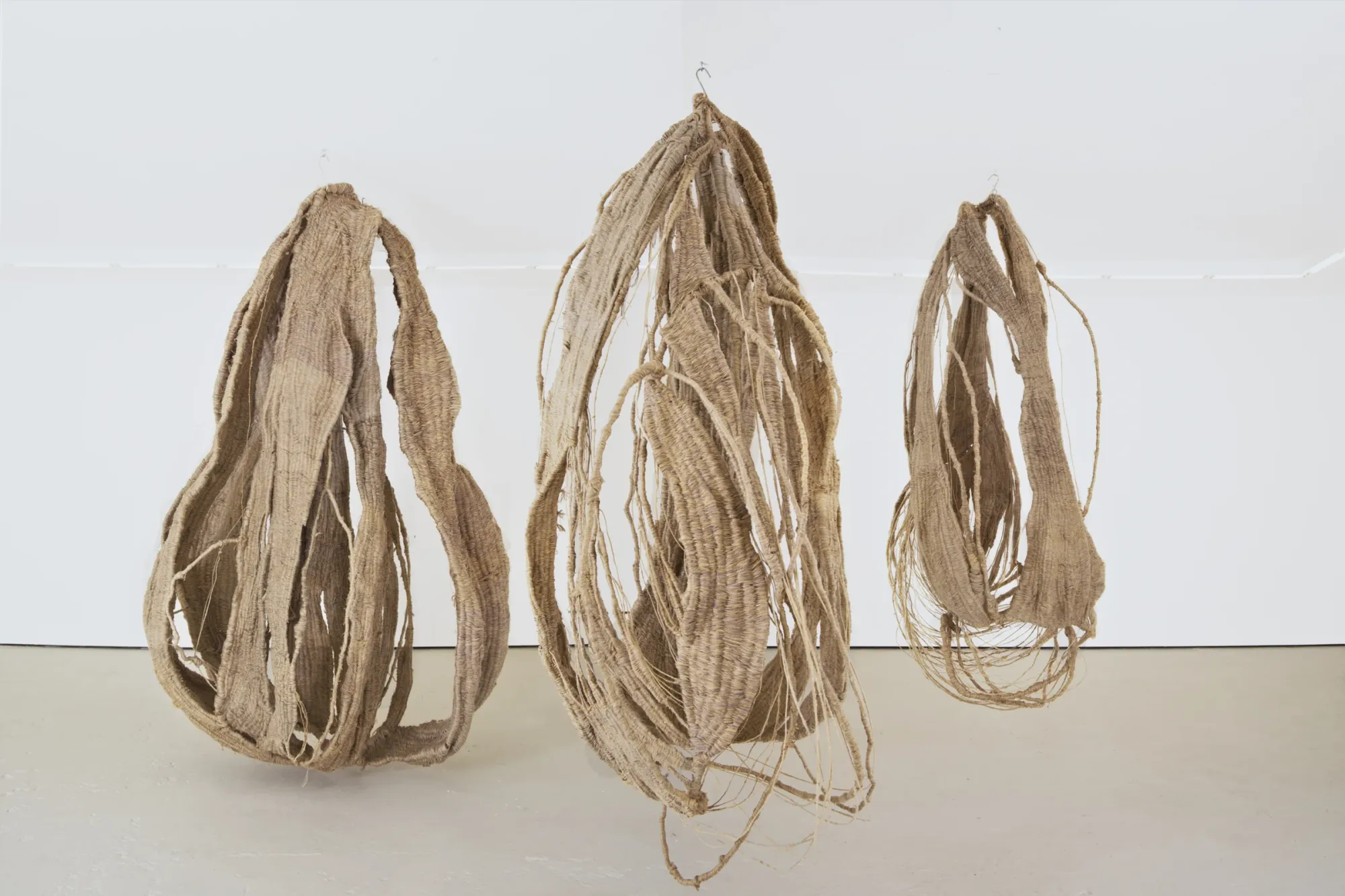
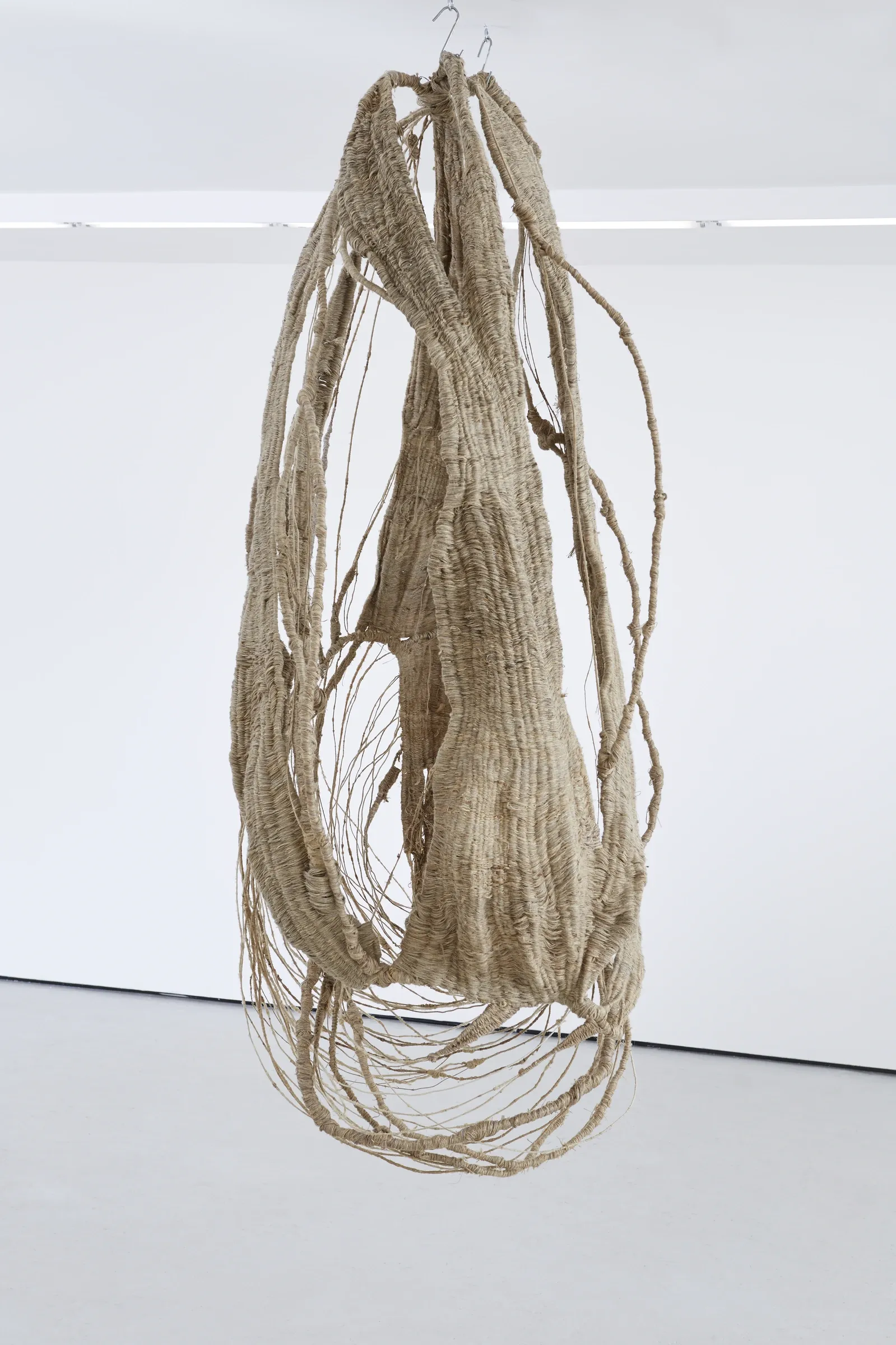
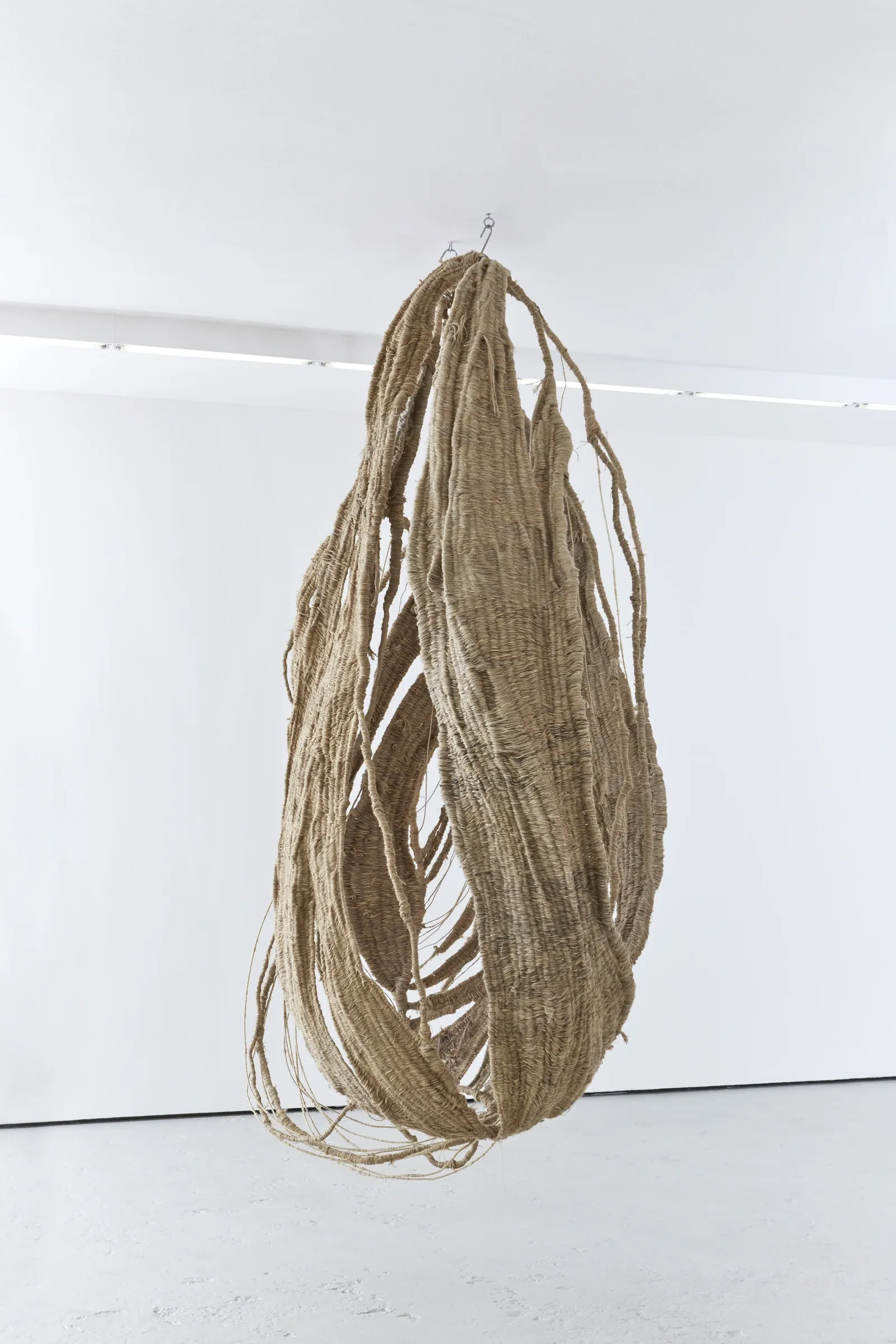
Soojin Kang, ‘Pod I and II, 2017, Metal armature, silk, linen, cotton, jute, hemp , courtesy of the artist and Unit 9, photo by this HAPPENED
Related Readings:
No spam, no sharing to third party. Only you and me.