Soft Machinery: A Poetry of Distorted Paths
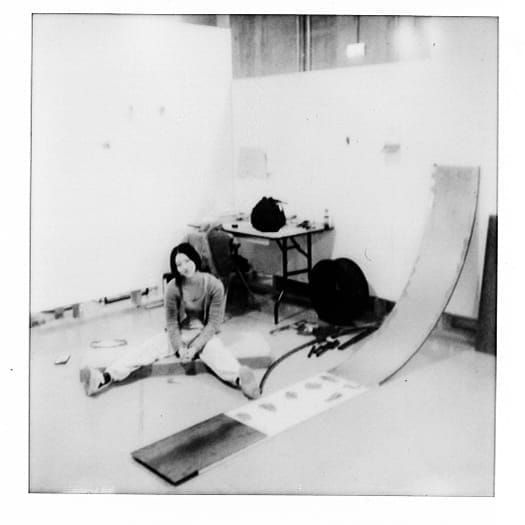
London, UK
China
Sculpture, found objects, silicone casting, metal fabrication, 3D printing
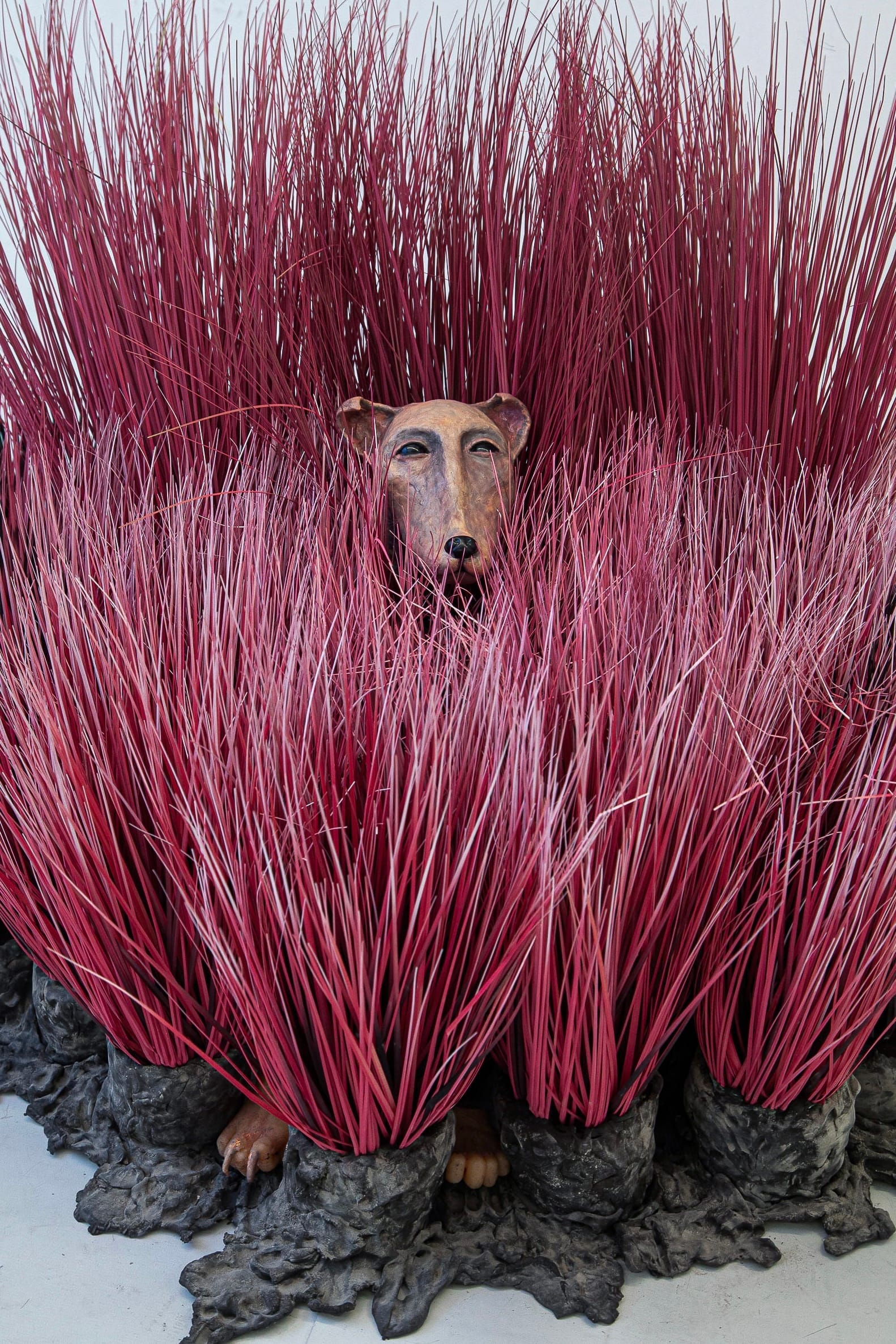
Neighbours and Lovers, 2026
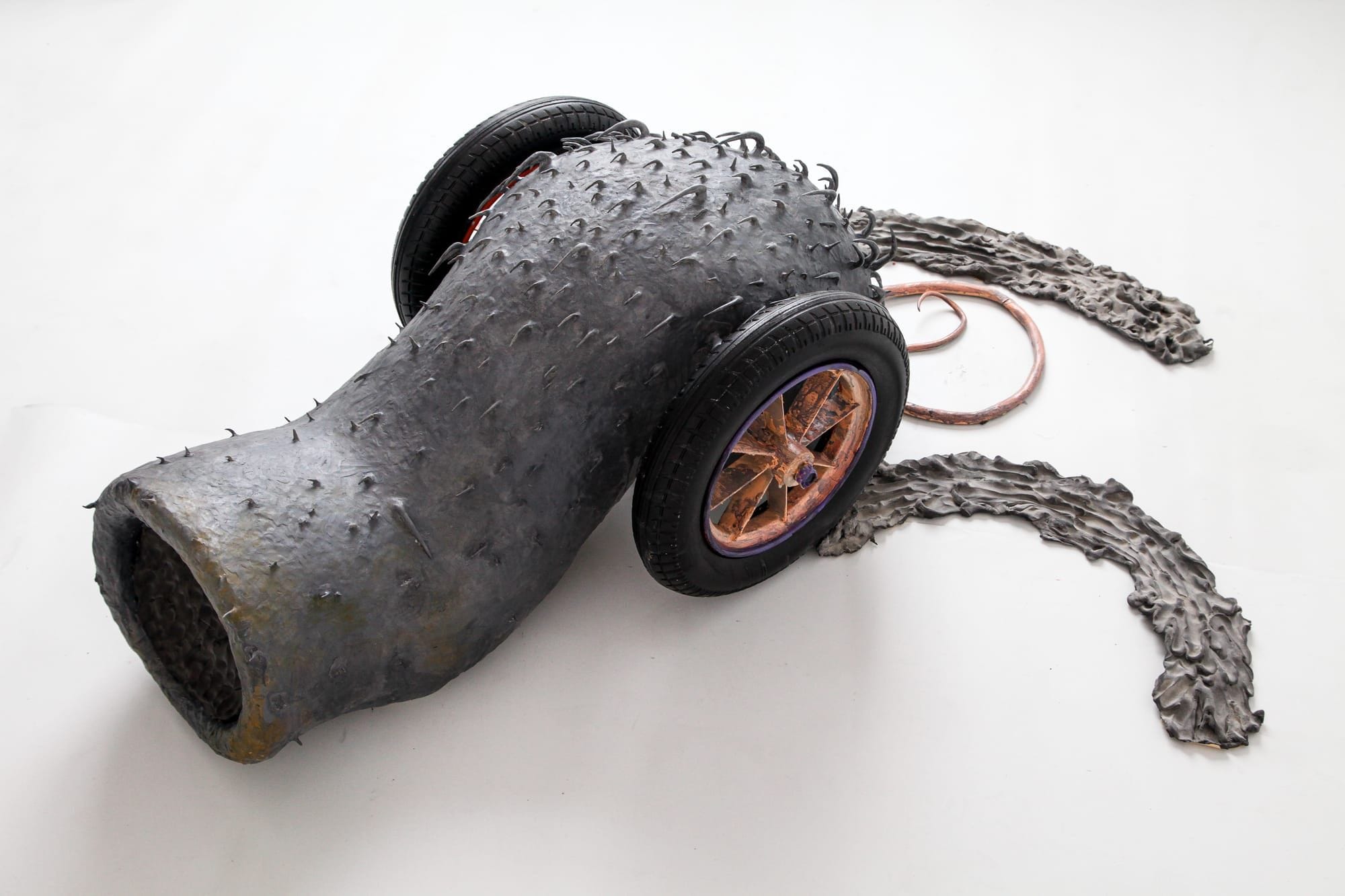
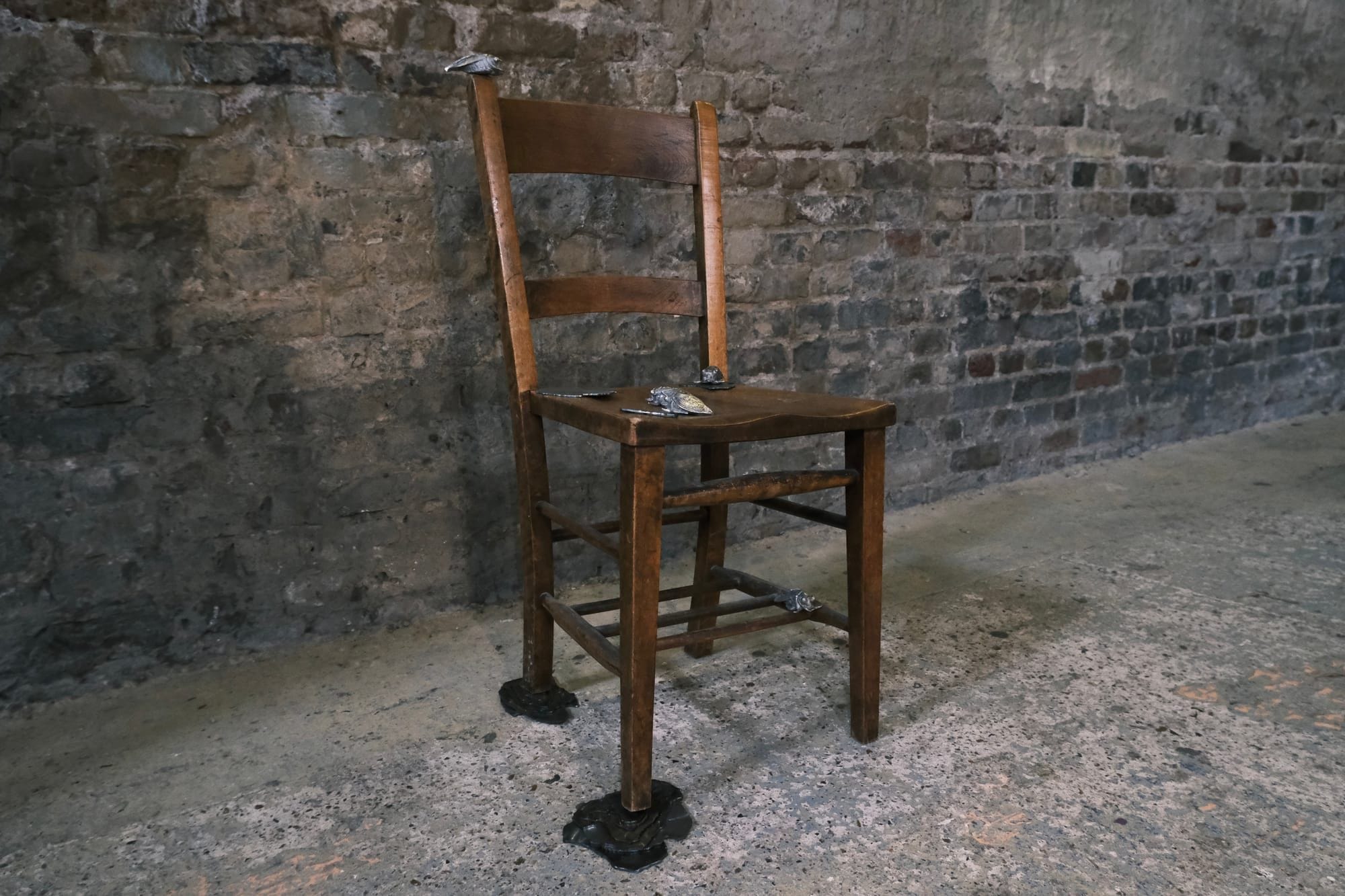
Occupied seat, 2026
A promise set at a tilt, 2025
Courtesy the Artist
Runqi Wen, Zhongting Sun
In Dialogue: Shirley Fu × Di Franco
One of the most compelling aspects of Shirley Fu art practice is the way she engages with materials — not simply as tools, but almost as collaborators.
She often works with unexpected combinations: industrial and everyday materials appear alongside more organic or fragile elements, creating visual and physical tensions within the work.
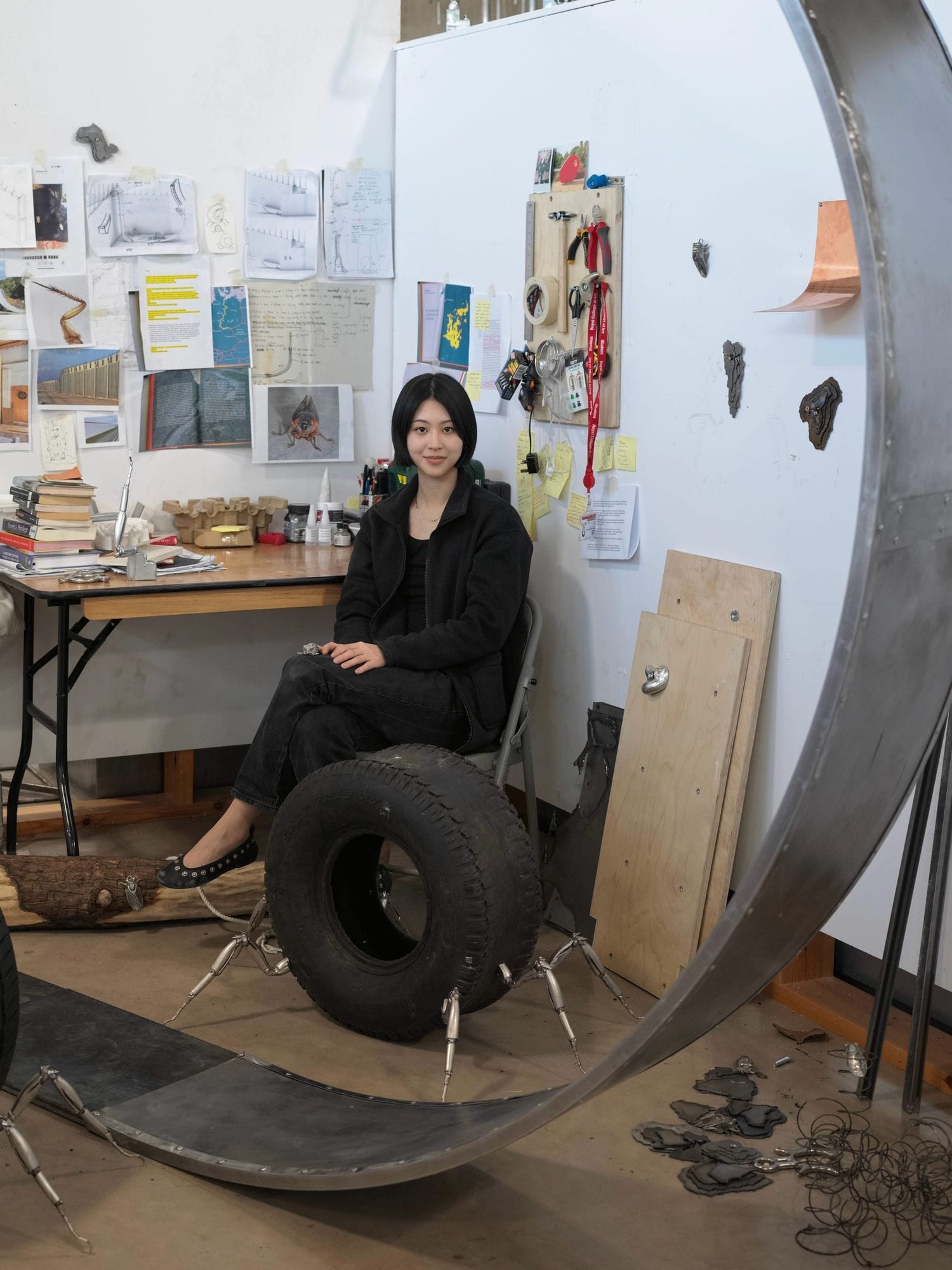
There is a strong focus on sensory qualities, texture, weight, balance, resistance and how these properties shape both the process and the final outcome.
Many of her pieces seem to exist in an in-between state, as if still in the process of becoming, which gives them a sense of vitality and instability.
Manual processes play a central role: cutting, shaping, assembling, and reassembling. This studio-based approach often remains visible in the finished work, rather than being concealed, reinforcing the idea that the work is not only about a final form, but about construction, trial, and discovery.
Ultimately, Shirley’s work exists in a tension between control and chance — between intention and emergence — resulting in pieces that are both materially grounded and conceptually open.
Interview - Shirley Fu × Di Franco
1. How do you define the conceptual core of your artistic practice?
I would say exploring the boundaries between human and non-human life, using hybrid forms to question ideas of identity, belonging and transformation.
I’m interested in translating layered meaning into visual form, creating spaces or objects that feel ambiguous and open-ended. I would hope the viewer to enter a world that is unfamiliar but still echoes something real, something emotional or political beneath the surface.
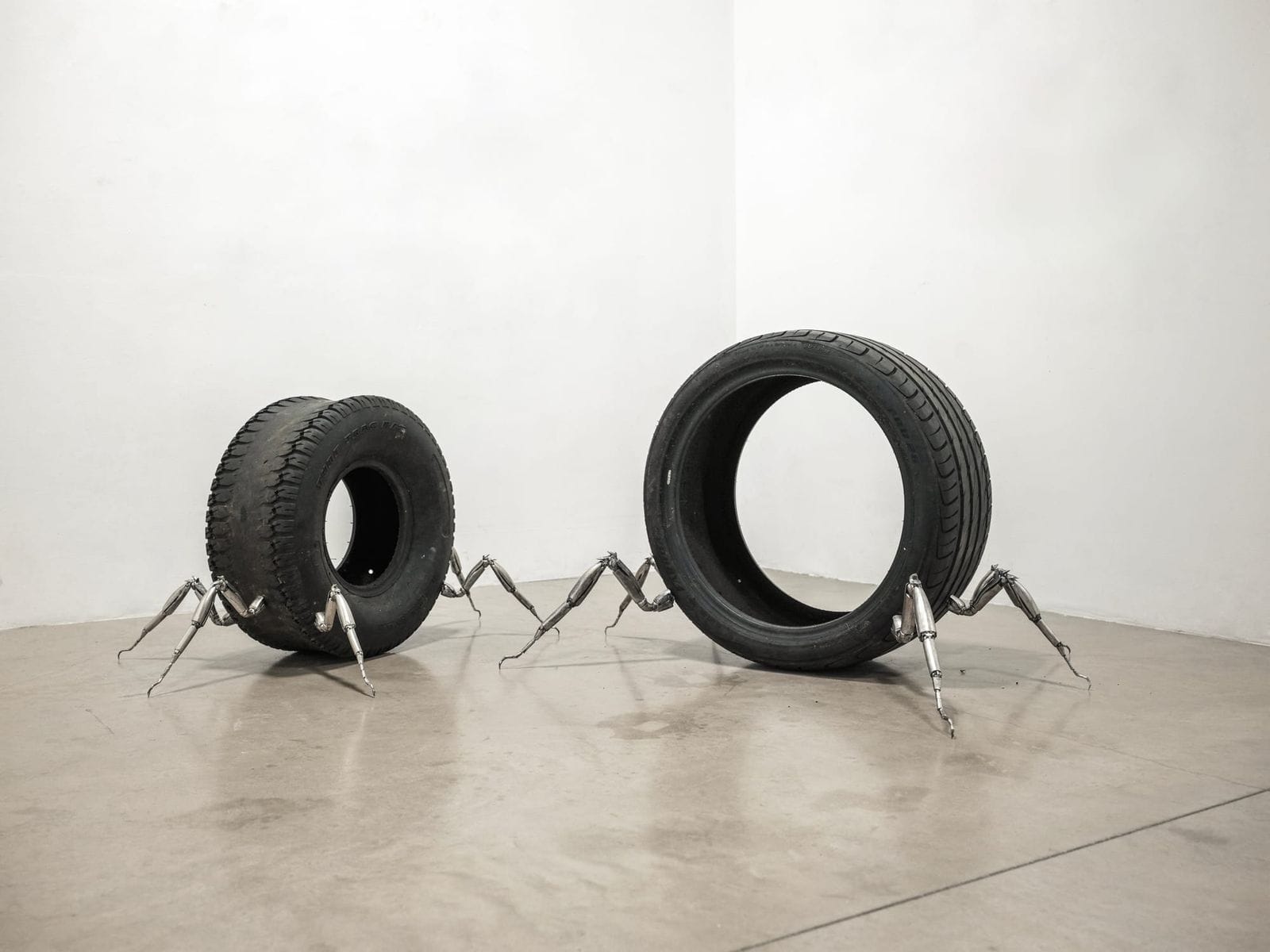
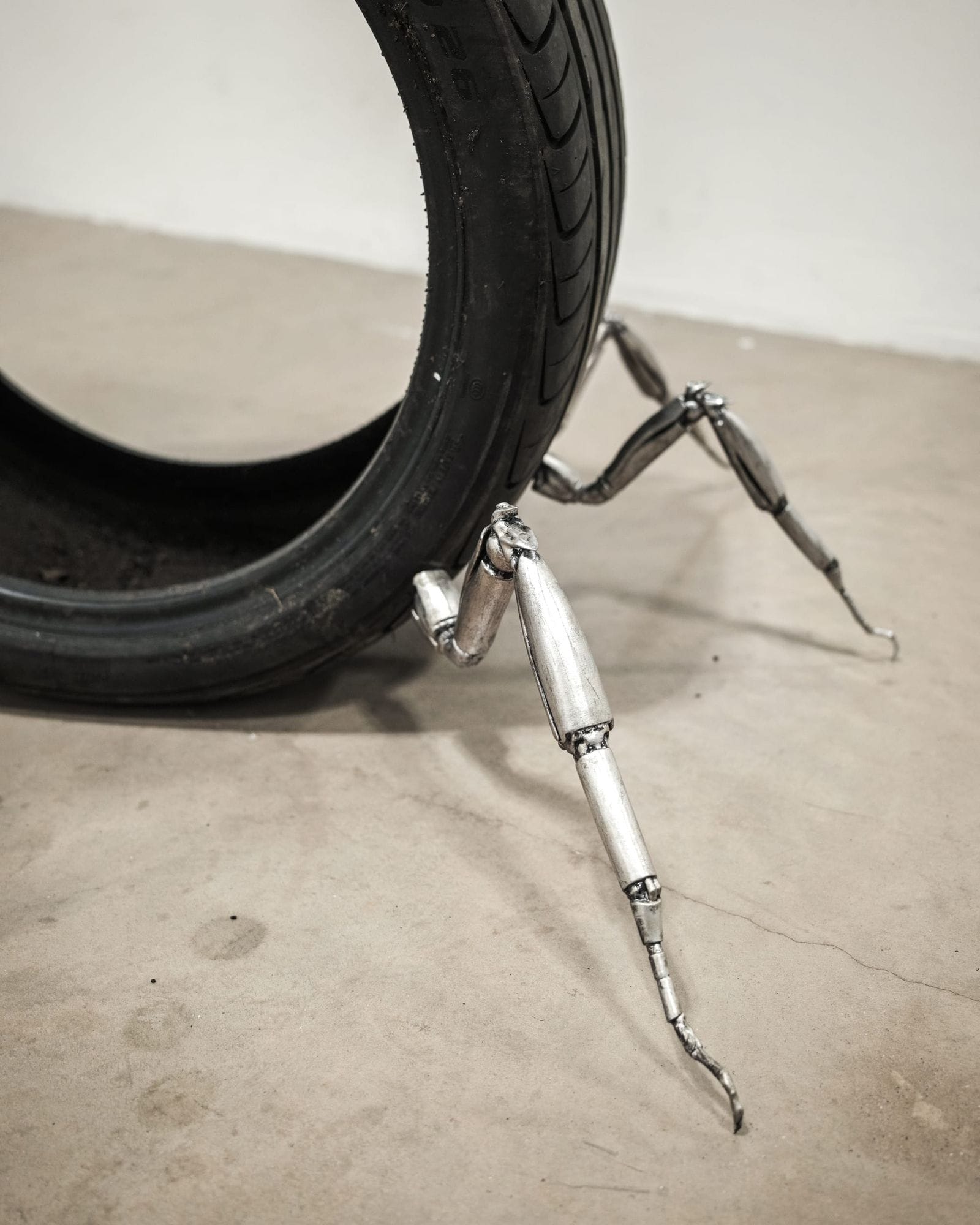
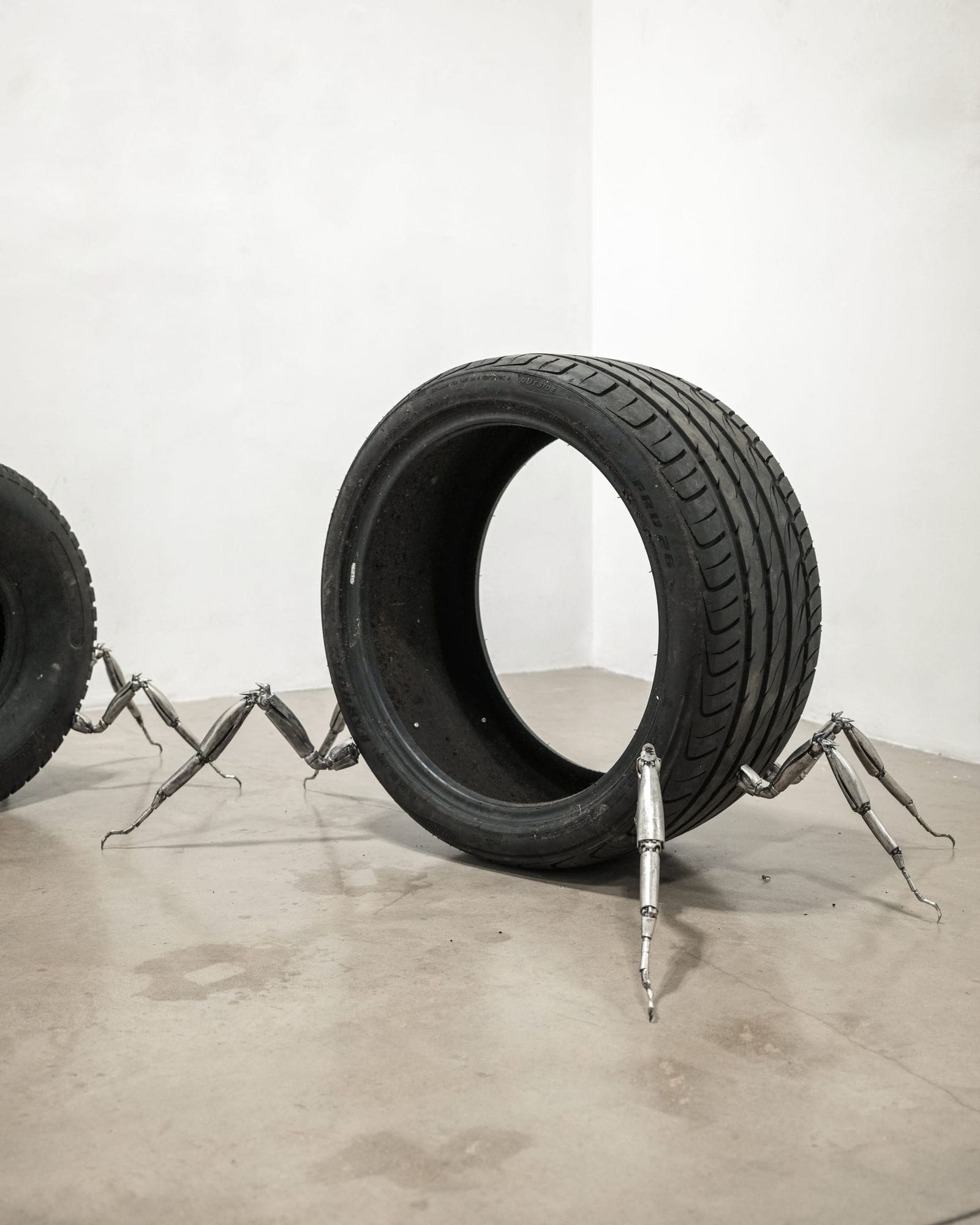
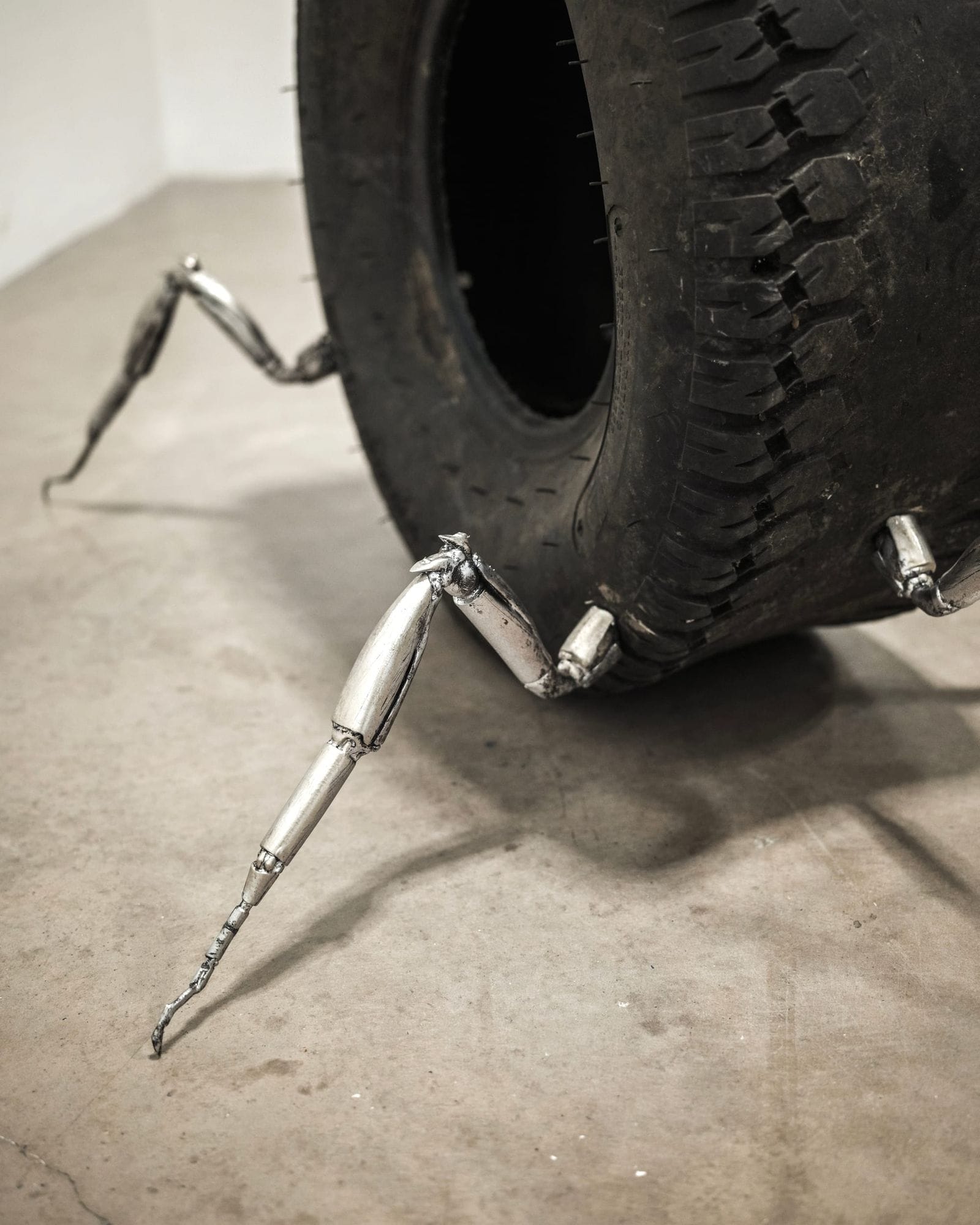
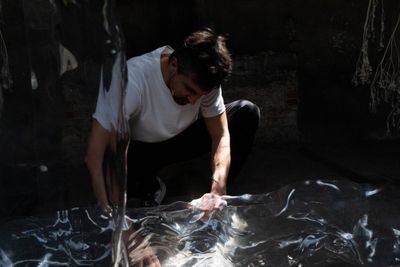
Shirley Fu, Neighbours and Lovers, 2026, found tyres and 3D printed resin legs, 70 x 125 x 65 cm, 60 x 110 x 55 cm, Courtesy of the artist, Photo by Zhongting Sun
2. In what ways does your personal trajectory influence your work?
Moving to the UK alone when I was 13, I felt a lot of alienation and confusion. I remember feeling like I had two identities, one in China and one in the UK. During my teenage years, I couldn’t decide who I was or who I wanted to become, but now I think I have a better idea. I think all those journeys have translated into my work, and, in the same way, exploring my practice has influenced how I see myself.
3. What interests you more: the process or the final result?
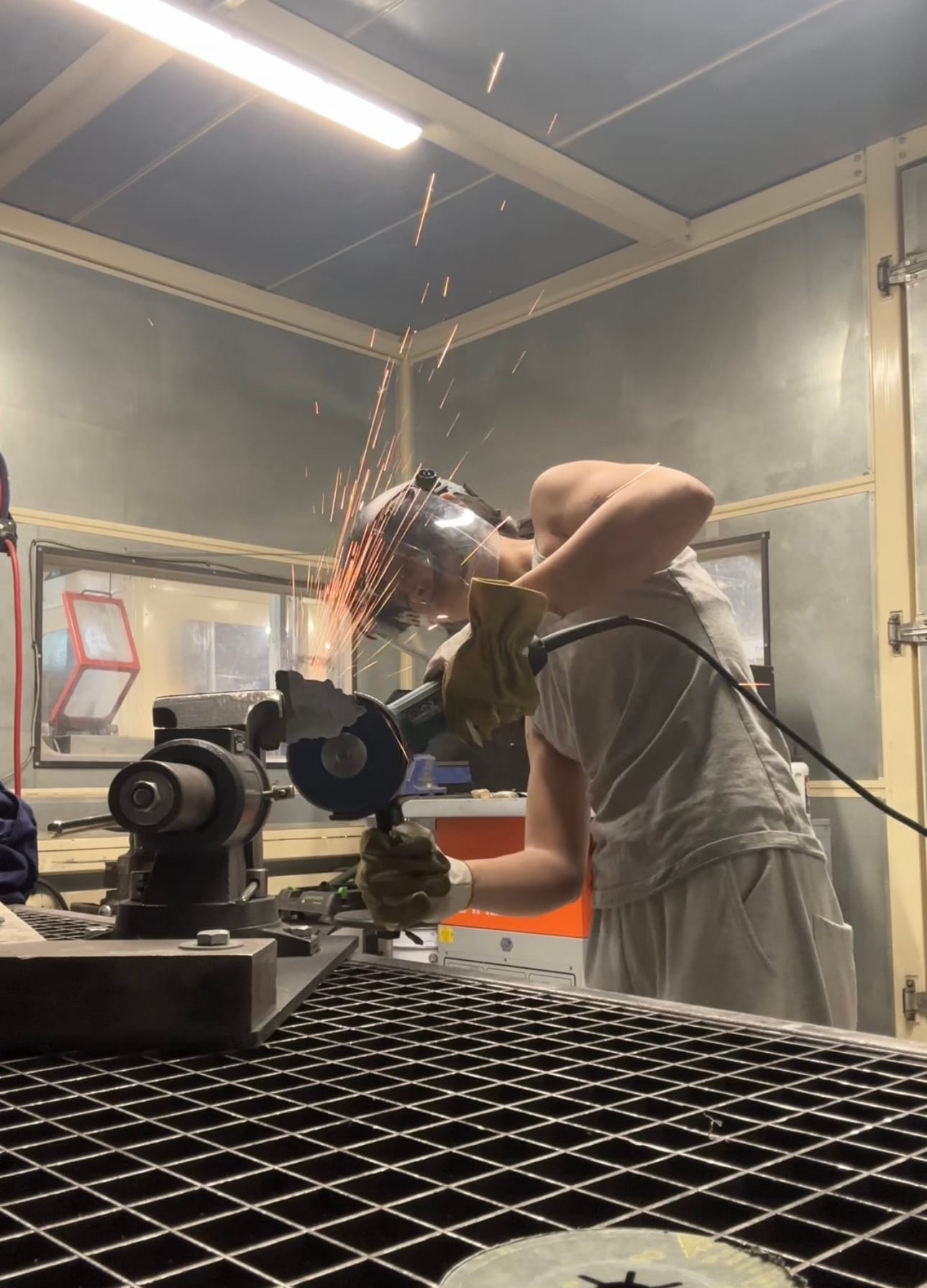
Both, I really enjoy the manual making and the sparks during the process; there’s something so fulfilling about just making and seeing it develop into something more refined. The uncertainty during the process I find very beautiful, as it gives me a number of possibilities.
4. How do you choose the materials you use in your work?
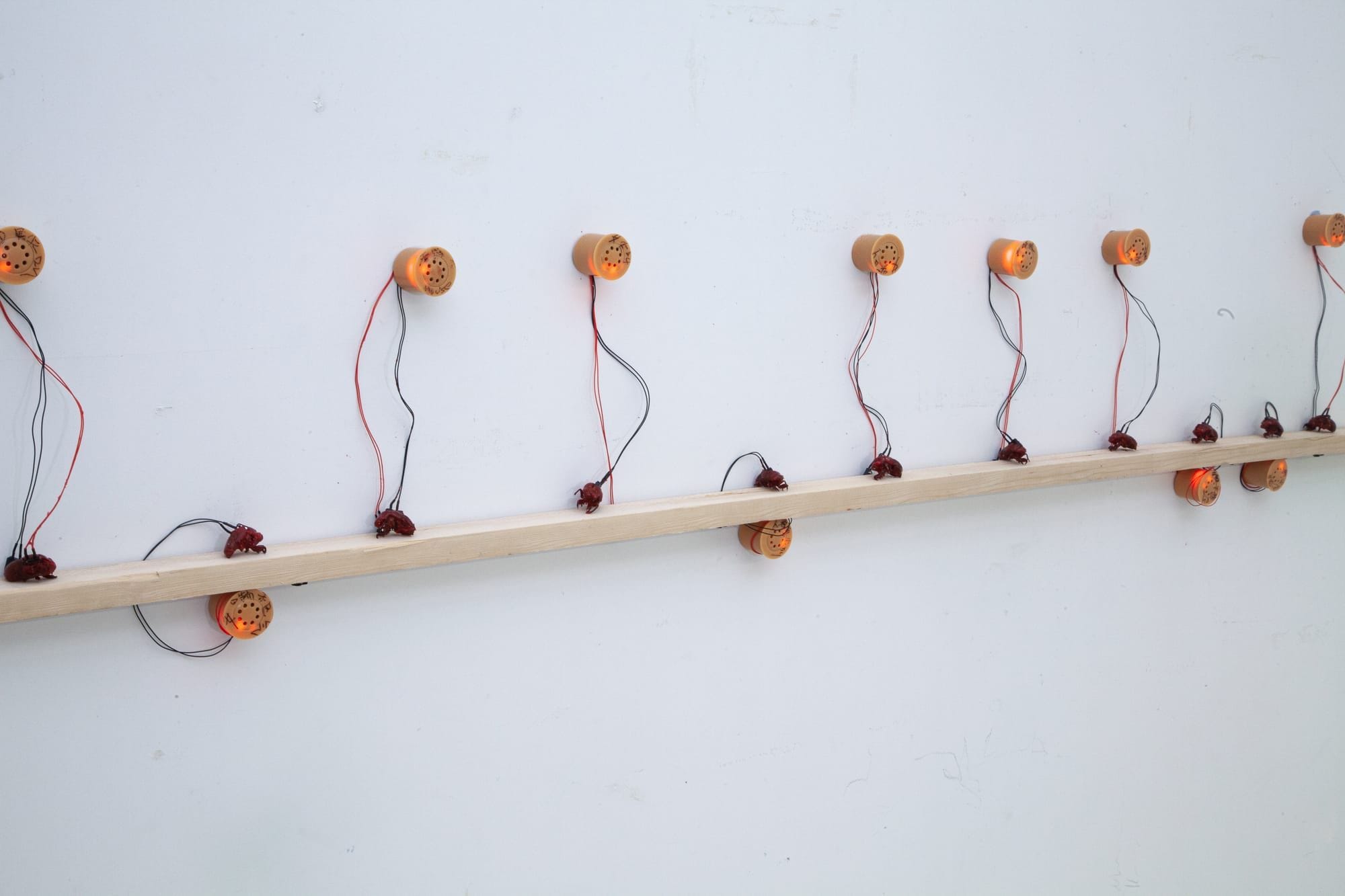
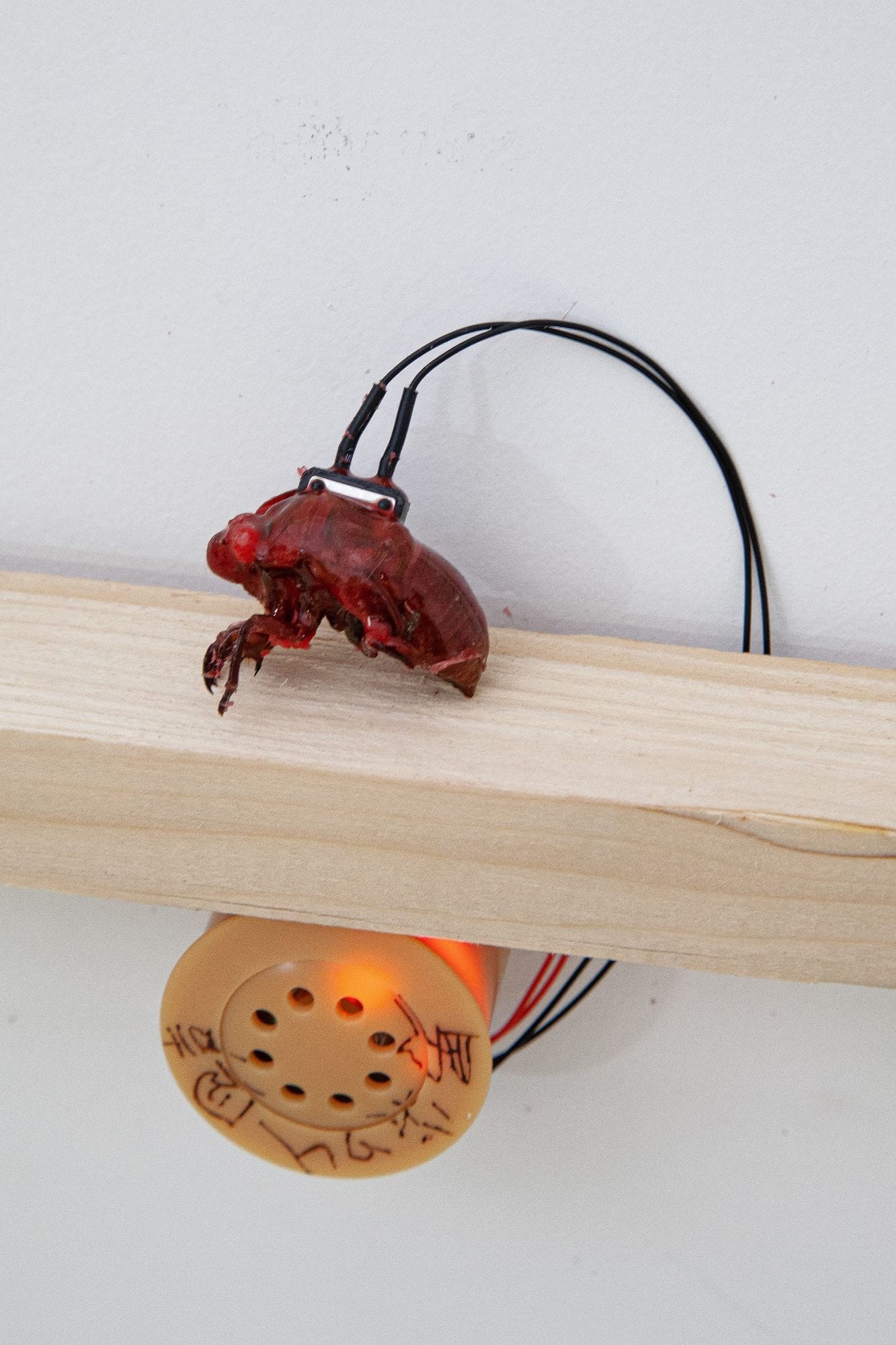
It can be spontaneous, I pick up tyres from the local trash centre near my university, or I find cicada shells on the ground when I’m outdoors climbing. At the time, I wasn’t thinking much; it just felt like these materials or objects were calling at me. And there are materials I intentionally choose for their material language, such as silicone with a strong sense of flesh or metal with a cold, industrial tone.
5. What role does experimentation play in your artistic practice?
A huge part of my work starts with just experimenting with materials or an idea I have. I would spend time exploring the possible outcomes of a specific material and try to perfect my technical ability.
For example, silicone casting requires control and precision for the mould to come out fine. The work I want to make in metal requires calculations of weight and precise measurements. I would make CAD models to estimate and plan. Sometimes the plan can change multiple times, or back and forth, until I’m happy with it.
6. Is error something you seek or avoid in your process?
Yes and no, I don’t think errors really exist until it comes to technical issues, such as having a wrong calculation in metal or I miscalculate the mixture in my silicone mould.
But when it happens, the offcuts of metal or silicone become inspirations in my work; the shapes of the offcuts remind me of a country's map, which later contributes to my practice and leads me into further developments through those
“errors”.
7. How does a new work usually emerge: idea, material, or intuition?
Honestly, all three, but I personally find myself really liking following my intuition. I can make a plan for a new work back and forth multiple times, either by doing more research or by picking which materials, and it still just doesn’t feel right.
At the end, there’s just this spark or intuition that spoke to me and made me finalise my decisions. But that could also just be all the considerations and planning disguised as intuition, all the information I’ve absorbed that lies behind my subconscious and led me to continue. I think it’s just a constant dialogue among all three; none of them can be left out to continue.
8. What themes consistently run through your work?
Having works on the ground, I still haven’t fully understood why. But I’ve found a pattern: I really like making works and placing them on the floor. I’ve had many incidents where I show a work, and people accidentally step on it.
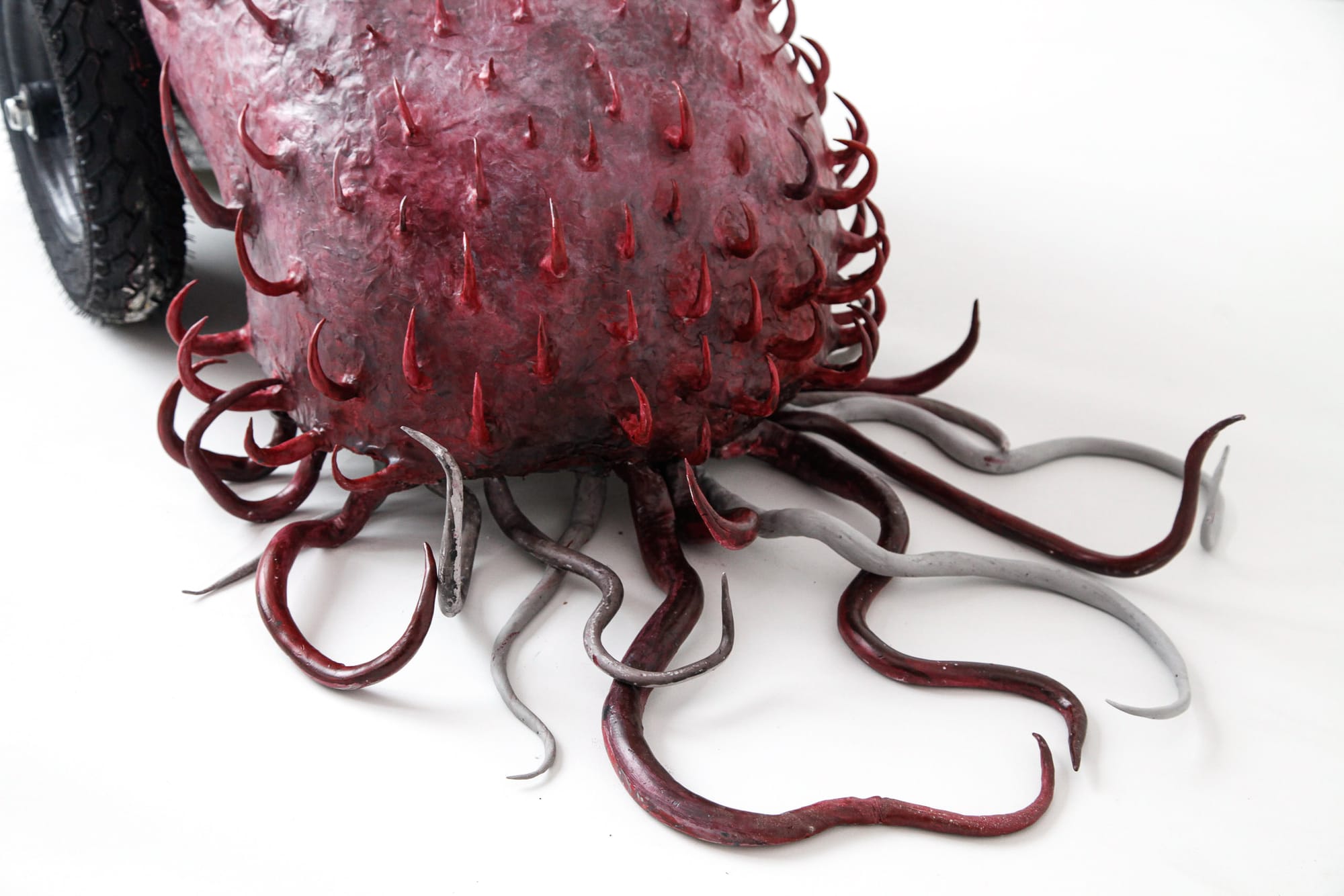
I made an egg that went next to my tyres, and it got fully crushed the first night of the exhibition. I found it funny, and there’s something so free about it. And I’ve also made work that the intention was to let people step on it, my huge silicone bug that makes humans scream when people stomp on it.
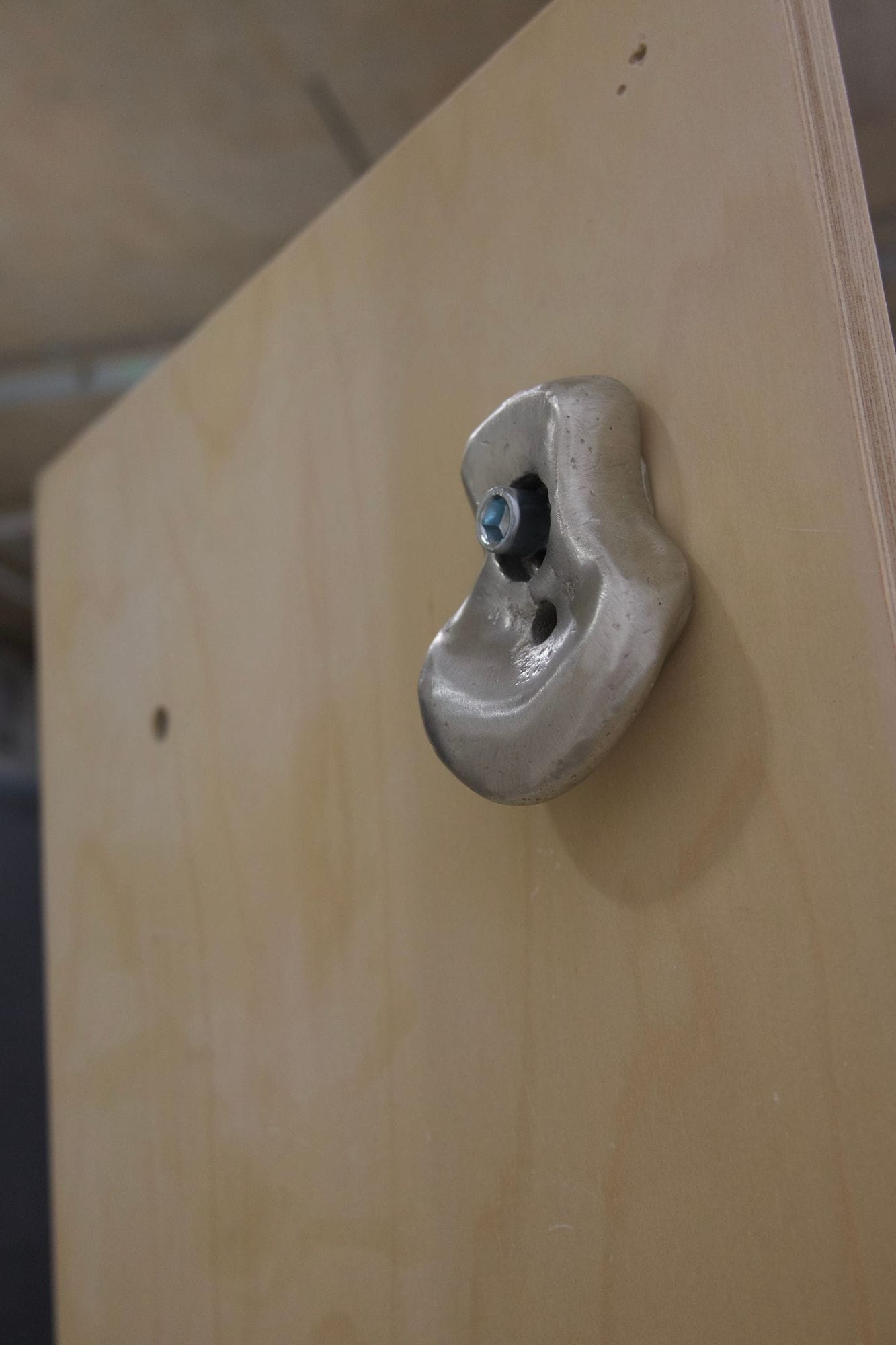
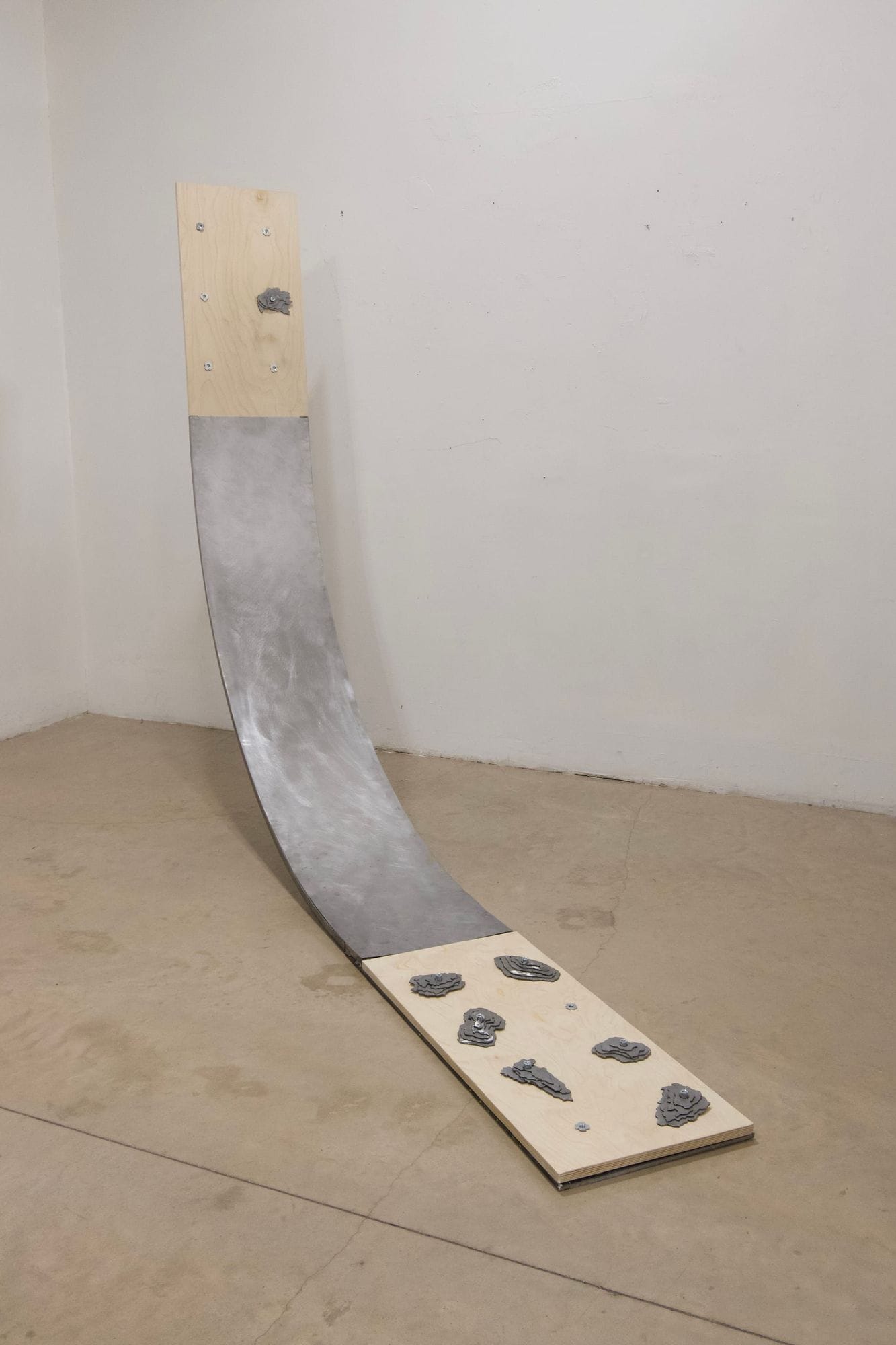
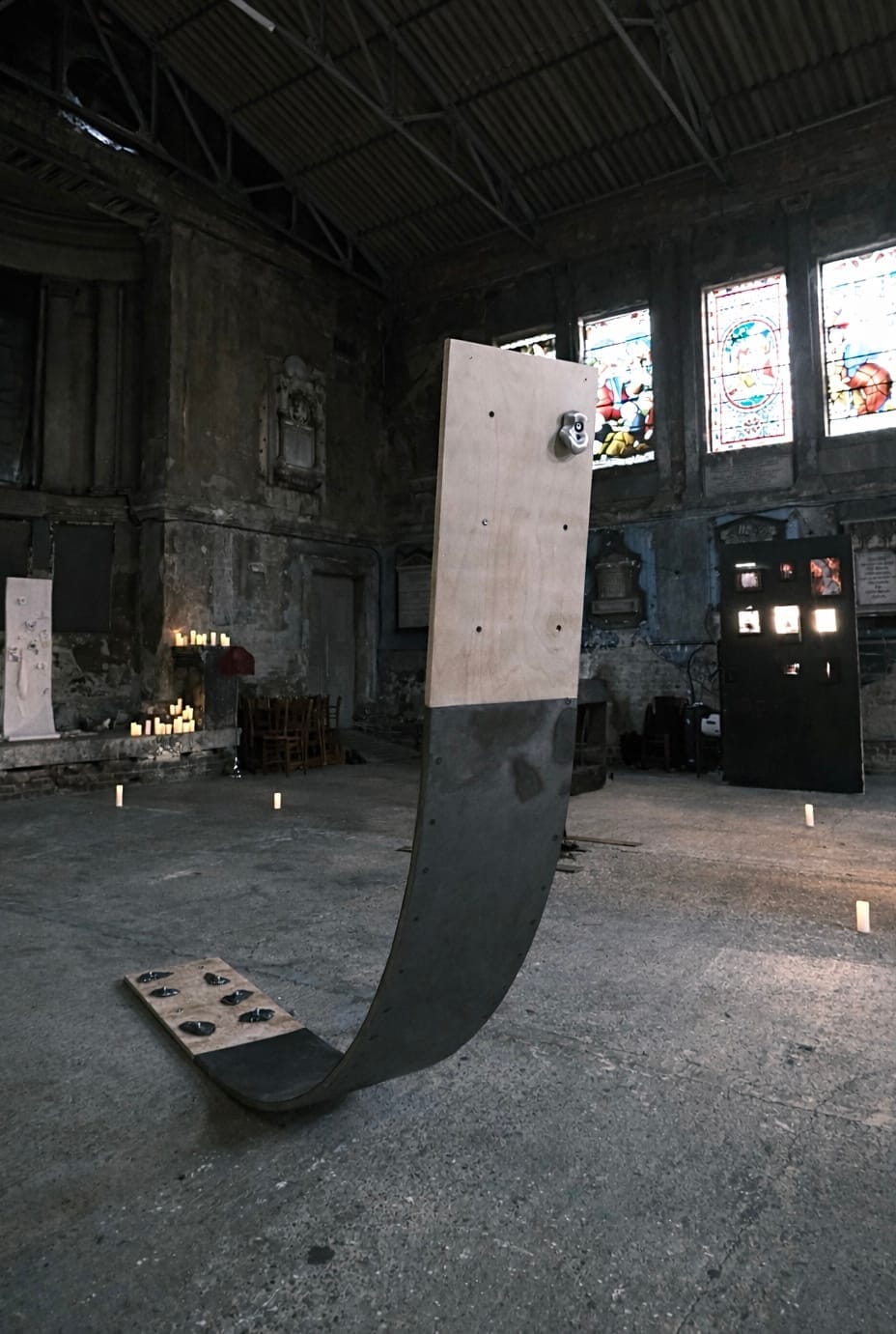
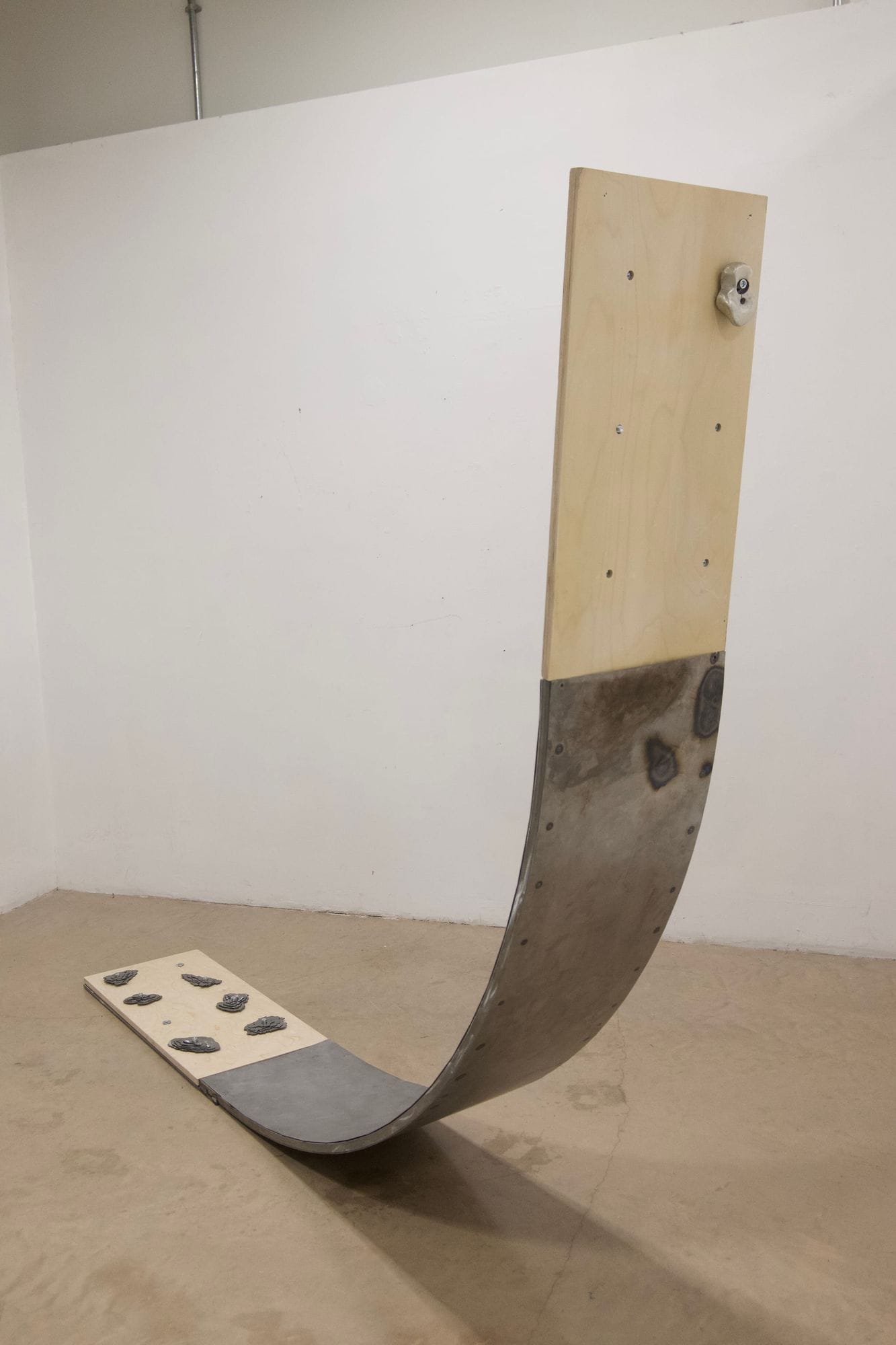
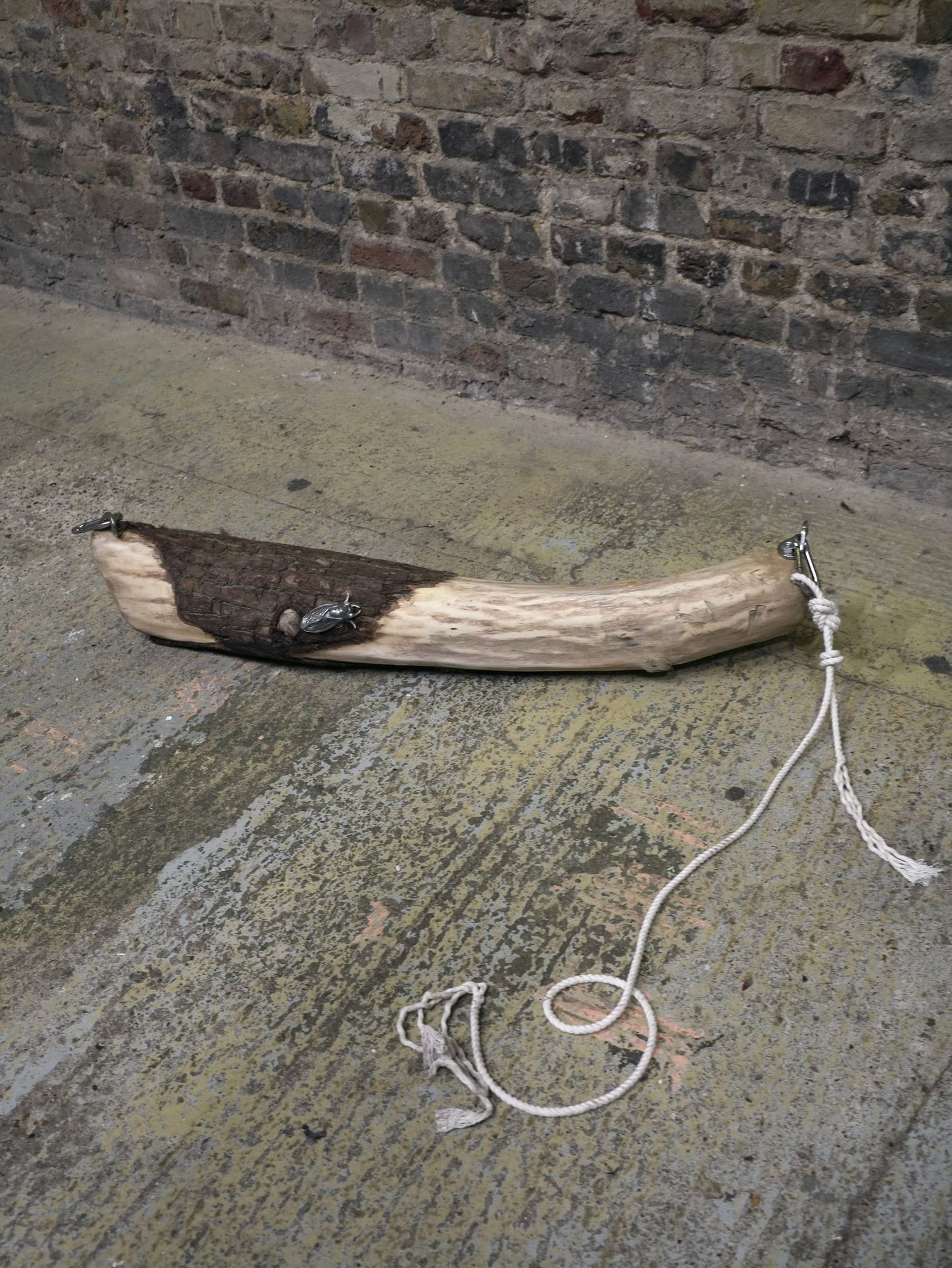
Shirley Fu - A promise set at a tilt 2025 Steel, wood, pewter 250 x 184 x 37cm - Image Courtesy of the artist
9. How would you describe the relationship between drawing, object, and space in your work?
I would say that drawing isn’t a big part of my work right now; I’m more focused on how objects and spaces can convey an experience for the viewer or a specific atmosphere I’m trying to create. Space is important in my work. As someone who mainly makes 3D works, I have a constant dialogue about how my work would exist in a certain space.
The work can be either a response to a specific site or
about how the space would affect the work. The space would sometimes even redirect what I would make.
10. Is your practice more intuitive or conceptual?
I think it's intuitive at first, and then it becomes more conceptual.
11. What is your working rhythm in the studio?
I would usually go into my studio with a goal for what I wanted to do today, either going into the workshops or continuing what I was already making in my studio.
Or sometimes I just focus a day on reading, research, writing, or planning, which can turn into days or even months. But usually, before I start any projects, I take some time to plan before even making.
12. Which artists or references influence your practice?
I’m very influenced by speculative fiction, particularly books like Blood Child by Octavia E. Butler, as well as films such as District 9, The Fly, and Princess Mononoke, and manga like BLAME!.
These works have deeply shaped how I think about world-building and storytelling in my practice. What draws me to them is not just their aesthetics or narratives, but the way they construct entire worlds that feel both alien and uncomfortably familiar.
Growing up, I was fascinated by these kinds of worlds; I would stay up all night reading or watching them almost as a form of escapism. But I’ve come to understand that what felt like escape was also a way of processing reality.
I find these stories often act as metaphors for complex issues, such as power structures, colonial histories, loss of identity, and the evolving relationship between humans, technology, and nature. These themes resonate strongly with my own concerns and practices in my work; these stories always made me have a strong urge to create my own imaginative world.
And also, my hobby rock climbing, it has given me numerous inspirations, either through the shapes of the holds, the outdoor environment, rocks, the physicality of climbing, the journey of a route, the social and psychological element of how an individual perform while climbing, there’s many great metaphors of how the action of climbing can relate to the world, I find ways of connecting them to my
practice.
13. How do you see your work evolving in the coming years?
I have many projects and ideas I want to continue; there’s still a lot to learn and figure out as I’m studying at university right now, which offers workshops and facilities that give me a lot of freedom to experiment.
After I graduate, I think there will be many changes, but hopefully I will figure it out. I still want to make more
weird creatures.
14. What has been the greatest challenge in your artistic journey so far?
I think believing in yourself and your work is what the world wants to see, but I don’t really care anymore. As long as you don't stop, there will be people who enjoy your work.
Hopefully … (Thank you David)
Also trying to control what the viewer thinks; at the end of the day, it isn’t something one can fully control. I should take it easy on it. ( One time, my huge silicone bug got asked if I’m into harming animals, and S&M, that really took me in a spiral.)
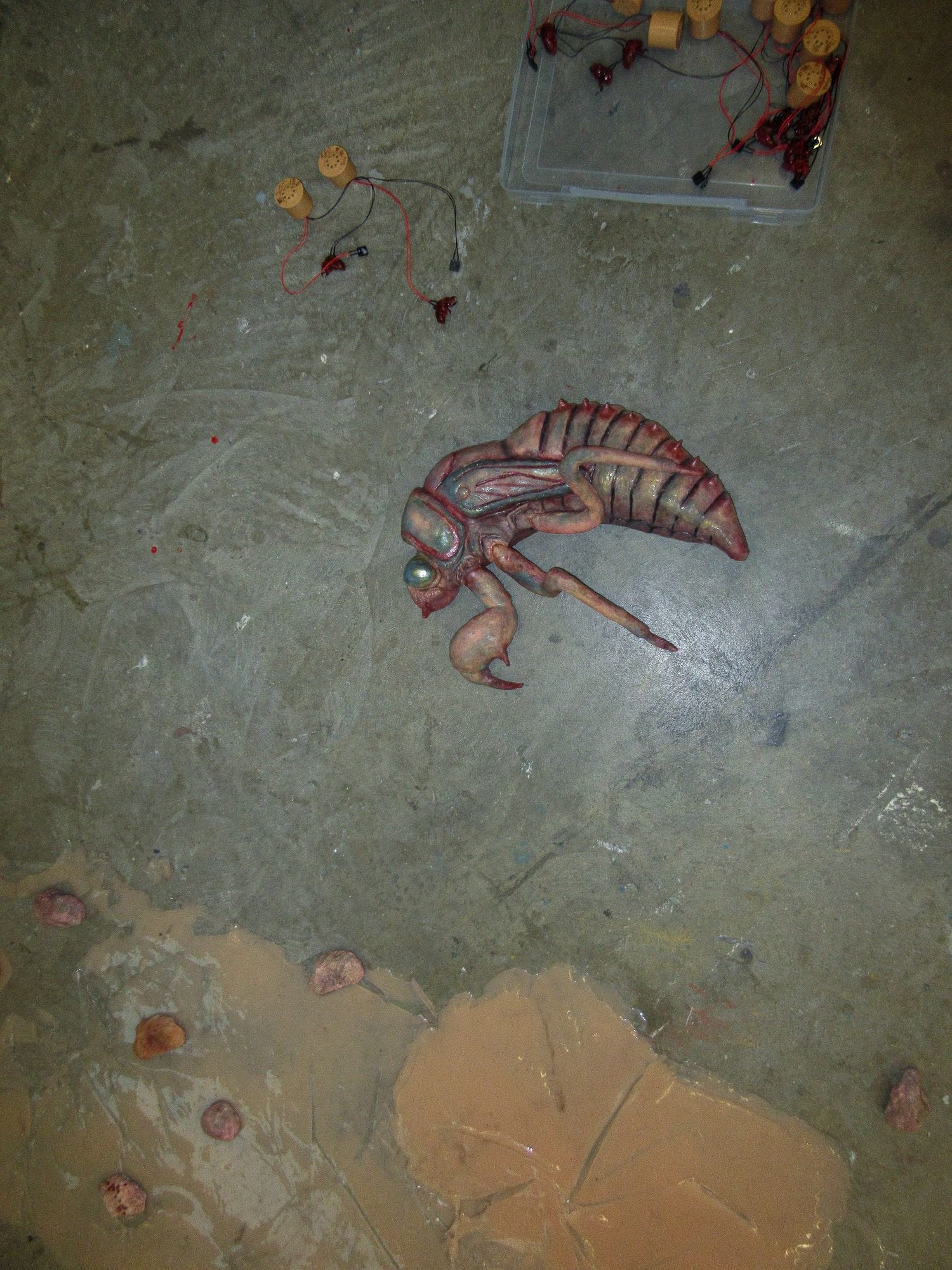
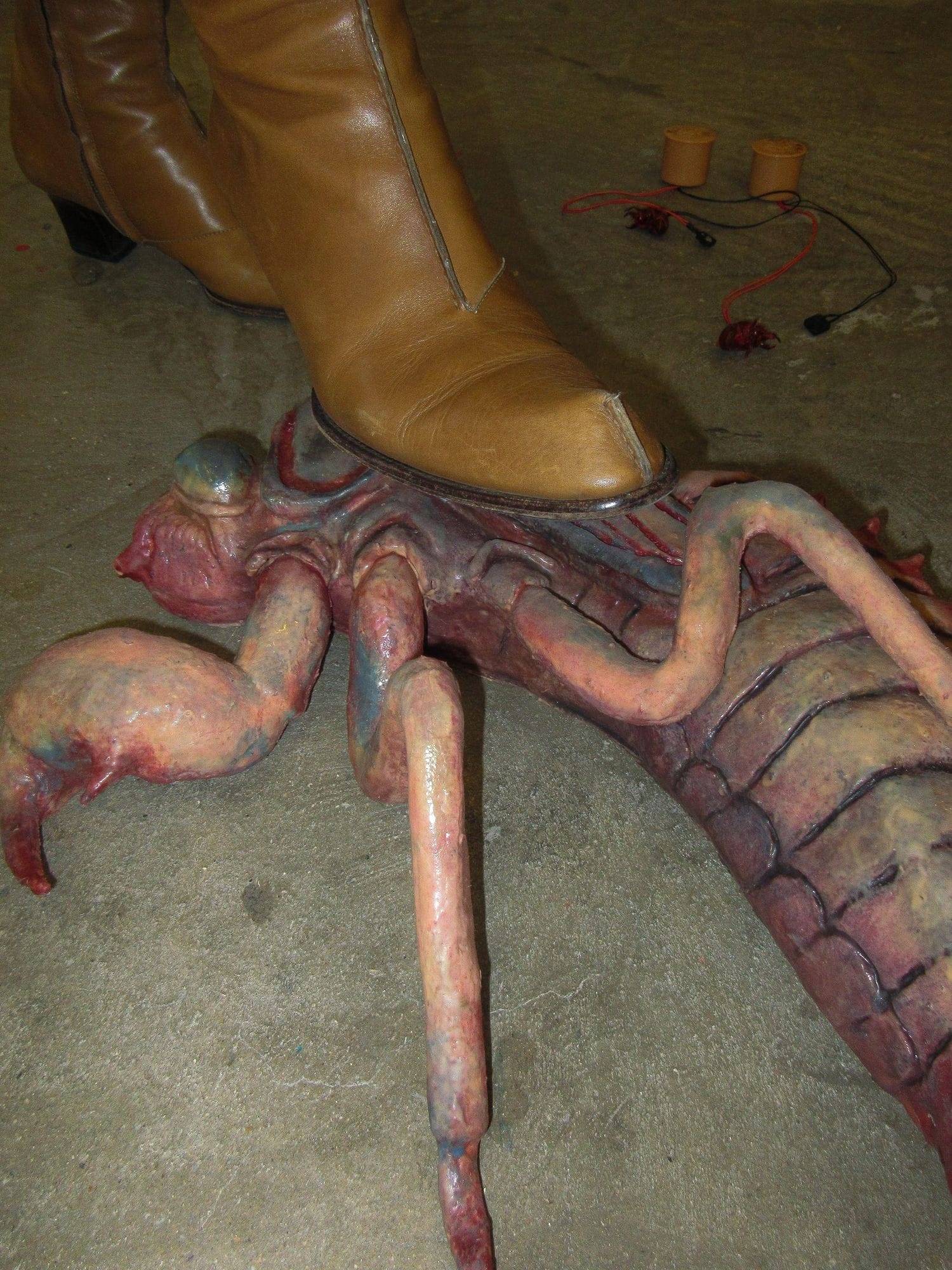
Shirley Fu, Cicada Creature, 2024, silicone, sound buttons, oil paint, 40 × 13 × 10 cm. Image Courtesy of the artist
15. What do you aim to convey or provoke in the viewer?
I would like to test the boundary between what’s comfortable and uncomfortable. I think like insects, for example, a lot of times the species itself isn’t disgusting, but we associate them with diseases or poisonous, insects have existed before humans, more than 480 million years ago. Because of urbanisation, we have reduced opportunities to experience nature, leading to a loss of the ability to identify insects.
People with low insect knowledge are more likely to dislike insects, as indoor insects trigger a stronger sense of disgust than outdoor insects. I think about this a lot. When I’m back in China, there are a lot of cicadas during the summer.
When I’m in the city, the sound the cicadas make is unbearable. I would close my windows, but once I’m in the mountains, climbing, the sound becomes pleasant.
Instagram Shirley Fu
DiFranco on Instagram
About Catapult
This is an artist interview by DiFranco published by Catapult — an independent editorial platform for contemporary art, based in Vienna. We publish exhibition reviews, artist features, interviews, and critical context, with a focus on emerging and mid-career practices from Europe and beyond.
catapult.art
Want to be featured? Submit your work →