A Colony Has No Single Center - Patricia Piccinini at Passage Gallery, Sydney

Patricia Piccinini
Centrifugal Love Garden
Passage Gallery
Sydney, Australia
-
102/8 Quay Street, Haymarket, Sydney 2000
Document Photography
Courtesy Passage Gallery
Passage Gallery Presents 'Centrifugal Love Garden' in Haymarket, Sydney
The centrifuge is a machine for forcing things apart by spinning them together. What it produces, clusters of living cells in suspension, growing into forms with no clinical category yet, exists between the engineered and the emergent. Science calls them organoids.
Patricia Piccinini has spent more than three decades returning to exactly this threshold: the place where biology reaches past itself, where the fabricated begins to carry something that wasn't part of the plan. Her work has never been interested in the boundary between technology and nature as a crisis to resolve. It finds the tenderness there instead.
In Piccinini's logic, care doesn't arrive after vulnerability, it is what makes the organism possible. What the lab grows and what the body holds aren't opposites. They are the same gesture.
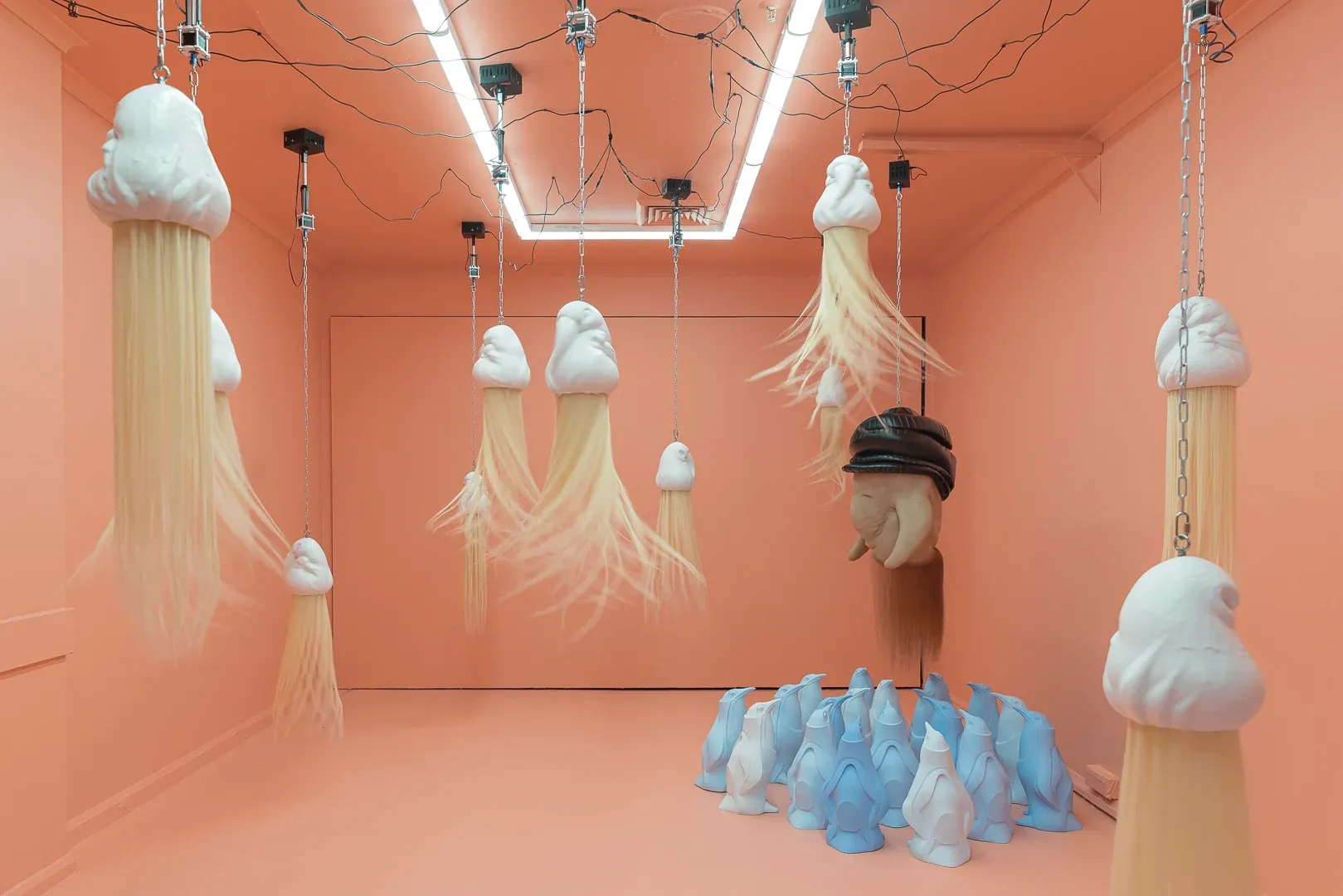
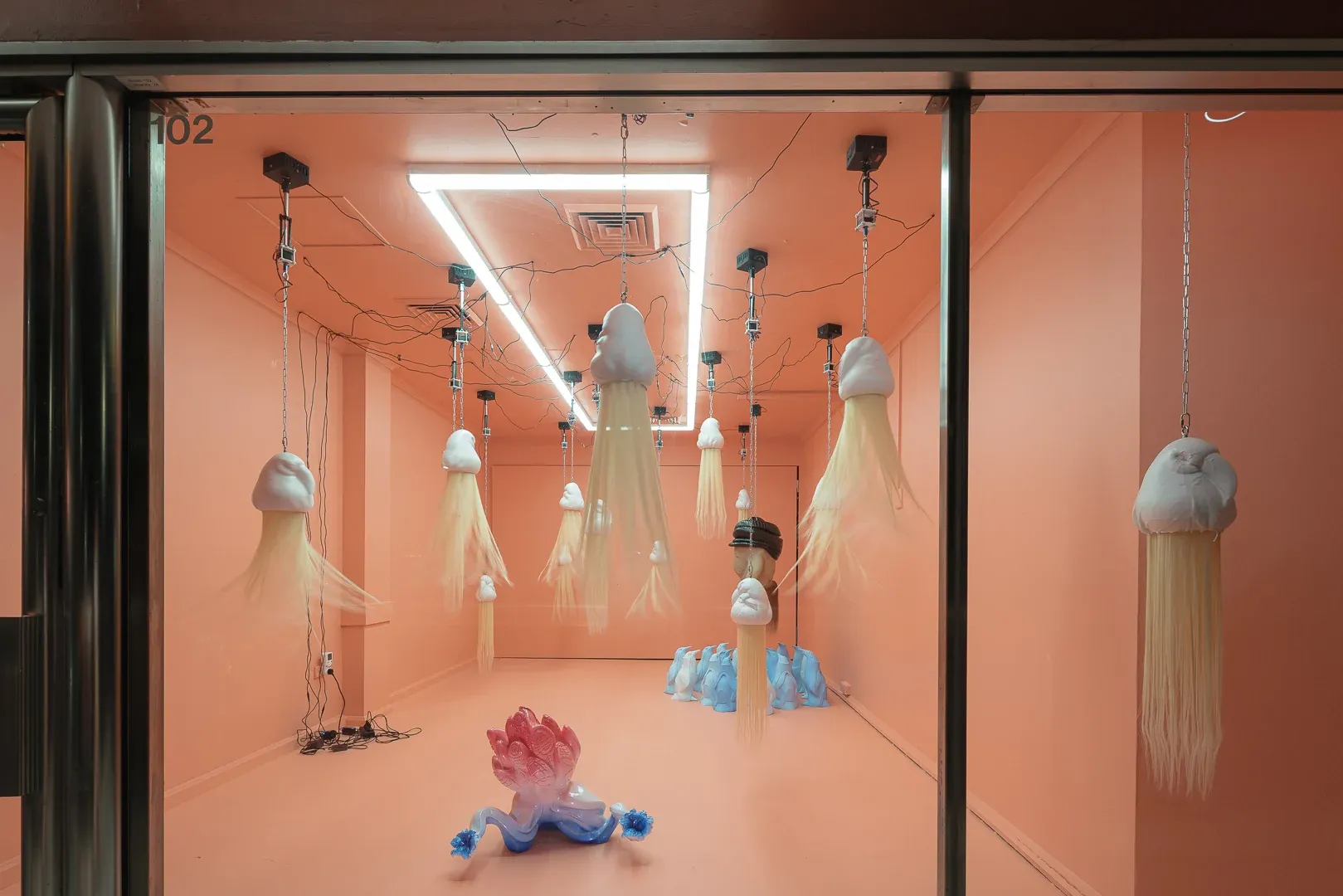
Passage Gallery occupies a shopfront in Prince Centre, a concrete shopping mall in Sydney's Haymarket, on the second floor above a noodle restaurant. The space glows from the street at night, floor and walls painted a continuous warm salmon, visible through the full-length glass facade. That enclosure matters. What Piccinini has made here doesn't just hang in the space; it seems to grow from it, as if the pink walls were the walls of a vessel.
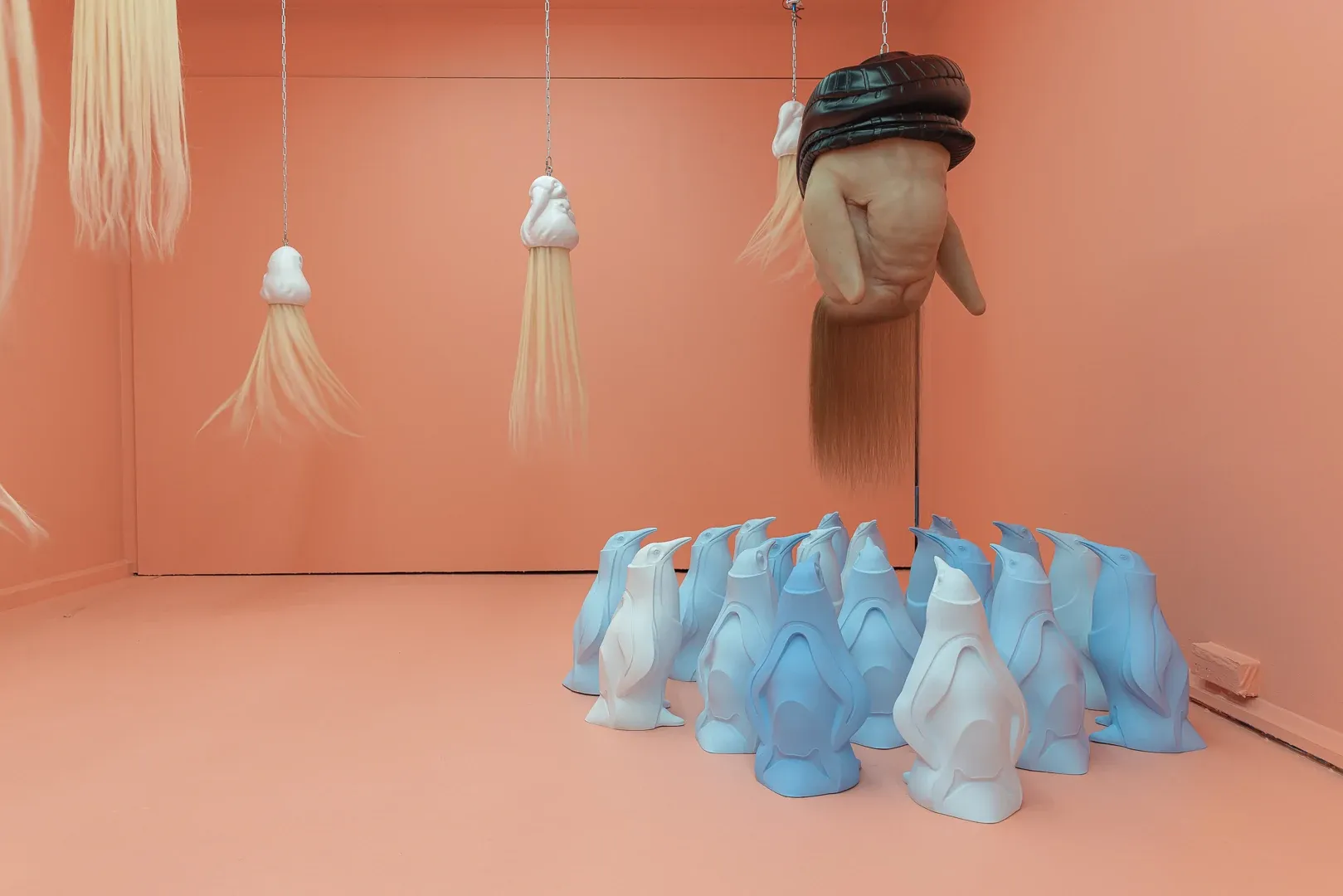
From the ceiling, a series of motorized forms descend into the room. Each consists of a soft, bunched white body, biomorphic, loosely organic, from which long strands of synthetic hair cascade and swing in slow, continuous arcs. The movement is quiet.
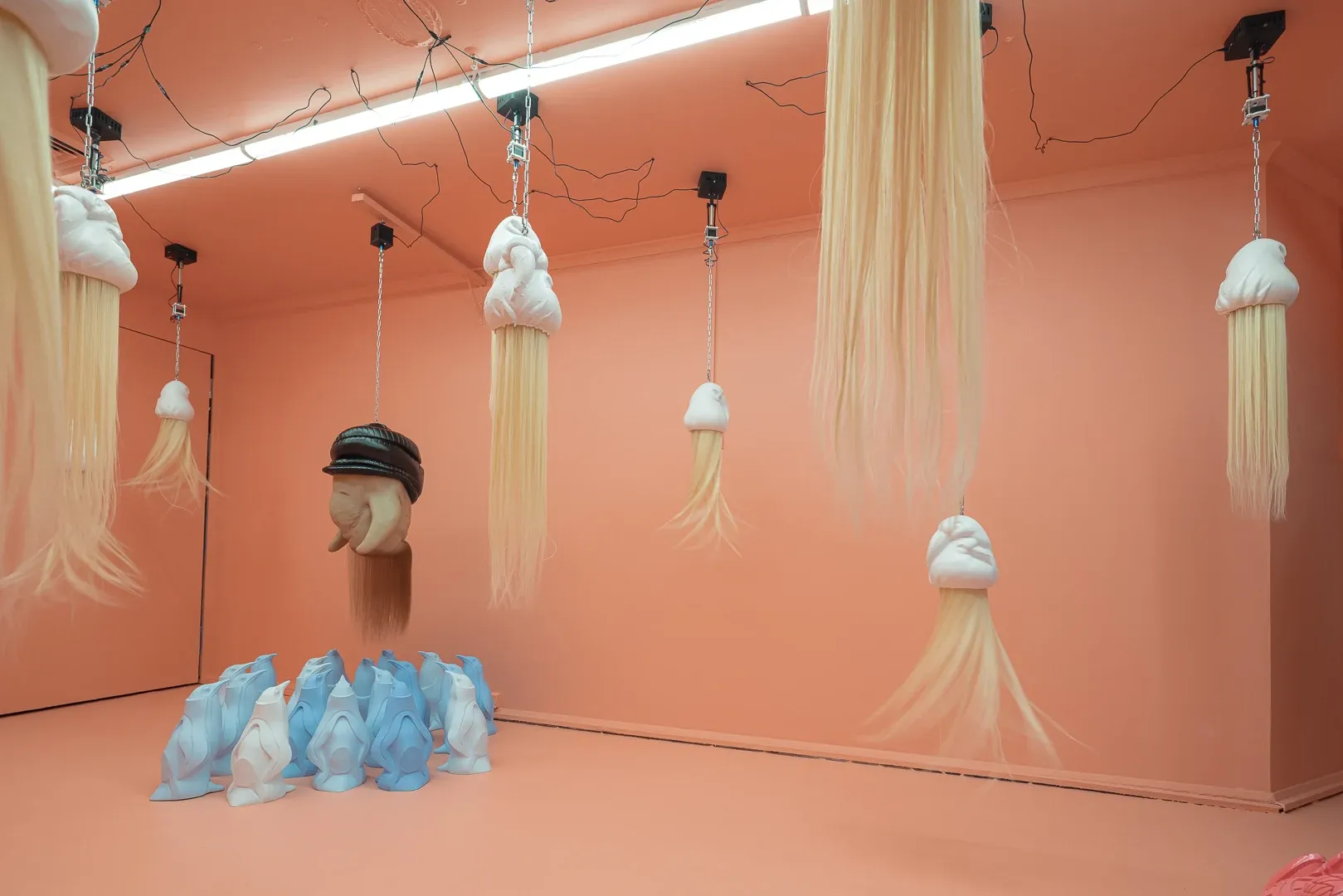
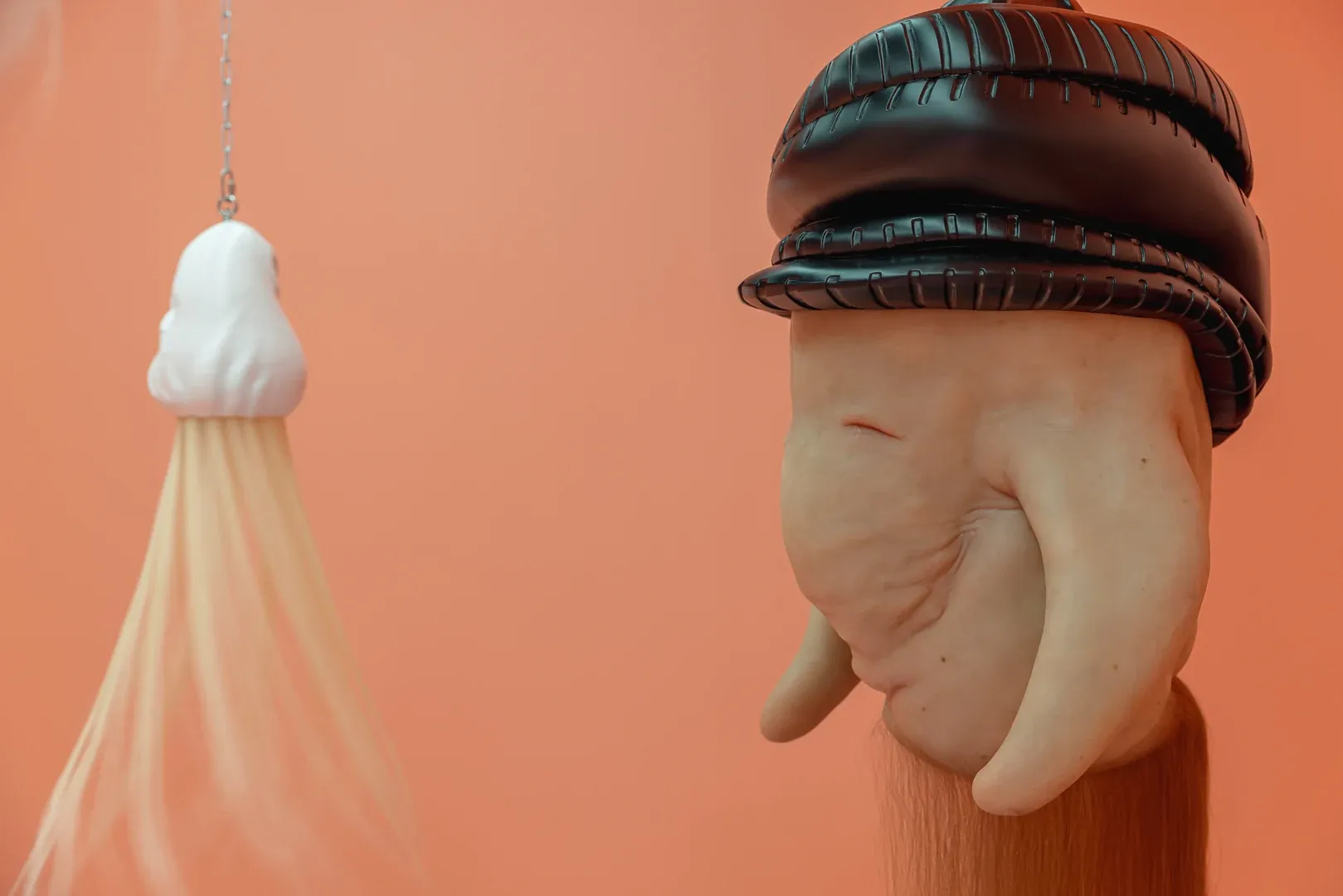
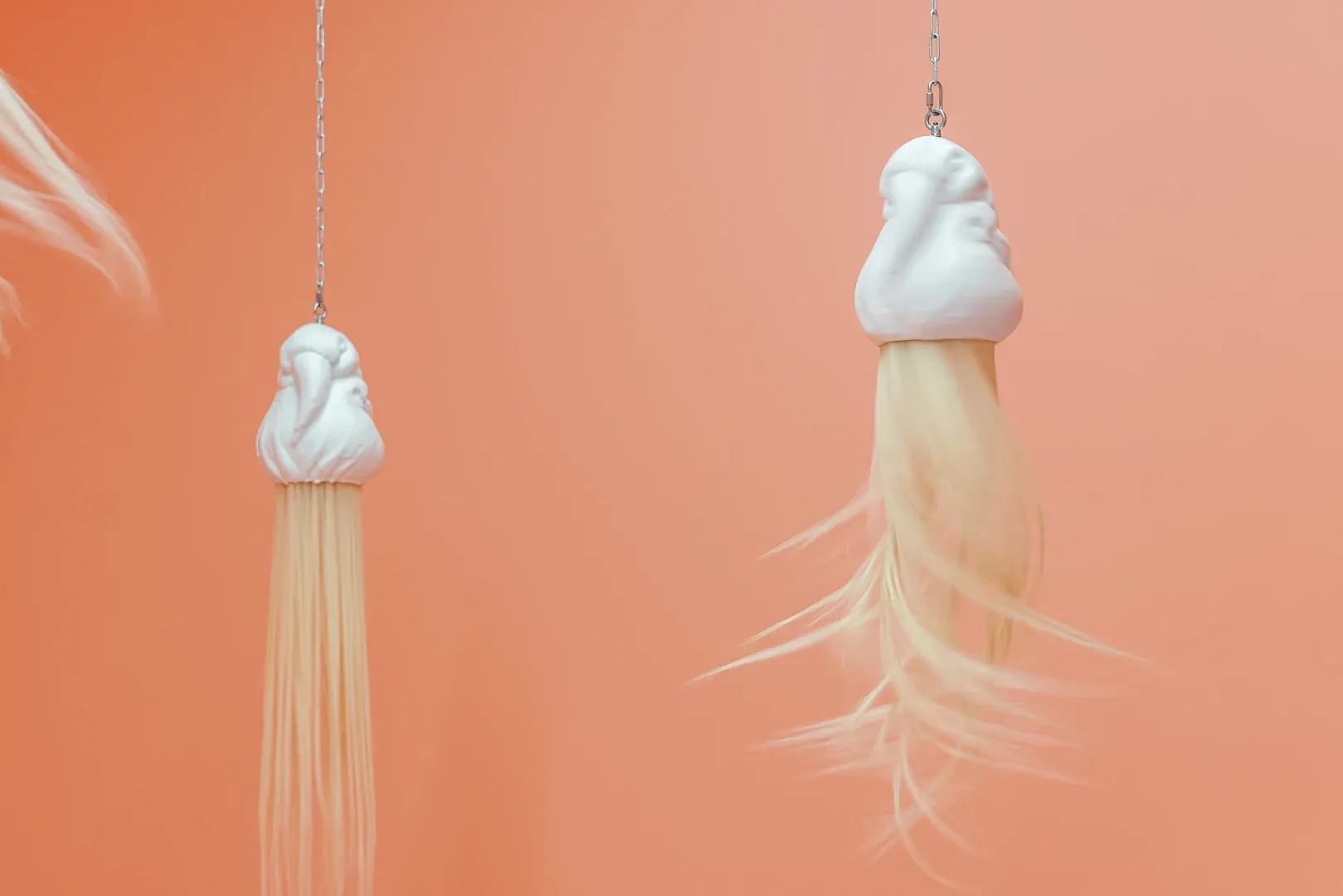
It references the swirling of organoids inside a centrifuge, the circular logic of cells finding their own shape while the machine turns around them. These kinetic works introduce movement into Piccinini's practice in a new register, not metaphorical motion, but actual motor-driven rotation, something perpetually forming and unforming in the air.
At the room's center, a different presence: a fleshy, rounded figure suspended by chain, its body neither fully hand nor fully face, wearing what seems to be a leather-wrapped crown at its head, with reddish-brown hair flowing from its base.
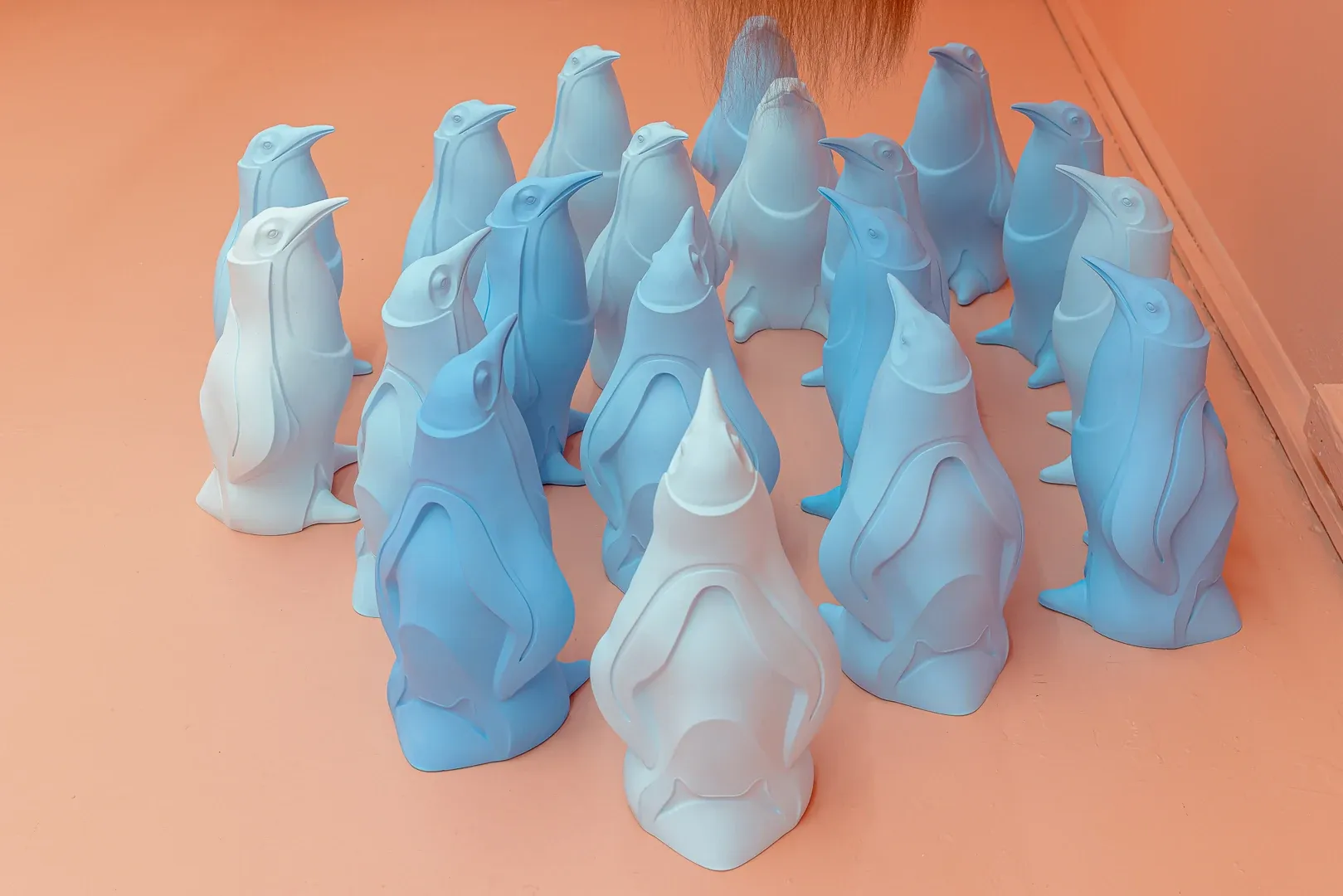
Below it, a colony of small blue-white penguin sculptures huddles on the pink floor. The grouping carries something specific, not alarm, not hierarchy, but proximity. The penguins don't look up. They hold the ground.
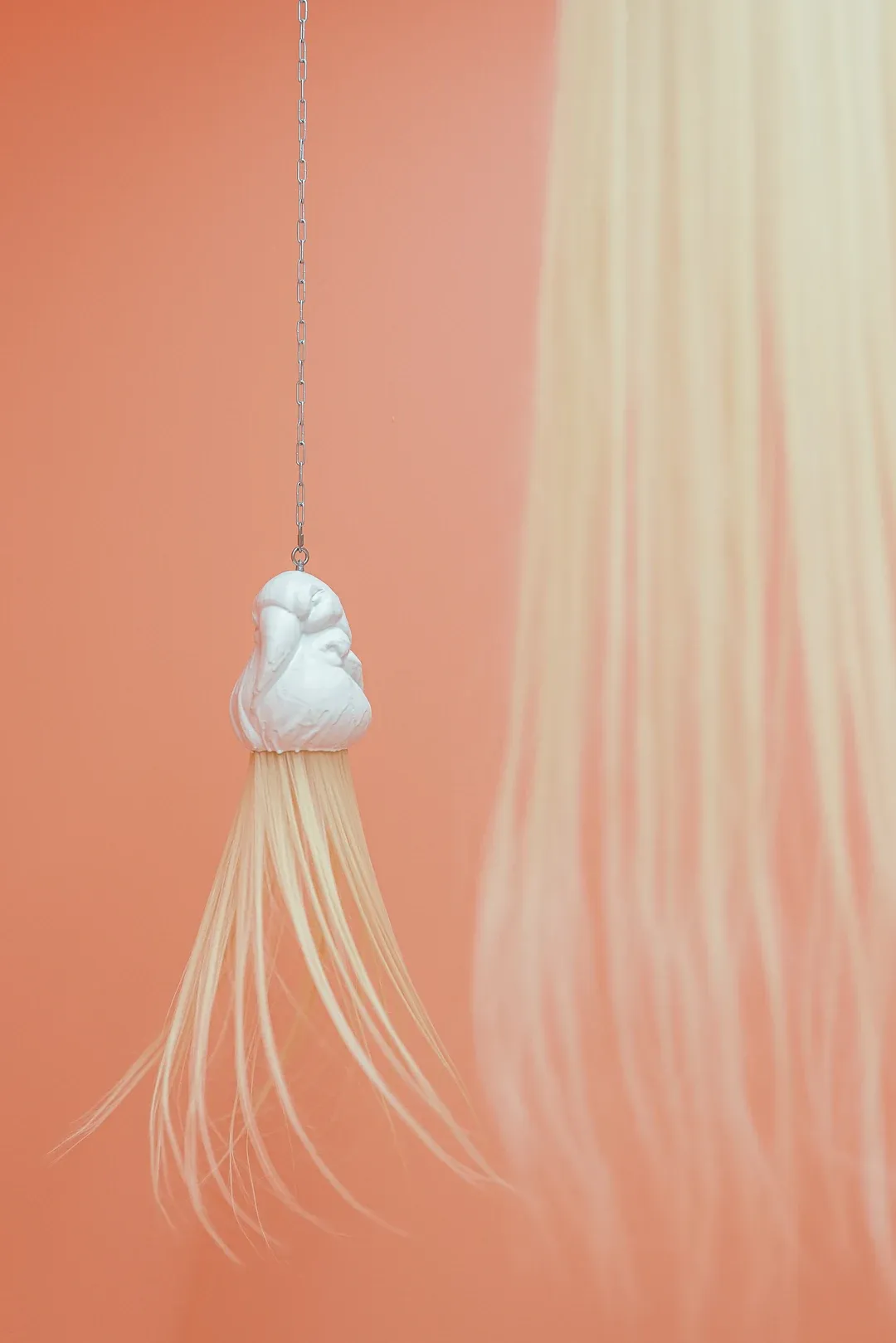
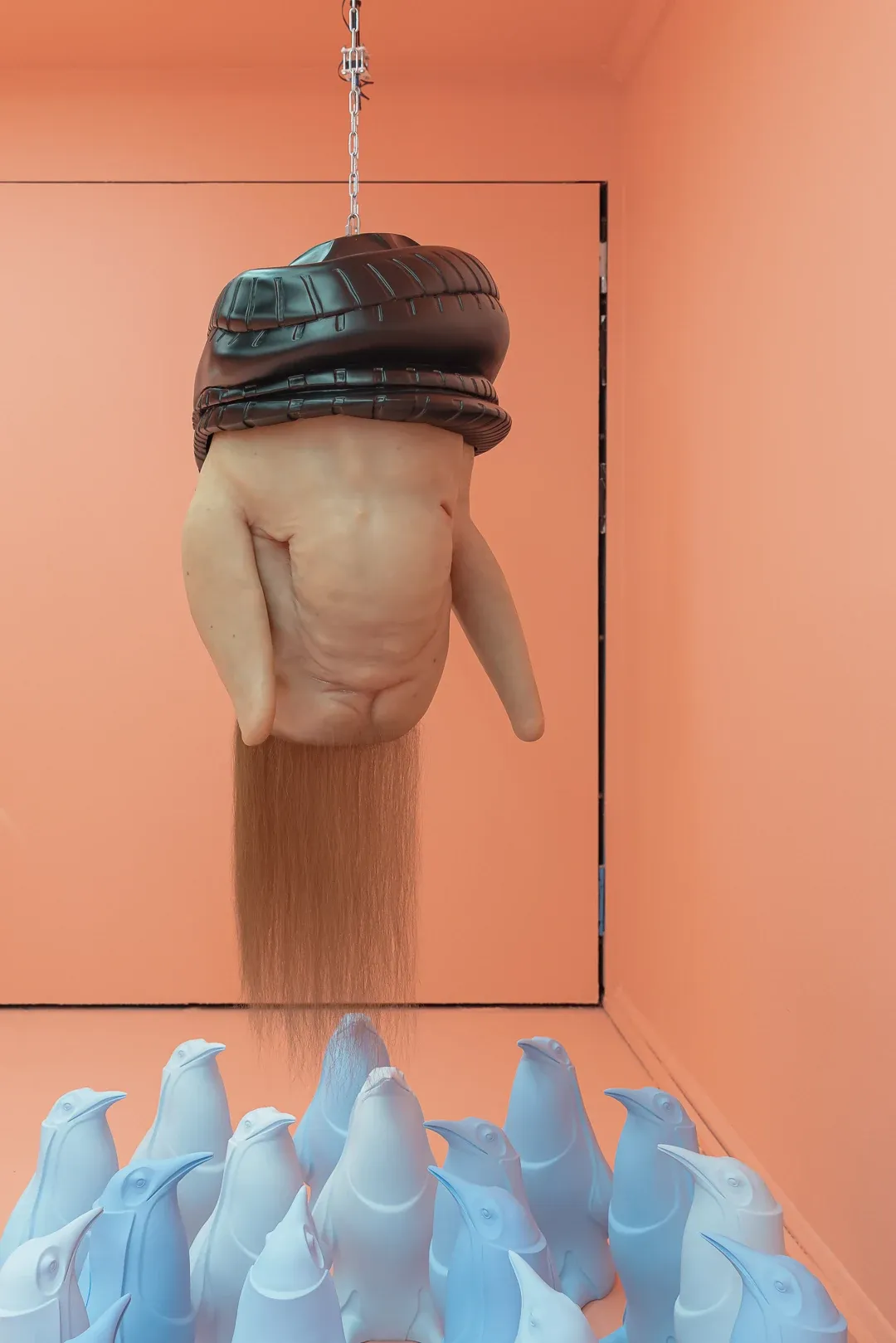
Patricia Piccinini, Centrifugal Love Garden, detail view, Passage Gallery, Sydney. Suspended biomorphic form extending into long strands of synthetic hair. Photo by Document Photography. Courtesy Passage Gallery
Closer to the glass, a lower form rests on the floor: lobed and gradient, pink fading into blue, with tentacular limbs ending in blooms. It reads less as figure than as growth, an organism mid-process, not yet committed to a final shape. Where the kinetic works rehearse the spinning logic of the laboratory, this piece holds still and waits.
The exhibition opens in a moment when the relations between biotechnology, care, and ecological thought are being renegotiated in ways that are neither simple nor linear. Piccinini doesn't frame this as anxiety. The organoid logic of the show, life forming in suspension, collective and unchosen, holds a different register: something between optimism and honesty.
The colony stays together regardless of what circles above it. What persists here is not resolution but a certain insistence on proximity, on the body that leans toward another body even when neither has a name yet.
Instagram Passage Gallery - Sydney
Patricia Piccinini on Instagram
Notable Works and Exhibition Views:
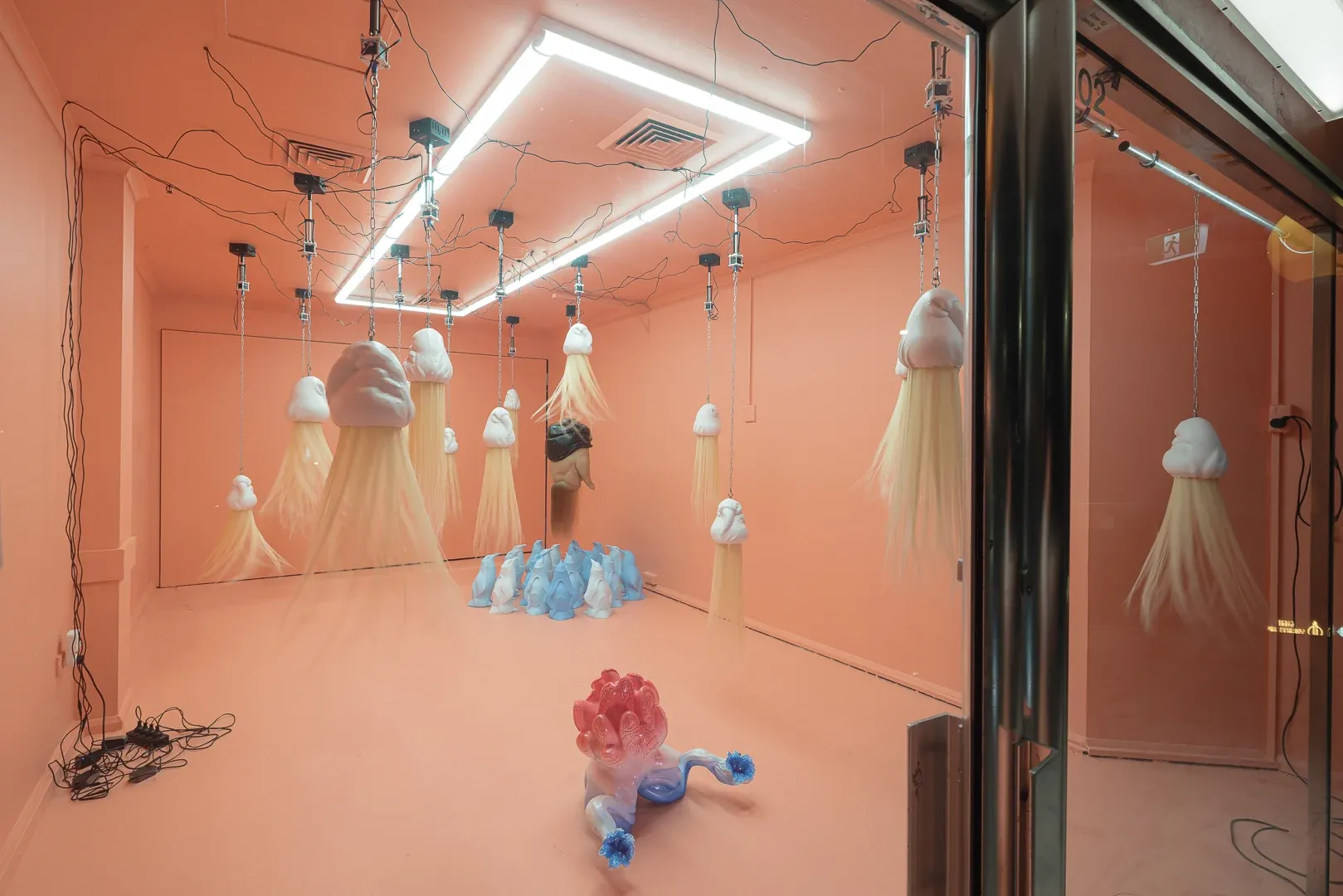
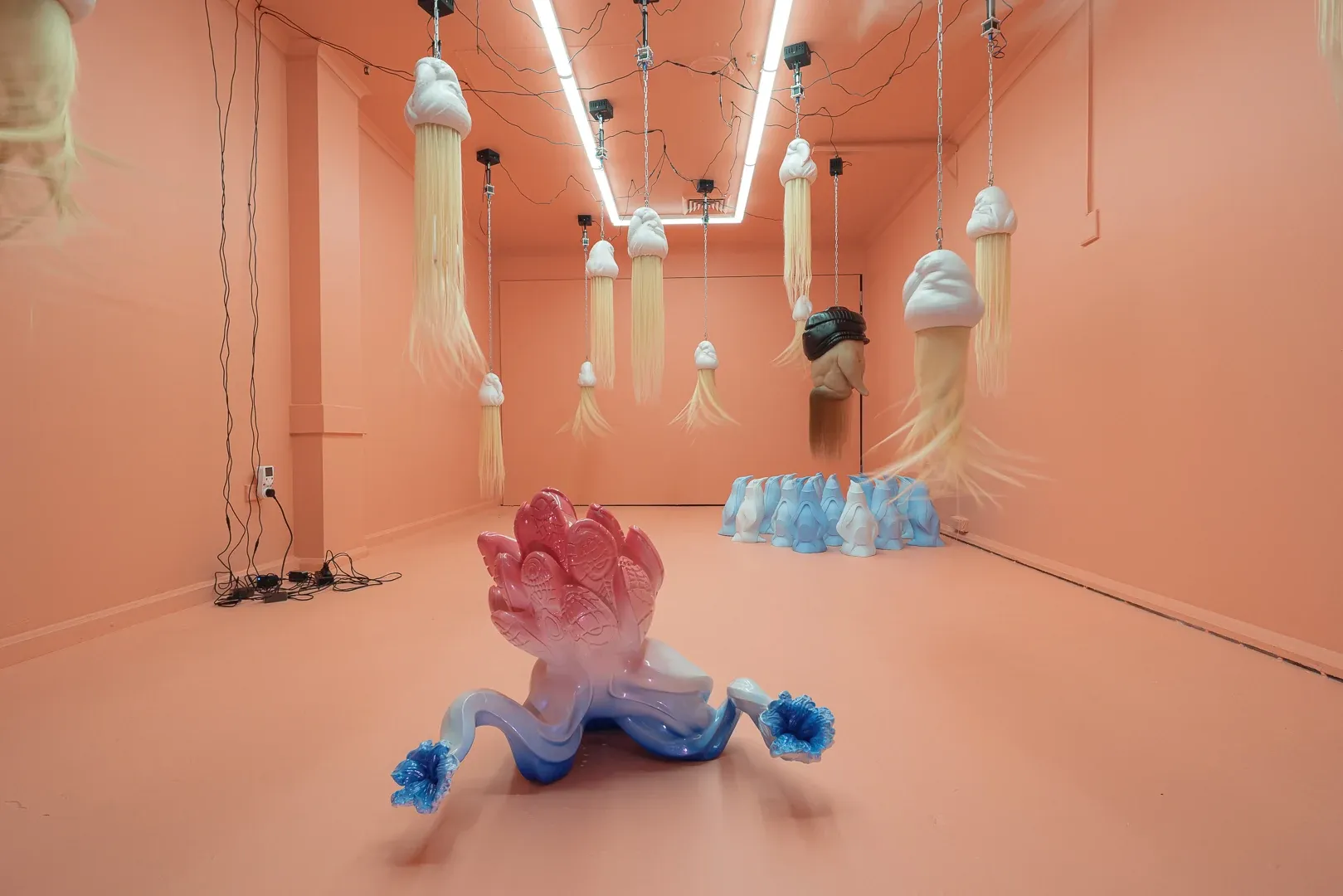
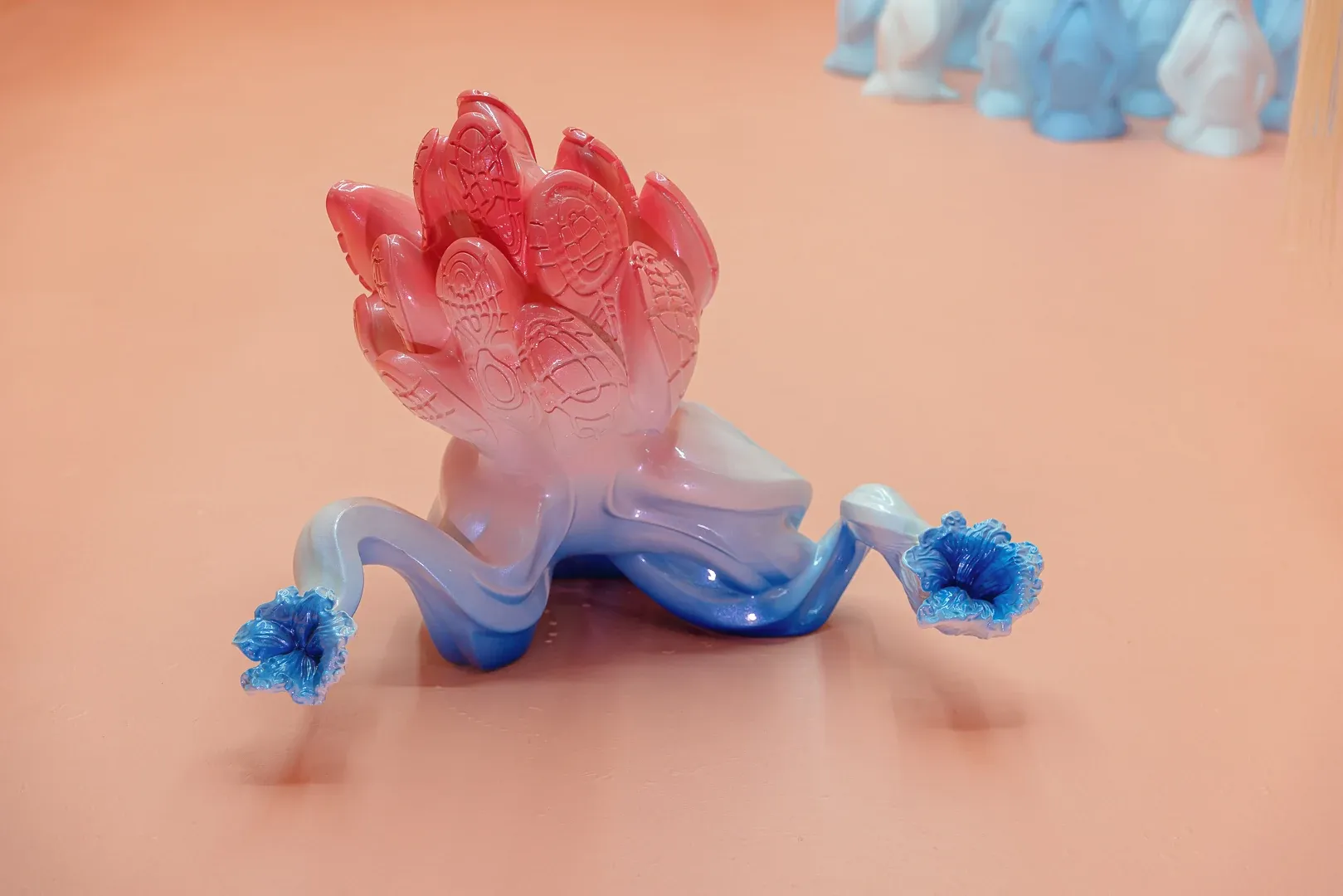
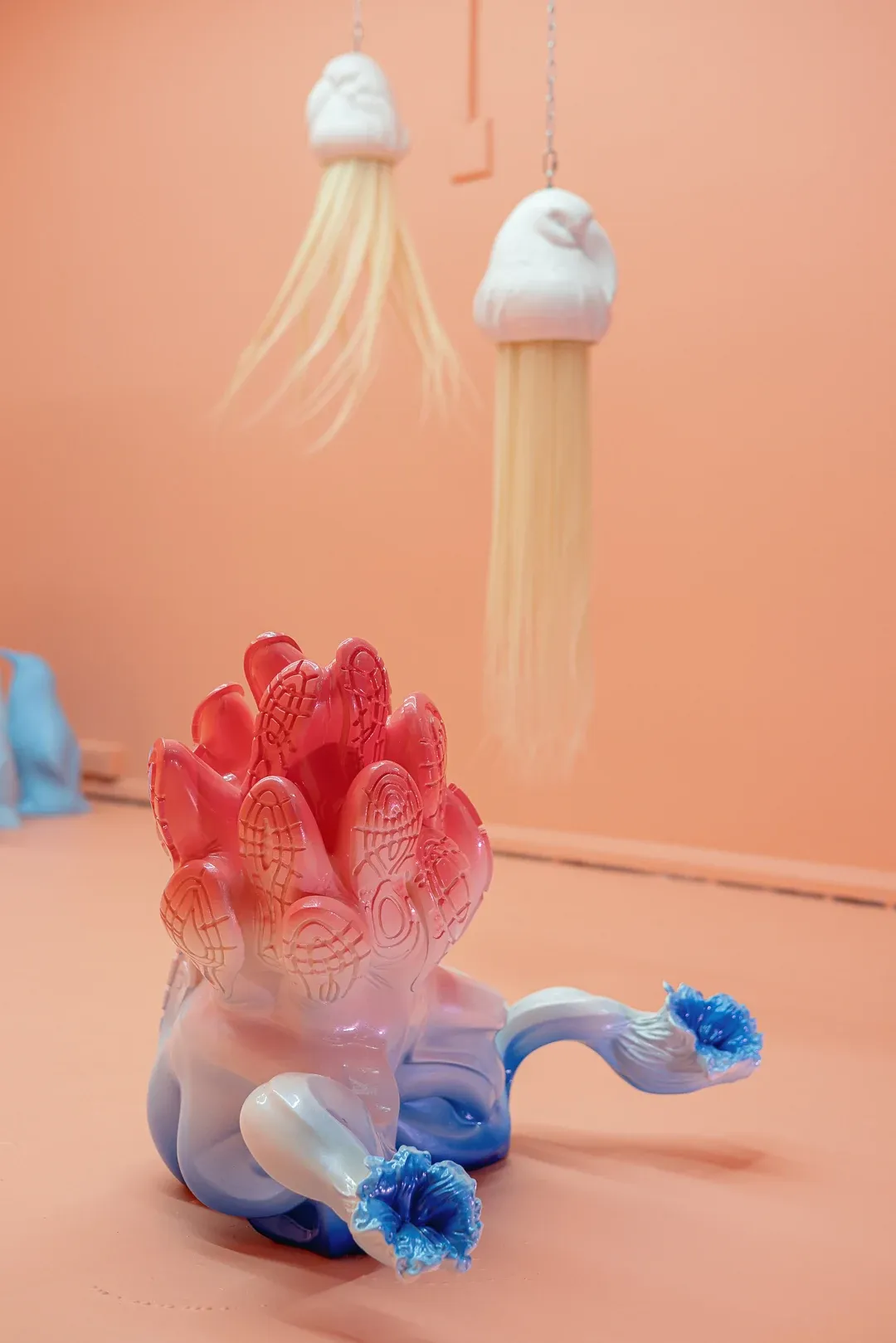
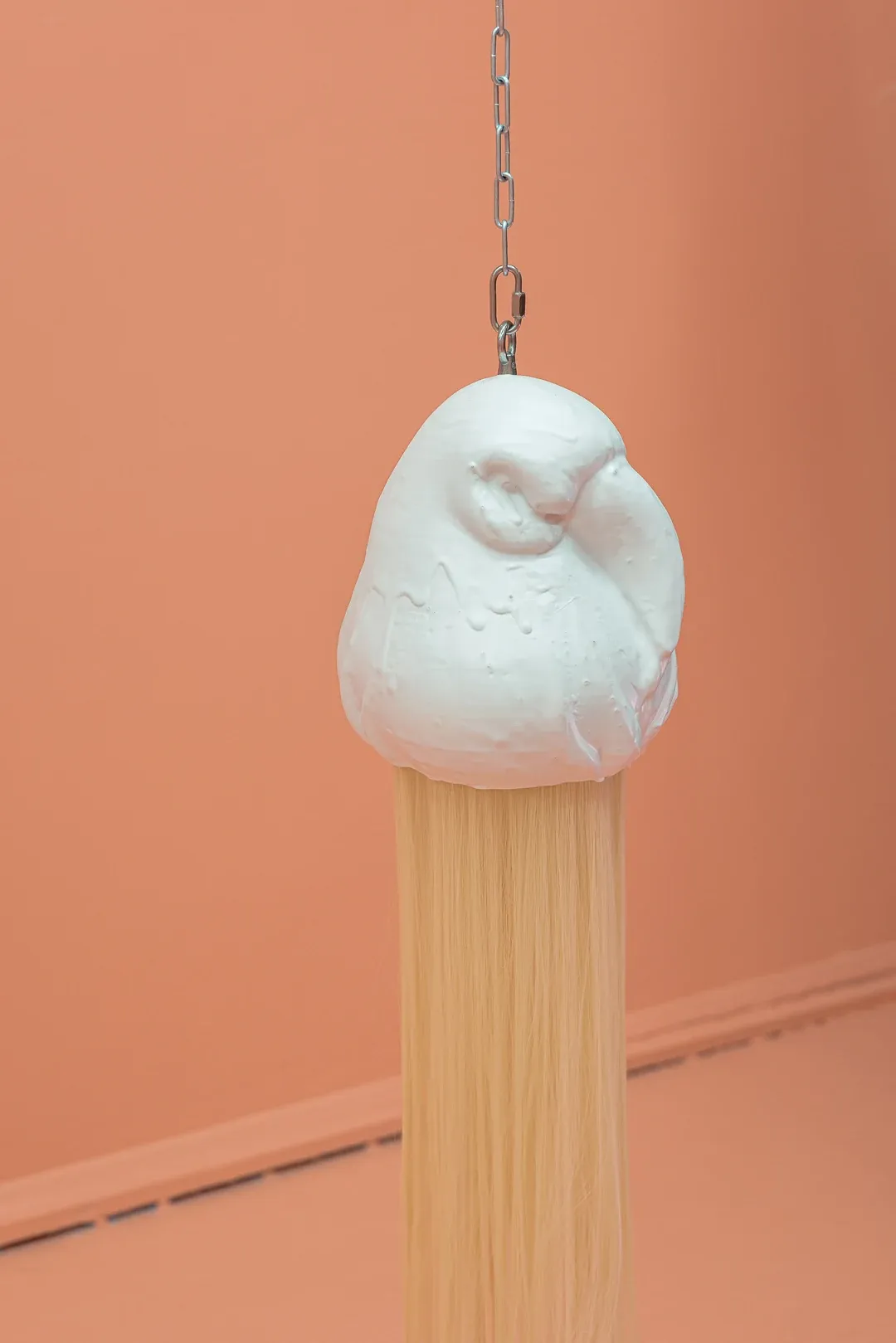
Passage Gallery, Sydney. Installation view of Patricia Piccinini’s Centrifugal Love Garden. Suspended kinetic forms and clustered penguin figures within a fully saturated pink environment. Photo by Document Photography. Courtesy Passage Gallery.
About Catapult
This is an artist interview published by Catapult — an independent editorial platform for contemporary art, based in Vienna. We publish exhibition reviews, artist features, interviews, and critical context, with a focus on emerging and mid-career practices from Europe and beyond.
catapult.art
Want to be featured? Submit your work →
Related Readings
No spam, no sharing to third party. Only you and me.