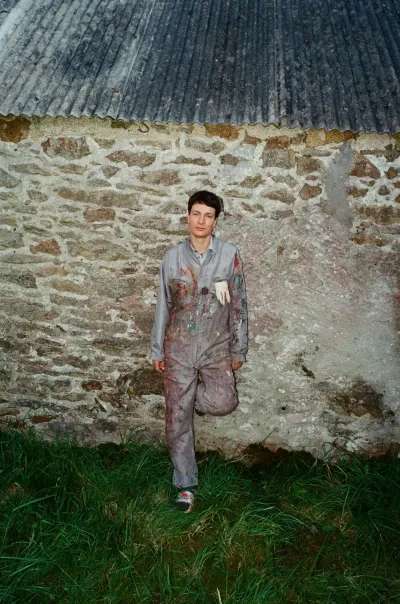
A practice shaped by movement and return

Paes is a Brazilian painter and musician based in Belfast, Ireland, working primarily with acrylic, oil, and oil pastel on canvas, board and paper. 

Over the last five years, after moving from Recife to Lisbon, Barcelona, and now Belfast, his visual language has consolidated into something direct and unresolved. 
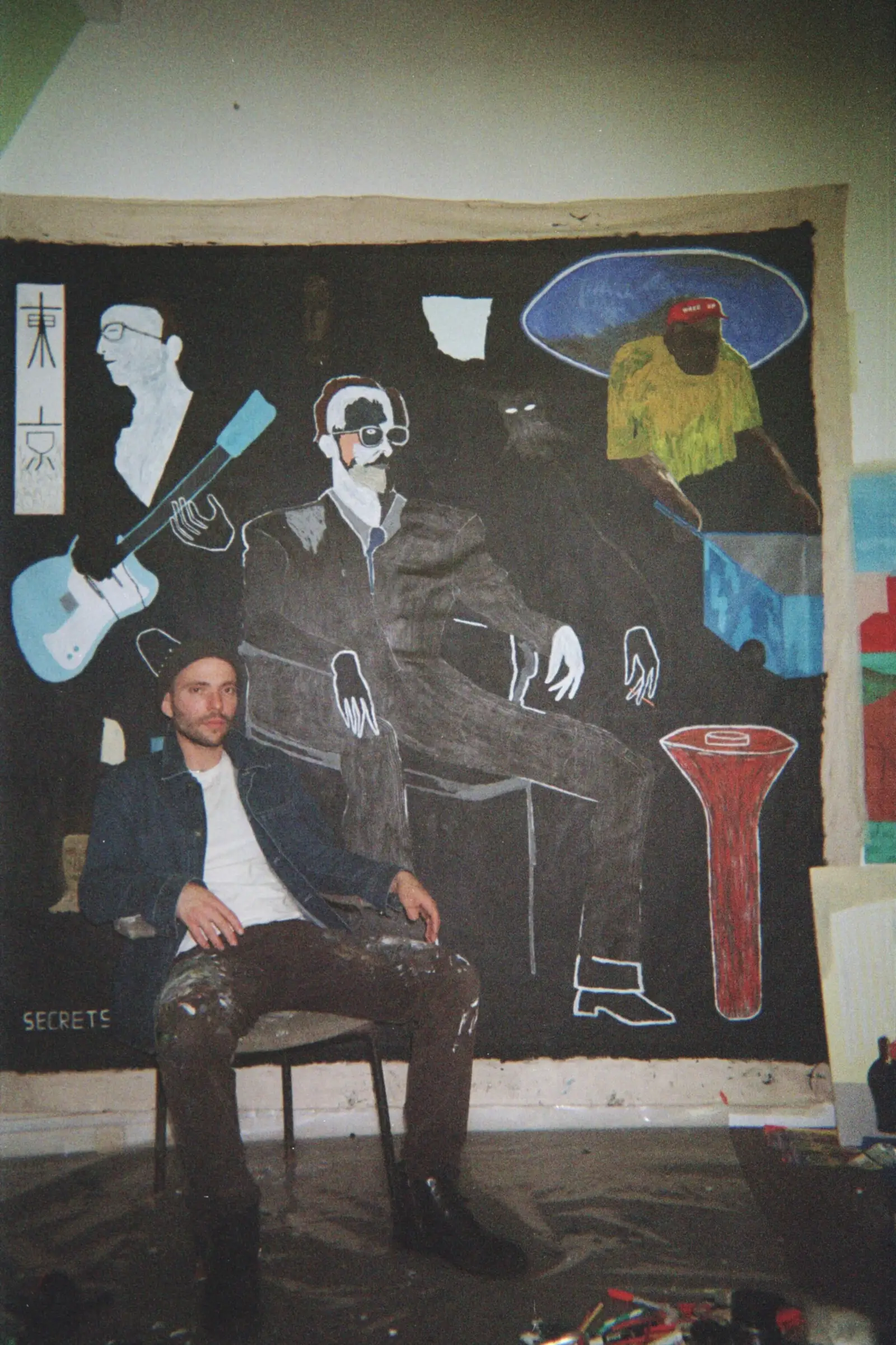
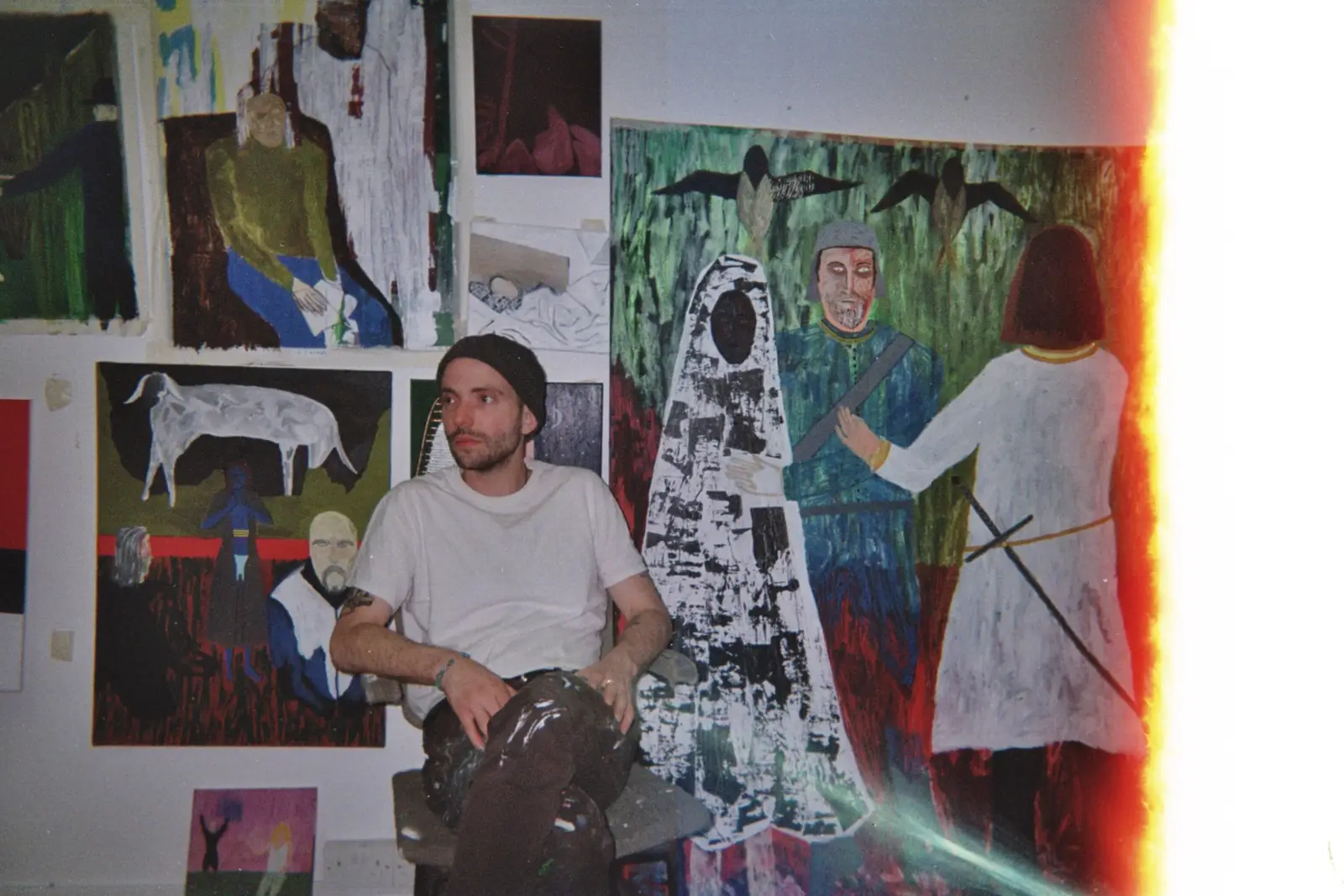
contemporary artist Paes sitting on a chair infront of his artwork Secrets of Unfolding Leisure
Paes: Portrait in front of Secrets of Unfolding Leisure, studio of the artist. Photo by Beckie Stew (@beckiestew). Image courtesy of the artist.
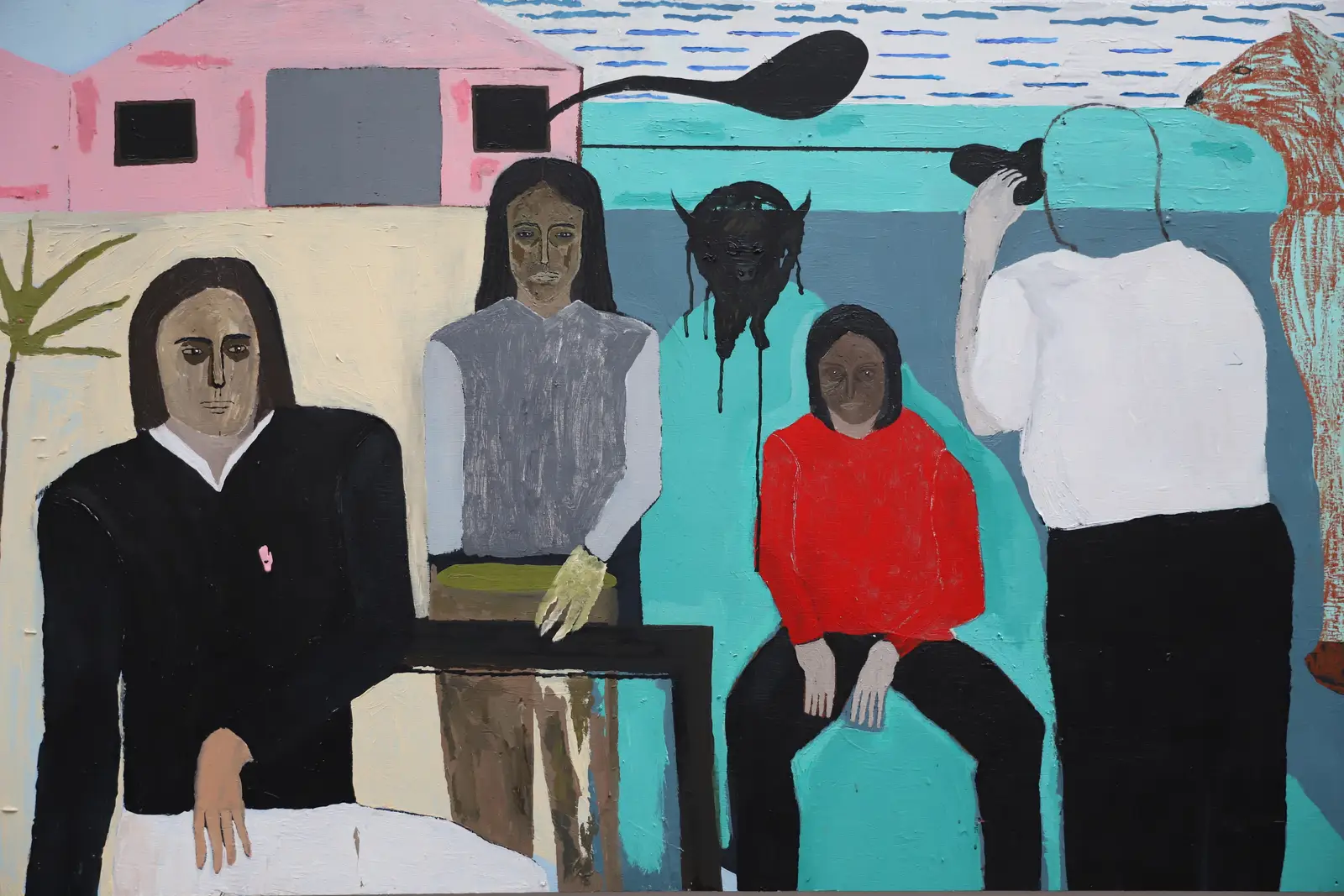
Painting by Paes, titled “Coming back to the place where I came from” (2025), showing multiple figures in a staged outdoor scene, acrylic and oil pastel on wooden boar
PaesComing back to the place where I came from, 2025. Acrylic and oil pastel on wooden board, 90 Ă— 140 cm. Photo: Molly Martin (@molly_martin_photo). Image courtesy of the artist.
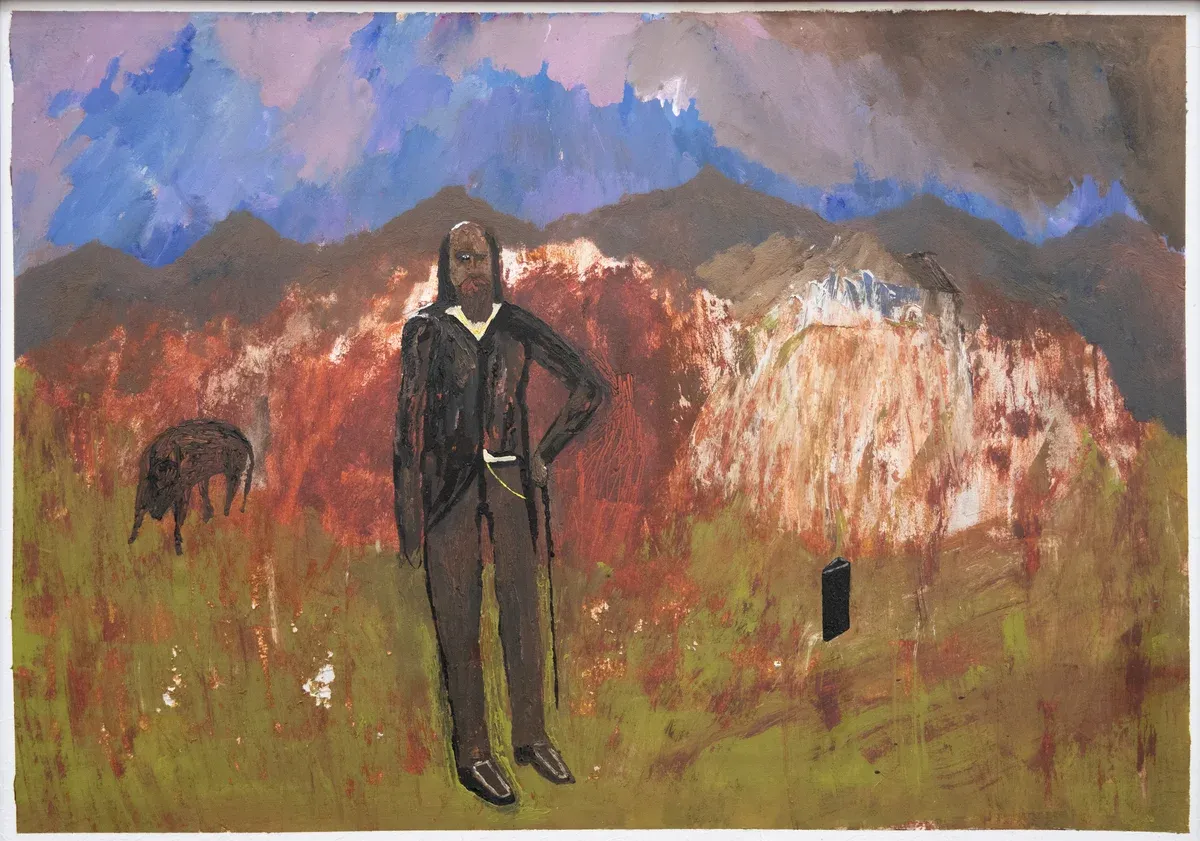
figure against a dark ground with graphic elements, acrylic on canvas.
PaesDemon catcher (These monsters are in the past now), 2025. Acrylic on canvas, 49.5 Ă— 60 cm. Photo: Molly Martin (@molly_martin_photo). Image courtesy of the artist.

Before focusing on painting, he spent eighteen years releasing music under his surname, and that long engagement with rhythm and repetition still informs how his images accumulate rather than unfold. 

His paintings resist linear progression. They build through fragments. In recent years, Paes has exhibited in Palma de Mallorca, Barcelona, and Belfast, working with spaces including Catalyst Arts, Platform Arts, Ps2 Paragon Studios, Ineditad, Escat Gallery, and Artsy.

Figures that remain, rather than act

The figures in Paes’s paintings are often still. They sit, lean, lie awake, or face outward with expressions that resist clarity.

Bodies are simplified and flattened, held in place by deliberate fields of color rather than illusionistic depth. Faces carry most of the emotional weight, sometimes meeting the viewer, sometimes drifting just past them.

There is no overt narrative being performed or resolved.

Presence itself becomes the central condition.
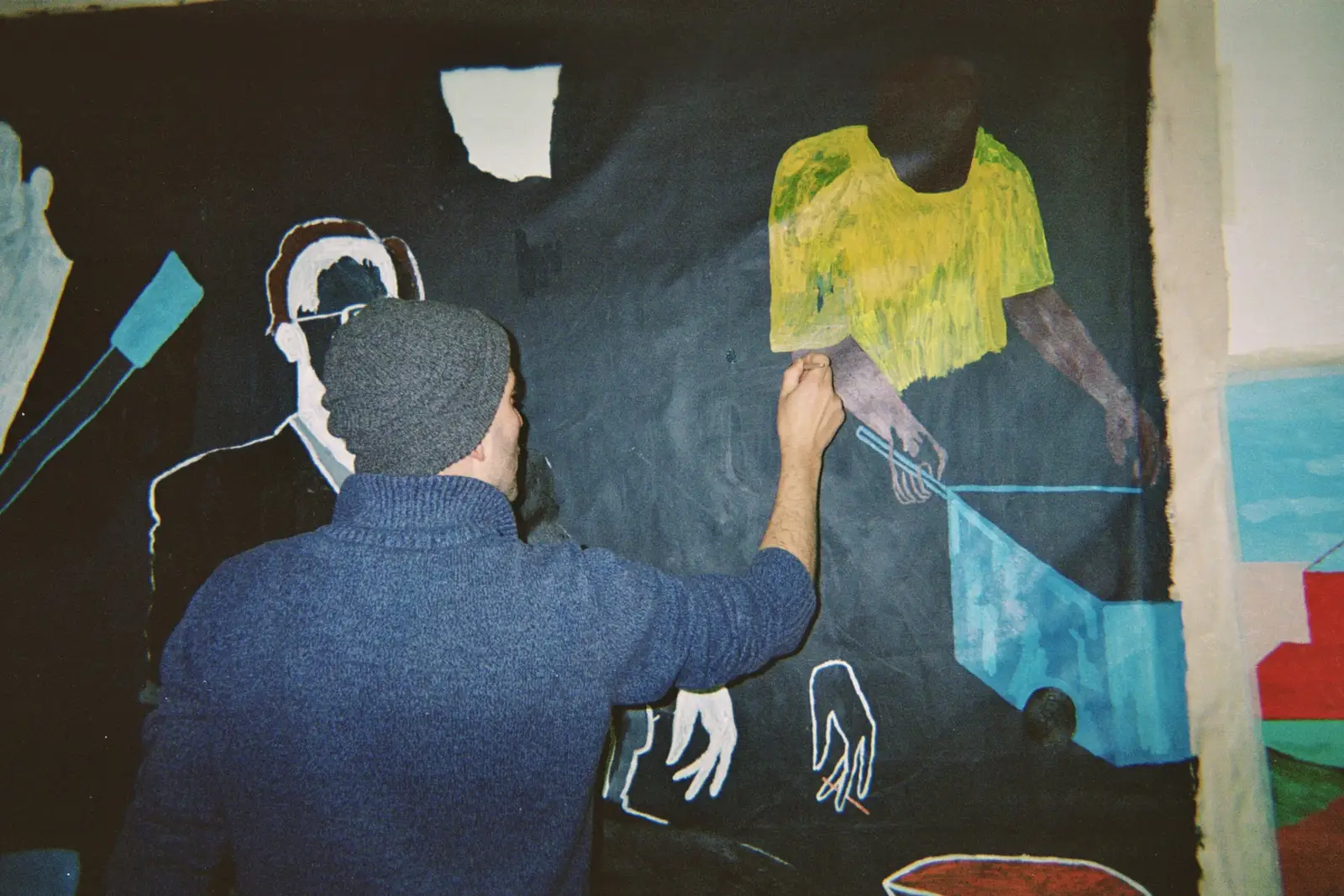
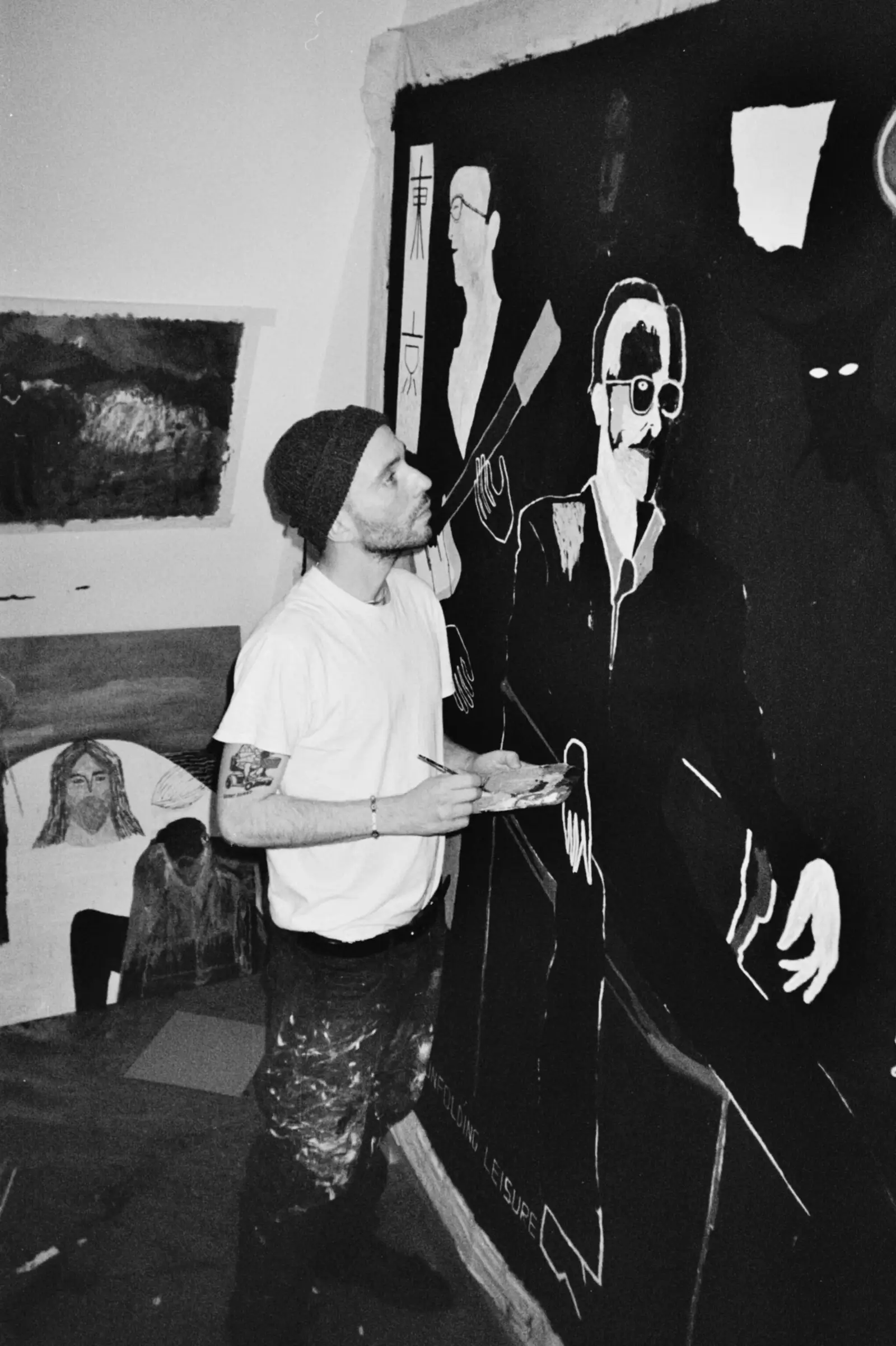
Paes, artist,  painting a large black canvas with figurative elements in his studio.
Paes: artist, working on Secrets of Unfolding Leisure, developing figures and symbols directly onto the canvas. Photo by Beckie Stew (@beckiestew). Image courtesy of the artist.
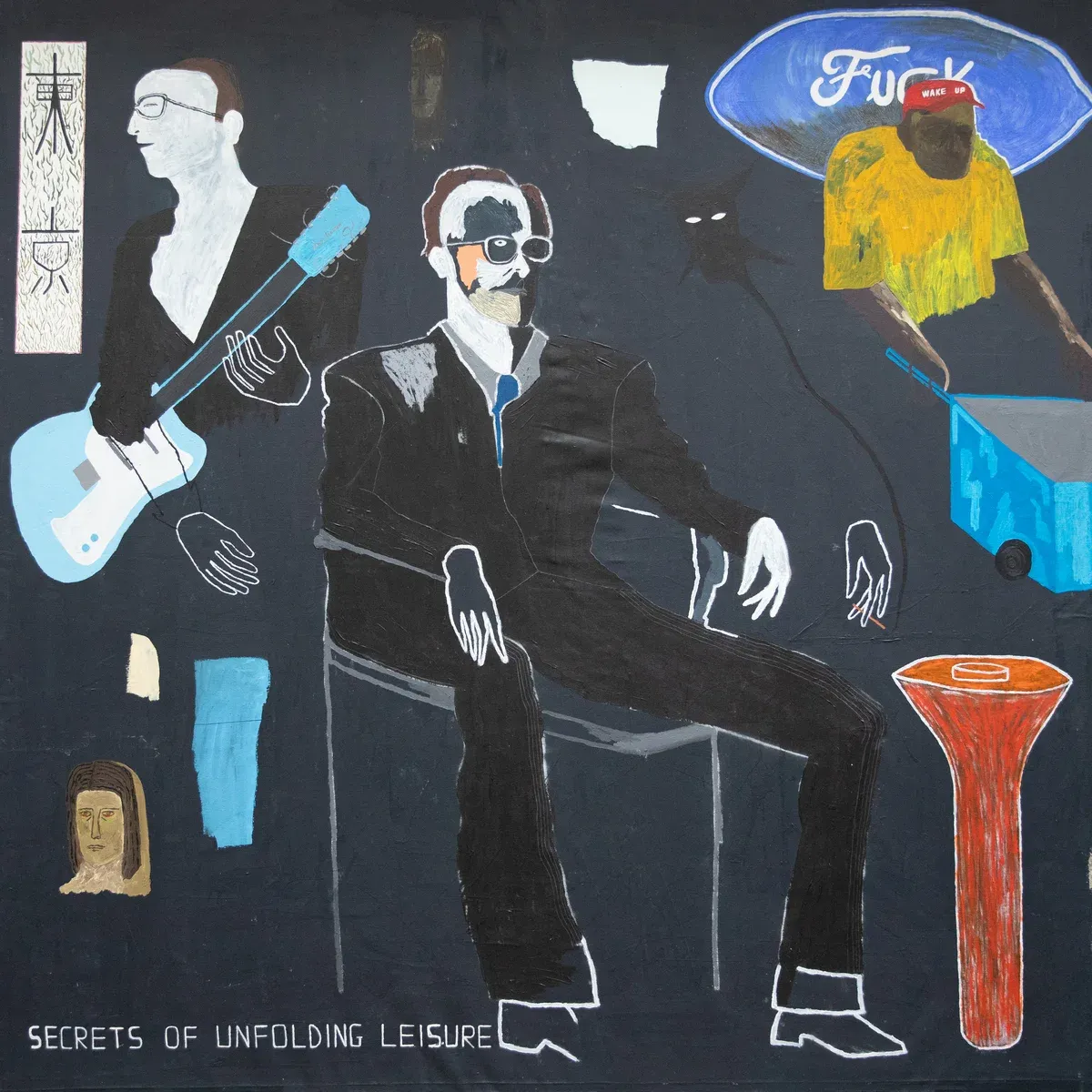
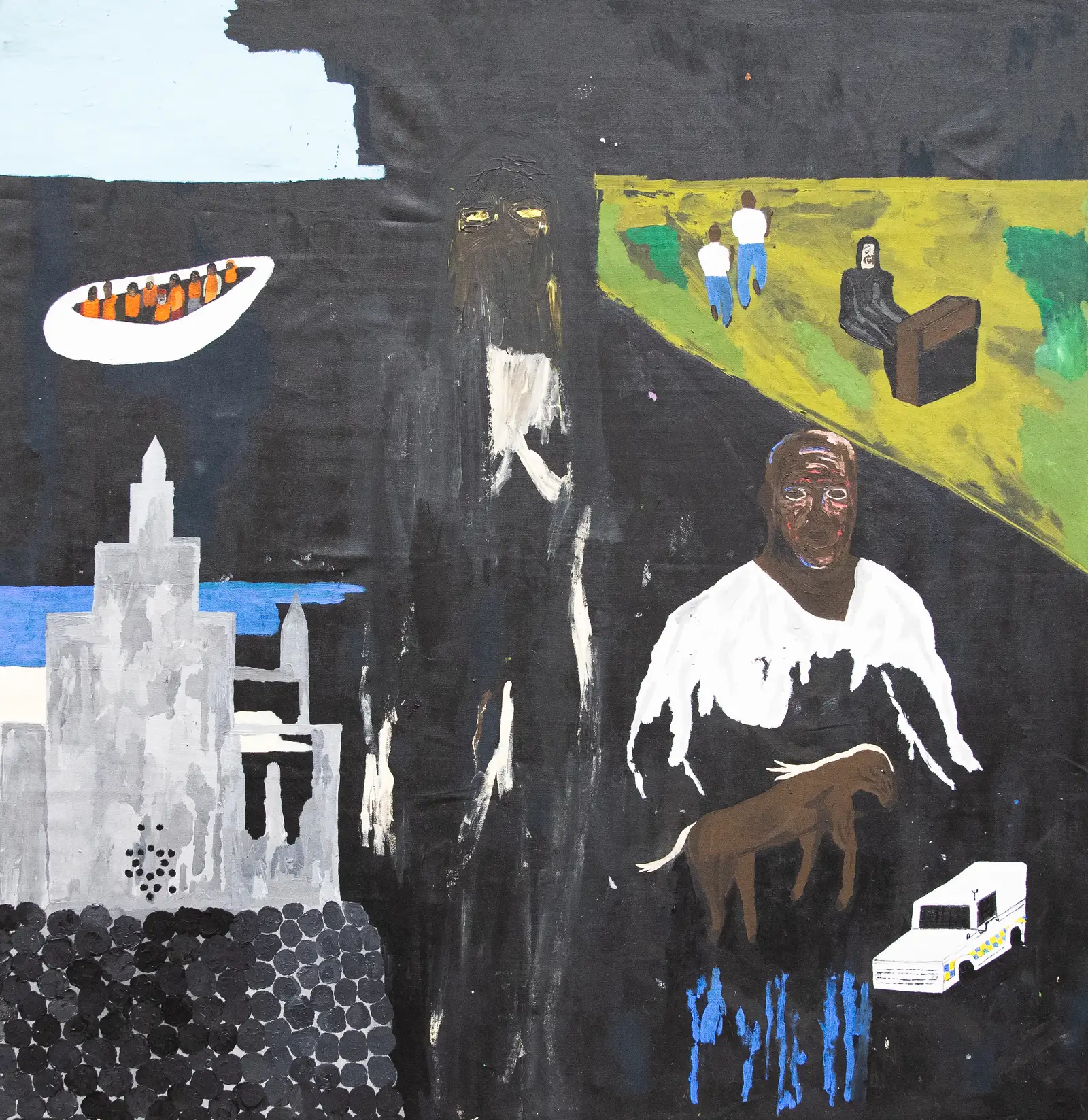
paes - artist - his painting about Secrets of Unfolding Leisure is a double portrait of Arto Lindsay - No Wave legend, born in New York
Paes: Painting -Secrets of unfolding leasure - 210x213 - Acrylic and oil on canvas - 2025 - Molly Martin (@molly_martin_photo). Image courtesy of the artist.
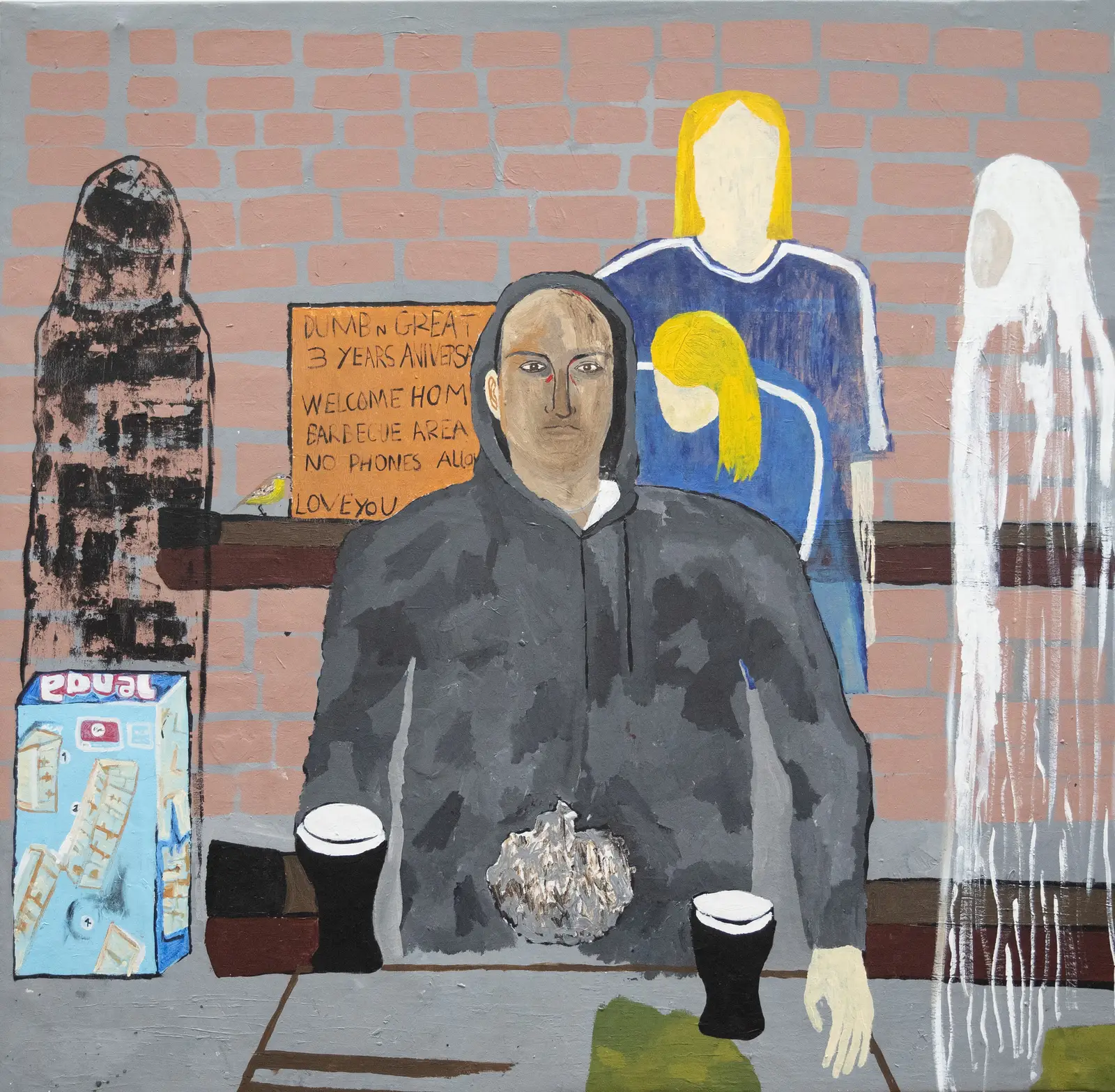
showing a seated figure at a table with cups and standing figures behind, acrylic on canvas
Paes, I can't believe it, 2025. Acrylic, oil and oil pastel on paper, 59.4 Ă— 84.1 cm. Photo by Molly Martin (@molly_martin_photo). Image courtesy of the artist.
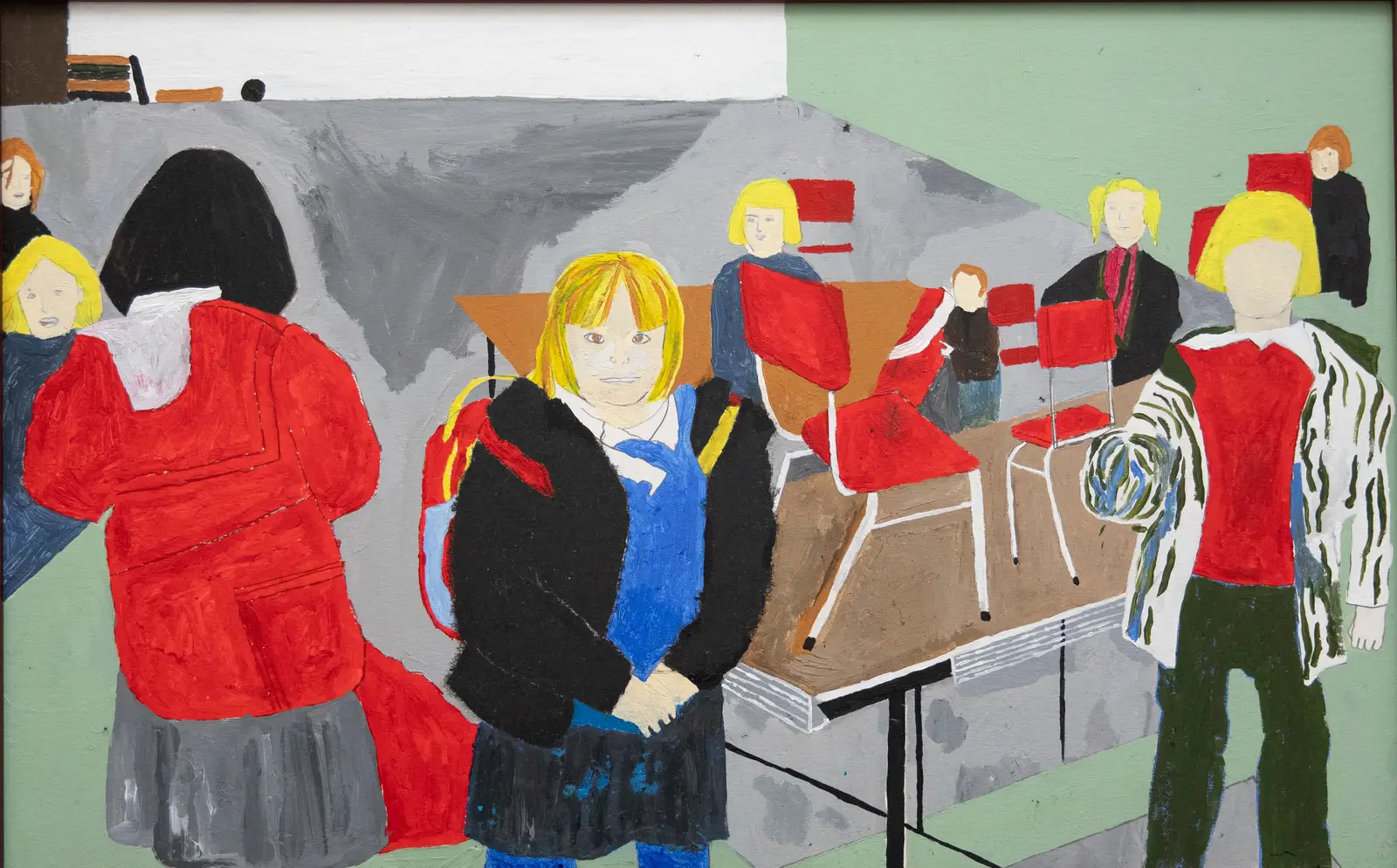
Painting by Paes, titled “Lisa Brown was a bitch” (2025), showing multiple figures in a classroom-like interior, acrylic on carton.
Paes: Lisa Brown was a bitch, 2025. Acrylic on carton, 50 Ă— 60 cm. Photo by Molly Martin (@molly_martin_photo). Image courtesy of the artist.

When memory and the present overlap

In It looks like a nightmare but feels like a dream (2025), a bedroom splits between turquoise day and starlit night. Figures appear in different positions within the same space, fragments of the same person held together in a single image.

As Paes has described, the nightmare is not monstrous. It is the inability to distinguish memory from the present moment. The painting stays close to that instability, acknowledging fear while allowing space for recognition and self-awareness rather than resolution.
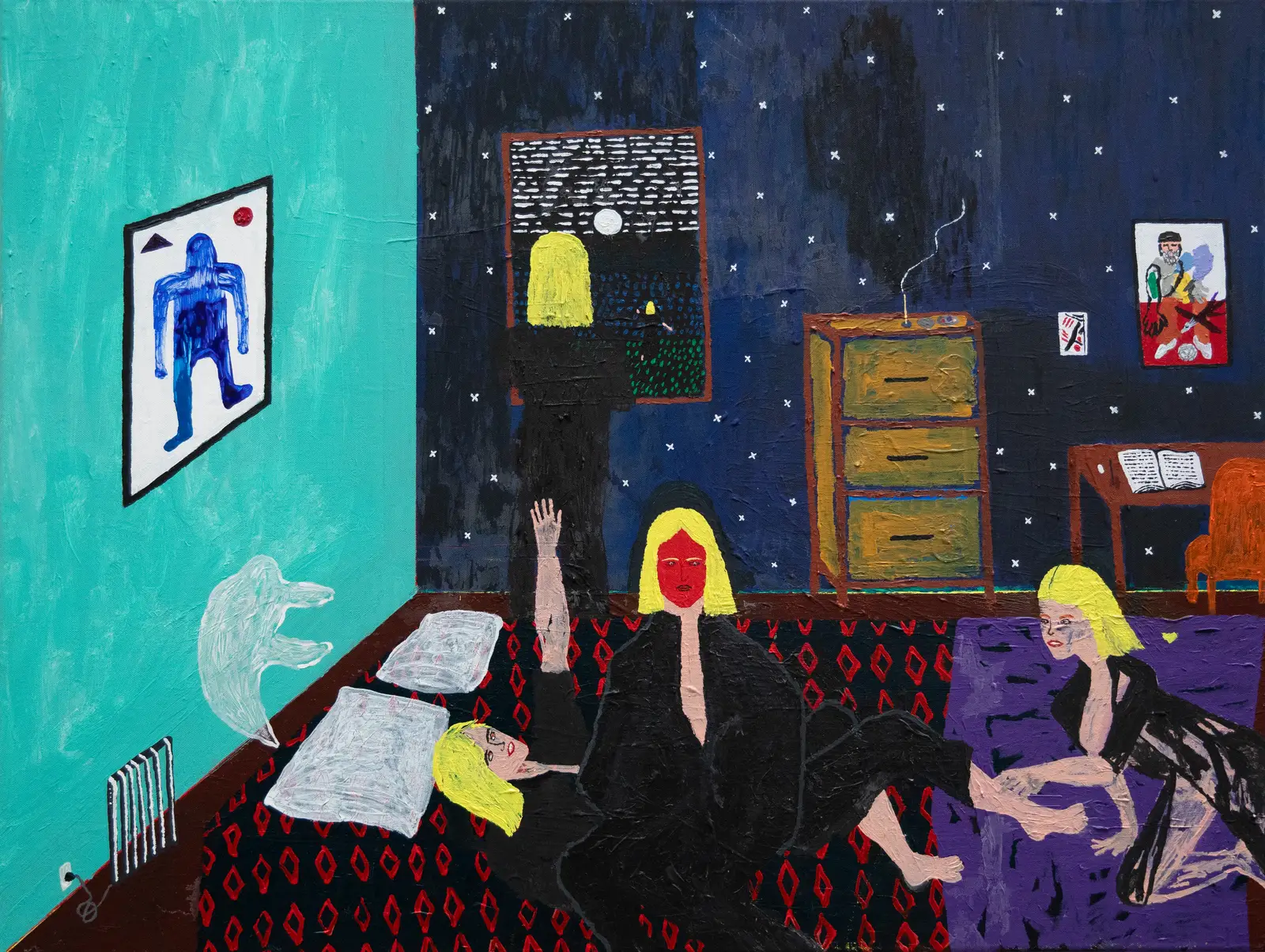
Painting by Paes, titled “It look like a nightmare but feels like a dream” (2025), showing figures in an interior night scene with patterned floor and furniture
PaesIt Looks Like a Nightmare But Feels Like a Dream, 2025. Acrylic on canvas, 60 Ă— 79 cm. Photo: Molly Martin (@molly_martin_photo). Image courtesy of the artist.

Leisure as exposure

Secrets of unfolding leisure functions as a key work within this body of paintings because it condenses their emotional register. A seated figure is surrounded by objects and partial presences, observed without confrontation.

Leisure here is not rest. It is the moment when distraction falls away and internal tensions surface. Paes has described this condition as a form of surveillance of the unconscious, a phrase that sharpens the unease embedded in the scene. The painting holds that state without attempting to soften it.
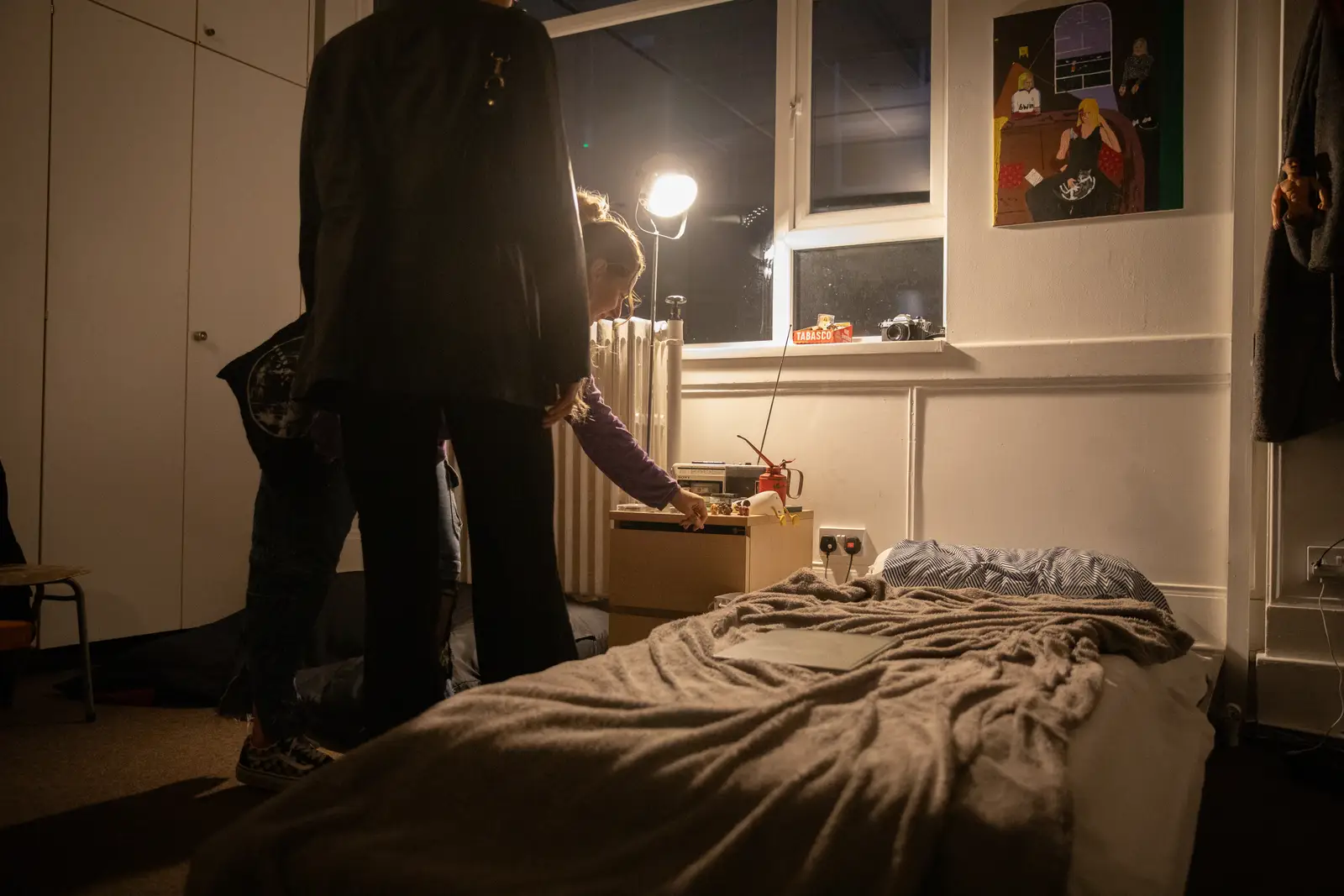
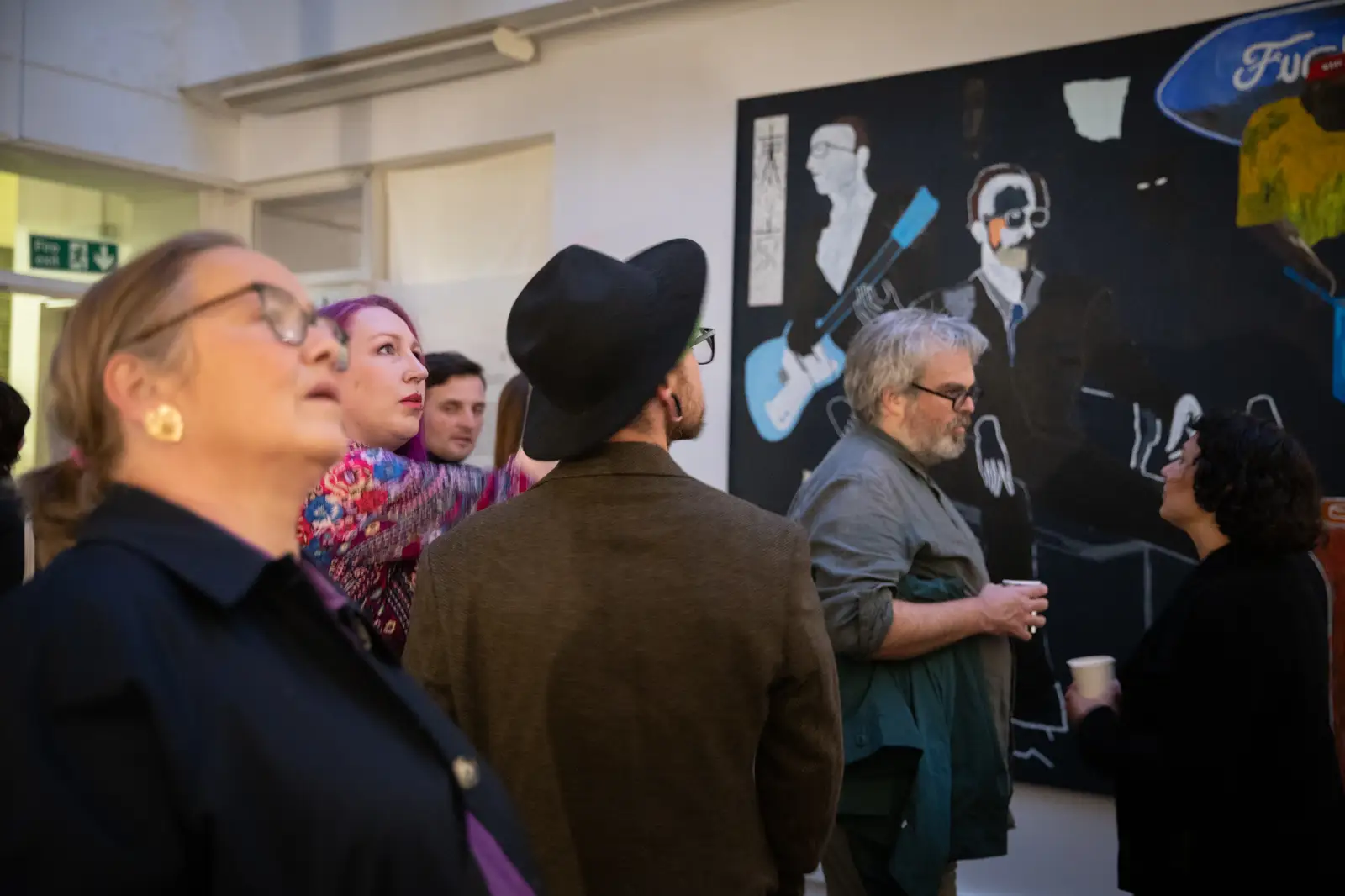
Two visitors discussing a Paes painting during the exhibition, seen from behind.
Paes: Room installation from Faces I See When I Go to Sleep, where the bedroom becomes both shelter and psychological exposure. Photo by Molly Martin (@molly_martin_photo). Image courtesy of the artist.

Ritual, myth, and the unconscious at work

Animals in Paes’s paintings often refuse fixed identity. They move between species, appearing part familiar, part symbolic. Landscapes suggest apocalyptic tension that dissolves into brushstroke on closer inspection. Hidden figures emerge unintentionally and remain, the unconscious asserting itself through the act of painting.

These elements draw from mythological, historical, and decolonial narratives, not as explanations but as layers that resist easy consumption. Ritual is present, but never translated into instruction.
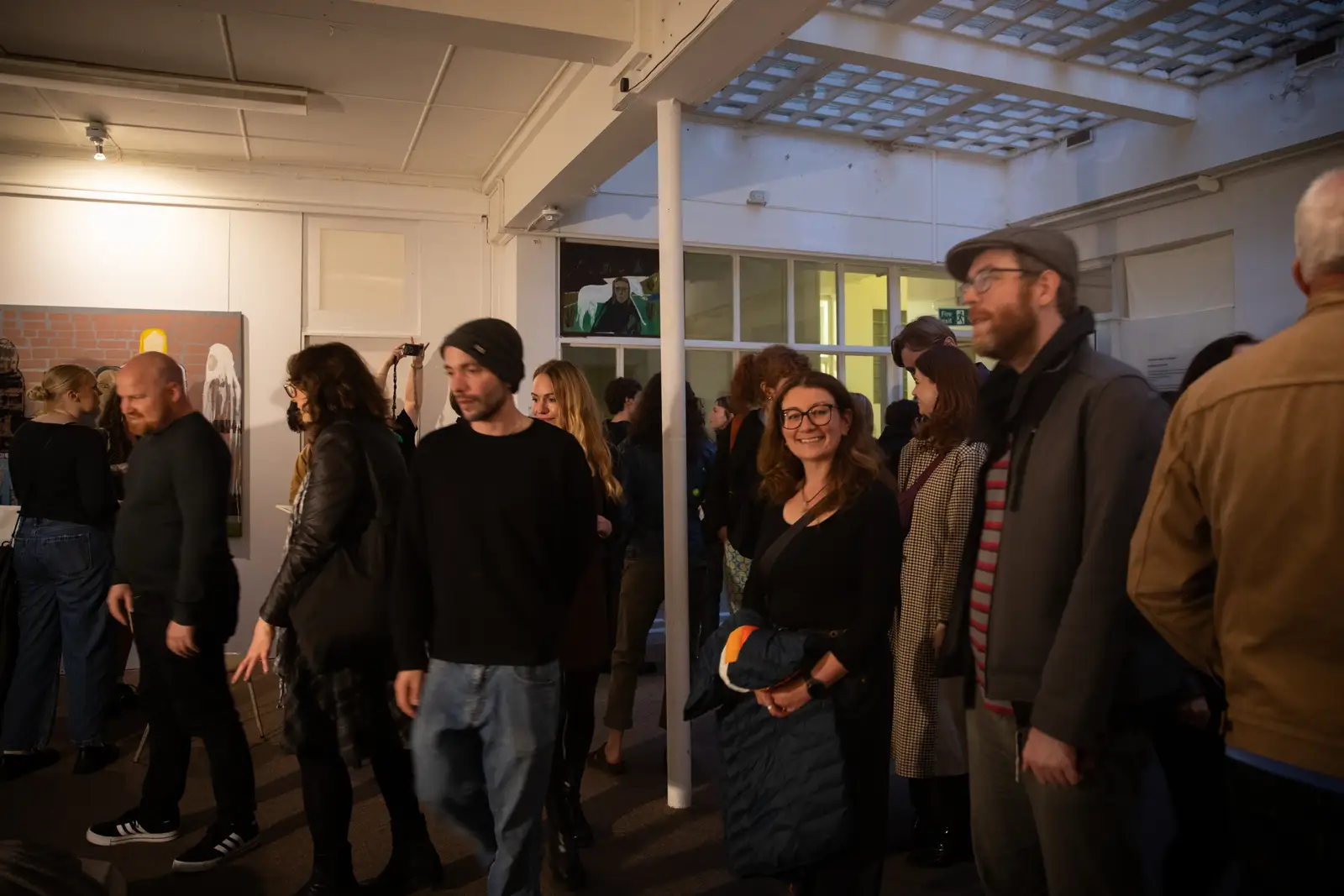
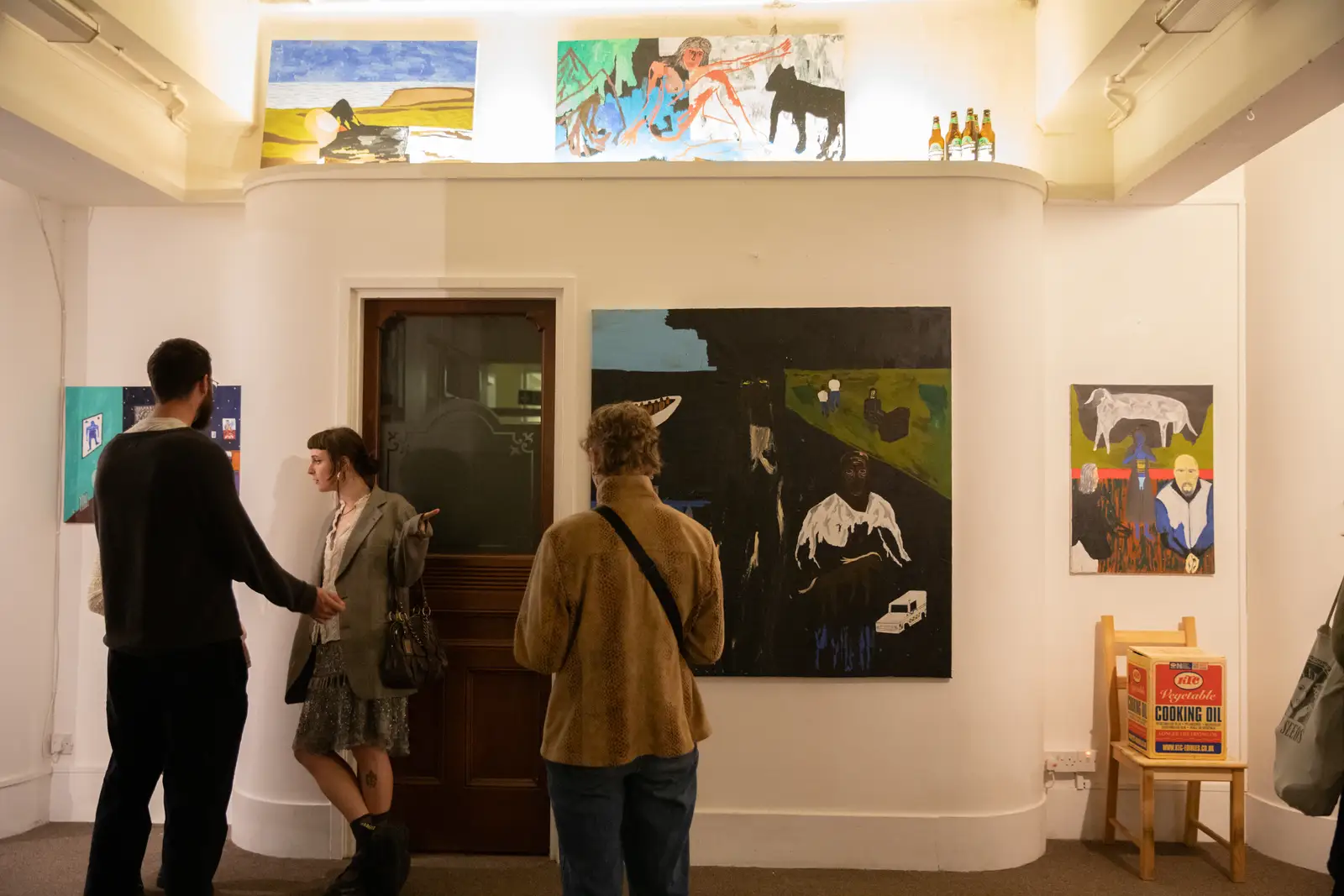
Gallery visitors walking through Paes’ exhibition with multiple figurative paintings installed across white walls.
Paes: Opening night "Faces I See When I Go to Sleep". Photo by Molly Martin (@molly_martin_photo). Image courtesy of the artist.
Paes: Exhibition view. Photo by Molly Martin (@molly_martin_photo). Image courtesy of the artist.
Visitors viewing Paes’ large-scale painting during the exhibition Faces I See When I Go to Sleep, showing figures inside a flattened bedroom interior
Paes: Exhibition view of Faces I See When I Go to Sleep. Image courtesy of the artist. Photo by Molly Martin (@molly_martin_photo). Image courtesy of the artist.
Visitors standing close to a Paes painting during an exhibition, engaged in discussion.
Paes: Exhibition view Photo by Molly Martin (@molly_martin_photo). Image courtesy of the artist.

Why this work matters

Paes’s paintings matter because they resist the pressure to clarify emotional experience into narrative or message. In a cultural moment that favors immediacy and interpretation, his work insists on ambiguity as a legitimate state.

By allowing fear, memory, affection, and social tension to coexist without hierarchy, the paintings reflect how inner life is actually lived. They create space for uncertainty without collapsing into abstraction or spectacle.
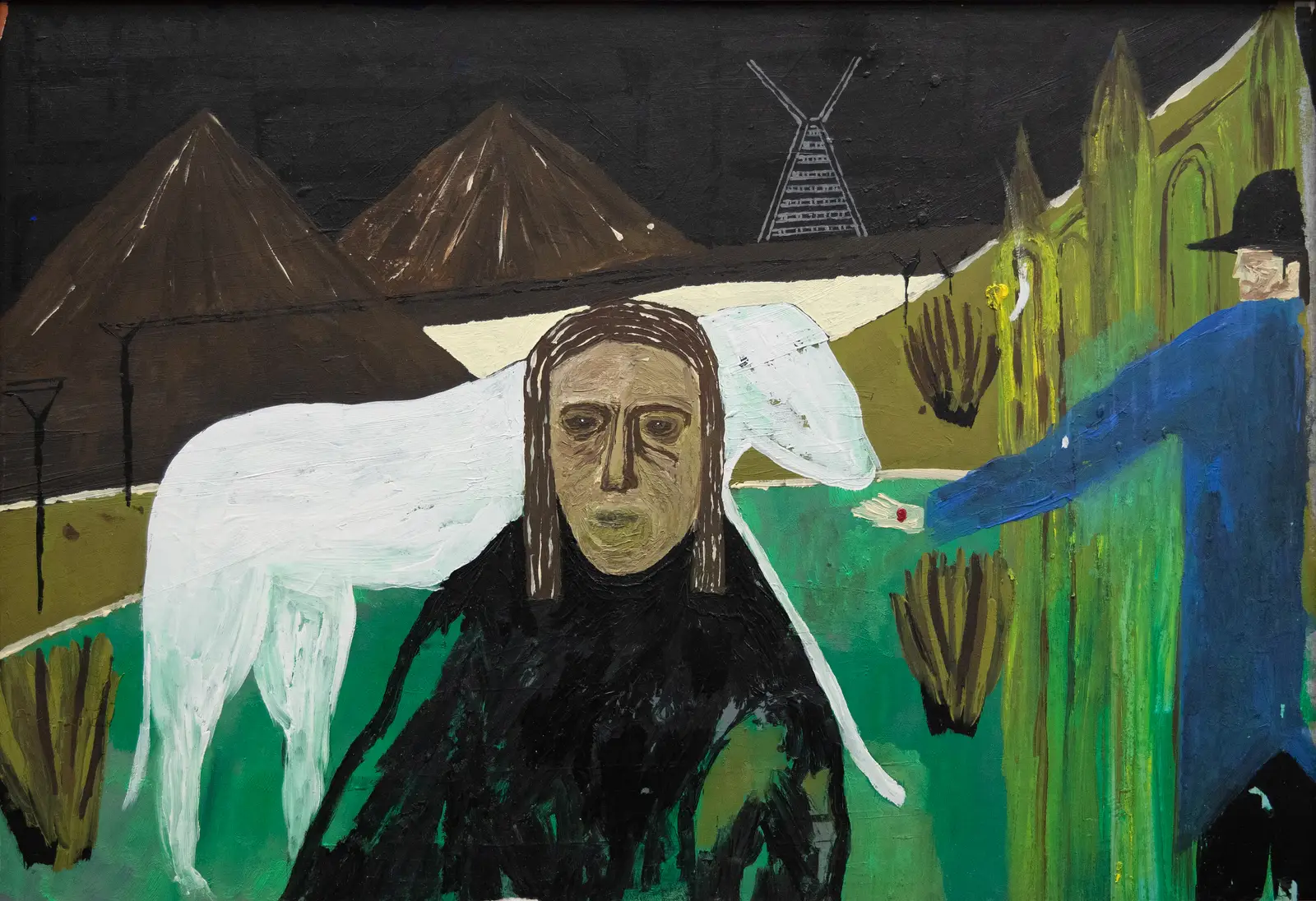
Painting by Paes, titled “Something in the way” (2025), showing a frontal figure in a landscape with animals and architectural elements, acrylic, oil and oil pastel on paper.
PaesSomething in the way, 2025. Acrylic, oil and oil pastel on paper, 80 Ă— 100 cm. Photo: Molly Martin (@molly_martin_photo). Image courtesy of the artist.
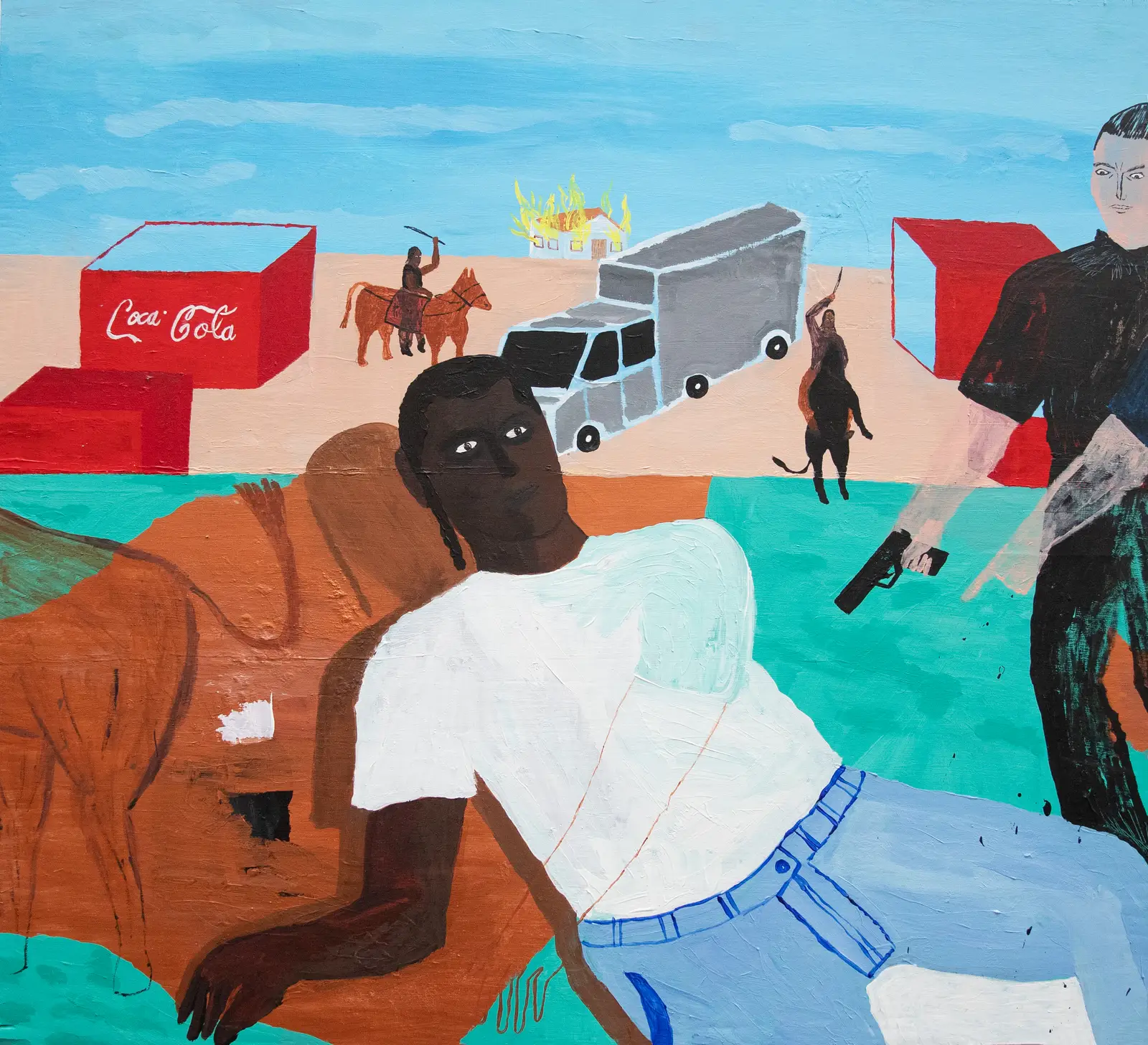
Painting by Paes, titled “Take your dirty hands out of ma land”, showing a reclining figure in a desert-like scene with vehicles and structures, acrylic on wooden board.
PaesTake your dirty hands out of ma land, 2025. Acrylic on wooden board, 99 Ă— 109 cm. Photo: Molly Martin (@molly_martin_photo). Image courtesy of the artist.
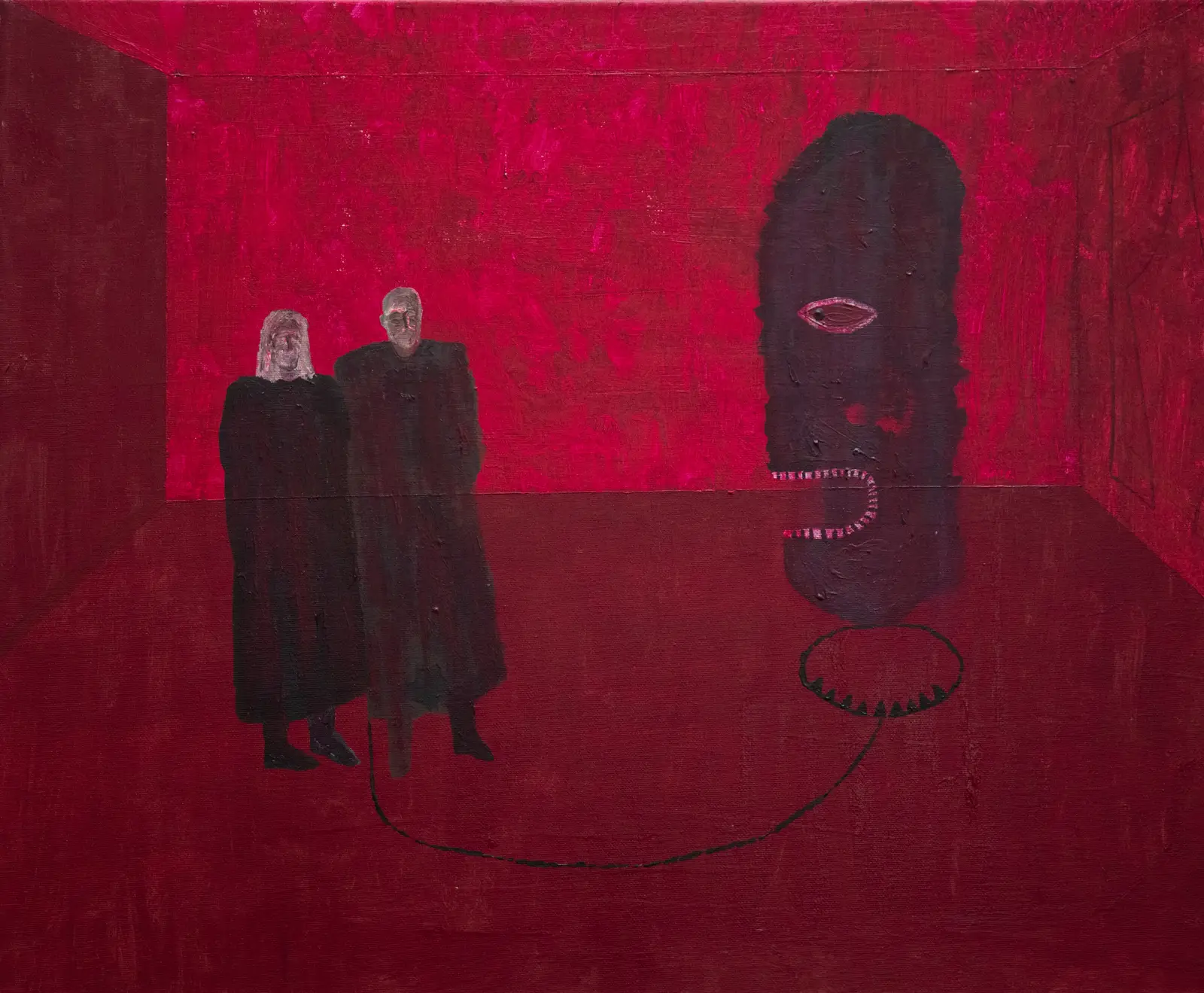
Painting by Paes, titled “Neenaw neenaw, u better run” (2025), showing two standing figures in a red interior space facing a large dark form, acrylic on canvas.
PaesNeenaw neenaw, u better run, 2025. Acrylic on canvas, 143 Ă— 140 cm. Photo: Molly Martin (@molly_martin_photo). Image courtesy of the artist.
PaesYou finally wrote a poem about living above a funeral home, babe, 2025. Acrylic on canvas, 139 Ă— 143 cm. Photo: Molly Martin (@molly_martin_photo). Image courtesy of the artist.
Portrait of artist Paes seated on a chair in front of a large black painting depicting a seated figure and abstract characters, photographed in the studio.
Paes: Artist portrait. Photo: Beckie Stew (@beckiestew). Image courtesy of the artist.

Letting the image remain intact

Paes allows his images to remain open, trusting the viewer to stay with what has not been resolved. The paintings do not ask to be decoded. They ask for attention, patience, and a willingness to sit inside emotional complexity. What emerges is not an answer, but a sustained encounter with something unfinished and real.

Follow Paes on Instagram and continue tracing his evolving practice. Share this with someone who values images that leave room for uncertainty.
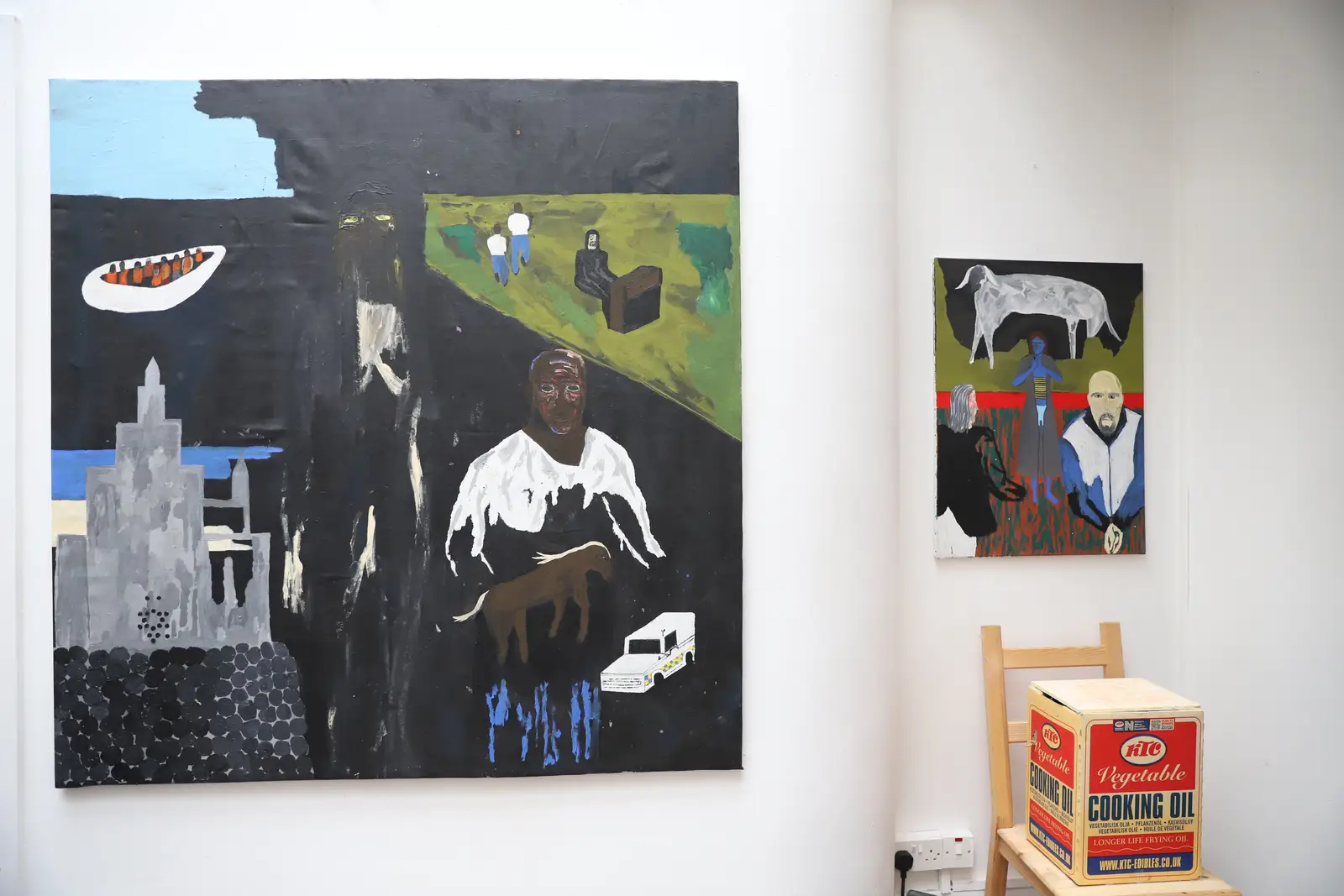
Installation view of Paes’ paintings displayed with everyday objects, including a chair and cardboard box, inside a gallery.
Paes: Installation view. Photo by Molly Martin (@molly_martin_photo). Image courtesy of the artist.
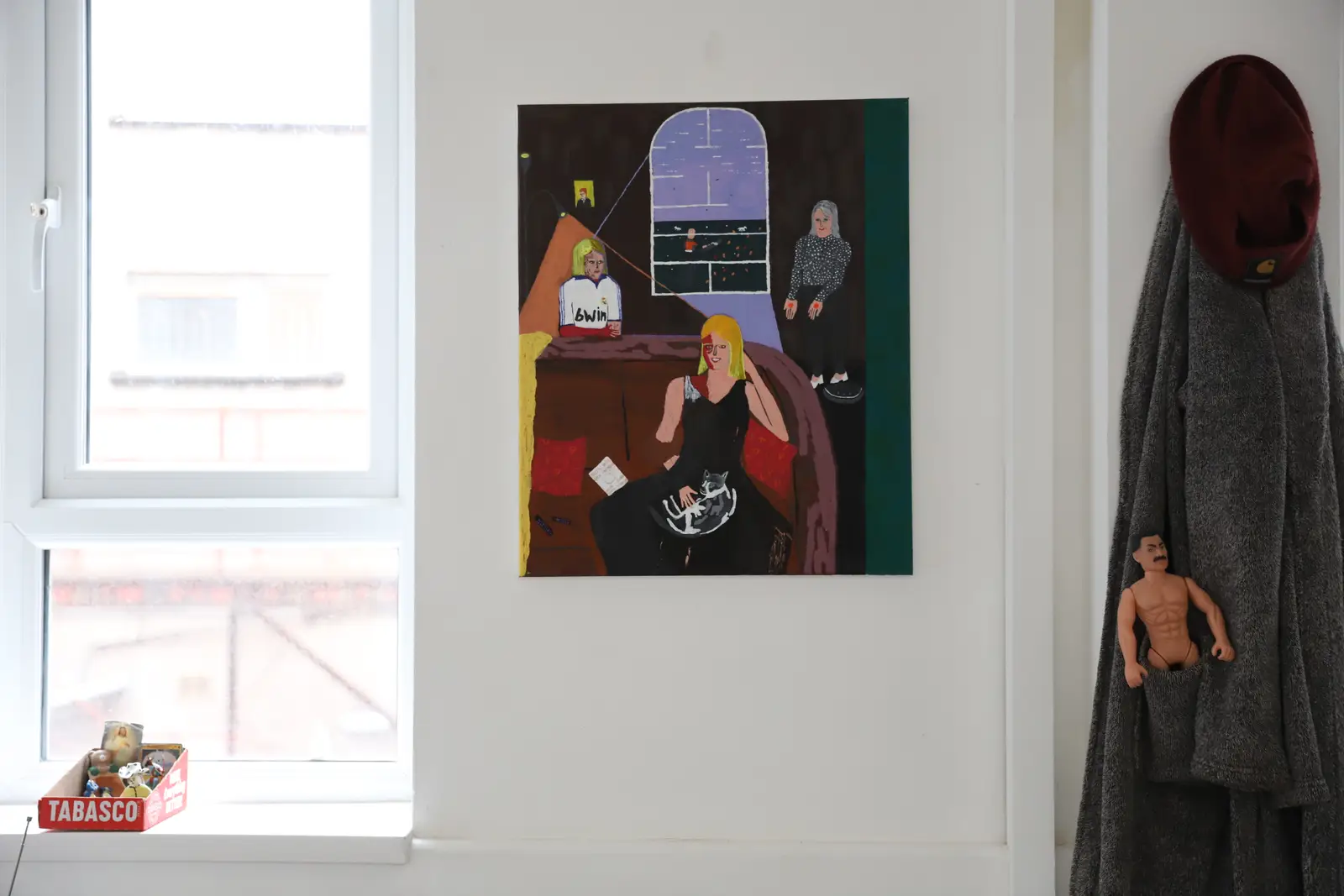
Paes painting displayed on a white wall near a window, with small objects placed below as part of the installation.
Paes: Painting positioned between window light and personal objects, collapsing private interior and exhibition space. Photo by Molly Martin (@molly_martin_photo). Image courtesy of the artist.

As painting title, the faces are right there. Multiple women, various states of presence, a bedroom containing them all.

You can't unhear it because you're seeing what generates the need to sing it.
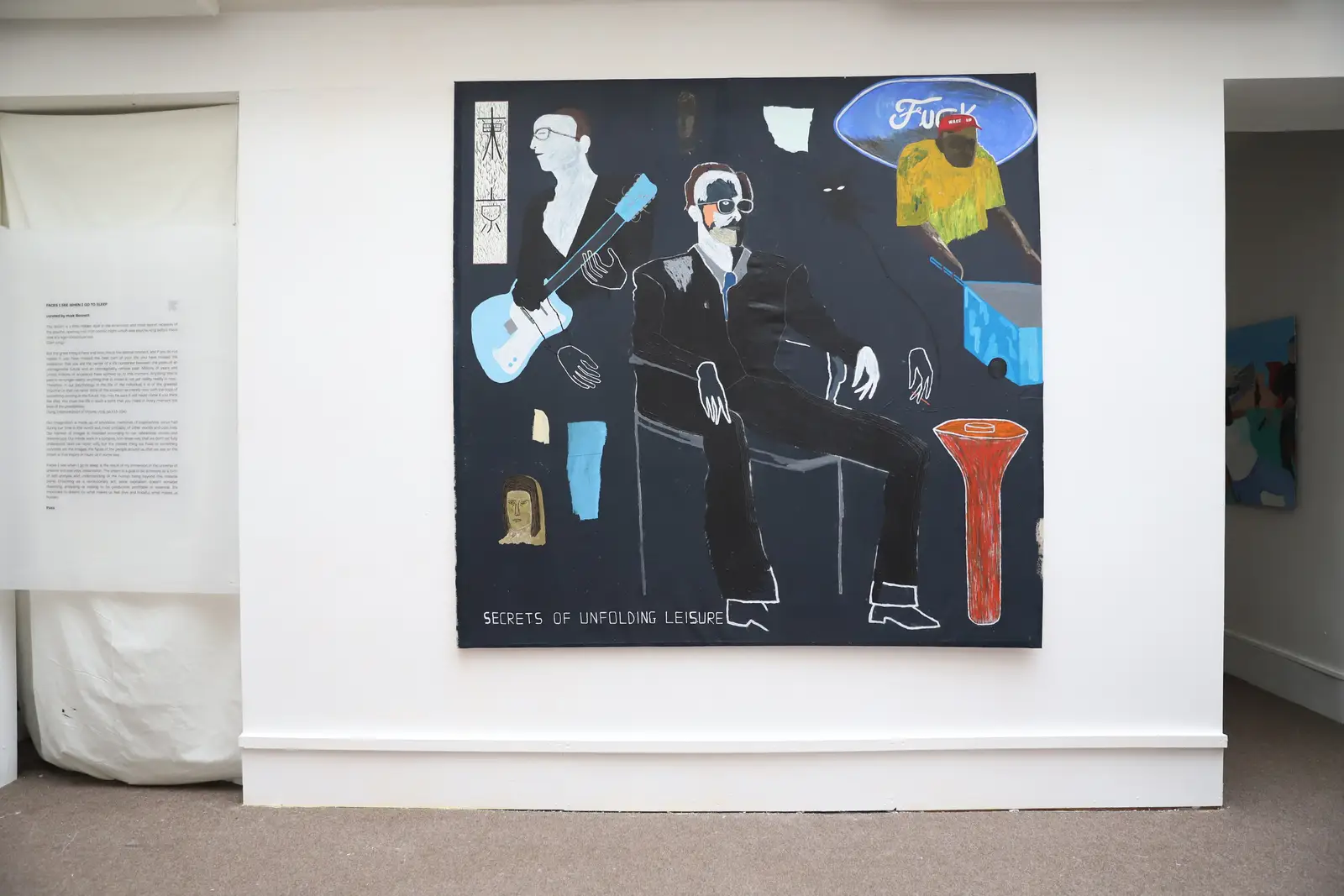
Paes painting Secrets of Unfolding Leisure installed on a gallery wall, featuring seated figures, floating objects, and text elements.
Paes: Secrets of unfolding leisure, 2025. Acrylic and oil on canvas, 210 Ă— 213 cm. Photo: Molly Martin (@molly_martin_photo). Image courtesy of the artist.
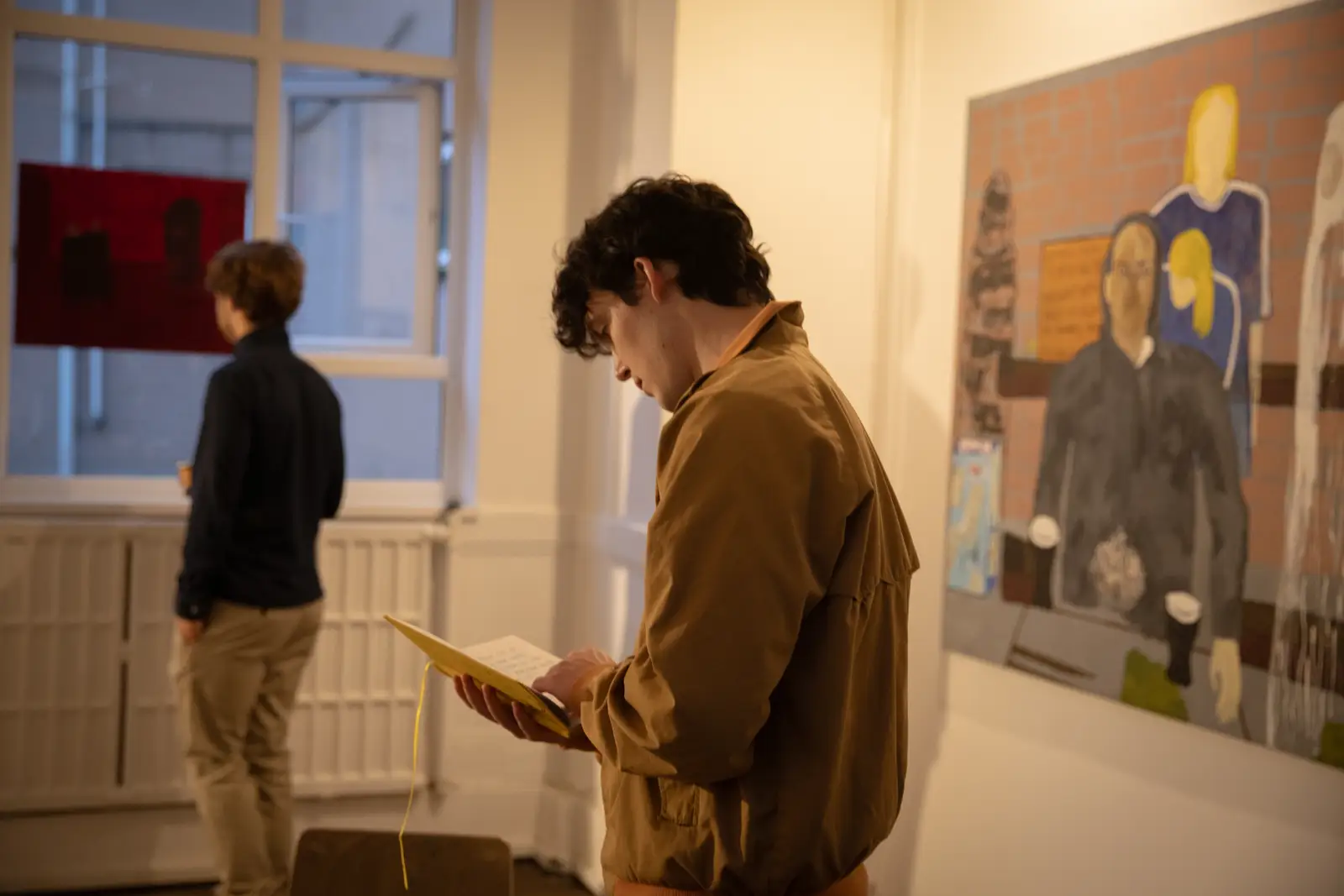
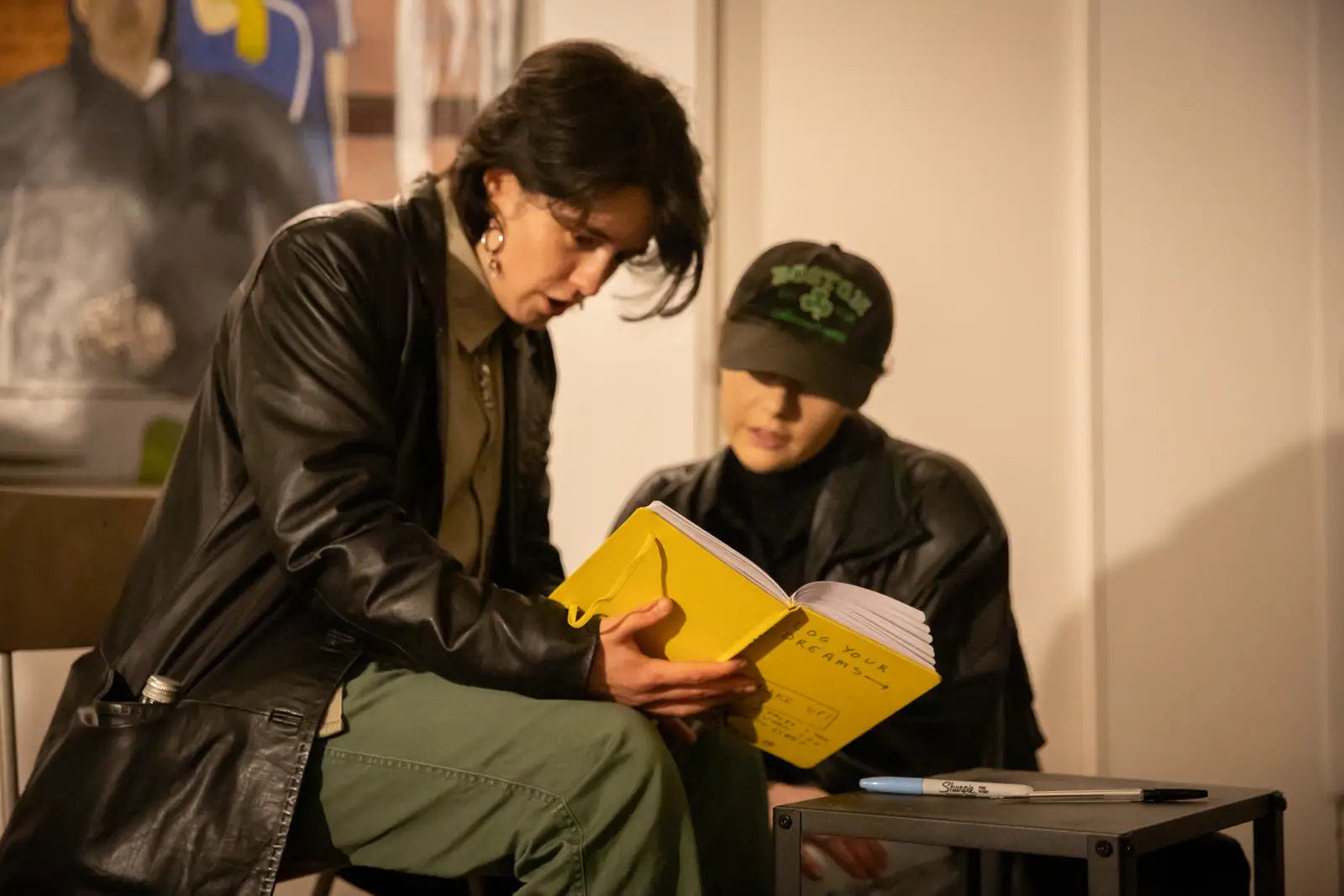
A visitor reading a yellow notebook inside Paes’ exhibition space, surrounded by figurative paintings
Paes: Exhibition view. Photo by Molly Martin (@molly_martin_photo). Image courtesy of the artist.

ABOUT THE ARTIST

Paes is a Brazilian painter and musician based in Belfast, Ireland. For over 18 years he has released music under his surname, with seven albums in total. Among the most defining are Mundo Moderno and Wallace, which established his artistic identity and received significant media recognition across Brazil and Europe.
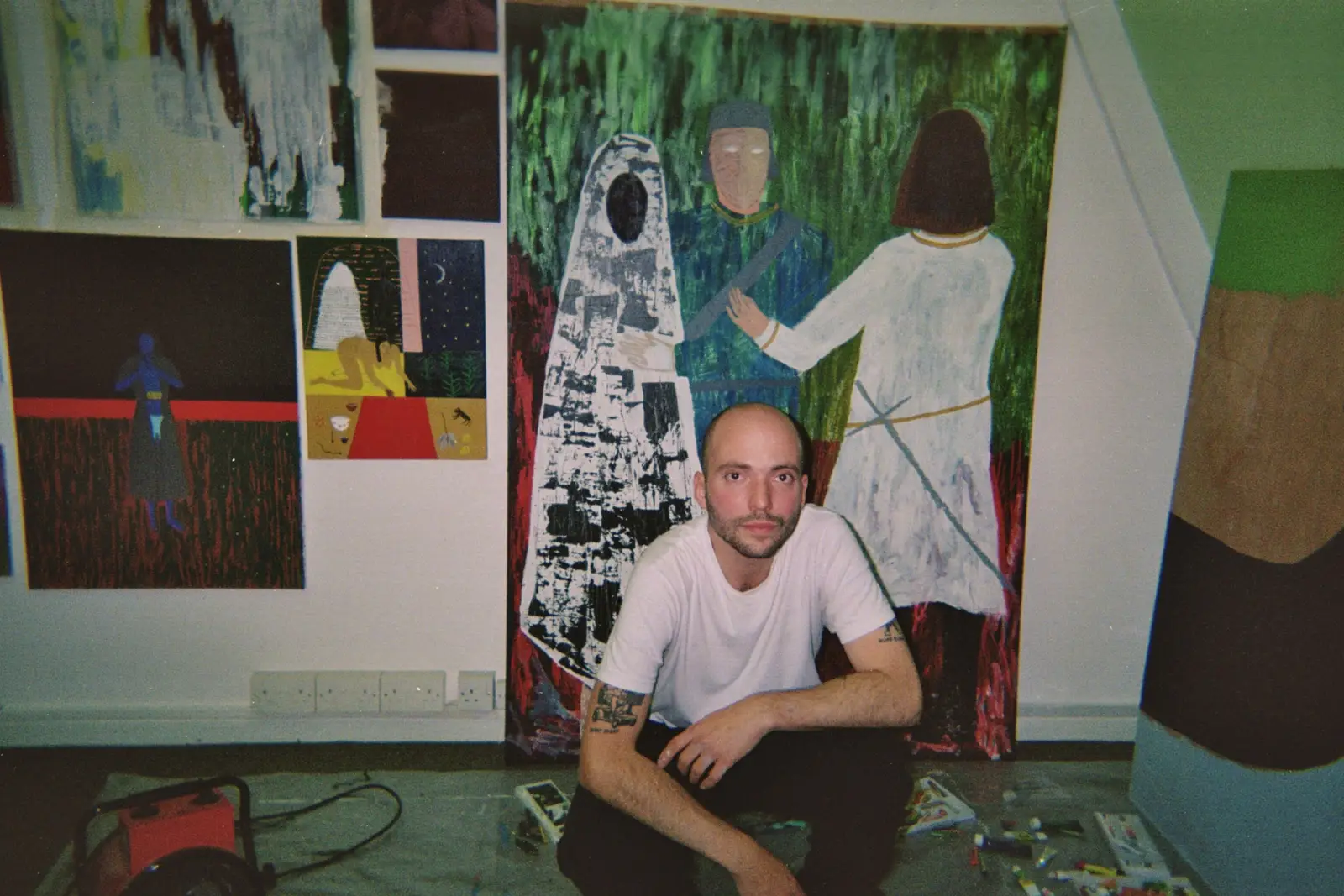
Portrait of artist Paes crouching in front of a tall painting with three figures, photographed in the studio
Paes: Portrait, in front of "Secrets of unfolding leisure" - Studio of the artist. Photo: Beckie Stew (@beckiestew). Image courtesy of the artist.
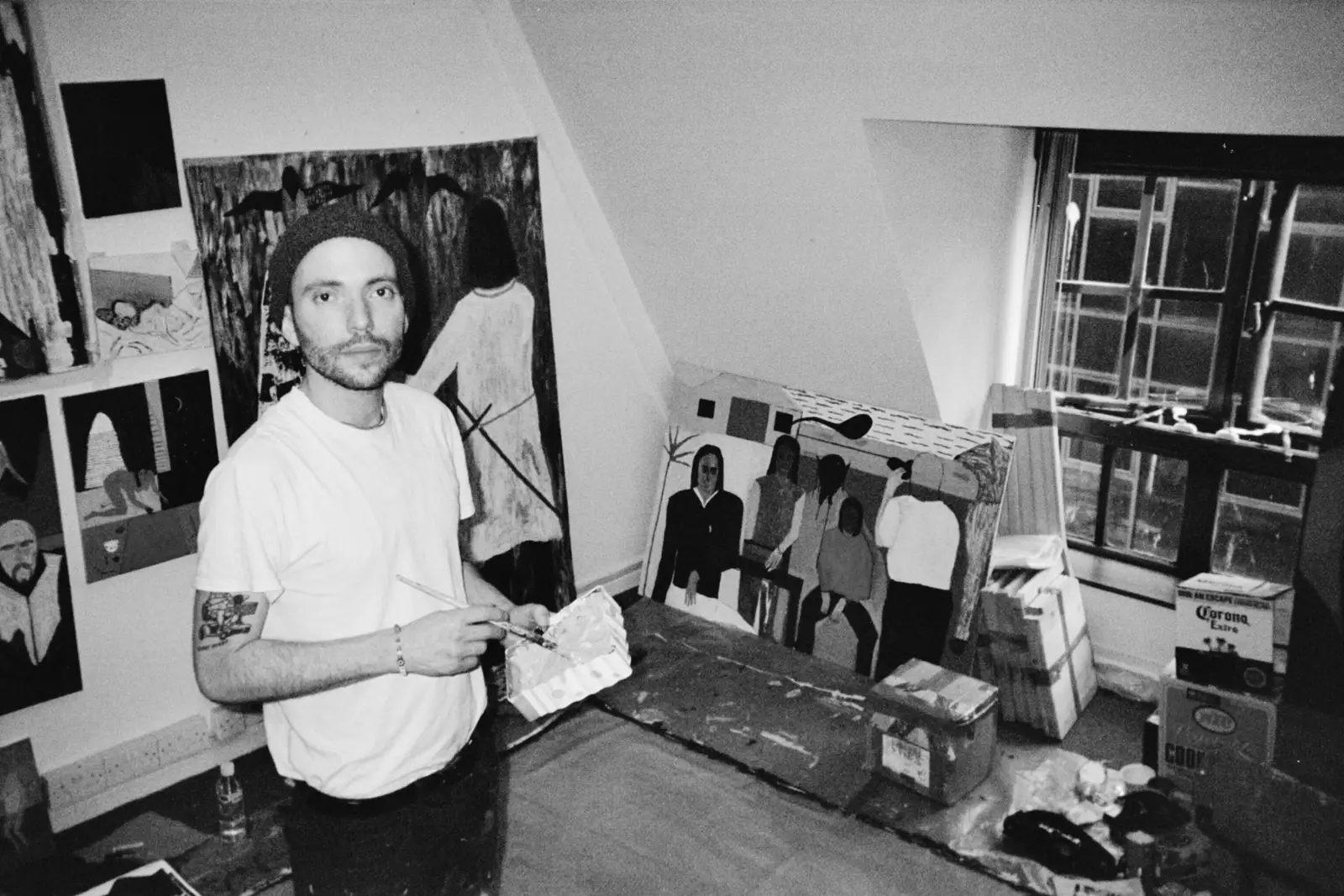
Black-and-white portrait of artist Paes in his studio holding a paint palette, surrounded by paintings and works in progress.
Paes: Portrait, photographed in his studio. Photo: Beckie Stew (@beckiestew). Image courtesy of the artist.

VISIT / ENGAGE

Follow Paes on Instagram for studio work and new paintings.

Recognize this? Share with someone who writes songs about rooms they can't leave. Tag @munchiesartclub and tell us: what happens when language stops working?


Share this post