What the Archive Doesn't Classify - Nata Varazi and Gvantsa Jishkariani in a Duo Exhibition

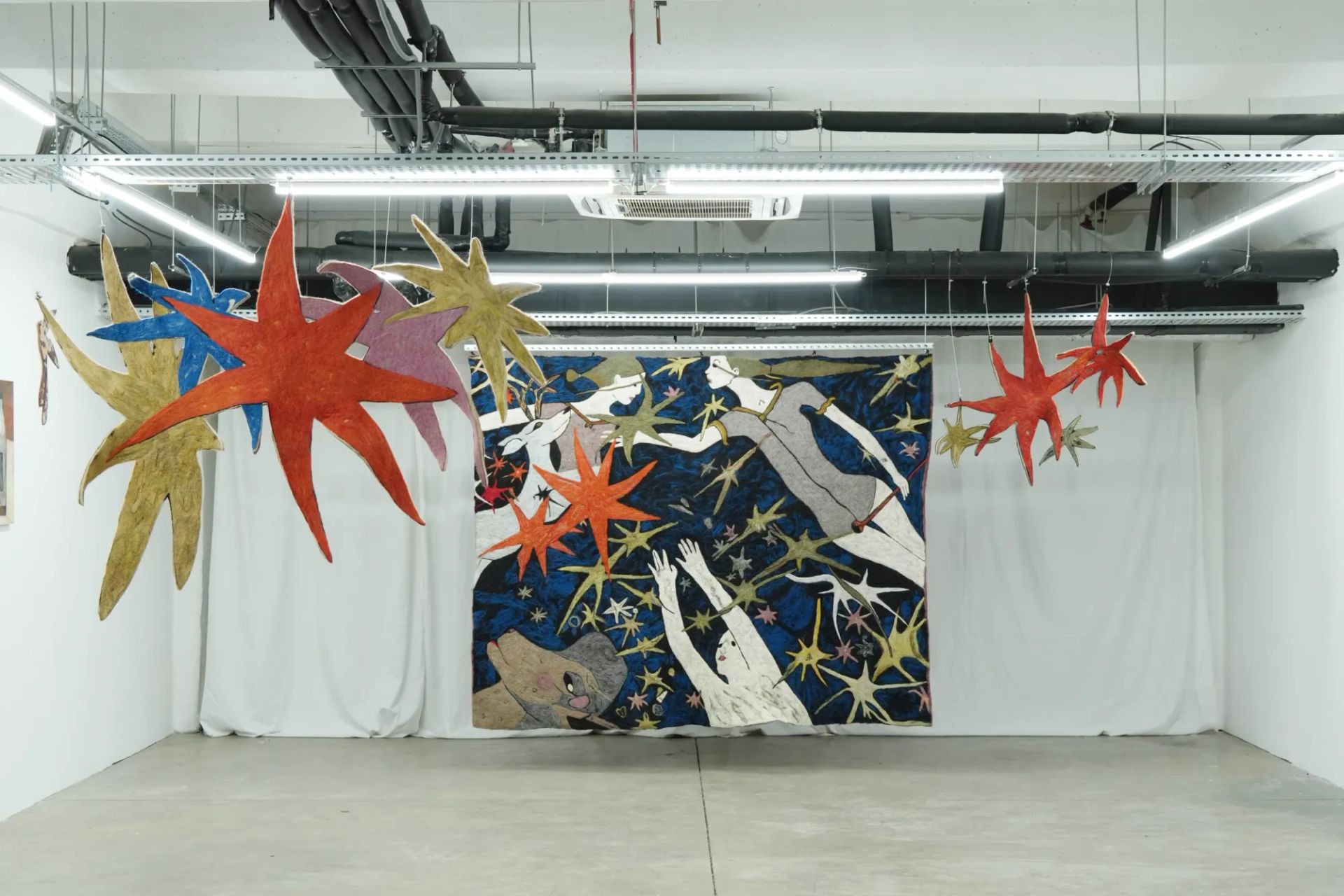
The Why Not Gallery Presents Catalogue of Sensory Data in Tbilisi
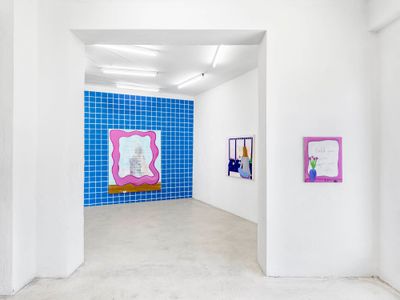
The Why Not Gallery presents Catalogue of Sensory Data, a duo exhibition by Nata Varazi and Gvantsa Jishkariani, at Fabrika Project Space, Tbilisi.
There is a long tradition of archives that fail the things they try to contain. The record doesn't hold grief. The catalogue entry for longing is always missing.
What Catalogue of Sensory Data proposes, through two artists working in materials as far apart as hand-felted wool and marble mosaic, is not a protest against classification but an alternative system. One where the data is tactile. Where the entry field is not "date acquired" but "what it felt like to be here."
Nata Varazi, Gvantsa Jishkariani
Catalogue of Sensory Data
Tbilisi, Georgia
Courtesy The Why Not Gallery
hi@thewhynotgallery.com
An archive of lived experience, built from materials that resist neutrality. These works don't document sensation, they are its format.
The exhibition takes place at Fabrika Project Space, a converted factory compound in Tbilisi that has become one of the city's most active cultural sites.
The choice is not incidental, Fabrika carries its Soviet-era industrial past visibly, and Catalogue of Sensory Data places itself inside that layering, art made from cultural inheritance, shown in a building that is itself a renegotiated archive.
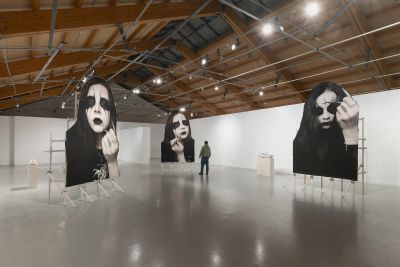
It is The Why Not Gallery's first exhibition in collaboration with Fabrika, and the scale of the space shapes what both practices become inside it.
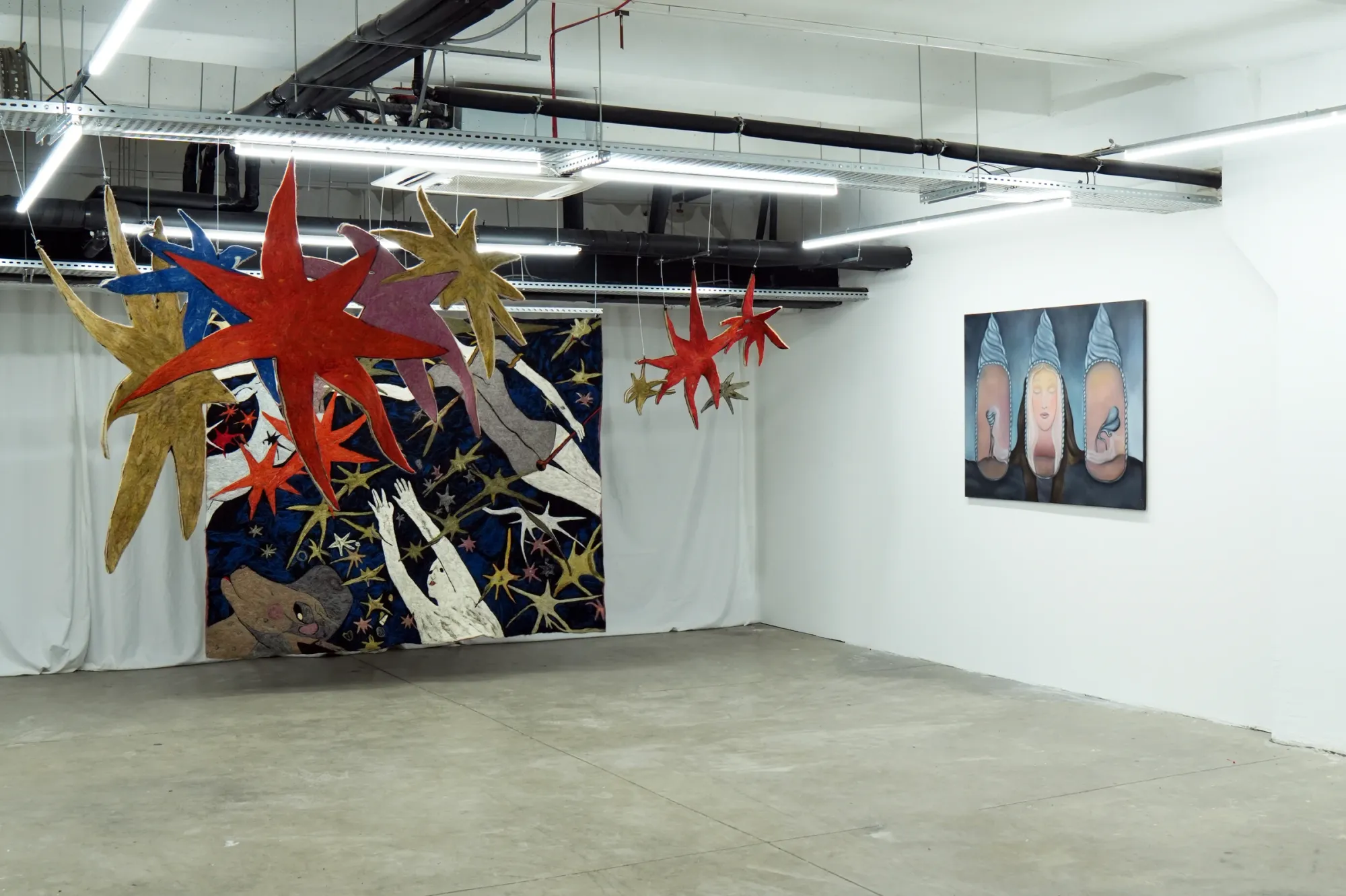
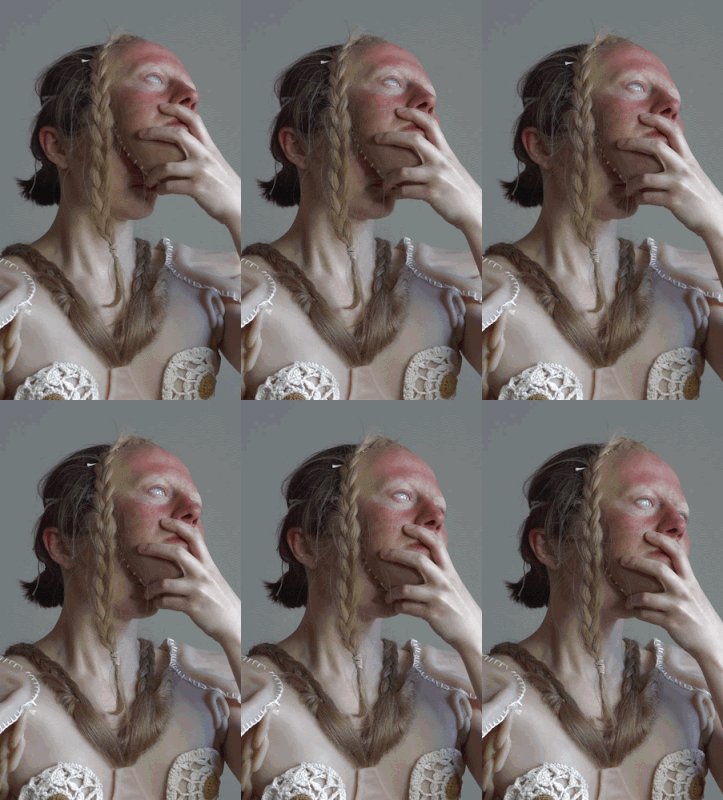
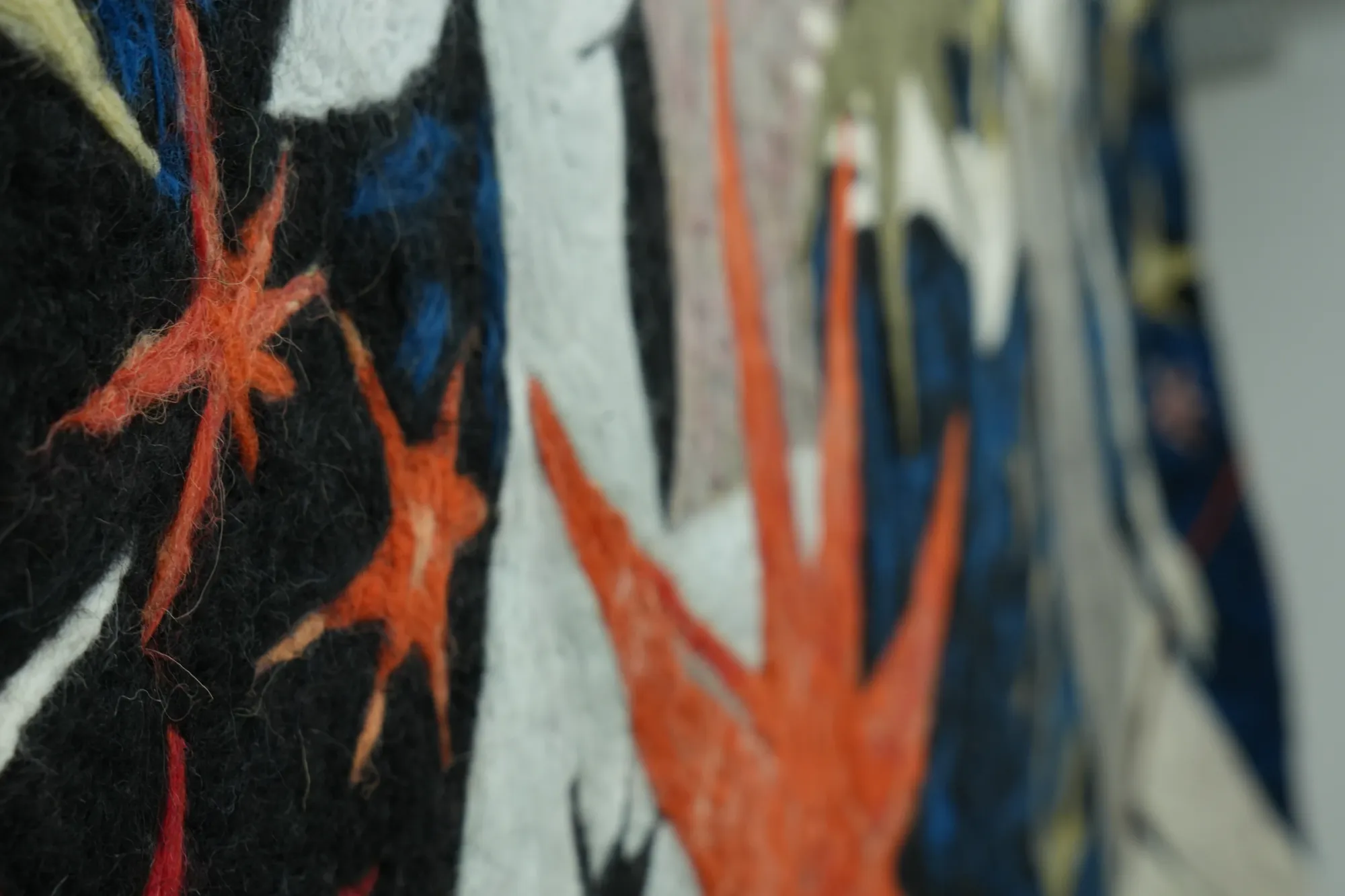
Gvantsa Jishkariani's large felt compositions set the spatial tone. A work scaled to overtake a wall, Georgian and Italian wool pressed and shaped into a surface that feels more like landscape than textile, holds an elongated, spectral figure, somewhere between folkloric symbol and private vision. Felt, as a material, doesn't sharpen. It absorbs.
Jishkariani's Catalogue of Sensory Data (the title shared with the exhibition itself) and her Catalogue of galaxies series seem to understand this, the format and the content converge.
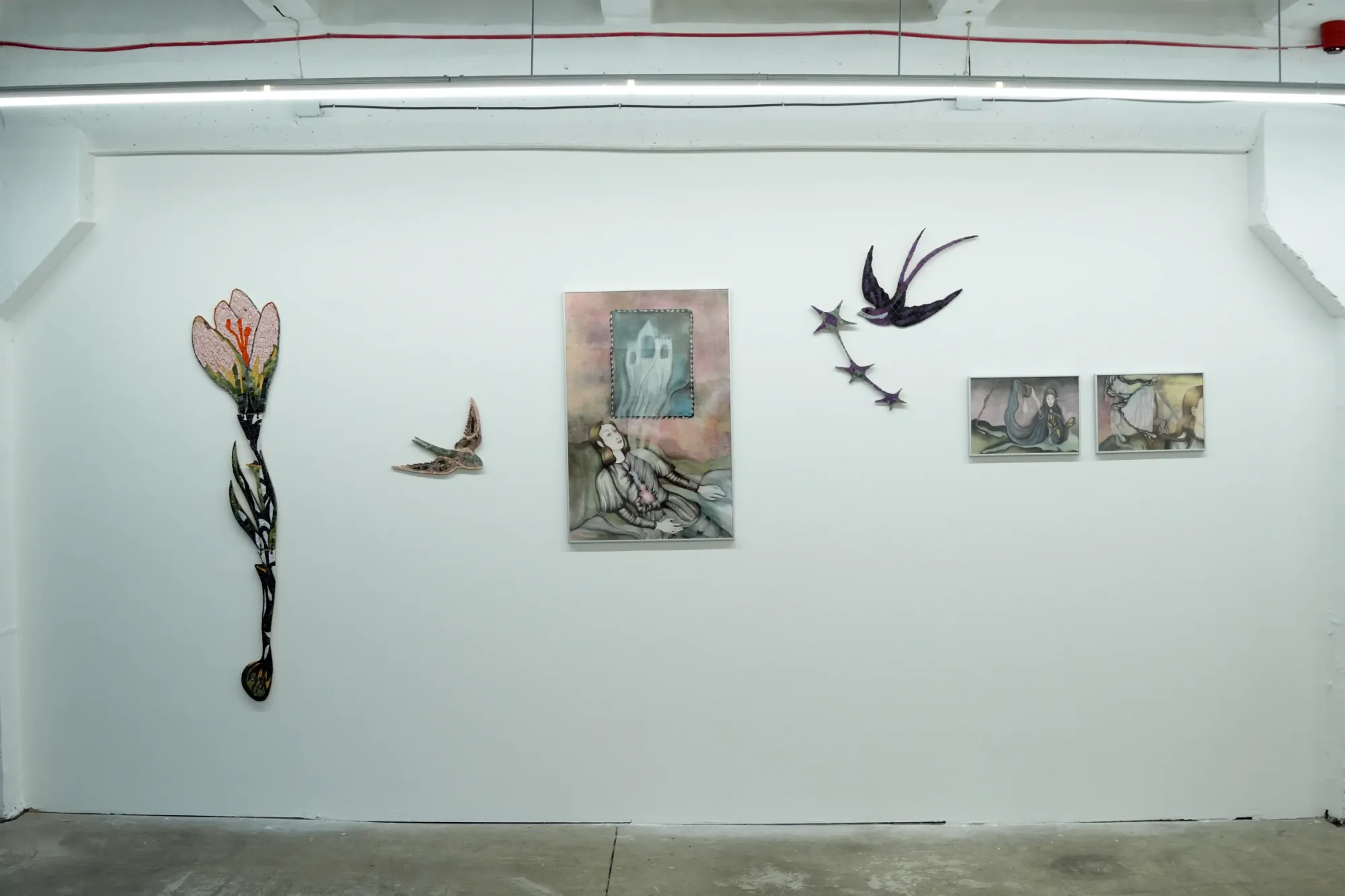
Her Ouroboros drawings on paper carry the same circular logic in smaller register, beginning folding into end, containment as structure rather than failure.
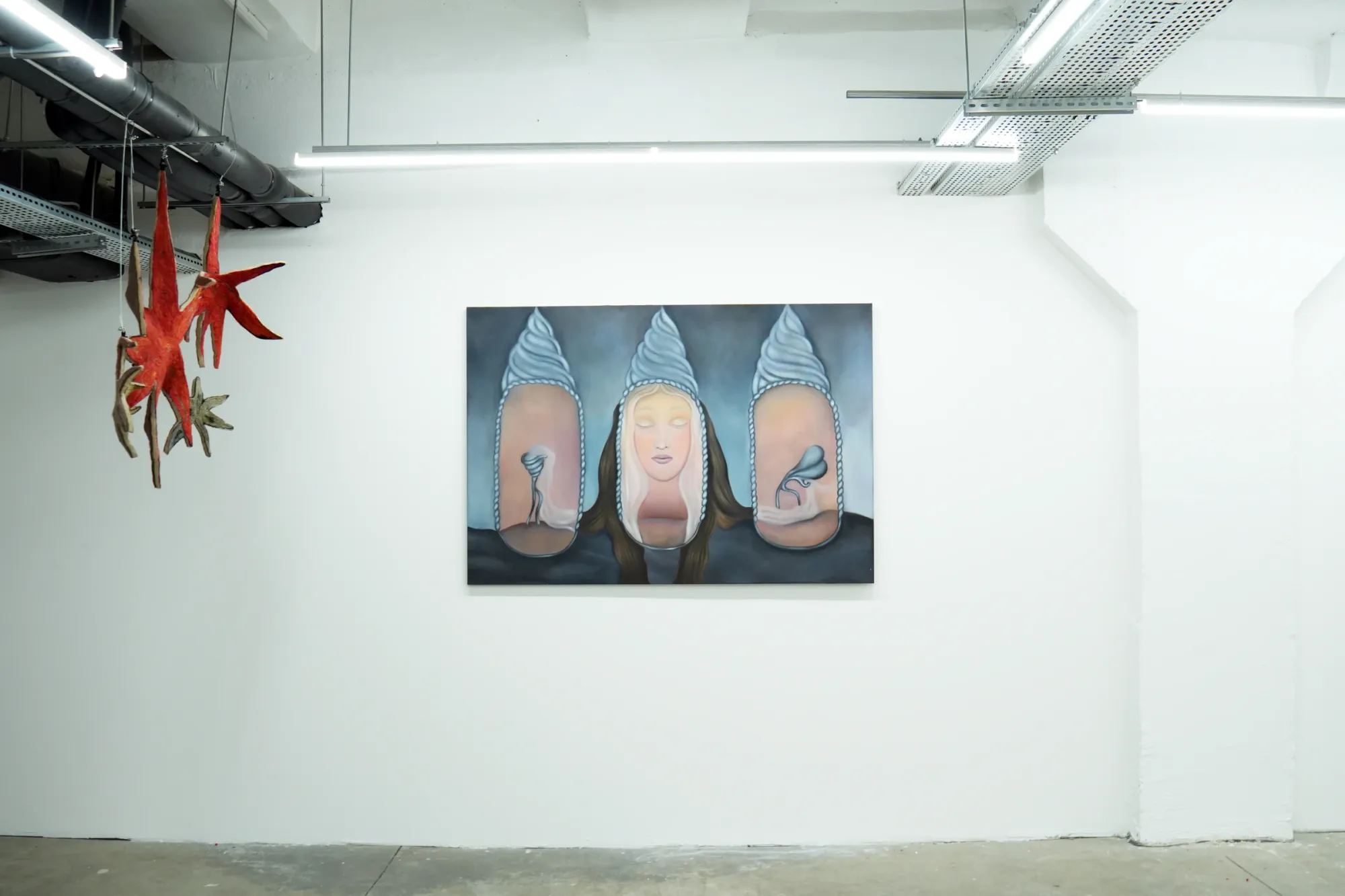
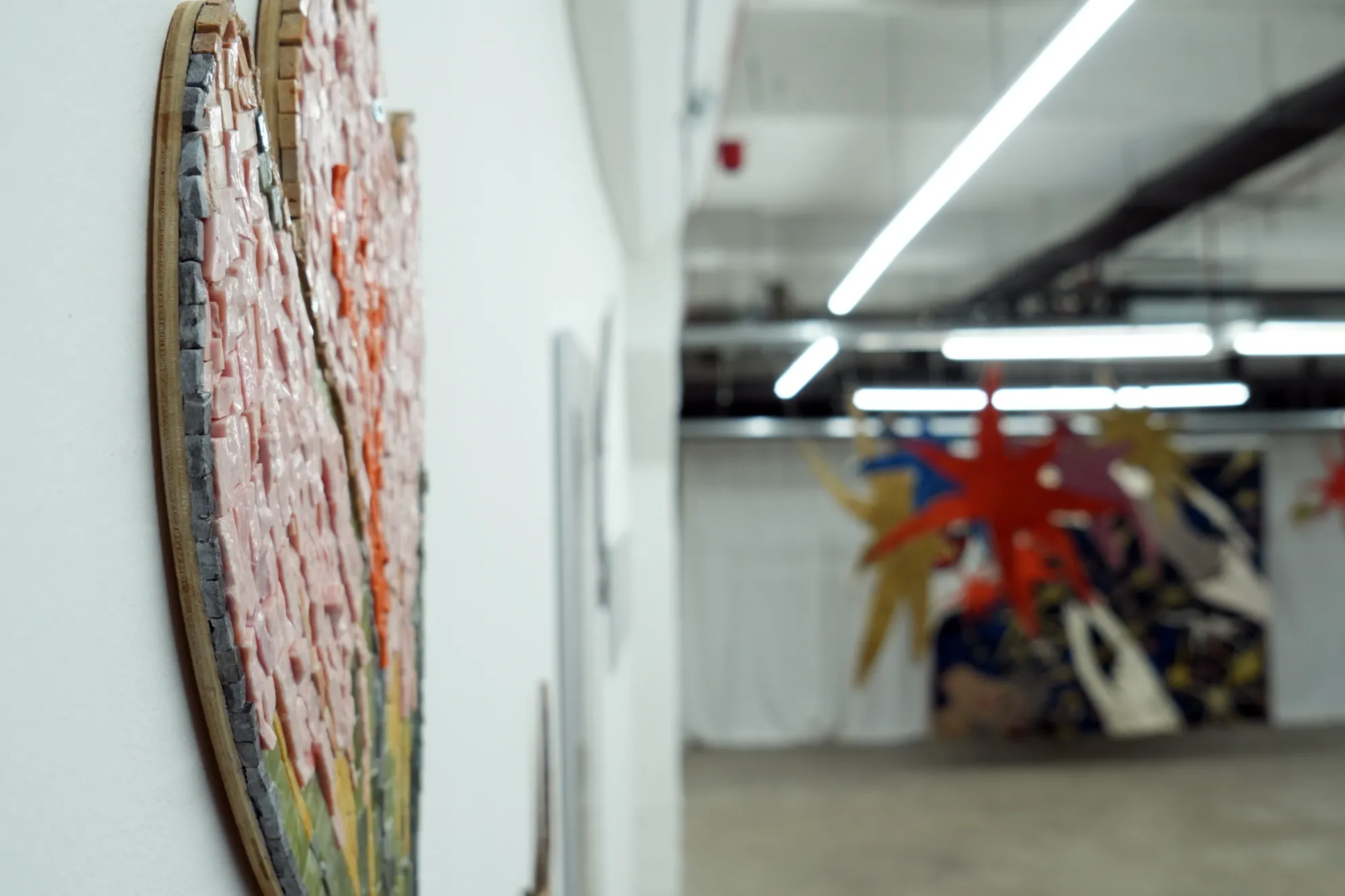
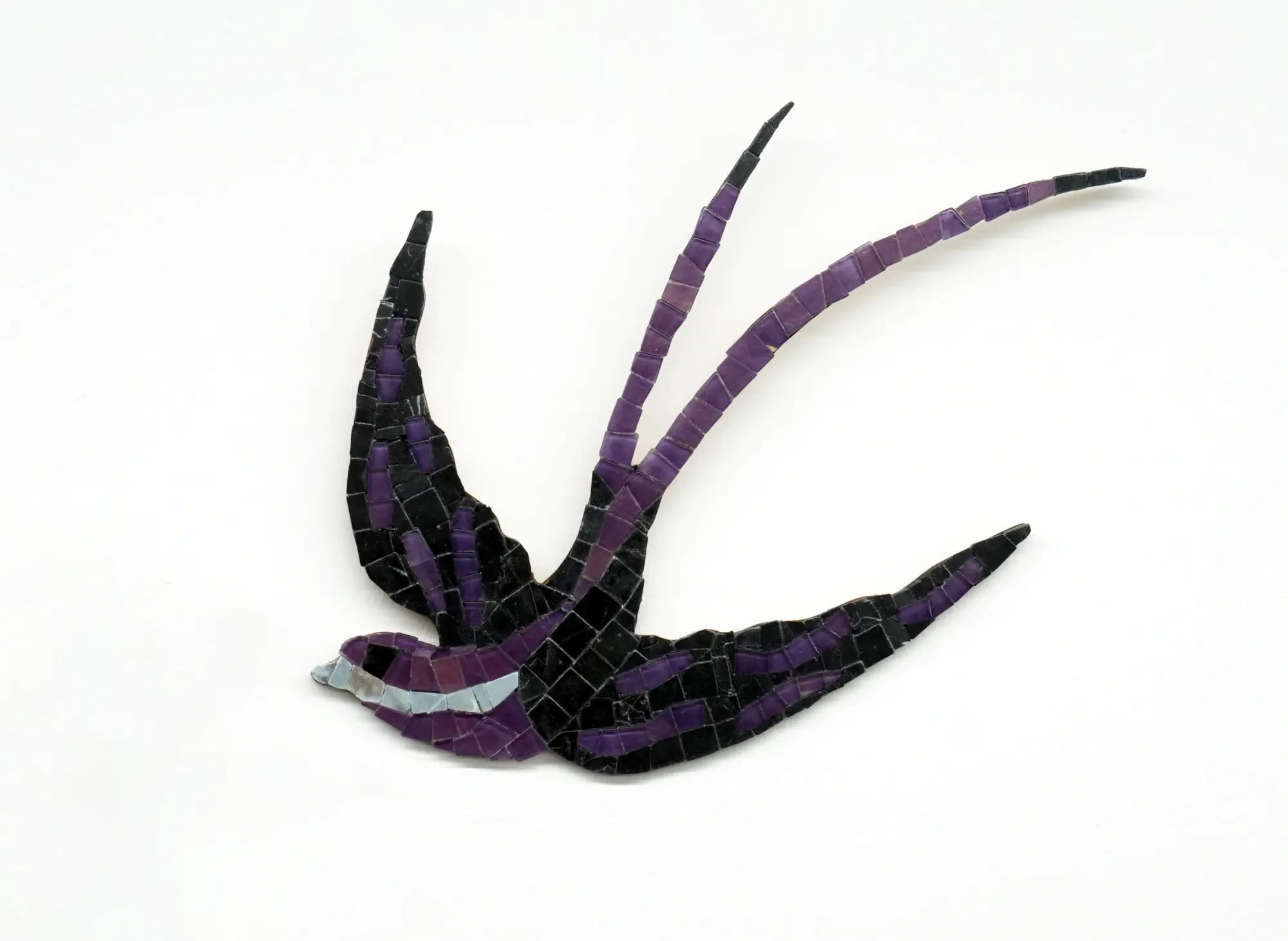
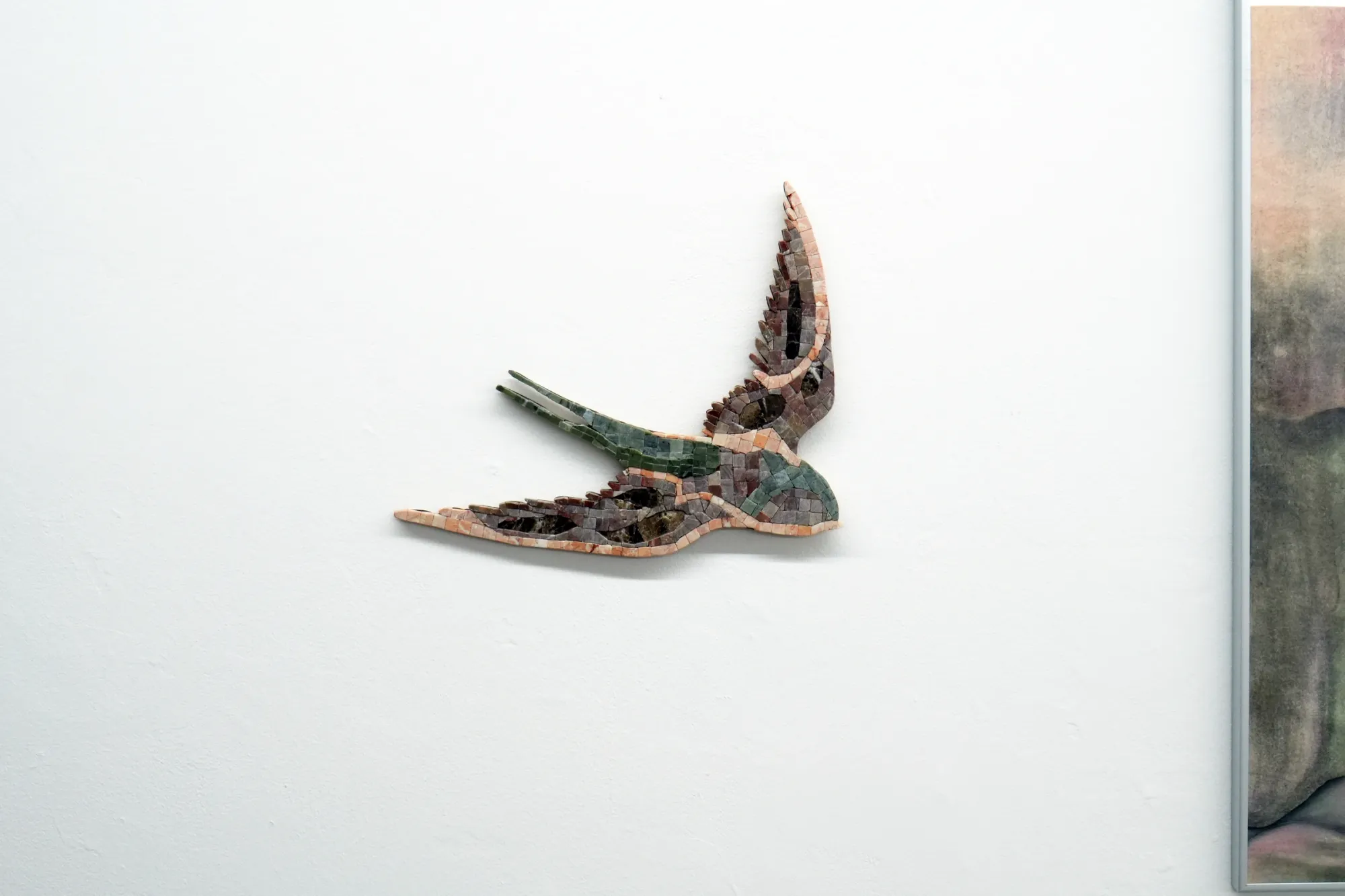
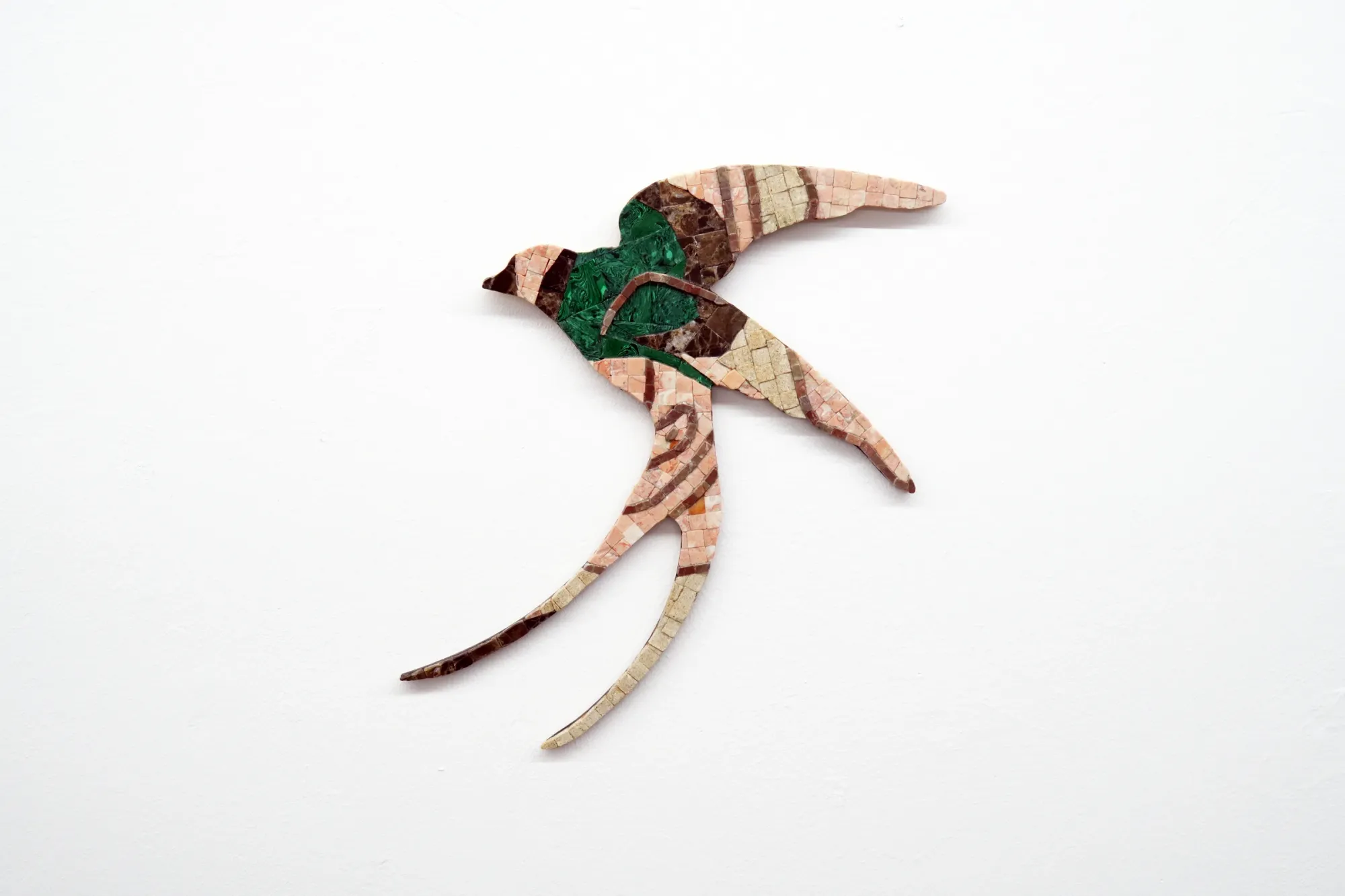
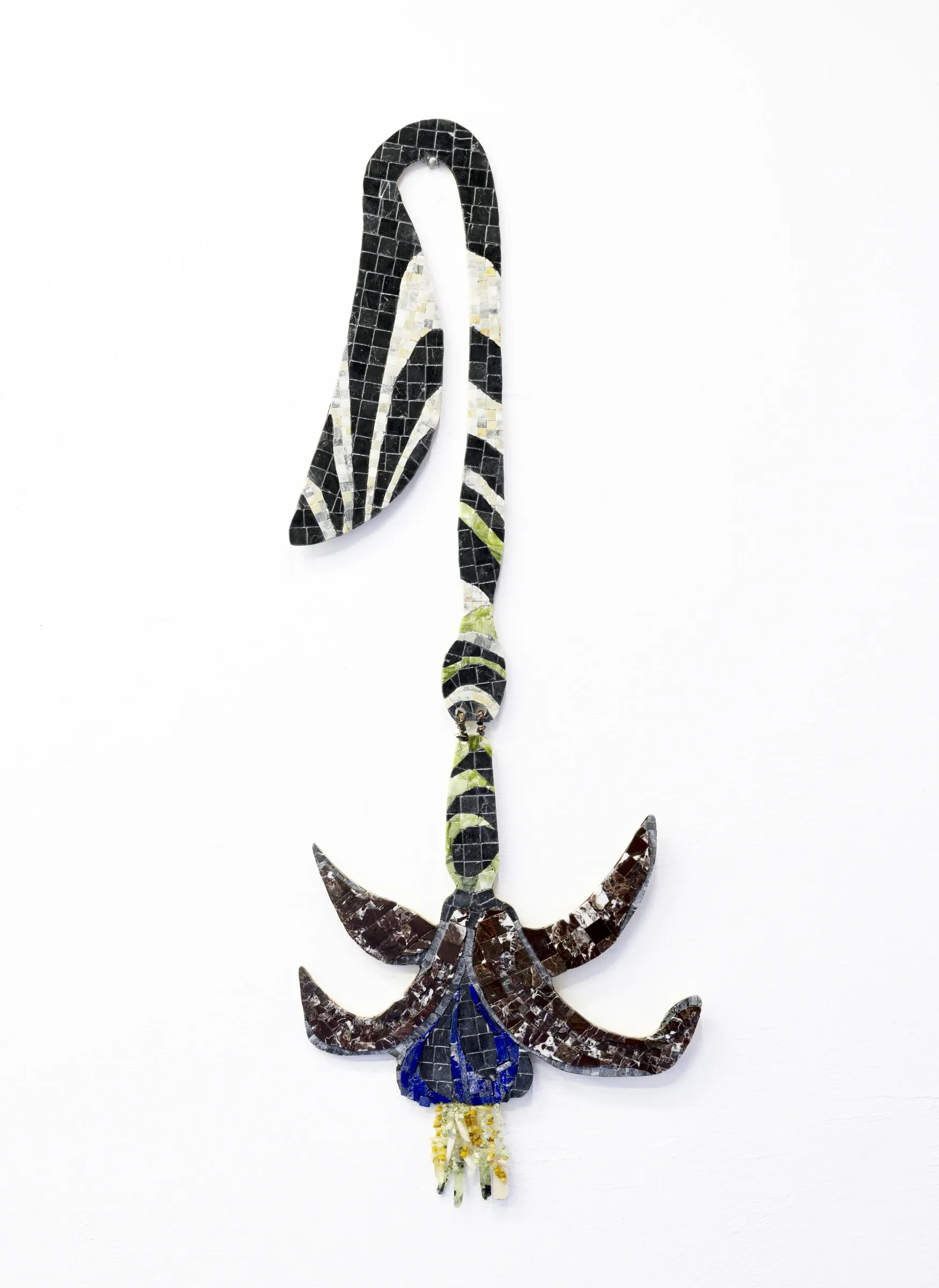
Nata Varazi works in the register of duration. Her marble and gemstone mosaics use ancient technique, Italian Smalti, lapis lazuli, malachite, beach glass, not to invoke the classical but to insist that certain kinds of attention can only be built slowly.
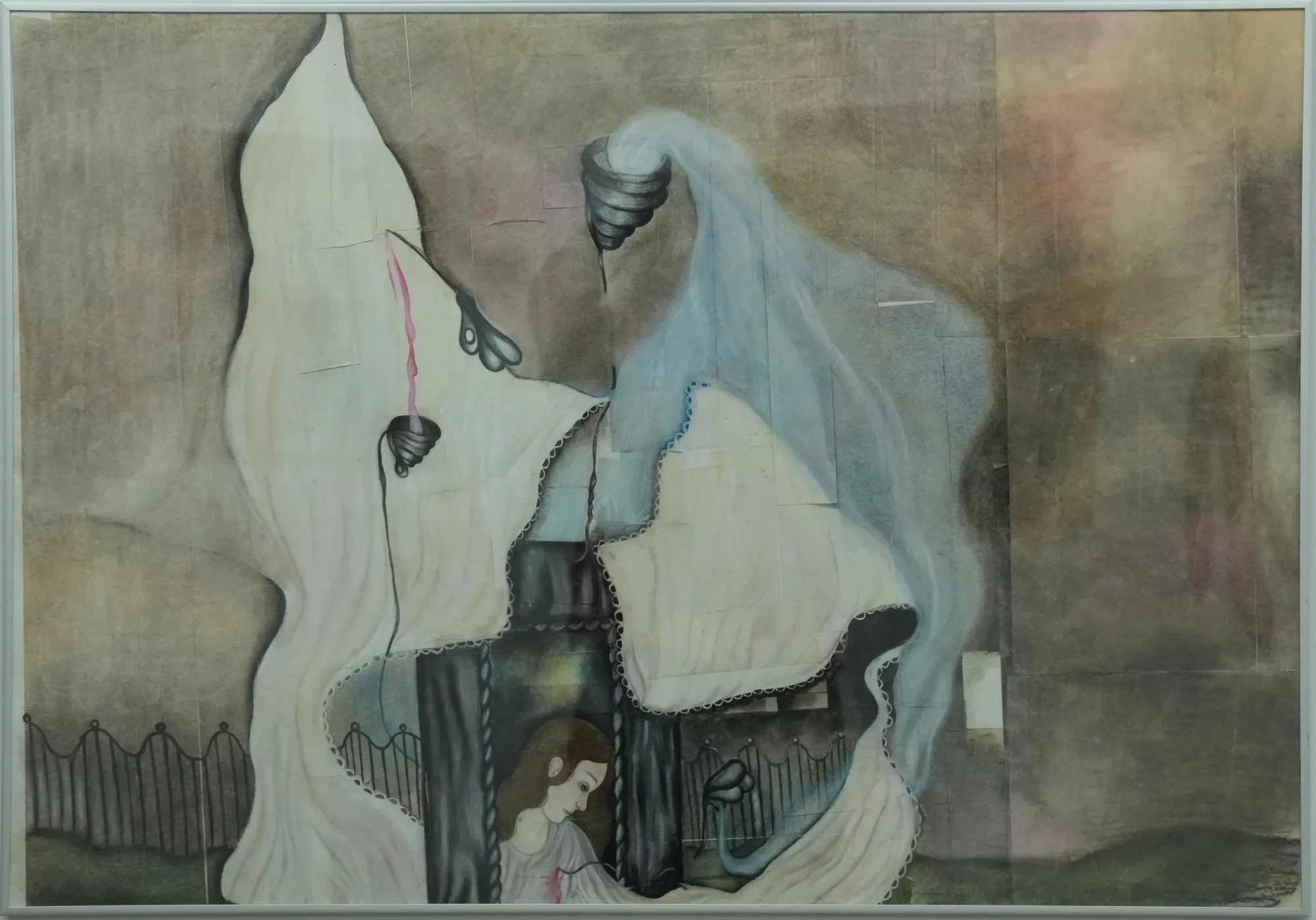
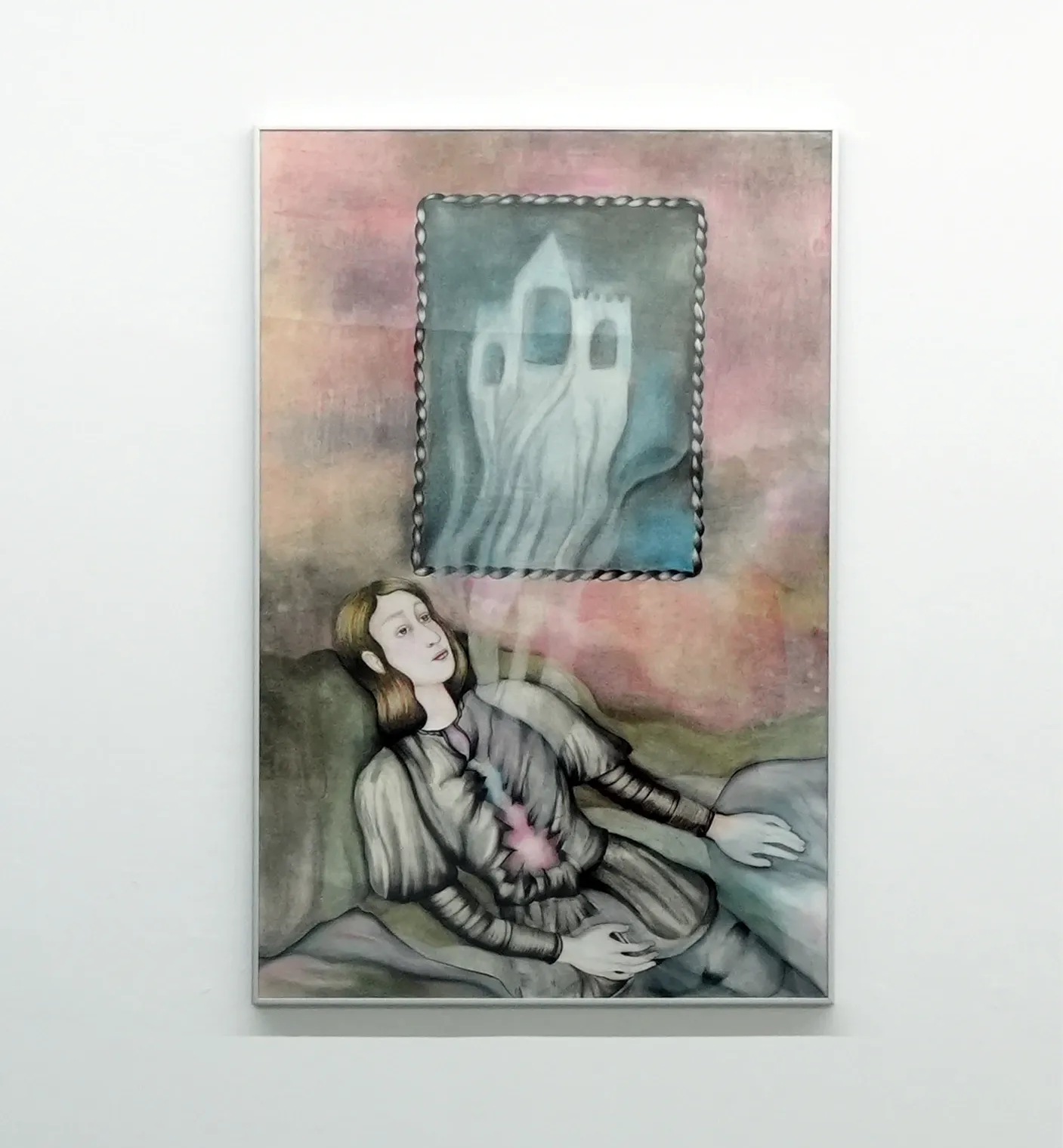
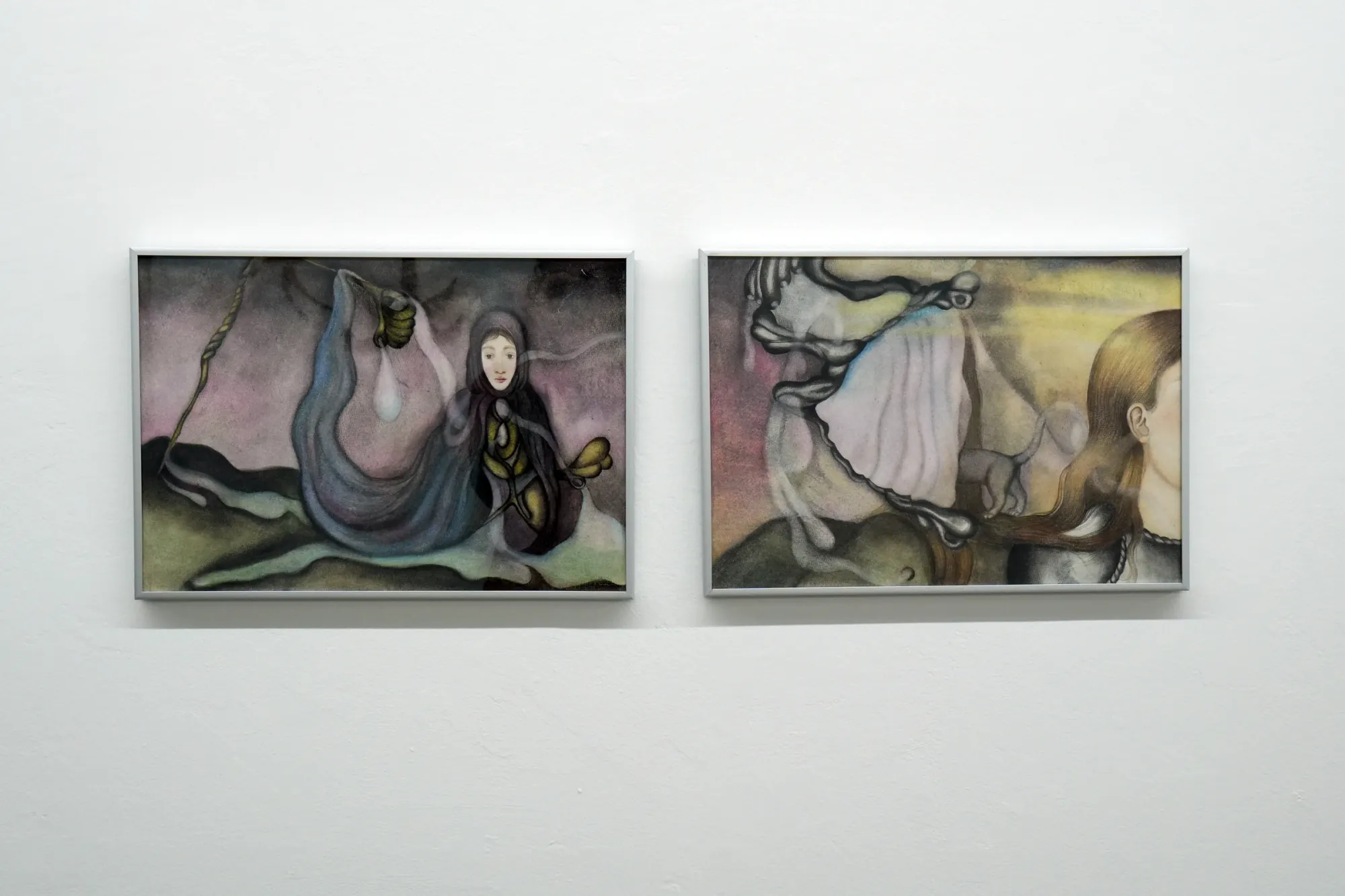
If you listen carefully when walking in the woods at night is a long vertical form, the title functioning as instruction rather than description. Crystalized Threads of Dusk carries semi-precious stones across its surface as though memory itself had a mineral structure.
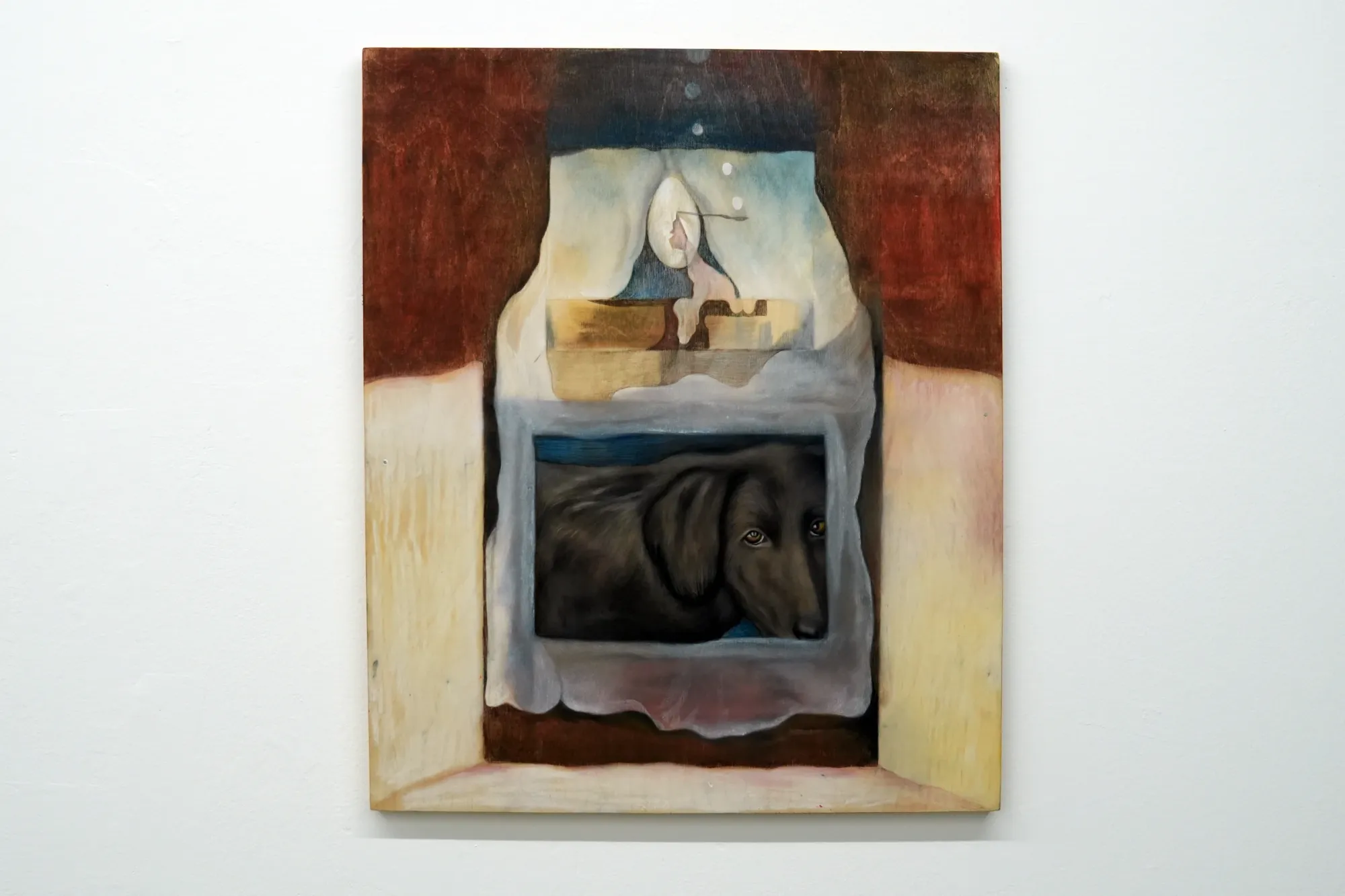
The oil paintings operate differently, looser, more immediate, the language of title, I Hear you Purring Inside, I Feel You Licking My Wounds, closing the distance between image and body.
Both practices circle what the exhibition's own framing calls an "archive of lived experience", the states dismissed as vulnerability, the sensations without institutional category.
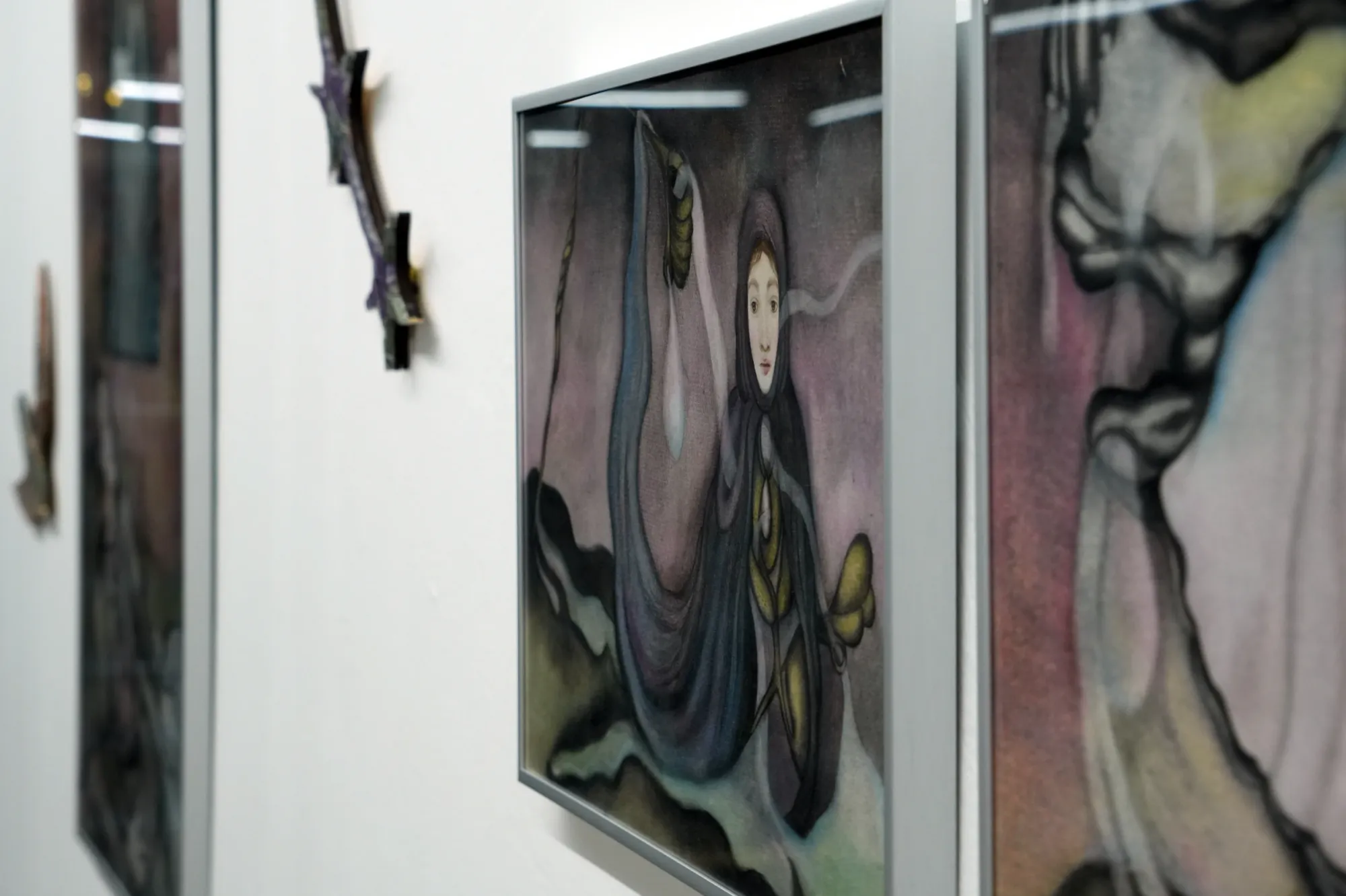
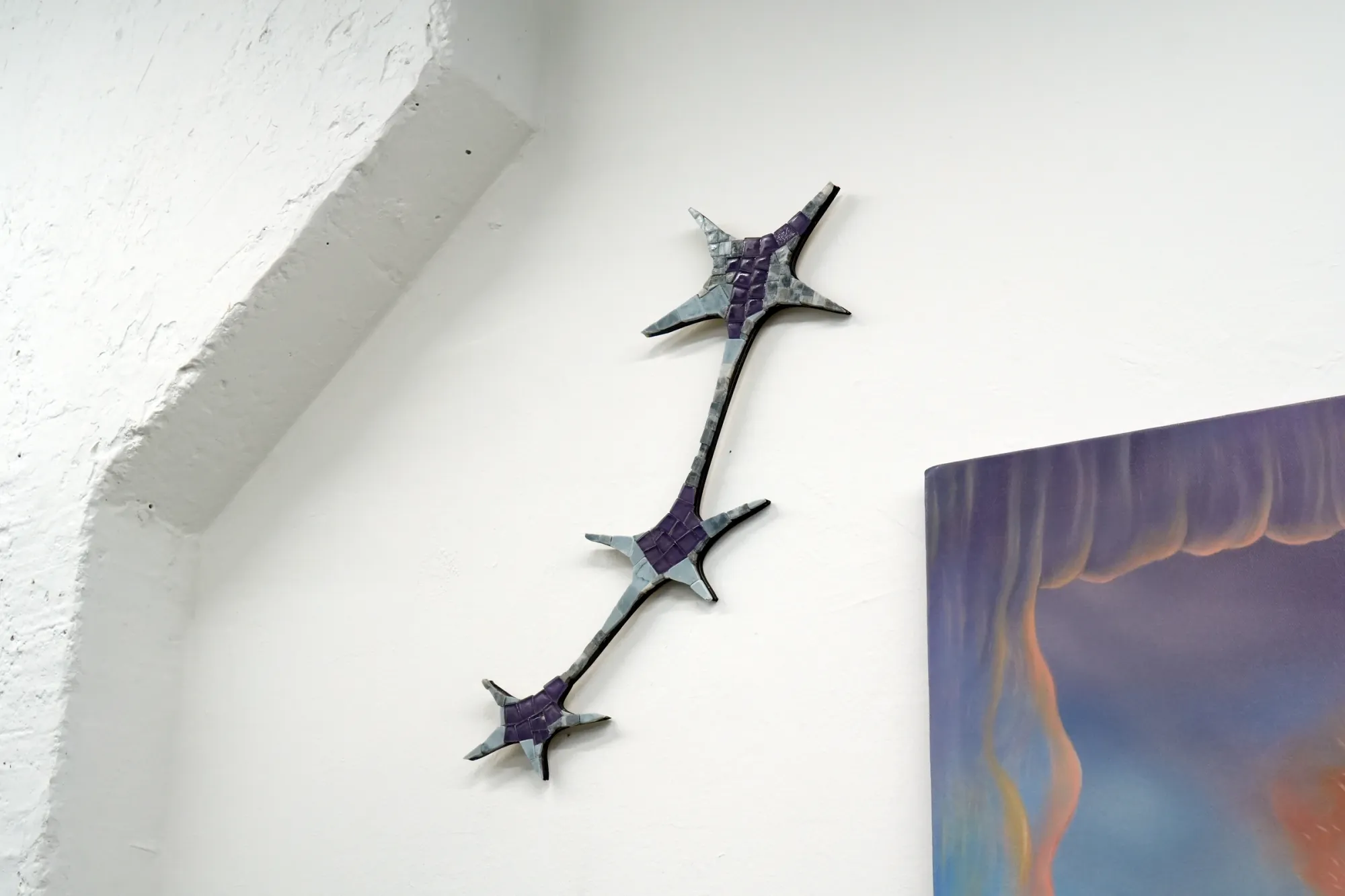
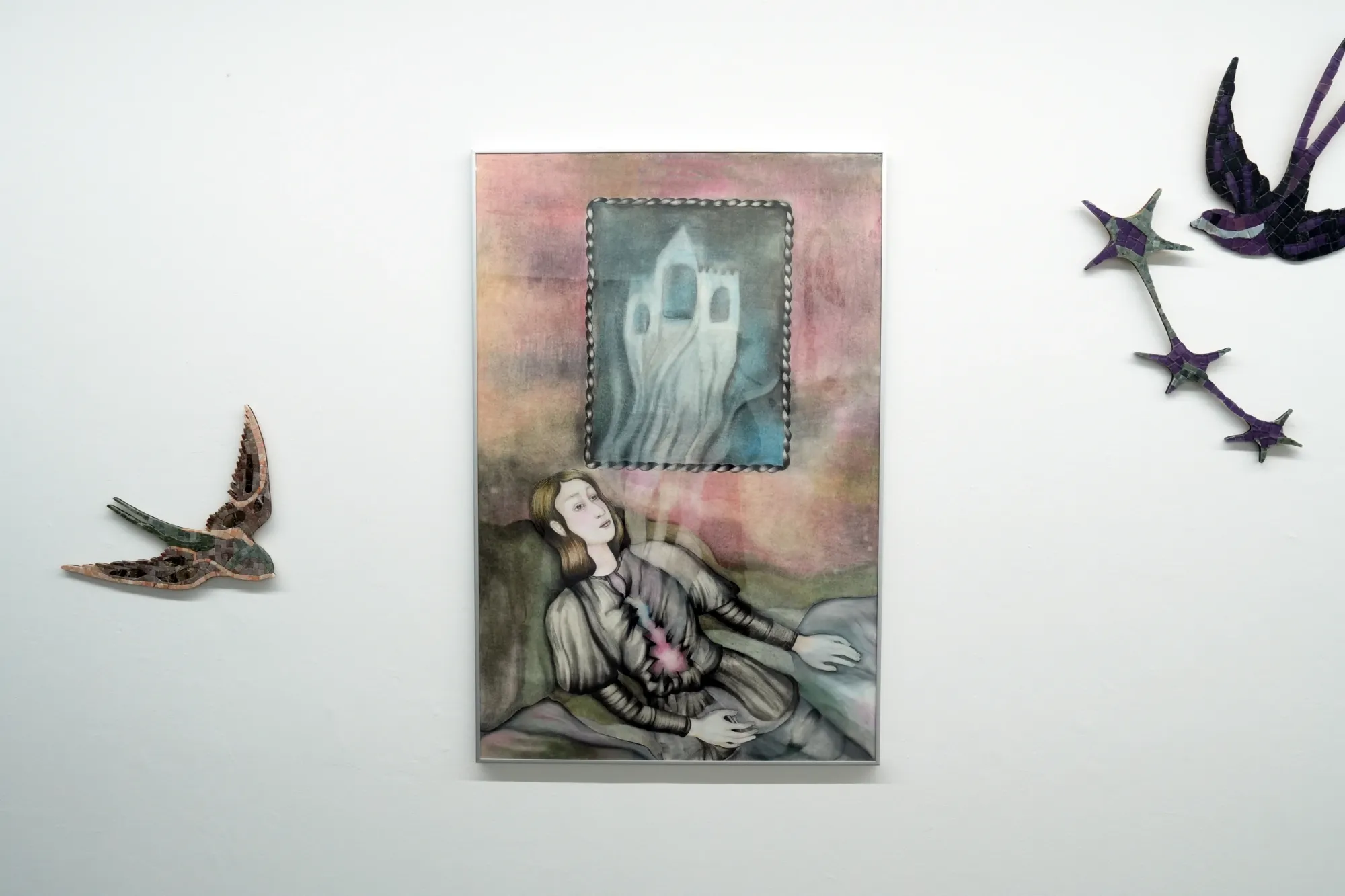
The shared naming, Catalogue of galaxies, Catalogue of Sensory Data, runs across both artists' works like a shared notation system, one that borrows the vocabulary of system of classification while refusing its neutrality.
In a cultural moment where emotional intelligence tends to get aestheticized quickly, turned into product, into platform, into a kind of decorative legibility, this exhibition insists on the difficult materials.
Felt that takes weeks to make, stone that took millennia to form, paint that sits heavy when the subject is weight. These are not quick declarations. They hold their ground because they were built to hold.
The final question the exhibition leaves open is not what the sensory data means, but who gets to decide when enough has been archived.
Nata Varazi on Instagram
Instagram Gvantsa Jishkariani
The Why not Gallery on Instagram
About Catapult
This is a exhibition review published by Catapult — an independent editorial platform for contemporary art, based in Vienna. We publish exhibition reviews, artist features, interviews, and critical context, with a focus on emerging and mid-career practices from Europe and beyond.
catapult.art
Want to be featured? Submit your work →