Working with Instability The Open Structure of 目[mé]

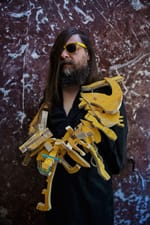
![目[mé], Japanese art team, in there studio in Tokyo now on view Catapult Munchies Art Club showcasing there art and practice](/content/images/size/w1920/2026/02/me-art-group-japan.webp)
Situations, Not Objects
We encountered 目[mé]art team through their online presence. Not as documentation, but as a structure. The projects did not appear as completed works. They appeared as states. Each intervention seemed provisional, as if it could tip at any moment. That instability was not theatrical. It felt structural.
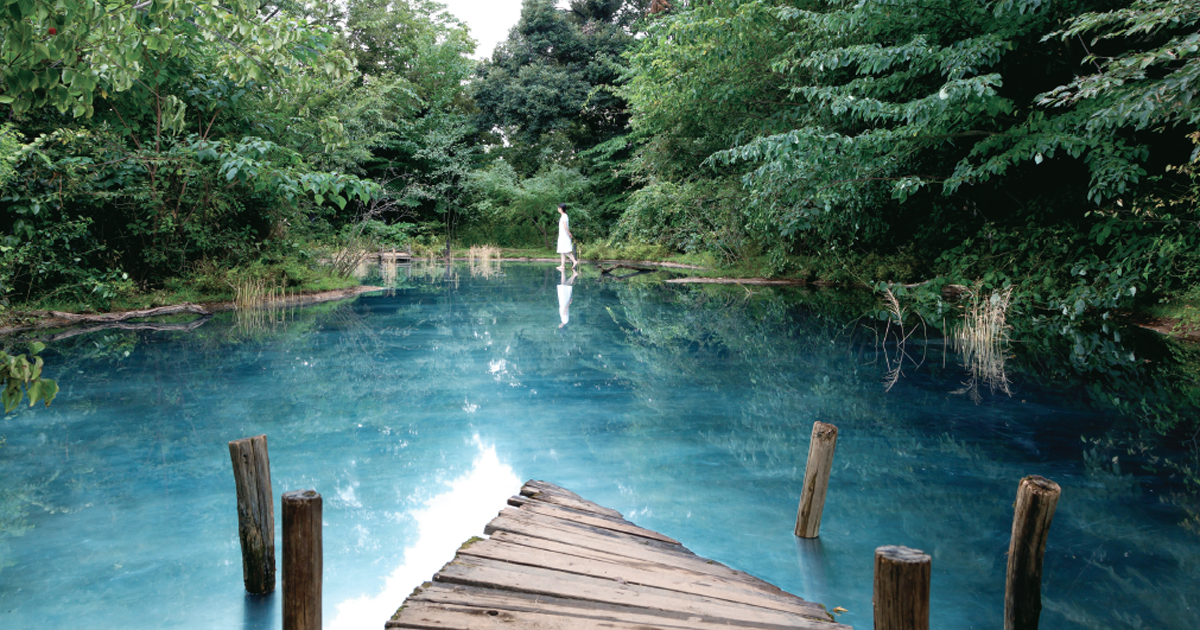
Looking closer, it becomes clear that their work is not organized around objects. It is organized around conditions. Elemental Detection does not present a sculptural form to be examined. It reorganizes perception. A reflective surface, a body, a landscape. The horizon dissolves. The viewer does not encounter a work. The viewer encounters a situation that recalibrates orientation.
![Bare feet walking across a reflective water surface in 目 [mé]’s installation Elemental Detection at the Former Saitama Prefectural Folklore Museum, Saitama Triennale](https://www.munchiesart.club/content/images/2026/02/Elemental-Detection--me-artist-group-japanwebp.webp)
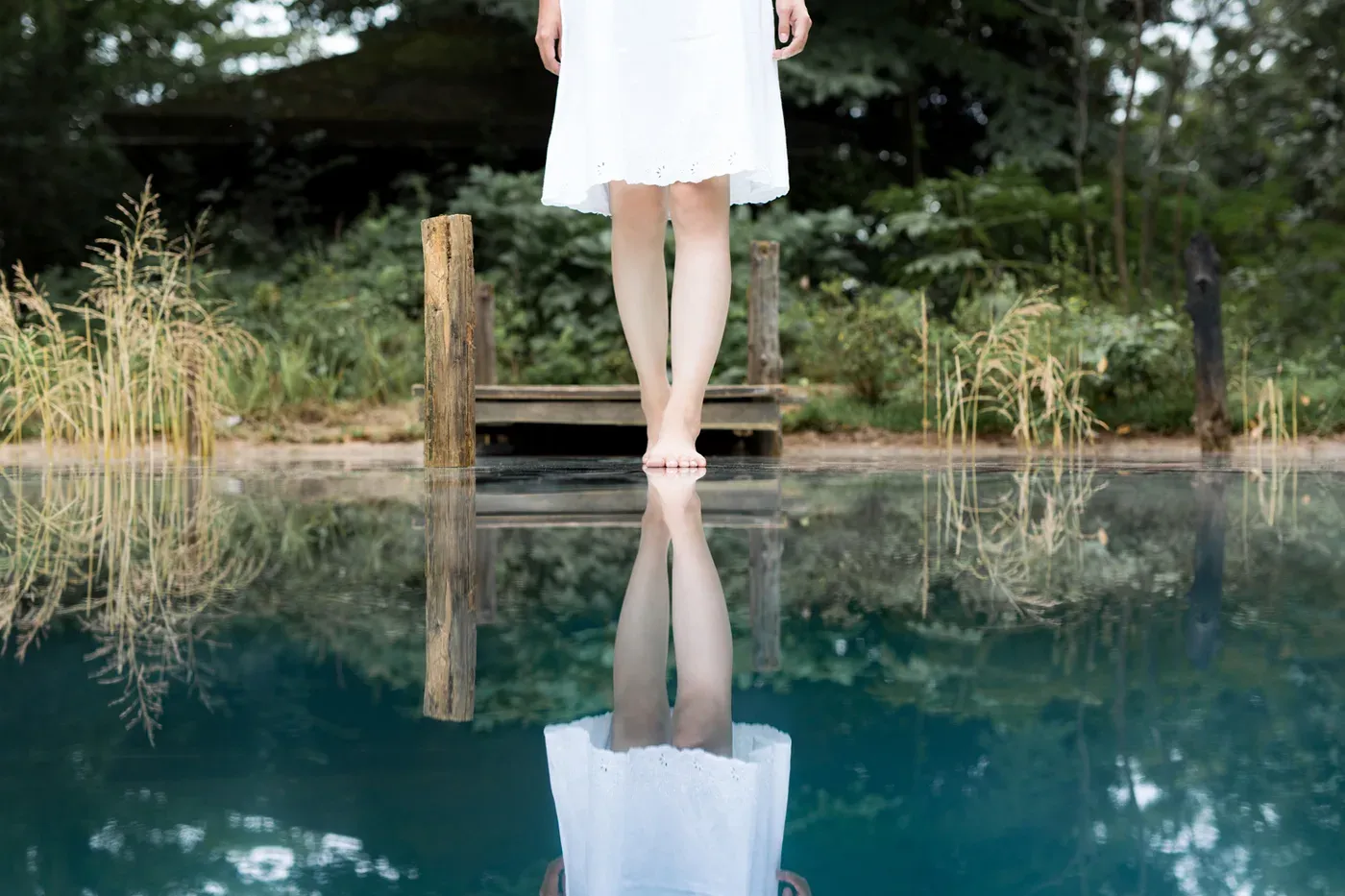
![Tree trunk reflected in a mirror-like water surface in 目 [mé]’s installation Elemental Detection, Former Saitama Prefectural Folklore Museum, Saitama Triennale](https://www.munchiesart.club/content/images/2026/02/Elemental-Detection--artist-from-japan.webp)
The intervention is minimal. There is no dramatic gesture. The shift happens through alignment, scale, surface. The work does not ask to be interpreted. It asks to be experienced physically. The eye searches for stability and does not find it. That moment is the work.
This approach recurs across projects. 目[mé]art team do not insert content into a site. They adjust the site until perception becomes uncertain. The result is not an image. It is a recalibration.
Architecture as Perceptual Device
If Elemental Detection destabilizes through surface and reflection, space shifts perception through architecture itself. The intervention is not additive.
It subtracts, reframes, isolates. A single opening becomes a device. A room becomes a lens.
![Exterior view of 目 [mé]’s installation space (2020) at Towada Art Center, showing a building façade opened into a luminous interior with a visible staircase and framed architectural intervention.](https://www.munchiesart.club/content/images/2026/02/me--japanese-artist-group-architecture-intervention.webp)
In space at Towada Art Center, the architecture does not function as container. It becomes instrument. The window is not simply a frame to the outside. It reorganizes the relationship between interior and exterior.
The street becomes part of the work. The work extends beyond the room without expanding materially.Nothing spectacular happens. The gesture is precise. The room is emptied of distraction.
![Exterior perspective of 目 [mé]’s architectural intervention space (2020) at Towada Art Center, showing an exposed staircase leading to a glass-fronted interior space inserted into the building façade.](https://www.munchiesart.club/content/images/2026/02/towada-art-center--me-artist-group.webp)
A circular form rests against the wall. Light enters. The viewer stands in between. Perception is triangulated: object, architecture, environment. Stability is negotiated rather than given.What matters here is not the object on the wall. It is the calibration of spatial awareness.
The work operates by reduction. Remove noise. Expose relation. Allow the viewer to sense the thin line between artwork and world.This is consistent across their practice. Architecture is never neutral. It is adjusted until it becomes perceptible as structure.
![Front façade view of 目 [mé]’s installation space (2020) at Towada Art Center, featuring a large rectangular opening revealing a luminous interior within an existing building structure](https://www.munchiesart.club/content/images/2026/02/Towada-Art-Center---me-artist-group--space.webp)
Walls are not surfaces. They are thresholds. Windows are not views. They are instruments.The intervention does not dominate the site. It reveals its latent instability.
Working Without a Center
The formal precision of these works corresponds to an equally precise internal structure. 目[mé]art team operate as a collective, but not as a symbolic gesture. The absence of a central author is not aesthetic branding. It is method.
Decisions emerge through shared processes. Roles exist, but they are not hierarchical in the traditional sense. Ideas are tested through repetition, modification, physical trial. The work is not sketched into existence and then executed. It is adjusted into clarity.
This becomes visible in their working images.
![目 [mé] working inside a temporary plastic-enclosed studio environment, shaping a large circular sculptural surface during the production process.](https://www.munchiesart.club/content/images/2026/02/me-artist-group--art-practice--studio-view.webp)
![目 [mé] team gathered around a wooden table inside a glass-walled workspace, reviewing material on a laptop with sculptural forms visible outside.](https://www.munchiesart.club/content/images/2026/02/me--artist-group.webp)
![目 [mé] studio interior with white walls, exposed ceiling beams and worktables, showing an active production space with tools and sculptural elements in progress](https://www.munchiesart.club/content/images/2026/02/the-studio-of-the-artist-group-me.webp)
![目 [mé] studio building with corrugated metal façade and a glass-fronted office extension, surrounded by trees and gravel courtyard.](https://www.munchiesart.club/content/images/2026/02/me---artist-group--studio--japan.webp)
Hands measuring. Surfaces being prepared. Materials repositioned. The work is not imposed on a space. It is negotiated with it. Precision is achieved through iteration.The collective structure mirrors the spatial structure of the works themselves. No single element dominates. Each component holds tension in relation to others. Stability is produced through balance, not authority.
![目 [mé] and collaborators playing outdoors at dusk in front of their studio building, a reflective sphere suspended in the sky above an industrial courtyard.](https://www.munchiesart.club/content/images/2026/02/catapult-platform-presents-me--japanese-art-group-and-there-projects.webp)
This is crucial. The instability in their installations is not chaos. It is carefully calibrated. It requires discipline. Collective practice, in this context, is not an ideology. It is a condition that allows complex spatial decisions to emerge without collapsing into singular authorship.
The result is work that feels both controlled and open. Intentional, but never rigid.
Time as Material
Instability in the work of 目[mé] is not only spatial. It is temporal. Many of their projects unfold over duration rather than presenting a fixed state. The work is not complete in a single moment. It accumulates, repeats, reappears.
In masayume, a fleeting encounter becomes structure. A figure appears in public space. The event is quiet, almost incidental. There is no announcement, no framing device that insists on artistic significance. What remains is not an object but a memory. The work exists in repetition. The same encounter, staged in different cities, generates variations.
![目 [mé] masayume (2023) hot air balloon sculpture featuring a monumental female head floating between historic buildings in Lisbon during Engawa – A Season of Contemporary Art from Japa](https://www.munchiesart.club/content/images/2026/02/me-artist-group-lisbon--public-space-and-art.webp)
![目 [mé] masayume (2019–2021) floating head sculpture suspended above a river and bridge in Tokyo at sunset during Tokyo Tokyo FESTIVAL Special13.](https://www.munchiesart.club/content/images/2026/02/me-artist-group--intervention--contemporary-art-tokyo.webp)
![目 [mé] masayume (2024) monumental floating head sculpture rising above the skyline of Madrid during Veranos de la Villa 2024, presented by The Japan Foundation.](https://www.munchiesart.club/content/images/2026/02/masayume-in-Madrid-by-me-the-artist-group-form-japan.webp)
The project is never identical, yet never entirely new.This repetition does not create narrative. It creates continuity. Viewers who encounter the event once may not recognize it as part of a larger system. Those who encounter it again begin to sense pattern. The instability lies in this ambiguity. Is this coincidence, or construction?
Time is not used to dramatize transformation. It is used to stretch perception. The interval between encounters becomes part of the work. The gap carries meaning.
![目[mé] movements (2019) suspended swarm installation composed of hundreds of small black elements floating in space, installation view at Chiba City Museum of Art.](https://www.munchiesart.club/content/images/2026/02/chiba-city-museum-of-art--movements.webp)
![目[mé] movements (2019) large-scale wall installation forming a drifting cloud of suspended elements across a white exhibition space at Chiba City Museum of Art.](https://www.munchiesart.club/content/images/2026/02/me-artist-collaboration--permanent-exhibition-at-MonET.webp)
Similarly, in projects that involve gradual change or prolonged exposure, the build-up and the dismantling are not secondary phases. They are integral. Construction, erosion, reconfiguration. These stages are not hidden from view. They constitute the work’s duration.
What emerges is a practice that treats time as material. Not metaphorically, but operationally. The work is not simply placed in time. It is structured through it.
Contact as Condition
If time extends the work beyond the visible moment, contact anchors it in physical proximity. In Contact, the relationship between bodies and surfaces becomes central. The work does not stand apart from the viewer.
![目 [mé] Contact (2019) immersive ocean-like installation with undulating dark blue surface presented at Mori Art Museum Tokyo](https://www.munchiesart.club/content/images/2026/02/mori-art-museum--exhibition.webp)
It requires negotiation. Distance, touch, orientation. The spatial arrangement produces awareness of one’s own position.
There is no dramatic interaction. The shift is subtle. A surface that seems stable reveals fragility. A structure that appears fixed responds to presence. The body becomes aware of itself in relation to tension, gravity, material resistance.
This is not participation in the conventional sense. The viewer is not invited to perform. The viewer is implicated through presence.
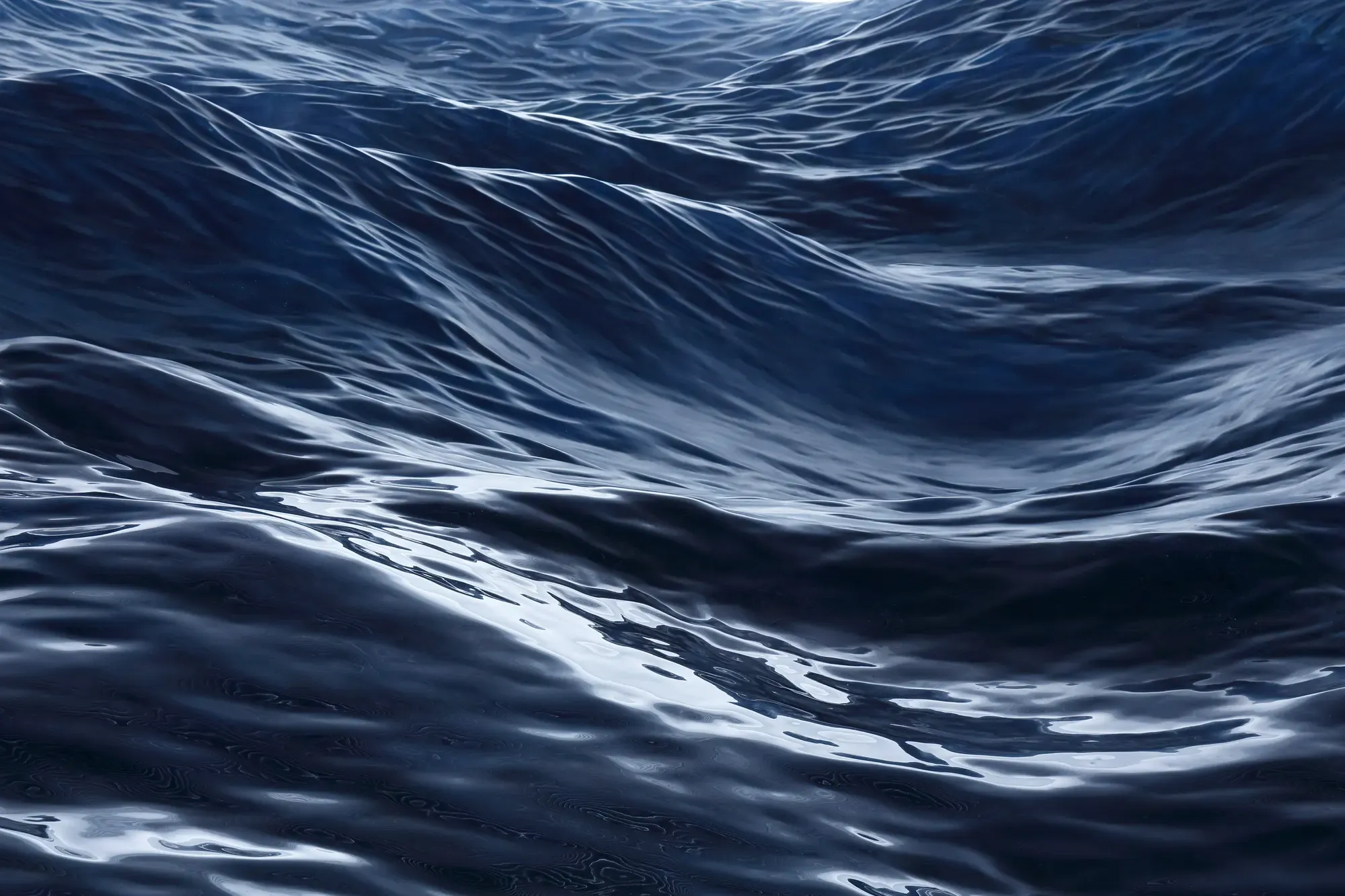
![Close view of rolling dark blue waves in 目 [mé] Contact installation, Mori Art Museum Tokyo,](https://www.munchiesart.club/content/images/2026/02/roppongi-crossing--mori-art-musuem--tokyo.webp)
Awareness sharpens.Across projects, this attention to contact recurs. 目[mé] do not stage spectacle. They stage relation. The encounter is often understated, but it recalibrates perception. One becomes conscious of thresholds. Of balance. Of proximity.
Contact, here, is not emotional. It is structural. It is the condition through which the work becomes active.
Open Structure
Returning to the initial encounter with their practice, what becomes visible is not a sequence of discrete works but a coherent structure.
Instability is not theme. It is method. Situations are adjusted until they reveal latent tension. Architecture becomes instrument. Time becomes material. Collective process becomes structural logic.
There is no single aesthetic signature. No recurring visual motif that defines the group. What connects the works is a consistent attention to conditions under which perception stabilizes or falters.
![目[mé] -Artist Haruka Kojin, director Kenji Minamigawa, and installer Hirofumi Masui present present the public art project with holes in a house in Tokyo Japan](https://www.munchiesart.club/content/images/2026/02/me--artist-group--japan--intervention.webp)
This is why their online presence reads less like documentation and more like an open system. Each project is specific. Each context differs. Yet the internal logic remains legible.
The practice does not aim to produce objects that endure unchanged. It produces frameworks in which experience can shift. The works do not insist on meaning. They create situations in which meaning is negotiated.
What remains is not a fixed image. It is a method. An invitation to recognize instability not as disruption, but as a precise mode of attention.
What remains is not a unified image, but a working logic. Instability is not overcome. It is maintained as a condition for perception.
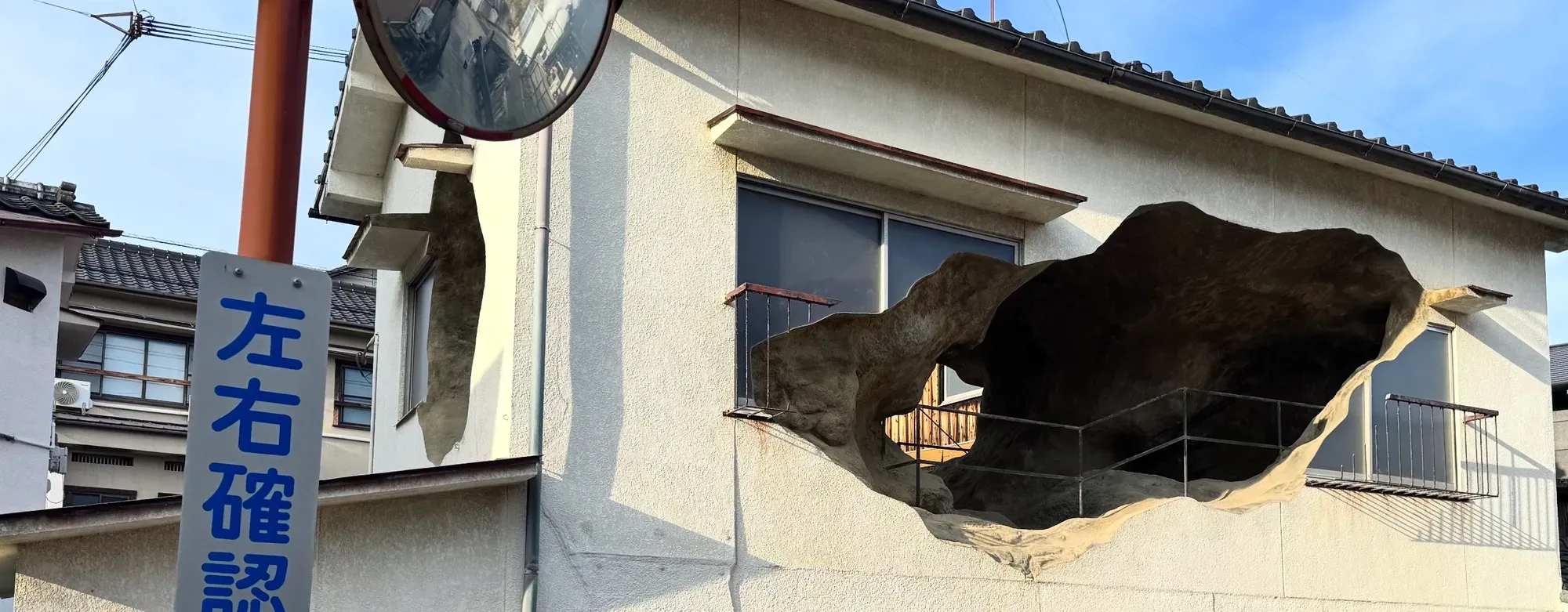
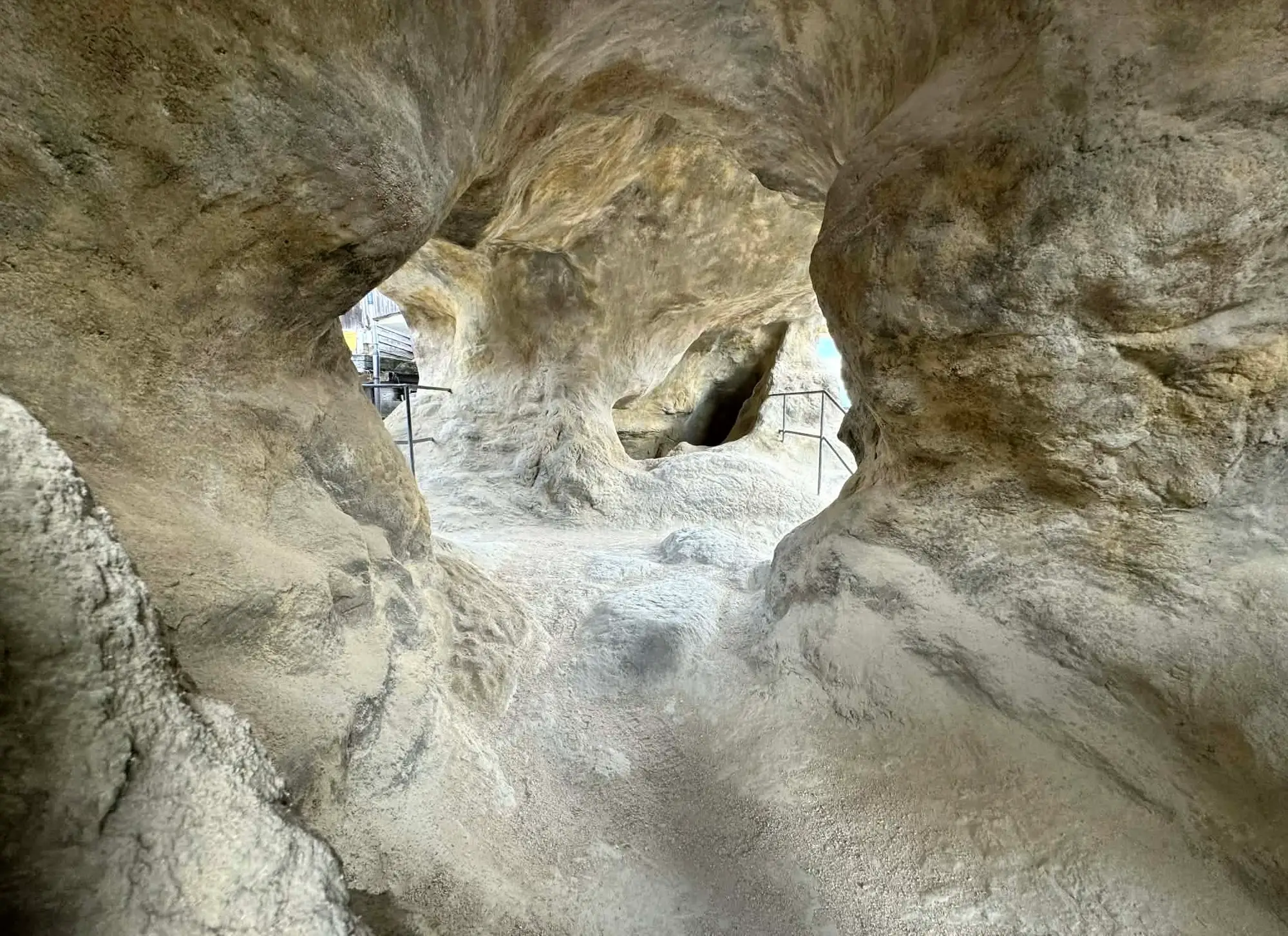
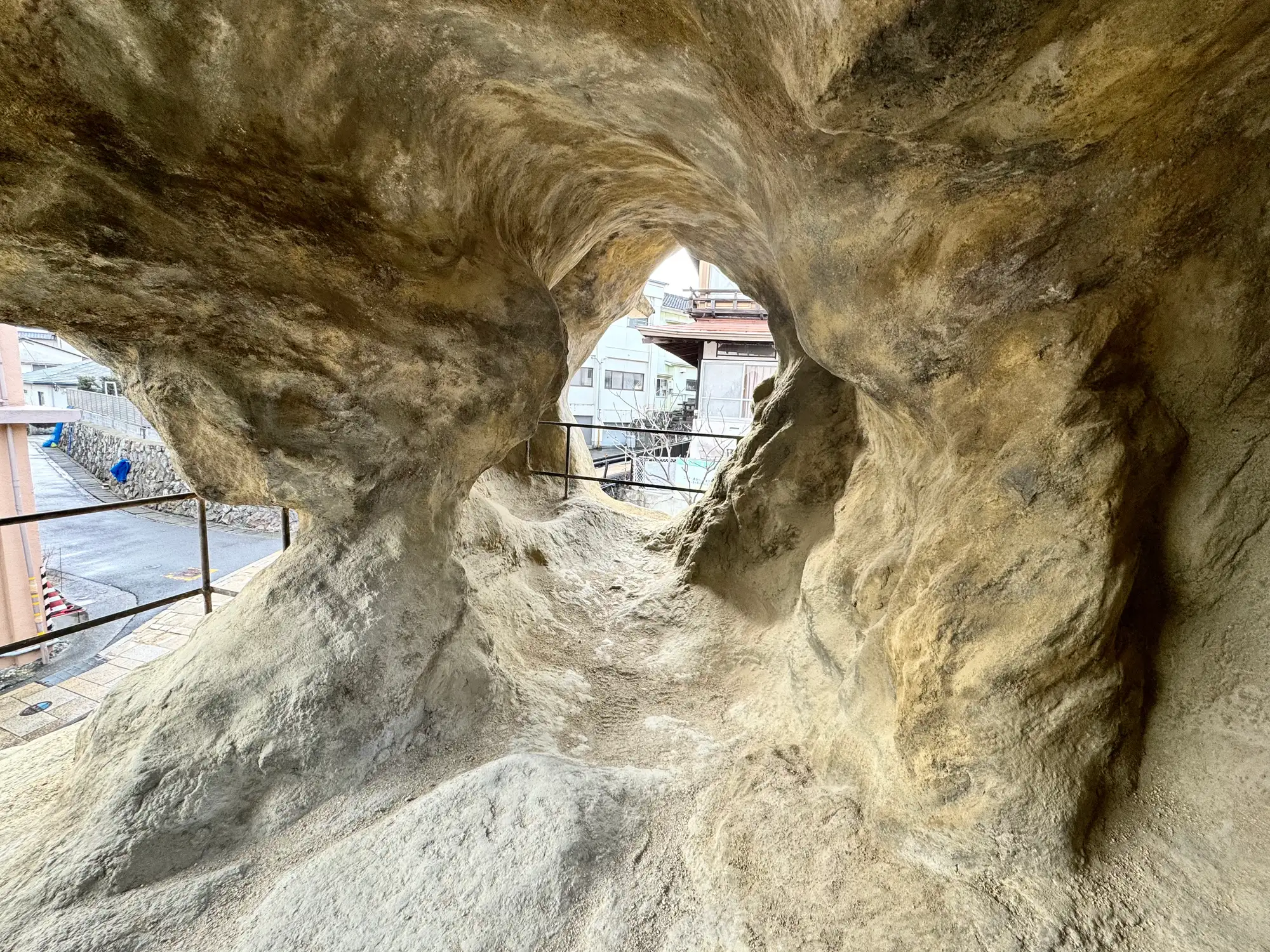
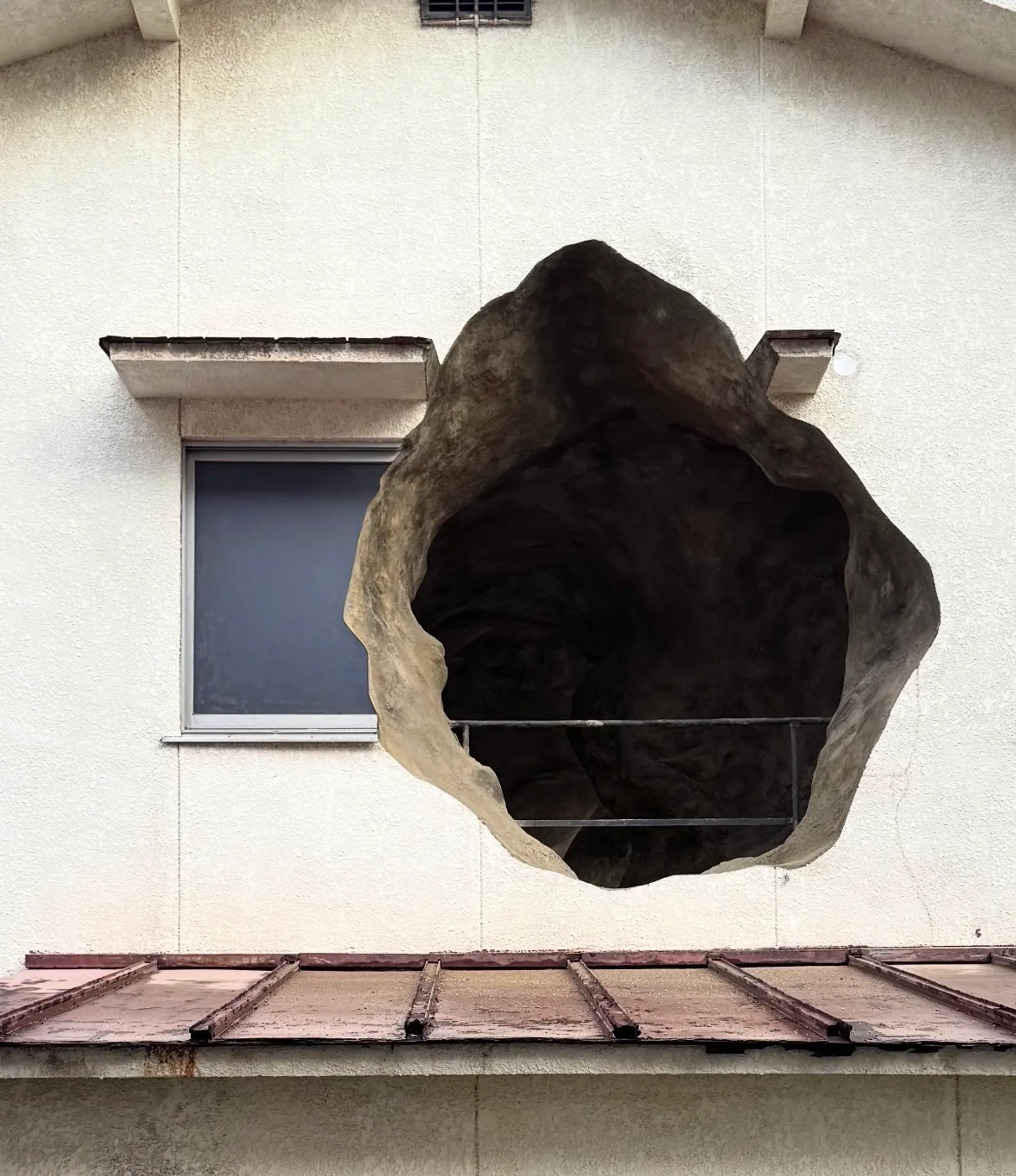
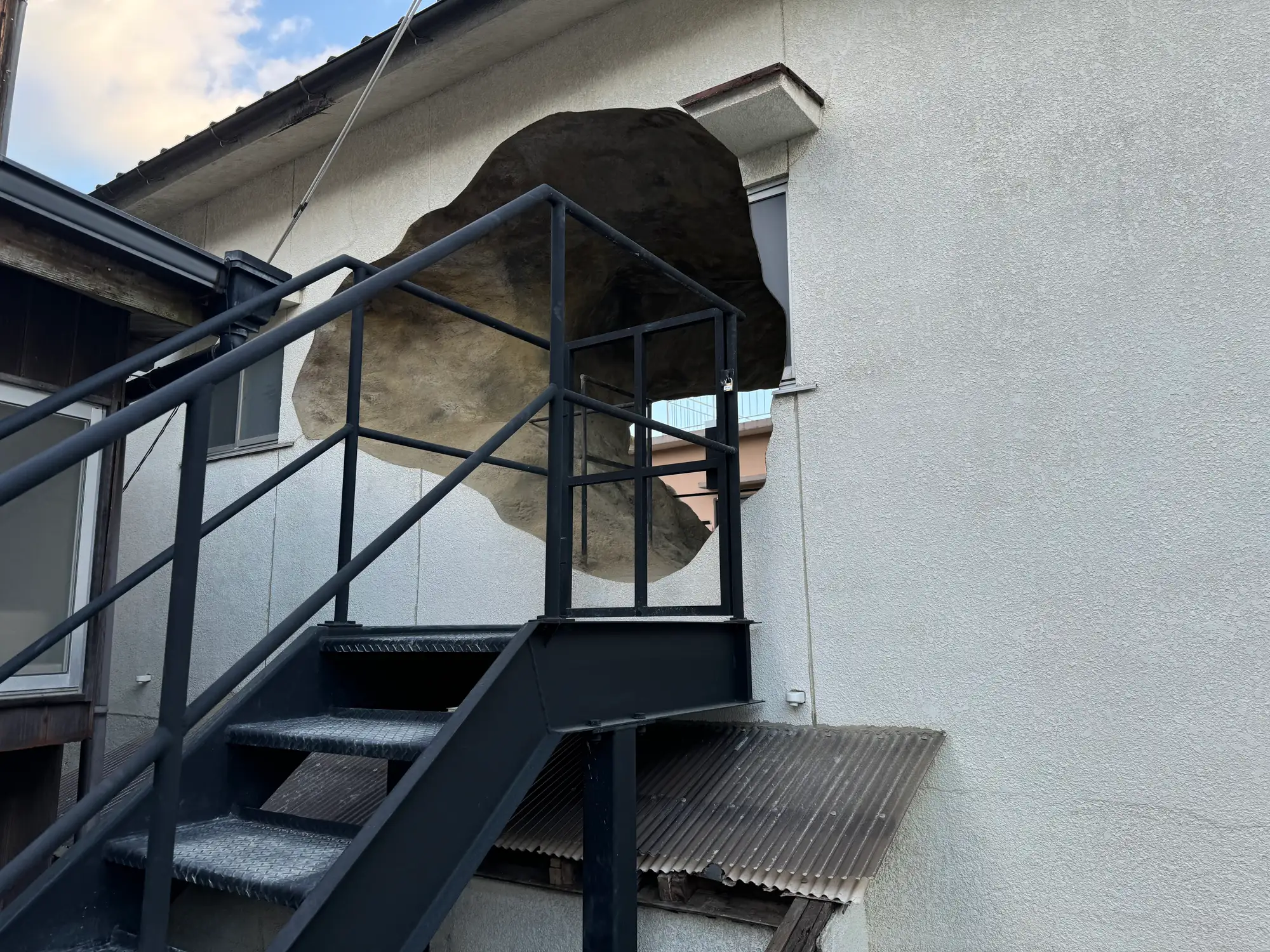
目[mé] art team, space Ⅱ (2025), ALTERNATIVE-STATE #2, Host: Mixed Bathing World Executive Committee - Image Courtesy of the Artists
Core Members
目[mé]art team is a Japanese art team structured around three complementary positions: Artist Haruka Kojin, director Kenji Minamigawa, and installer Hirofumi Masui.
Rather than producing autonomous objects, the team develops spatial situations that recalibrate how we experience what is already there. Their work does not construct alternate realities. It adjusts the conditions through which the present world becomes perceptible.
Haruka Kojin Instagram
Artist
Born 1983, Hiroshima
Kenji Minamigawa on Instagram
Director
Born 1979, Osaka
Hirofumi Masui
Installer
Born 1980, Shiga
Exhibition History
The team has participated in major international exhibitions including the Echigo-Tsumari Art Triennale (Niigata, 2018), Roppongi Crossing at Mori Art Museum (Tokyo, 2019), and the Hawai’i Triennial (2022). Their long-term project masayume has appeared in contexts such as Engawa - A Season of Contemporary Art from Japan (Lisbon, 2023) and Veranos de la Villa (Madrid, 2024). In 2023, they served as directors of the Saitama Triennale.
Individually, Haruka Kojin has exhibited internationally, including When Life Becomes Form at the São Paulo Museum of Modern Art (2008), Bye Bye Kitty!!! at Japan Society, New York (2011), and Japanorama at Centre Pompidou-Metz (2017–2018).

official Website
We are introducing a new category on Catapult dedicated to practices that operate through structure, situation and spatial recalibration.
If you are an artist or curator working with site-responsive, process-driven or collective formats, we invite you to submit your project.
No spam, no sharing to third party. Only you and me.