Bitter Spring by Mara Projects, London

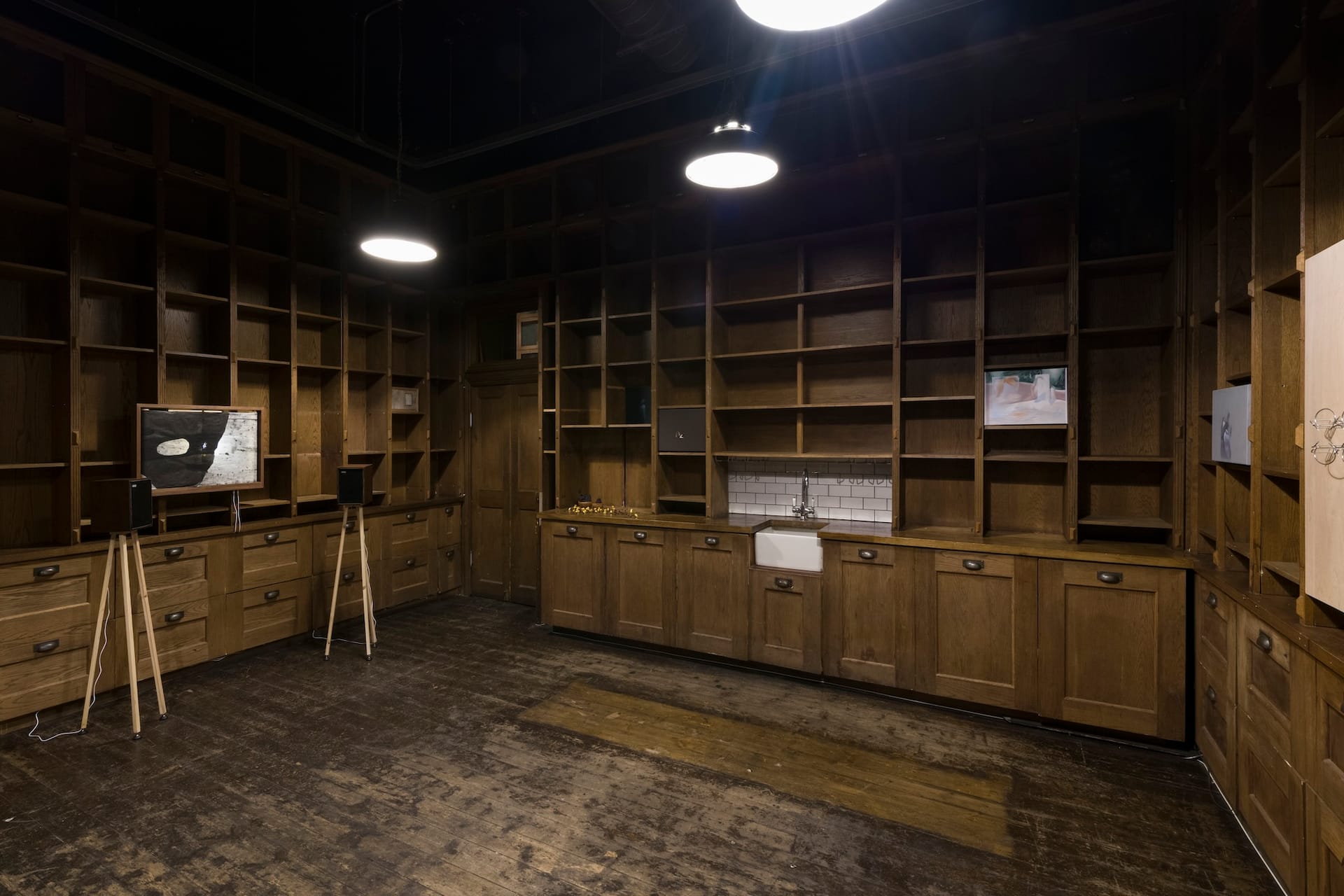
Bora Baboçi, Inés Cárdó, Ben Grosse Johannboecke, Felix Murphy, Edoardo Rito, Kairi Tokoro, and Renid Tosuni - Bitter Spring - Mara Projects
The exhibition includes works by seven emerging and mid-career artists working At MARA Projects in London, Bitter Spring gathers works by Bora Baboçi, Inés Cárdó, Ben Grosse Johannboecke, Felix Murphy, Edoardo Rito, Kairi Tokoro, and Renid Tosuni.
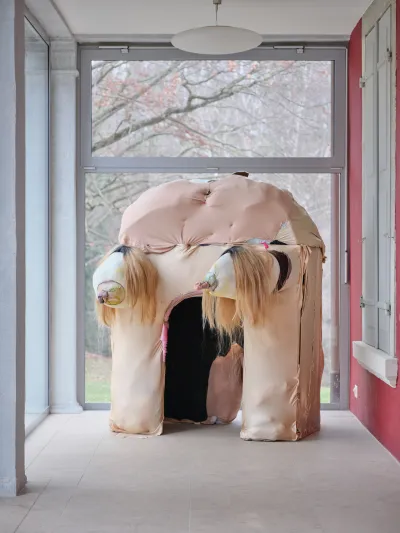
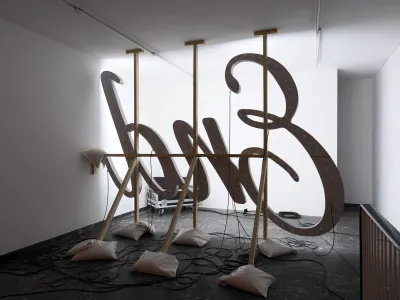
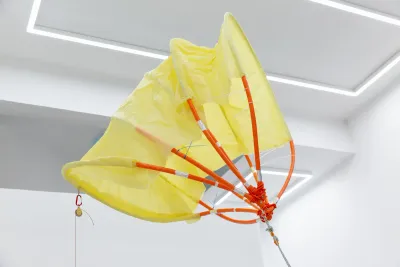
Across painting, sculpture and installation, the exhibition frames materials and objects as unstable sites of memory, exchange and transformation.
Short Exhibition Infos:
Bora Baboçi
Inés Cardó
Ben Grosse-Johannboecke
Felix Murphy
Edoardo Rito
Kairi Tokoroi
Renid Tosuni
MARA Projects
17B Kingsland Road
E2 8AA London
United Kingdom
Bitter Spring
5 – 12 March 2026
Lisja Tërshana
Curtorial Statement: Bitter Spring by Mara Projects, London
Mara Projects is pleased to present Bitter Spring, a group exhibition bringing together seven artists across painting, sculpture, and installation, on view from 5 to 12 March 2026 at 17B Kingsland Road, Shoreditch.
Held in a former whisky shop — a space built to offer a substance that has always been both remedy and ruin — the exhibition takes as its starting point the ancient Greek word pharmakon, which means simultaneously poison and remedy, and whose
power lies precisely in the impossibility of choosing between the two.
The exhibition proceeds from the observation that transformation has always required vulnerability: before pharmacy became a science, the apothecary worked in the indeterminate space between knowledge and superstition, cure and harm, and to seek out that help was already an act of trust — in the person administering it, in inherited knowledge, in the body's own capacity to do something with what it was given. Risk was the passage through which change became possible.
Bitter Spring argues that this tolerance for the unknown has been systematically dismantled. We now live inside landscapes and systems designed to eliminate the variable: to anticipate desire, to deliver frictionlessly, and to guarantee that the outcome matches the expectation. The result is a profound incapacity to encounter something without knowing in advance what it will do.
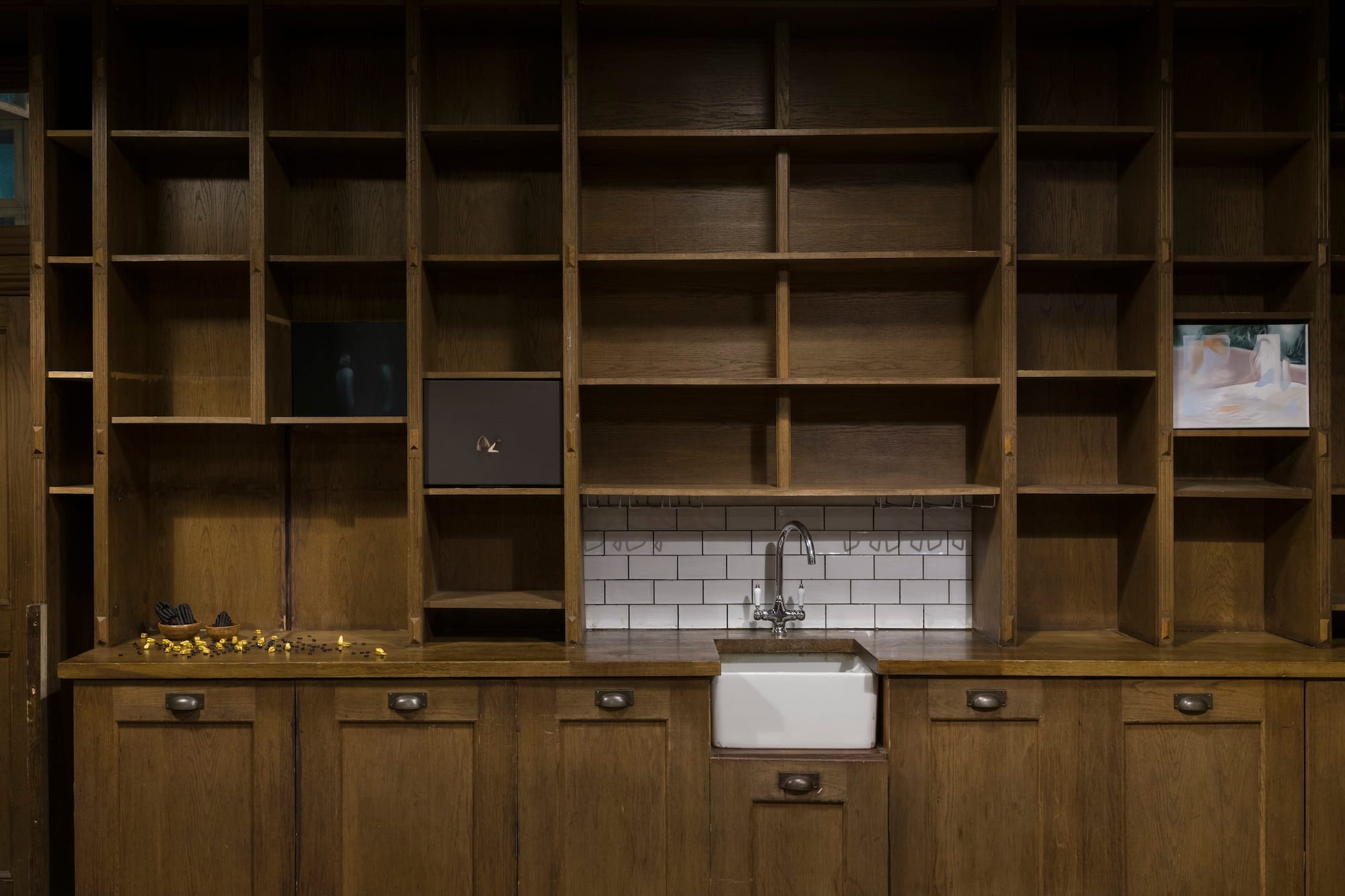
The seven artists in Bitter Spring do not claim to resolve this. With a shared fidelity to difficulty,they restore the unknown to its proper place. Kairi Tokoro's kinetic sculpture produces sound as the residue of contact between wood, washi paper, and mineral pigment — a rhythm that exists only in the encounter between its materials.
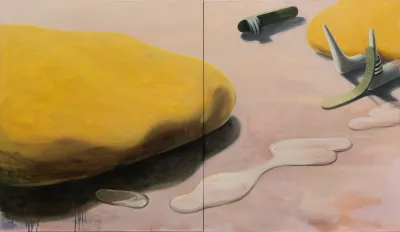
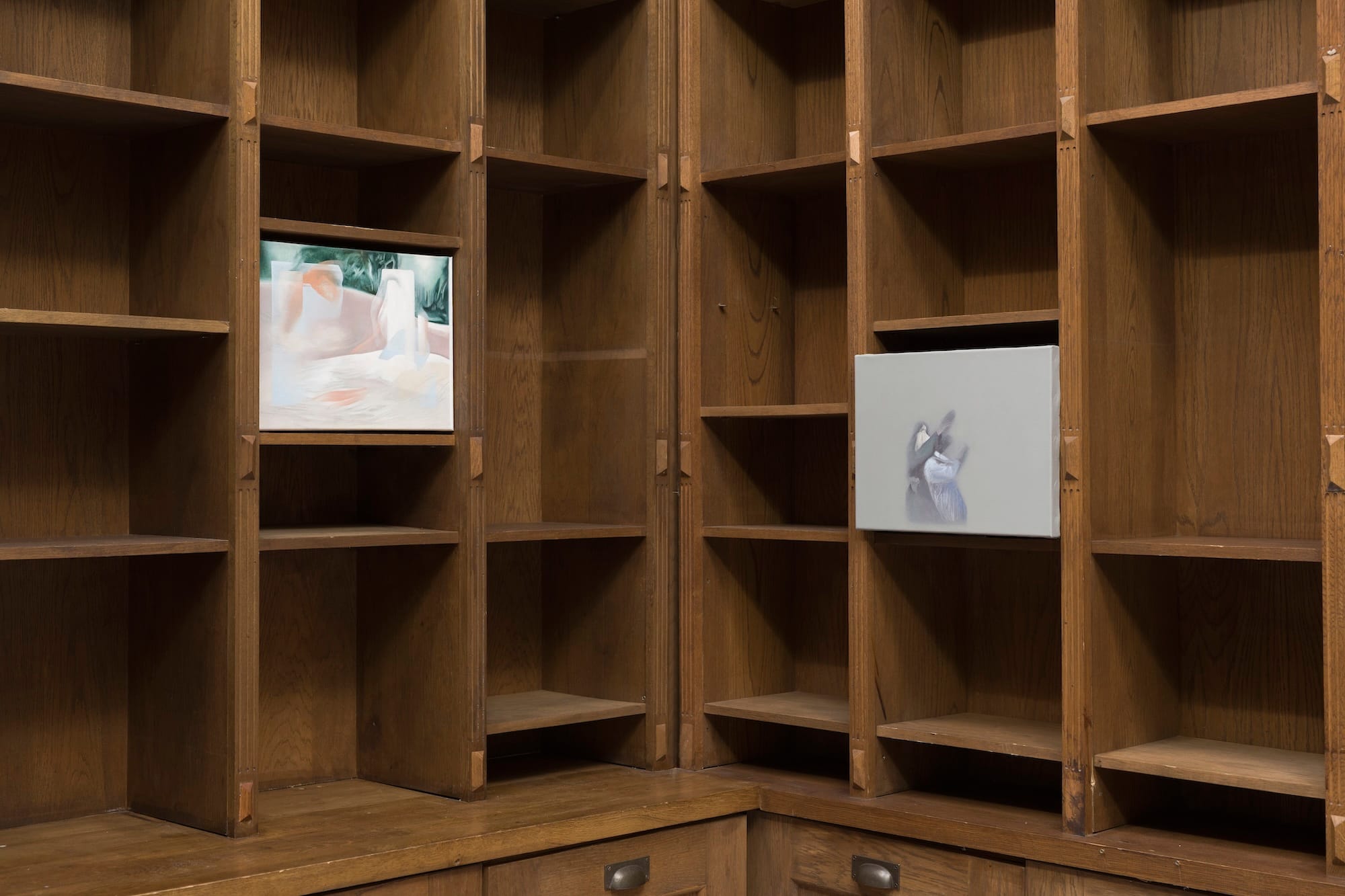
Bora Baboçi's paintings make bodies and landscape into sites of exchange: a night journey through the silence of the Saharan desert, moving always towards Zenith Hour, an obliterating white that no gesture can reach with any certainty of being received.
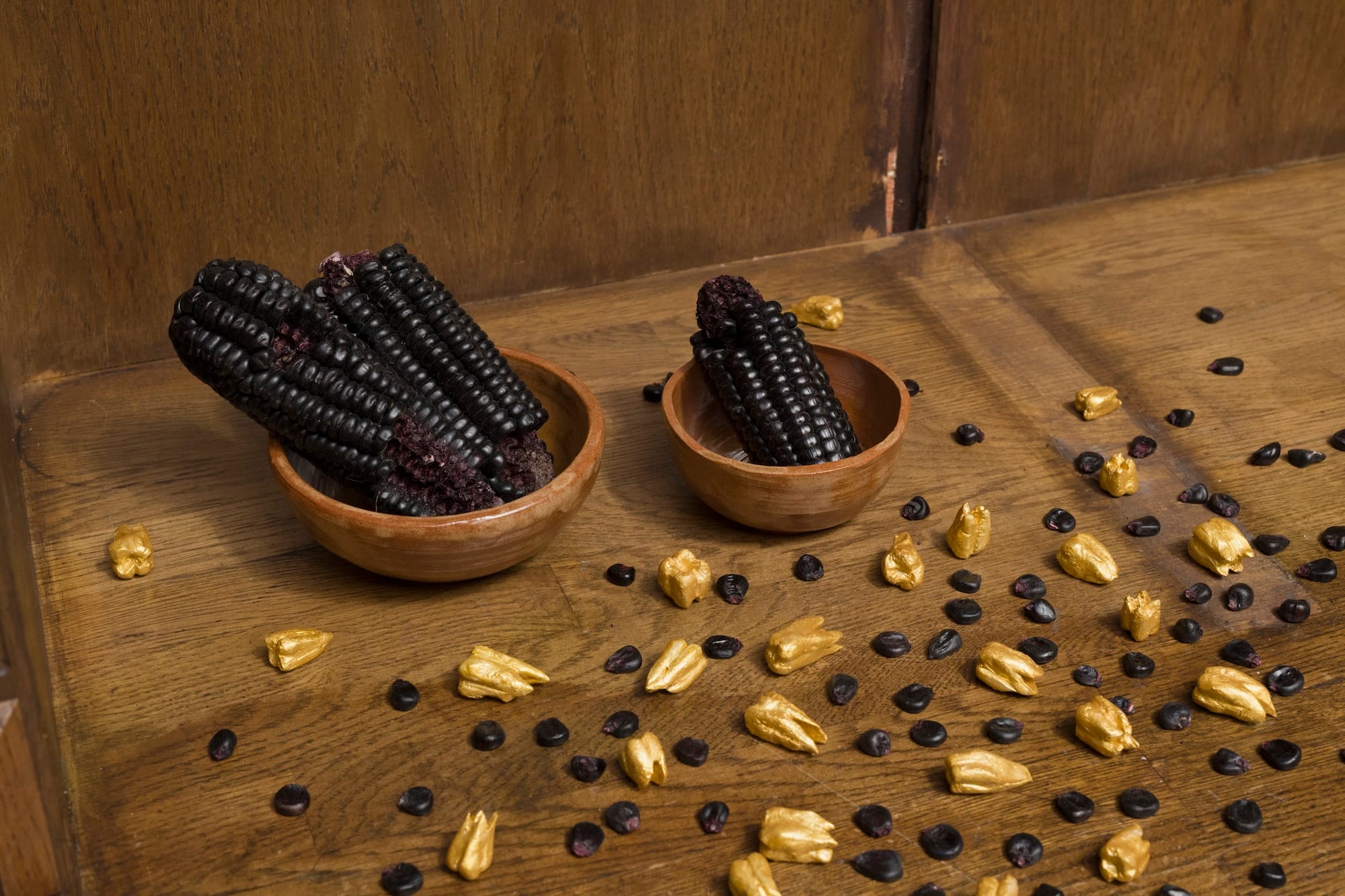
Inés Cárdó reimagines purple maize as oracle and offering, pairing it with gold-painted teeth; drawing on pre-Columbian practices of communion with natural forces, the work proposes a mode of relation grounded not in extraction but in reciprocity.
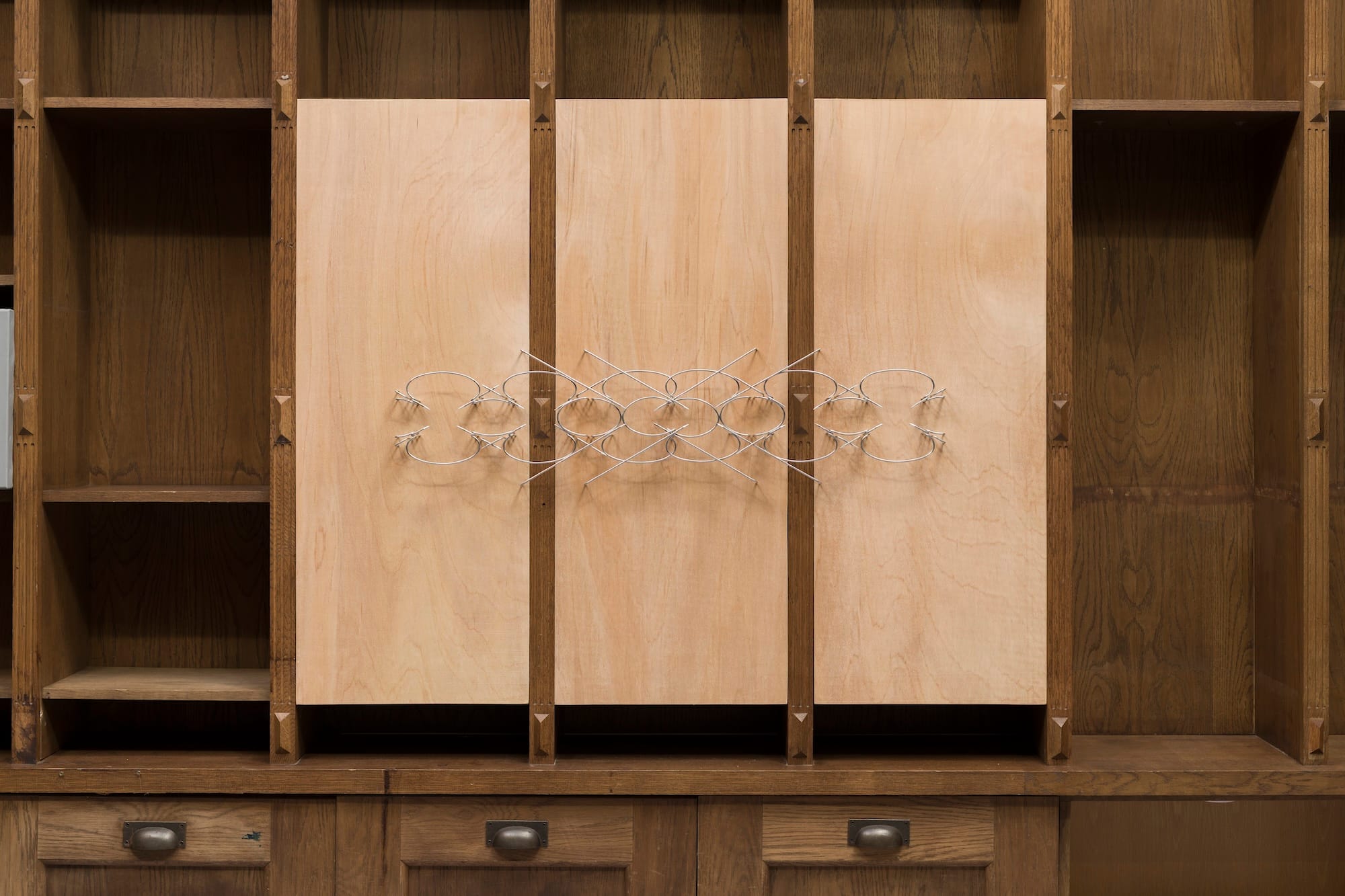
Ben Grosse-Johannböcke's metal barriers seal off new wood across three compartments: whether they are withholding the cure or protecting the viewer from harm, there is no way to know.
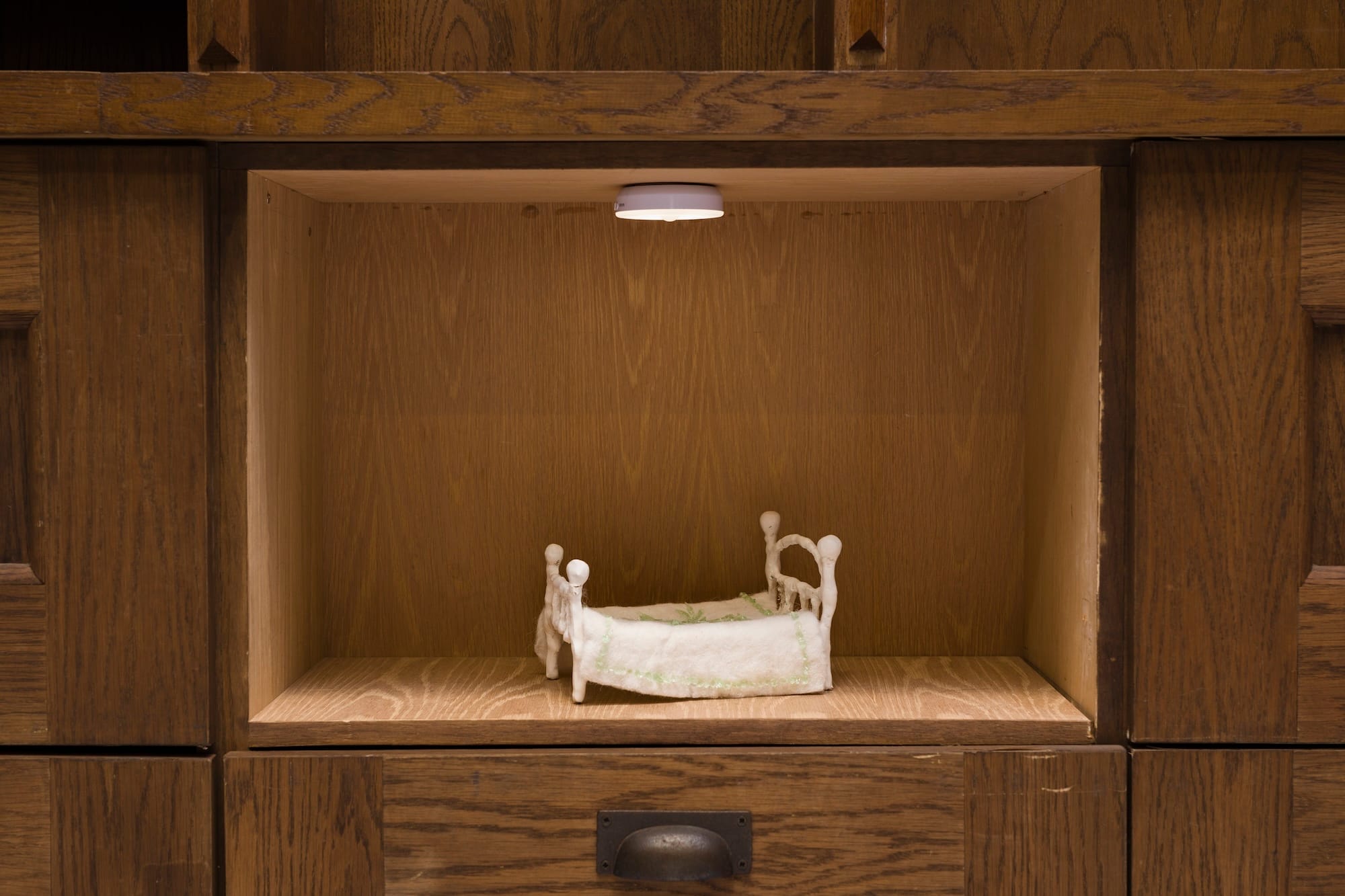
Renid Tosuni presents a small clay bed blanketed in felt, its glass shards arranged in a motif recalling Balkan textiles — a work that holds the memory of the artist's great- grandmother, an alternative healer who mixed finely broken glass with herbs and wrapped it around the bodies of the sick.
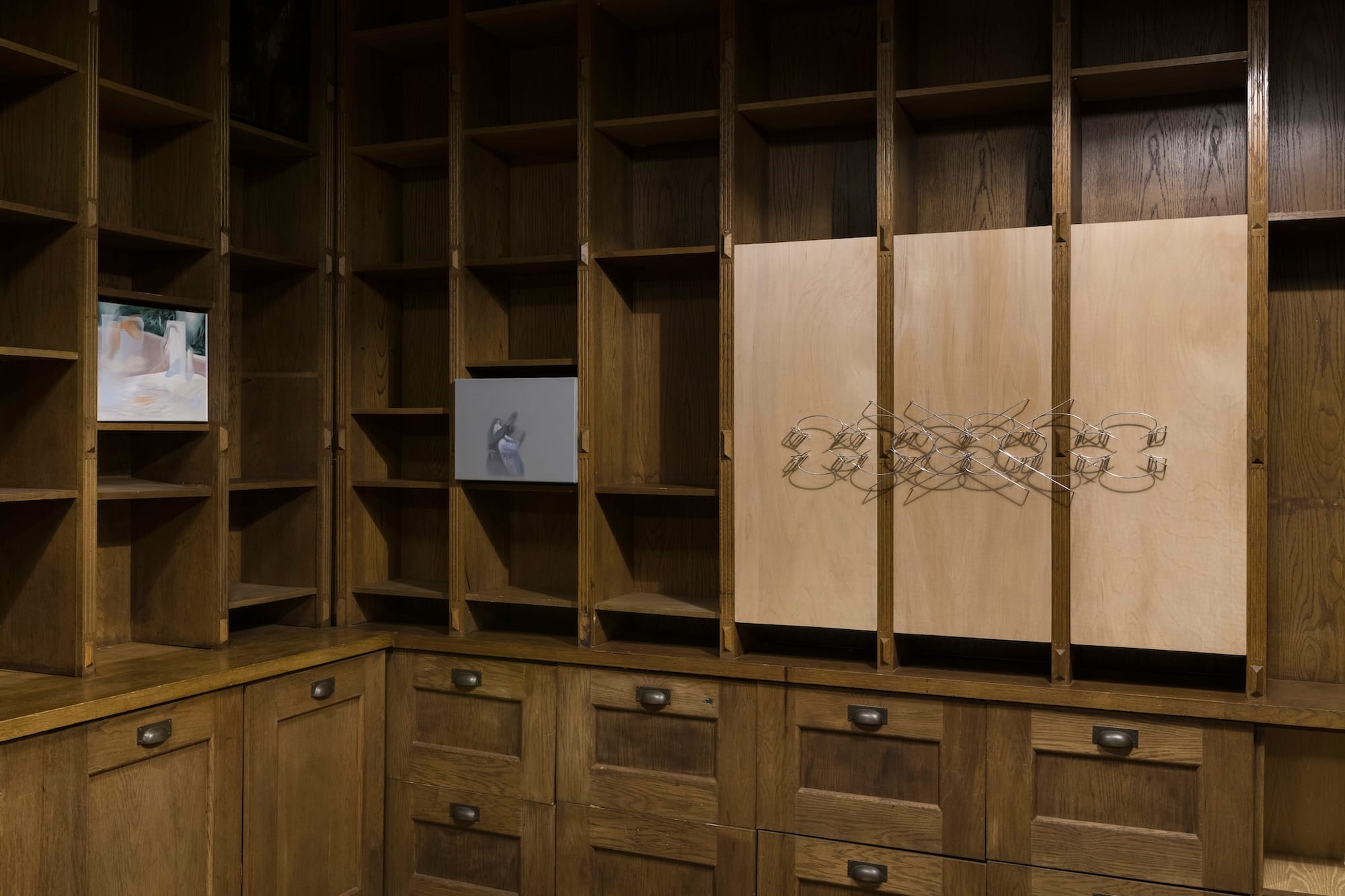
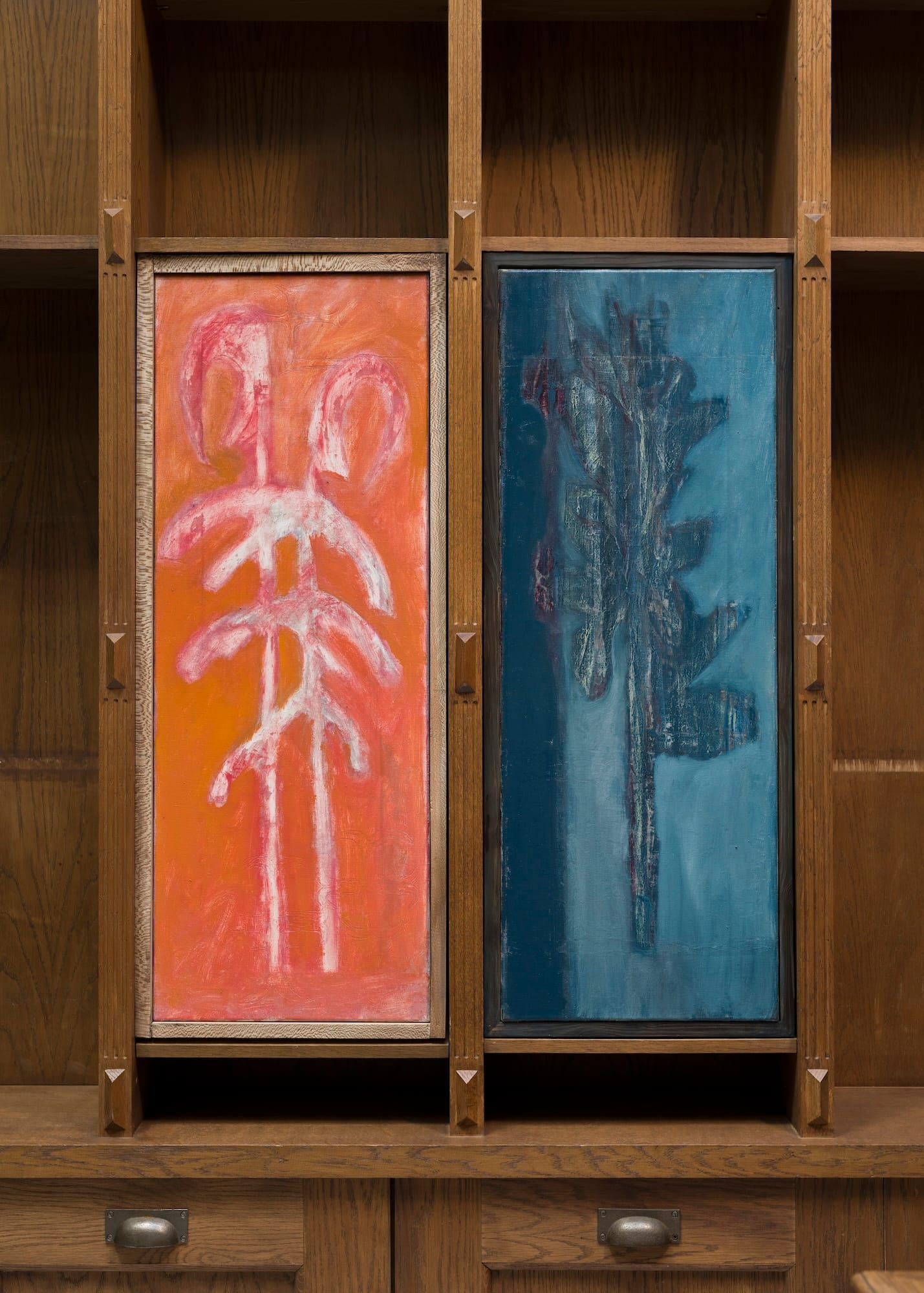
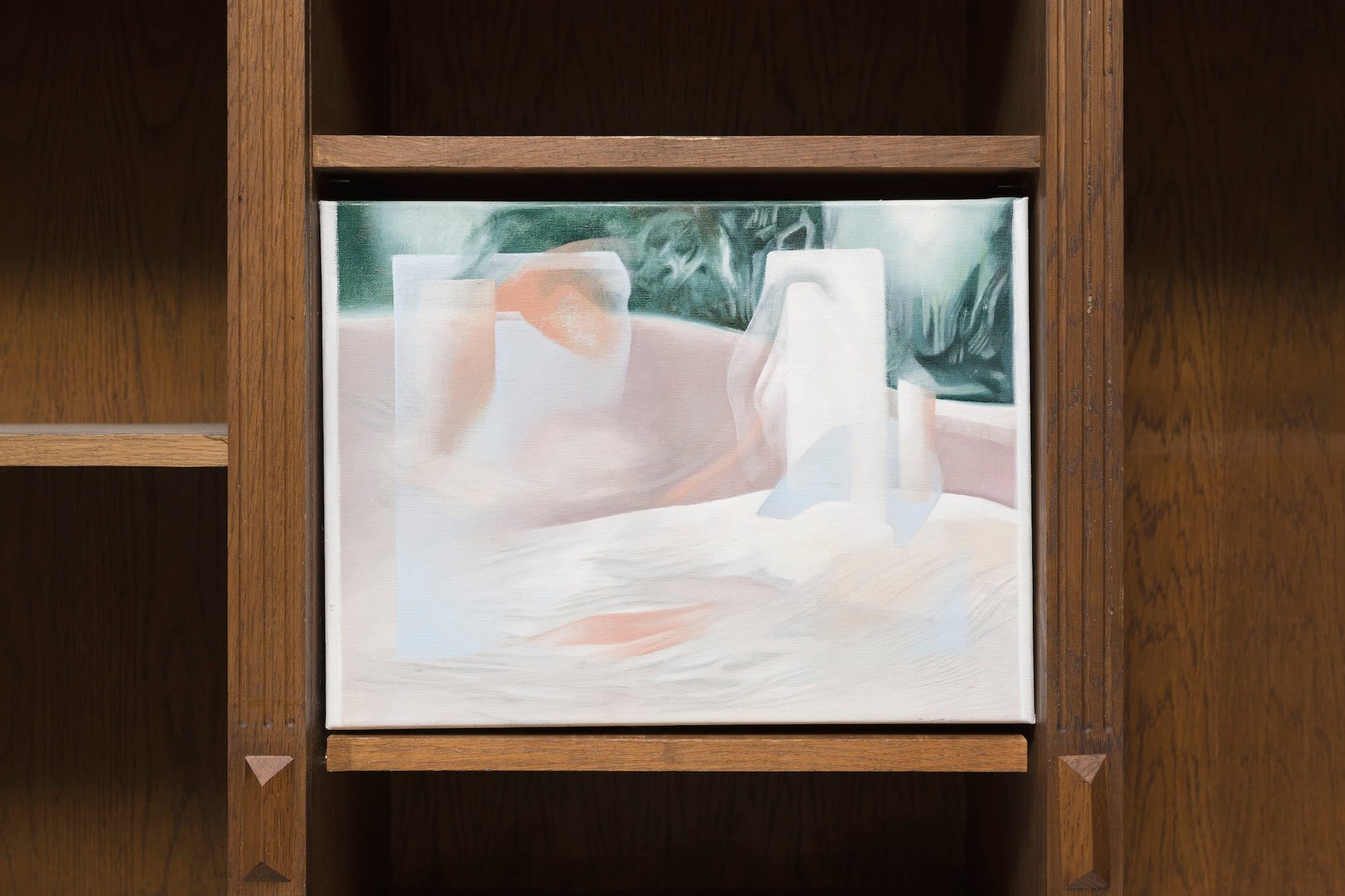
Felix Murphy's paintings take their cue from the ancient temple of Asklepios at Epidauros, where the sick slept overnight in hope of dreaming their own cure: an older order of trust, prior to the need to name what is being asked for. Edoardo Rito’s work is down the stairs. Like everything stored in anticipation, what is delivered is never quite what was promised.
Why this exhibition matters
Siting the exhibition in a former whisky shop, a space that already carries the Bitter Spring arrives at a moment when contemporary group exhibitions too often mistake thematic coherence for curatorial argument, and this is the most quietly radical decision Lisja Tërshana made in assembling this exhibition.
The venue selection is equally considered. The room already carries the pharmakon in its material history — a substance that has been remedy and ruin in equal measure across centuries. By staging the exhibition here, Tërshana avoids having to make that point explicitly in a white cube space that would have otherwise diluted the argument.
There is also a curatorial restraint that is harder to execute than it looks. The temptation with a space of lined compartments is to fill them with shiny objects and potions. Tershana resists this and invites seven artists who share a fidelity with difficulty.
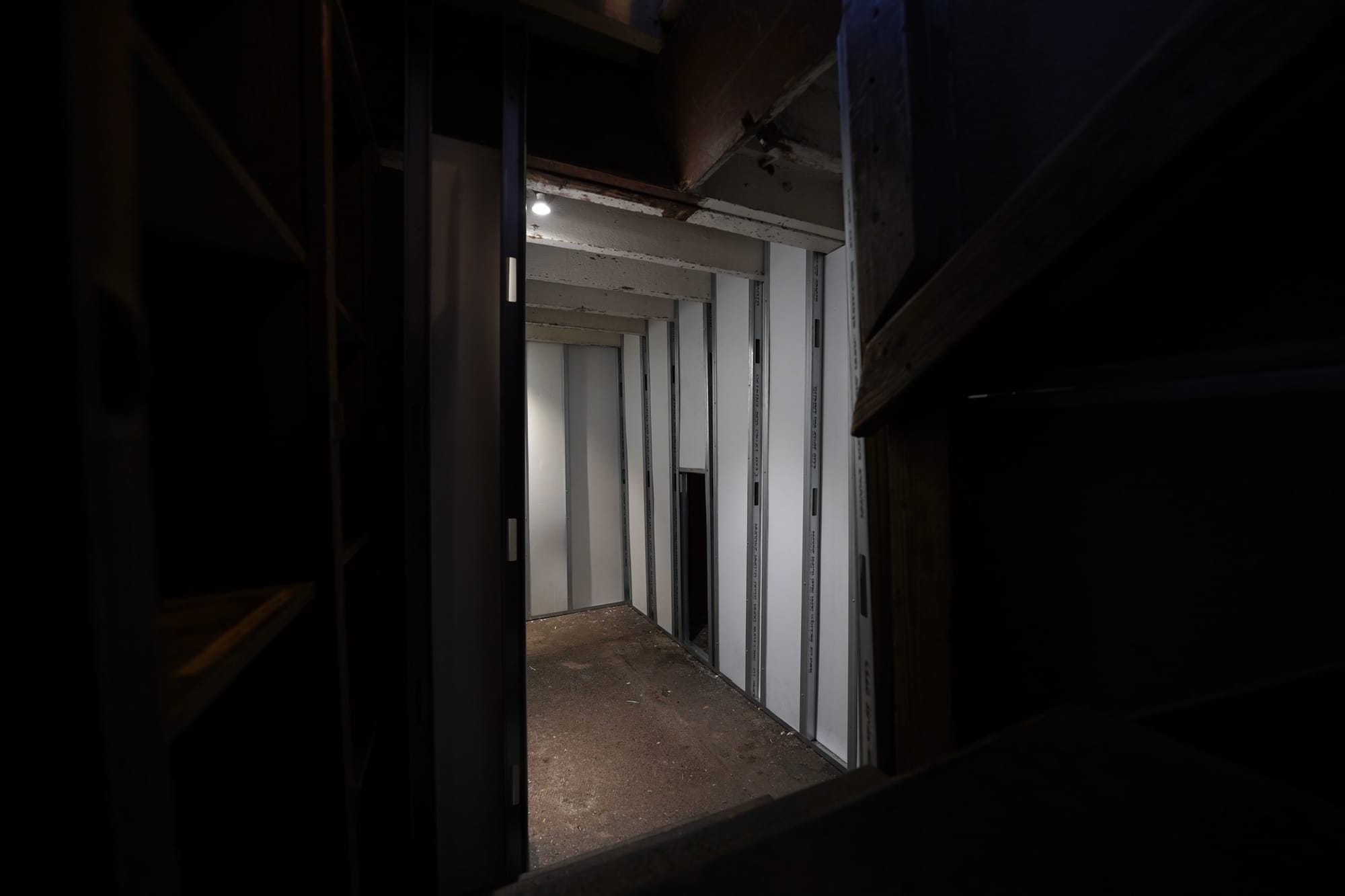
Each arrives at that difficulty through a different kind of knowledge: Tosuni through inherited folk knowledge, Murphy through ancient temple rituals that surrendered cure to the irrational, Cardó through pre-Columbian practices of reciprocity that refuse extraction, Baboçi through a desert journey where bodies and landscape dissolve toward an obliterating light, Grosse-Johannboecke through barriers that cannot tell you what they are protecting or withholding, Tokoro through a rhythm that only exists in the moment of contact between materials, and Rito through an architectural threshold you have to physically descend to encounter.
Bitter Spring is the work of a curator who trusts the intelligence of the artists she has gathered, trusts the intelligence of the audience she is addressing, and understands that the most rigorous thing a group exhibition can do is refuse to prepare you how to feel.
The timing carries the same logic. Opening in the days immediately before spring — the season most heavily loaded with cultural expectation, with notions of renewal and deliverance — the show arrives at precisely the moment when the promise has not yet been tested.
About Mara Projects
Mara Projects is a gallery operating nomadically between London and Tirana. Founded by Lisja Tërshana, it develops site-specific projects with emerging contemporary artists through collaborations with galleries, institutions, independent spaces, and international art fairs.
Following Bitter Spring, Mara Projects is participating at Art Cologne - Palma de Mallorca in April 2026 with a solo presentation of Ermir Zhinipotoku.
No spam, no sharing to third party. Only you and me.