Everything That Accelerates Leaves Something Behind

Maija Fox
Hard Shoulders
Sinne
Helsinki, Finland
-
Markus Åström
Ahmed Alalousi
Courtesy Sinne
Sinne Presents Maija Fox: Hard Shoulders in Helsinki
Infrastructure is not neutral. The road, the bridge, the optimised route, these are arguments made permanent in materials, carrying within them a culture's commitments: speed, growth, the assumption that forward is the only direction worth tracking. What tends not to appear in that argument is what the forward motion passes over, the marsh, the margin, the pause.
The breakdown lane carries an admission within it. Built for emergency, for the moment the system cannot continue, its presence acknowledges that failure was always part of the plan. That space beside the road, intended for stopping, not for being, holds something the design did not mean to include.
"The surface that accelerates and the water beneath it are not opposites. They are the same system, measured at different speeds."
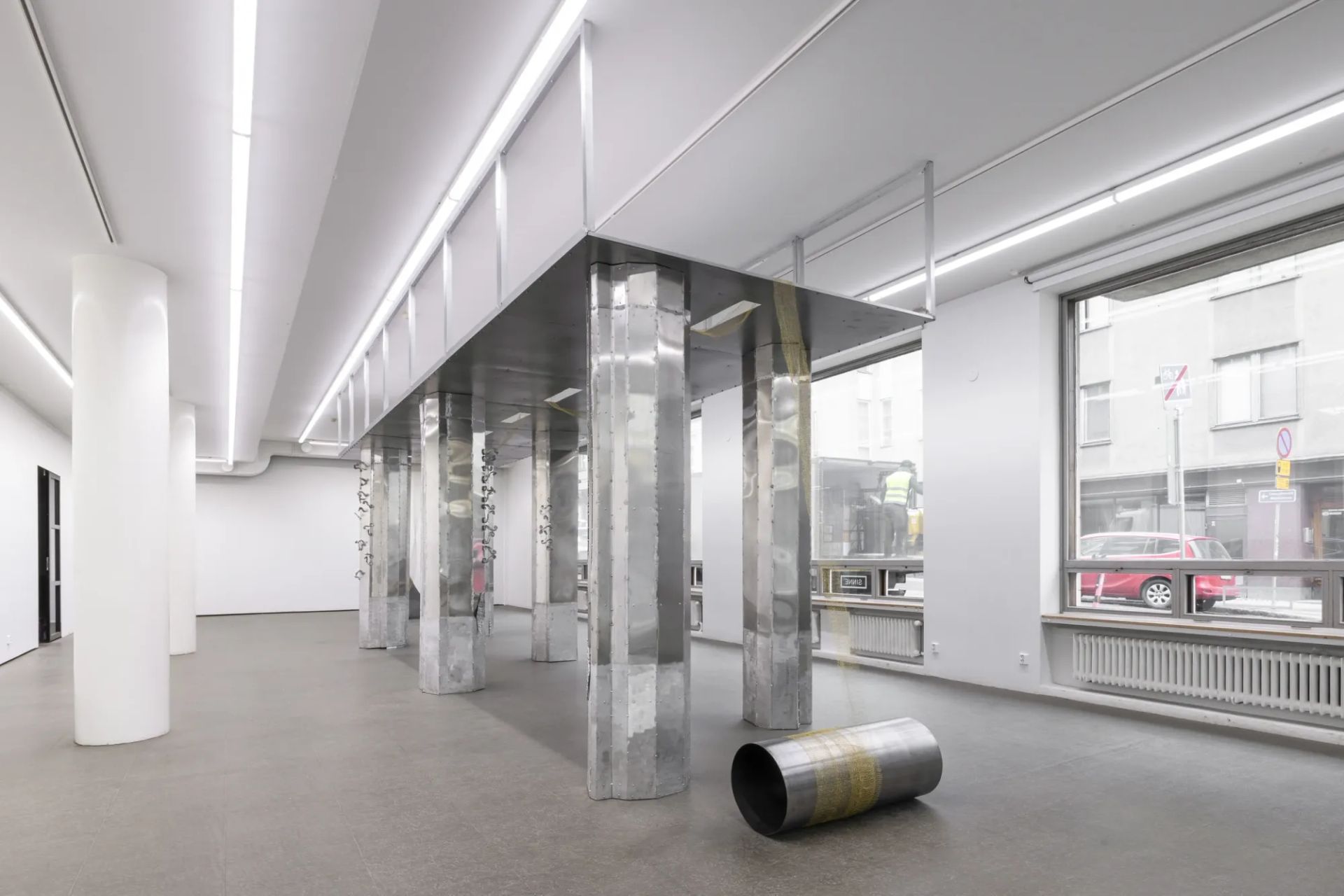
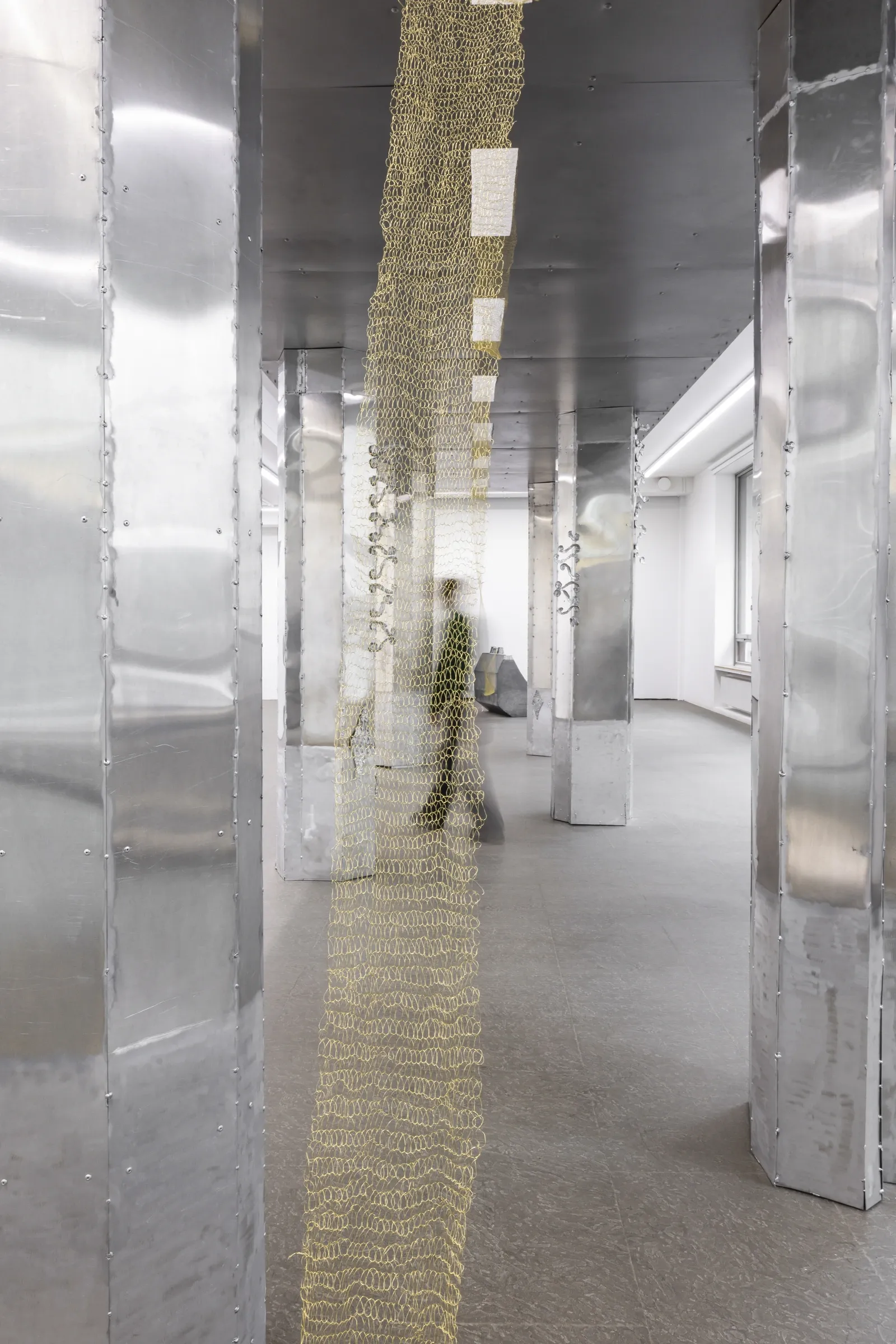
Sinne, Helsinki's institution for contemporary sculpture and installation, is a space that makes room for work rather than merely displaying it. Maija Fox's exhibition Hard Shoulders fills it with a single large-scale installation, through and through, built from cast brass, cast aluminium, forged steel, and stainless steel fixtures. The material weight is real. So, unexpectedly, is the fineness of certain elements within it.
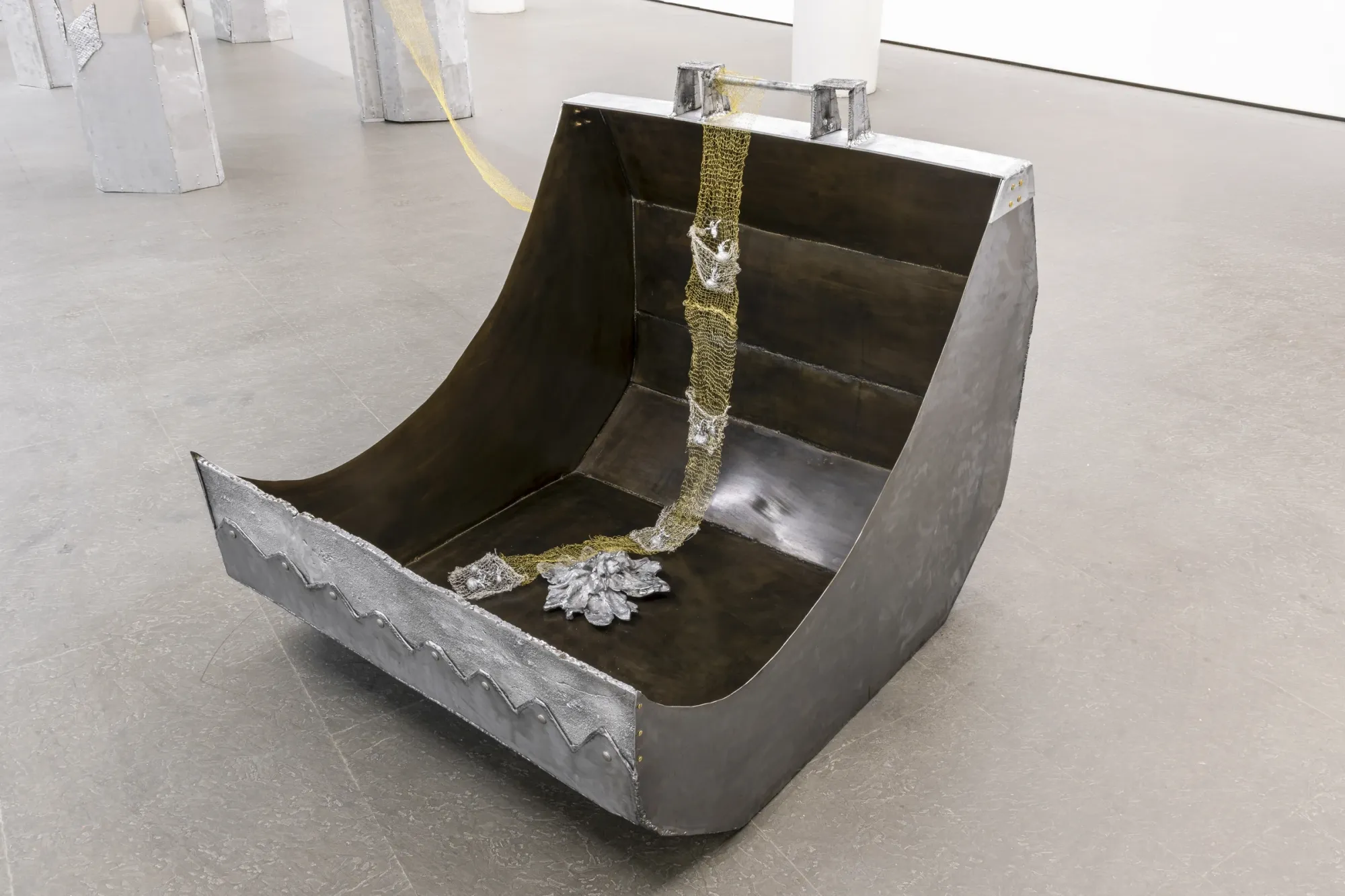
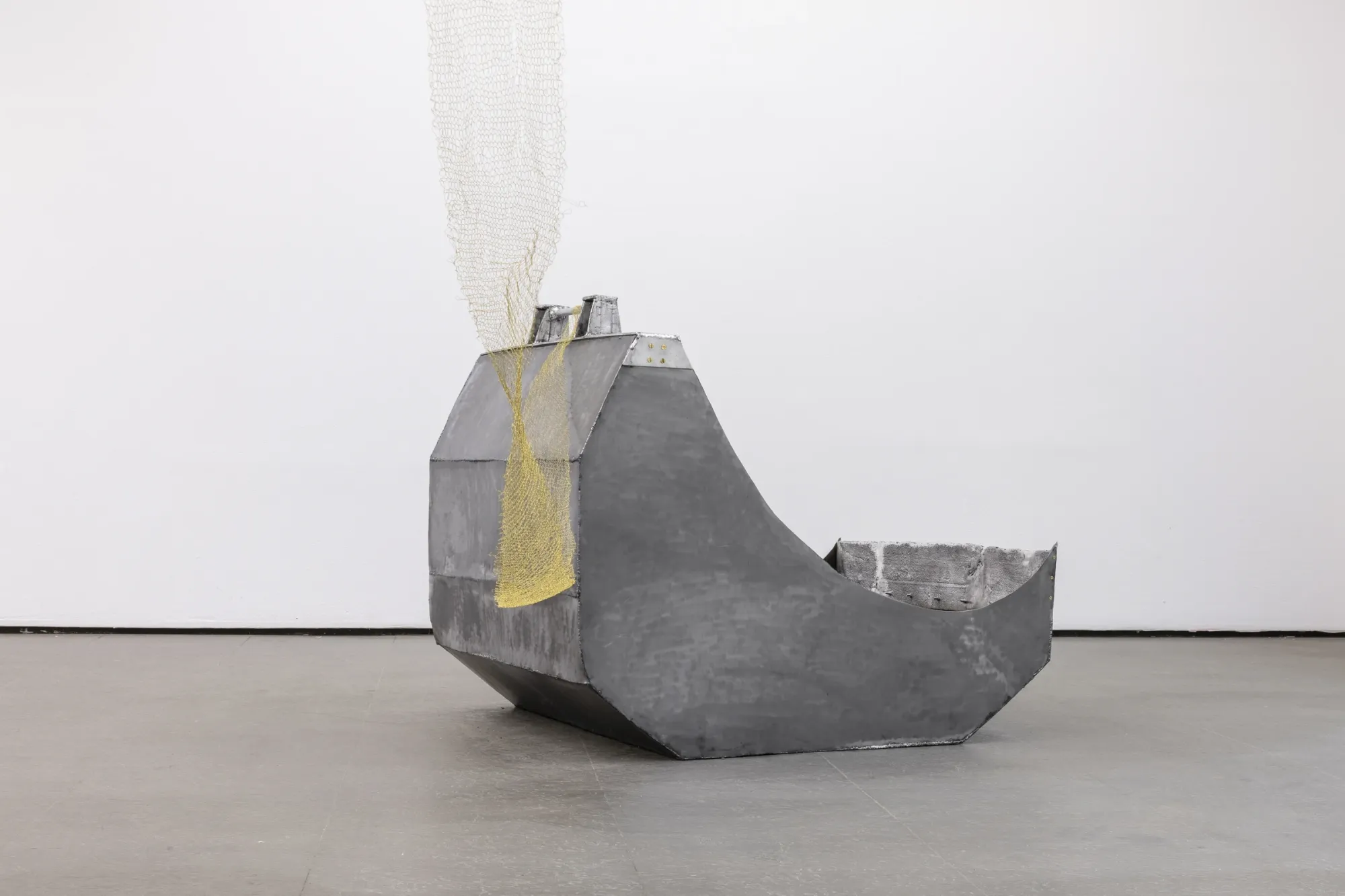
Fox drew from a specific source: Finland's Highway 4, and more precisely a motorway bridge where the road crosses a marsh. The installation does not represent that bridge so much as hold the condition it produces, two systems moving at different speeds, co-present but not reconciled.
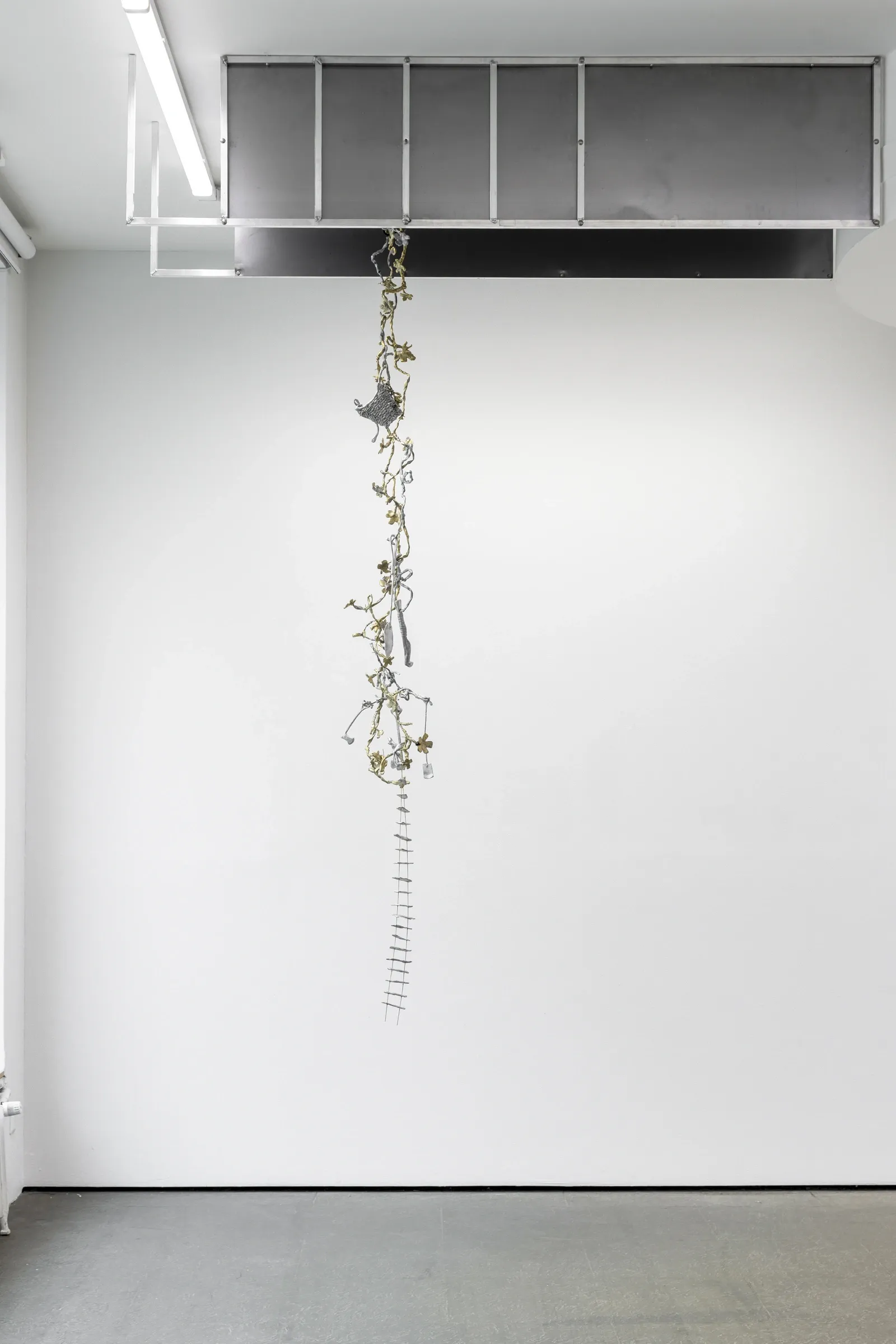
Wetland plants appear throughout: ranunculus, rosehip, mullein, white water-crowfoot, cast in aluminium, their forms preserved in the material of the road itself. The aluminium takes the shape of the plant with precision. That exactness seems significant, it does not aestheticise the marsh flora but converts its logic, holds it within infrastructure's own material vocabulary. Something survives the casting but changes entirely in the process.
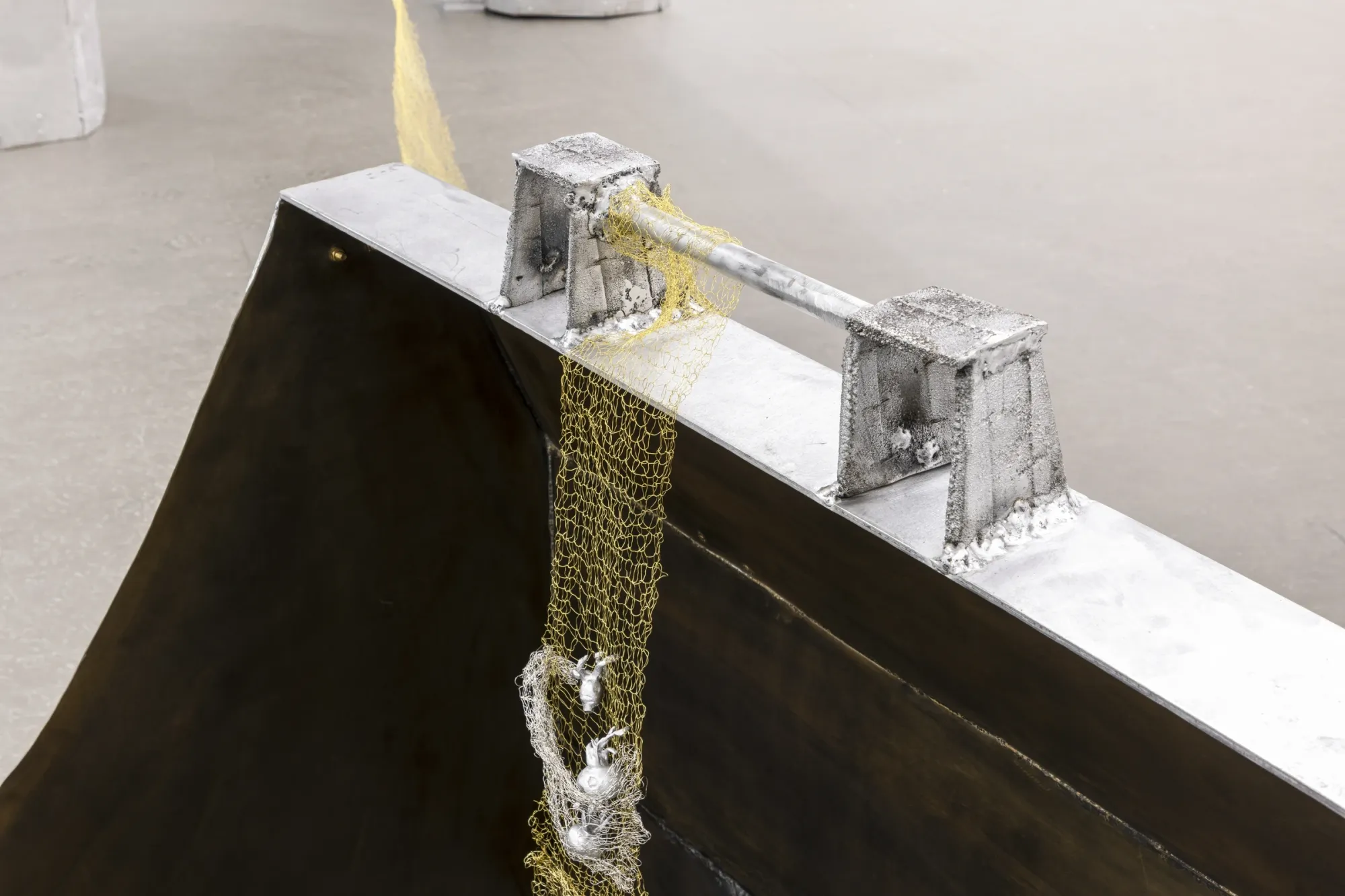
A different register enters through metal wire, knitted and woven upward through the work like climbing plants forcing through hard surface, eventually becoming part of a painted road centre line.
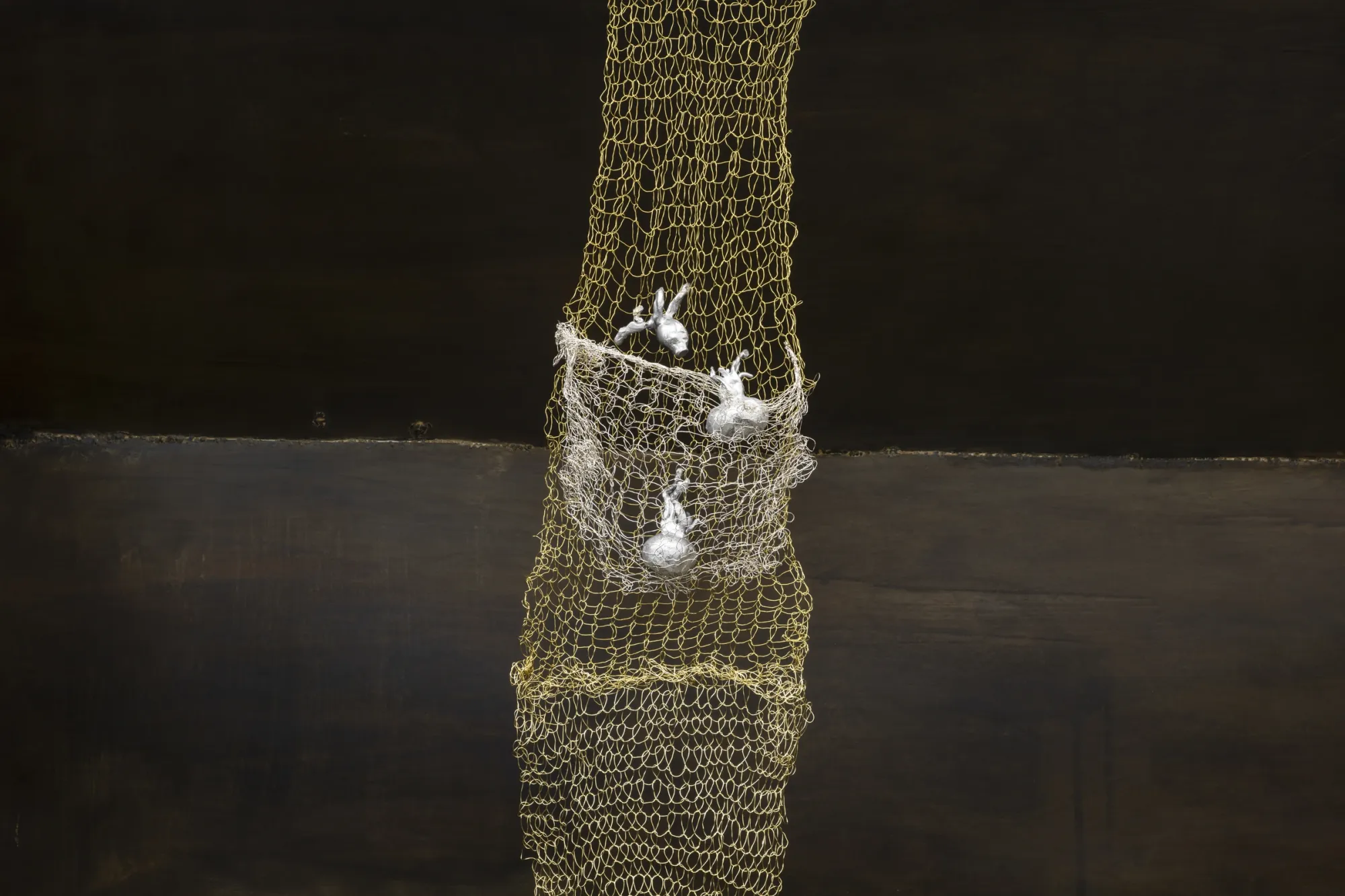
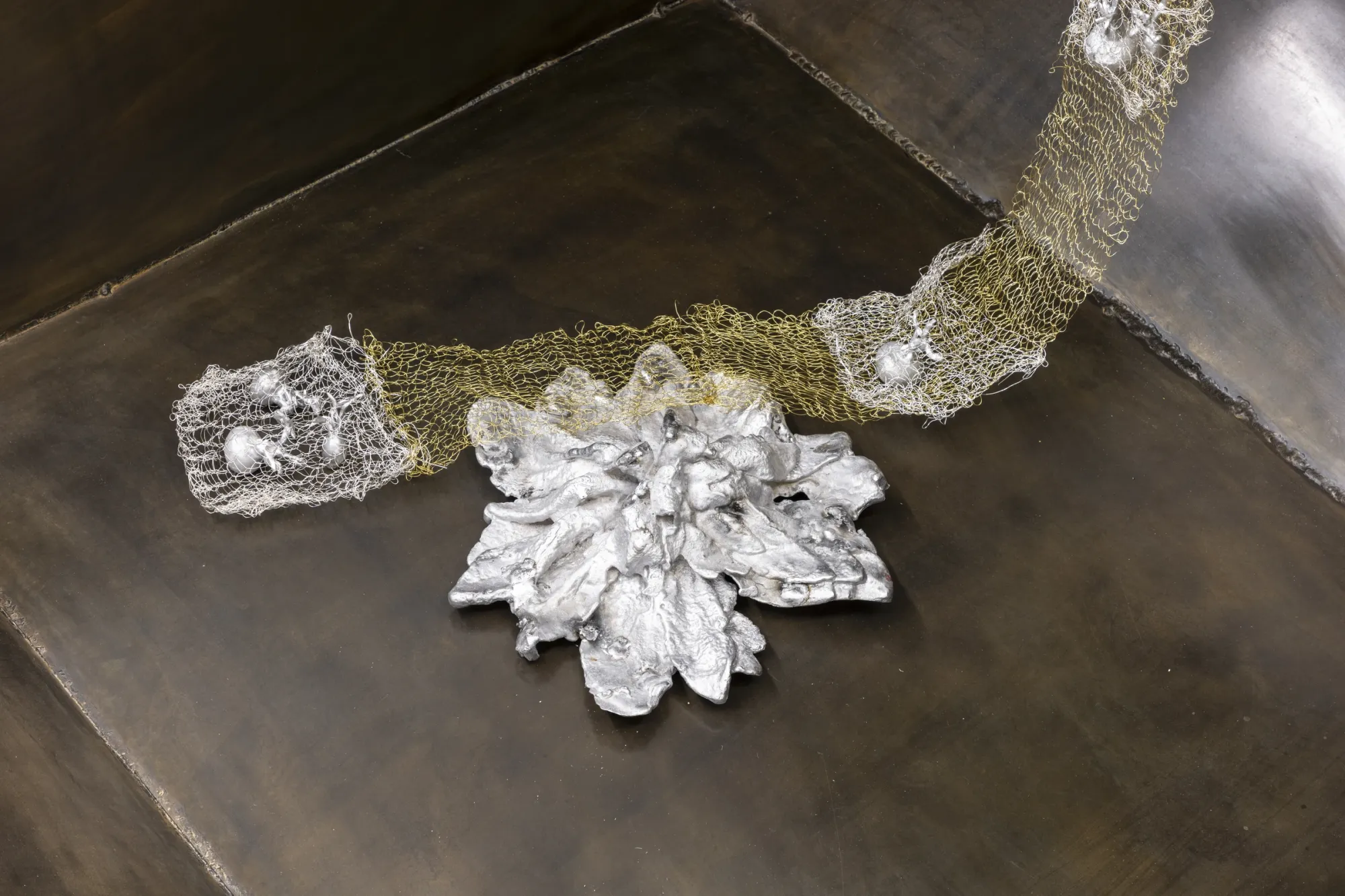
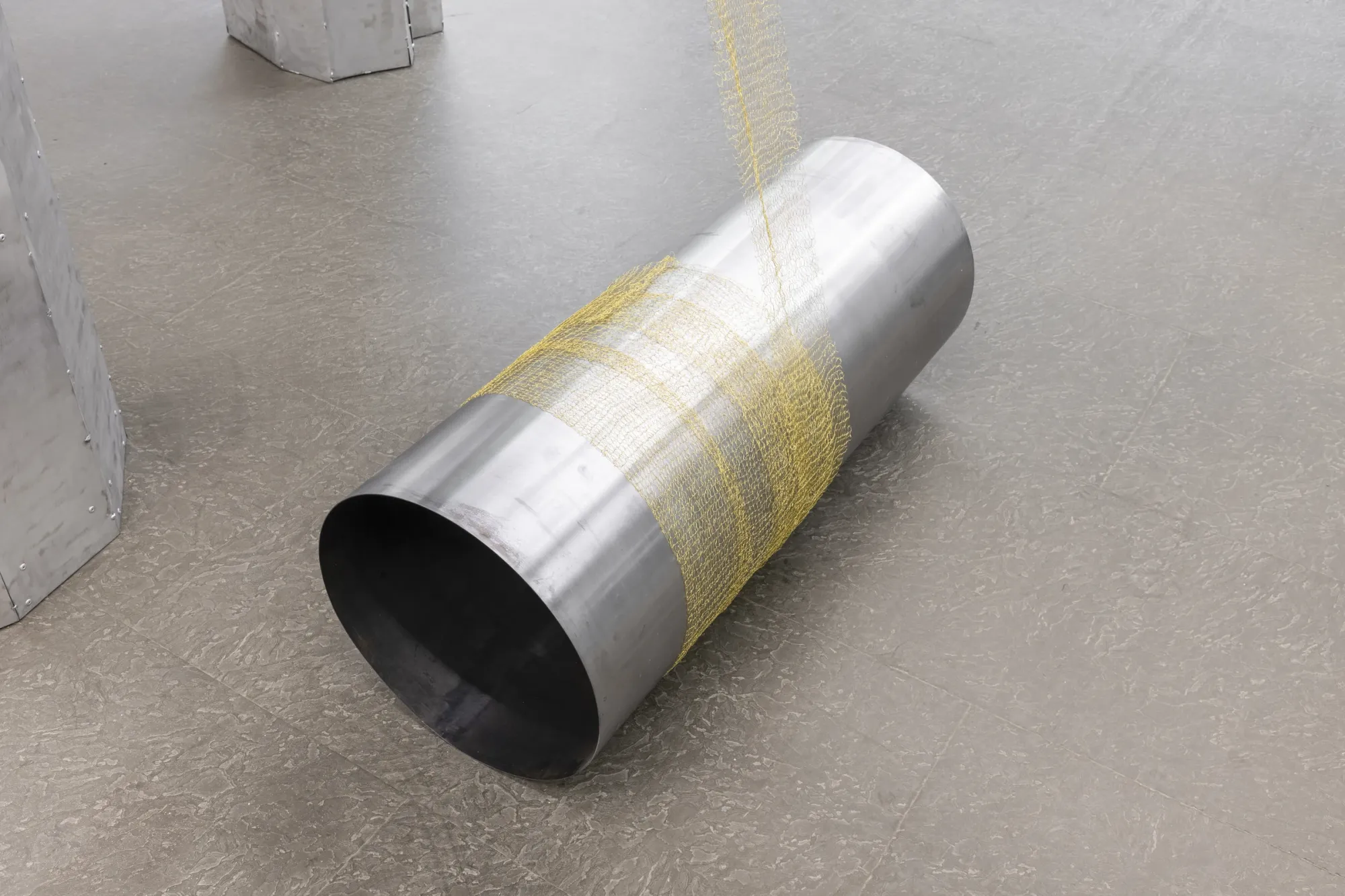
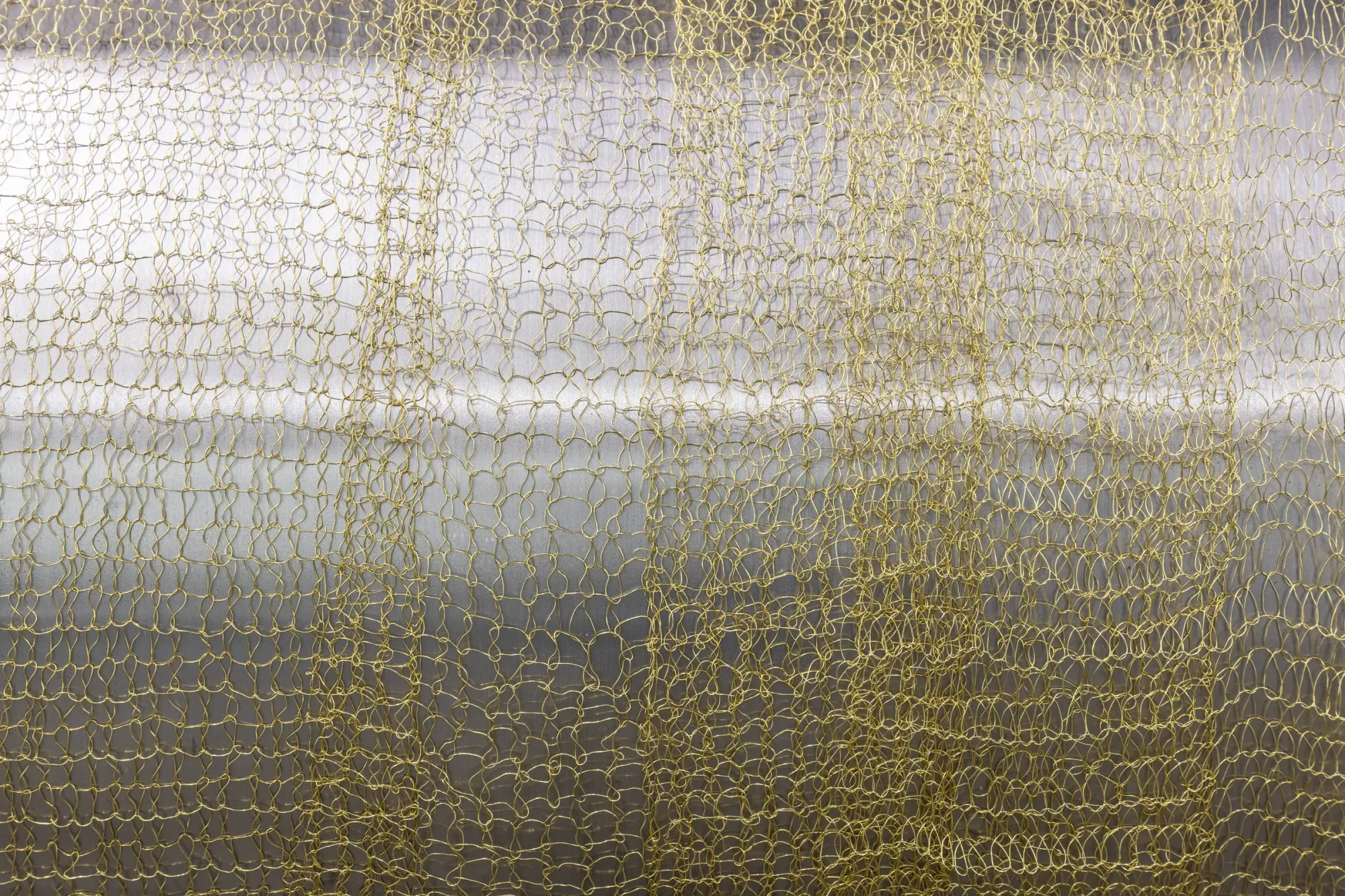
In the pockets of the knitting: worn, empty key chains, objects that once opened gates and started machines, now carrying only absence. Fox identifies this textile dimension as a break from the monumental, and it functions as exactly that: a shift in scale that does not abandon the colossal but refuses to be absorbed by it.
There is something specific about this moment for a work that makes visible the space beside the system. Conversations about pace, exhaustion, and the unmanageability of accelerating conditions have not resolved, they have become structural.
Fox does not make an argument about this directly. She builds a form in which two speeds, the road's forward motion and the marsh's thick, patient time, remain simultaneously present, and the viewer finds a position between them rather than a conclusion about them.
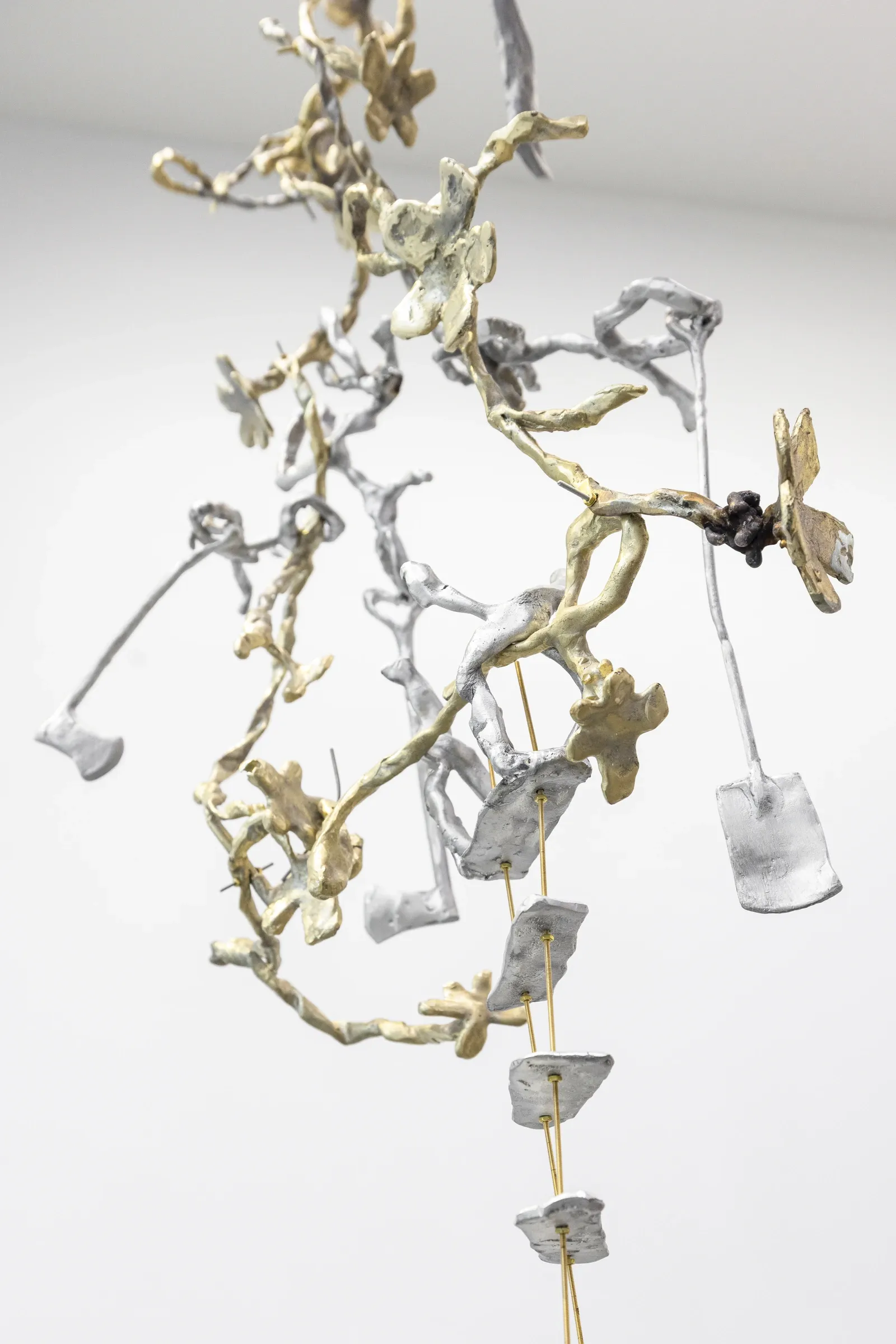
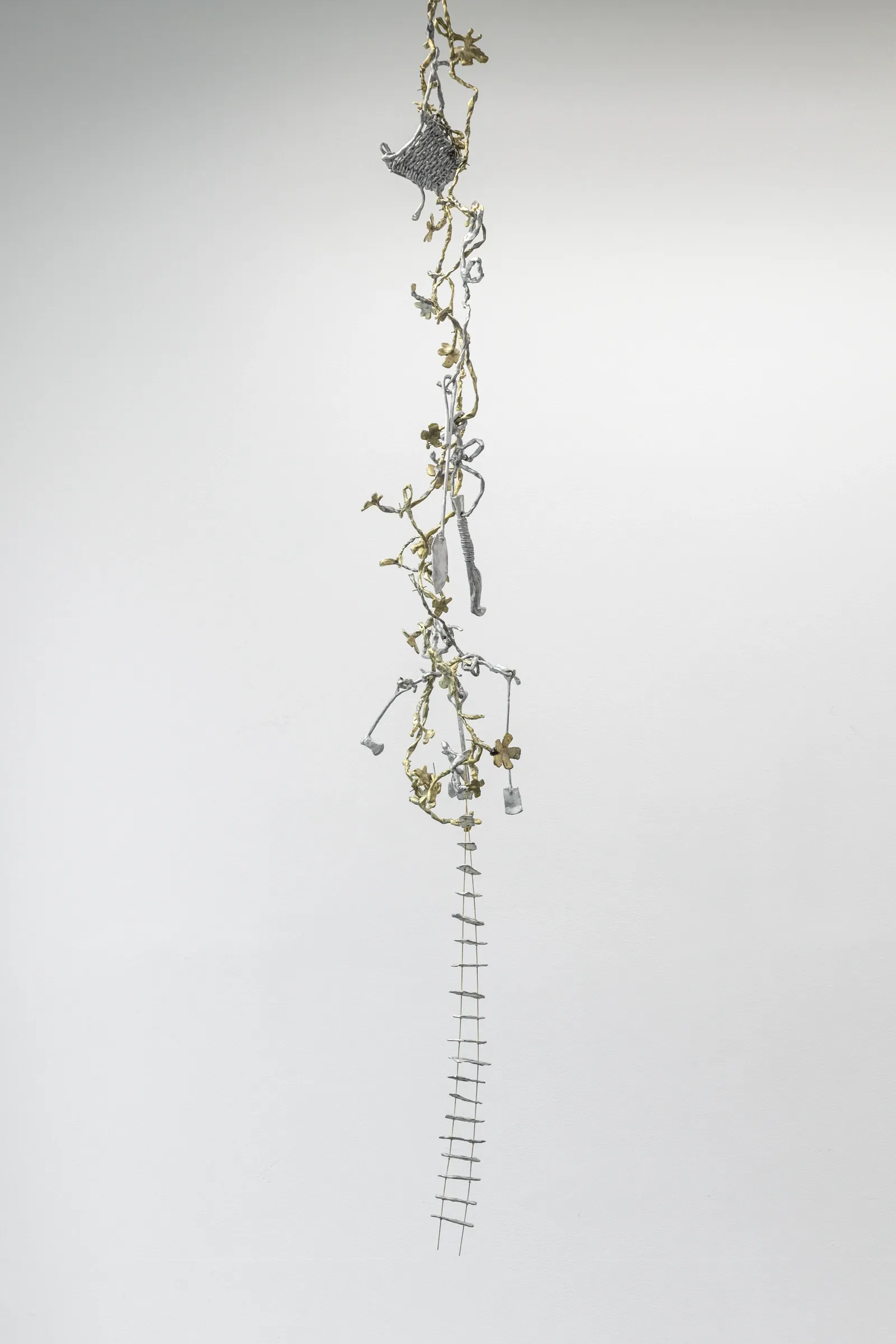
Maija Fox, Hard Shoulders, 2026, Sinne, Helsinki. Photo by Ahmed Alalousi. Courtesy the artist and Sinne.
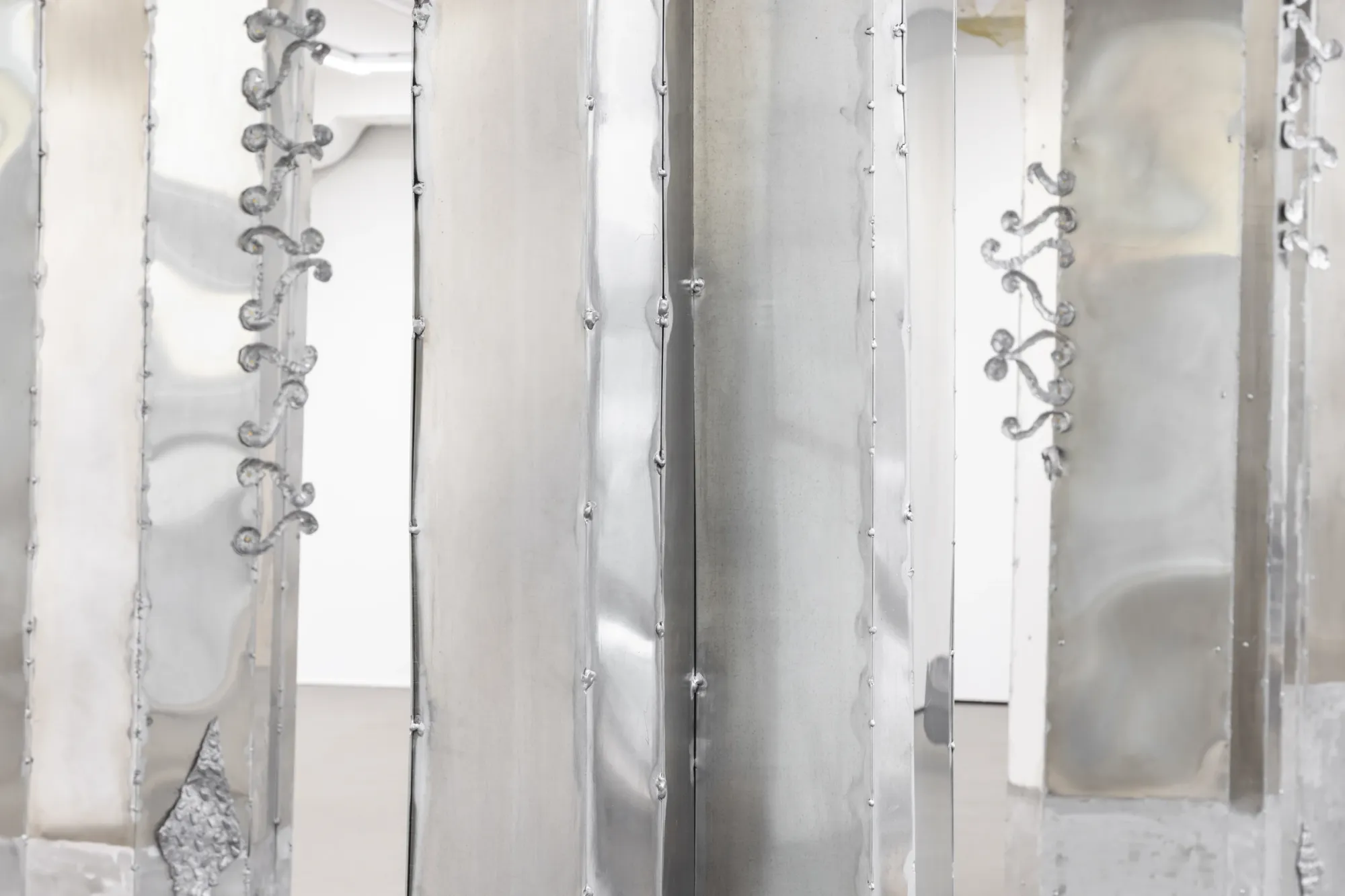
The empty key chains in the wire are not melancholy objects. They are a record: of things that started, ran, and stopped.
Instagram Sinne Gallery
Maija Fox on Instagram
Curatorial Note by Markus Åström
In her Hard Shoulders exhibition, Maija Fox addresses the relationship between our culture, labour, and the individual. Her large sculptural installation is mainly constructed out of aluminium and steel and is an interaction with the gallery space and its architectural elements.
Fox has been inspired by Finland’s Highway 4 and, more precisely, by a specific motorway bridge that stands in a marsh. Hard Shoulders refers to the motorway verges or breakdown lanes intended for stopping in an emergency.
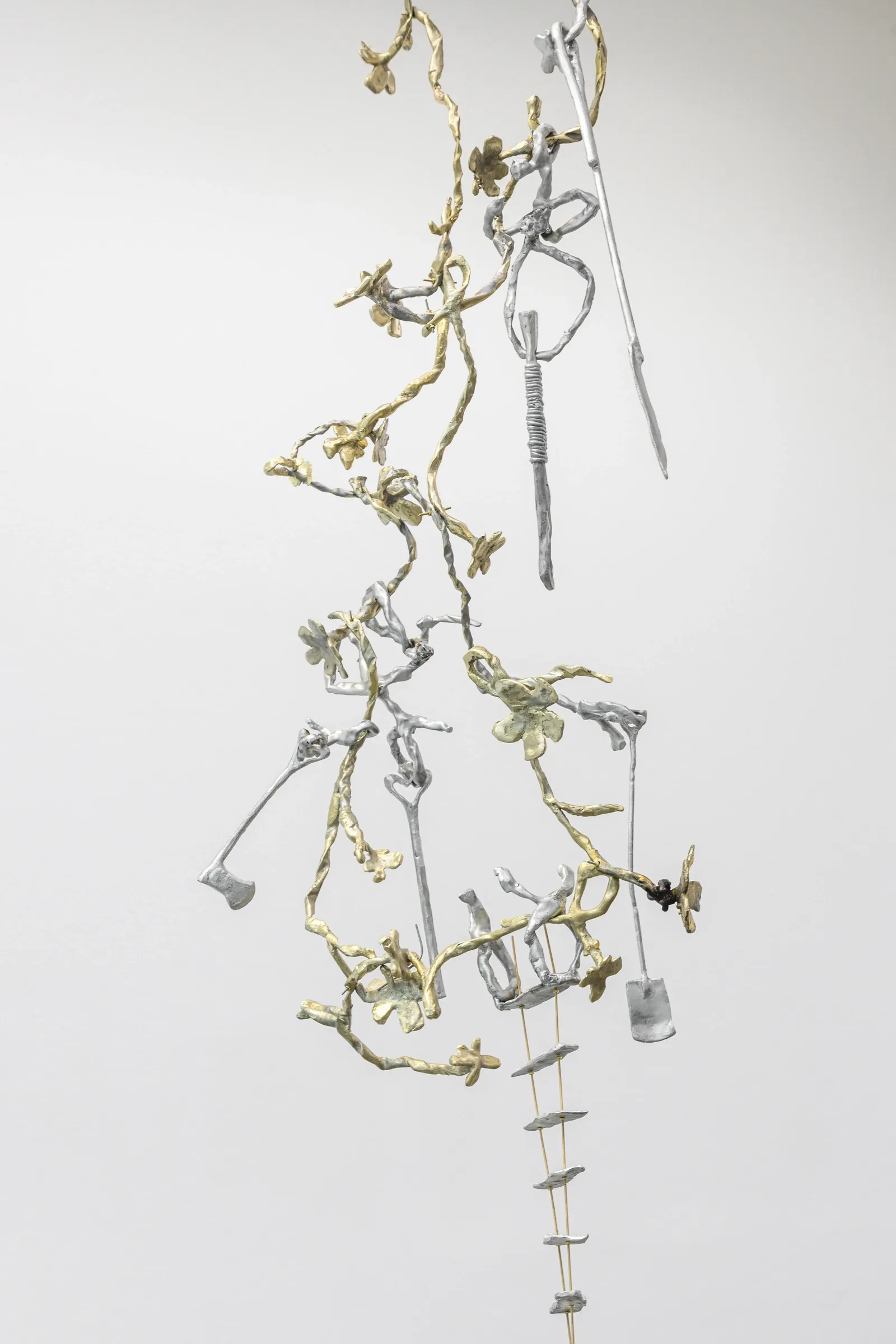
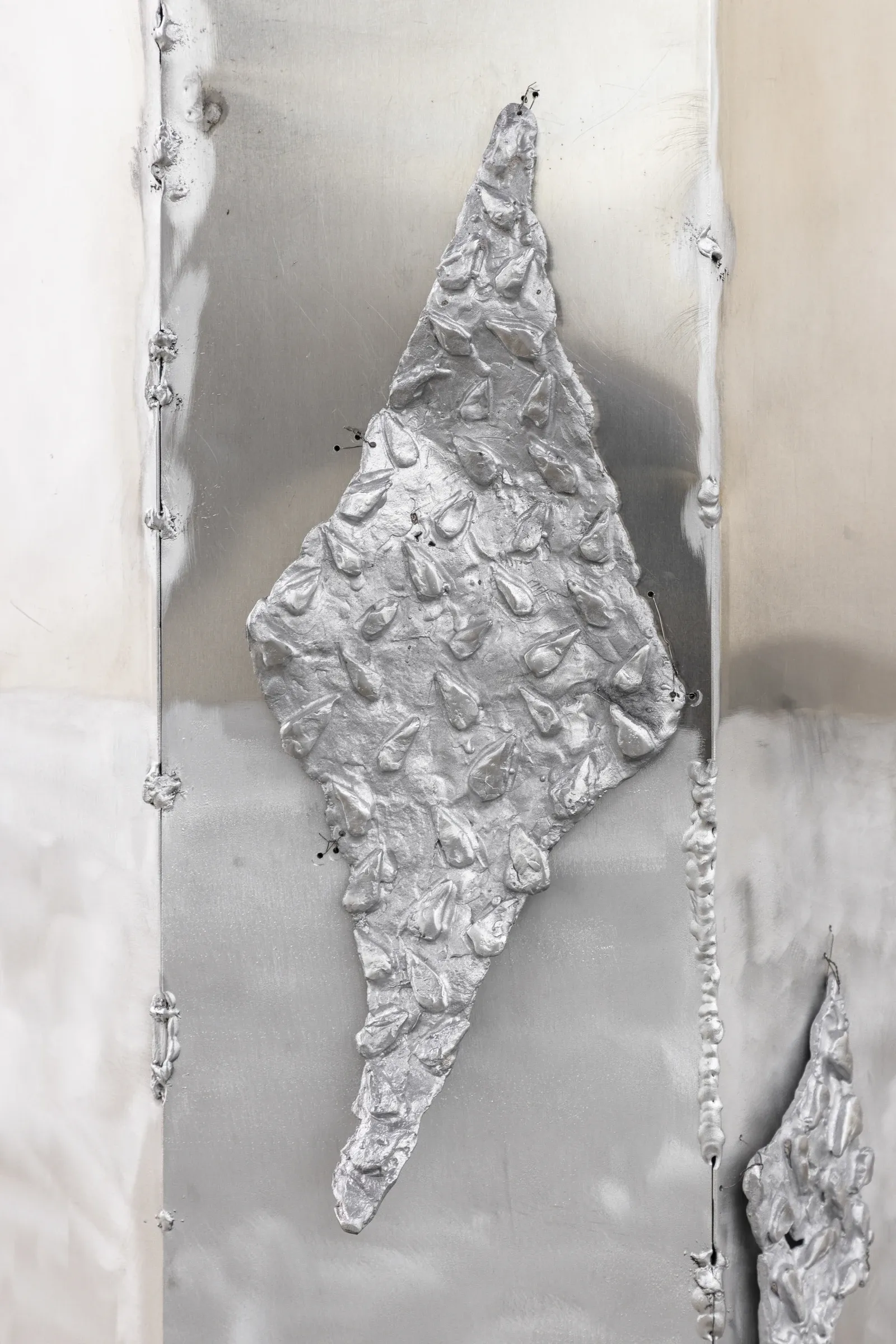
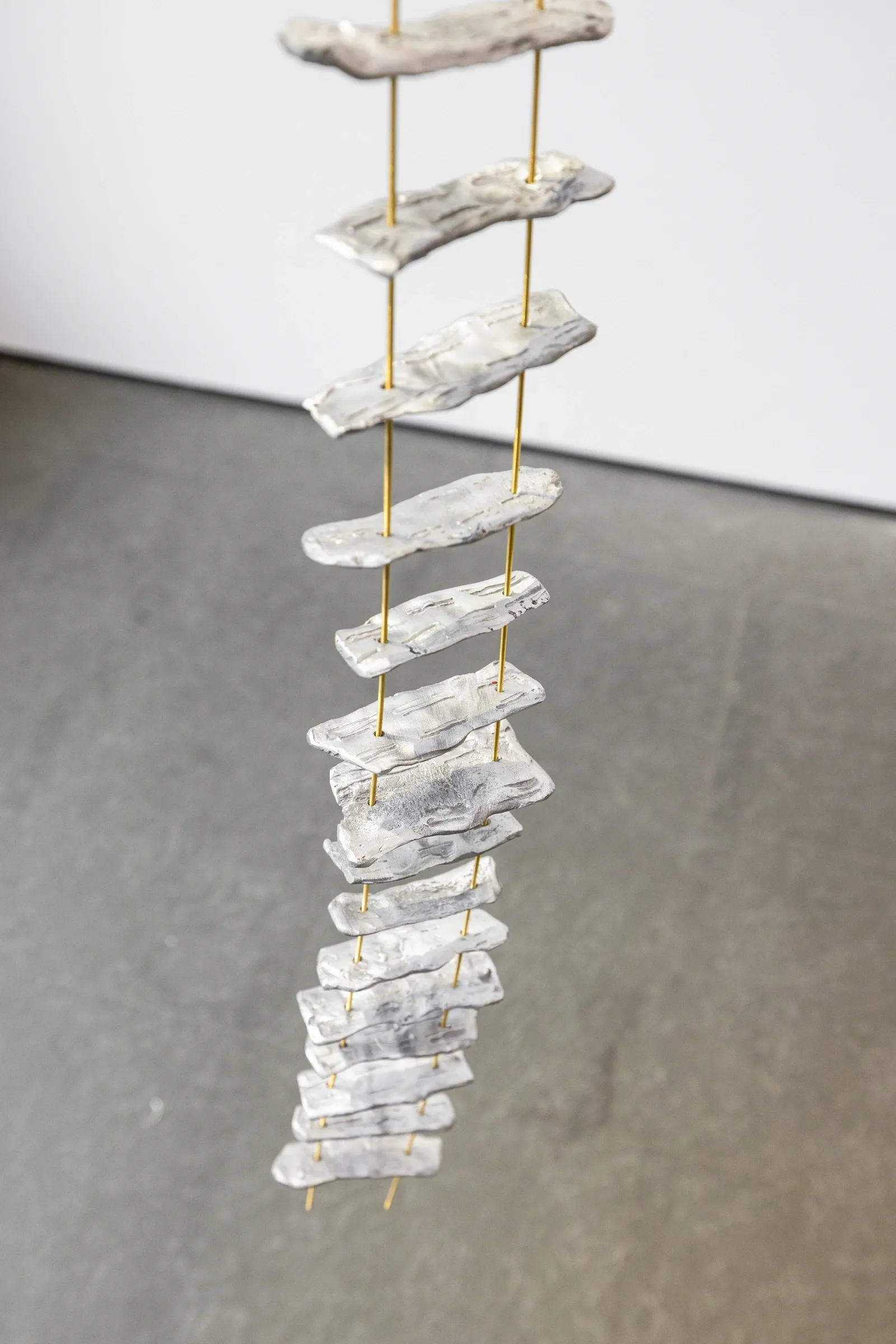
Maija Fox, Hard Shoulders, 2026, Sinne, Helsinki. Photo by Ahmed Alalousi. Courtesy the artist and Sinne.
With this title, Fox brings up an existing emergency situation in our society, where the pace and pressure of advances in our surroundings create an ever-growing sense of unease and hopelessness on a personal, but also on a collective, level. She opens out our narrow field of vision to reveal an emptiness that moves in parallel with us on the margins. With her large-scale, technically challenging installation, she urges us to find an entry point to a sideways movement into a sense of security and enveloping calm.
Fox’s emphatically material-based art occupies the zone where humans and nature meet. In her art we can see traces of agriculture and heavy industry, both of which are directly rooted in Fox’s own upbringing in the countryside. She incorporates different elements from this setting, including tools, machinery, and structures with which human beings at work interact and influence their environment.
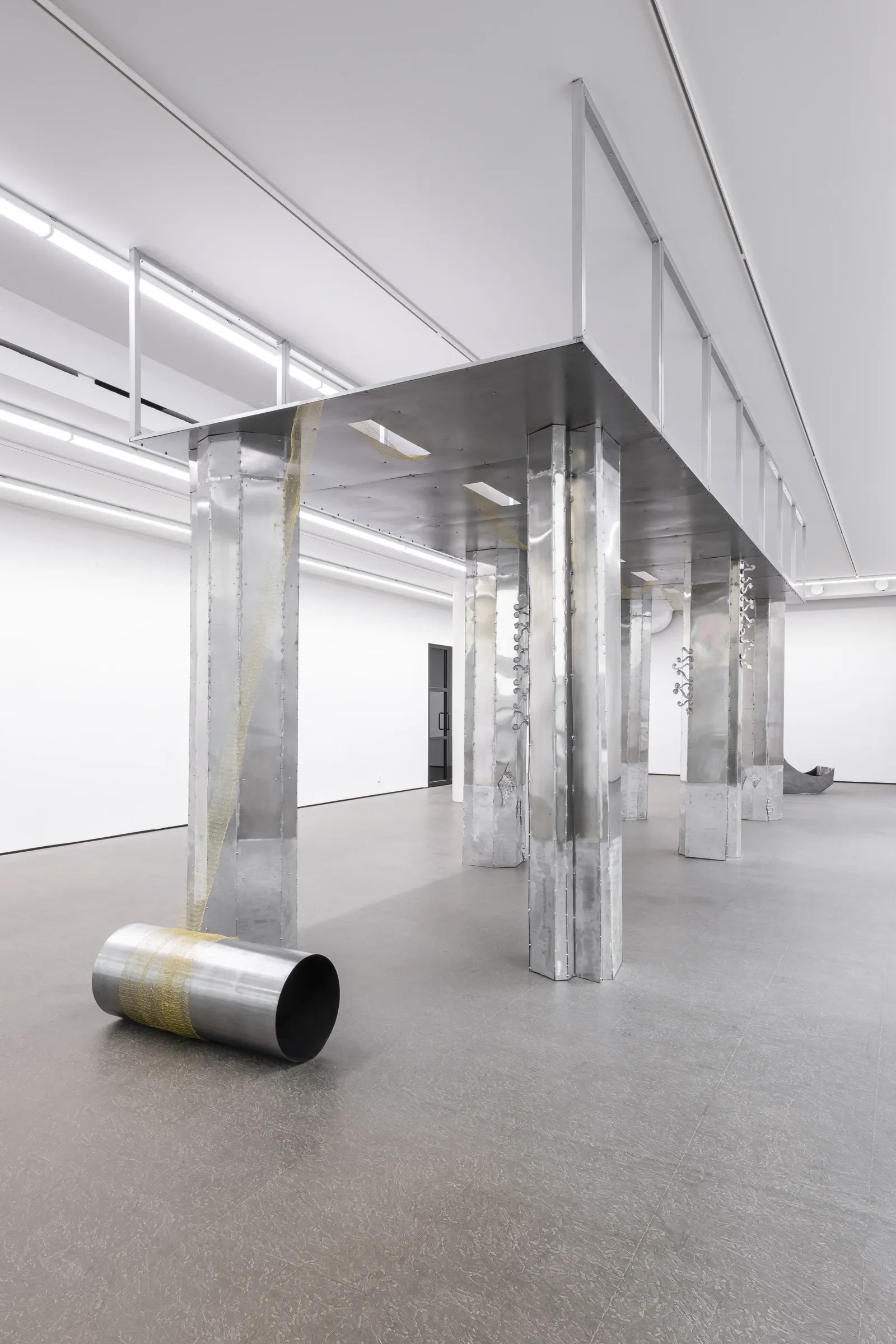
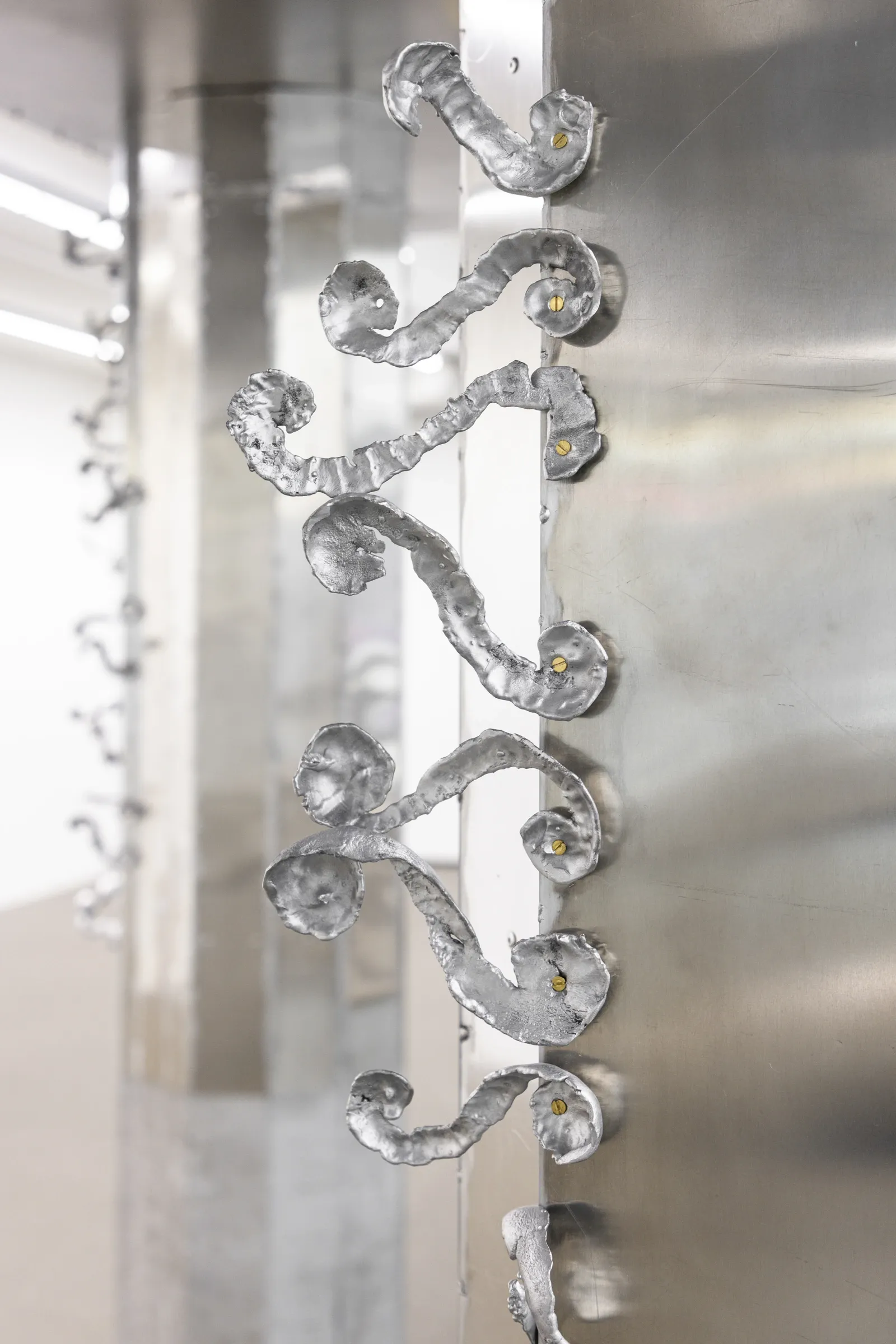
Maija Fox, Hard Shoulders, 2026, Sinne, Helsinki. Photo by Ahmed Alalousi. Courtesy the artist and Sinne.
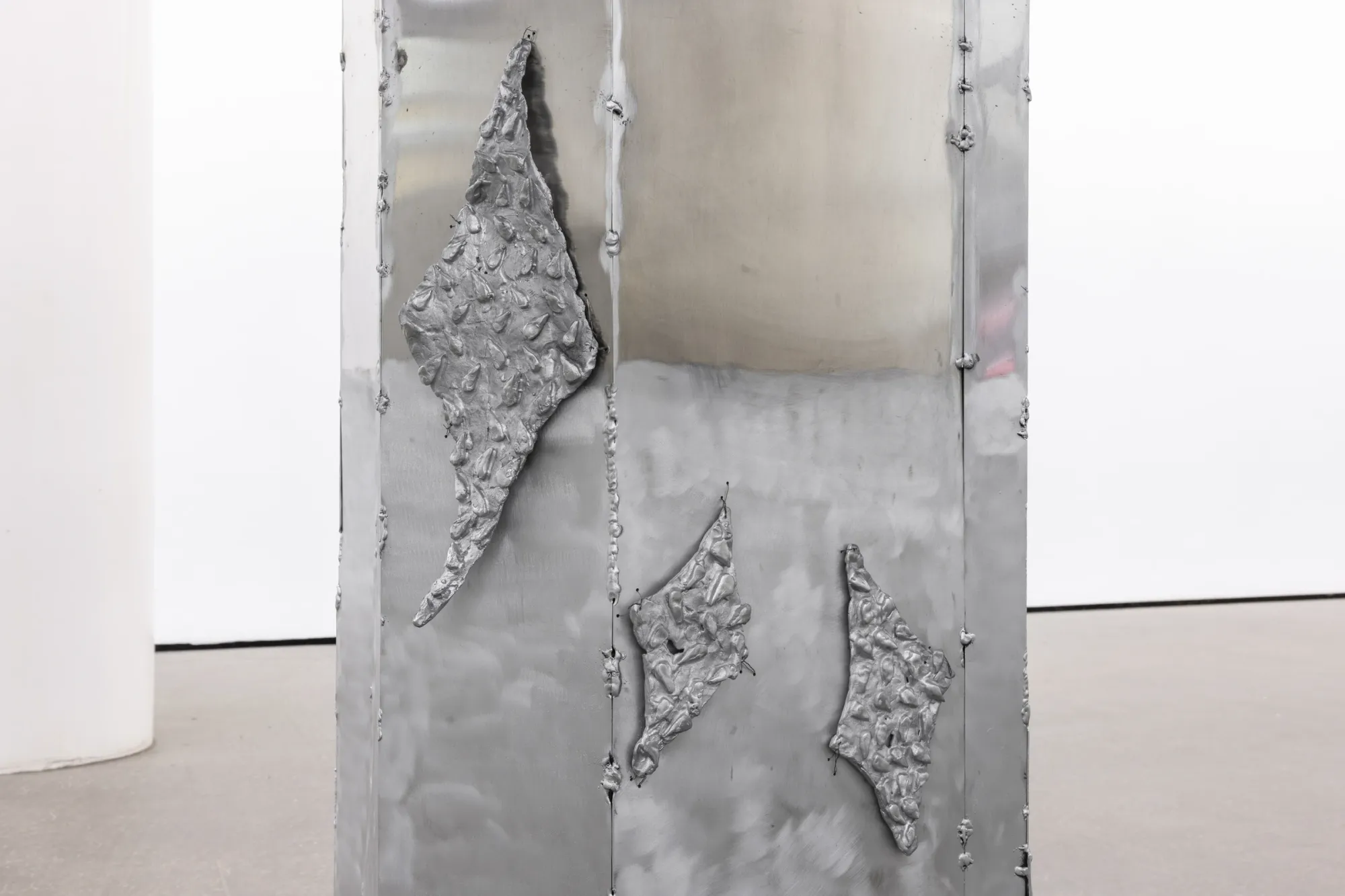
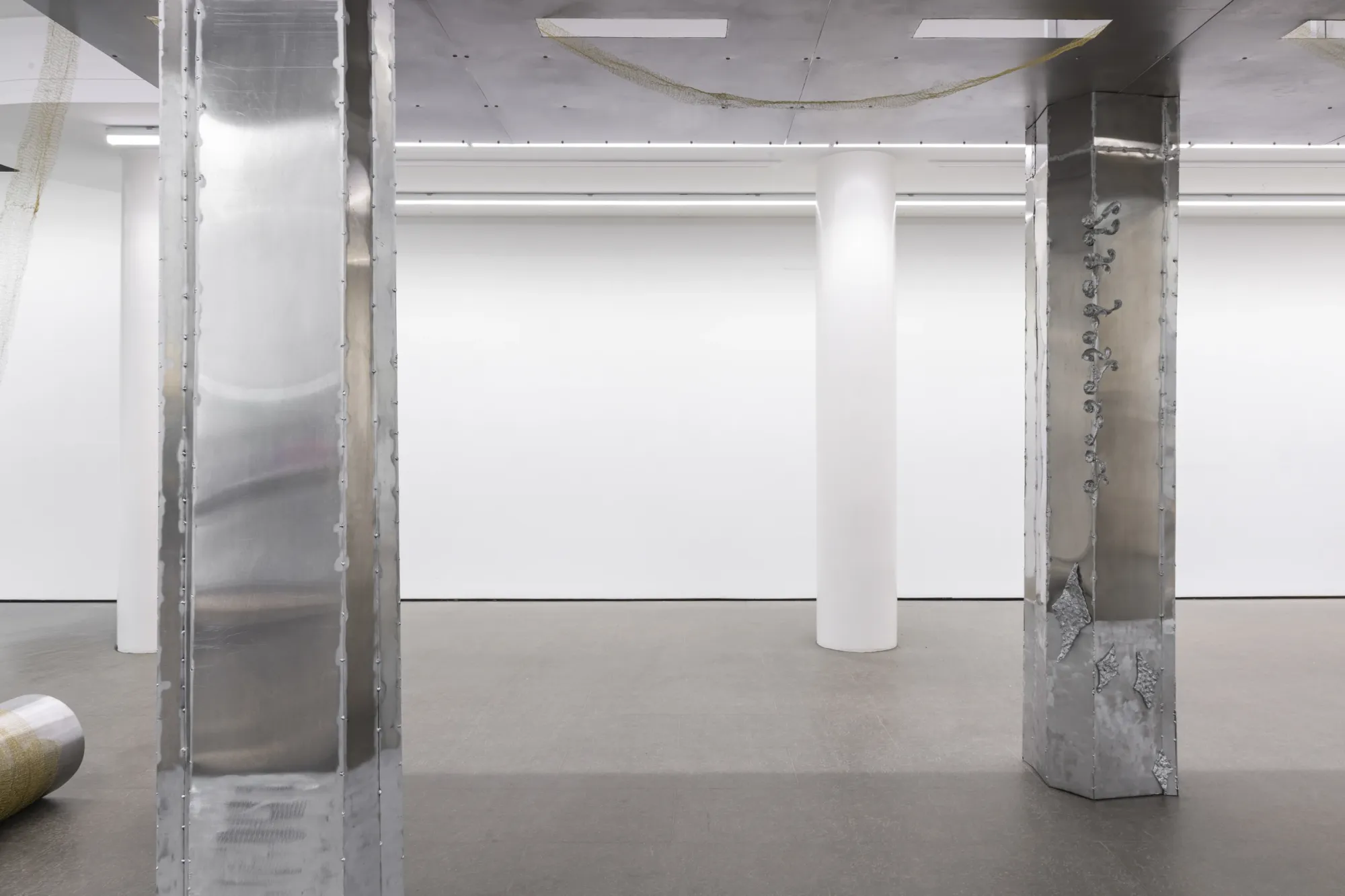
Metals are a key, recurring material that Fox reworks using various techniques. She has developed her own poetic form language, in which she makes open-minded, creative use of the techniques and methods of the artisan, engineer, and artist. She combines various familiar mechanisms and structures, producing something that is evidently intended to elicit new functions and even to attain dreamlike states.
The bridge is something of a symbol of the engineer’s art — it combines civic construction with good infrastructure planning that not only sustains but also lays the foundation for continued growth. A bridge reduces distances and eases our movement across difficult terrain and “inhospitable” landscapes. In Hard Shoulders, Fox brings together two worlds and rhythms: above, the human being’s energy-craving, accelerating forward motion; below, the stillness of the swamp, where time thickens and the restless pace overhead begins to recede. We can see here our own drive to optimise, to streamline, and our ability to reshape the landscape and to exploit the resources contained in it.
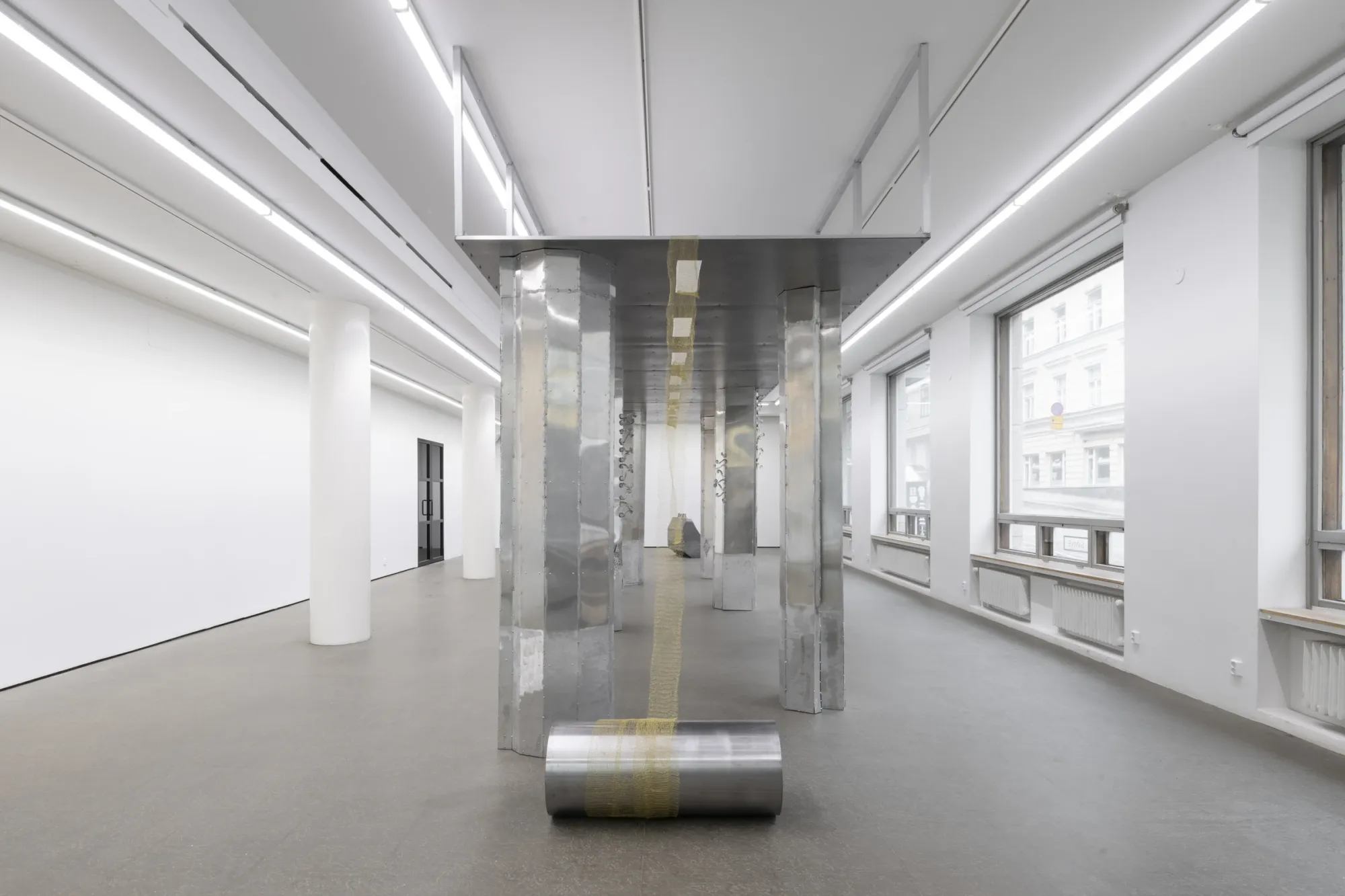
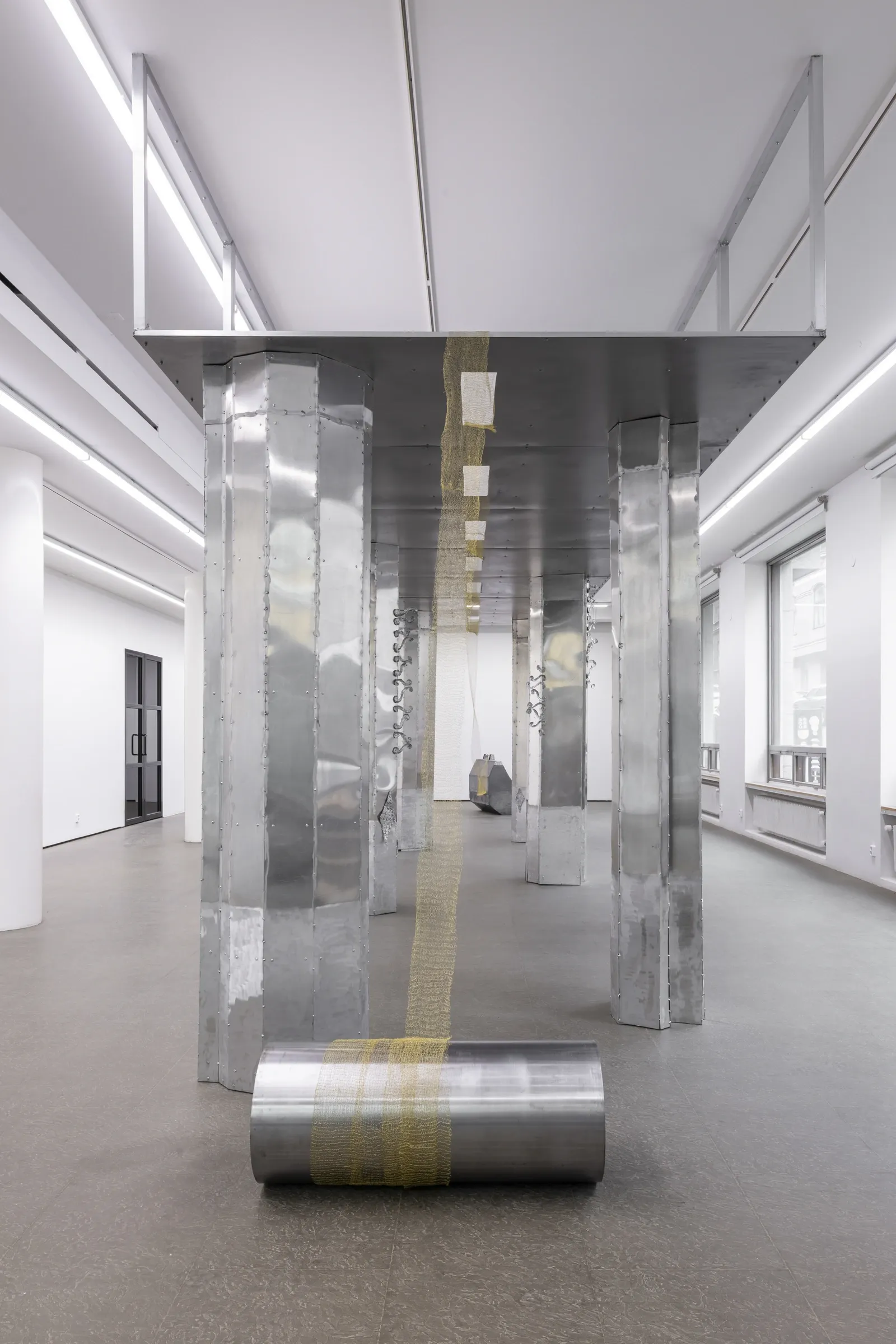
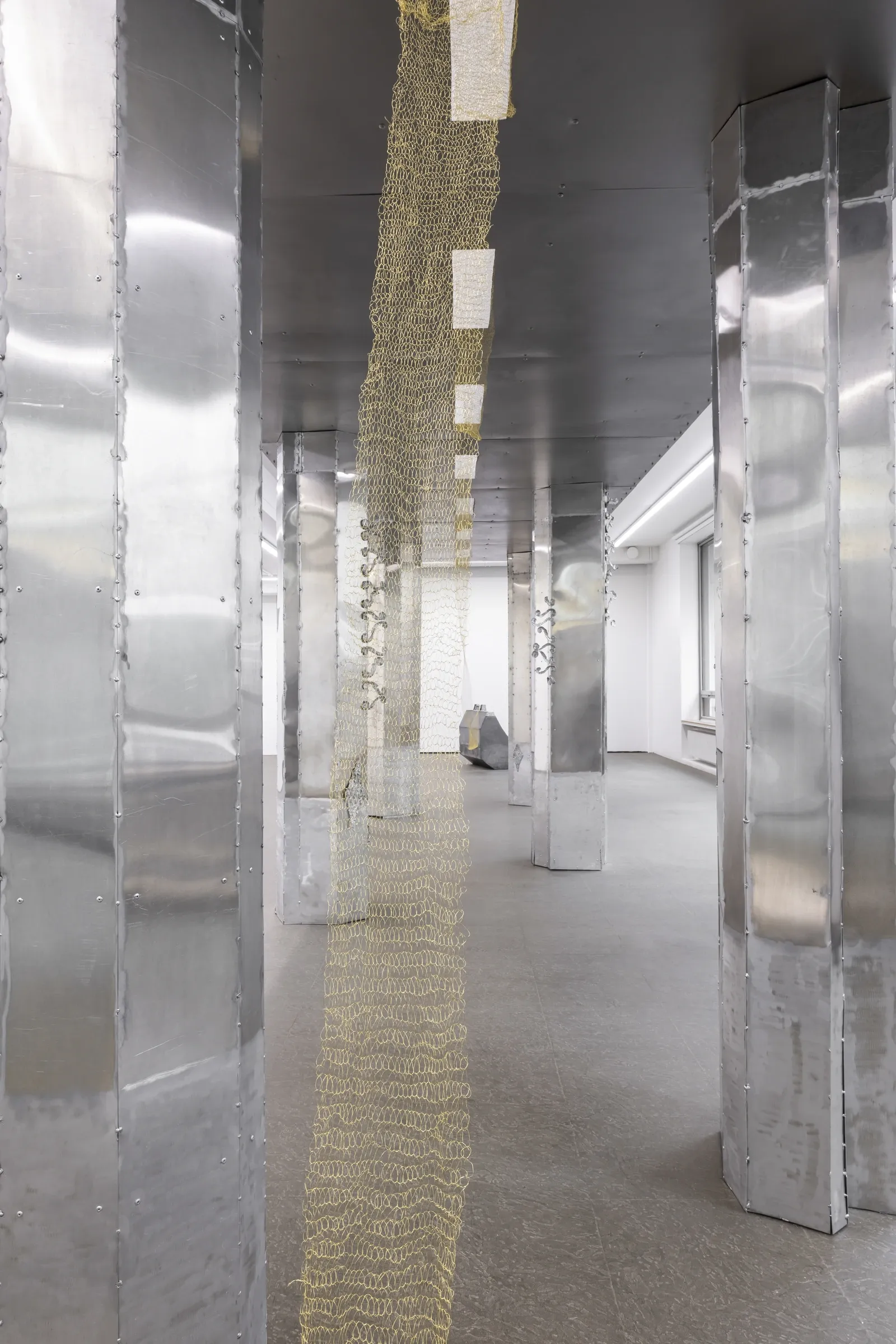
Maija Fox, Hard Shoulders, 2026, Sinne, Helsinki. Photo by Ahmed Alalousi. Courtesy the artist and Sinne.
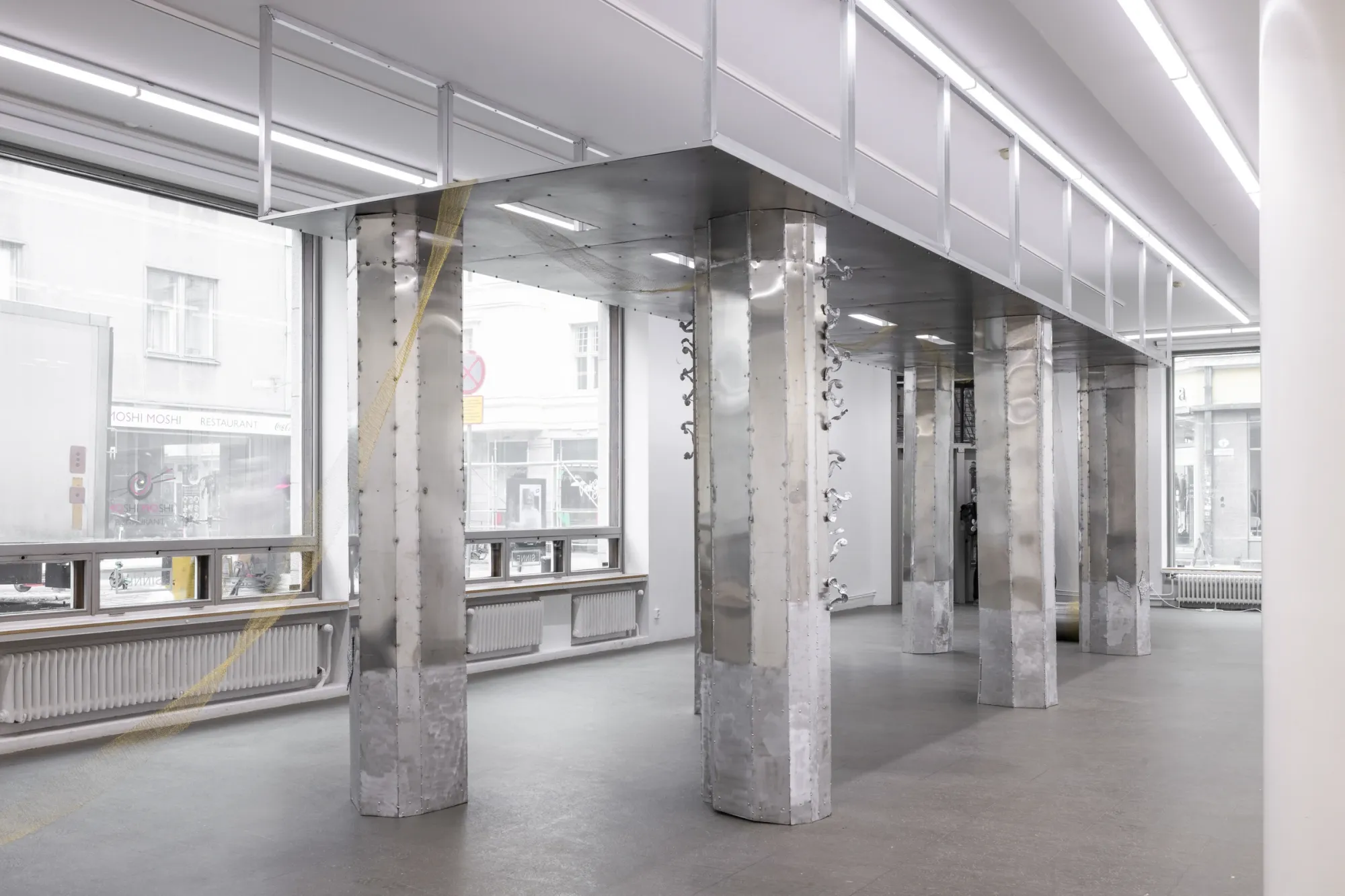
Fox’s installation still seems to point to a coincidence — that Hard Shoulders simultaneously carries a silence. Traffic on the asphalt road, the machines on the construction site, and the machinery in the factories have come to a standstill for a moment. She tentatively steers our gaze to one side, toward the ranunculus flowers and other wetland plants cast in aluminium. She awakens our senses to see the marsh that surrounds the entire construction.
Rosehip bushes stand bleached by exhaust fumes, while velvety mullein presses upward between the margins of the road. Like the coming and going of memories, fragments of tear plate and orange peel appear between the road and the swamp.
The flower of a white water-crowfoot rests on the water, while the rest of the plant reaches down and clings to a world beneath the surface. This fragile biotope and its slow processes become a manifestation of an existence outside the system.
Like thickets and climbing plants, the interknitted metal wire grows upward and, like a sturdy weed, penetrates the hard surface of the asphalt, becoming part of the road’s painted centre line. In the pockets of the knitting lie worn, empty key chains — memories of previous entries and of keys that once opened doors and gates, and which once started machines.
This textile dimension of the work is a break and a shift away from the monumental and robust that is forever seen as development and progress. These small intertwined fibres embody a different way of thinking based on responsiveness, care, and warmth.
The colossal construction becomes a lesson, a basis and fuel for something small to slowly and patiently grow into something that, we hope, will give us a sense of community, hope, and courage.
About Catapult
This is a Exhibiton Submission published by Catapult — an independent editorial platform for contemporary art, based in Vienna. We publish exhibition reviews, artist features, interviews, and critical context, with a focus on emerging and mid-career practices from Europe and beyond.
catapult.art
Want to be featured? Submit your work →