Neither Metaphor Nor Pet: A Preview

Lin May Saeed
Lin May Saeed
Kunsthalle Bern
Bern, Switzerland
-
Helvetiaplatz 1, CH-3005 Bern
Andy Keate; Wolfgang Günzel; Andrej Vasilenko
Courtesy of the estate of Lin May Saeed; Jacky Strenz, Frankfurt/Main
press@kunsthallebern.ch
Kunsthalle Bern Presents Lin May Saeed
There is a persistent assumption in Western visual culture that when an animal appears in a work of art, it is there to say something about us. It carries a symbol, or stands in for a condition, or decorates the margins of a narrative whose center is always human. What happens when that arrangement is simply refused?
The refusal, in the work of Lin May Saeed, is formal rather than polemical. It does not announce itself. It happens at the level of material, of composition, of how a figure is placed in relation to another figure, and what that placement implies about standing.
Saeed's animals are neither rescued nor romanticized. They occupy the same moral and spatial ground as the human figures beside them, and that, precisely, is the argument.
Kunsthalle Bern presents this posthumous survey at its Helvetiaplatz building, an institution with a sustained commitment to practice that operates at the intersection of formal and political argument.
The timing carries weight. Saeed, who died in 2023 shortly before the opening of her solo exhibition The Snow Falls Slowly in Paradise at the Georg Kolbe Museum in Berlin, left a body of work that has since traveled through GAMeC in Bergamo, Sapieha Palace in Vilnius, and Buitenplaats Kasteel Wijlre, each presentation extending the reach of a practice that had been building for nearly two decades.
Her works are held in the collections of the Centre Pompidou Paris, the National Museum of Art in Oslo, and the Museum Folkwang in Essen, among others.
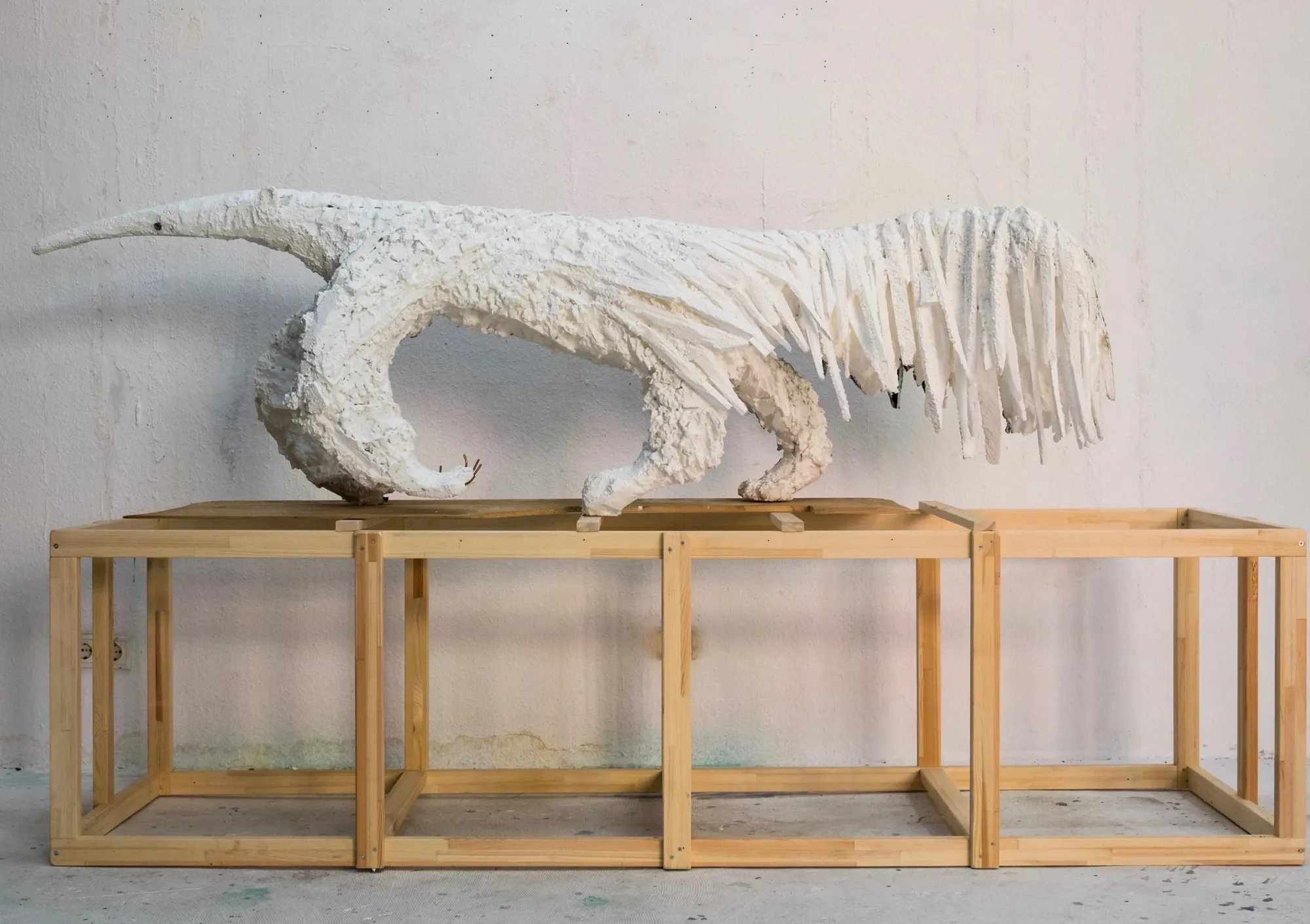
The Ameisenbär/Anteater from 2018 holds a kind of patient authority. Built from Styrofoam, steel, acrylic paint, and charcoal, the animal occupies its wooden platform in a stance that registers neither aggression nor submission.
The Styrofoam is not incidental, it is a material that carries no cultural prestige, and yet the form it takes here, this slow armored body with its improbable elongated snout, seems to require real attention before it gives anything back.
The work insists on being encountered rather than read.
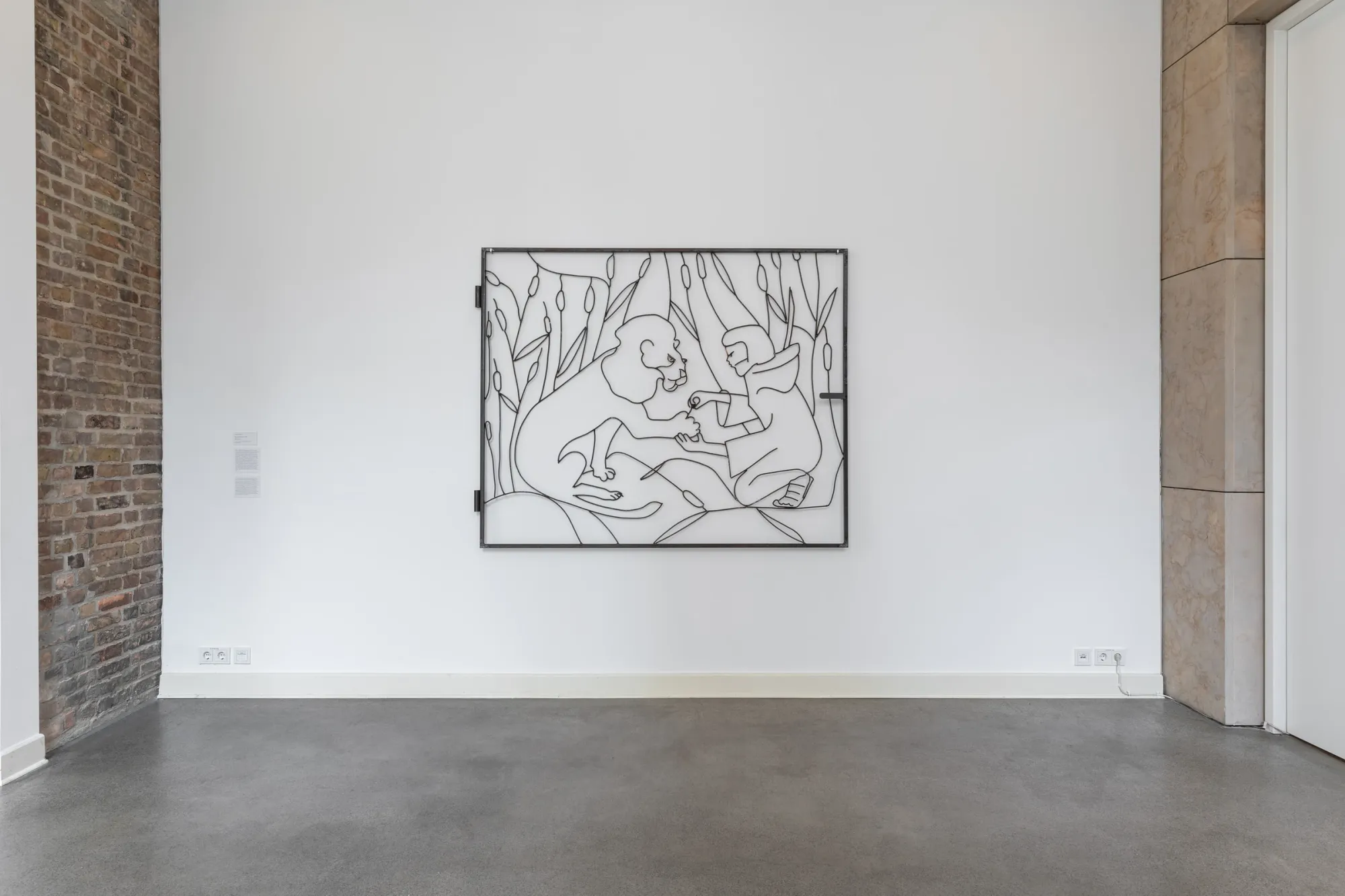
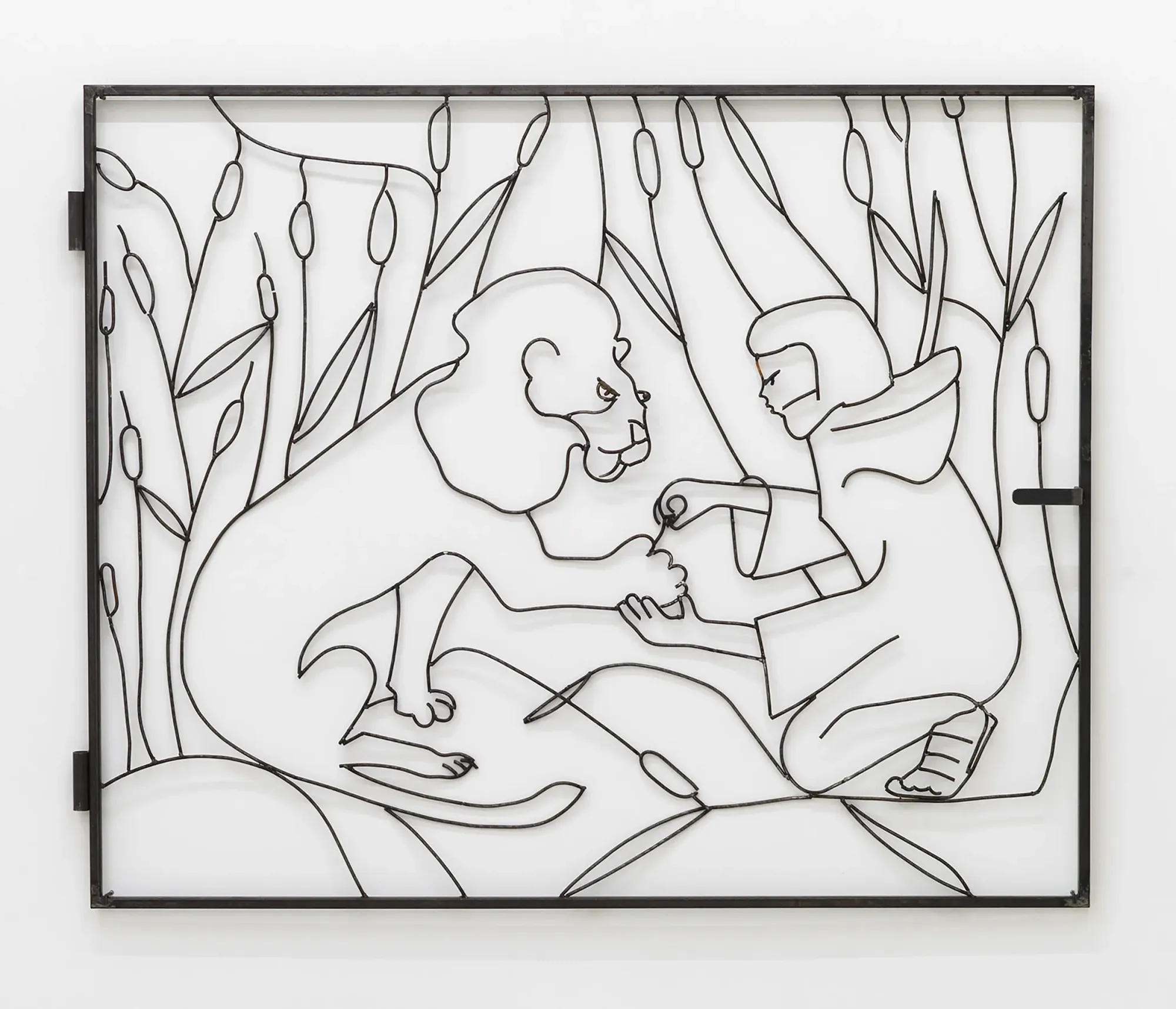
St. Jerome and the Lion from 2016 reaches into a specific iconographic tradition: the ascetic saint and the great cat, a pairing Western viewers will half-recognize from devotional painting where charity and hierarchy tend to run together.
Saeed renders both figures in bent steel, linear, transparent, each contour made from the same lacquered wire. The lion is no smaller and no less present than Jerome; the two share a plane where the usual distinction between subject and beast seems to have been quietly revoked.
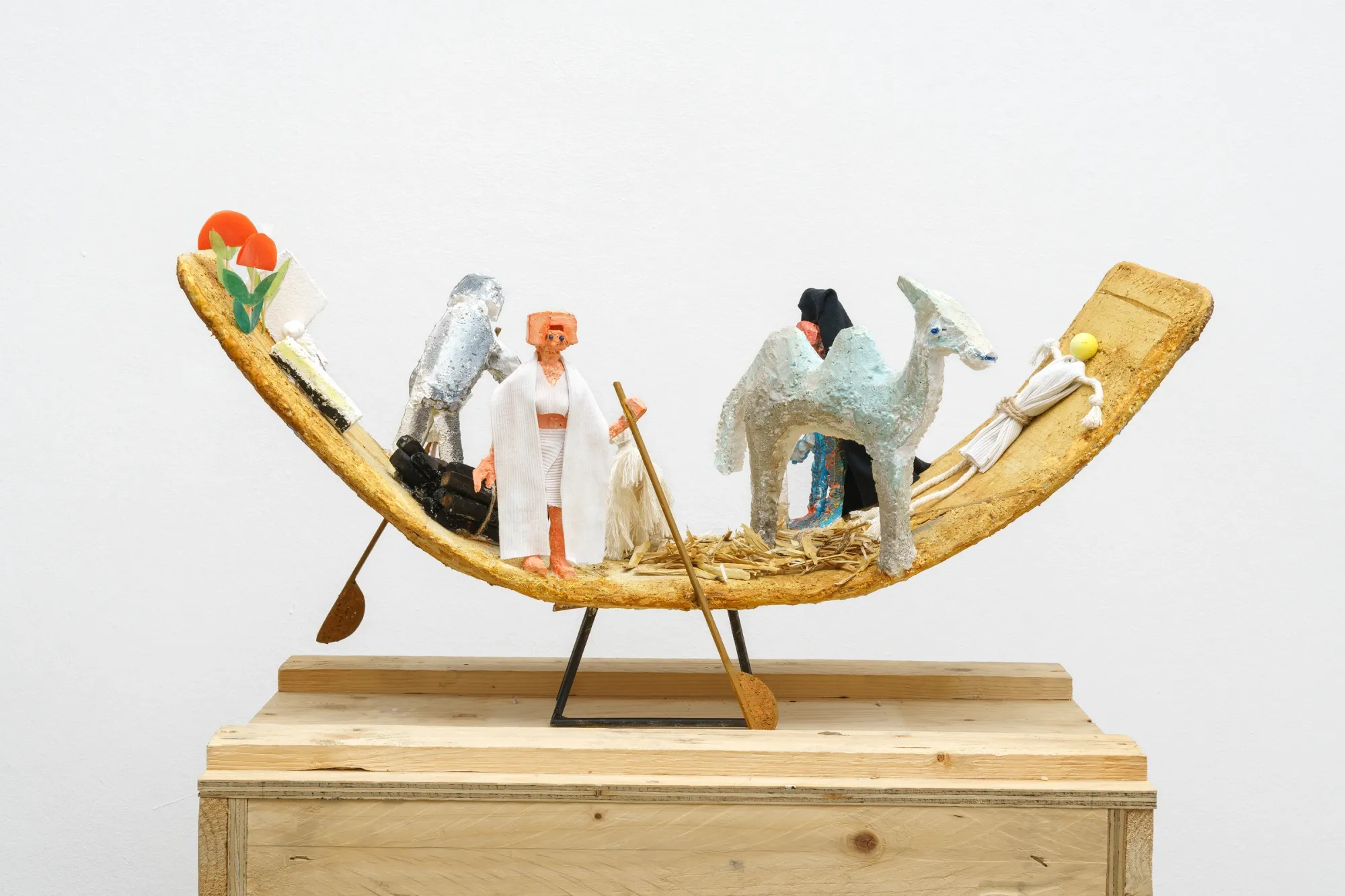
The Barque of 2021 stages a different kind of scene. A camel, a bird, and a robed figure share a crescent-shaped vessel built from steel, Styrofoam, wood, cotton, straw, hay, and paper, an ark that does not rank its passengers.
They hold their positions together, subject to the same drift. The work holds a question without resolving it: whether this arrangement was always possible, and what prevented it.
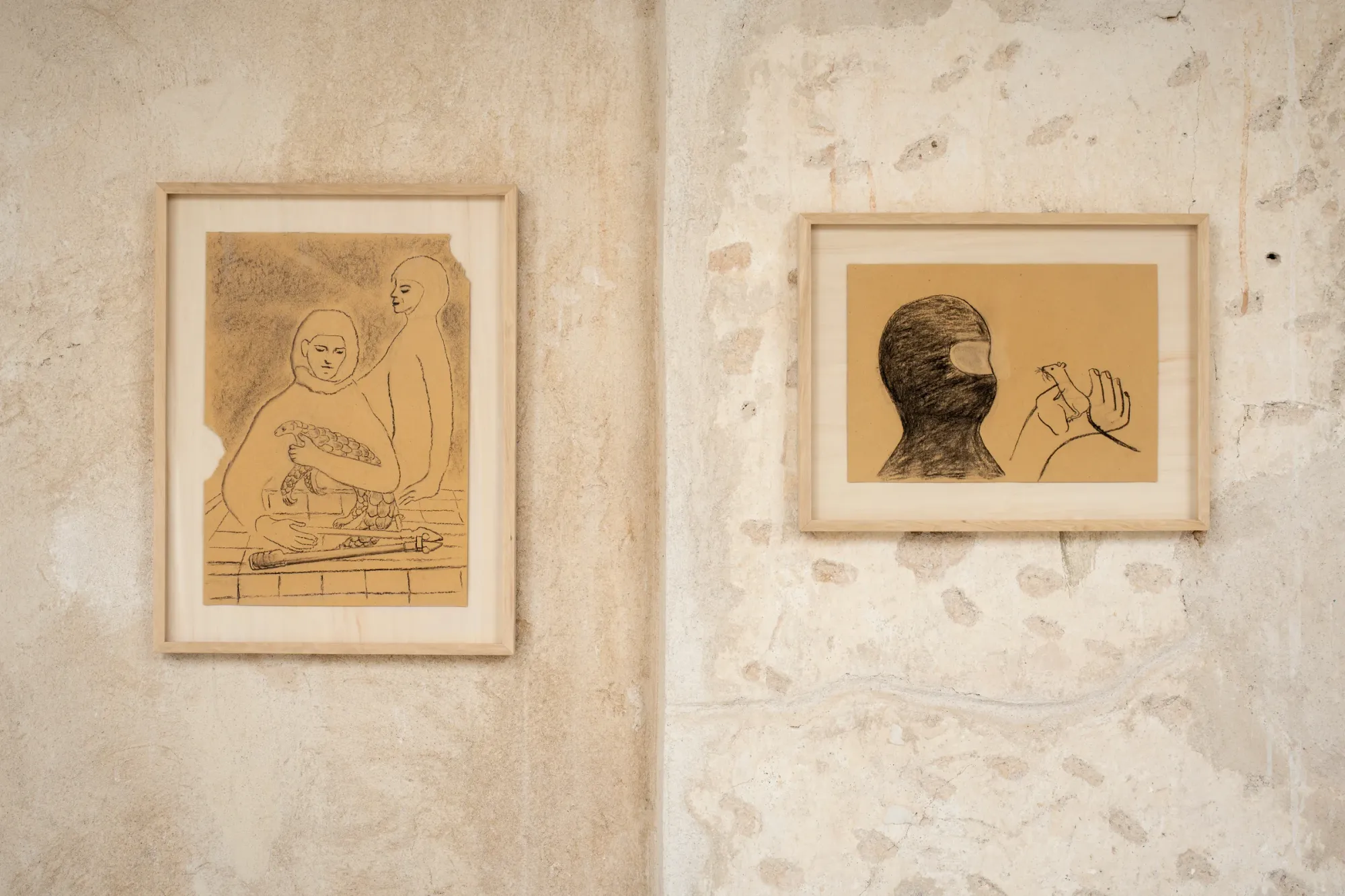
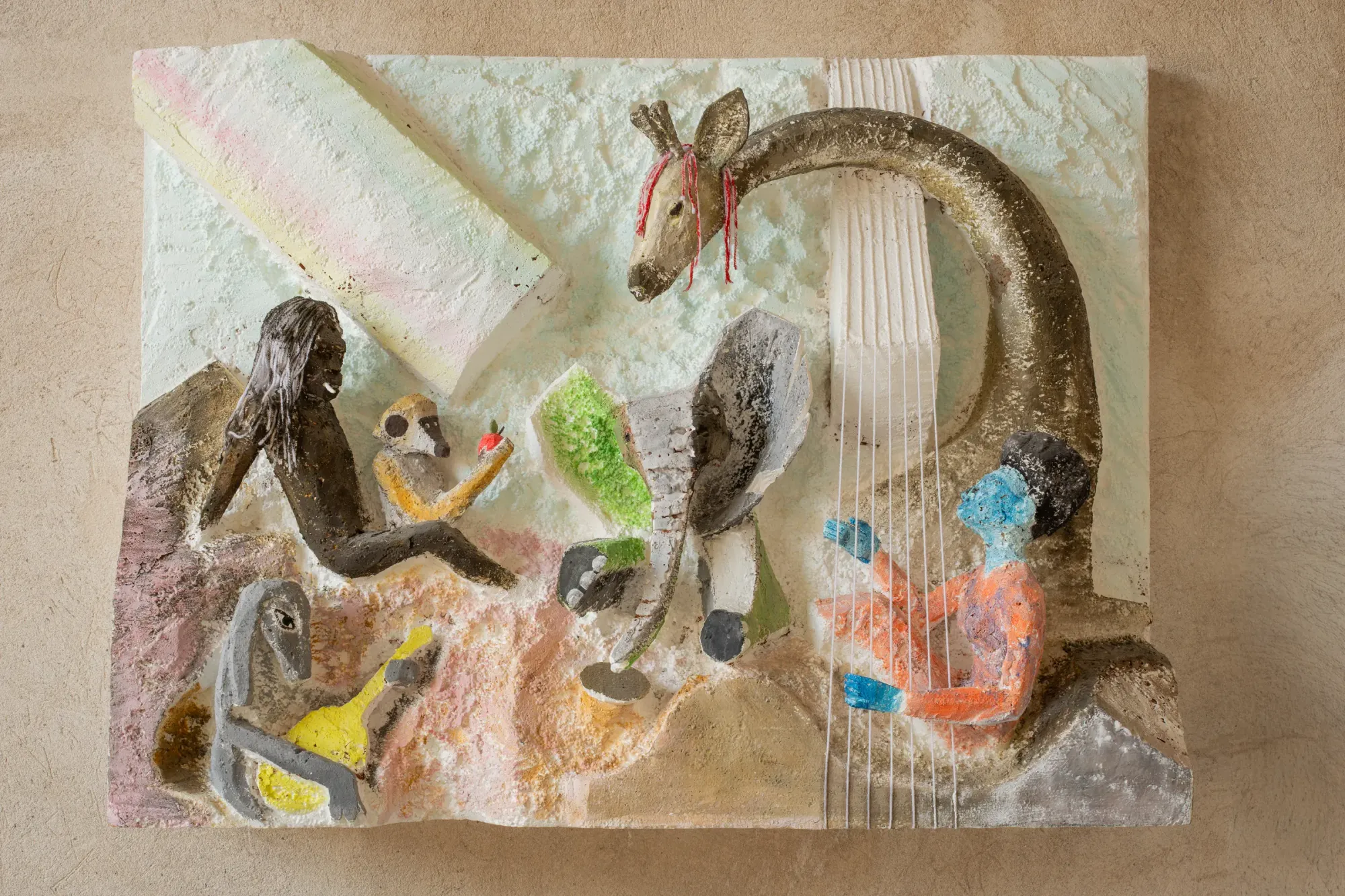
Debates around speciesism, the term itself remains contested, have grown considerably louder in the years since these works were made. Saeed's practice predates much of this recent urgency, which is part of what makes it interesting to encounter now.
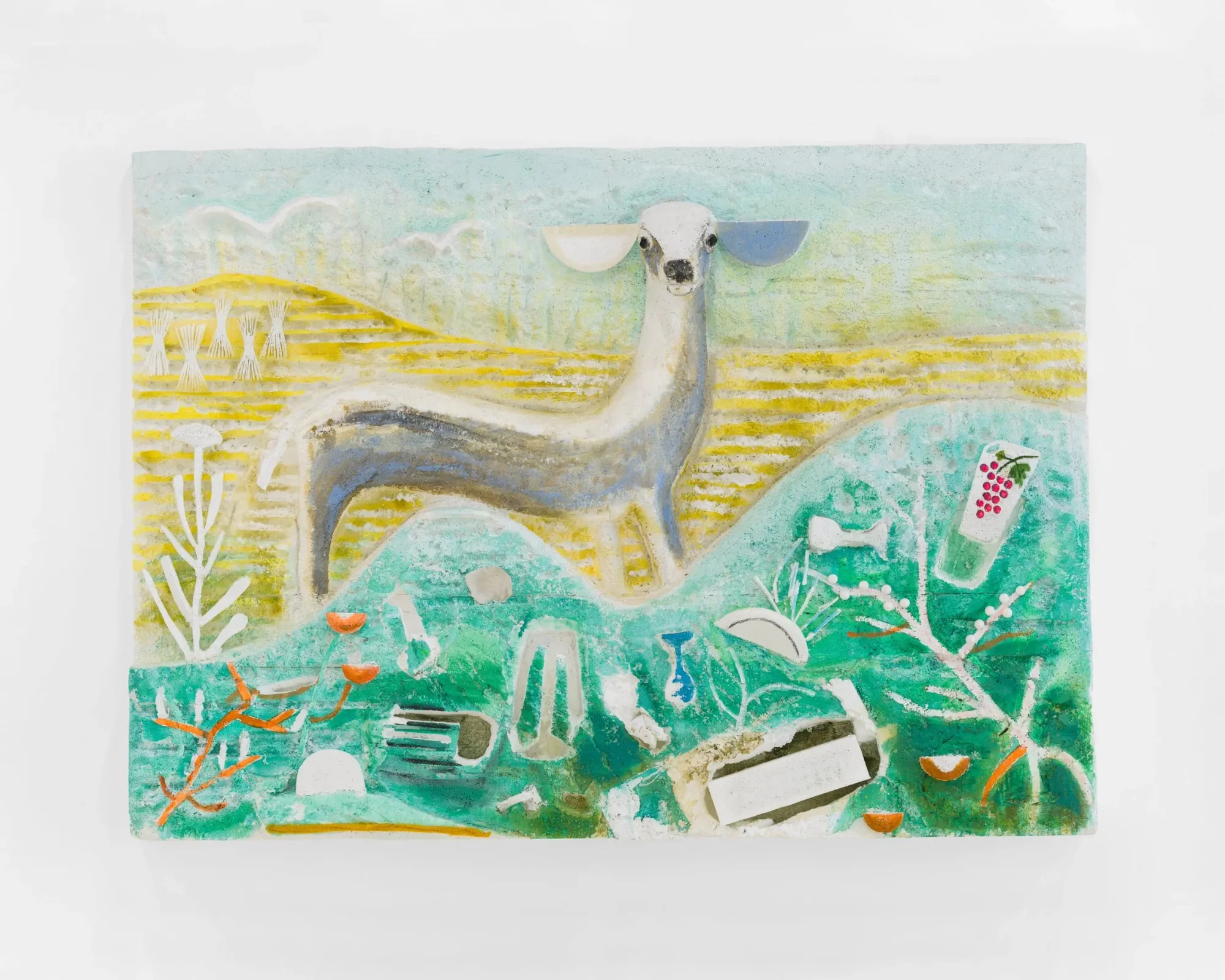
Ghazal Relief (V2) from 2022, a layered panel of Styrofoam, plaster, ceramics, and cotton balls, places a gazelle in a painted landscape alongside scattered human-scale detritus. The animal is not fleeing. It is not domesticated. It is simply there, amid the clutter of a world that has always been shared.
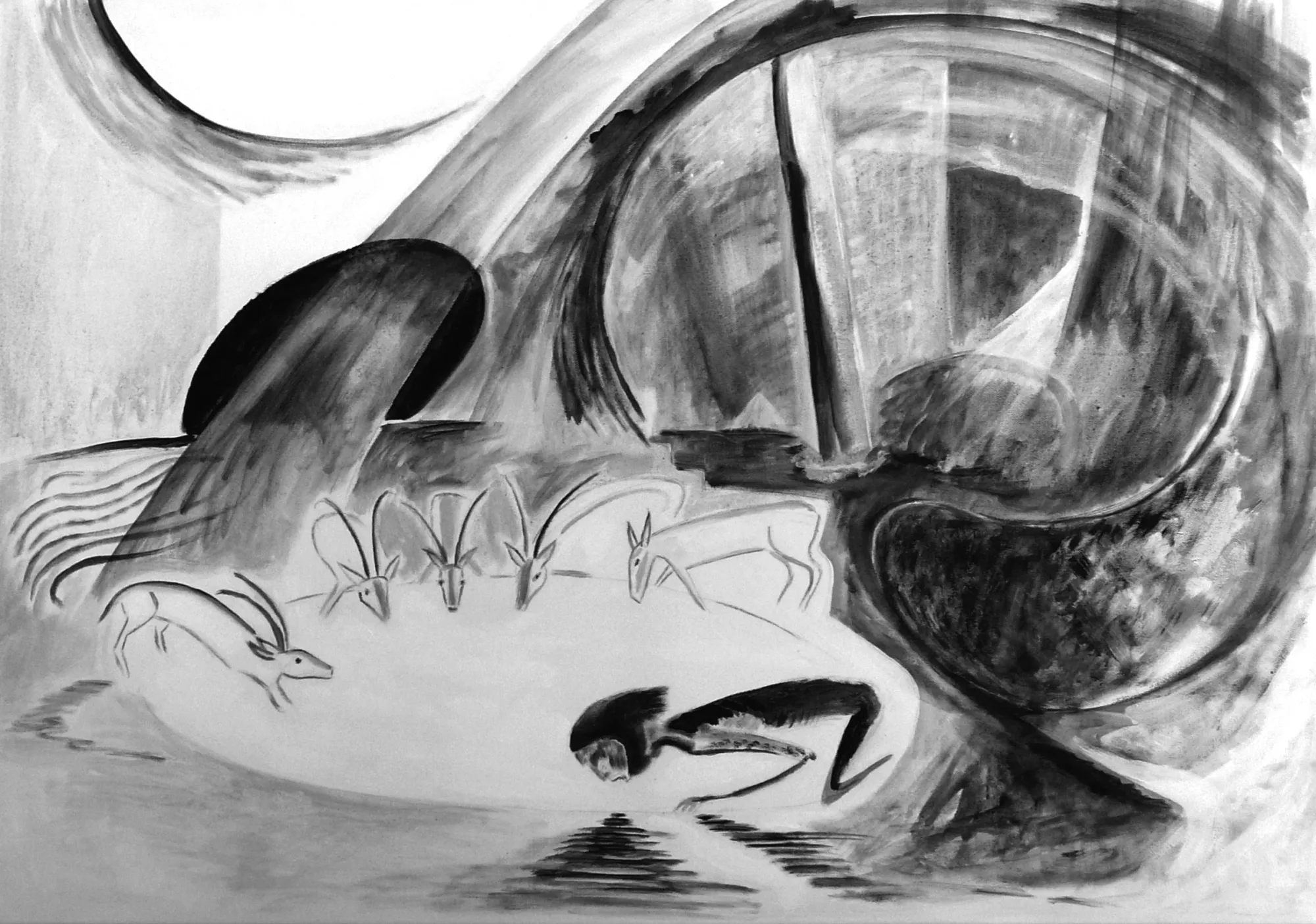
The earliest work in the presentation, the painted canvas Ekidu from 2007, shows that this was not a late position, it was a consistent formal commitment that ran through nearly everything Saeed made.
What the Bern exhibition offers, across its range of materials and years, is the record of someone working steadily on a problem most institutions were not yet prepared to take seriously.
Instagram Lin May Saeed
Kunsthalle Bern on Instagram