What If Neurological Pain Were Already a Deity?

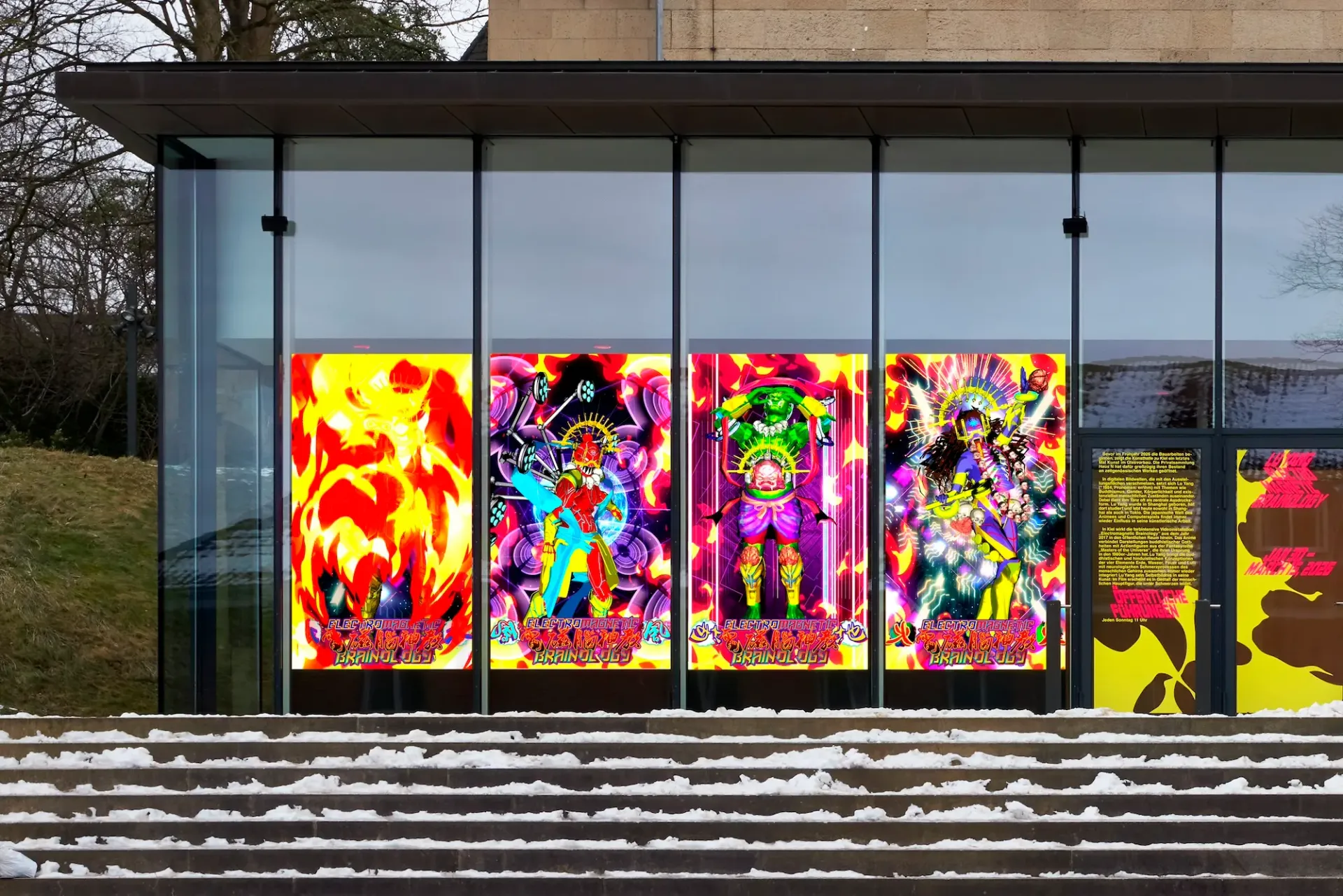
Lu Yang
Electromagnetic Brainology
Electromagnetic Brainology, 2017
5 Channel Animation, 00:13:34 min
Haus N Collection Kiel / Athens
#4 Pop-up Kunsthalle zu Kiel
Kiel, Germany
-
Düsternbrooker Weg 1, 24105 Kiel
Daily 6:00 a.m. – midnight
Free guided tours Sunday 11:00 a.m.
Lu Yang at Société, Berlin
Images courtesy of the artist, Haus N Collection Kiel / Athens and Kunsthalle zu Kiel.
Photography: Jan Brockhaus.
Video excerpt (file 4): Detail: Electromagnetic Brainology, 2017 (fire). Courtesy of the artist and Haus N Collection Kiel / Athens.
Video stills (files 15–18): Courtesy of the artist and Société gallery, Berlin.
Kunsthalle zu Kiel Presents Lu Yang -Electromagnetic Brainology at Glasvorbau, Kiel
Something holds in the space between medical terminology and cosmic mythology. Both systems try to name suffering. Both try to assign it a location in a larger order whether that order is the nervous system or the universe.
The four deities in Lu Yang's five-channel installation are not metaphors for disease. They seem to be the same thing, mapped onto different cosmological grids and the question of which grid is more real remains deliberately unanswered.
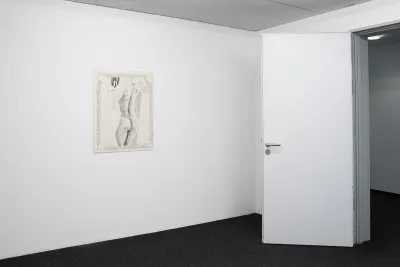
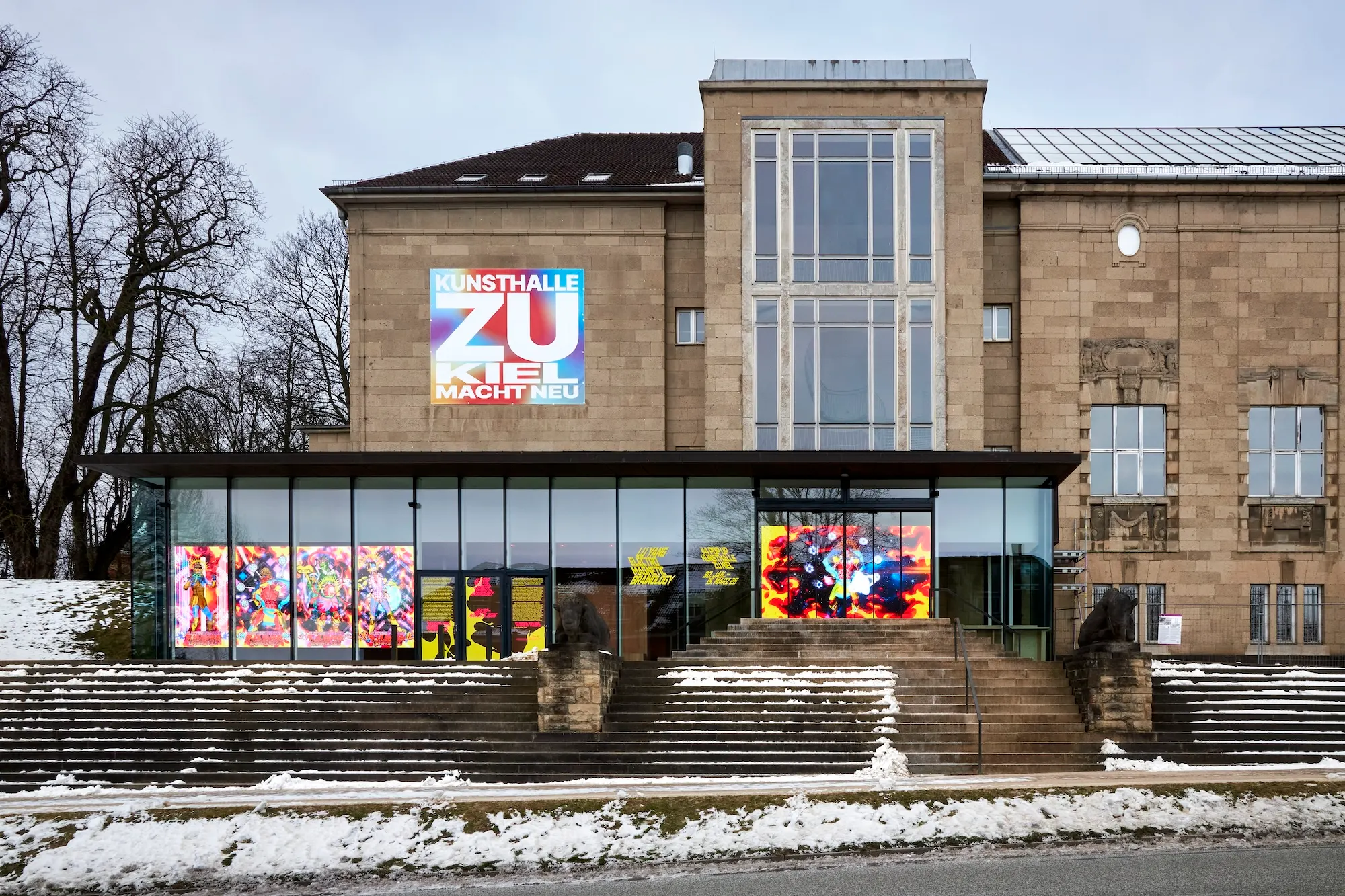
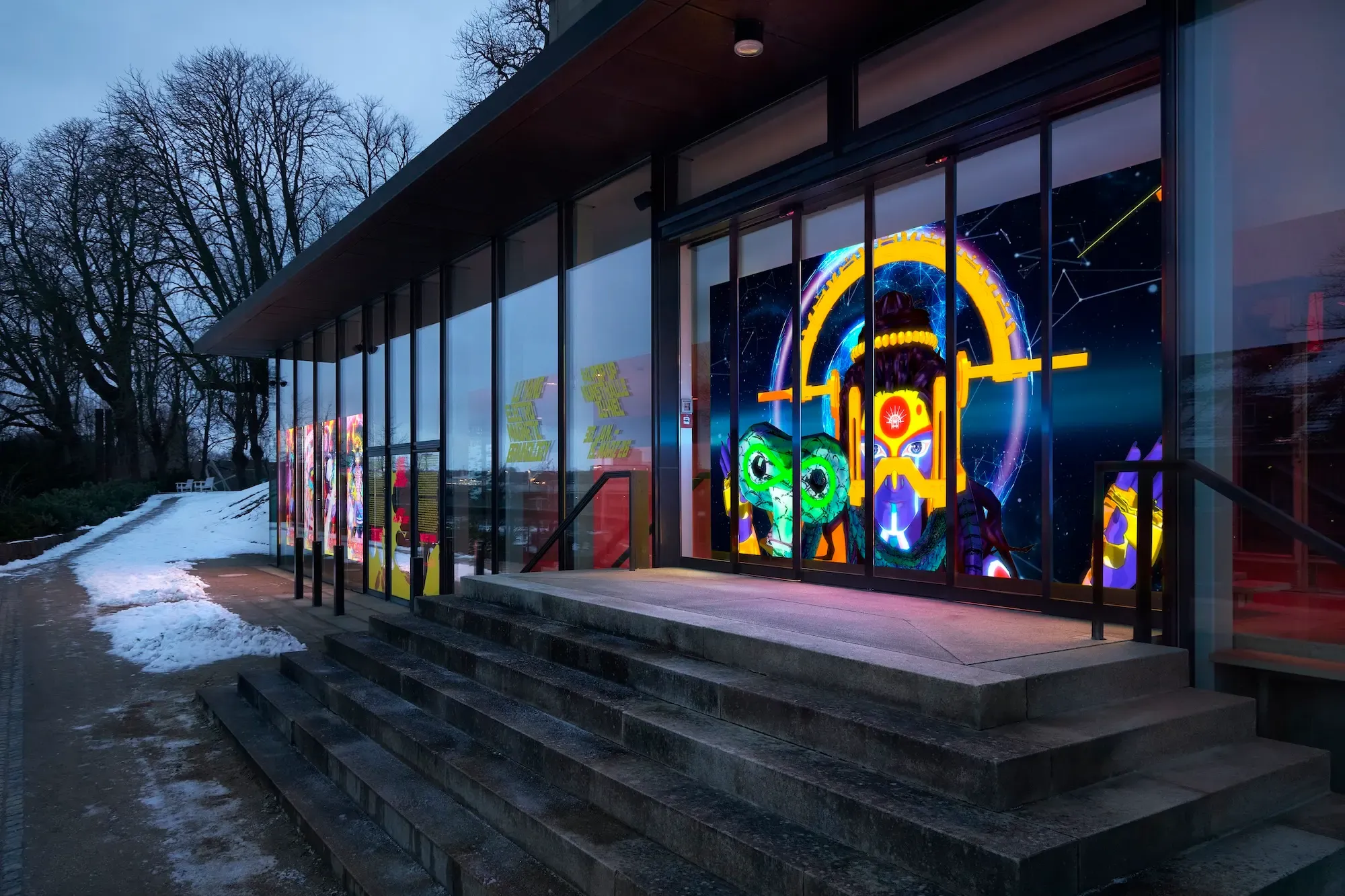
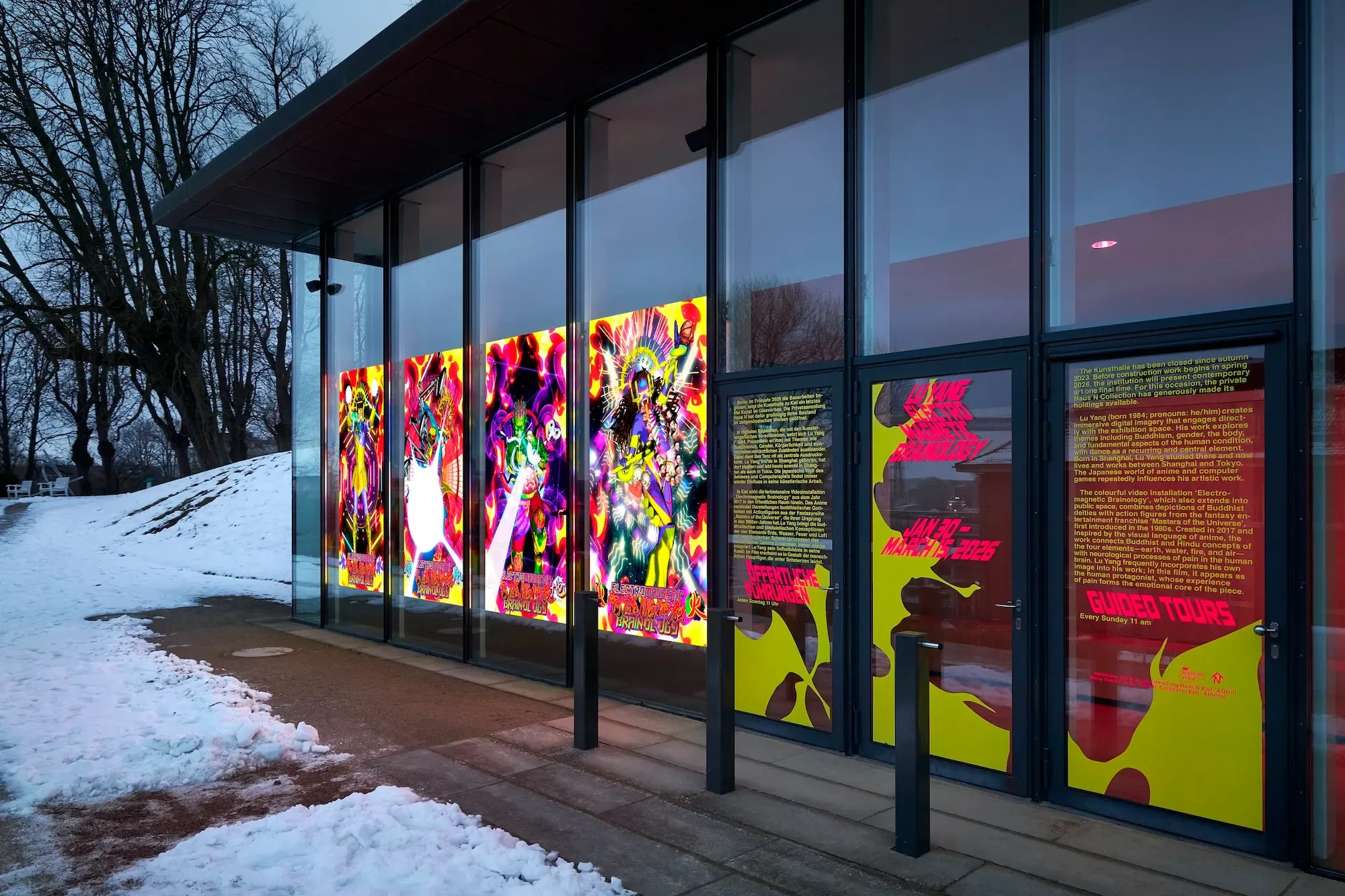
The glass vestibule at Düsternbrooker Weg 1 is not a conventional gallery space. Since September 2023, the Kunsthalle zu Kiel has been closed for renovation, its exhibitions relocated to external venues across the city.
Electromagnetic Brainology occupies the institution's glass entrance structure visible from the street at any hour, accessible from 6 a.m. to midnight, suspended between architecture and public infrastructure. The Kunsthalle has framed this as the institution's final presentation before construction begins in spring 2026: a last exhibition before the building gives way to scaffolding, staged in a threshold.
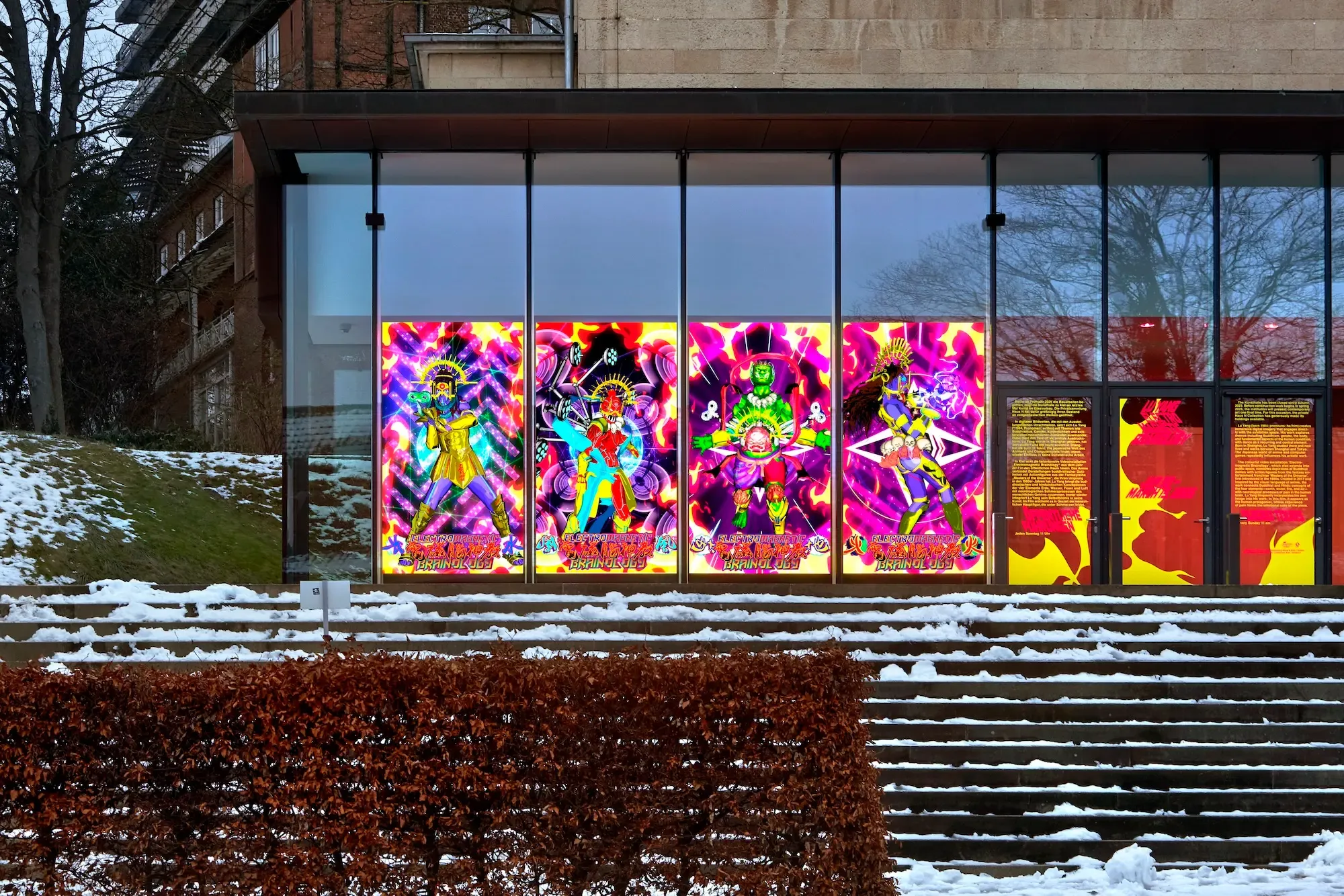
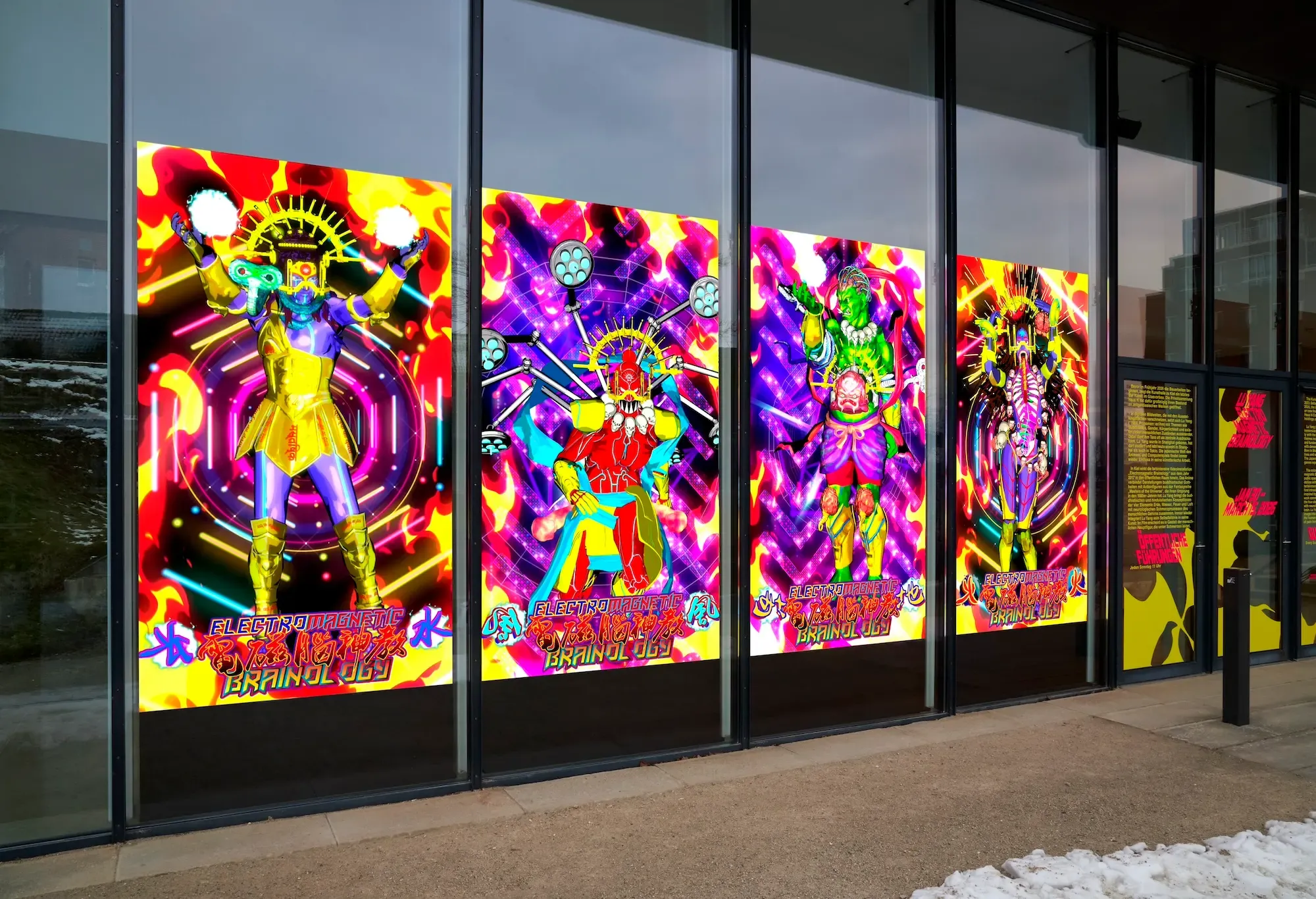
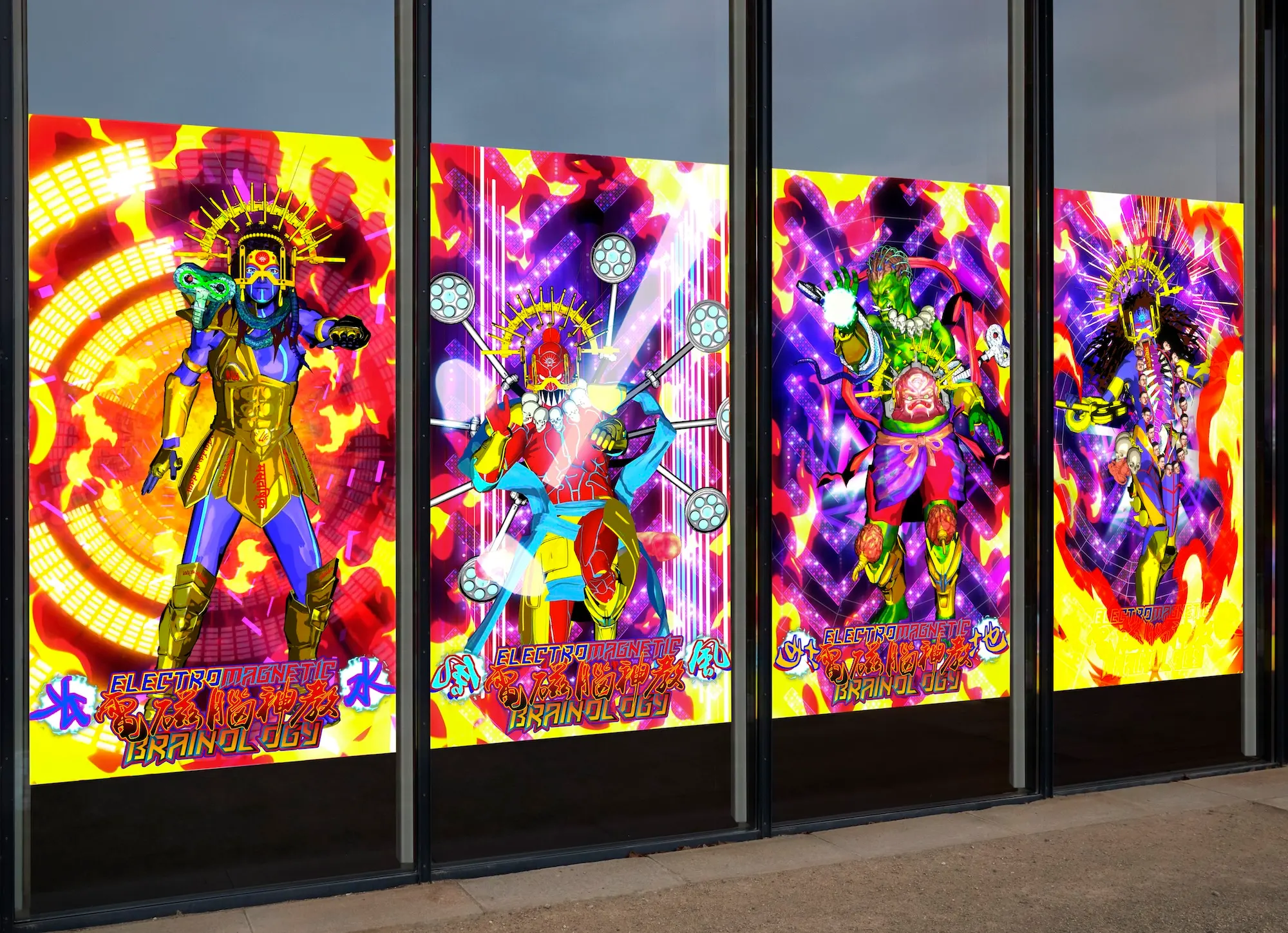
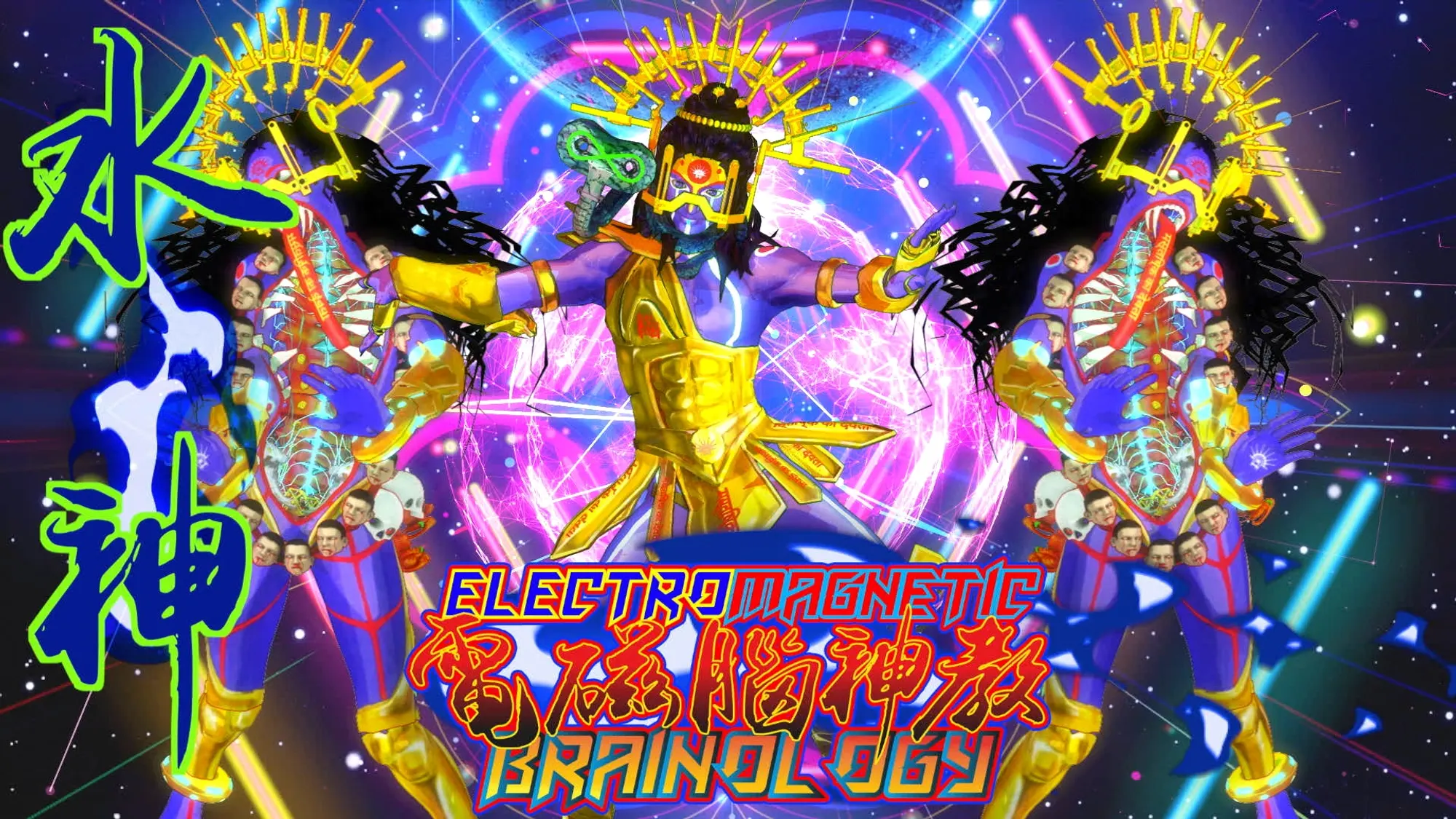
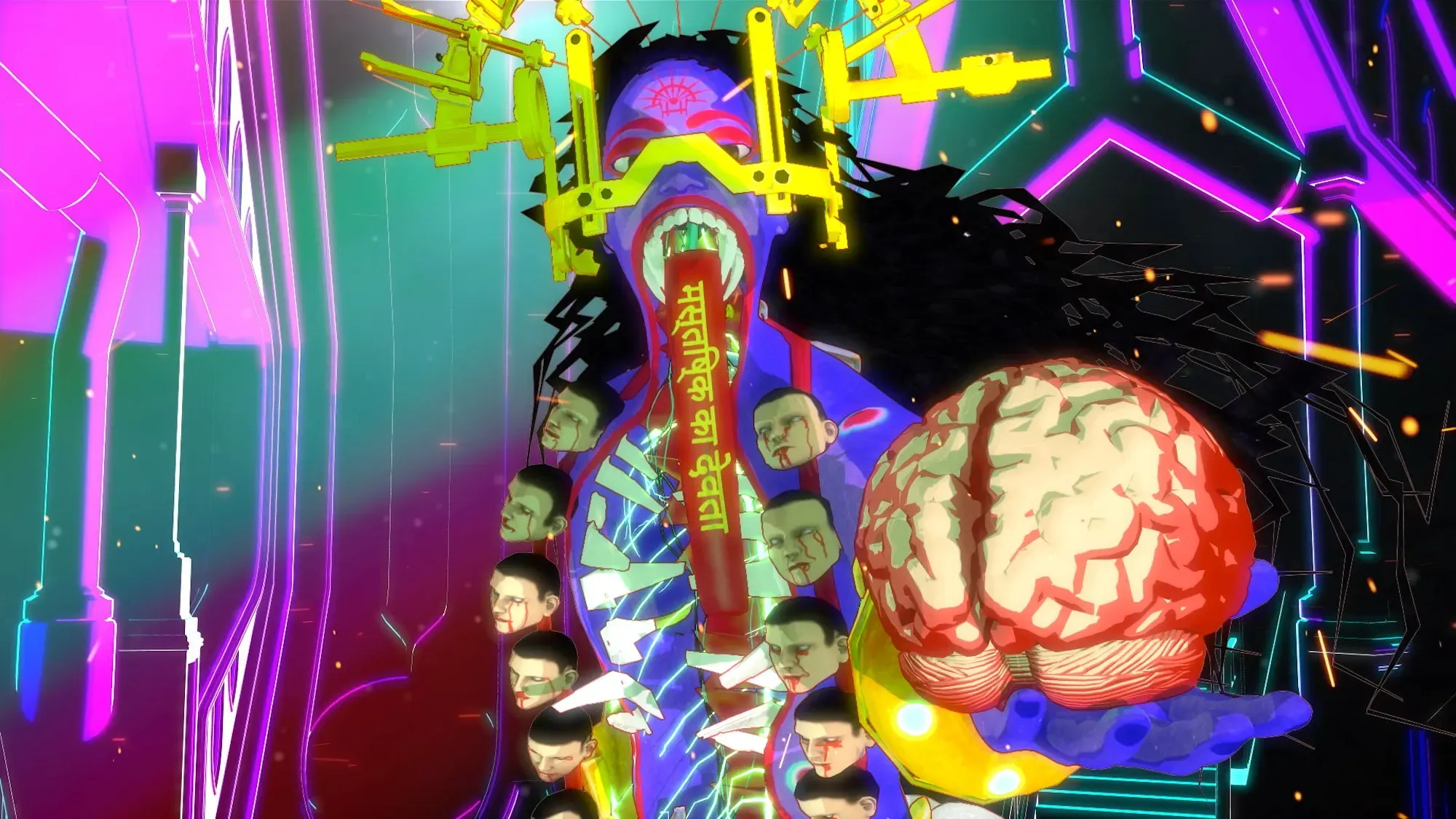
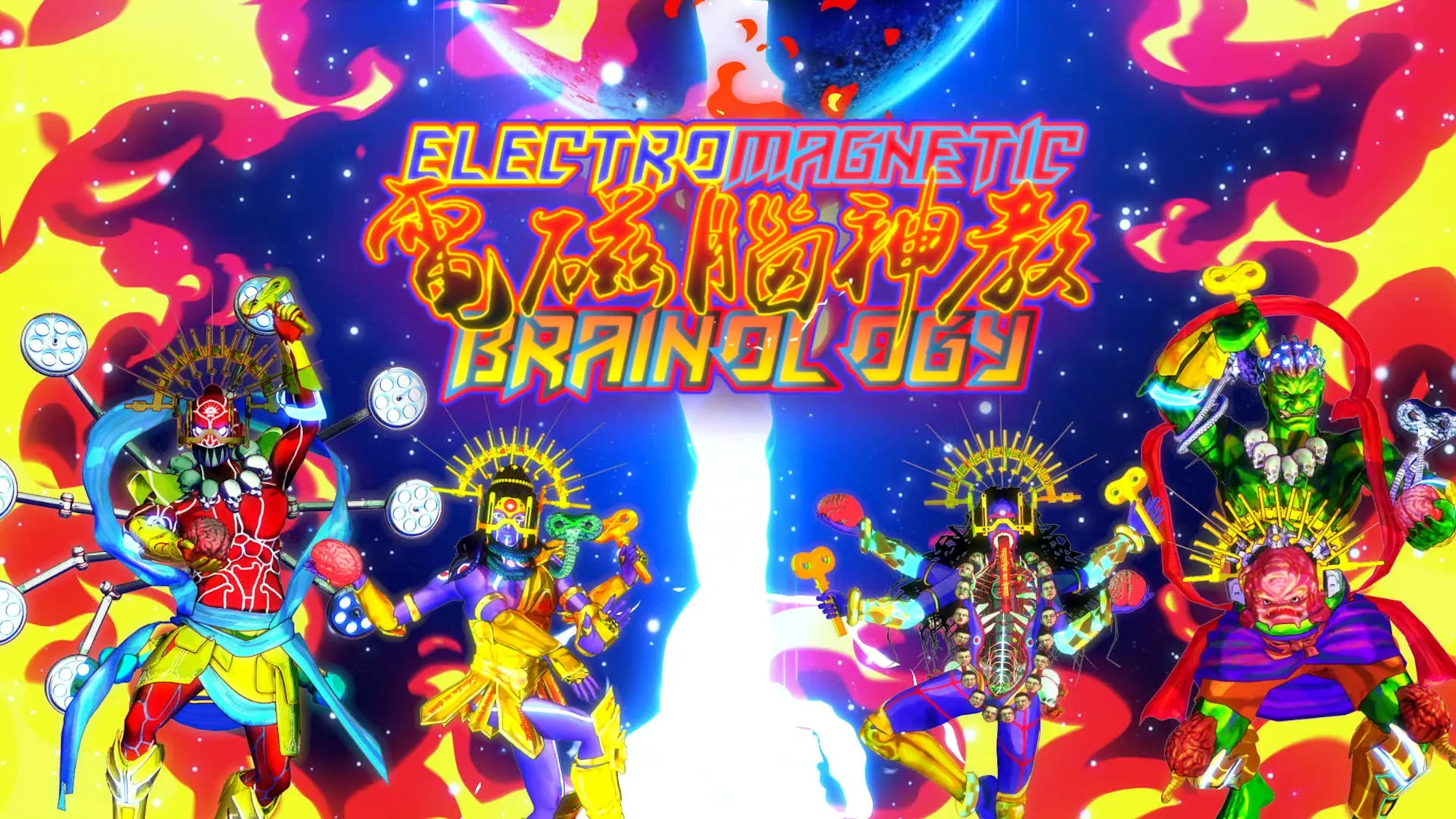
Created in 2017, Electromagnetic Brainology is a five-channel video installation running approximately thirteen minutes. Four deities built from Hindu and Buddhist iconography, their forms carrying resemblances to Shiva, Kali, and the Buddhist demon Yecha move across multiple screens in neon-saturated colour, their choreography hovering somewhere between religious ritual and arcade game combat.
Each deity corresponds to one of the four major diseases of the human nervous system; each is simultaneously aligned with one of the four classical elements: earth, water, fire, air. Parkinson's disease, for instance, appears alongside an elemental correspondence drawn from the Vimalakirti Sutra.
The work seems to hold that these two frameworks neurological medicine and ancient cosmology share an interest in locating the sources of human suffering, rather than simply standing as analogies for each other. The installation sits inside this convergence rather than resolving it.
The deities are non-binary avatars shaped in the visual language of Japanese anime and colour-intensive arcade games. They move to an electronic soundtrack by Invisible Manners, a Tokyo-based J-Pop production team. The aesthetic register is deliberately synthetic neon-lit, plastic in its texture, a visual dialect usually associated with fantasy entertainment and consumer spectacle. Within this register, a human figure recurs: Lu Yang's own self-portrait, occupying the role of the protagonist in pain.
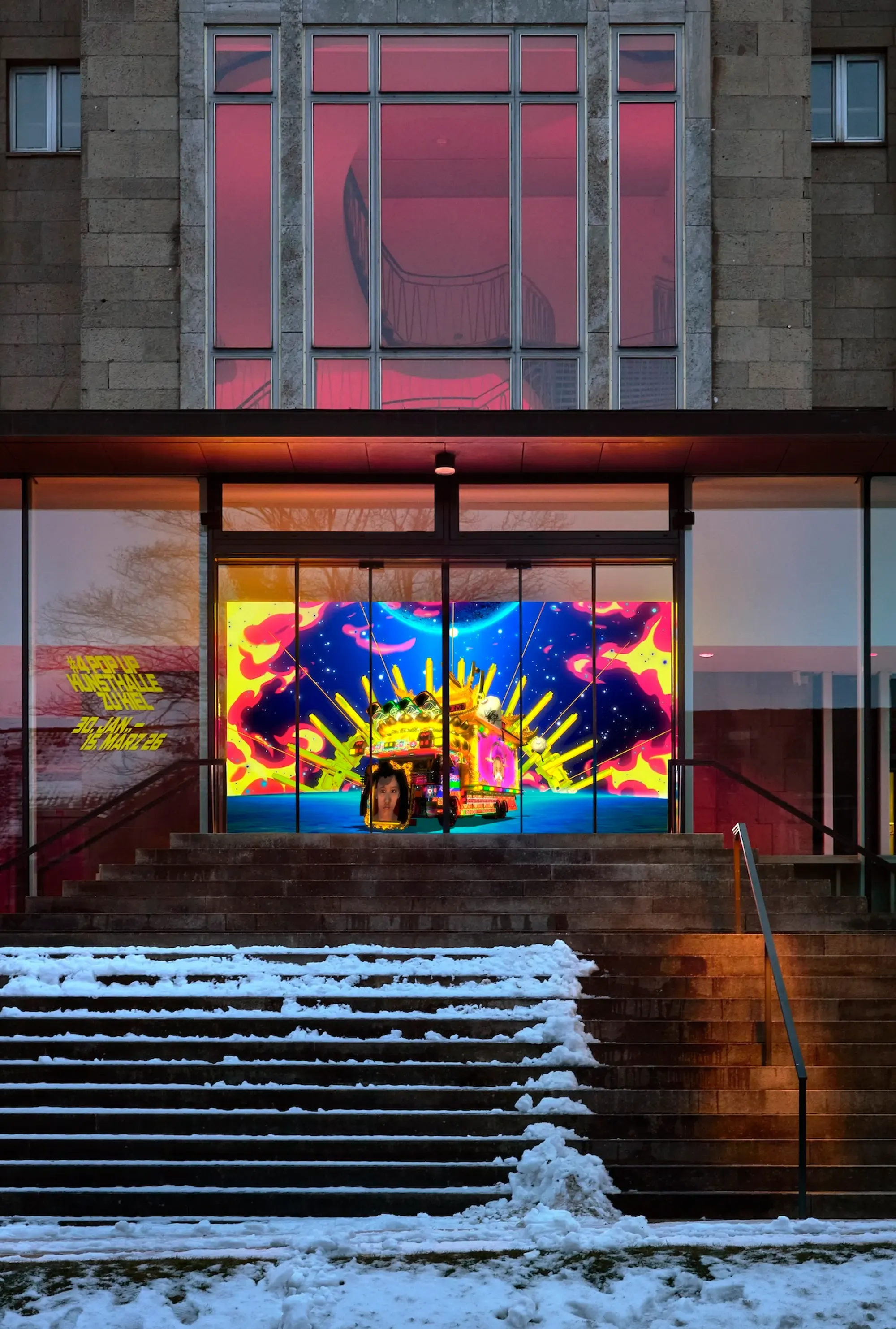
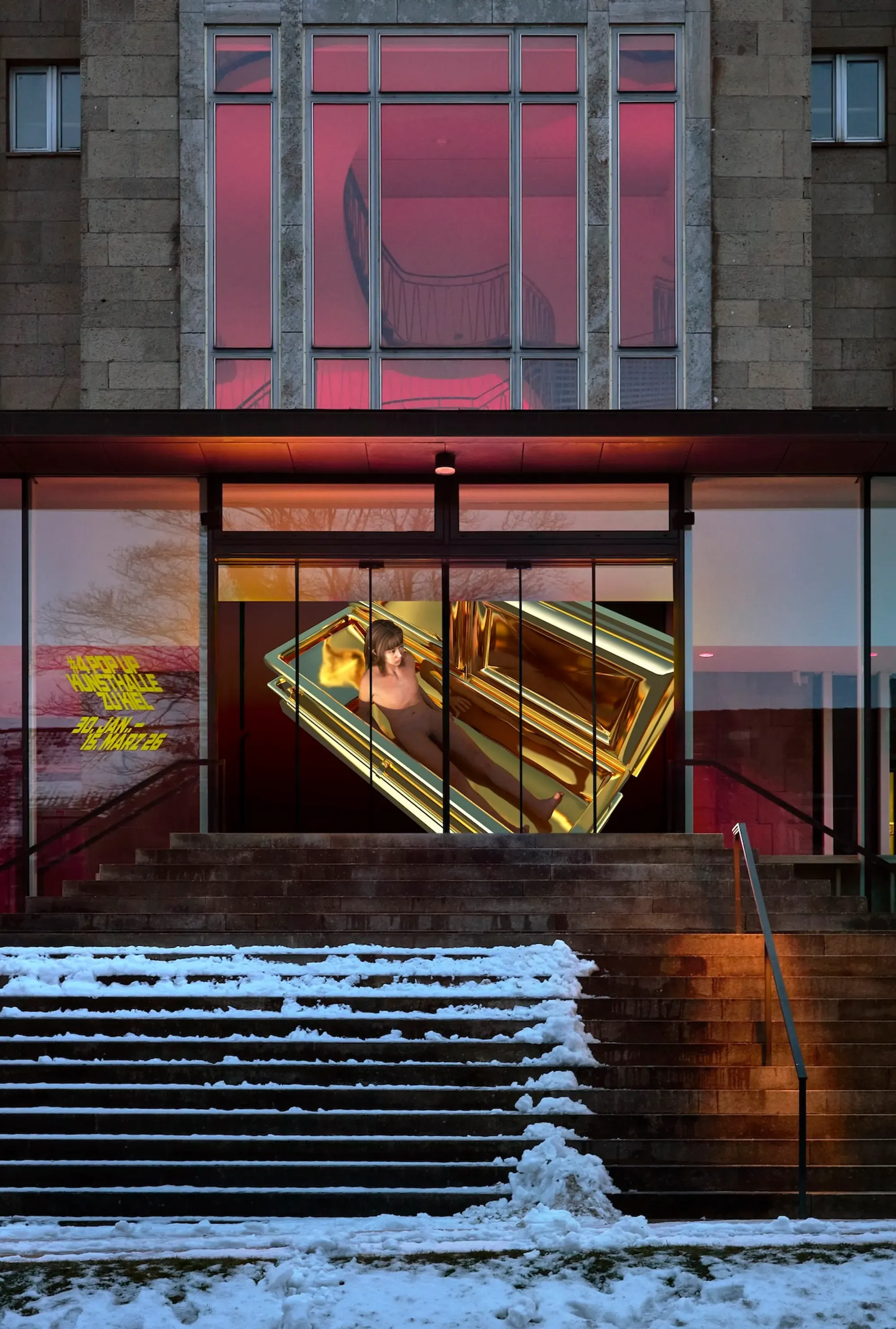
Lu Yang: Electromagnetic Brainology, Kunsthalle zu Kiel (Glasvorbau), Kiel, 30 January – 15 March 2026. Lu Yang, Electromagnetic Brainology, 2017. 5-channel animation, 00:13:34 min. Haus N Collection Kiel / Athens. Courtesy of the artist, Haus N Collection Kiel / Athens and Kunsthalle zu Kiel. Photography: Jan Brockhaus.
The five-channel format distributes the work across screens, producing an encircling field rather than a single frontal image. The pacing holds both registers at once, fast cuts characteristic of music video alongside looped elemental imagery, recurring formal patterns that accumulate meaning through repetition rather than through narrative resolution.
The question of what constitutes a body, and who gets to design one, has become difficult to separate from questions of technology and representation. Lu Yang has worked at this intersection for over a decade, producing video installations, live motion capture performances, and avatar-based works that consistently refuse stable categories of gender and selfhood. Electromagnetic Brainology finds particular resonance at a moment when AI-generated avatars and digital identity construction have passed from speculation into daily use, and when the idea of pain as data, mappable, classifiable, potentially optimisable, circulates through both medicine and consumer technology.
The posthuman subject proposed here, genderless and in pain, elevated into iconography while still suffering, seems less a forecast than a diagram of something already underway.
Whether the deities in Electromagnetic Brainology embody pain or transcend it, the installation holds both possibilities open.
Lu Yang on Instagram
Kunsthalle Kiel on Instagram
Notable Works and Exhibition Views

Related Readings
No spam, no sharing to third party. Only you and me.