The Middle Finger as Serious Argument

Joan Pallé
Els joves infeliços / Unhappy Youth
Sjors Bindels
Centre d'Art La Panera
Lleida, Spain
-
Free
Roberto Ruiz
Courtesy Centre d'Art La Panera
Centre d'Art La Panera Presents Joan Pallé's Unhappy Youth in Lleida
There is a specific unhappiness that comes not from ignorance but from clarity. When you can name the mechanism, describe its architecture, trace its logic, and find yourself still inside it. This is not the unconsciousness Pier Paolo Pasolini diagnosed in Italian youth fifty years ago. It is something harder to metabolize.
Pasolini argued that his generation's cardinal sin was the submissive acceptance of consumer society, and that their children were condemned to pay for it. What he could not anticipate was a generation for whom the inheritance arrives pre-labeled, legible from the start, and no less inescapable for it.
The problem is not that today's youth can't see the trap. The problem is that seeing it doesn't help.
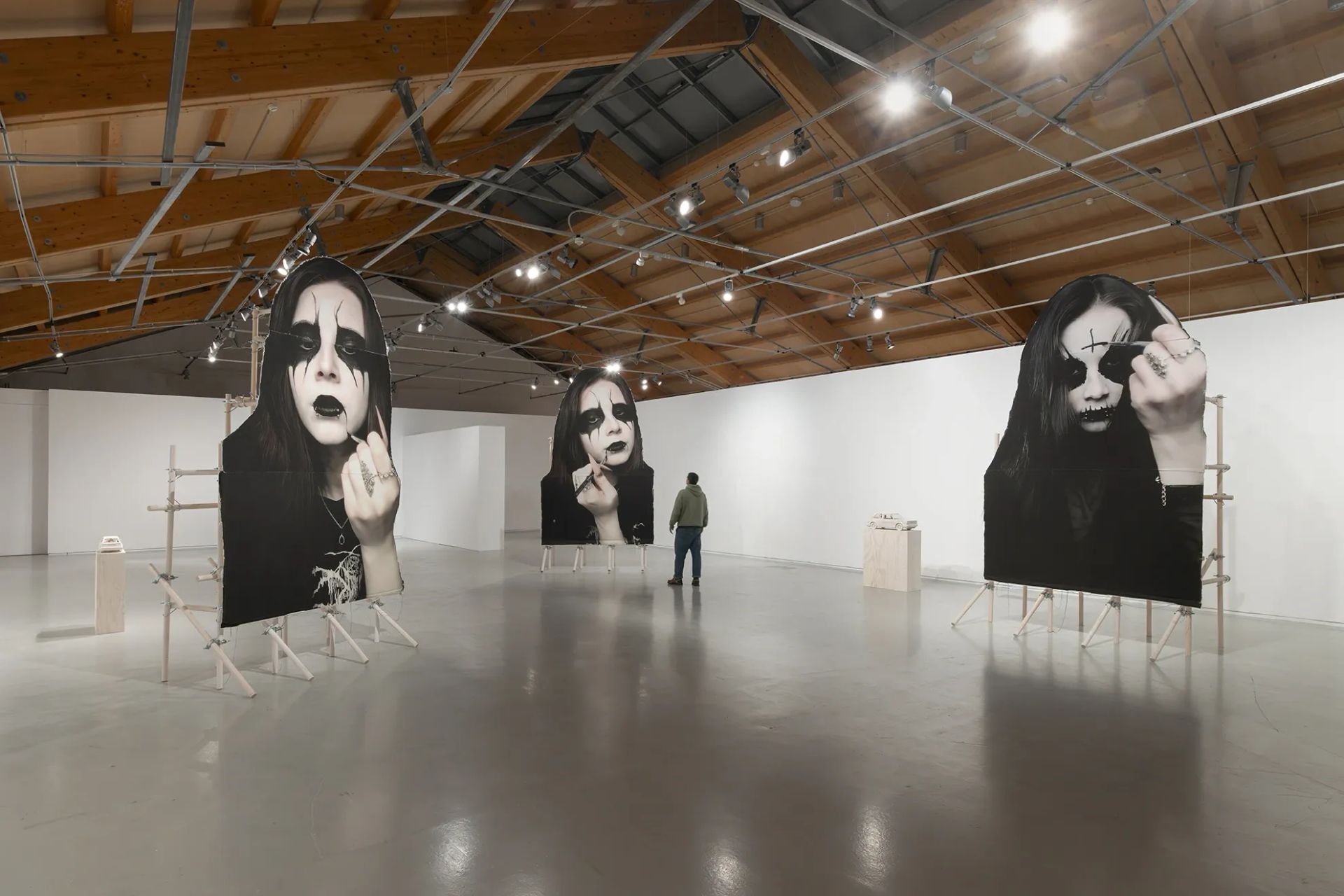
Centre d'Art La Panera occupies a large industrial hall in Lleida, Pallé's hometown, with exposed wooden beams overhead and a floor that holds the exhibition's contradictions without resolving them.
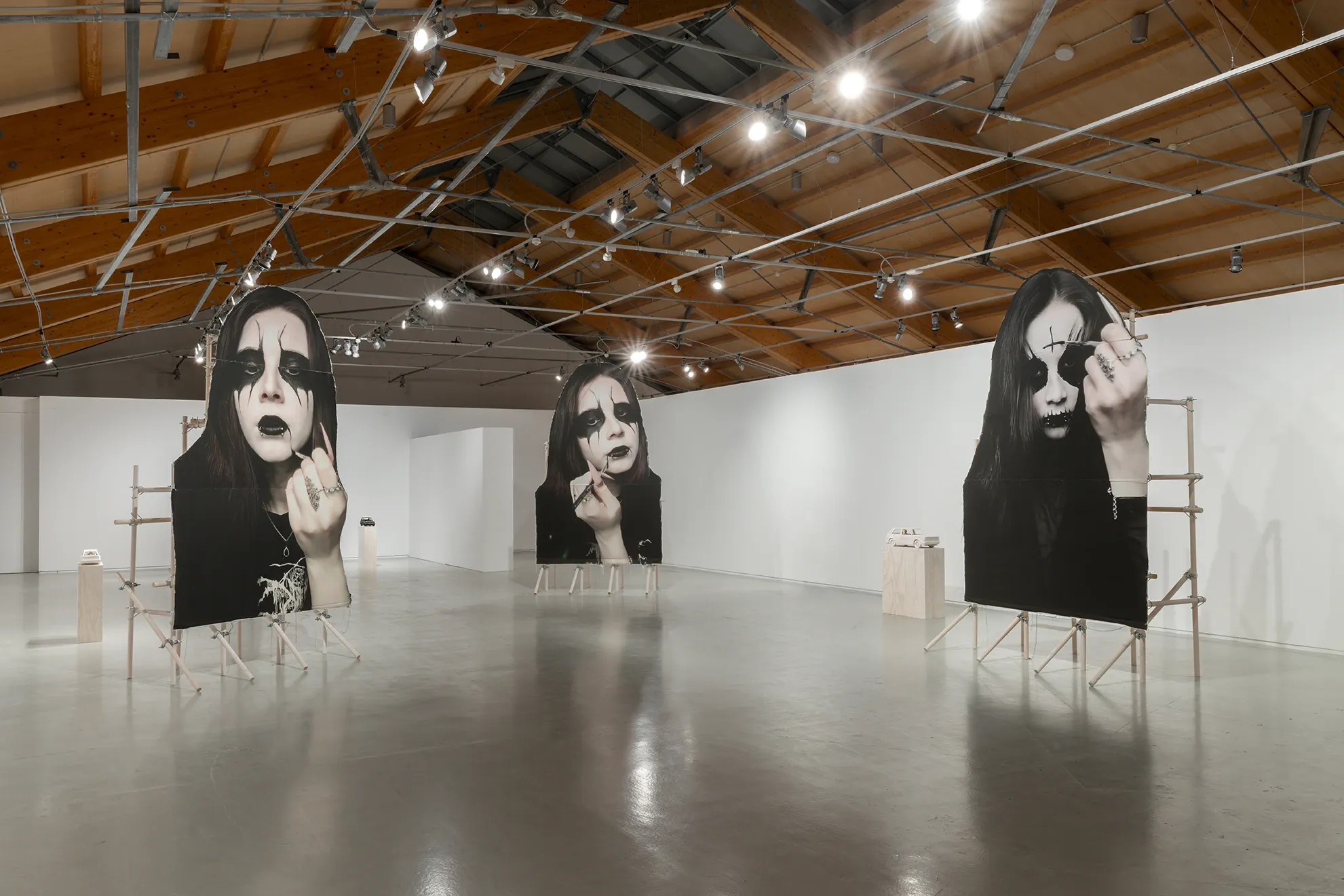
The choice of venue is not incidental: Els joves infeliços / Unhappy Youth is dedicated explicitly to the young people of this city, to those who, as the exhibition text puts it, simultaneously hide themselves and expose everything to the world.
That address, to a specific community in a specific place, carries more weight than a generic claim about youth in the abstract.
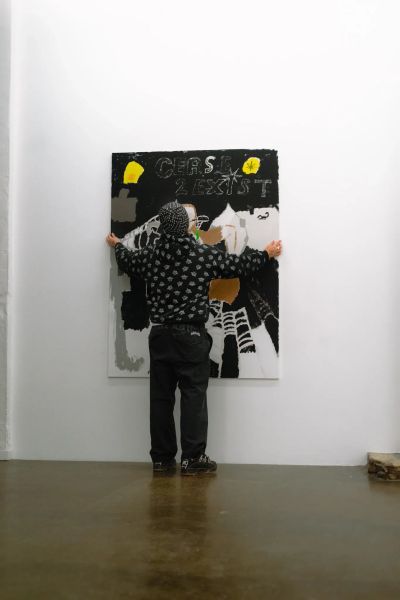
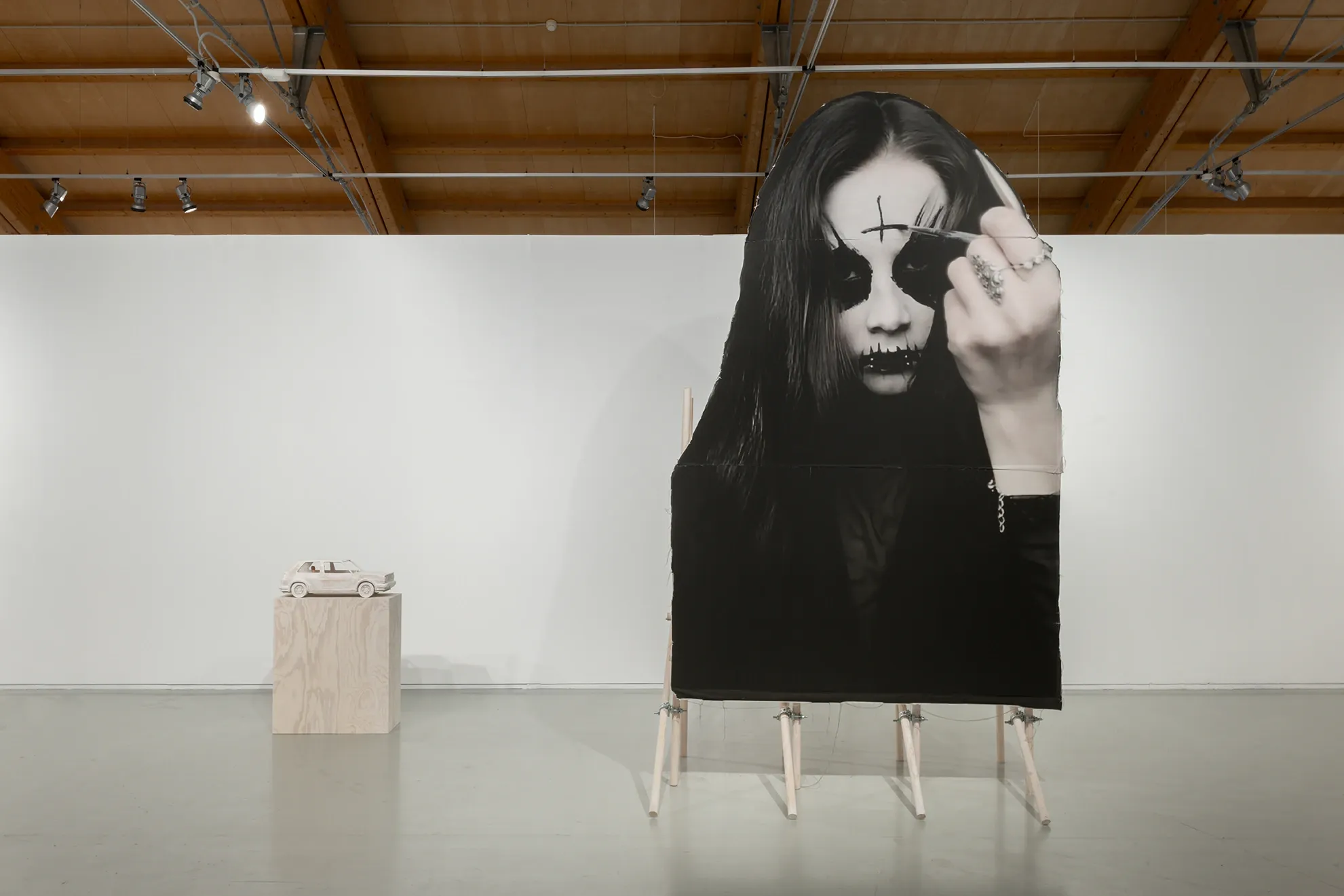
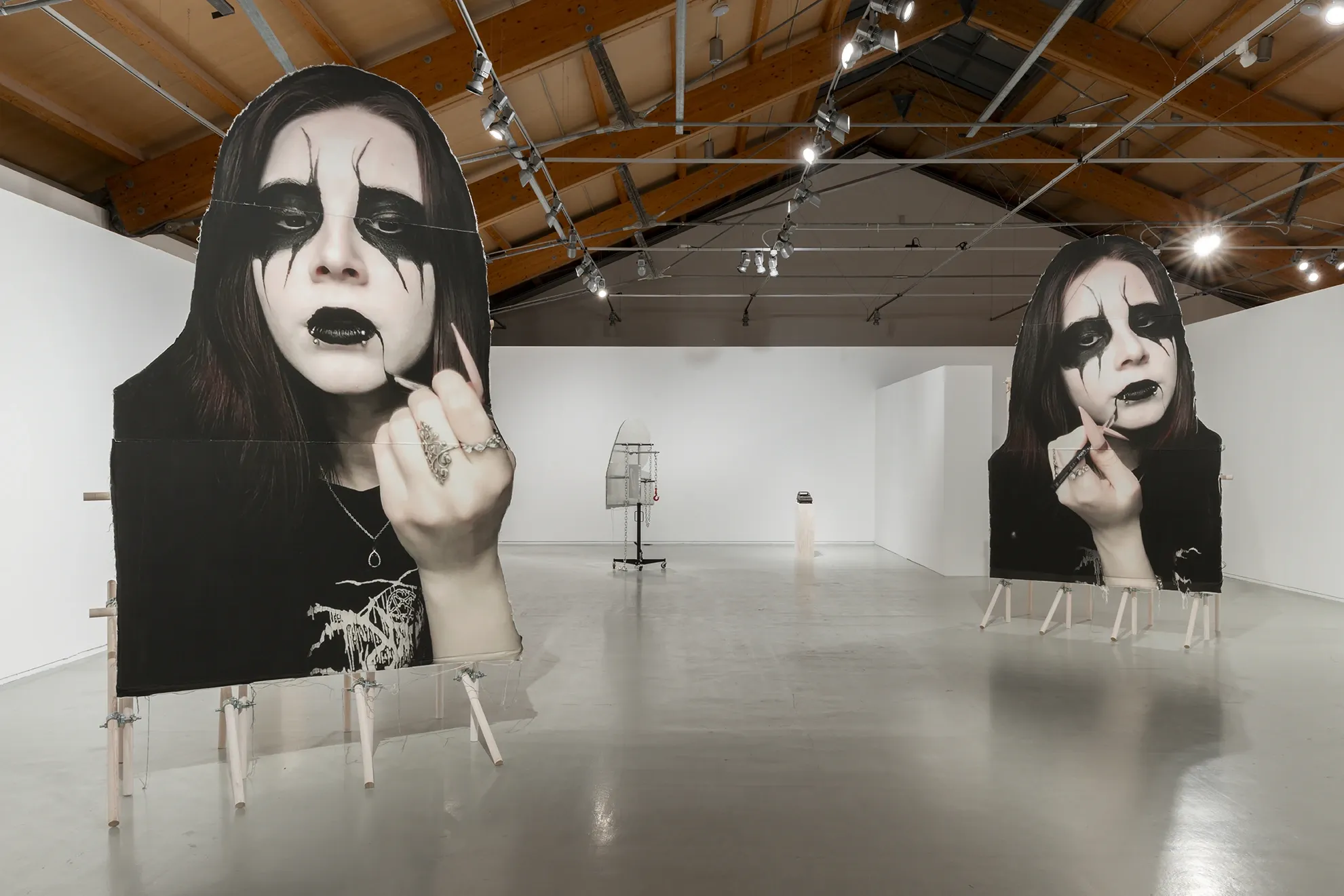
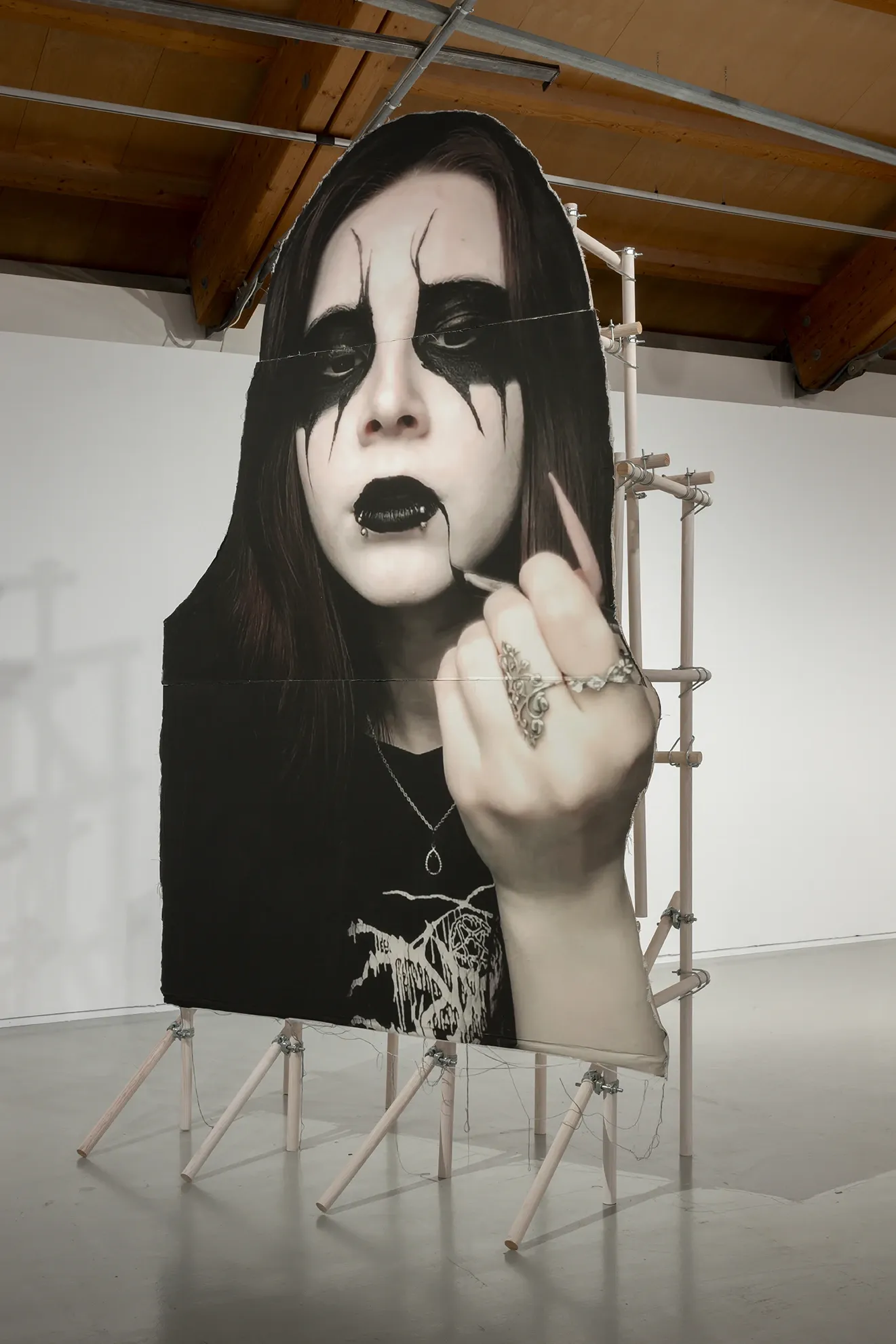
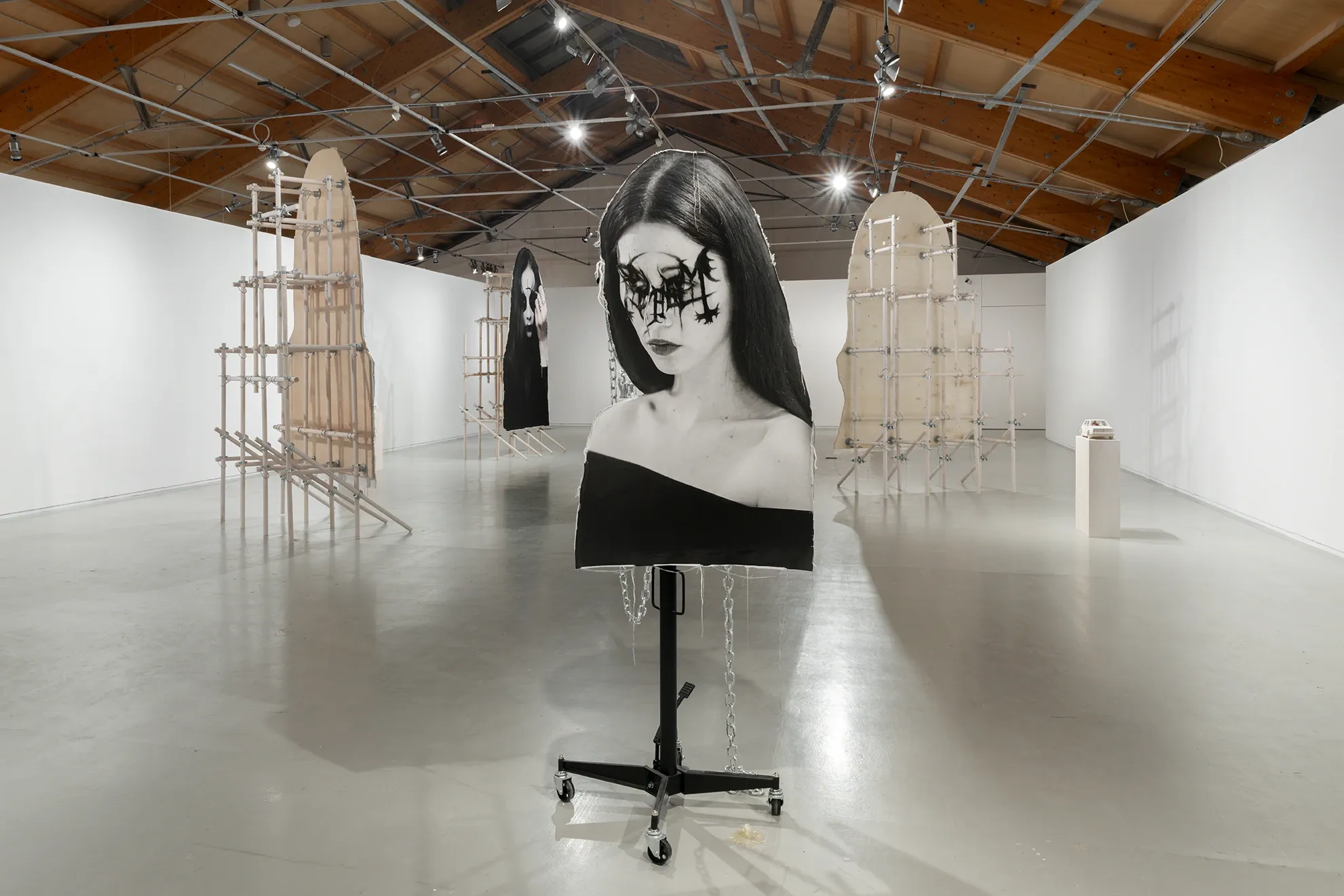
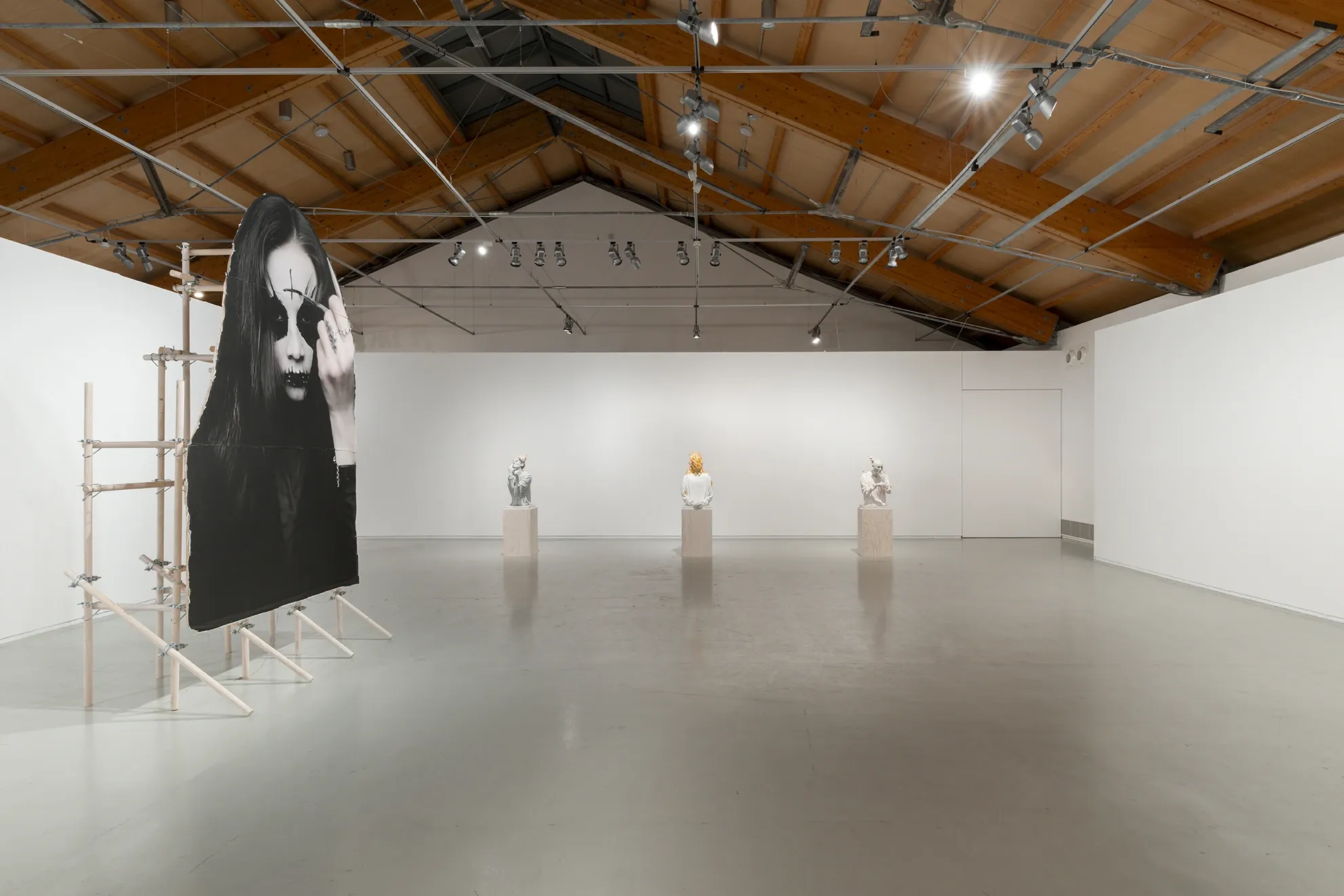
The dominant presence in the space is a series of monumental black-and-white photographs of young people in black metal and goth makeup, dark eye paint extending down the face, black lips, crosses drawn across skin, mounted on raw wooden scaffolding frames that arch at the top like unfinished windows.
Each figure performs a gesture that is simultaneously confrontational and quotidian: giving the middle finger, touching up makeup mid-act. At this scale, the gesture changes register. The middle finger is no longer an insult, it holds a position.
Three figures lined up across the space, their scaffolding provisional and structural at once, carry the argument that subcultural style has always been doing something more than signaling: it was marking refusal when no better language was available.
The sculptural works complicate that argument without undermining it. Two plaster figures on wooden pedestals face the room differently. One, rendered in the manner of a classical bust, turns slightly and touches its own face, the self-consciousness of a body that knows it is being watched.
The other figure, dressed in a plain white sweatshirt, has had its head replaced entirely by a mass of orange flames. The hands rest on the knees. The posture is quiet. The burning is not dramatized; it simply is, as if fire were just the face this person carries.
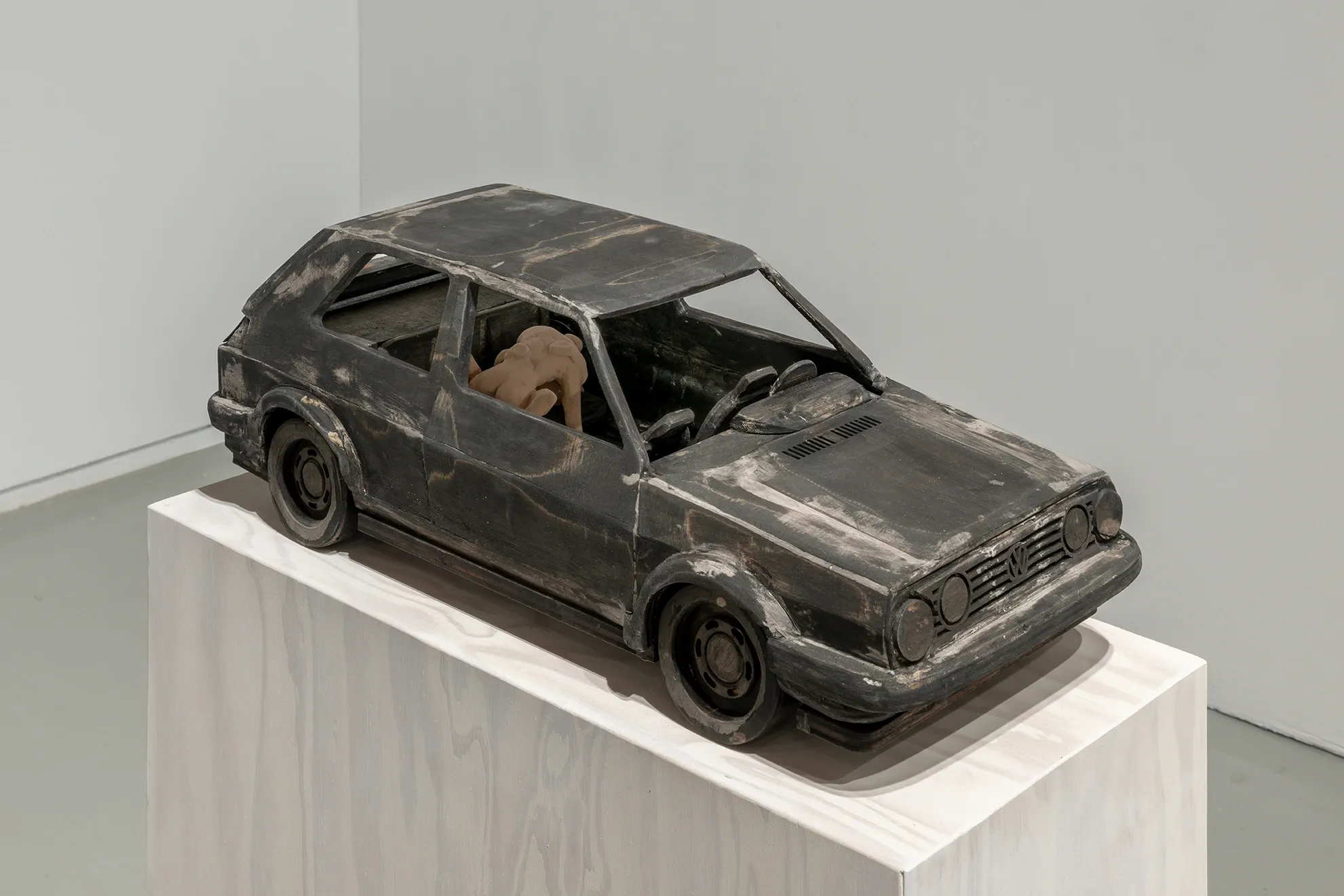
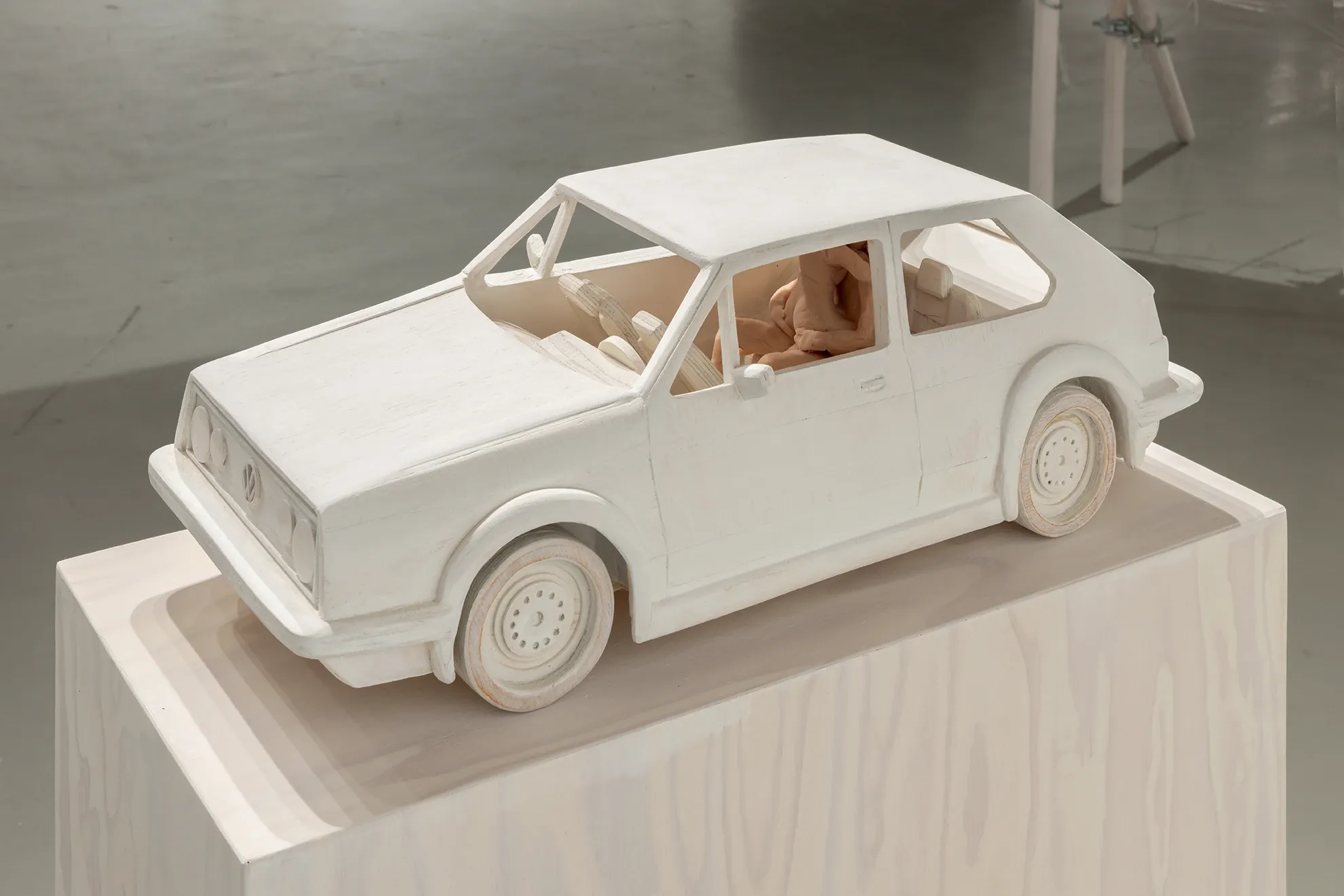
A third object, a blackened handmade sculpture of a VW Golf GTI, a small crouched human figure inside, arrives from a different angle. The Golf was a class object, a youth object, an aspiration. Here it is darkened and closed, the body inside unable to exit.
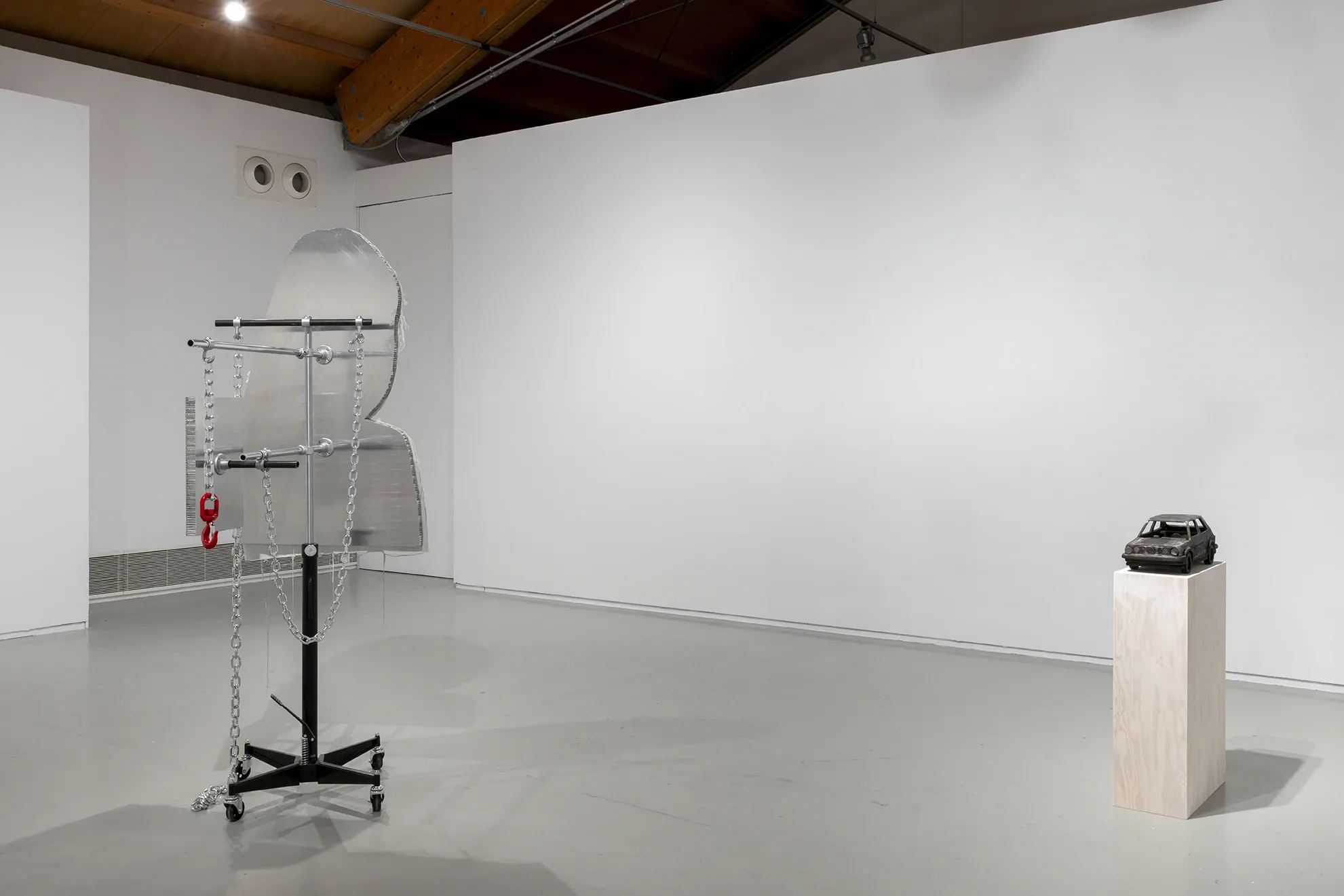
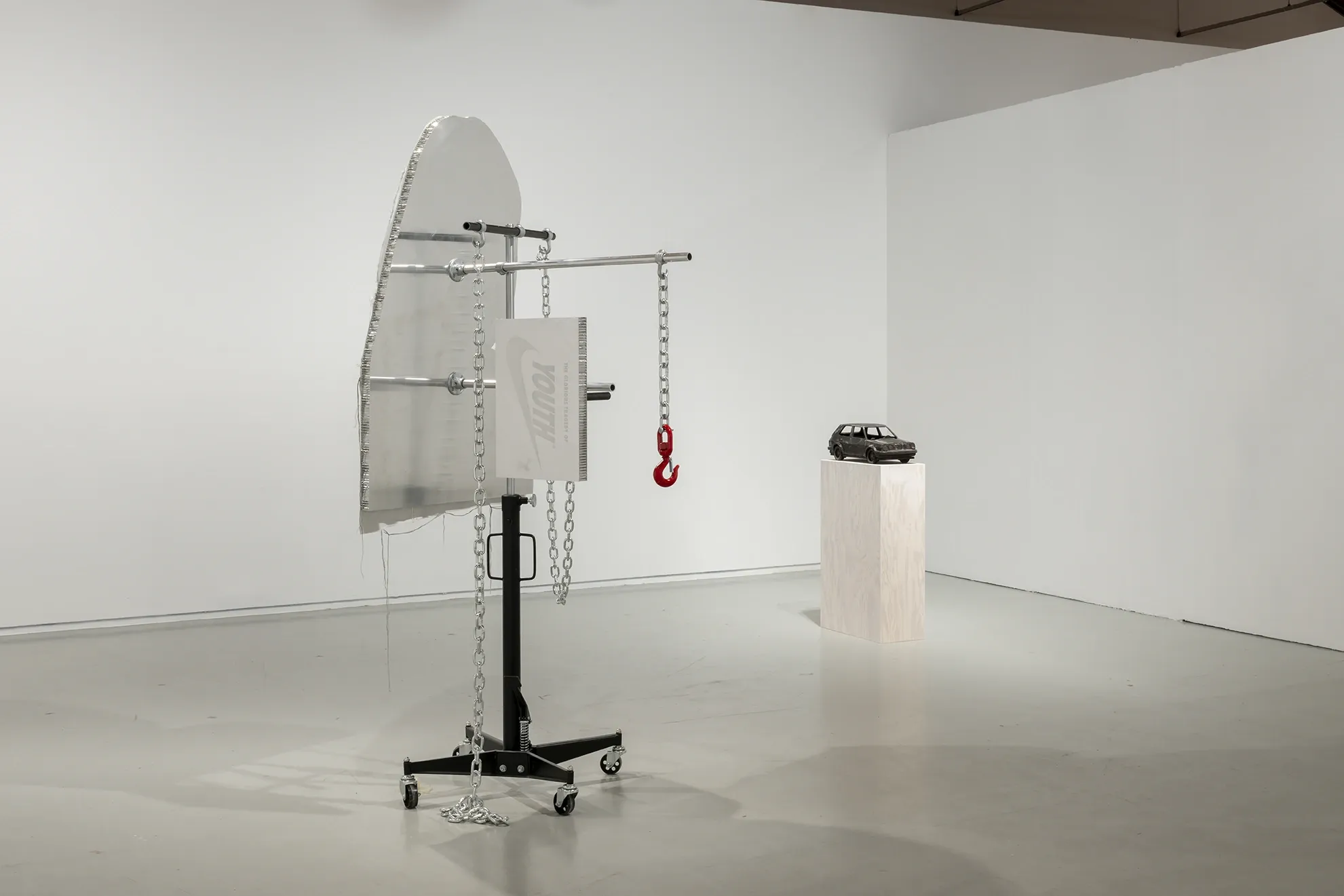
Nearby, a steel structure on industrial wheels carries chains, a red hook, and a panel that reads "YOUTH" in a logo format indistinguishable from sportswear branding. The object looks like a crane and a display stand at once, something that lifts, and something that sells.
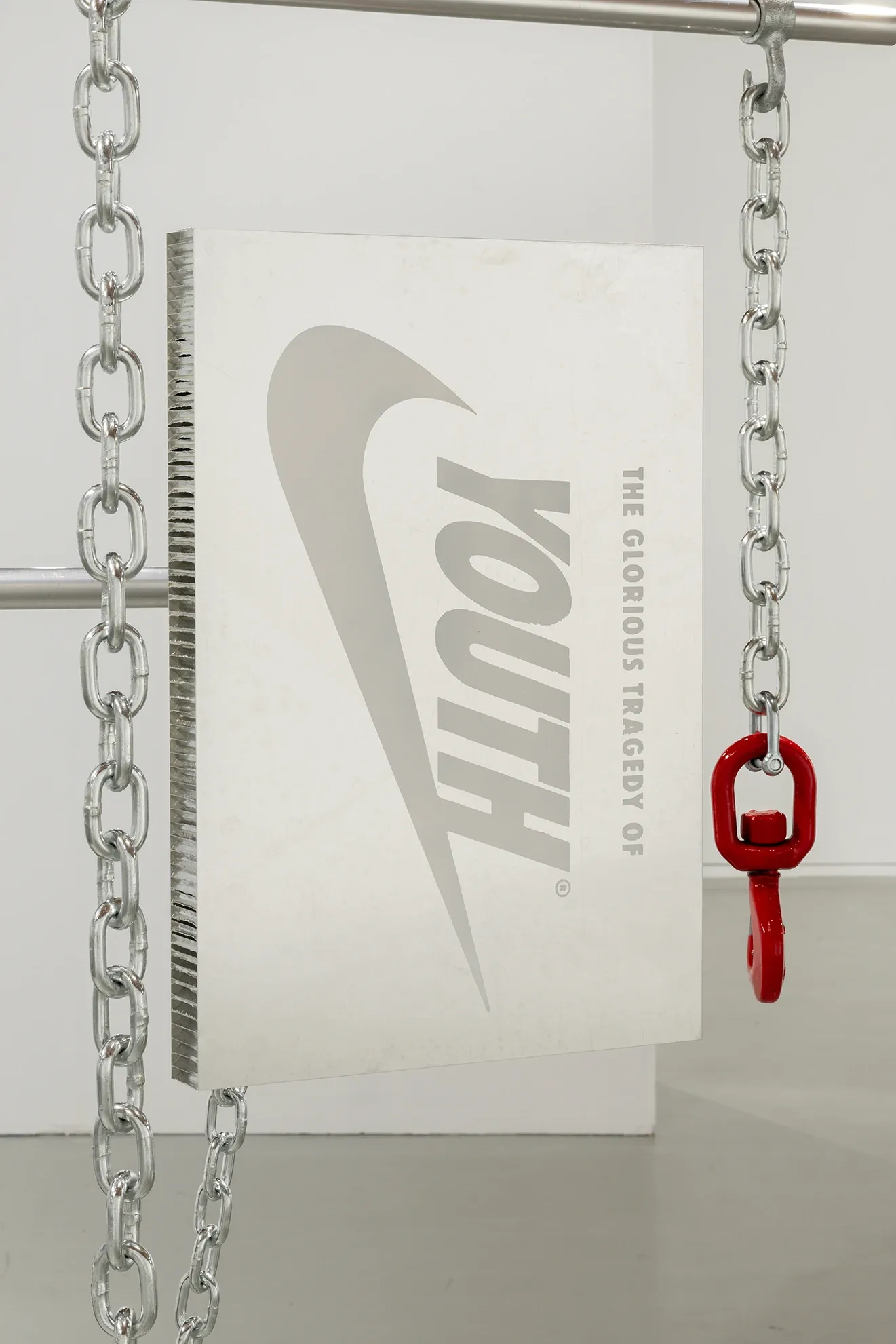
The exhibition does not offer the Pasolini reference as historical footnote. It uses it as a diagnostic: the generation that knows social media is harmful and keeps scrolling, that knows consumerism is empty and keeps consuming, is not simply hypocritical. It is navigating a system sophisticated enough to absorb its own critique and sell it back.
The goth, the punk, the emo were not naïve gestures, they were genuine attempts at refusal by people who had no institutional channels for dissent. The question Pallé raises, without answering, is whether the same holds now, when even refusal carries a logo.
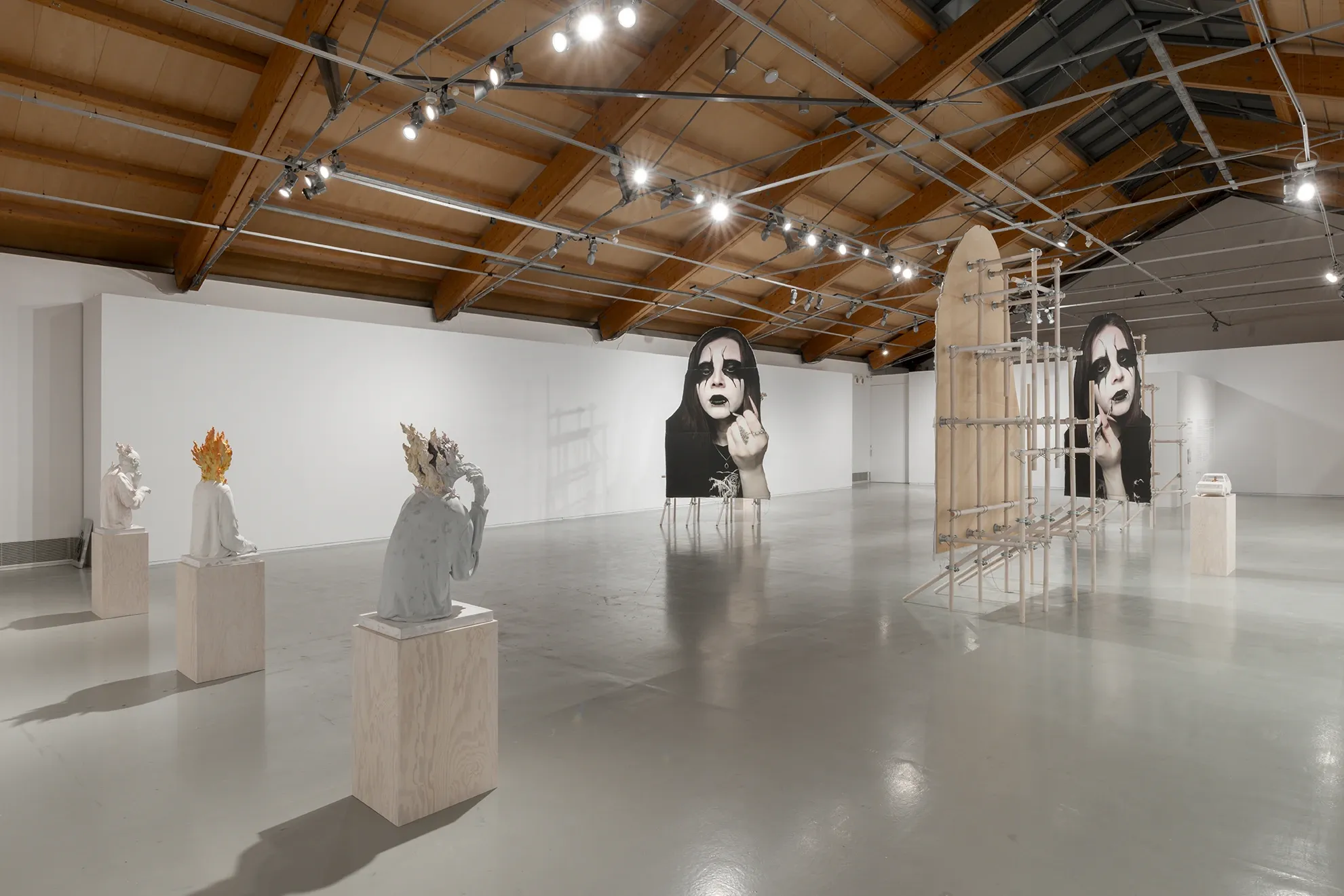
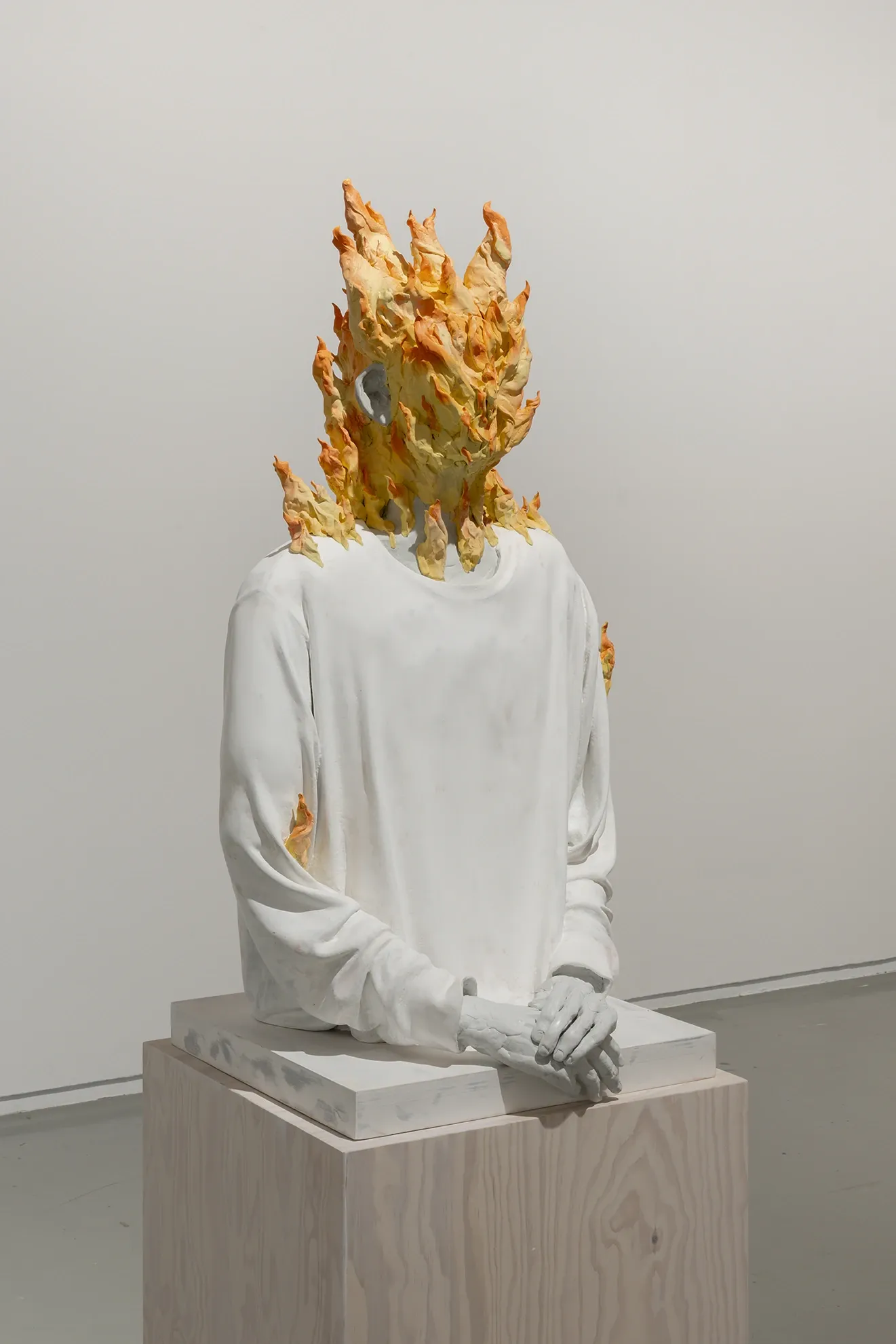
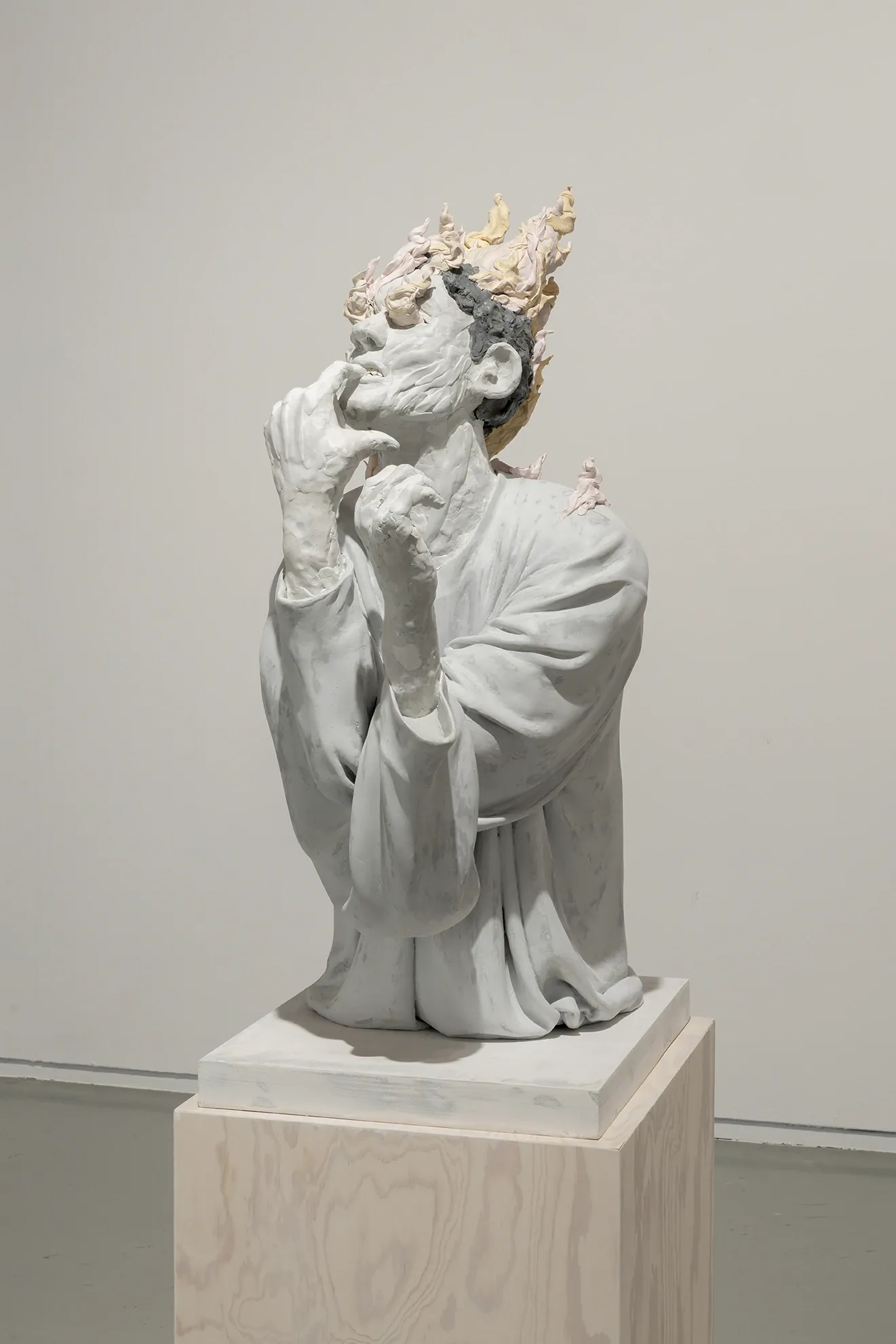
Joan Pallé, Els joves infeliços / Unhappy Youth, detail view, Centre d'Art La Panera, Lleida, 2026. Photo: Roberto Ruiz, courtesy of Centre d'Art La Panera.
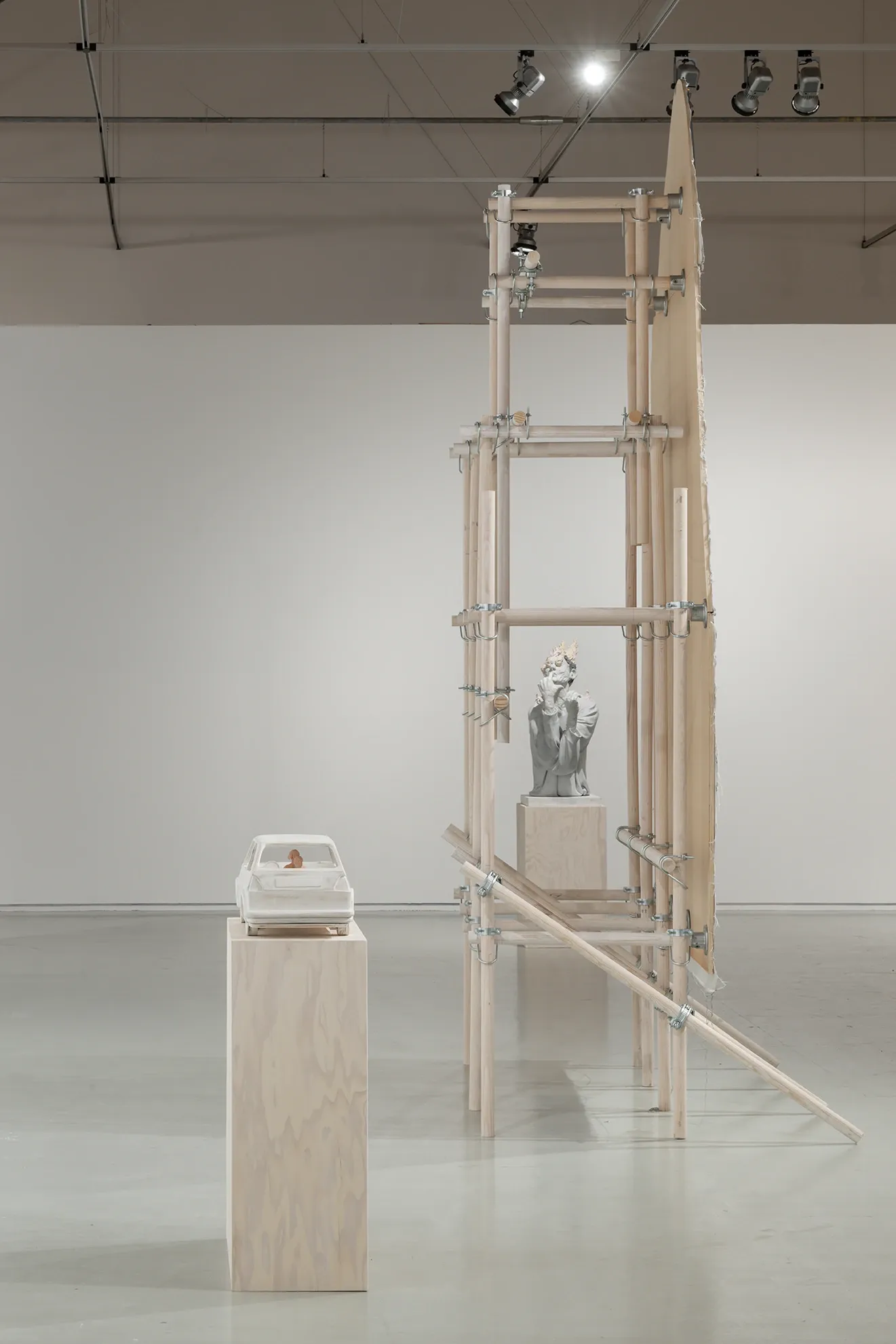
The blackened Golf with the crouching figure inside is not a metaphor for entrapment, it is evidence that the vehicle youth were handed was already a ruin, and that the posture of endurance inside it is the only form of agency the object allows.
Instagram Joan Pallé
Instagram Centre d'Art La Panera
About Catapult
This is an artist interview published by Catapult — an independent editorial platform for contemporary art, based in Vienna. We publish exhibition reviews, artist features, interviews, and critical context, with a focus on emerging and mid-career practices from Europe and beyond.
catapult.art
Want to be featured? Submit your work →