The Landscape That Lives Inside the Bird

South Korea
Kyoto, Japan
Ceramic sculpture, glazed ceramics, gold luster
Ryu Jeyoon Exhibition, Gallery Main, Tokyo, 2024
Courtesy the Artist
Jeyoon Ryu - South Korea / Kyoto, ceramic sculpture
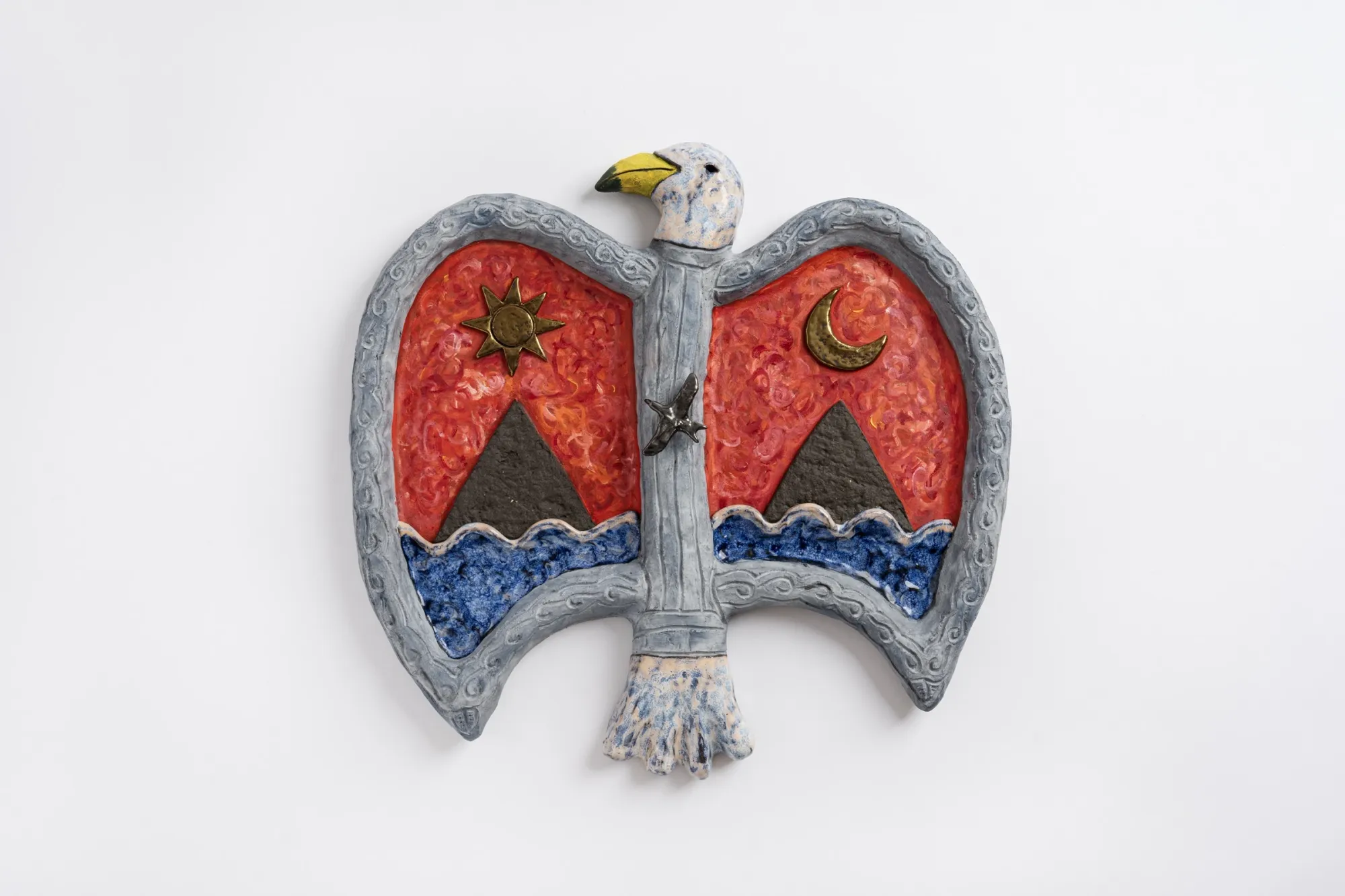
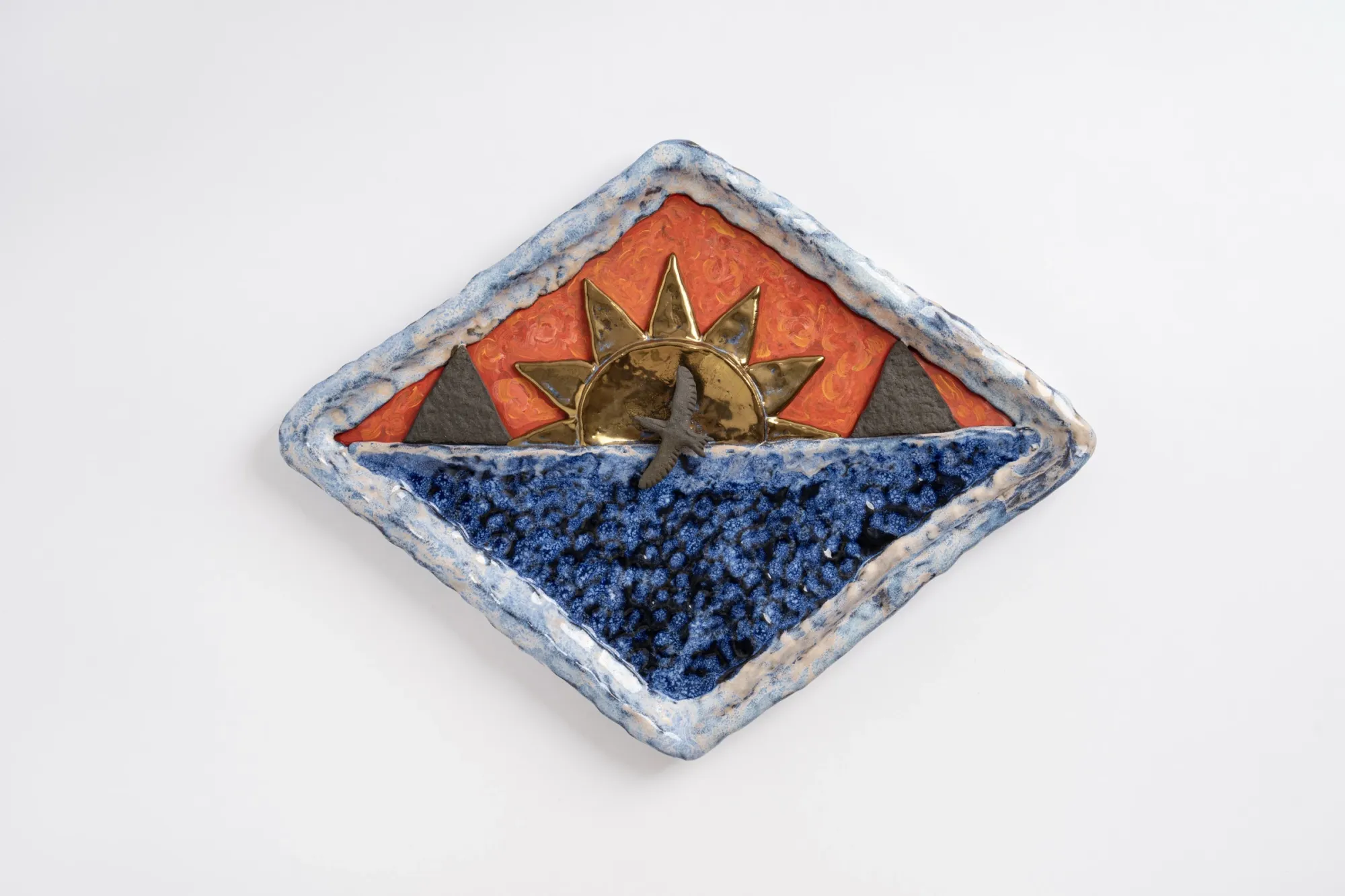
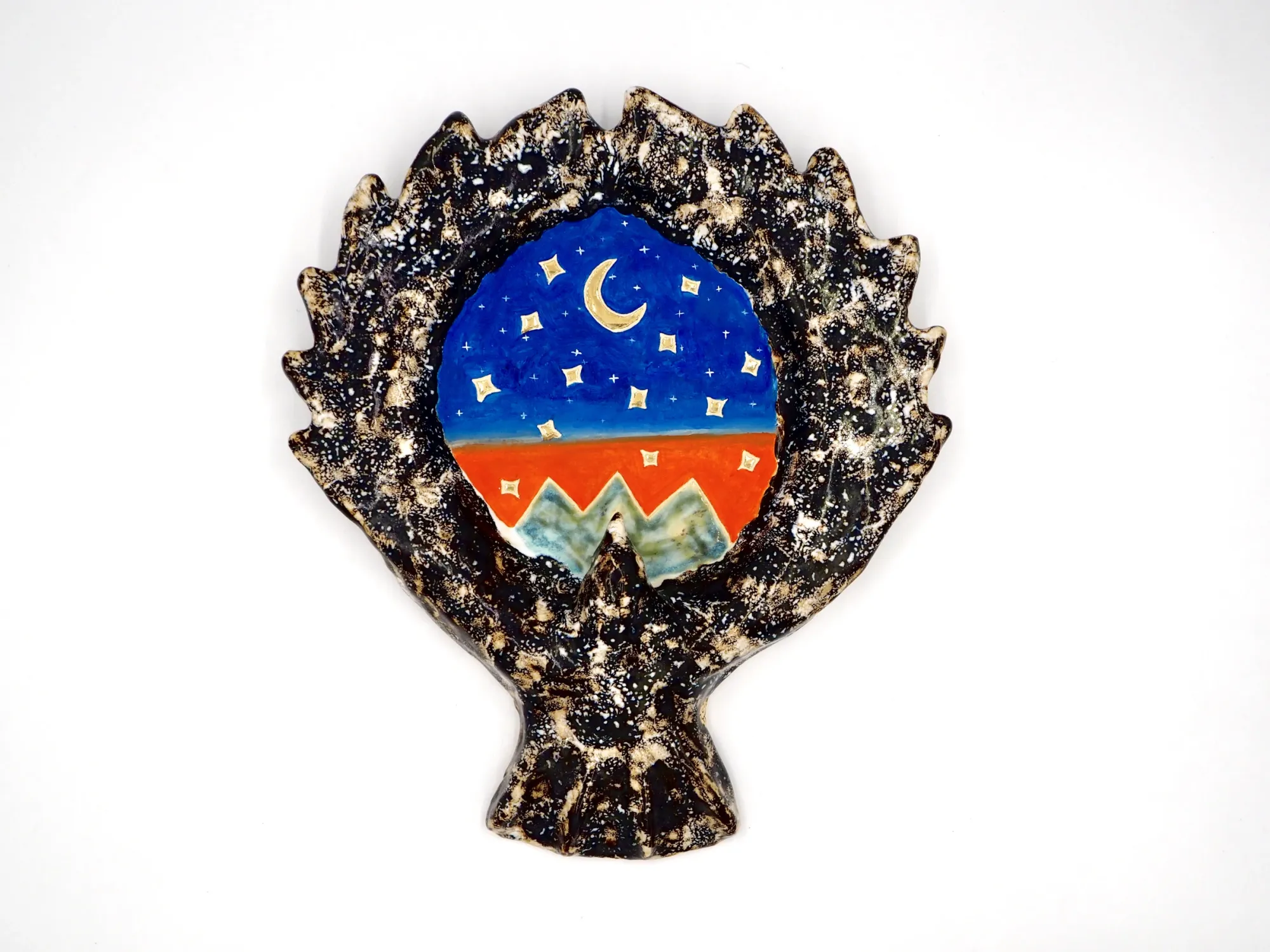
The outer form holds a world inside it. A seagull's wings spread not into air but into landscape, mountains, ocean, a sun on one side, a crescent moon on the other. The creature and its territory are not separate; the bird carries the island, and the island shapes the bird.
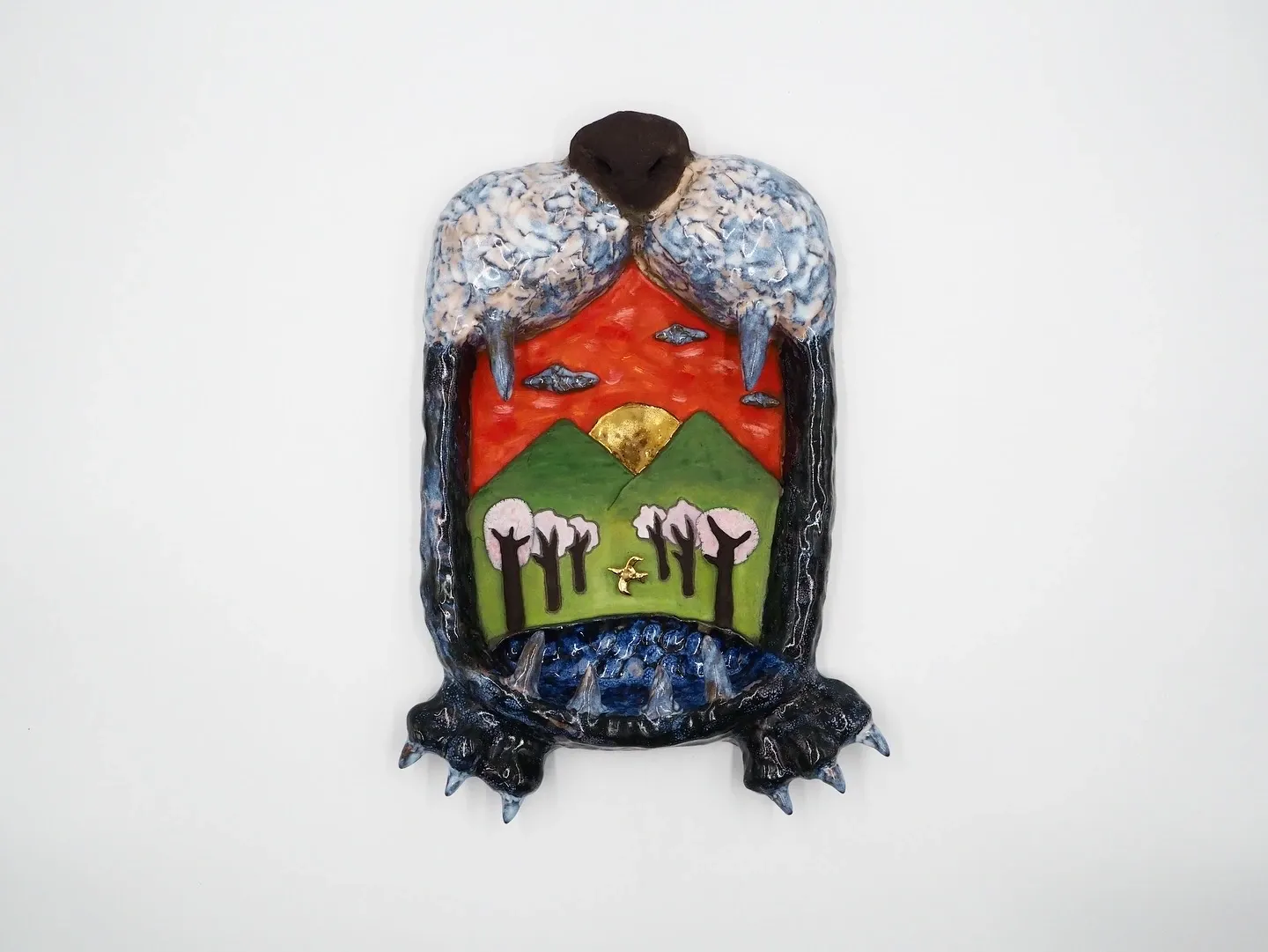
This structural move, the container that is also the contained, runs through the entire practice at different scales and in different materials. Form here never resolves as purely formal. It establishes the tension the work inhabits: between holding and releasing, between staying and crossing, between a geography left behind and one not yet arrived at.
"Objects may appear complete but contain internal elements that suggest further change." - Jeyoon Ryu
In Seagull Crossing Between Two Islands, the gull's spread body becomes a diptych: each wing holds a landscape, sun and moon marking opposite ends of a single crossing.
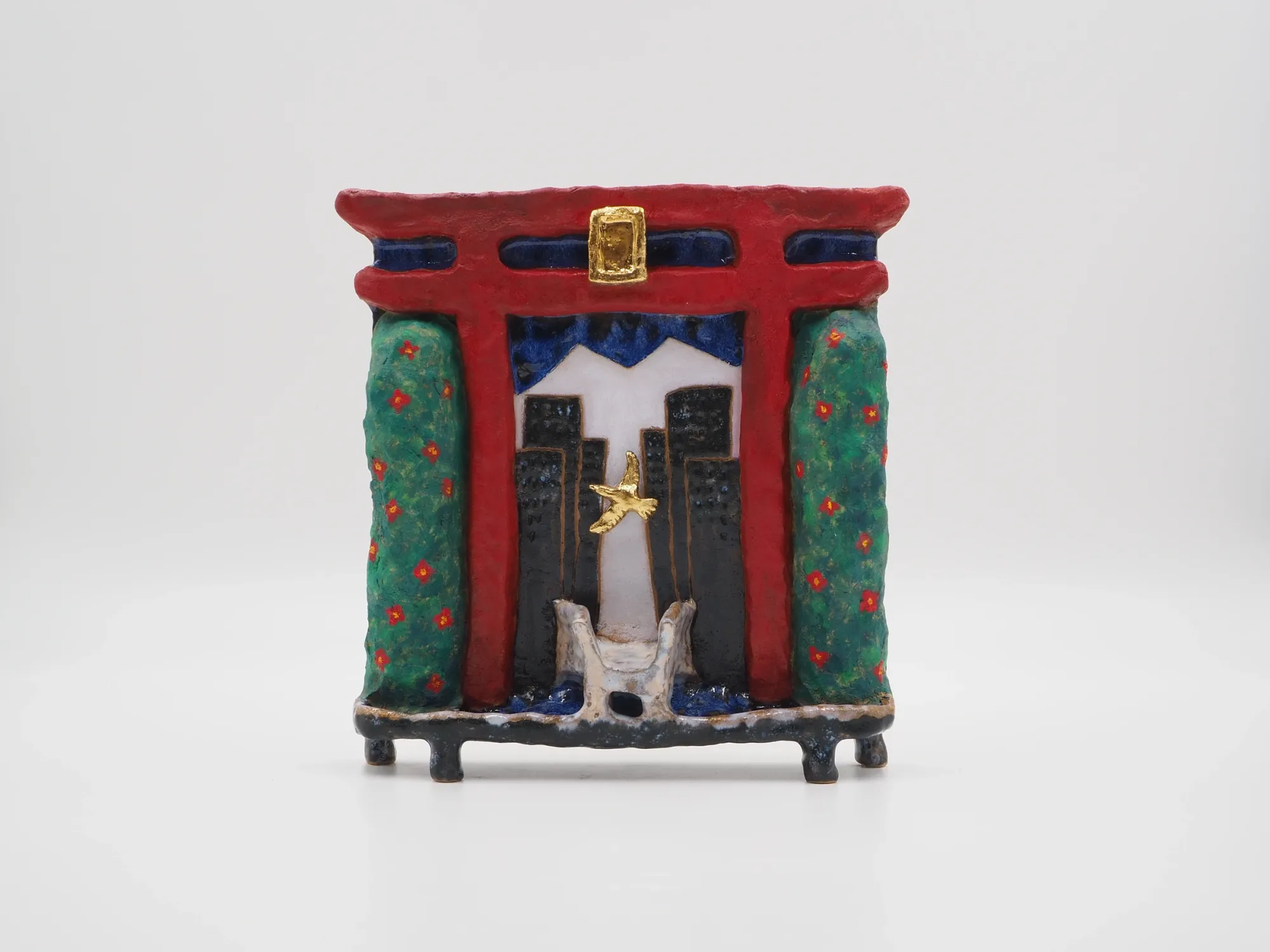
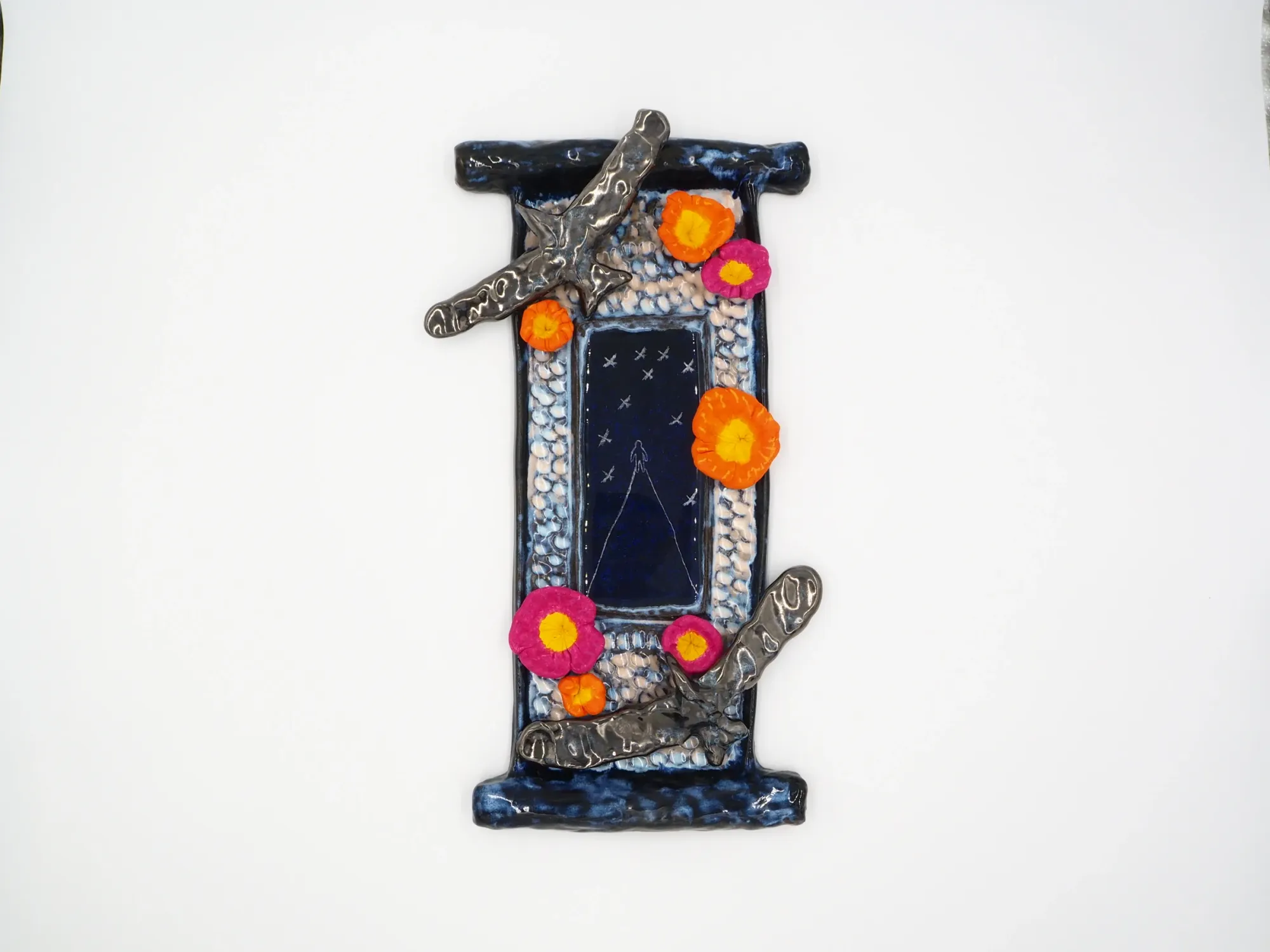
The gold accents that appear consistently across the work, on birds, foxes, celestial bodies, the one moving figure in almost every scene, are not ornamental. Gold marks the point of activation, what moves, what persists in transit.
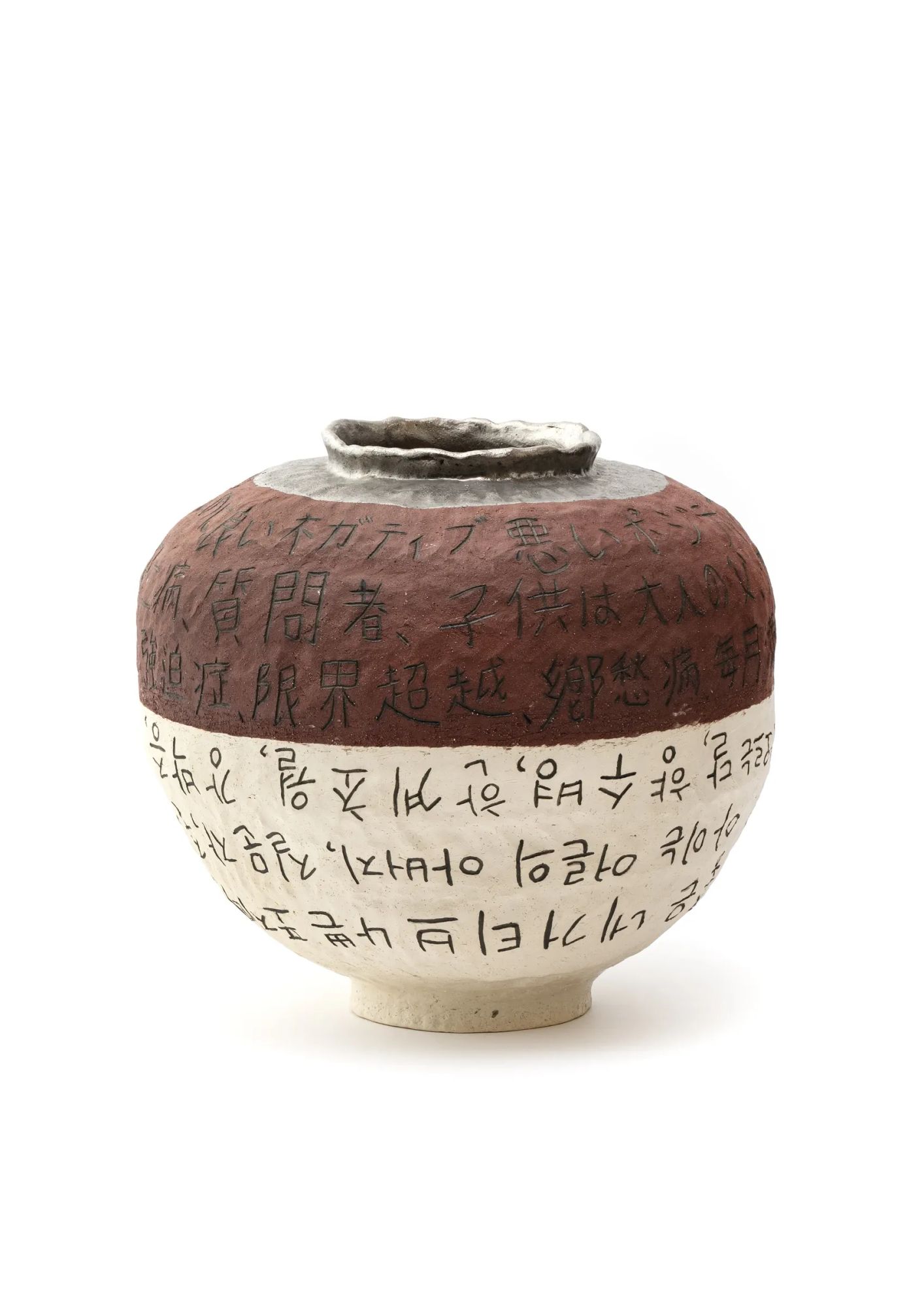
The moon jar operates differently. Moon jar6 takes a Korean ceramic form, associated with Joseon Dynasty pottery and its austere, quietly full silhouette, and covers its surface in two scripts: Japanese kanji and Korean hangul, pressed into the clay as if the vessel carries what neither language can hold alone. This is not homage to tradition. It uses the vessel form as a container for a present condition: a body that belongs to two linguistic cultures simultaneously.
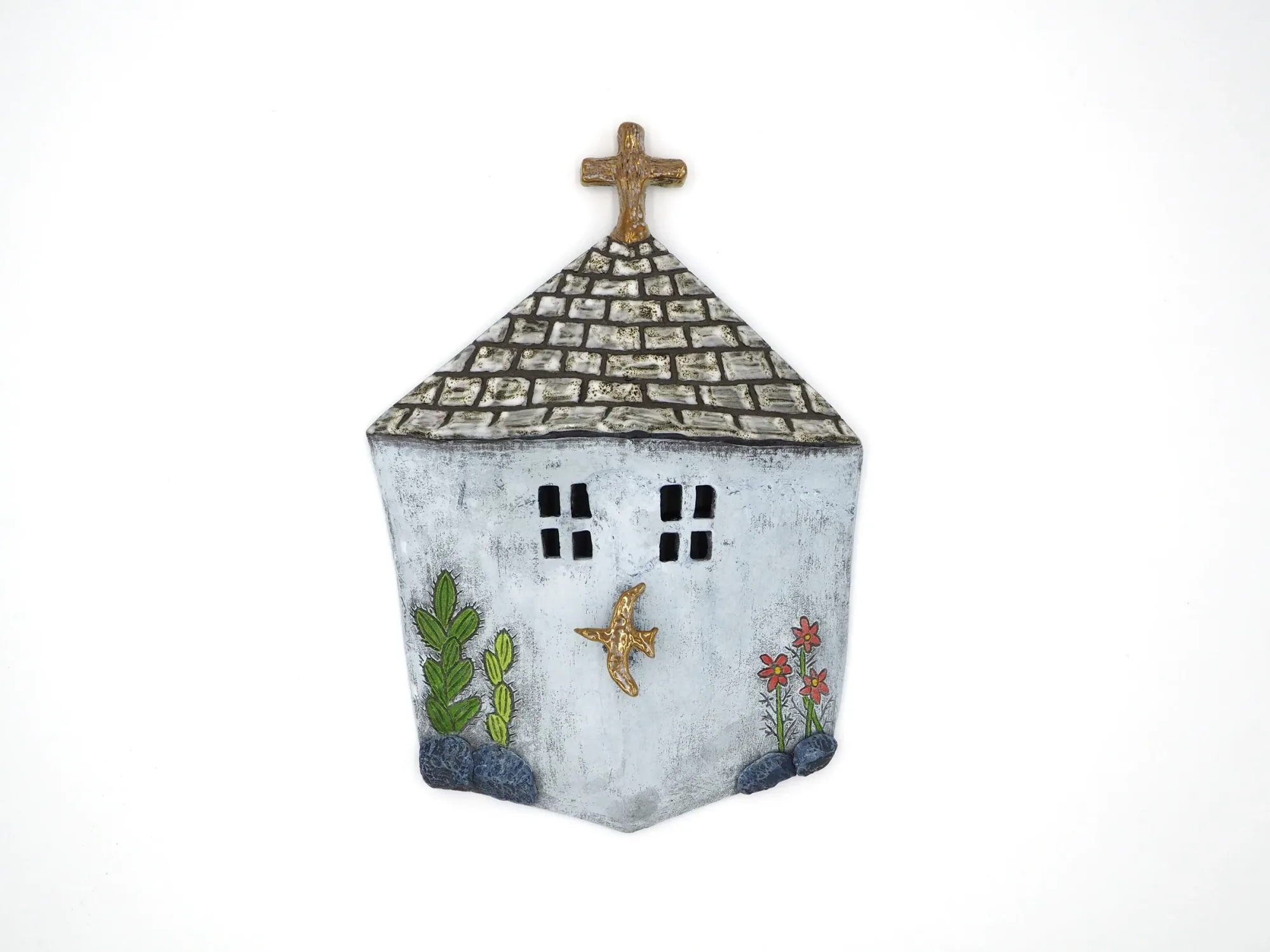
Eggs, birds, islands: the recurring motifs name the poles of the practice. Eggs hold what has not yet become. Birds cross. Islands mark the condition of being bounded, by water, by language, by origin. The architectural figures that appear elsewhere, poles, chapel-like structures, a torii gate standing in a Seoul cityscape, function as coordinates within these crossings, establishing location without fixing it.
Born on a small island in South Korea, Jeyoon Ryu is based in Kyoto, Japan. The movement between these two cultural contexts is not biographical background, it is the methodology. Korea and Japan share a history that each script on the moon jar carries without naming; the artist places both languages on the same surface and leaves the clay to hold the distance between them.
An exhibition at Gallery Main, Tokyo in 2024 placed the work in dialogue with Japanese craft traditions without collapsing into them. The sculptures read against both Korean and Japanese ceramics lineages and settle fully into neither.
What the objects hold remains held, without resolution.
Instagram Gallery Main Tokio
Instagram Jeyoon Ryu