Endurance Is Not the Same Thing as Healing

Floryan Varennes
Even Spectres Can Tire
Xxijra Hii
London, UK
-
London, SE8 4AL
Francesco Pasquini
Corey Bartle-Sanderson
Courtesy Xxijra Hii and the artist
info@xxijrahii.net
Xxijra Hii Presents Even Spectres Can Tire in London
The body held in care is also the body held in place. Something is applied to it, a brace, a protocol, a membrane, and the question is never simply whether it helps but who designed it and for what duration. Care, when it becomes a system, tends to outlast the condition it was built for.
This is not a pessimistic position. It is a structural one. The architecture of care, prosthetic, clinical, orthopedic, has its own grammar, and that grammar is worth reading as closely as any text about healing.
The spectre in Varennes' work is not an absence but a structure that refuses to dissolve, a form of care that holds a body in suspension long after the emergency has passed.
Xxijra Hii, a gallery space in Deptford, southeast London, carries its own residue: industrial, gritty, a part of the city that has been built over, repurposed, and held in transition for decades. For Floryan Varennes' first solo exhibition outside France, this seems like the right kind of friction. The white cube here is not neutral, it is emptied, functional, a space in which clinical objects acquire a different charge.
Varennes, born in La Rochelle in 1988 and working between Nantes and Paris, has built his visual vocabulary from two systems that rarely share a frame: medieval iconography and contemporary medical technology. Both, when examined closely, are concerned with the same thing, the armored body, the body requiring intervention, the body understood as something that can be corrected, protected, or enhanced.
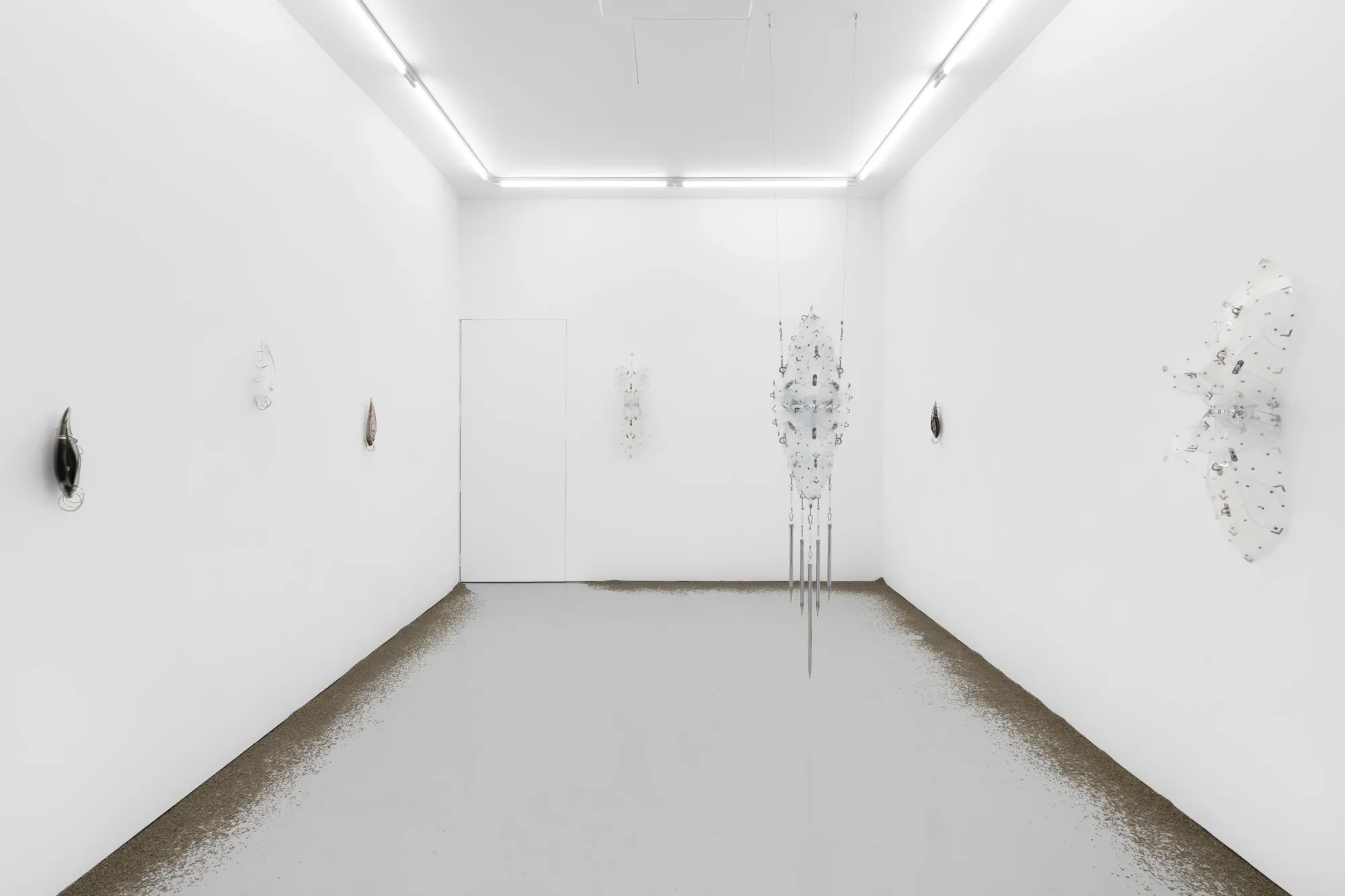
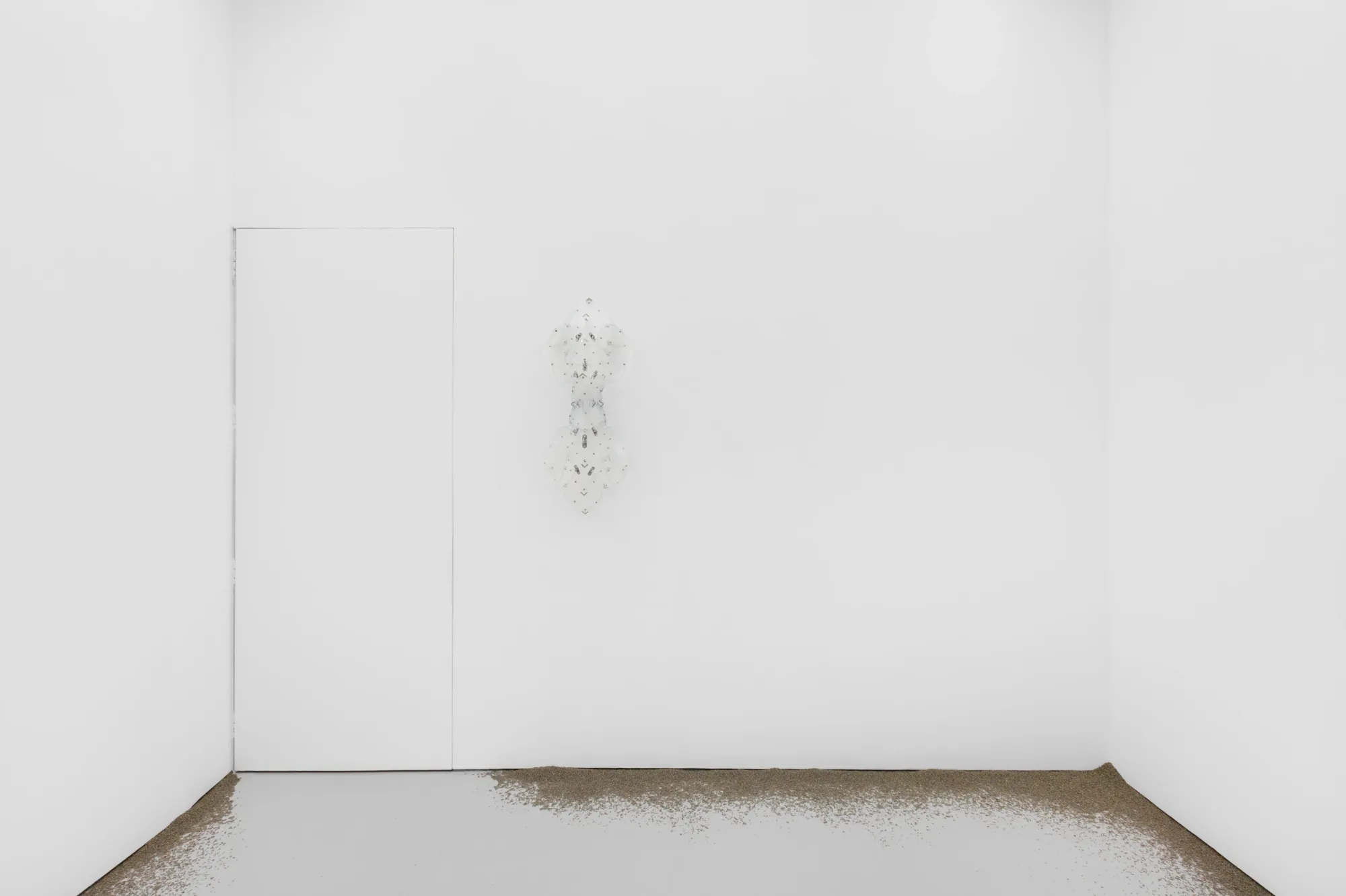
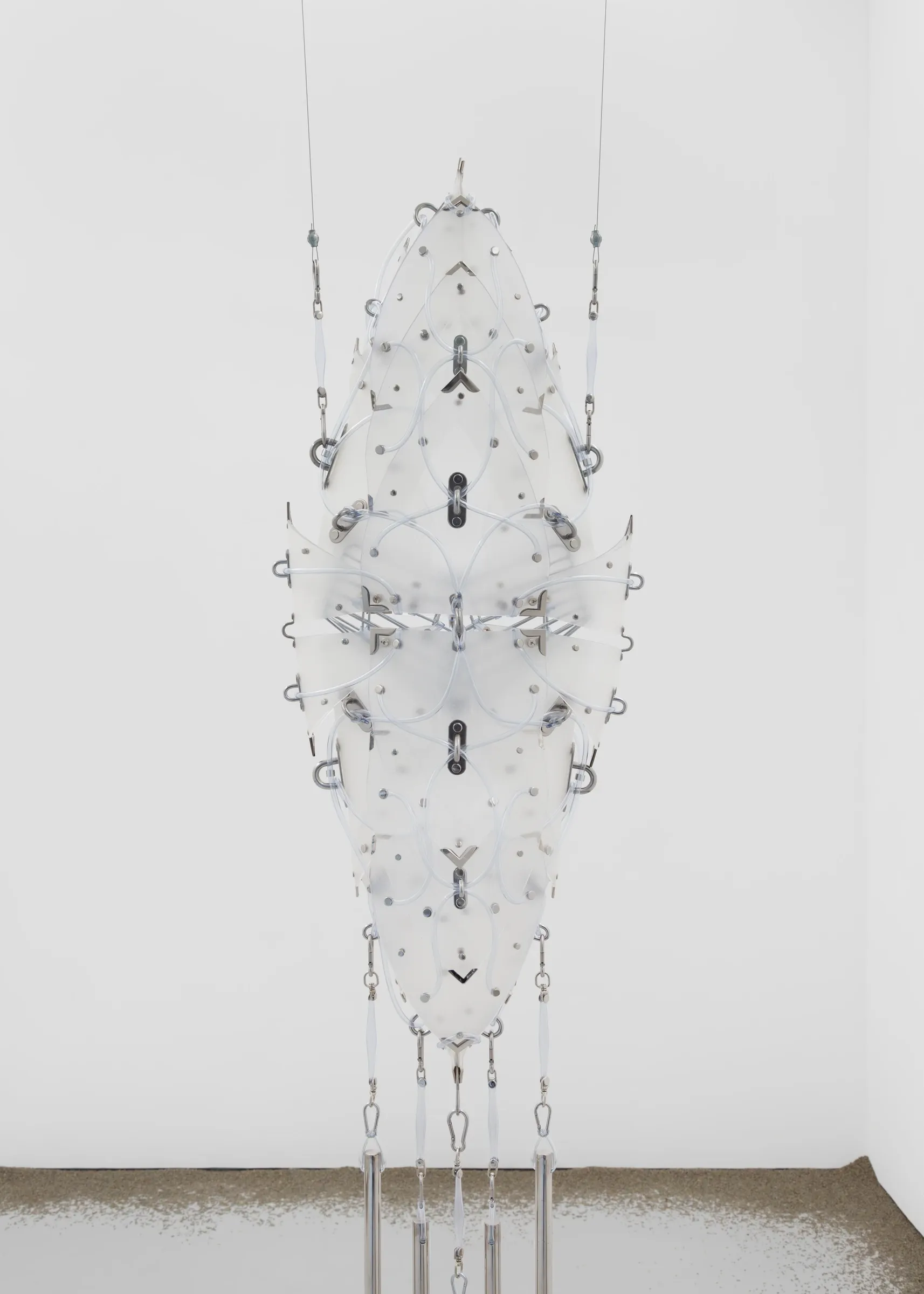
The Pixie sculptures anchor the space. Constructed from sandblasted PVC panels connected with steel brackets, bolts, and medical tubing, they hang from the walls at the scale of emptied suits, orthotic devices whose occupant has withdrawn. The logic is corrective: these are forms designed to stabilize, to support, to hold a joint or limb in place.
Ark works differently. Sealed where the Pixies are articulated, it holds the form of a cocoon, protection as enclosure, a membrane that holds a body in suspension without promising what comes after.
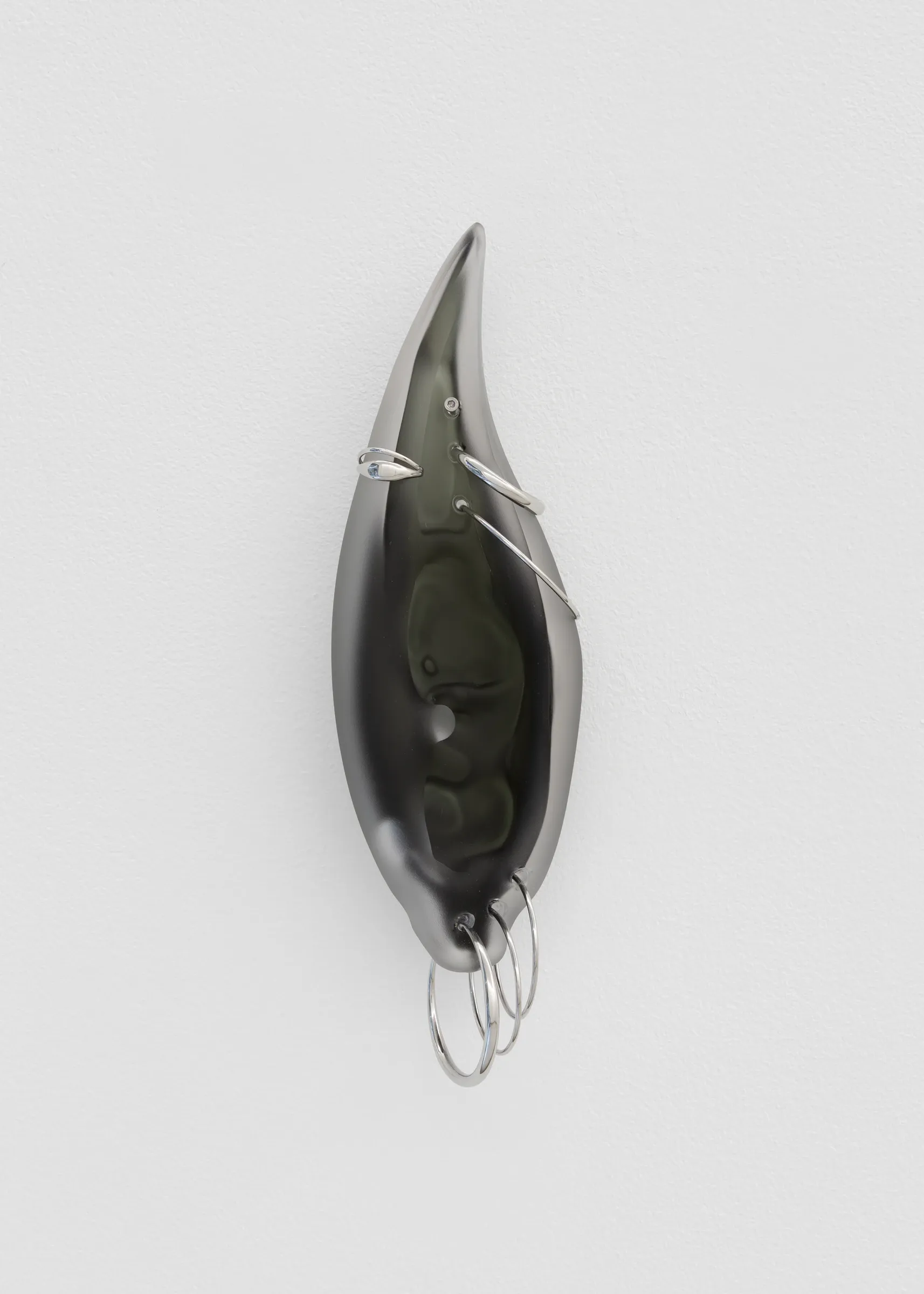
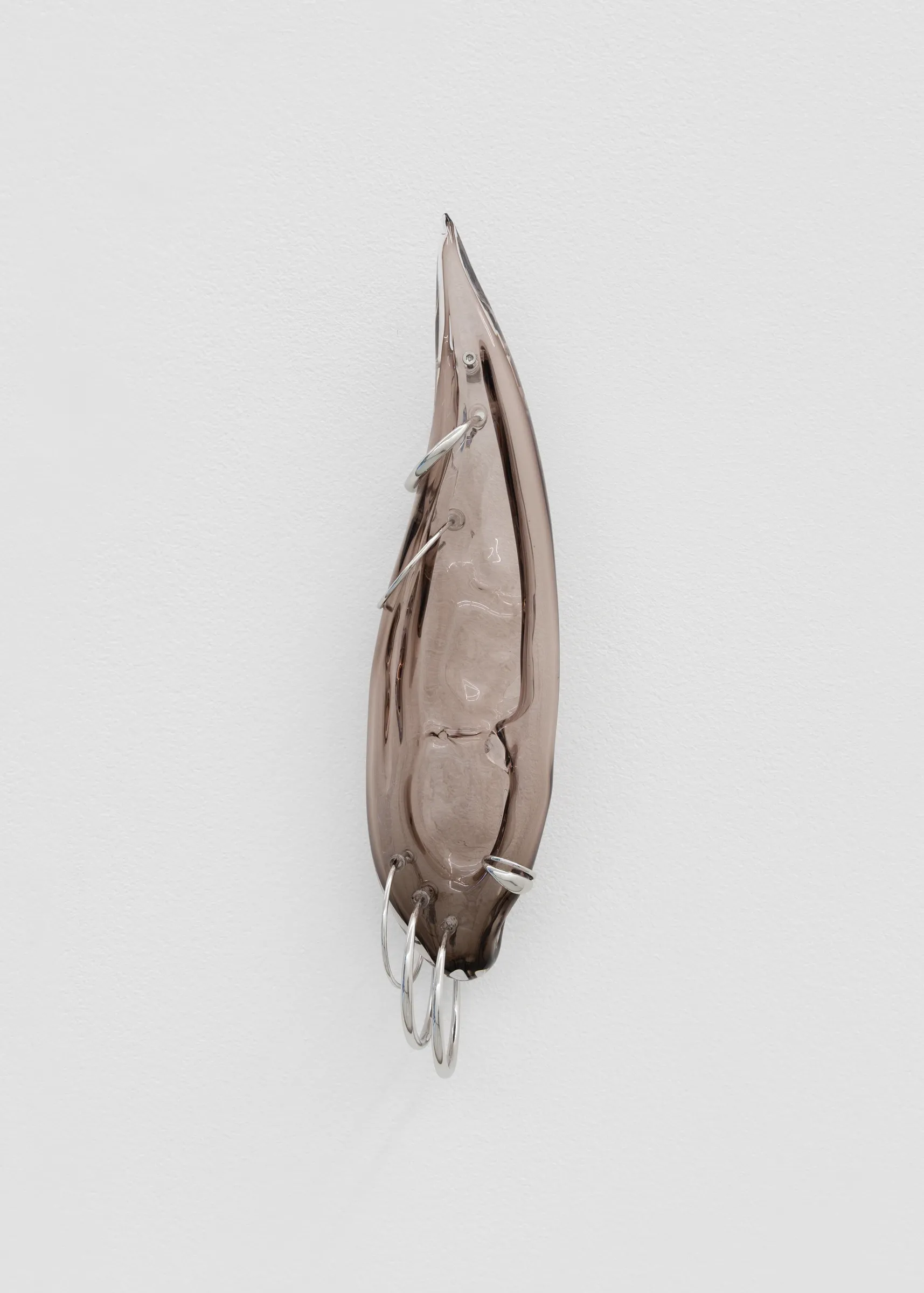
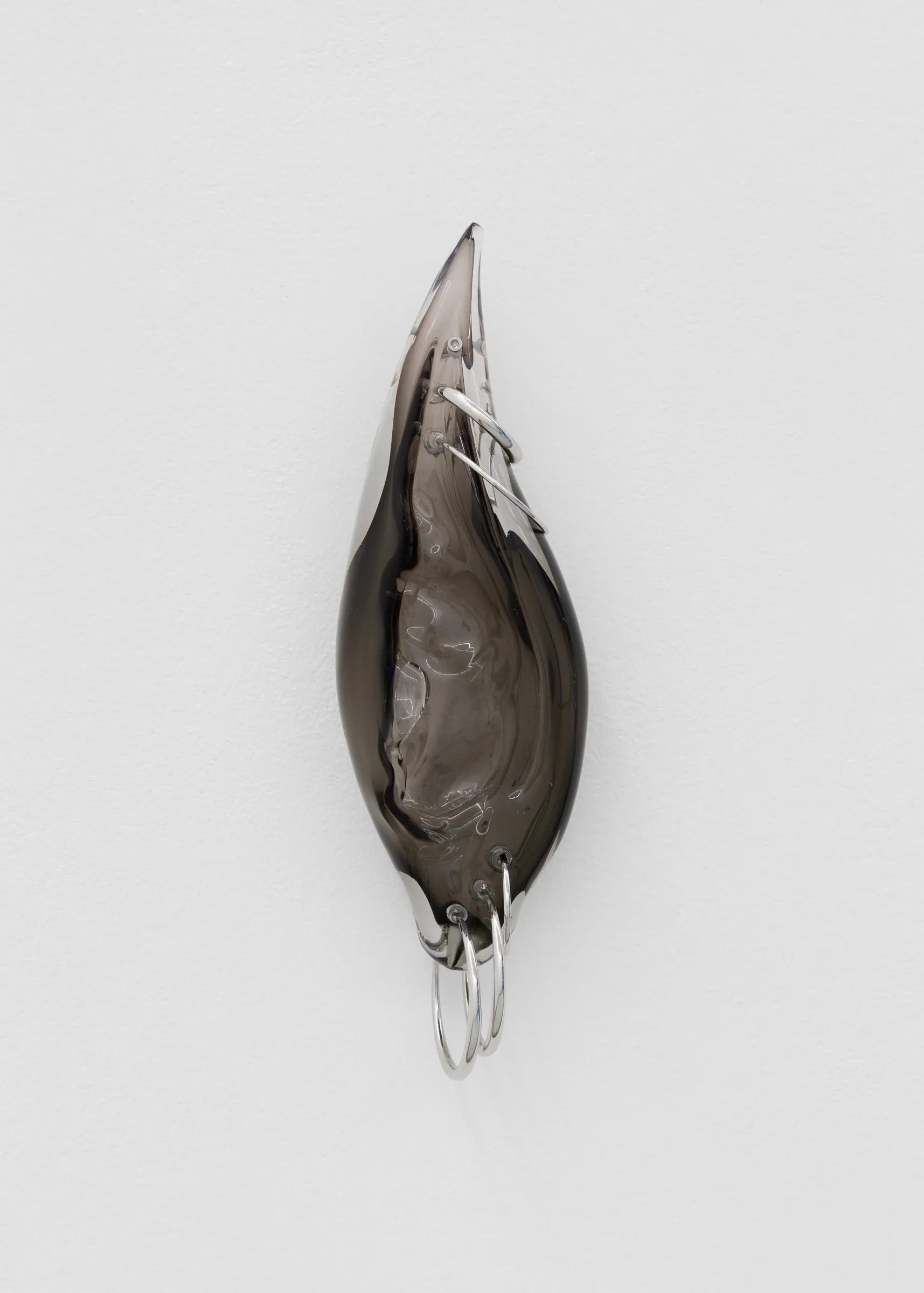
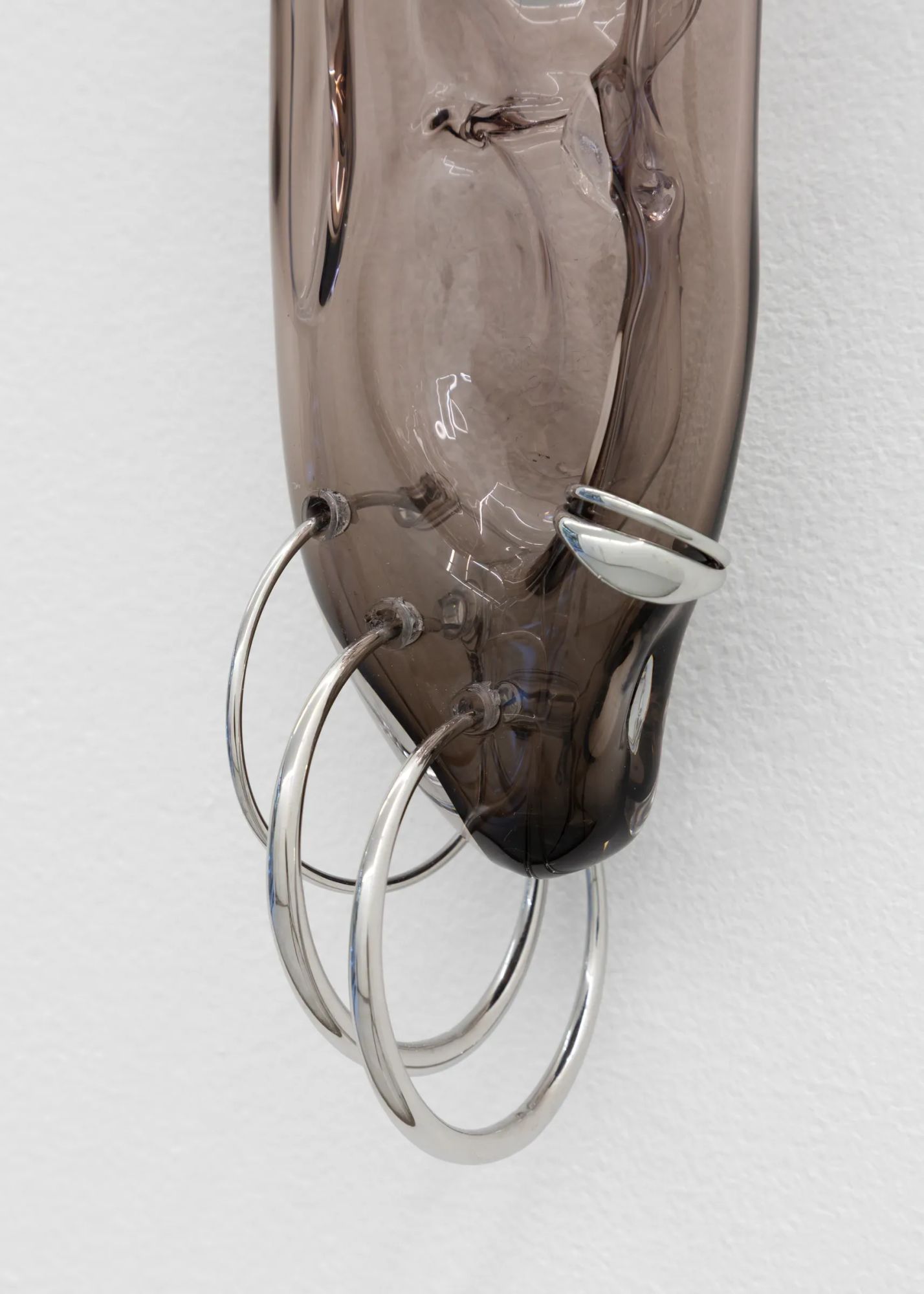
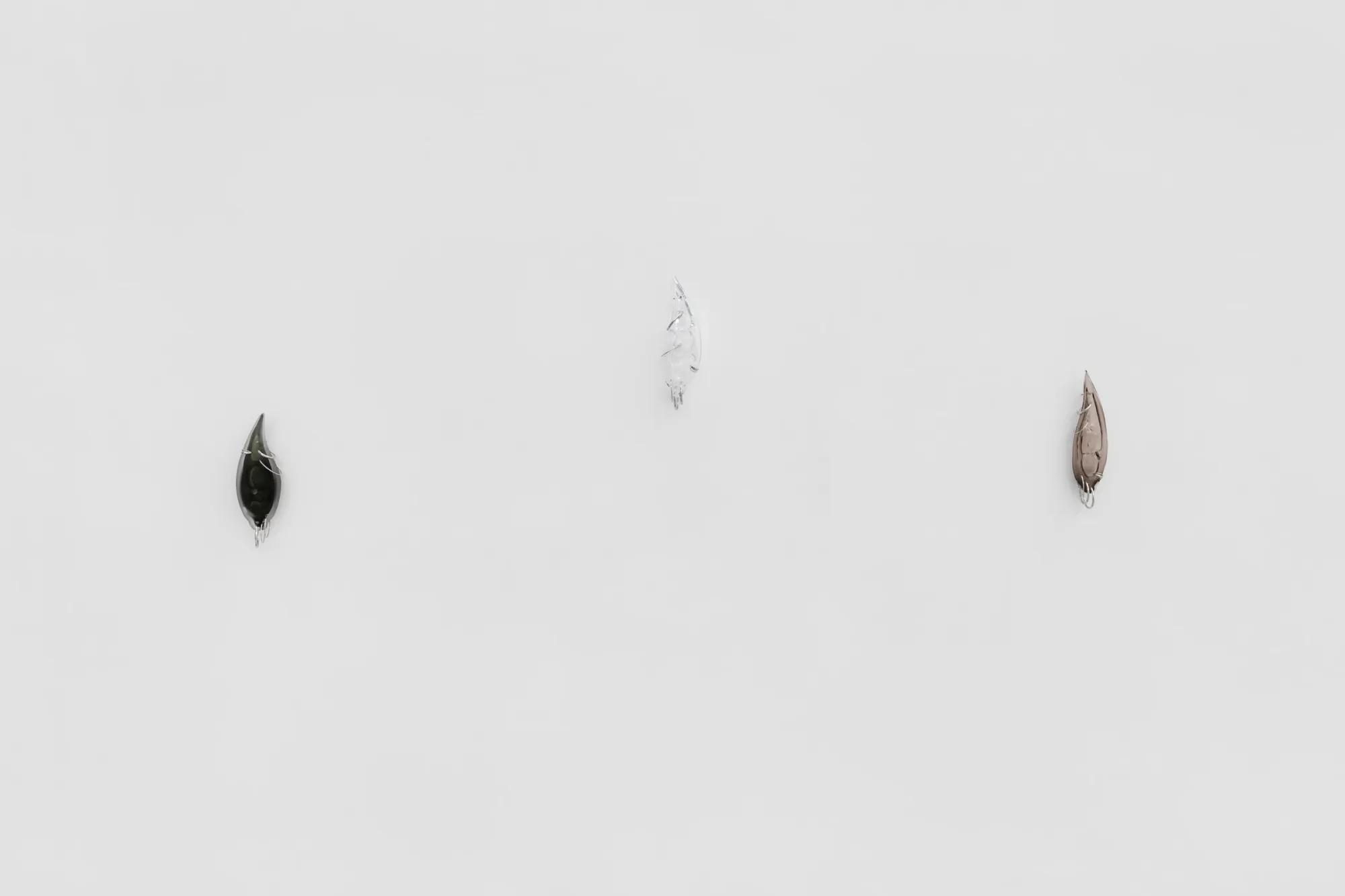
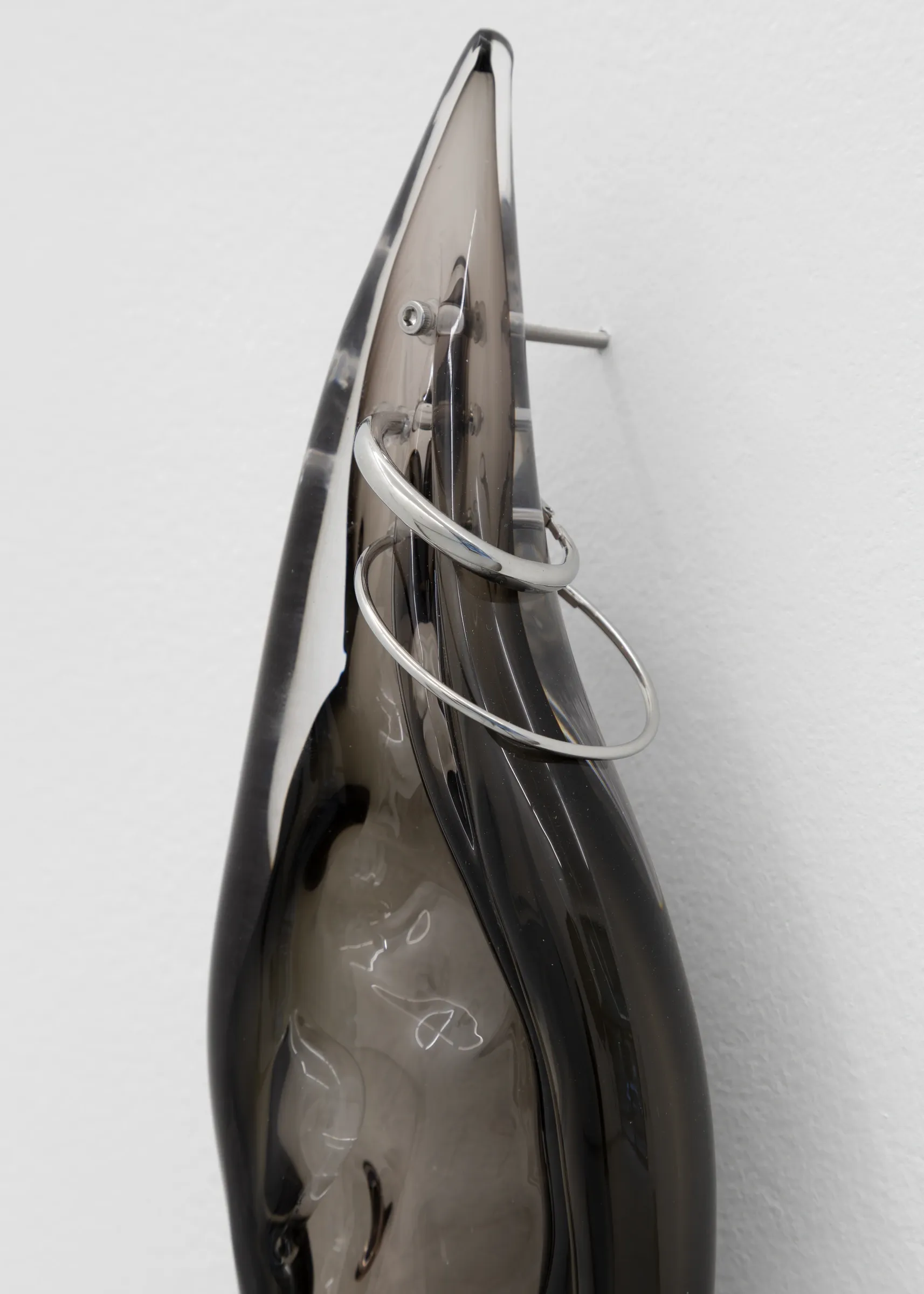
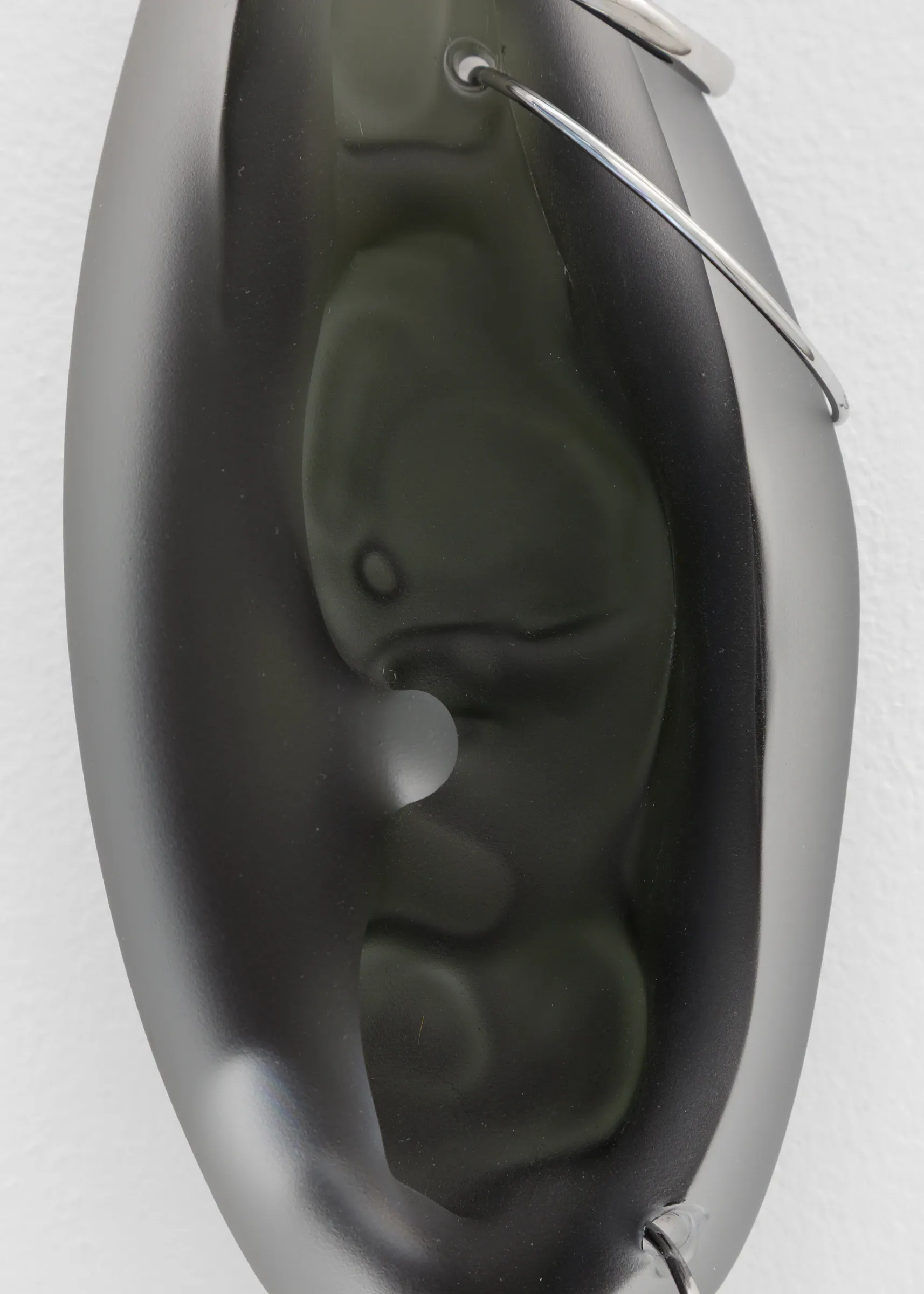
Floryan Varennes, Spike (Cendre), Spike (Sève), Spike (Ombre), 2026, glass and stainless steel, Xxijra Hii, London. Photo: Corey Bartle-Sanderson. Courtesy of the artist and Xxijra Hii
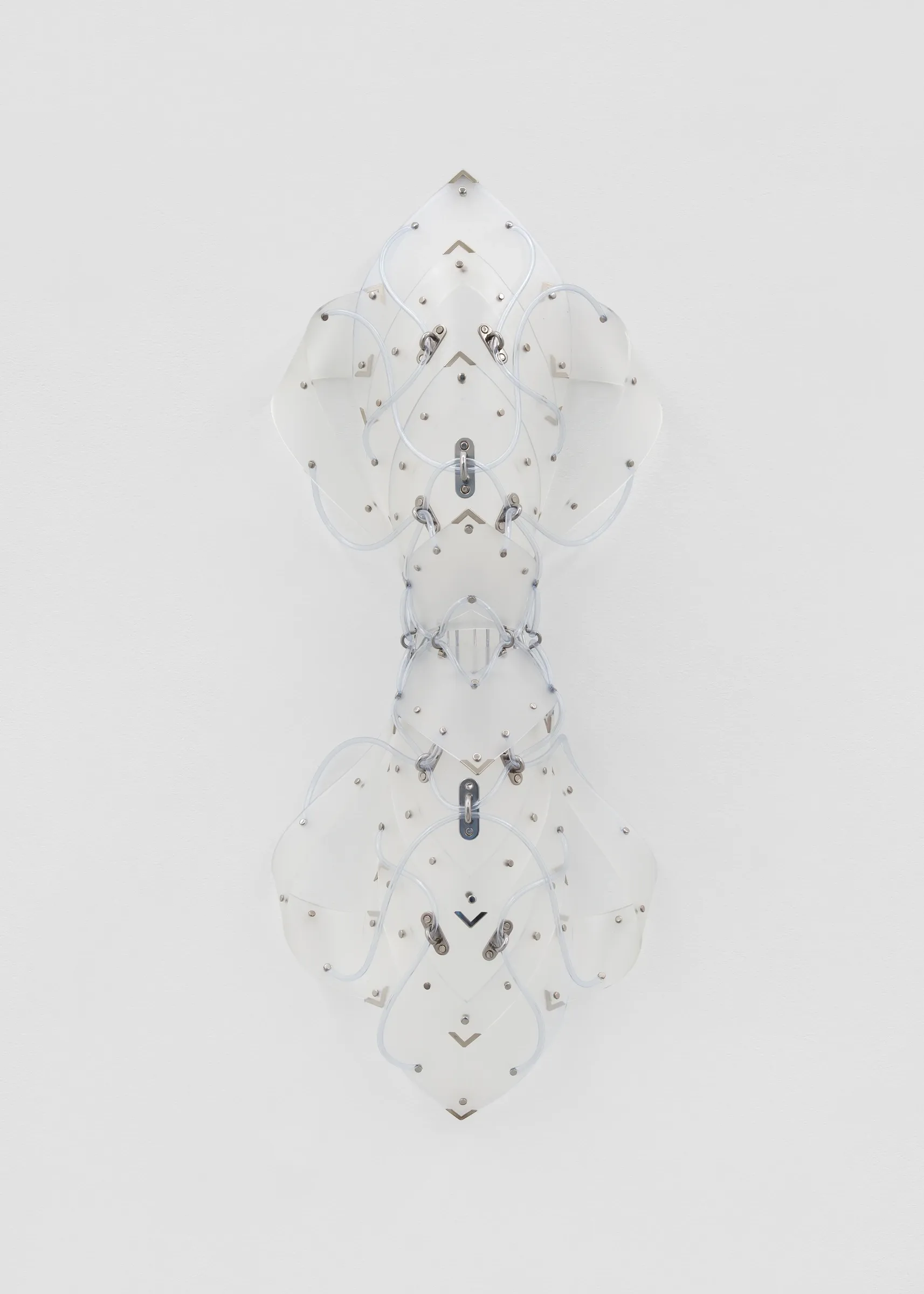
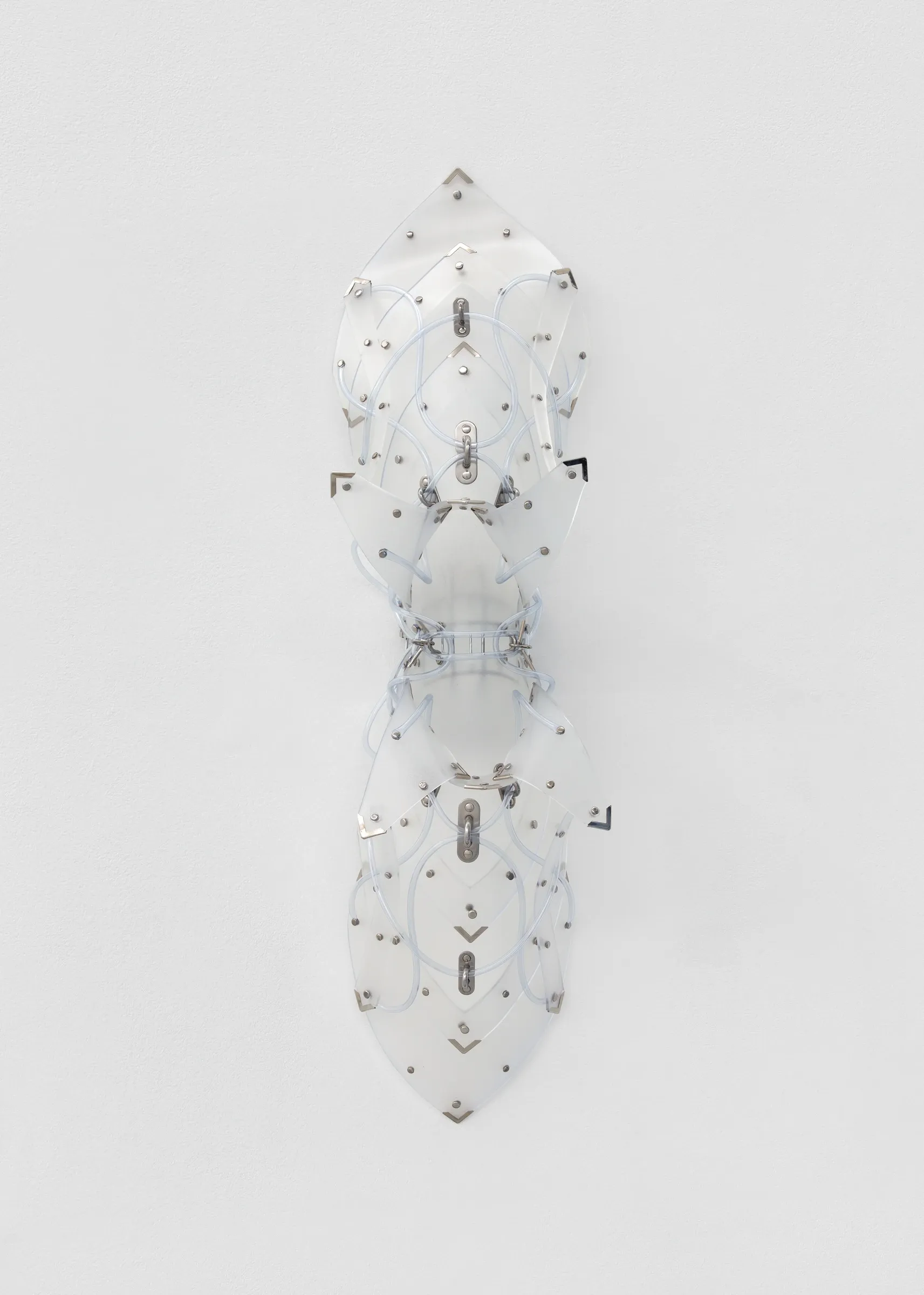
Floryan Varennes, Pixie 1.1 and Pixie 1.2, 2026, sandblasted PVC, steel and medical tubing, Xxijra Hii, London. Photo: Corey Bartle-Sanderson. Courtesy of the artist and Xxijra Hii
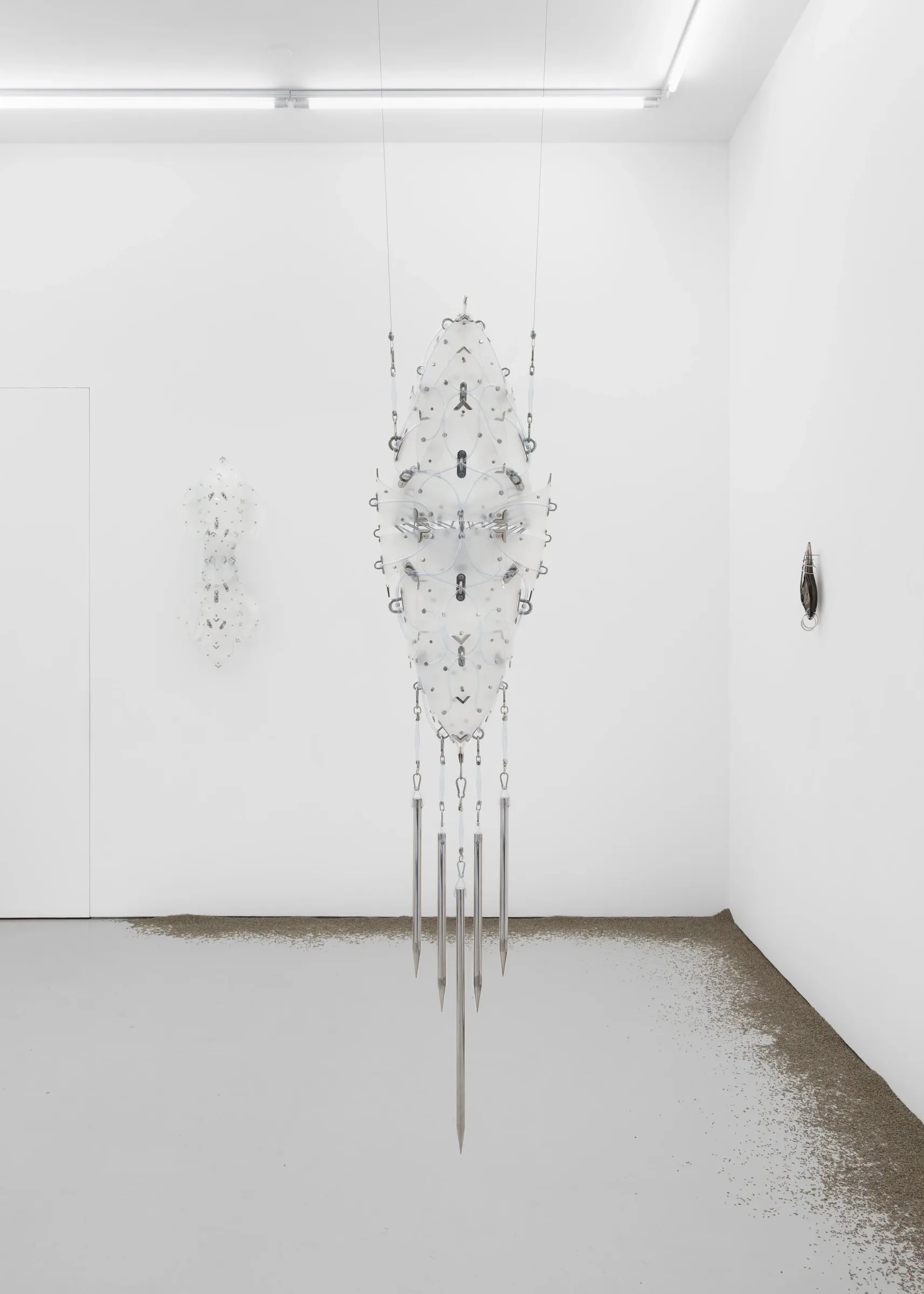
Below Ark, stainless steel rods extend toward the floor with a precision that seems structural and carries something else, the suggestion that what stabilizes could equally puncture.
In PVC and steel, it carries the vocabulary of life support without offering access to what it is supporting.
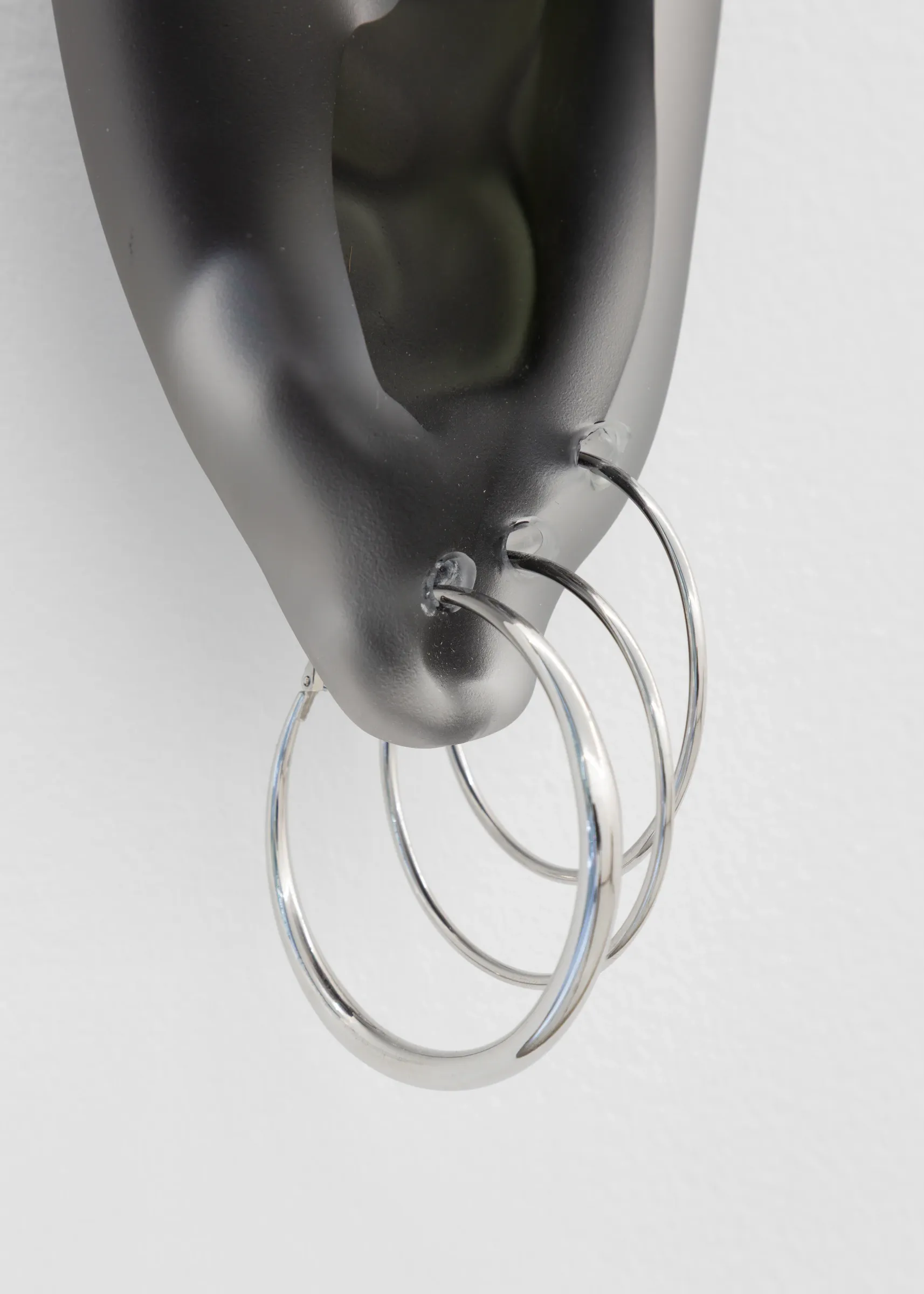
The four Spike works, glass and stainless steel, wall-mounted, ear-shaped, shift the register entirely. They sit quietly on the white wall, small, at approximately hearing height.
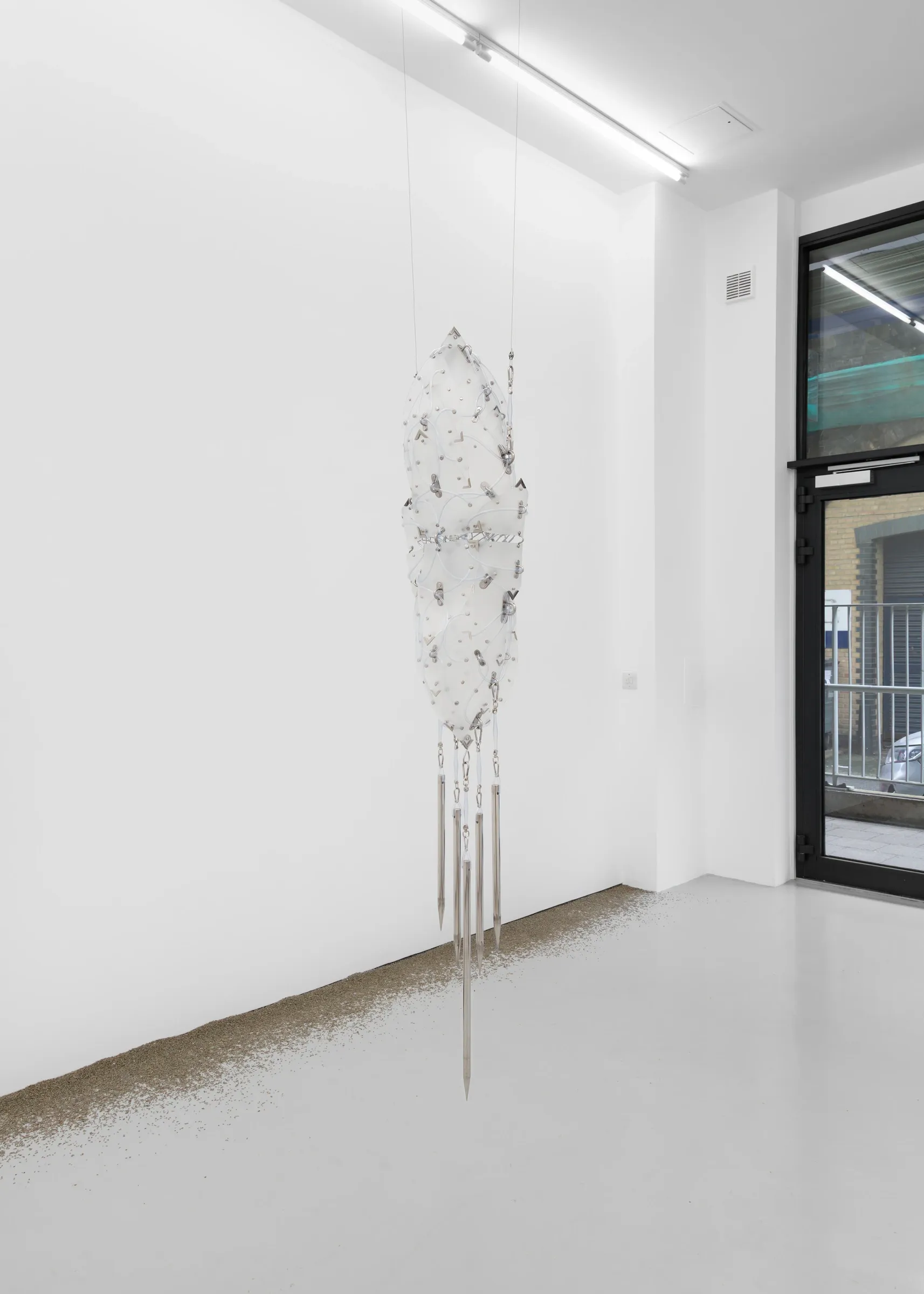
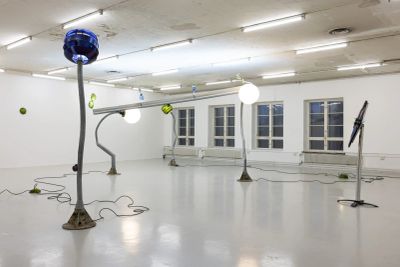
Floryan Varennes, Even Spectres Can Tire, 2026, installation view with suspended Ark, Pixie and Millefleurs (lavender), Xxijra Hii, London. Photo: Corey Bartle-Sanderson. Courtesy of the artist and Xxijra Hii
The exhibition text locates these within an economy of violence: the severed ear as wartime trophy, an organ removed from the body and reclassified as evidence or object. Here they are rendered in glass, transparent, fragile, cold to the eye, and placed back on the wall as if waiting to function again. The ear is still present, but estranged from the body it belonged to and from the sense it once held.
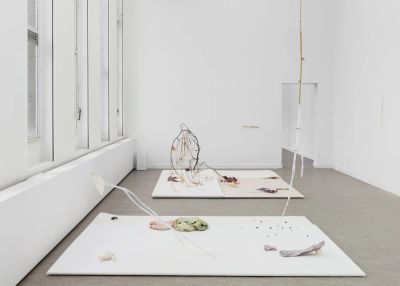
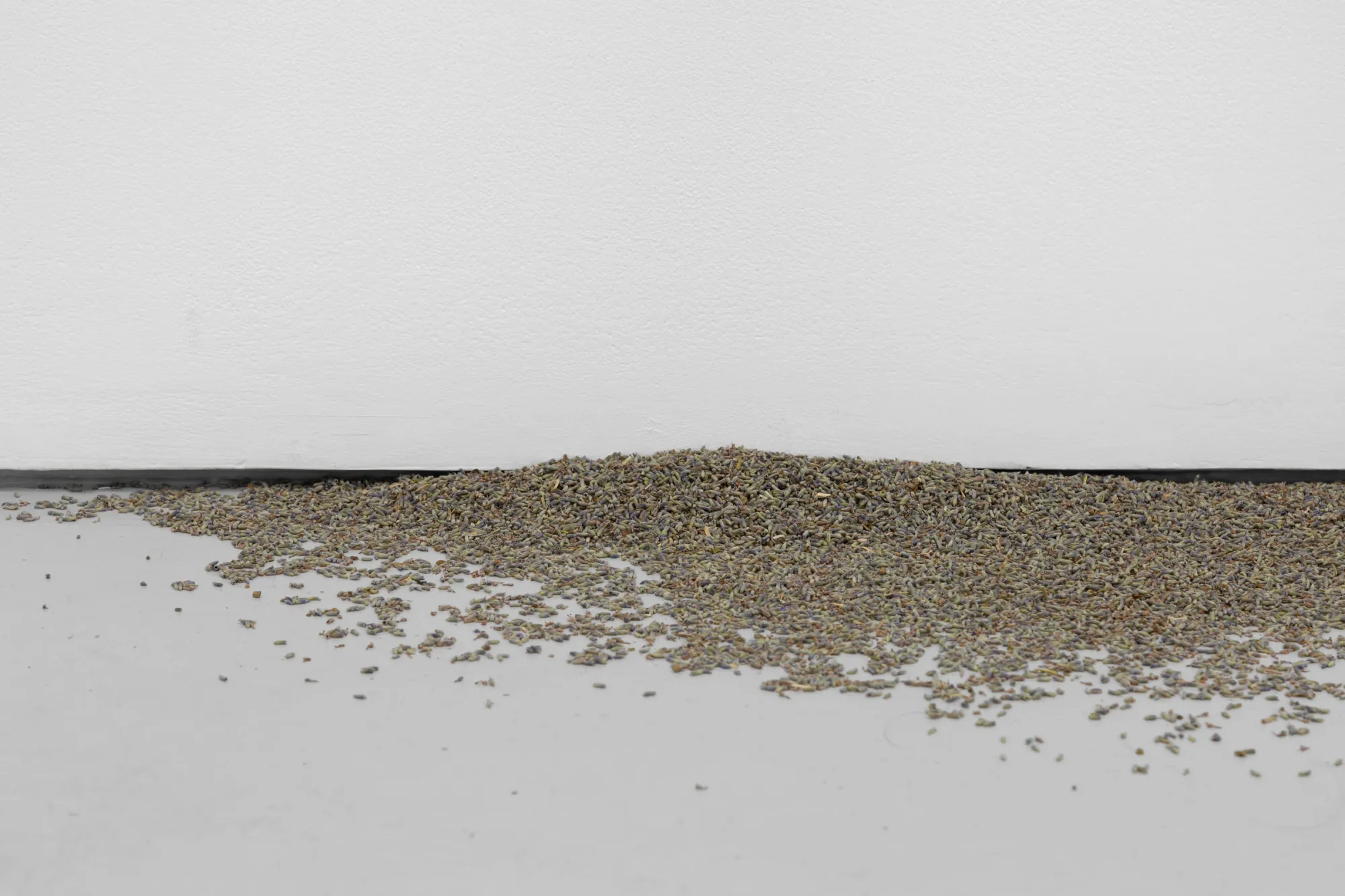
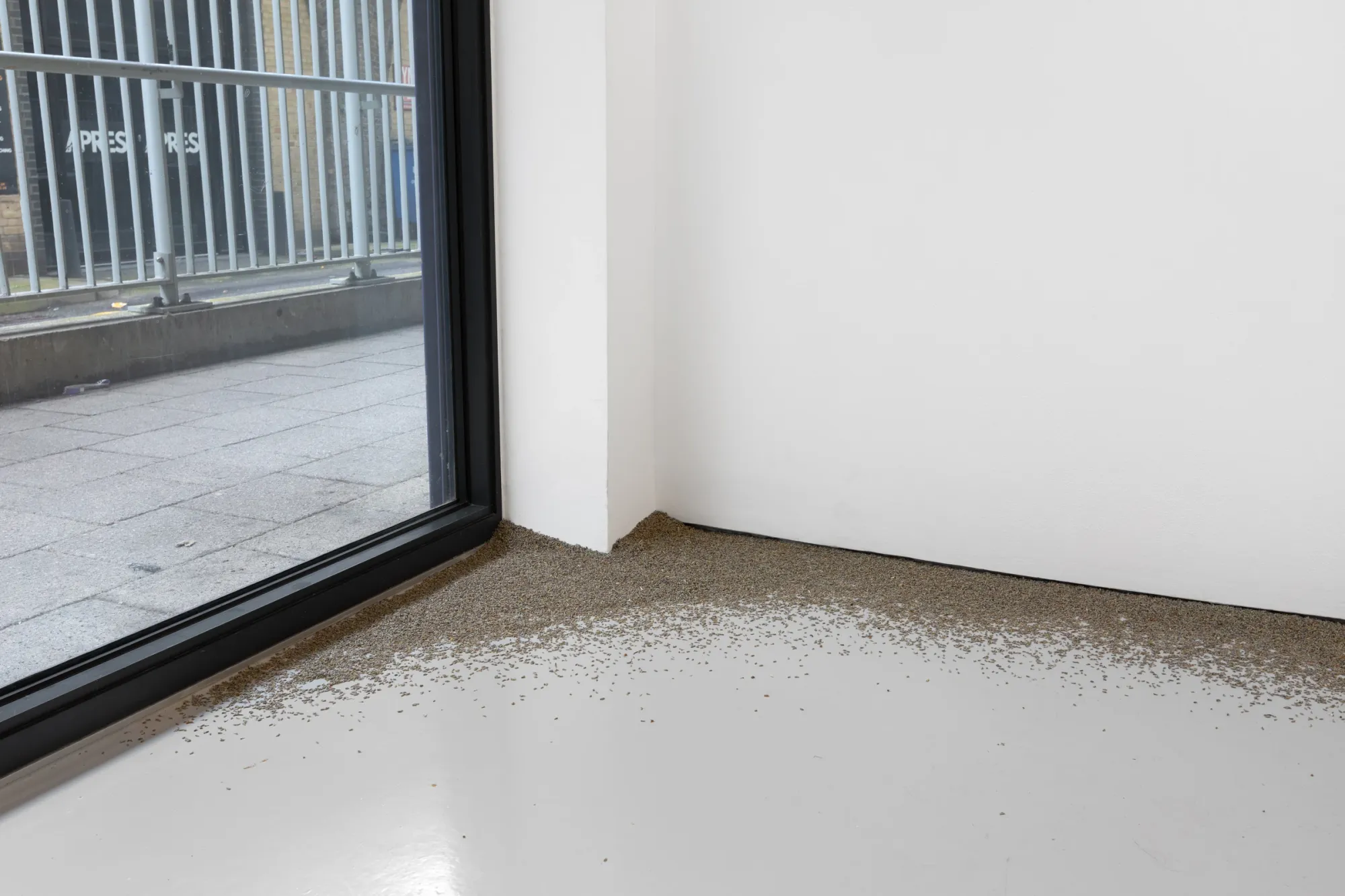
On the floor throughout the space, scattered in drifts that reach toward the center of each room, lavender, the work Millefleurs, introduces the only register in the exhibition that is warm. The scent is immediate, medicinal in its own historical tradition, and the contrast between the dried organic material and the cold precision of PVC and steel reads as deliberate. The organic world is still here. It is just on the ground.
Varennes' work has been read through queer theory, transhumanism, and medieval fantasy, and all of these remain relevant frameworks. But the question the exhibition holds most clearly is more immediate. When care infrastructure is being publicly renegotiated, financially, politically, institutionally, a body of work about the architecture of protection arrives with weight it might not have carried a decade ago. Not because it argues a position. Because it holds the paradox open.
The title permits the spectre to tire. Derrida's unresolved figure, the thing that haunts without concluding, is here allowed to become exhausted. That small permission changes the stakes. It means the structure was never immortal. It means endurance has a limit, and that limit is still out of frame.
Instagram Floryan Varennes
Xxijra Hii on Instagram
About Catapult
This is an artist interview published by Catapult — an independent editorial platform for contemporary art, based in Vienna. We publish exhibition reviews, artist features, interviews, and critical context, with a focus on emerging and mid-career practices from Europe and beyond.
catapult.art
Want to be featured? Submit your work →