Can Painting Wear Armour and Still Feel Tender? Fátima de Juan and Her Dino-Fueled Amazons

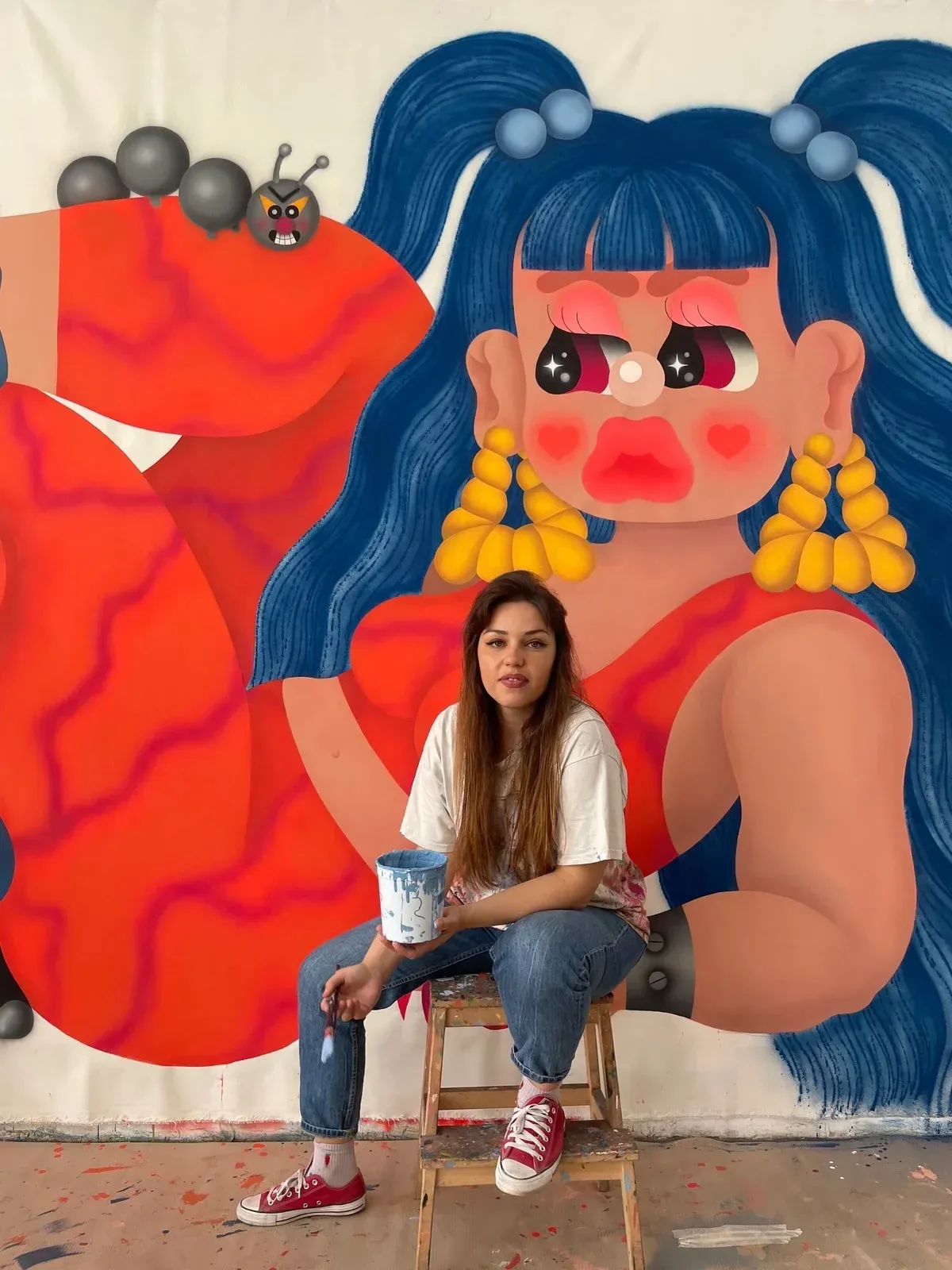
Soft cheeks, heavy boots, fruit everywhere, nothing here is defenseless.
From Palma walls to the studio floor
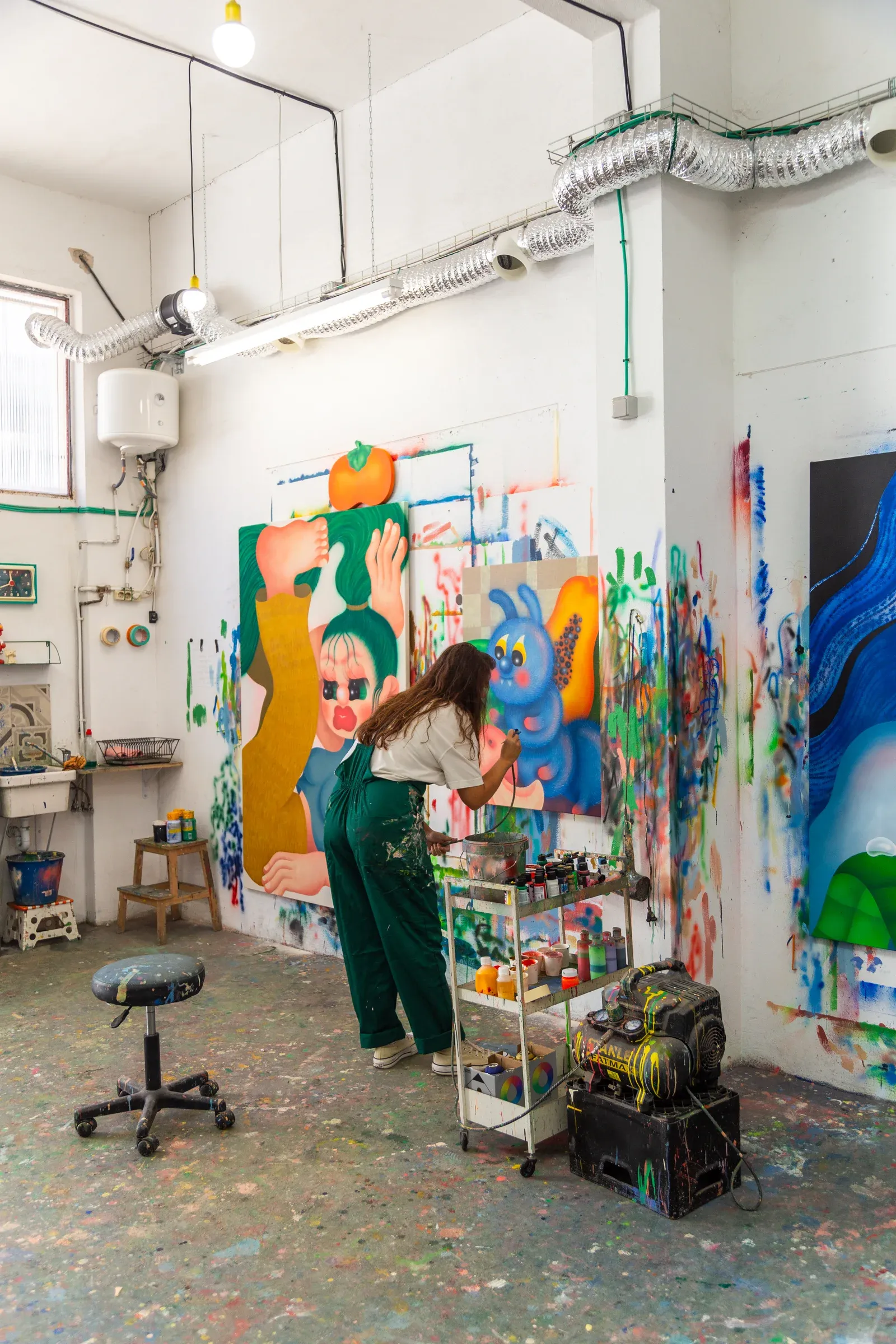
Fátima de Juan, a Spanish painter born in 1984 in Palma de Mallorca, works in large-scale painting, developing figurative worlds populated by muscular, big-cheeked female figures, animals, and symbolic objects.
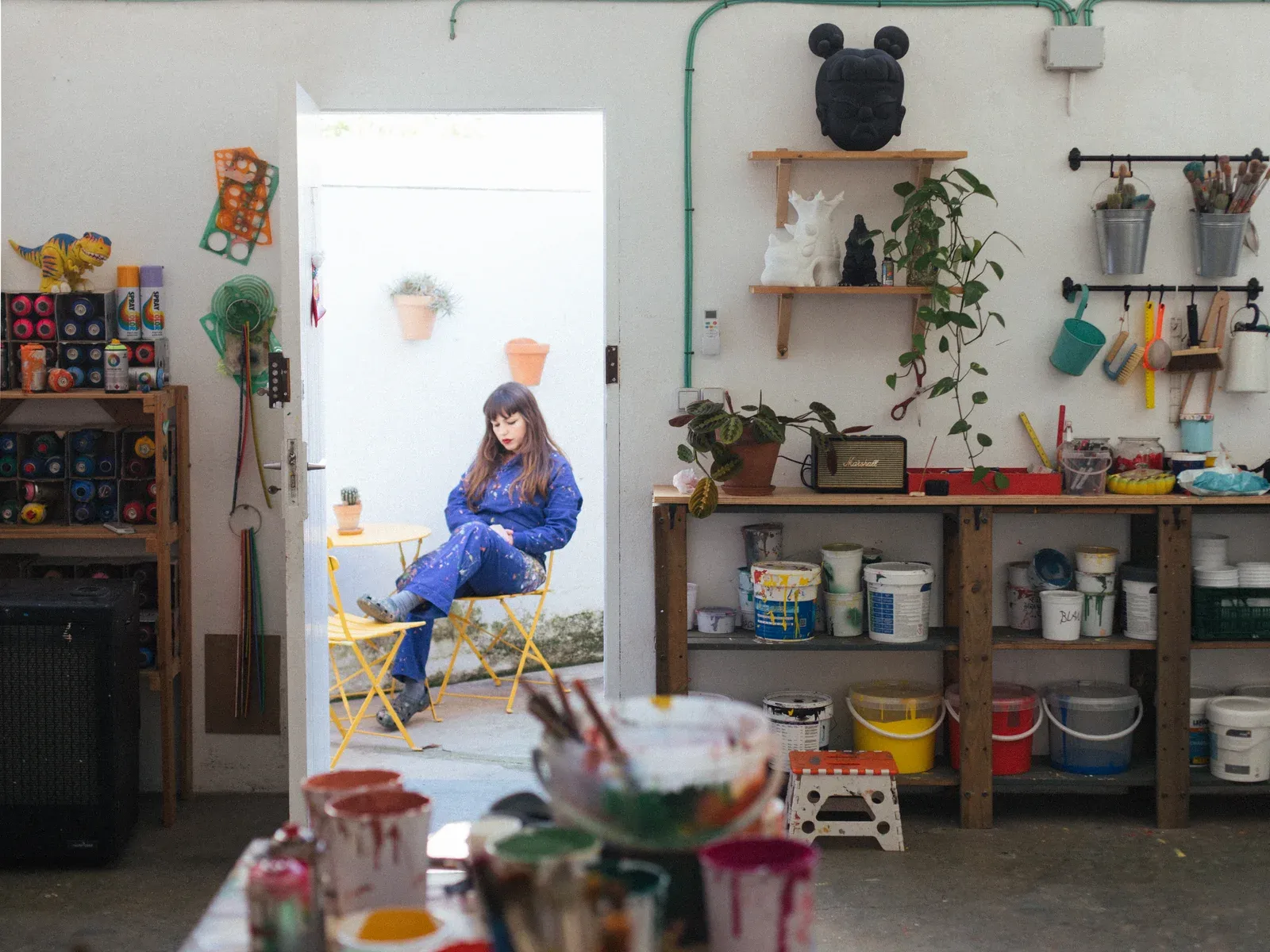
Trained in illustration and graphic design, she first found her visual language outside institutions, painting graffiti as a teenager under the alias Xena together with her sister.
That early experience of working directly on walls shaped her attraction to oversized forms, frontal presence, and images that must hold their ground in public space.
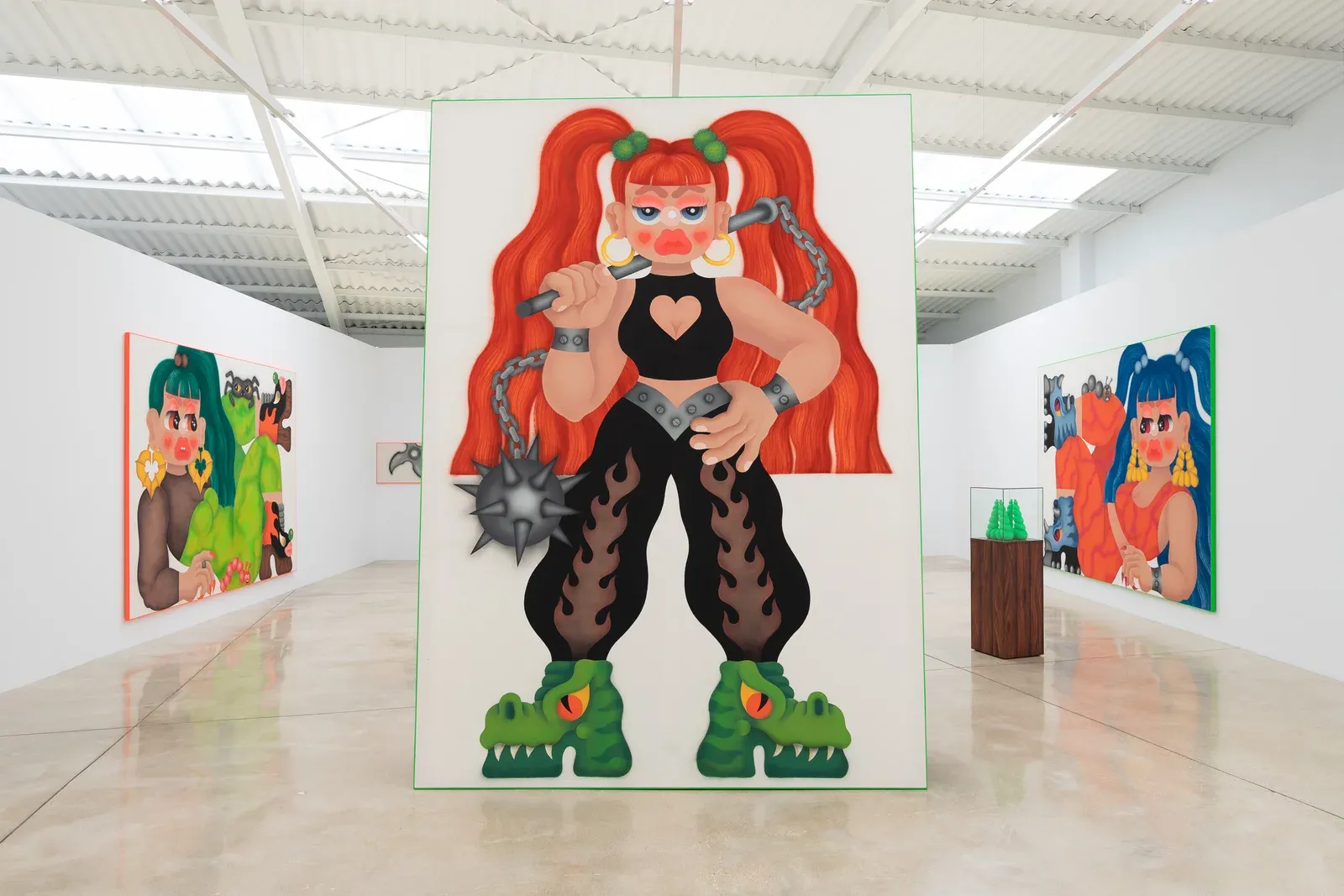
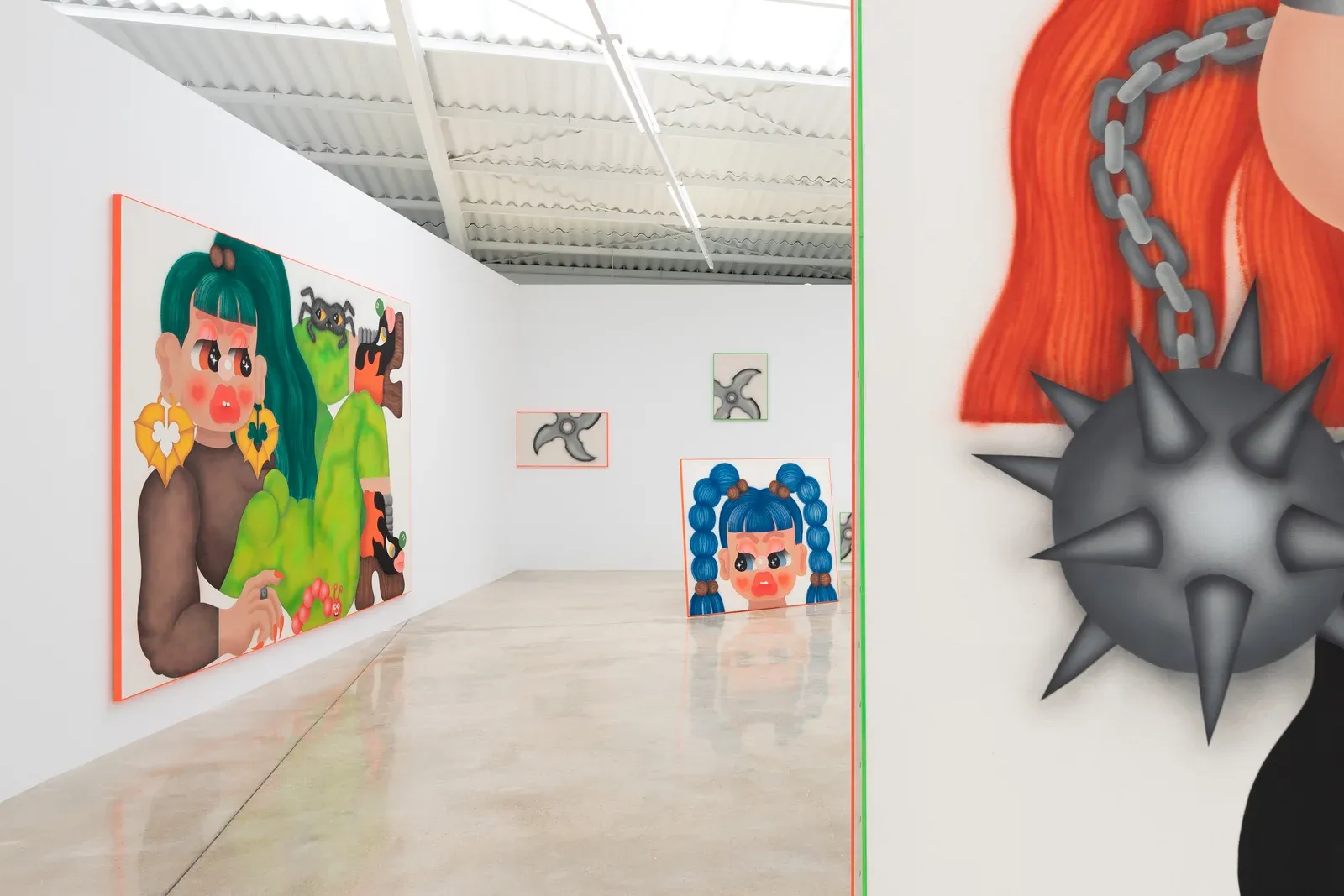
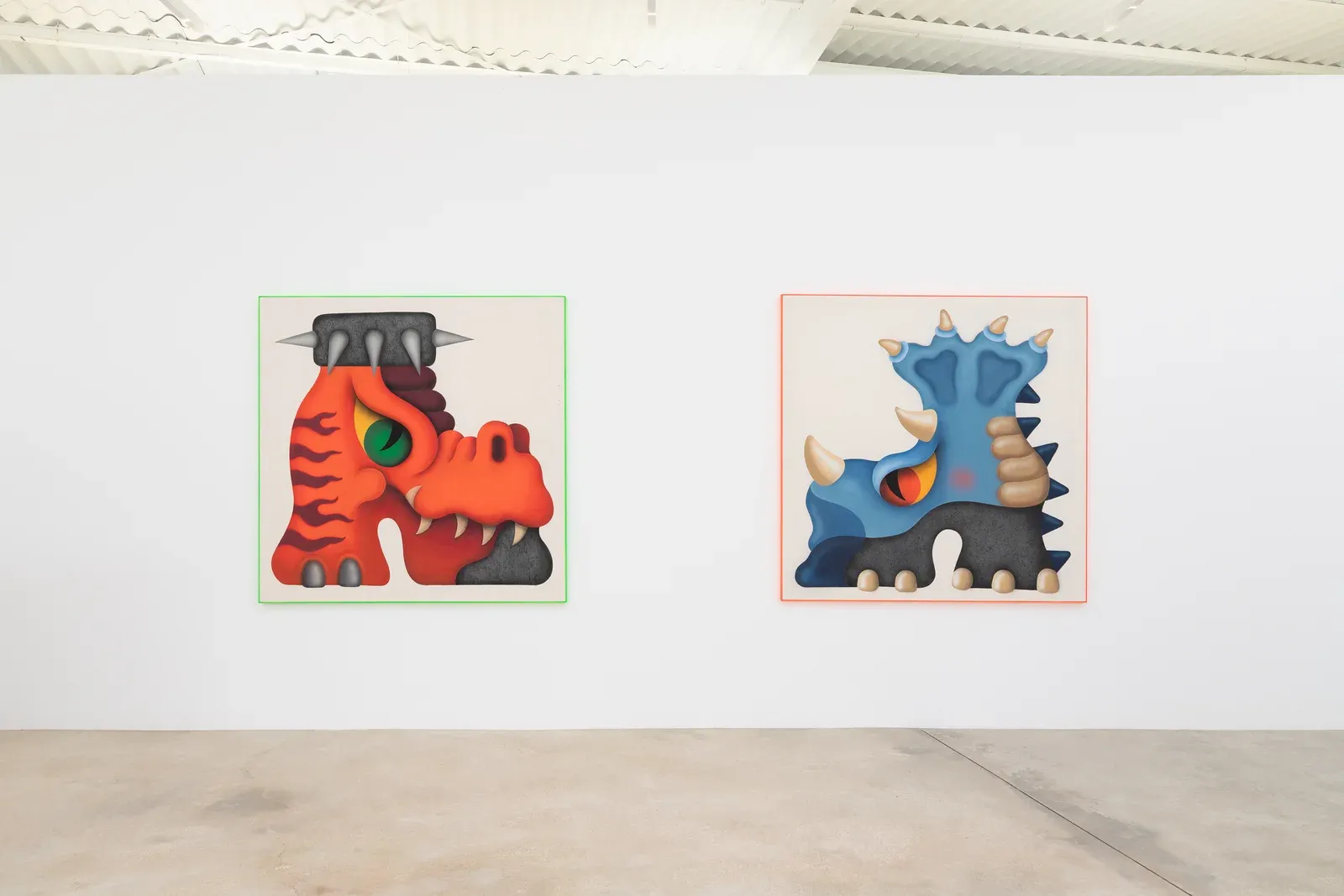
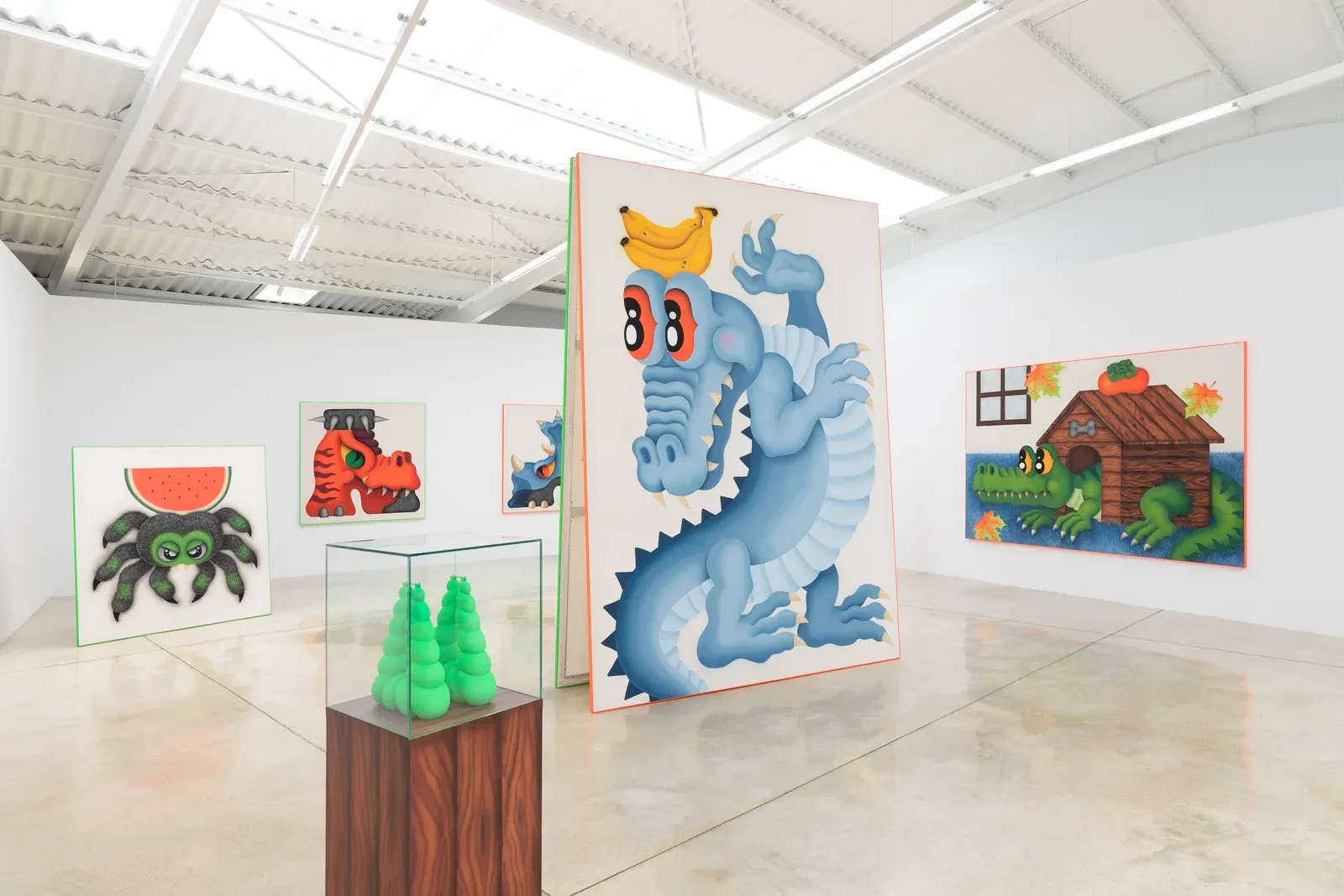
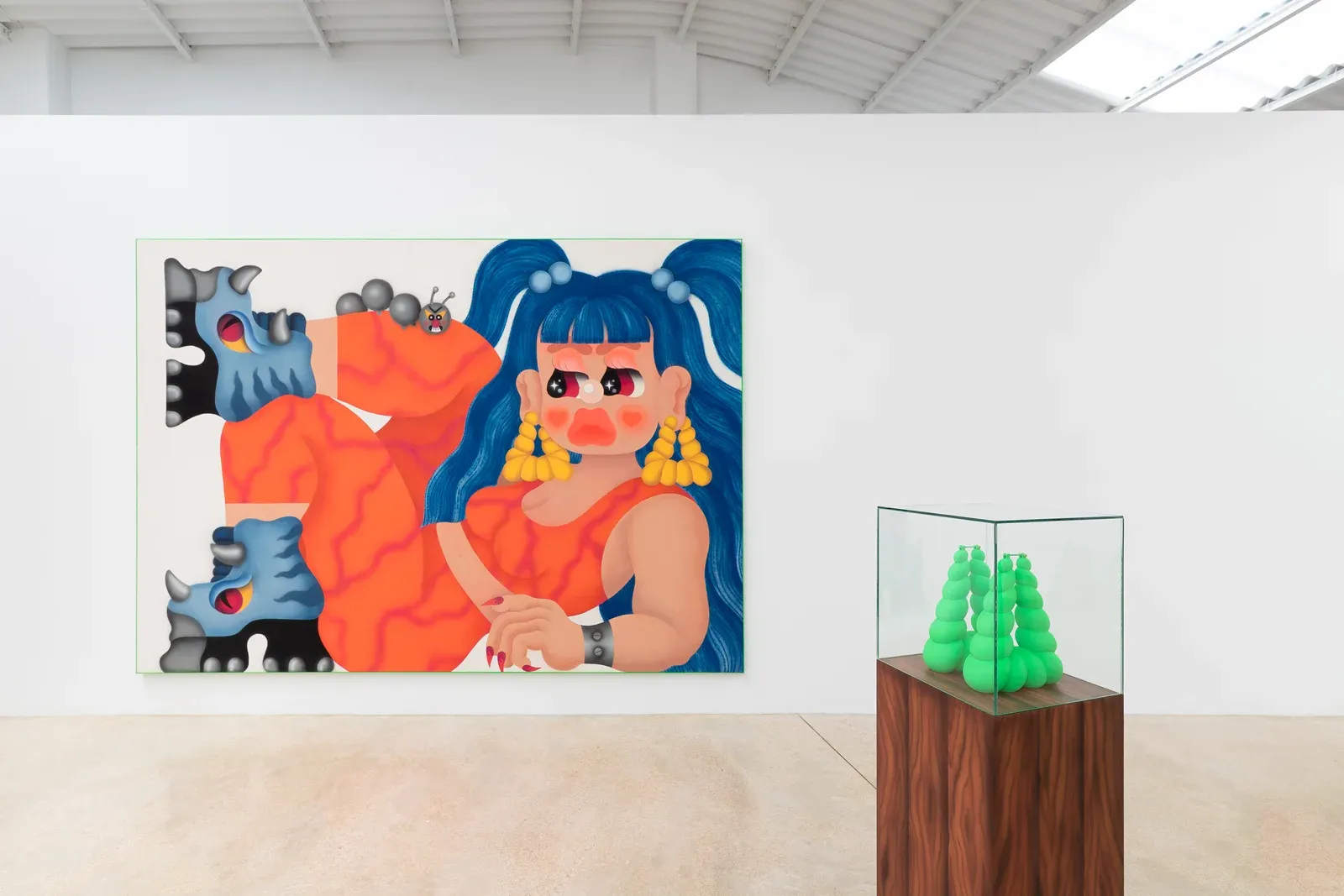
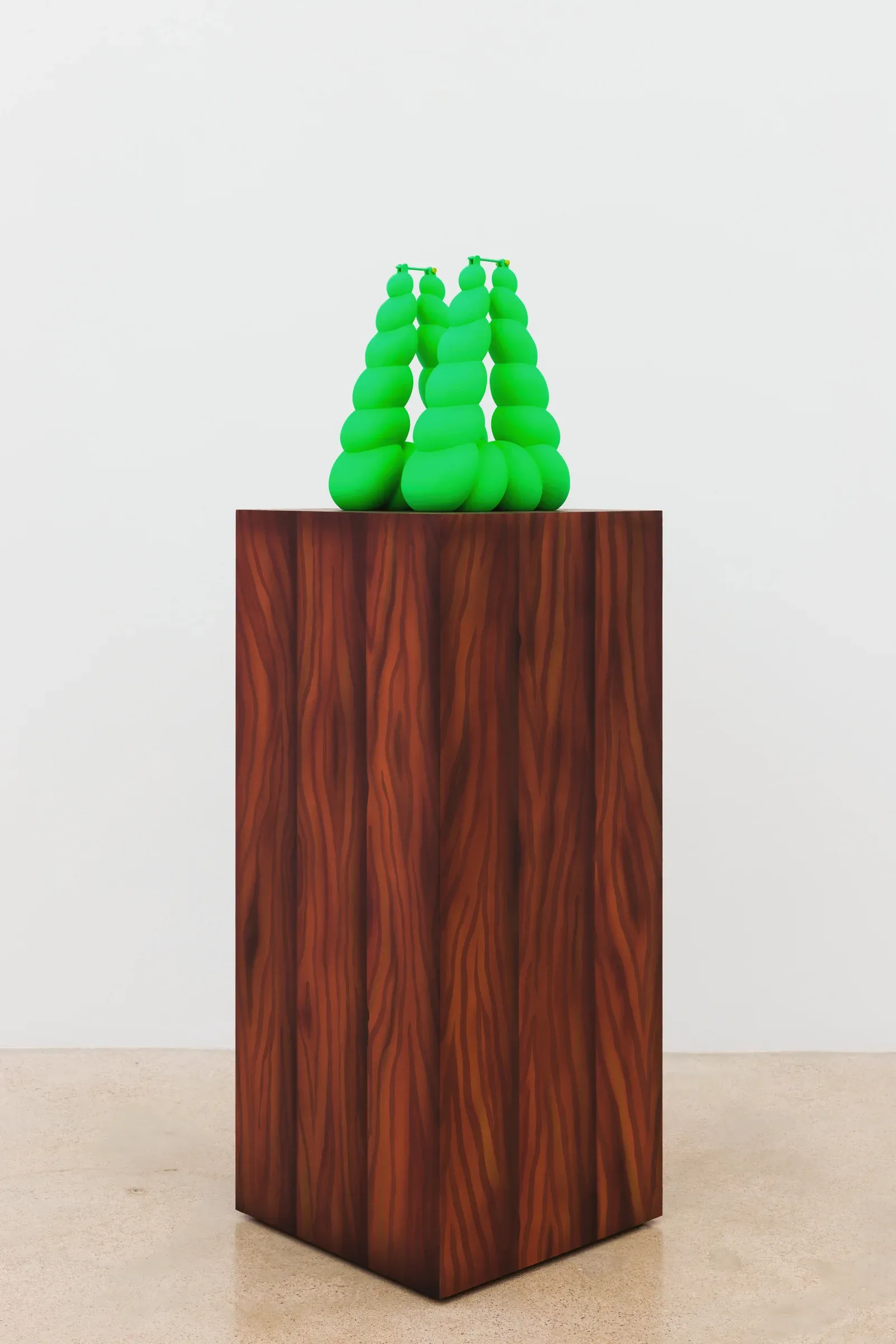
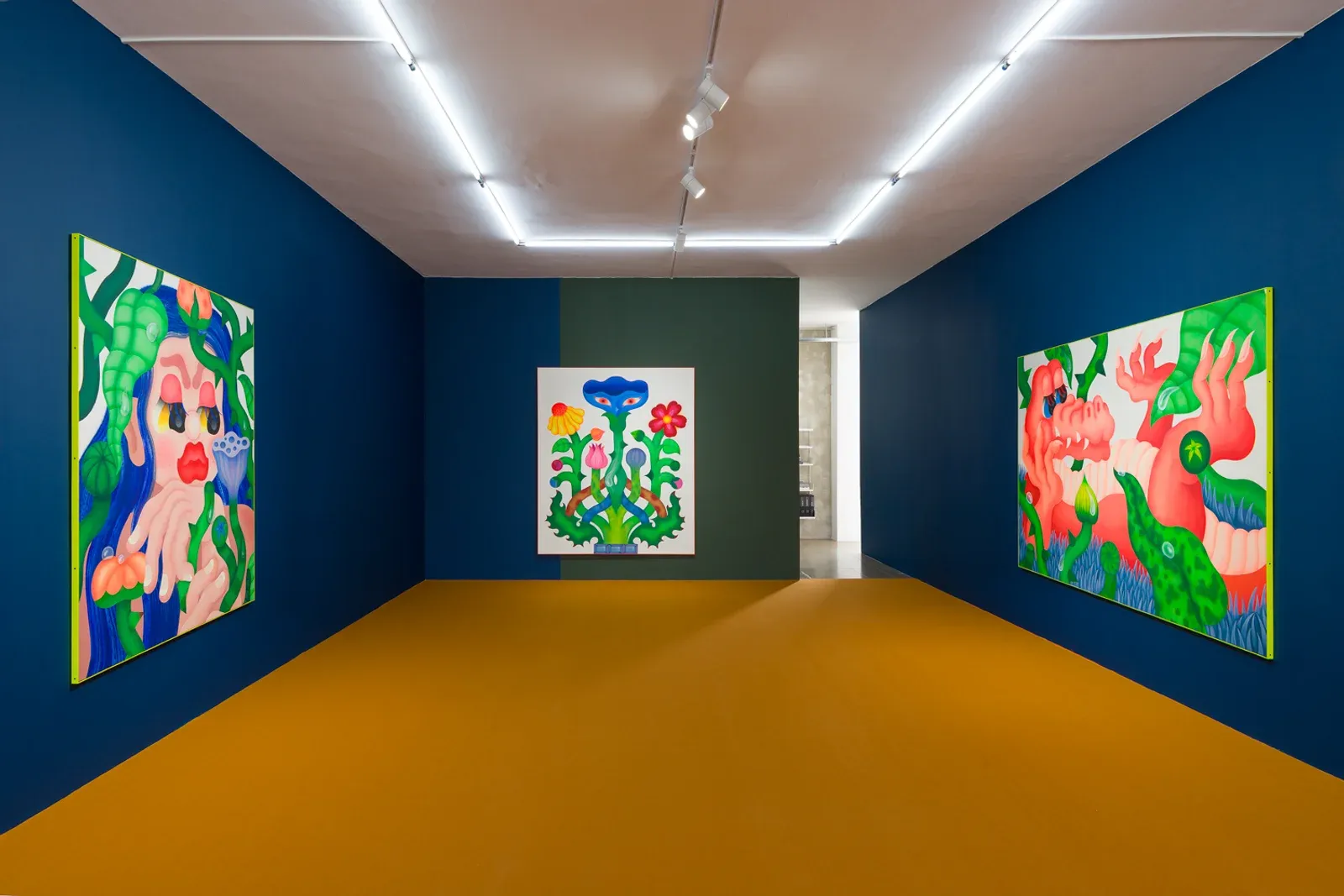
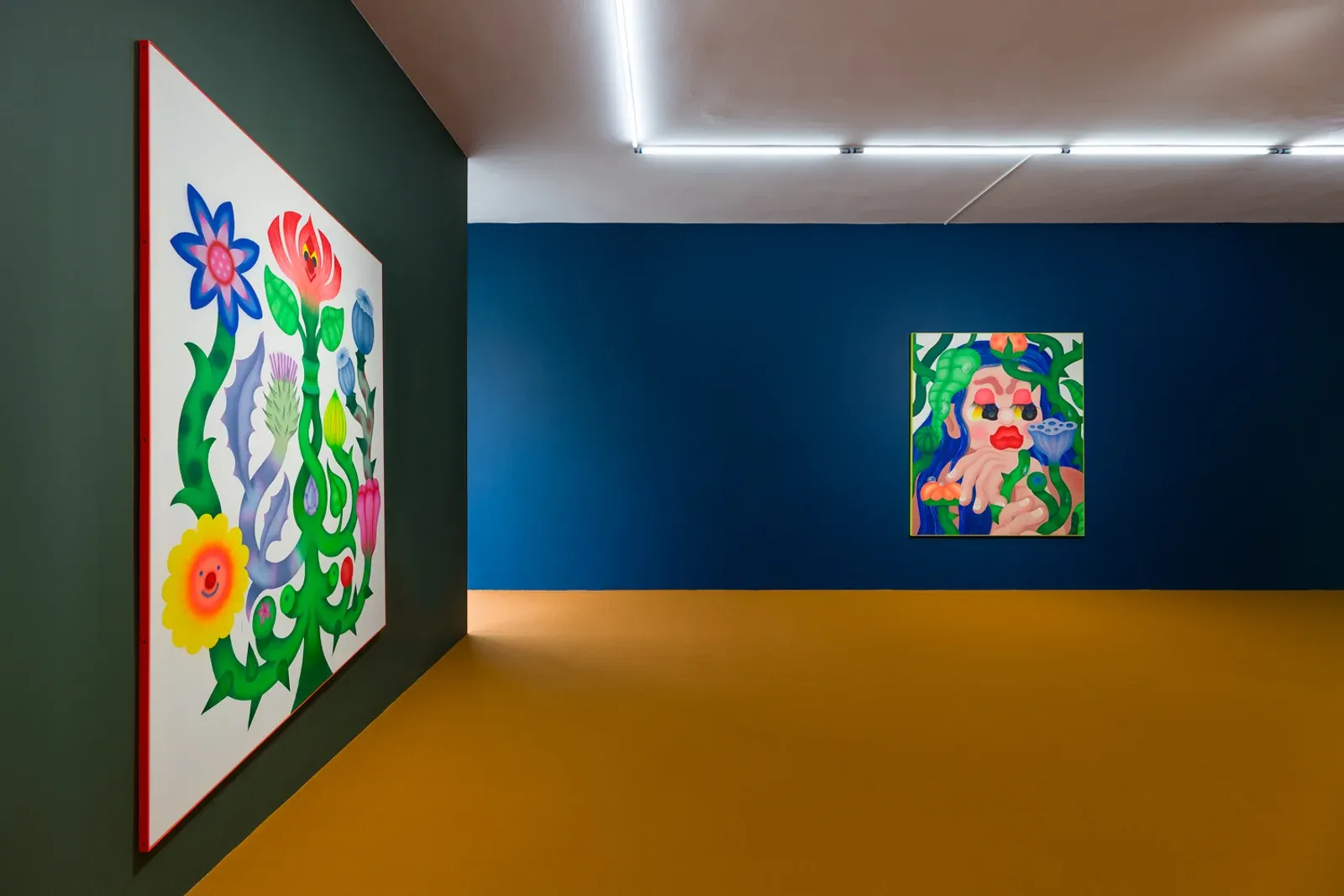
In 2022 she presented Pretty Thug, followed by Don’t Disturb Me, I’m Blooming in 2023, marking a decisive consolidation of her studio practice.
The leap from street to canvas
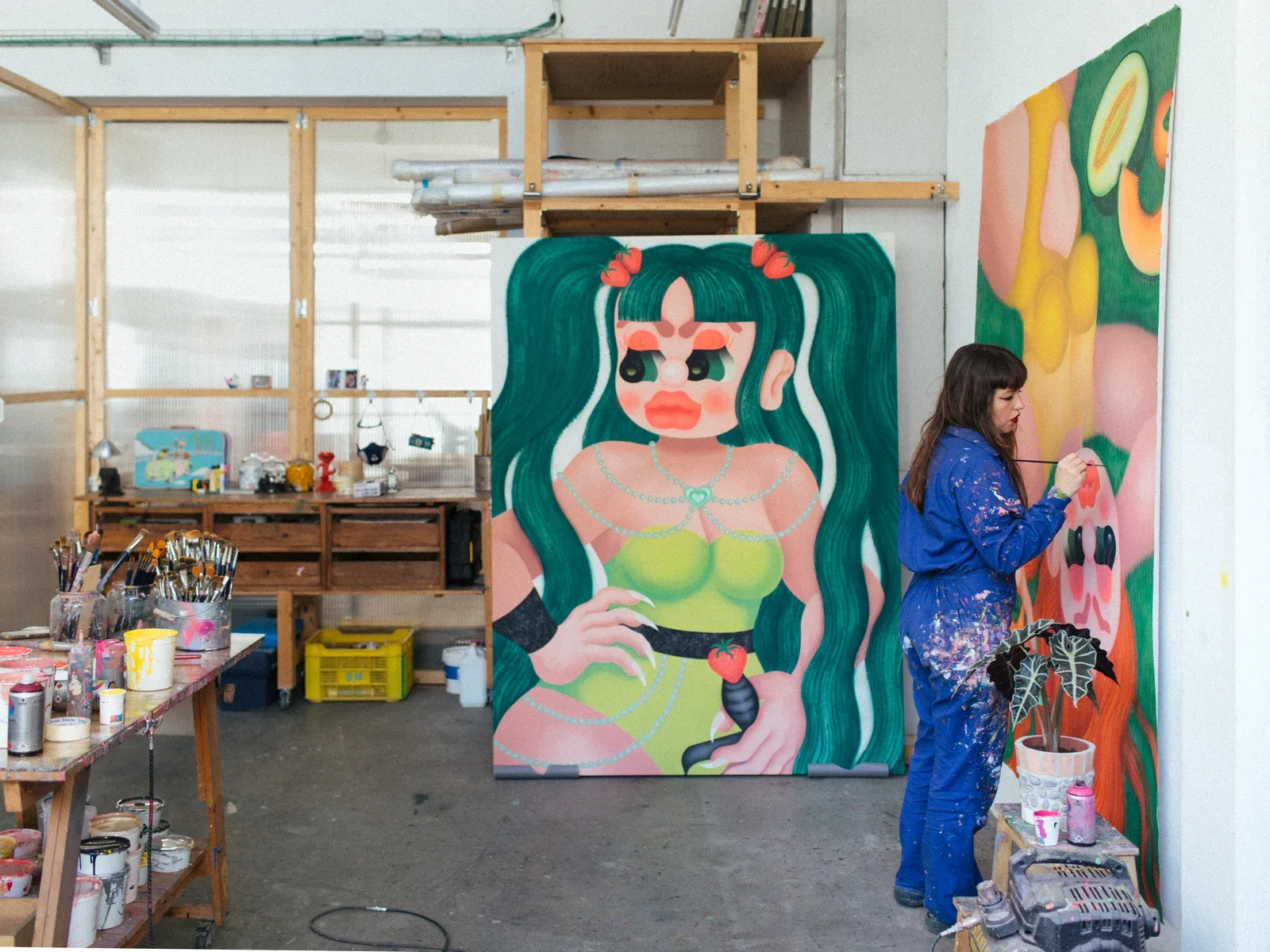
De Juan describes the move from murals to canvas as a leap rather than a retreat, the beginning of a full-blown Amazonian era. The works retain the monumentality and assertive stance of street painting, yet the surface becomes slower and more introspective.
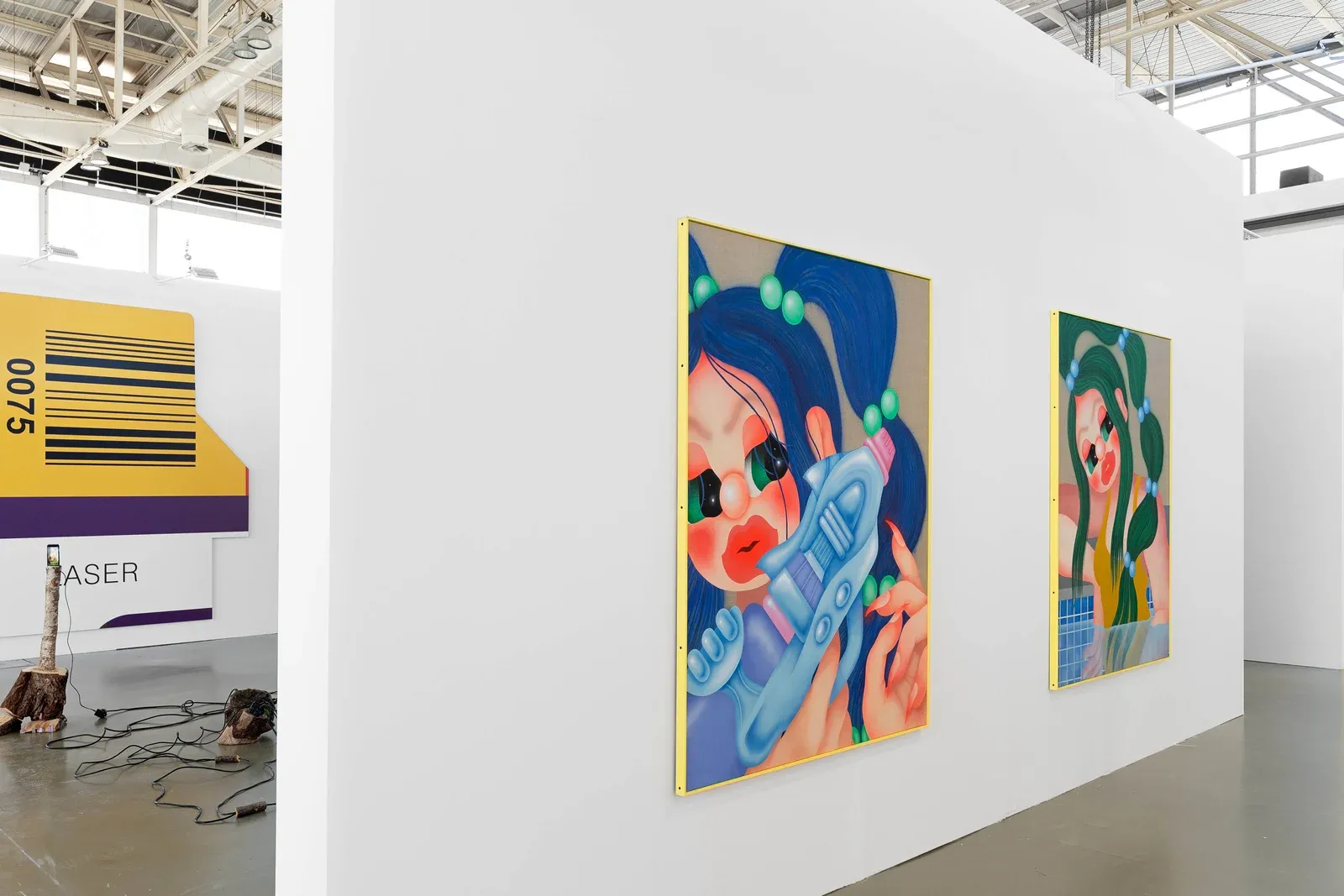
Fluorescent frames, saturated colours, and sharply contoured figures act like boundaries, containing energy rather than releasing it into the street. The paintings feel composed but never quiet, as if each figure is holding itself together by force of will.
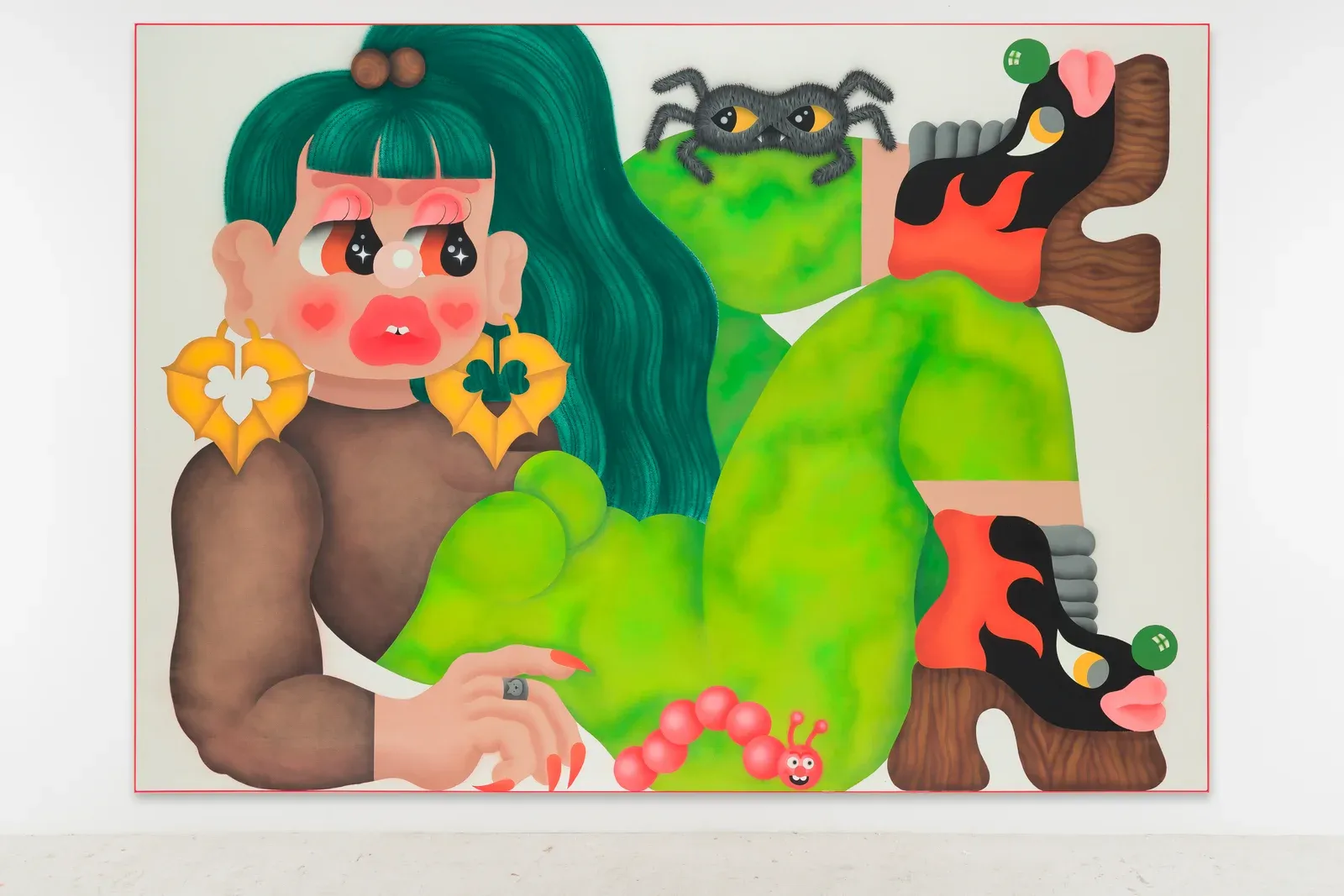
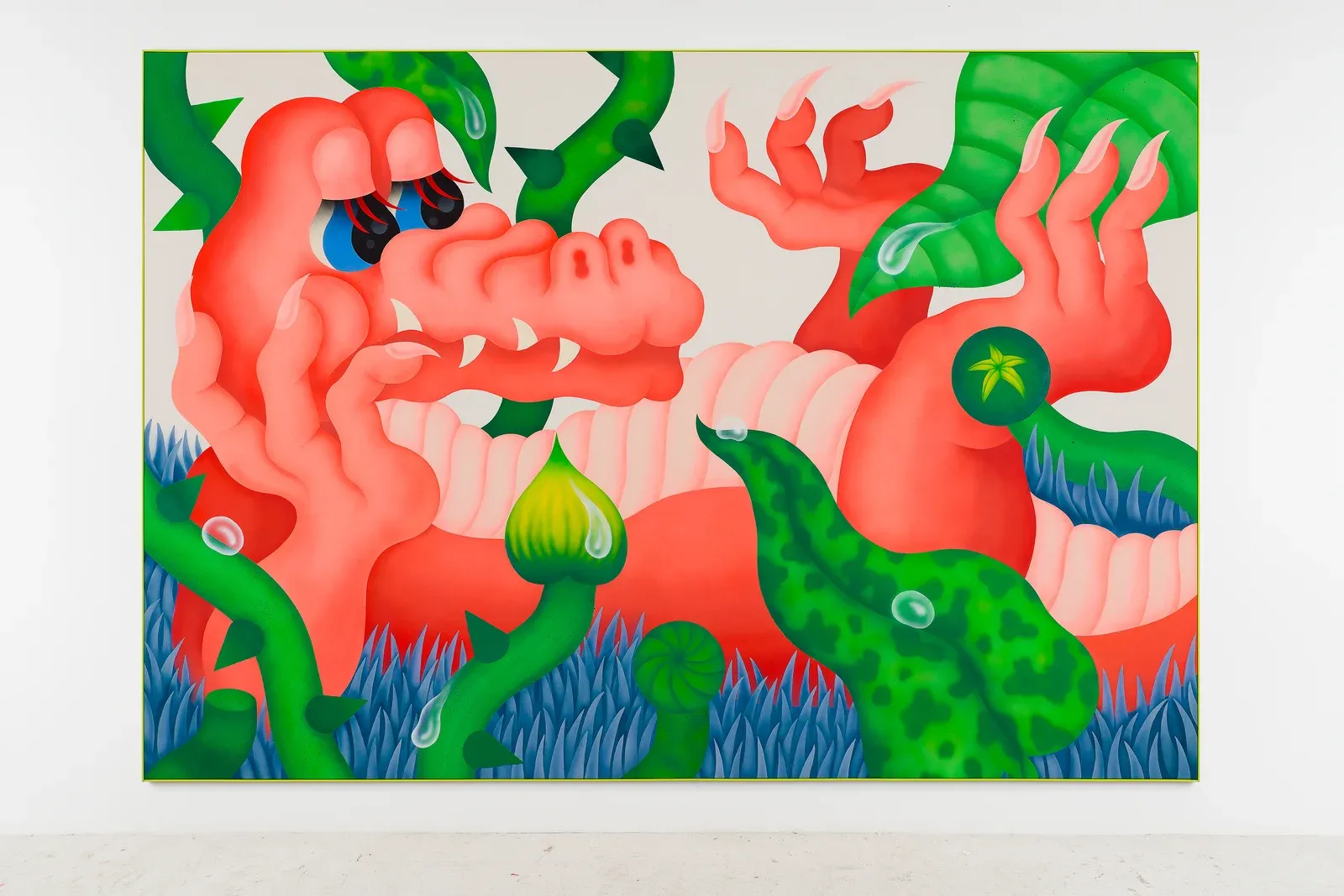
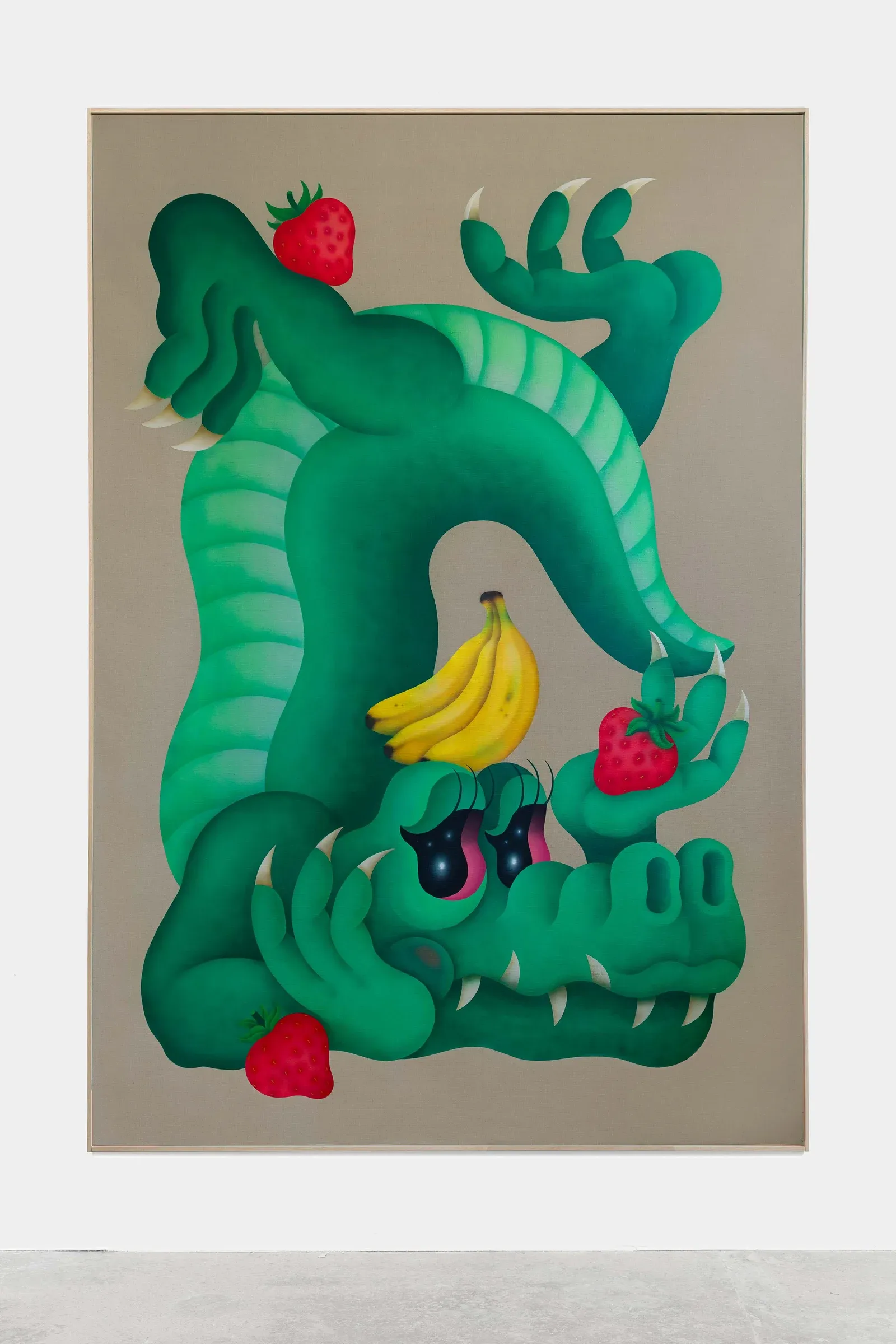
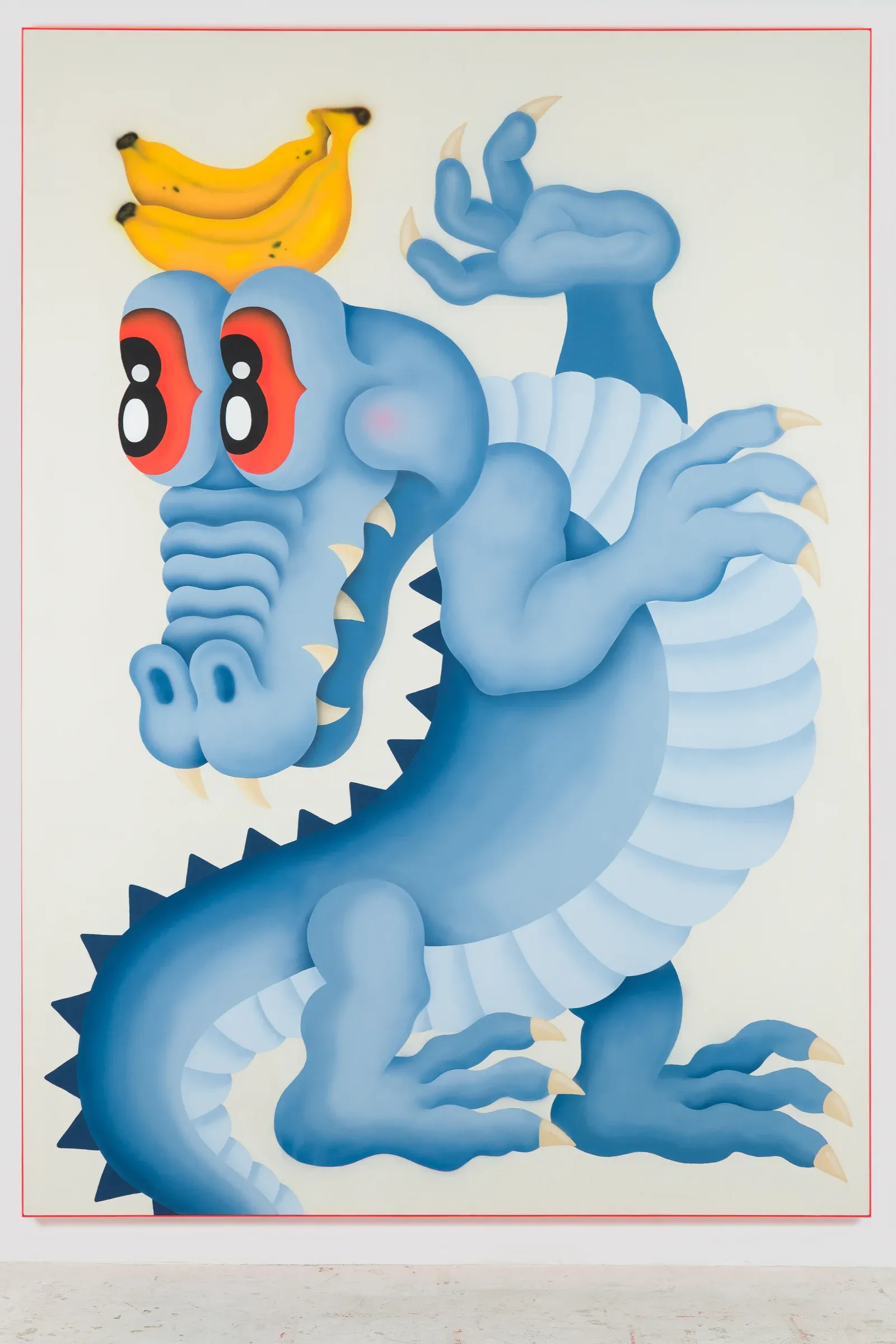
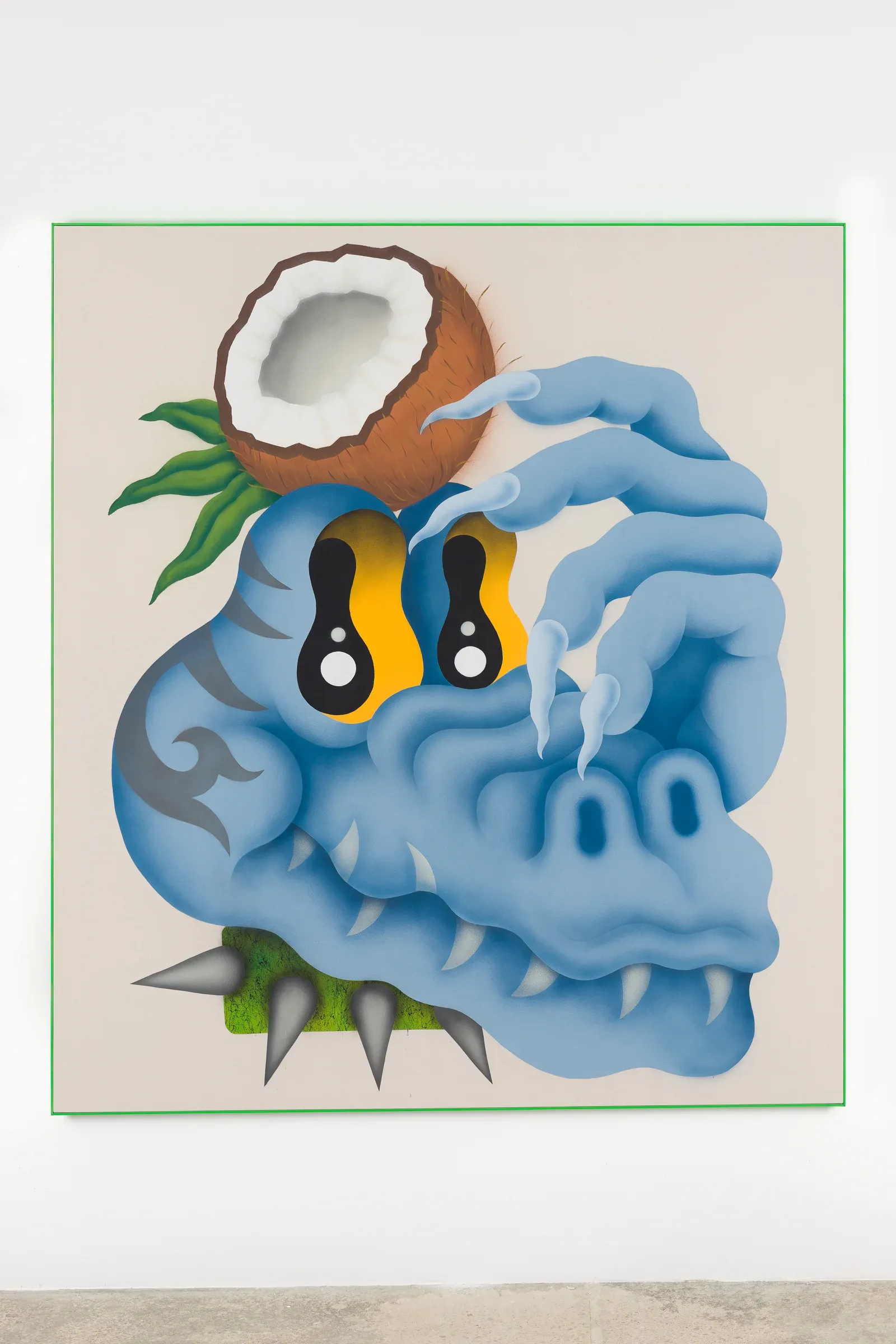
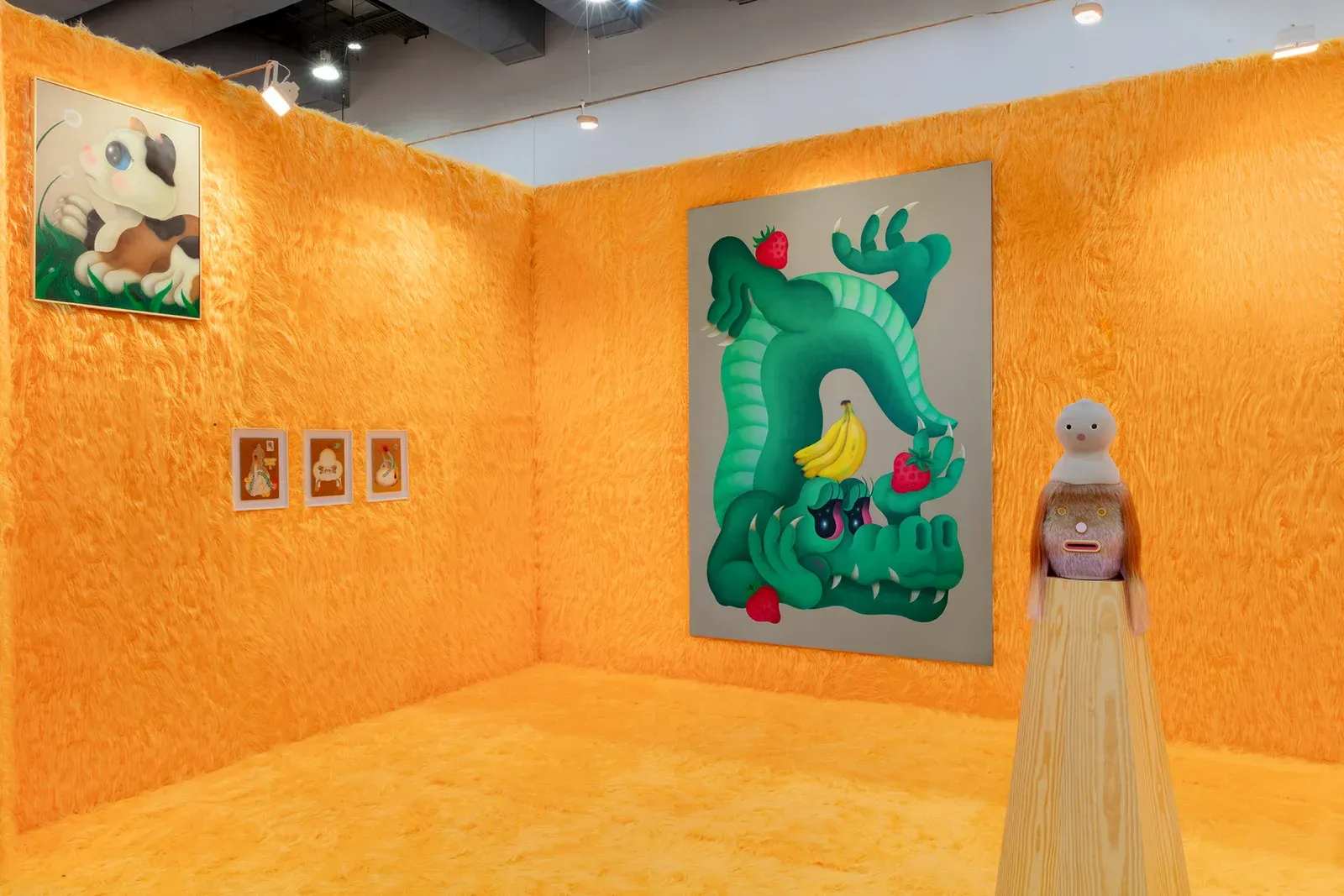
Fátima de Juan: On the left: Coco Tyson, 2022. Installation view, KIAF Seoul. and on the right: Every Day I’m Hustlin’, 2022. Installation view, Pretty Thug.
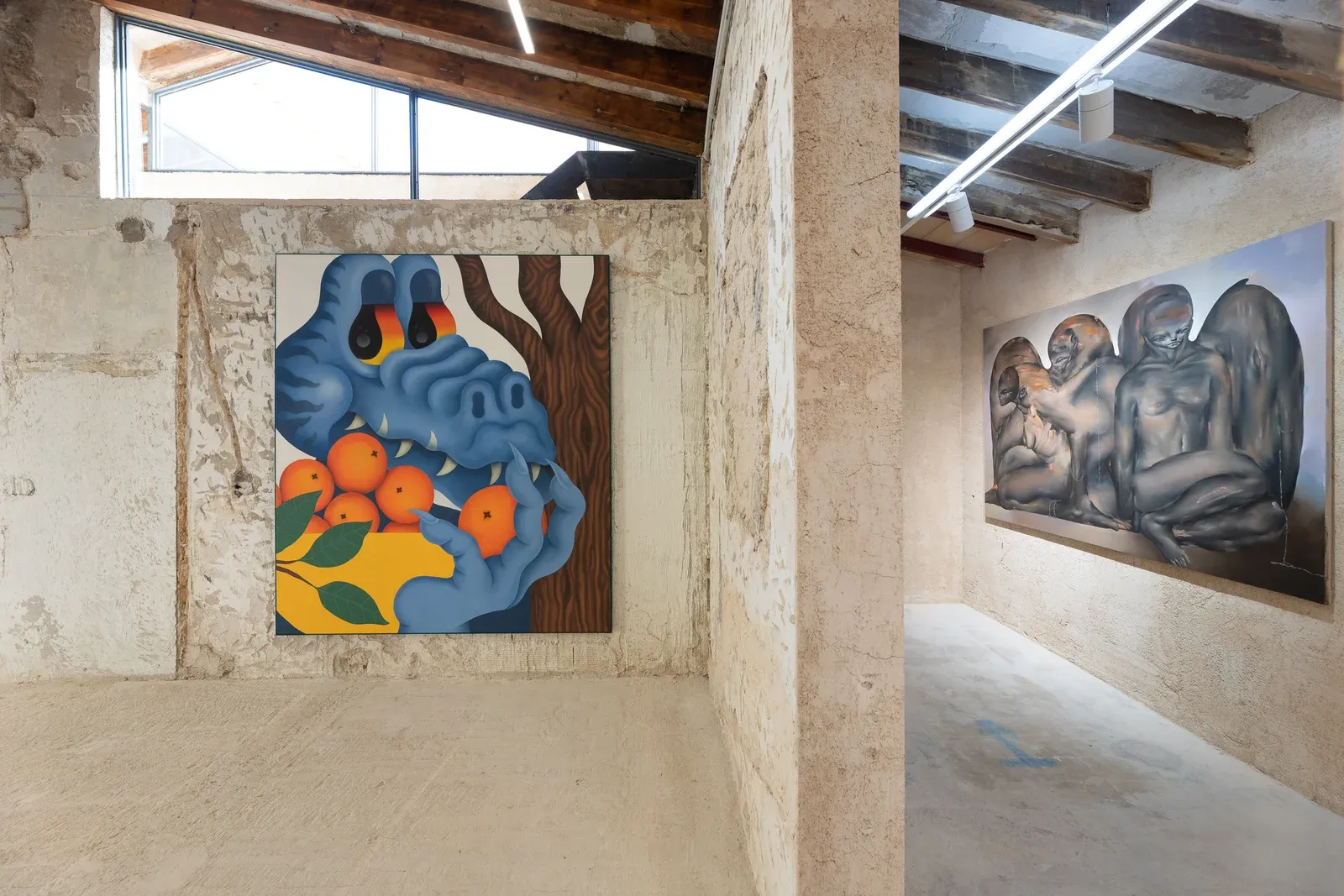
Warrior girls, Dinomamis, inner gangs
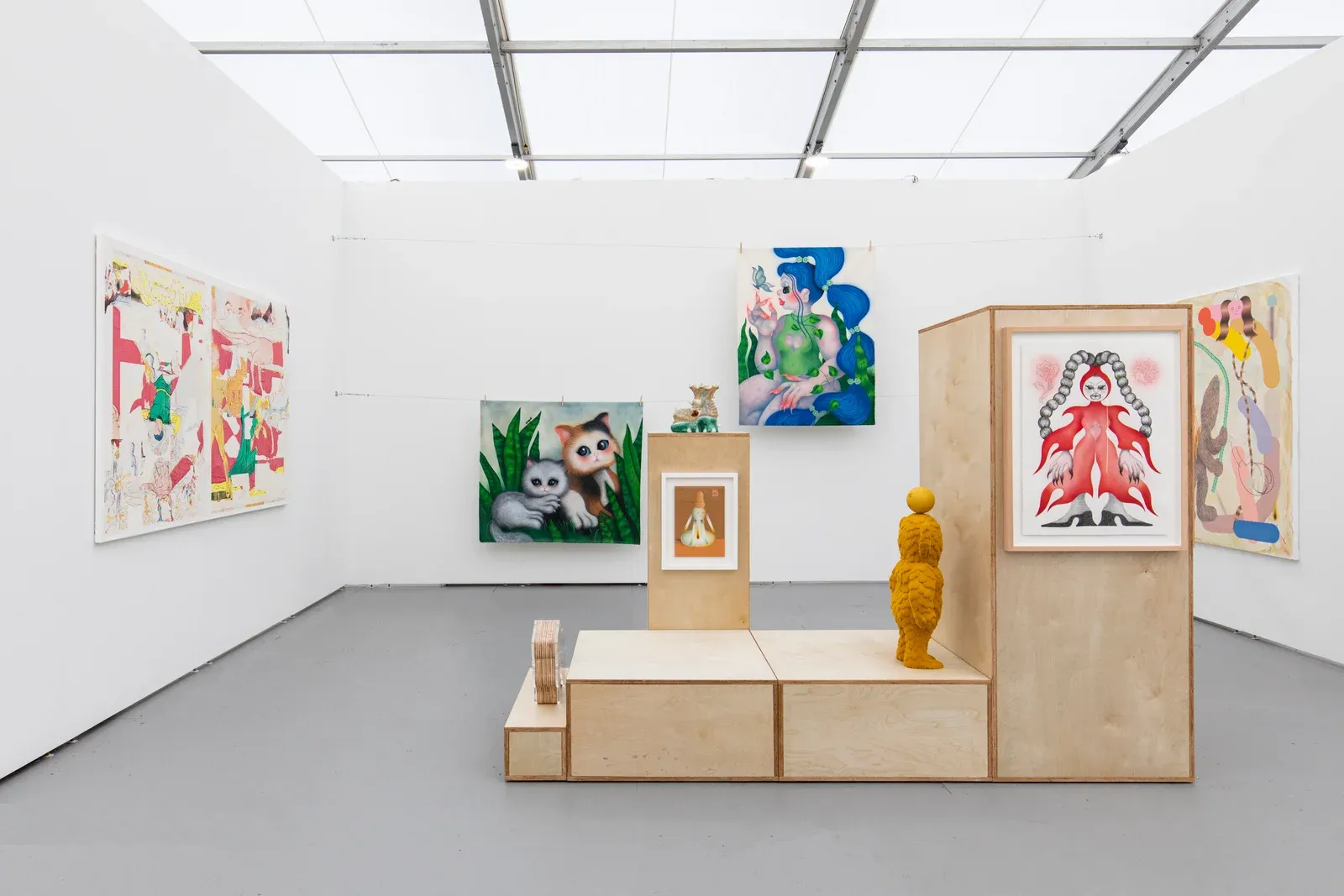
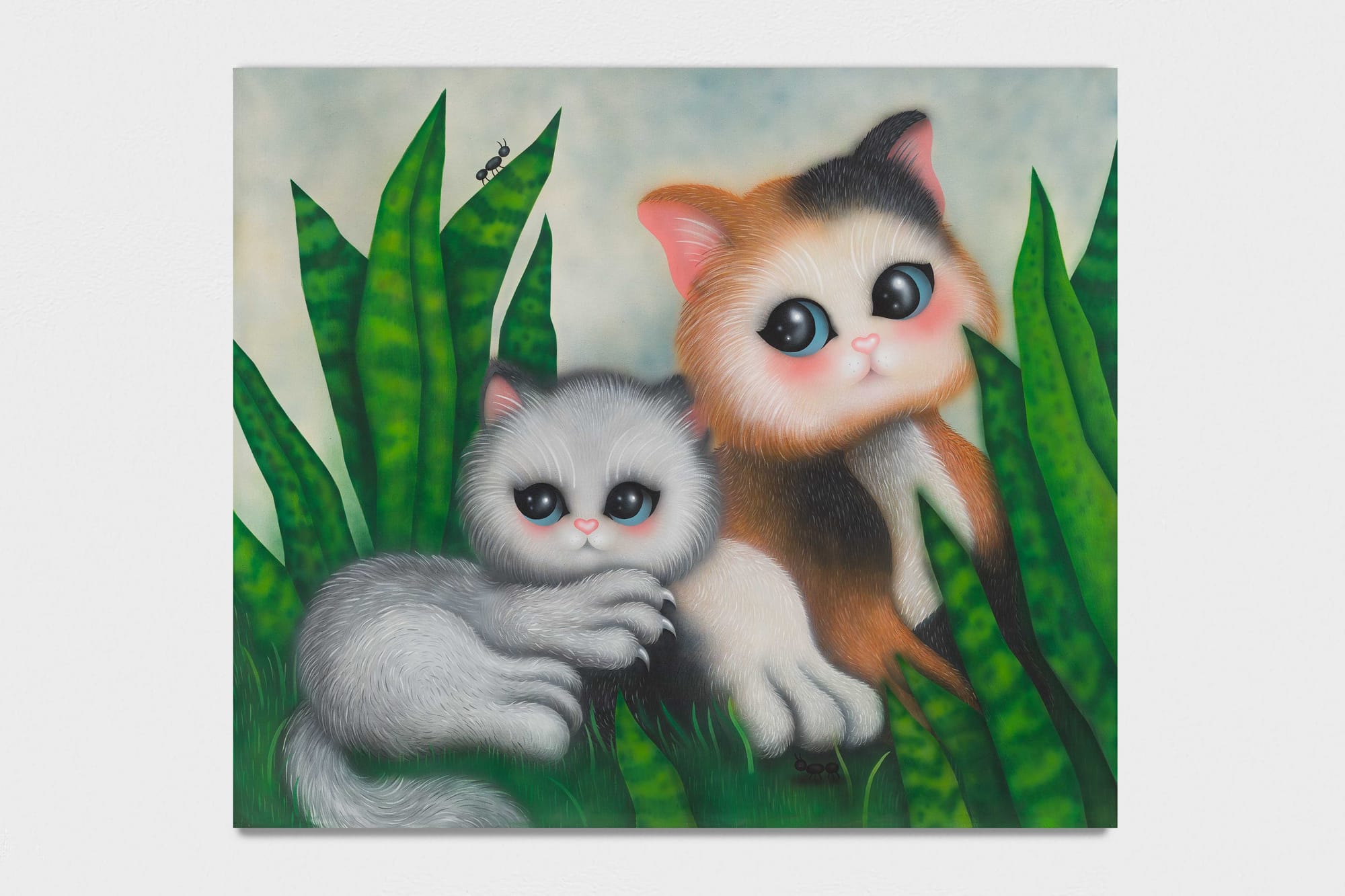
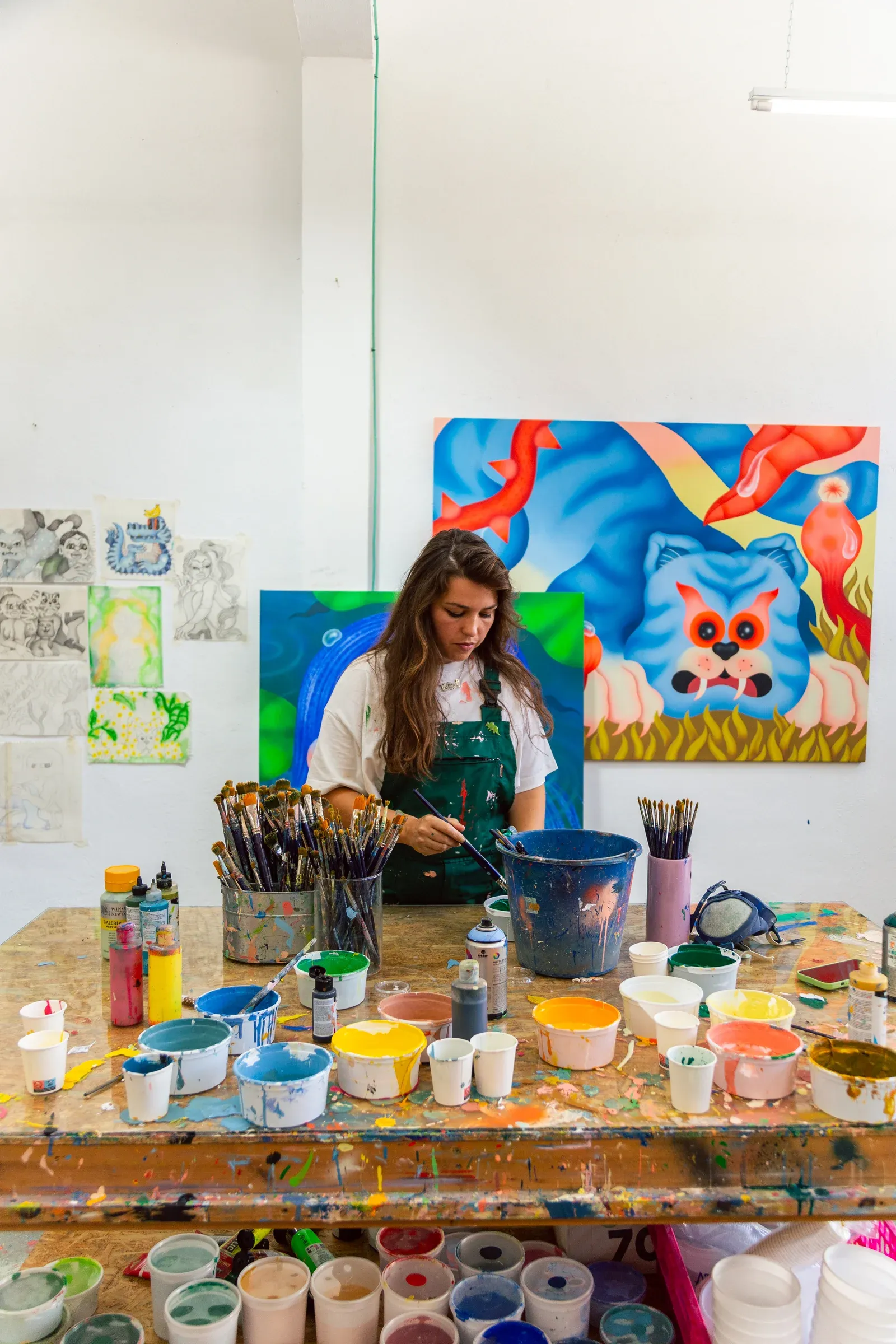
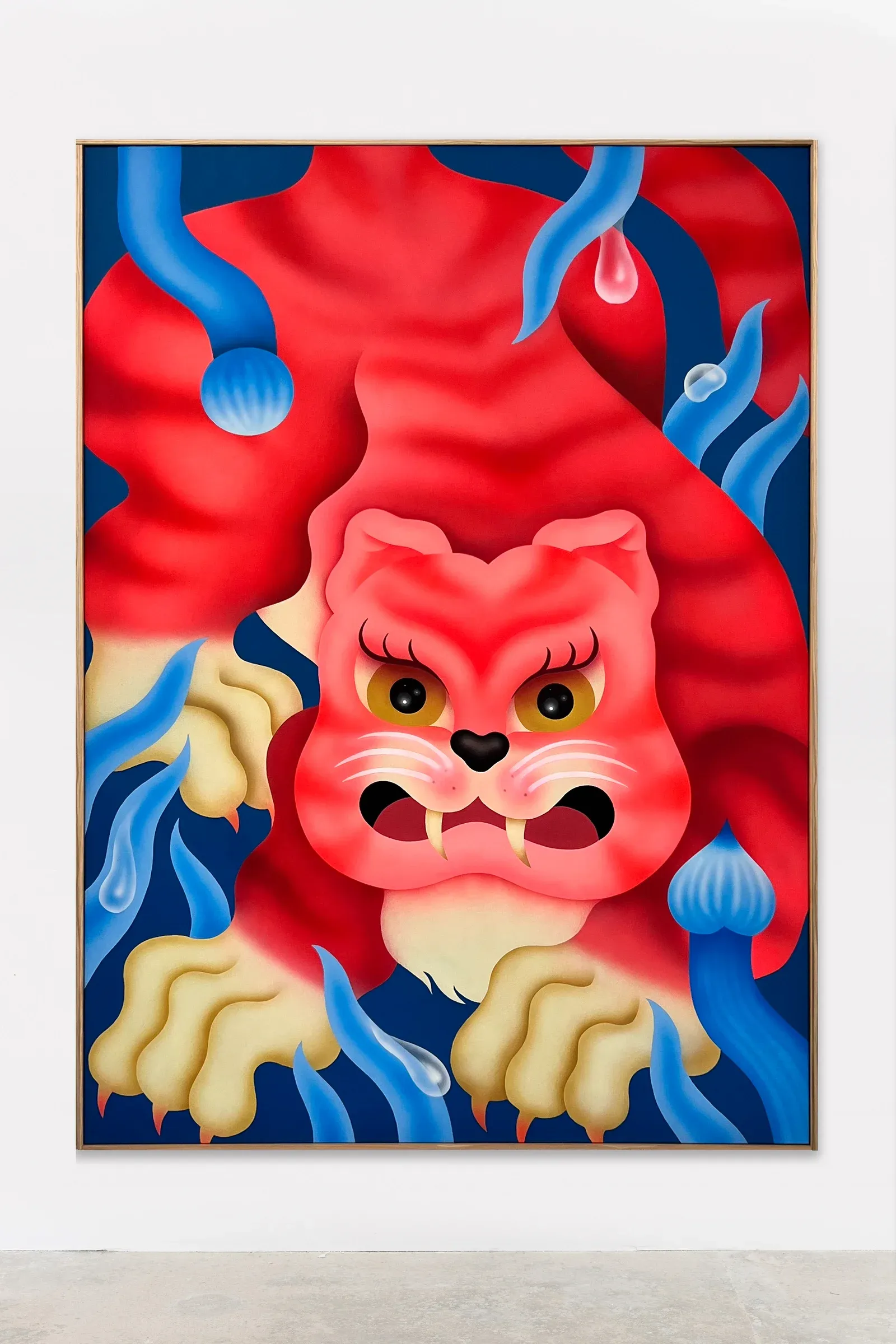
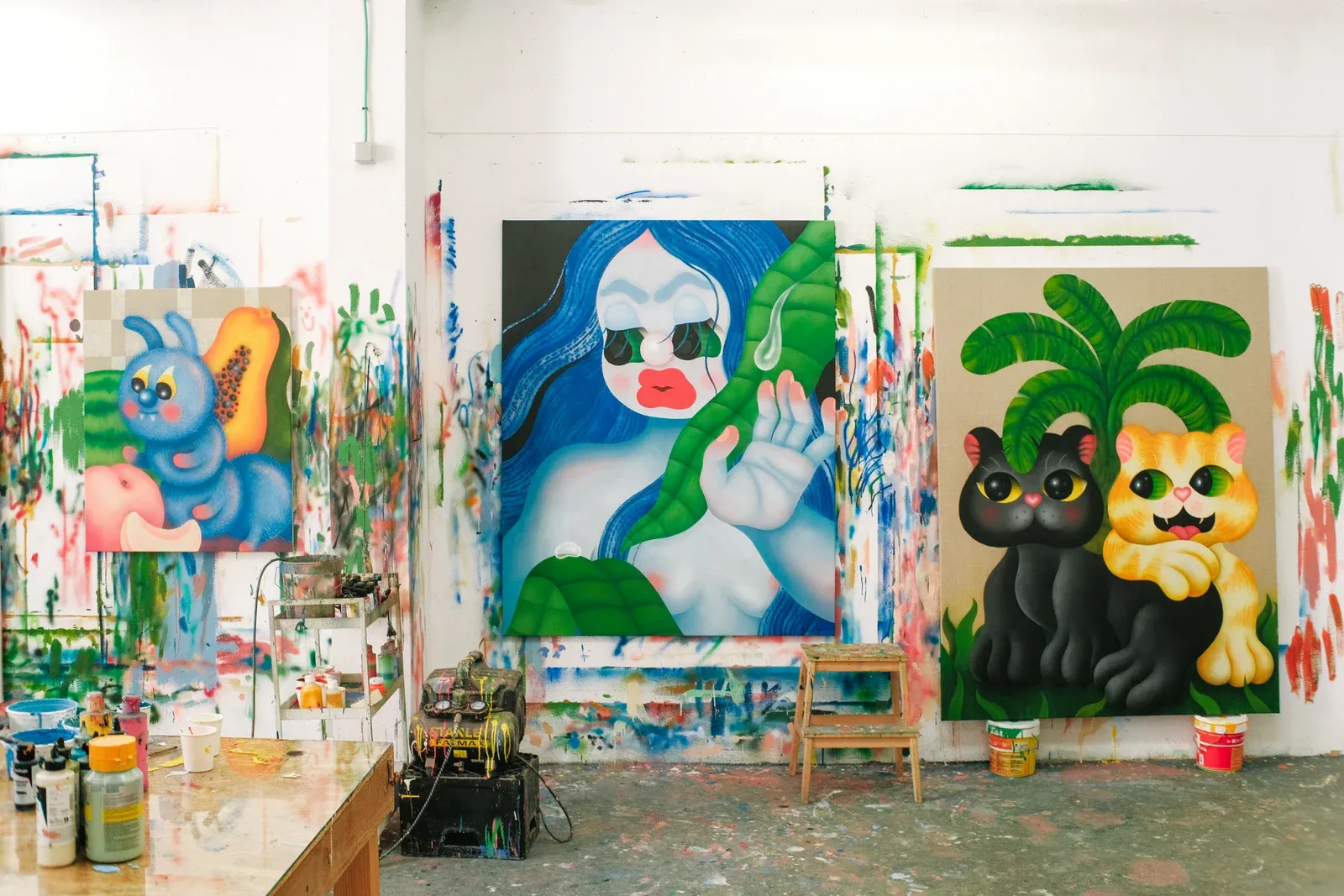
Her recurring characters, sometimes called warrior princess witches or Dinomamis, are surrounded by fruit, crocodiles, spiders, cats, swords, chains, and water pistols.
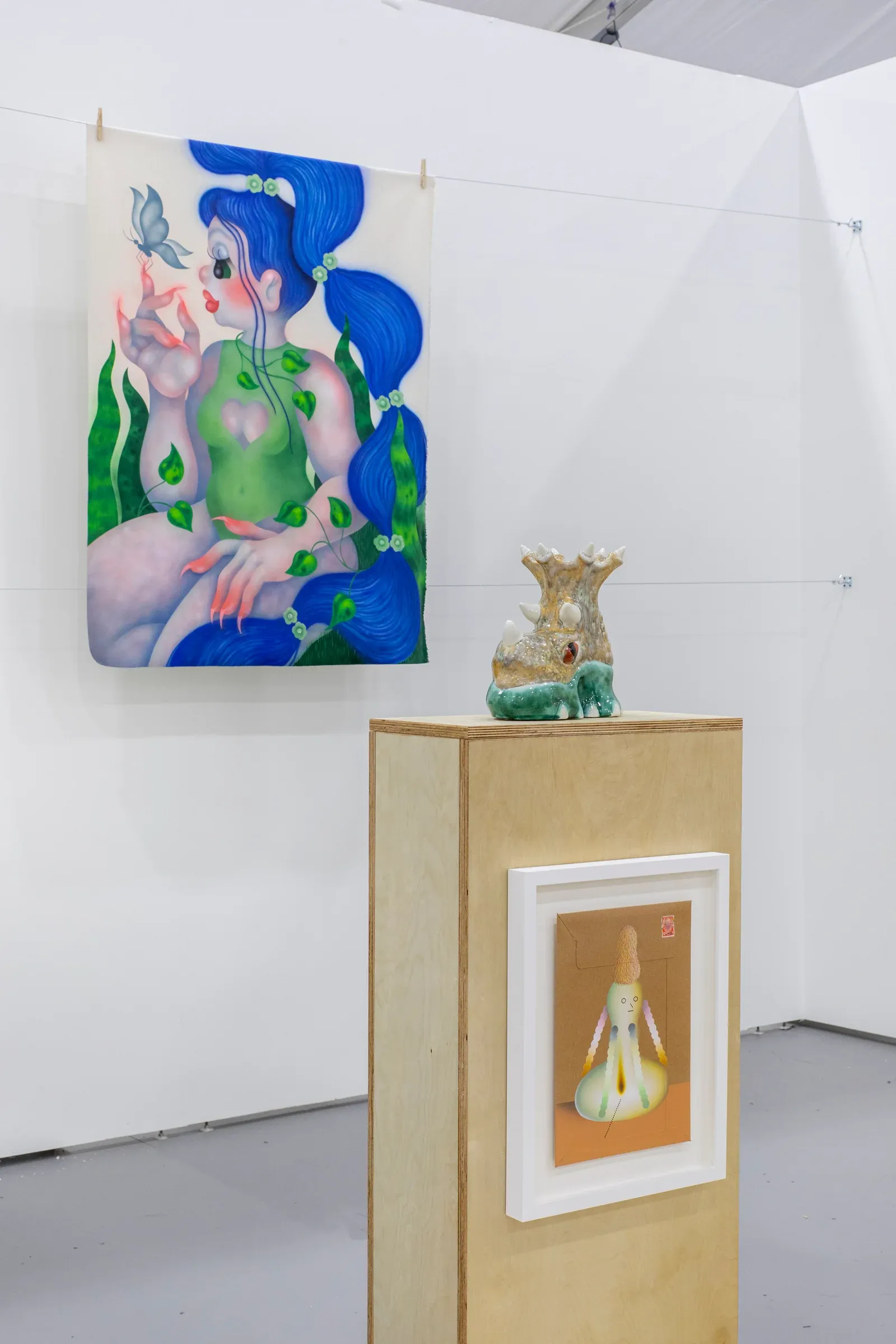
De Juan refers to them as projections of her inner girl and a personal girl gang, figures that mix naivety, sensuality, and physical strength. These women are absolutely uninterested in being relatable; they are busy taking up too much space on purpose.
The bodies are exaggerated, arms thick, cheeks flushed, eyes glossy, never fragile. They are not illustrations of myth but self-assembled alter egos, built from fantasy, humour, and defiance.
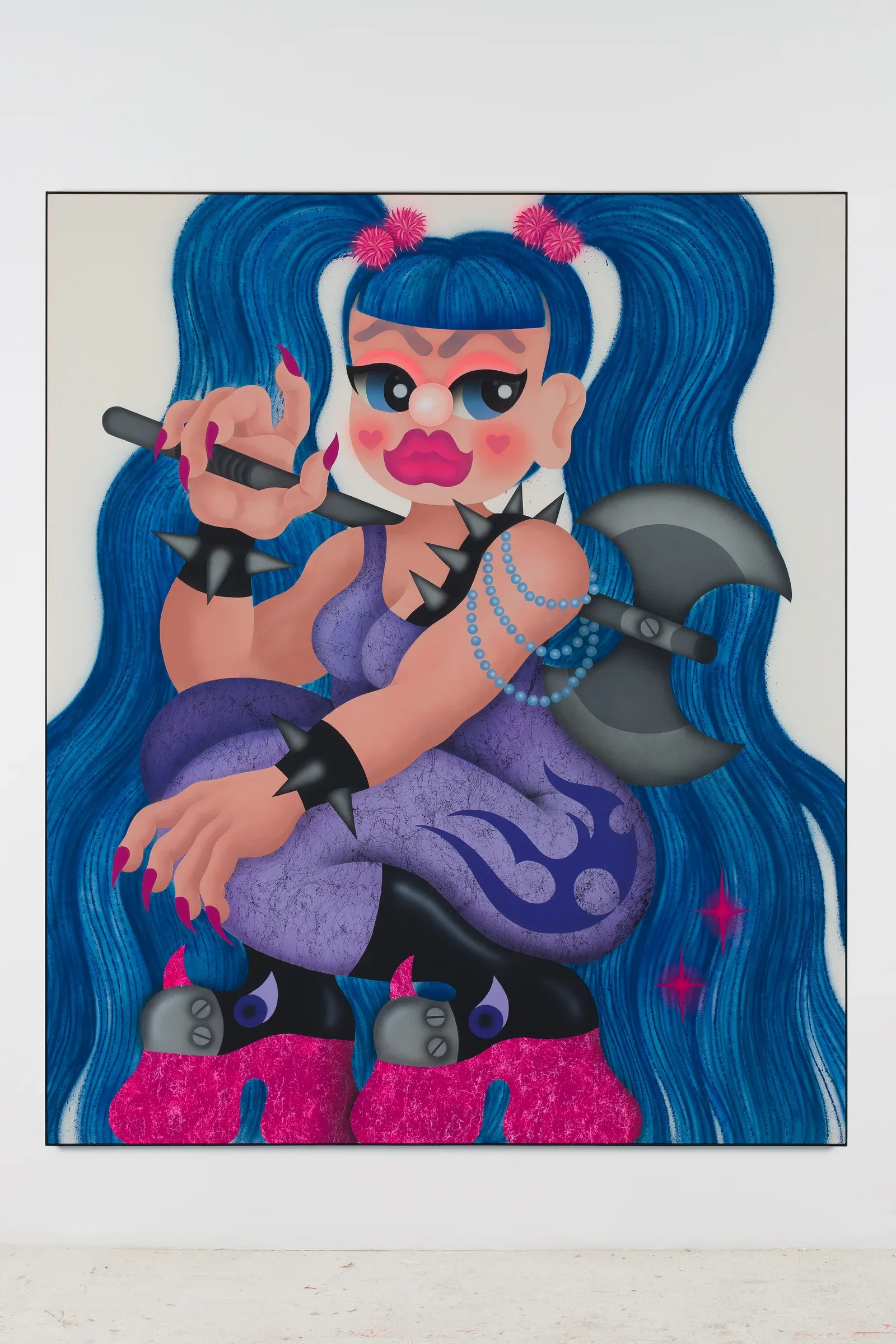
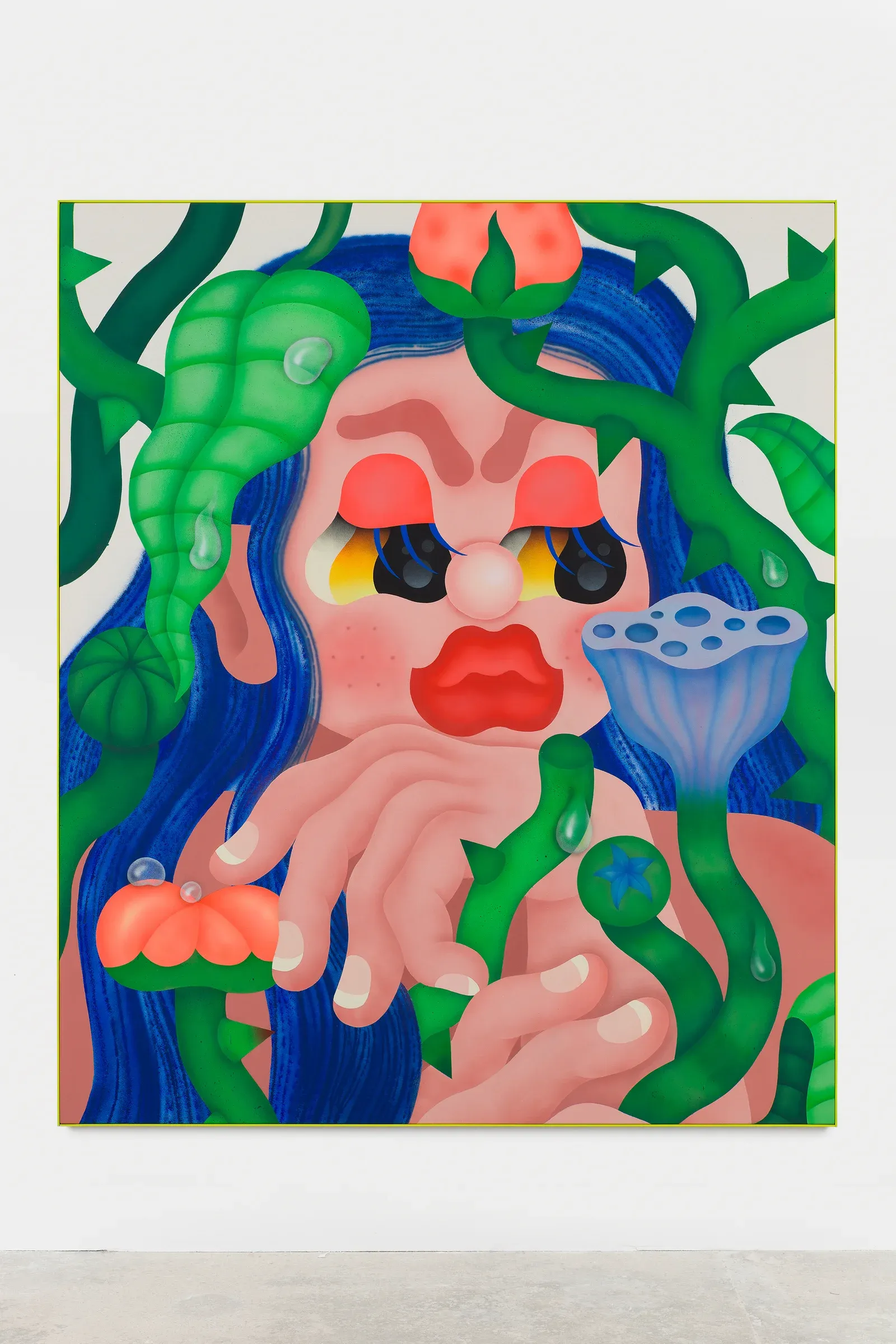
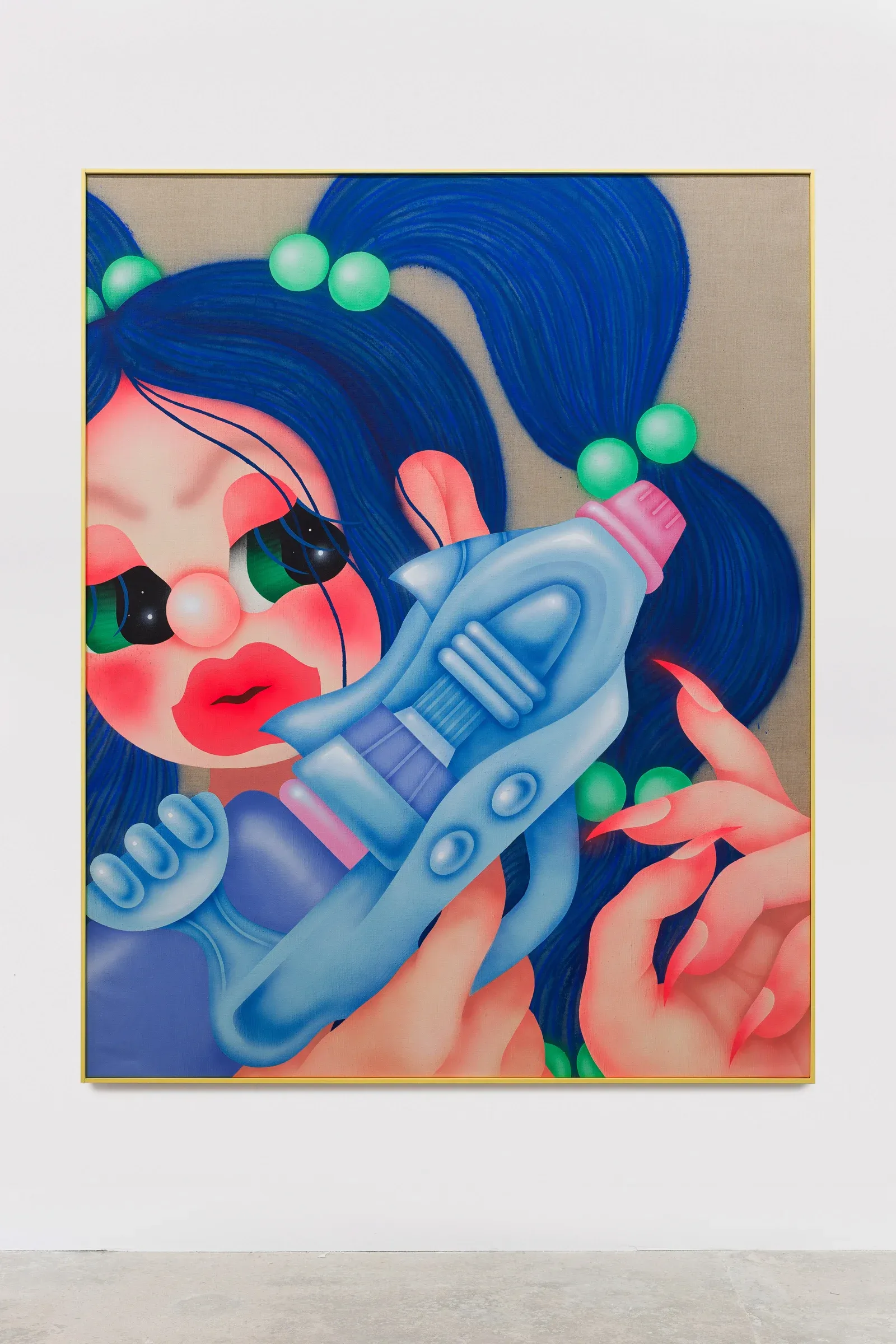
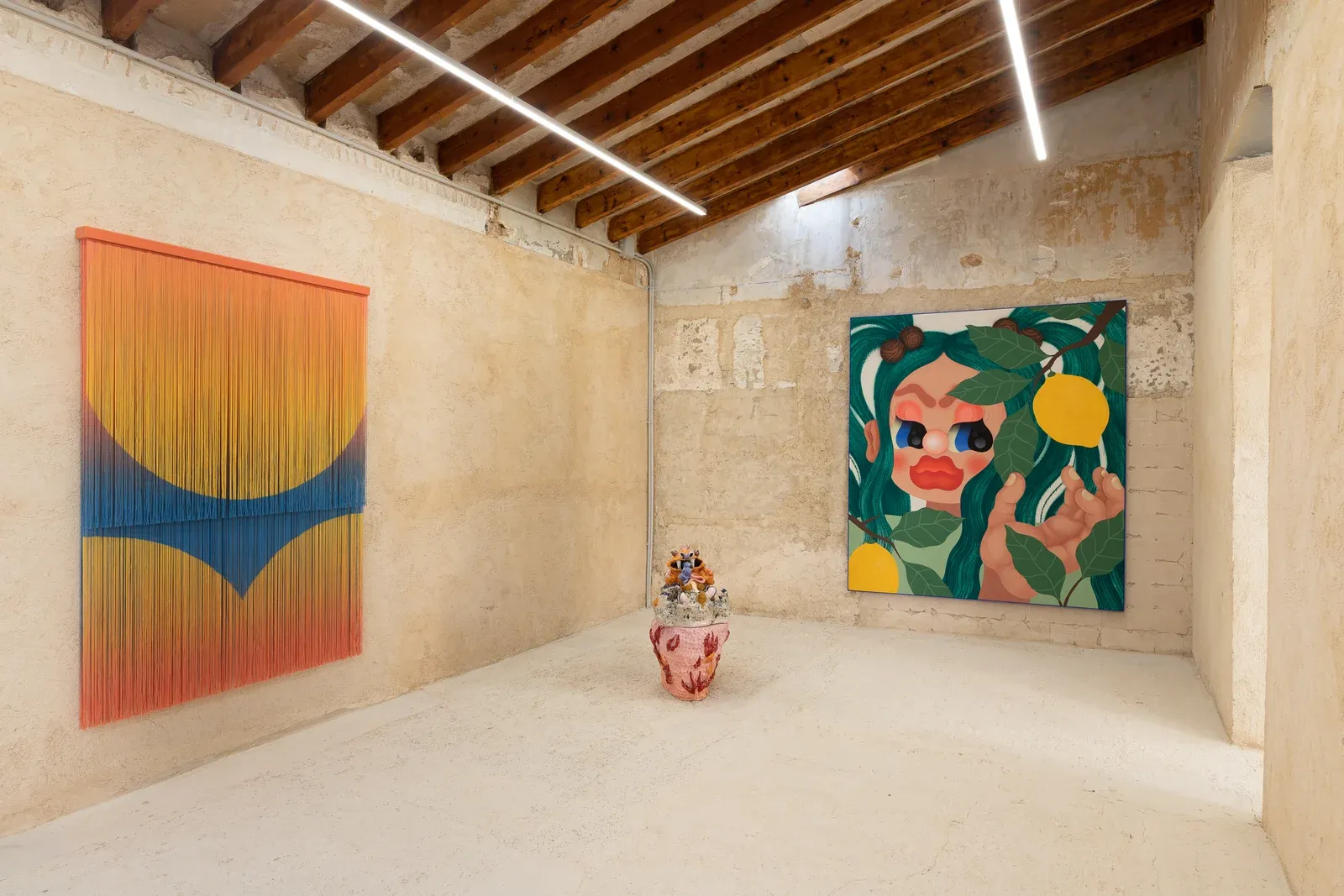
Fátima de Juan: On the left: Flower Fortress, 2023. Don’t Disturb Me, I’m Blooming and on the right: Girls and Guns, 2024. CAN Ibiza. Image courtesy of the artist.
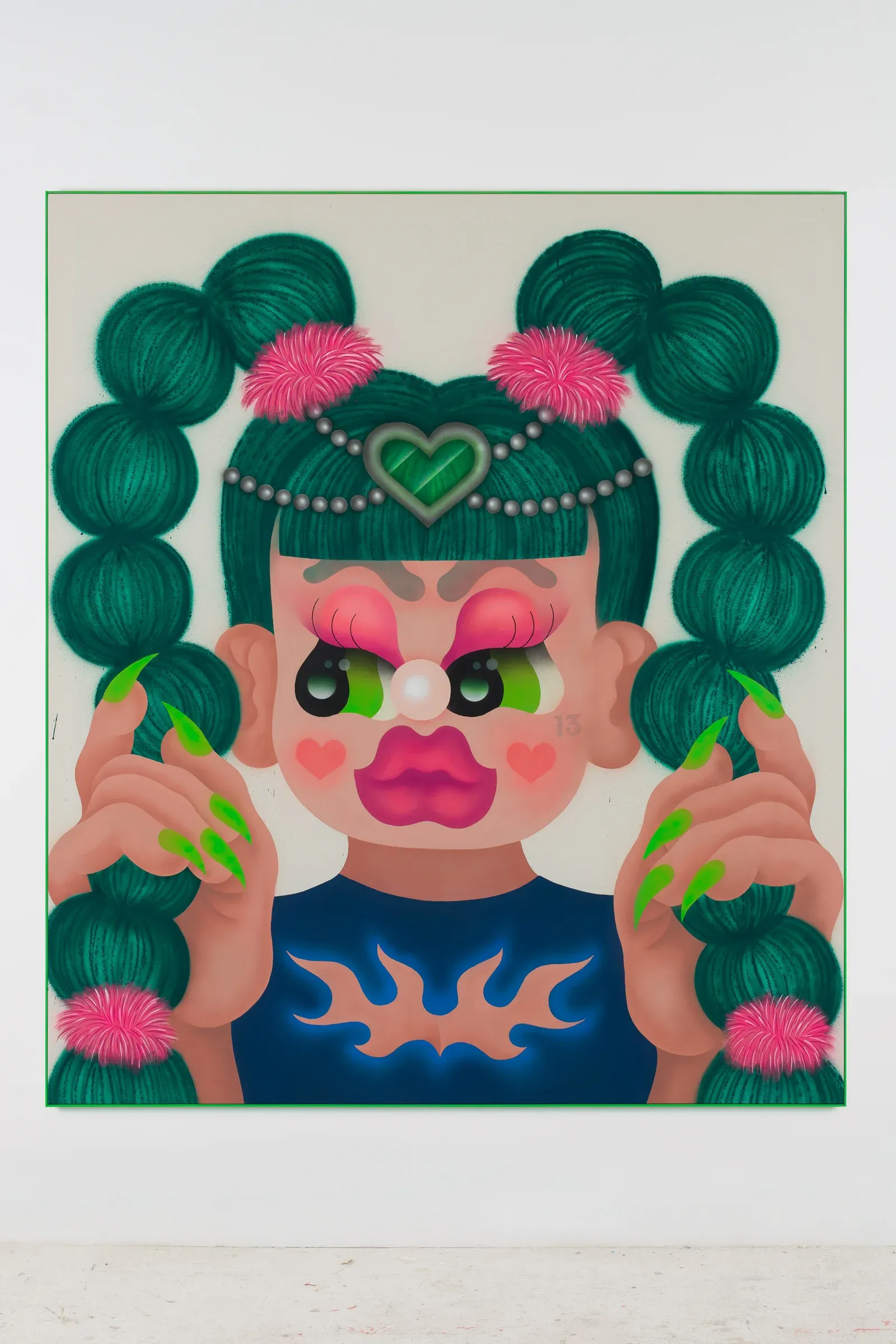
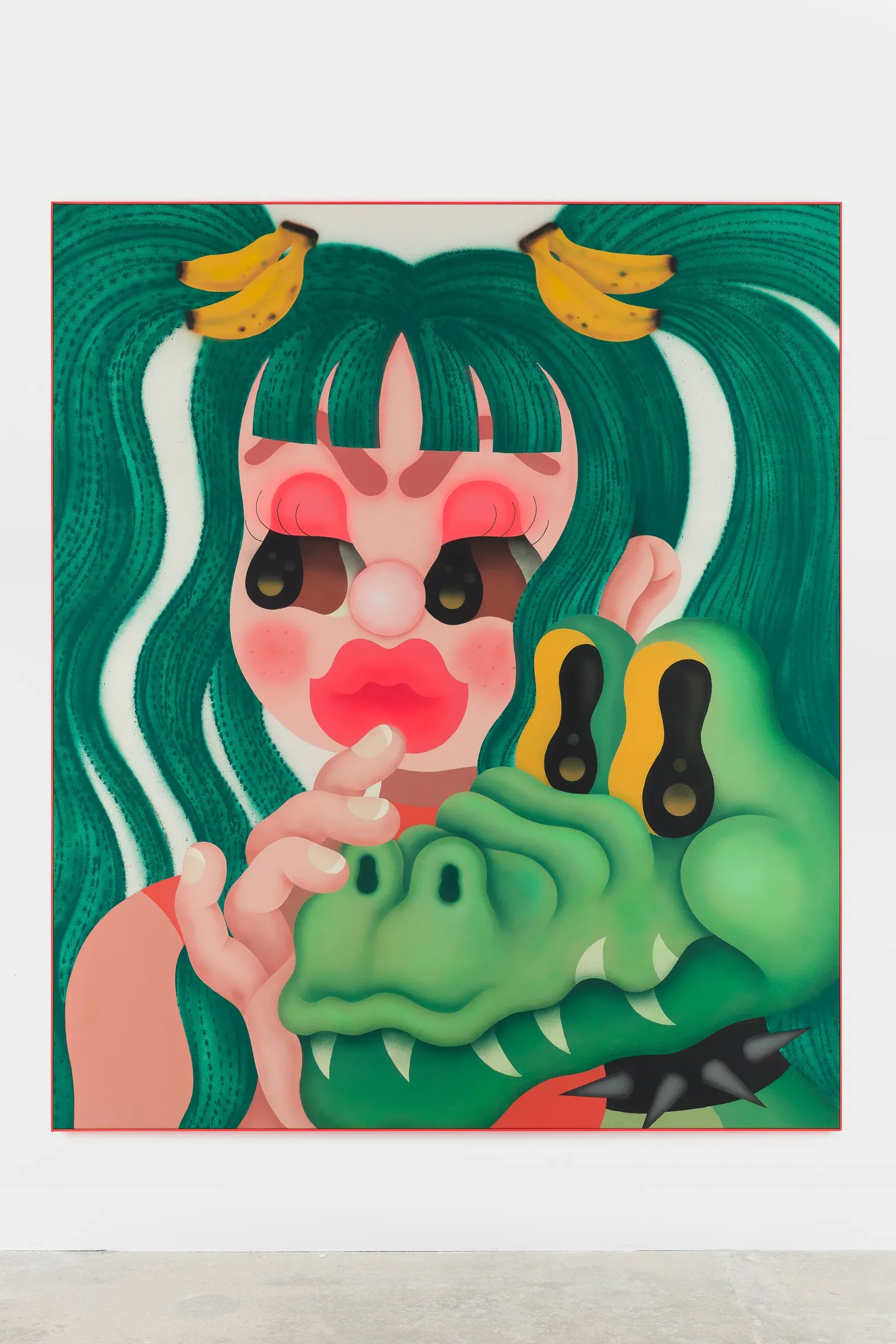
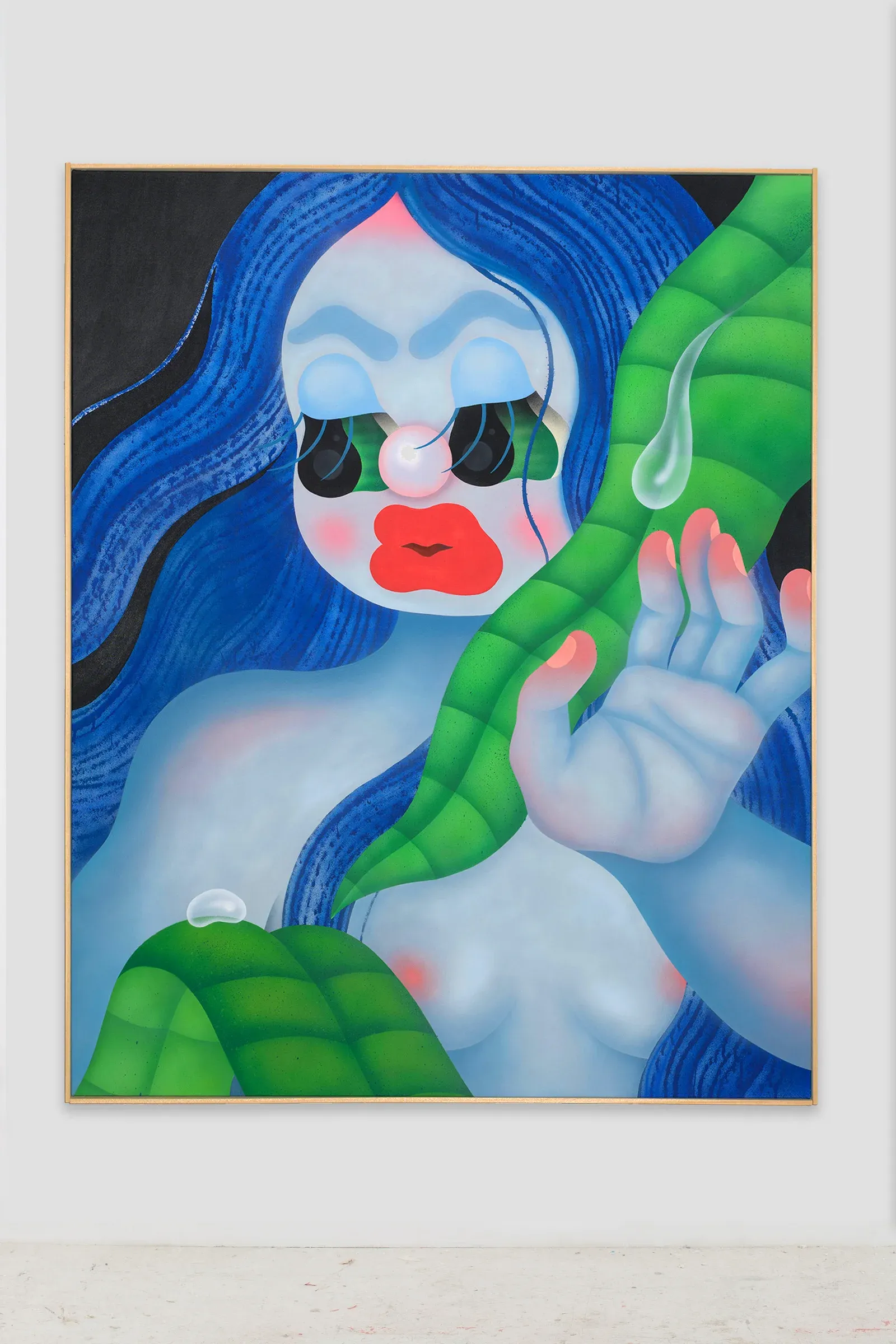
Fátima de Juan: On the left: Bubu and Banana Girl, 2023. ARCO Madrid and on the right: Blue Aphrodite, 2024. Image courtesy of the artist.
Fruit, abundance, and the eternal feminine
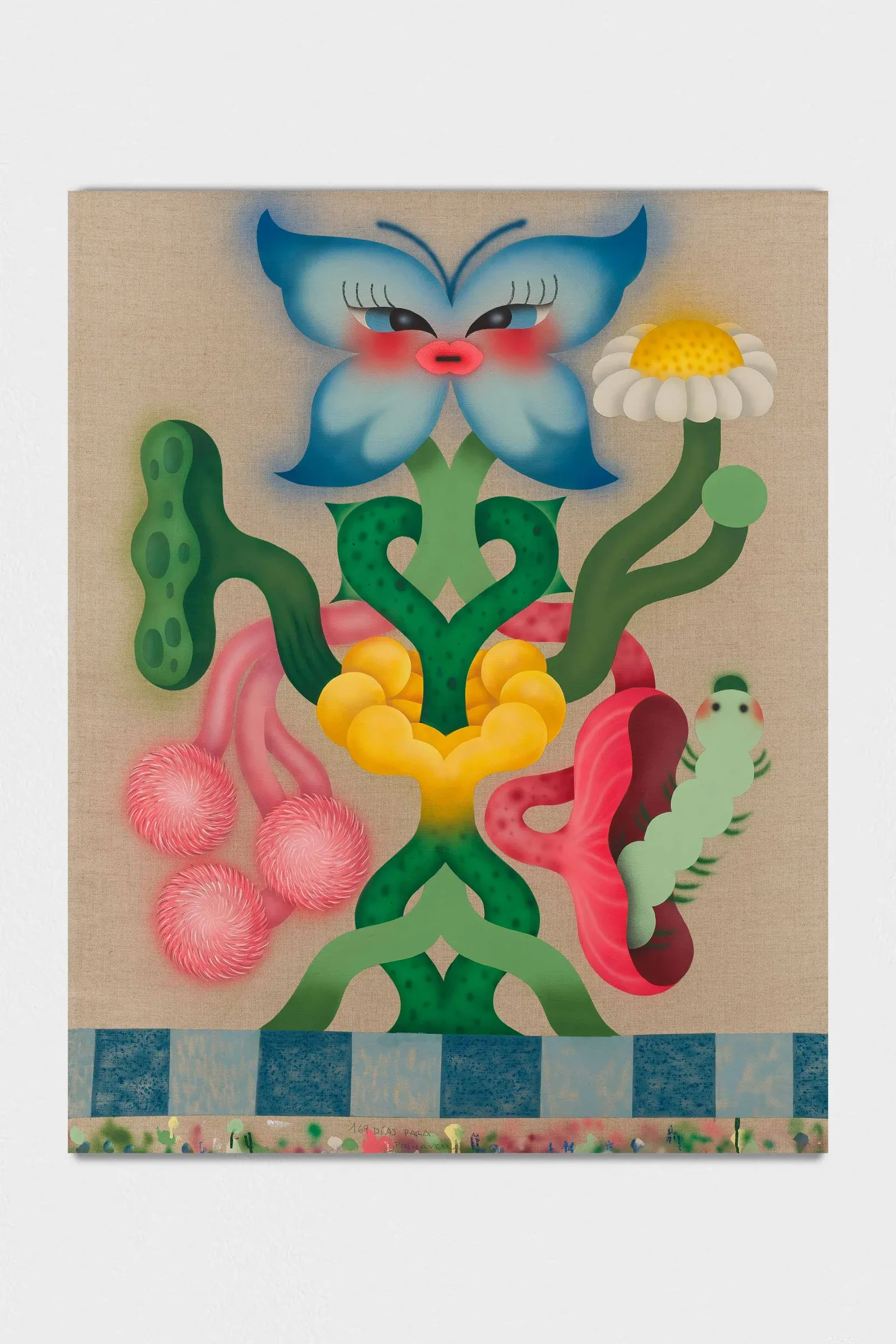
Fruit appears insistently throughout the paintings, bananas, pears, strawberries, often oversized and glowing.
For de Juan, fruit signals abundance and fertility, but also playfulness and excess. It functions as a counterweight to weapons and animals, softening the threat without neutralising it.
The result is a visual grammar where nourishment and danger occupy the same space, suggesting a form of femininity that is neither passive nor purely aggressive.
Fashion as shield, boots as armour
Clothing and accessories operate as tools rather than decoration. De Juan has spoken about fashion as a fantasy shield, a way of building visual armour.
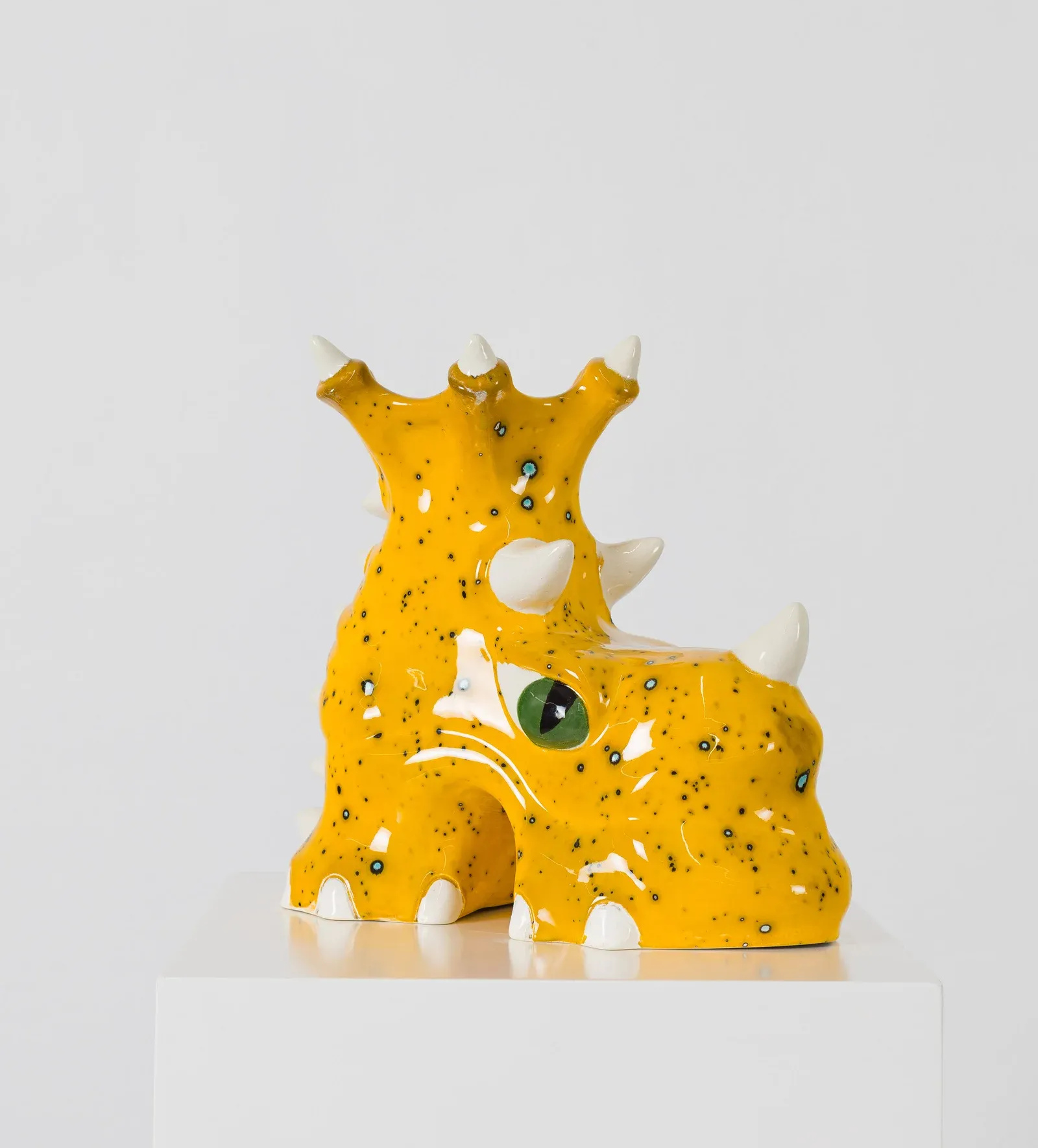
Dino boots, heavy jewellery, and cropped tops become part of a contemporary Amazon dress code. These elements stabilise the figures, grounding their emotional intensity in something wearable and performative.
The paintings propose not a costume, but a way of standing in the world.
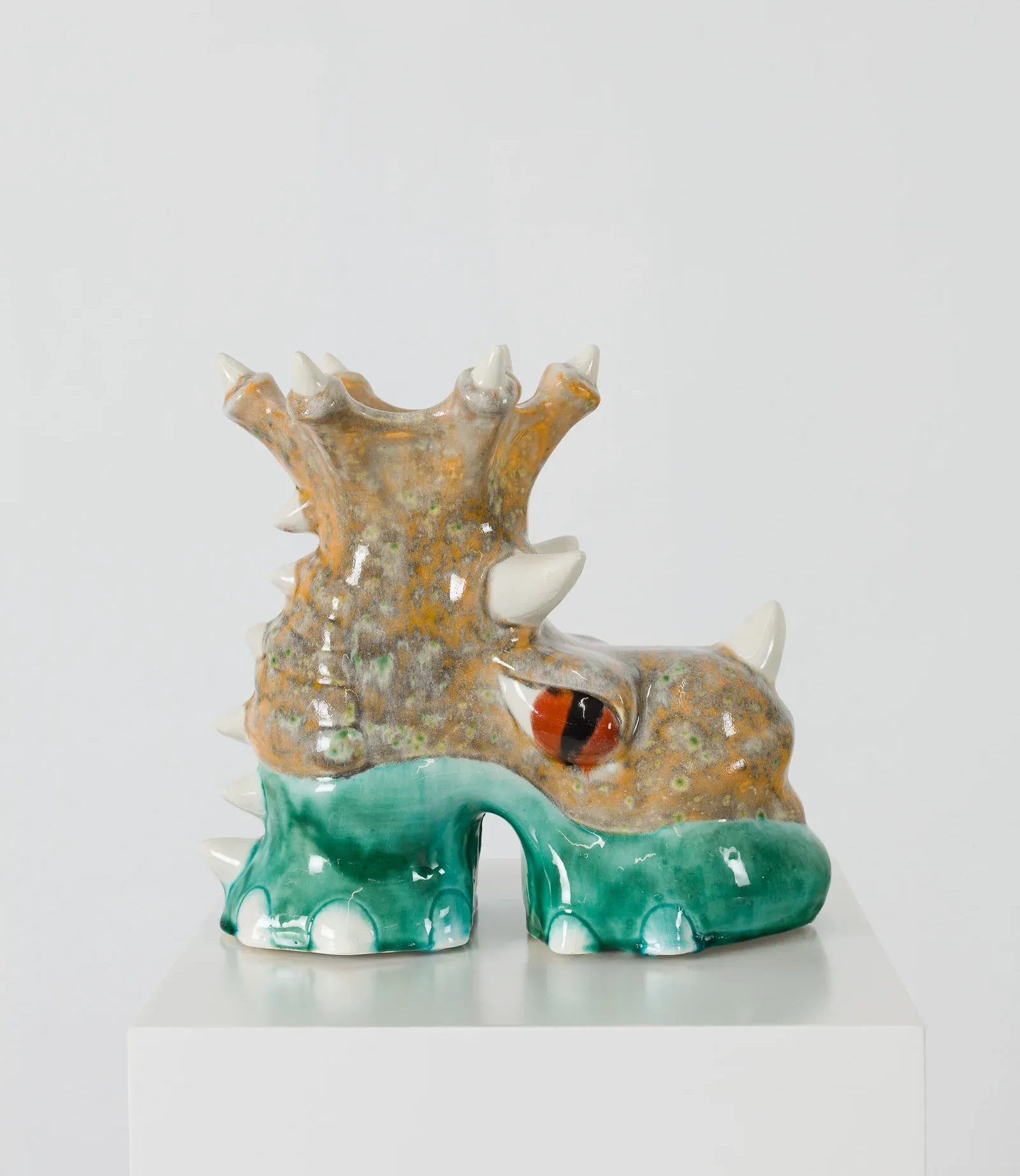
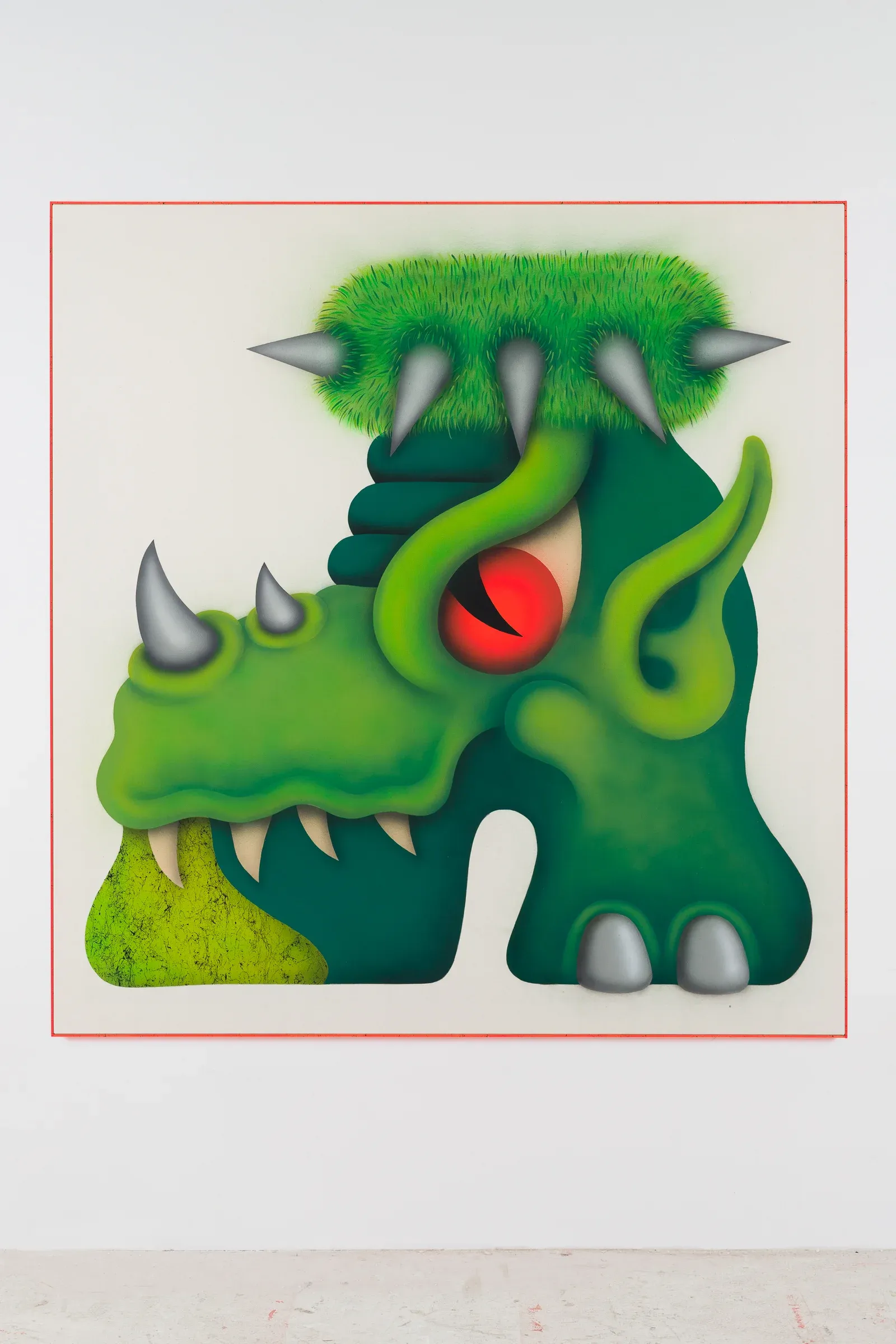
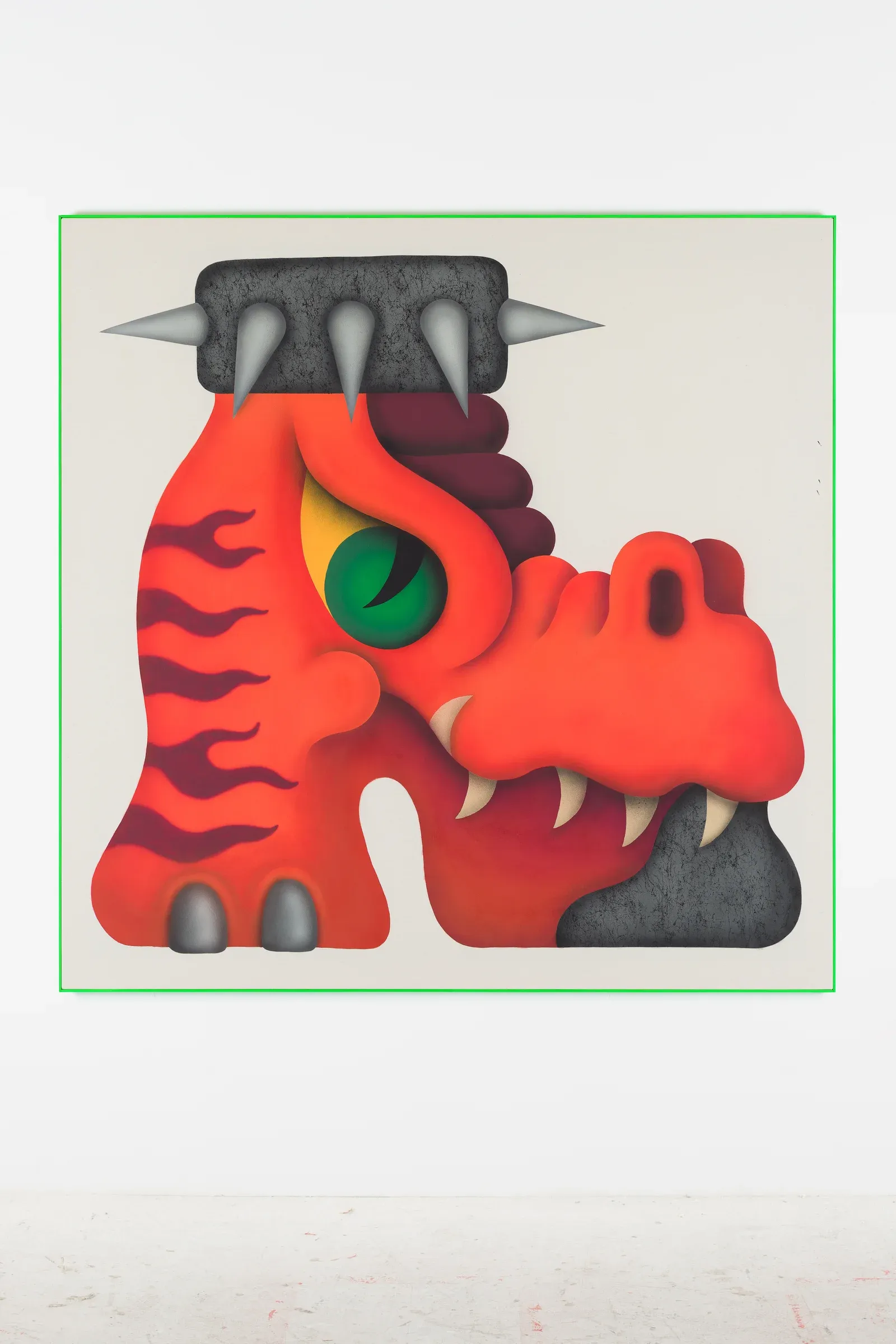
Fátima de Juan: On the left: Dinozapato 2, 2022. Pretty Thug and on the right: Techno Viking Boot, 2022. Pretty Thug. Image courtesy of the artist.
Exhibitions, fairs, and circulation
Fátima de Juan’s work has circulated widely through fairs and group exhibitions with La Bibi Gallery, including ARCOmadrid,, Untitled Miami, CAN Art Ibiza, Kiaf Seoul, and Zona MACO in Mexico City, as well as projects in Los Angeles, New York, San Francisco, and Hong Kong.
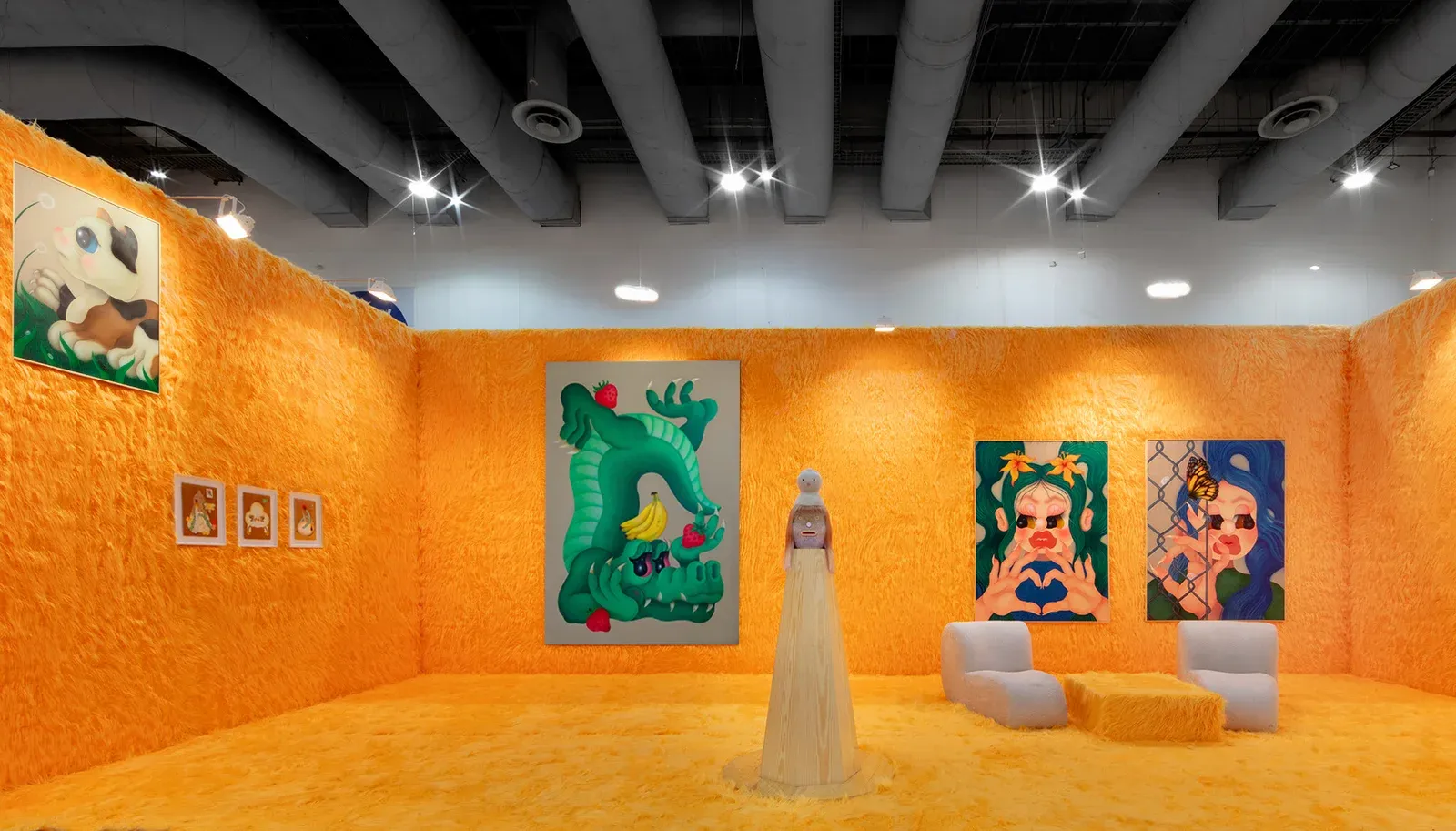
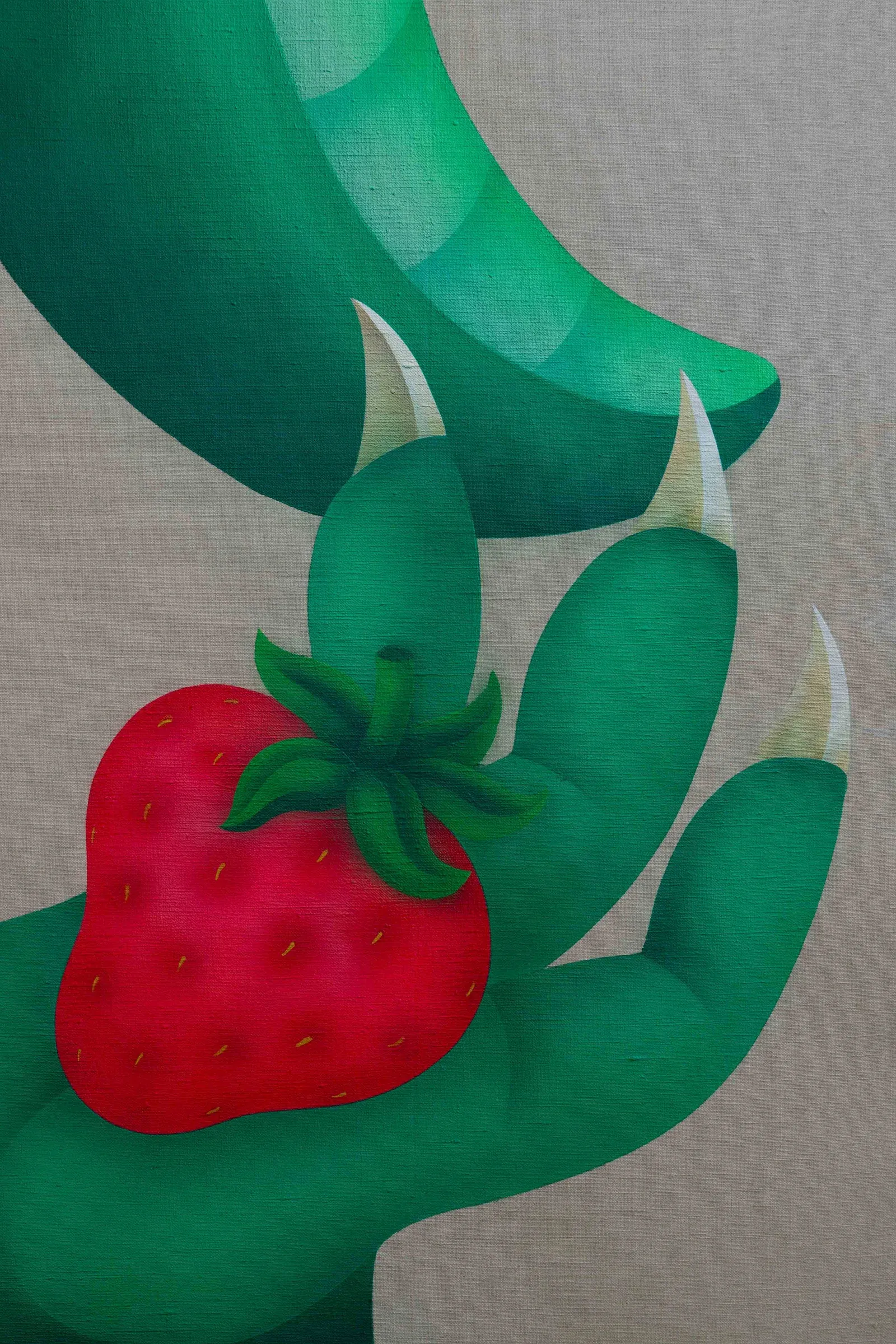
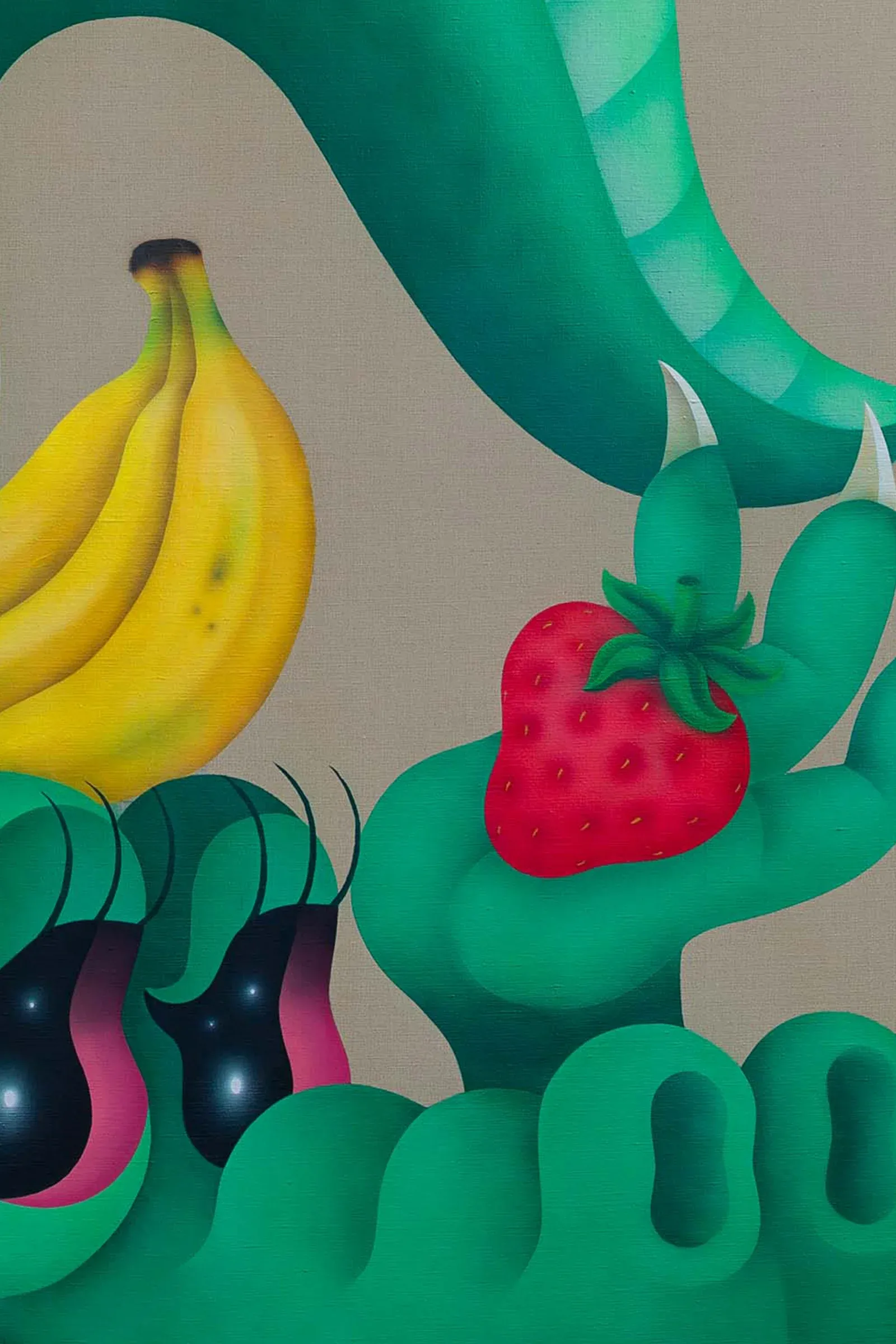
Fátima de Juan: Details from Tropical Business, 2025. Installation view, Zona Maco Art Fair.
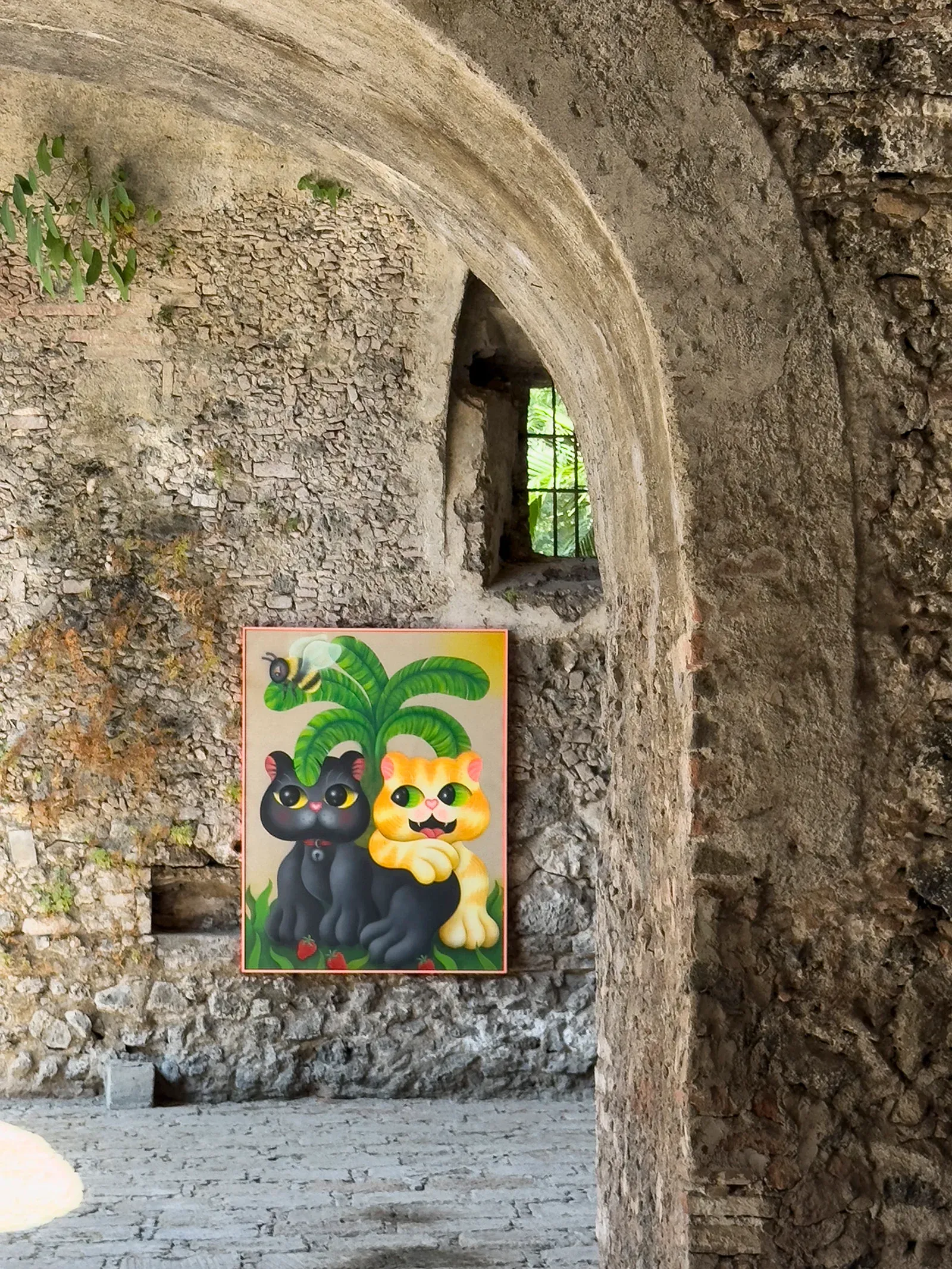
Installed in white cubes, fair booths, or colour-saturated rooms, the paintings adapt without losing their internal logic.
They survive the fair booth test, even under brutal lighting in cities like Madrid, Miami, and Seoul. Presence, not narrative explanation, does the work.
Why This Work Matters
De Juan’s practice insists on a form of femininity built from self-definition rather than opposition. Grounded in her own language of inner figures, abundance, and armour, the work reflects contemporary conditions where strength and vulnerability must coexist.
Without irony or spectacle, the paintings offer images of bodies that protect themselves while remaining open, proposing resilience as an everyday visual condition rather than a heroic pose.
A Jurassic, tropical planet
De Juan has imagined her ideal planet as Jurassic and tropical, inhabited by burly warriors, dinosaurs, crocodiles, and big-cheeked cats.
It is a world where tenderness survives because it is defended, and fantasy becomes a practical tool for living. Painting, here, does not soften power; it teaches it how to dress itself.
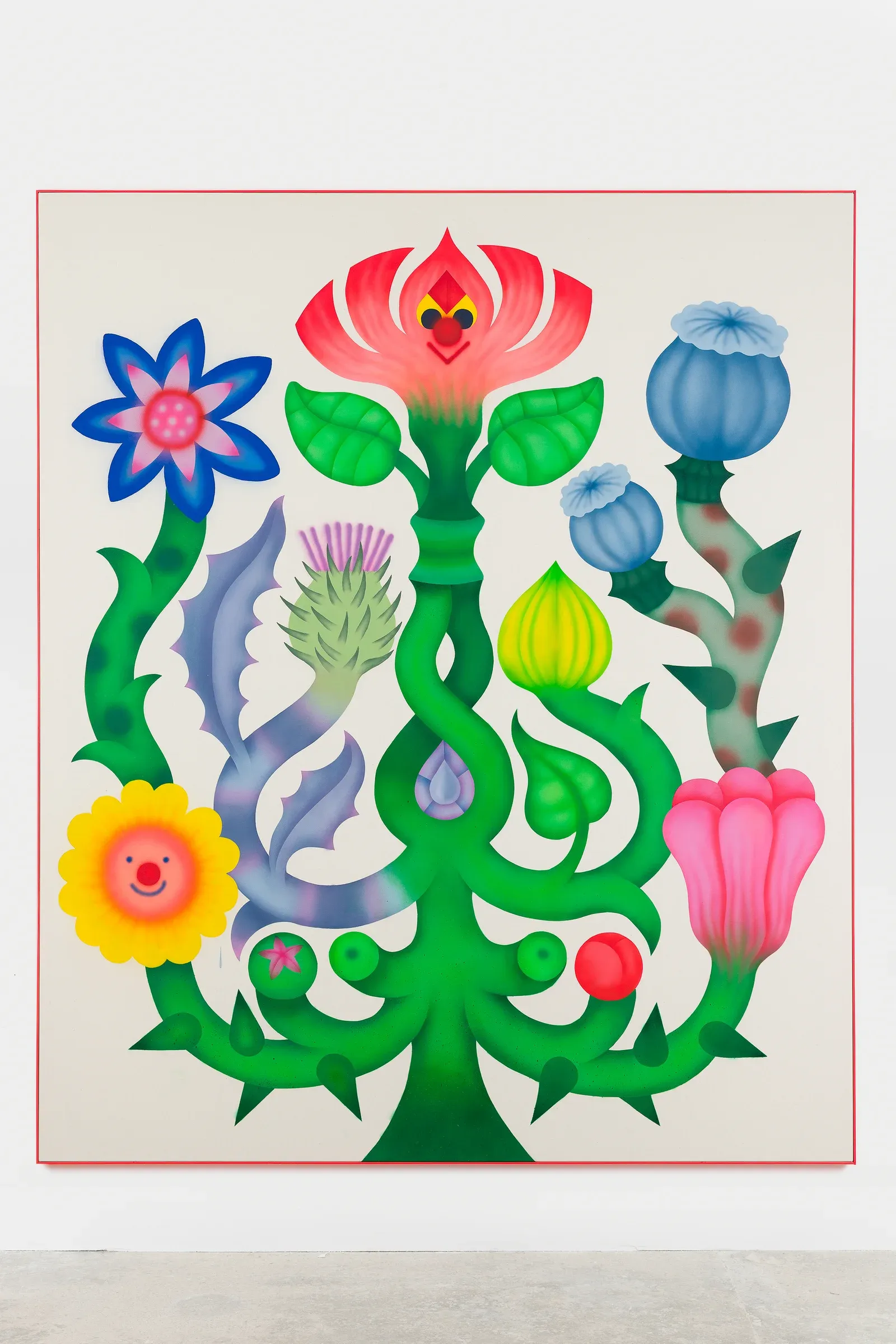
Follow Fátima de Juan on Instagram, check out De Juan's website and explore her recent projects via La Bibi Gallery, and share this with someone who believes softness can be a form of armour.
More to discover on Catapult:
Artist in Focus
Artist Spotlight
No spam, no sharing to third party. Only you and me.