Can Painting Carry Time Without Choosing a Side? Artist Spotlight Ruben Einsmann
Images appear as if they have already lived before we arrive.
A surface built from history and the present
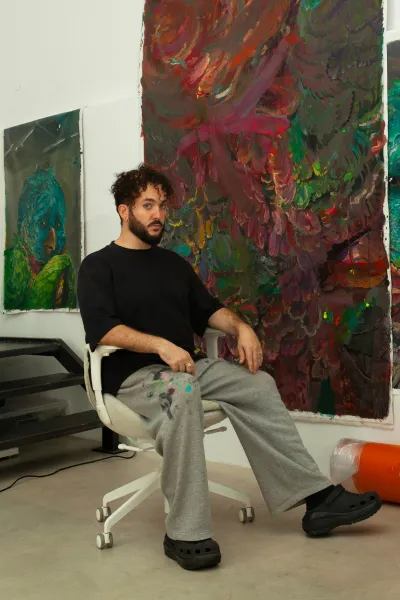
Ruben Einsmann, a German painter based in Leipzig, works with painting, drawing, ceramics, and installation, developing images that deliberately appear aged, eroded, and unstable.
His practice is rooted in his studies at HBK Braunschweig under Norbert Bisky and Thomas Virnich, where he combined an intensive engagement with art history and a close reading of contemporary visual culture.
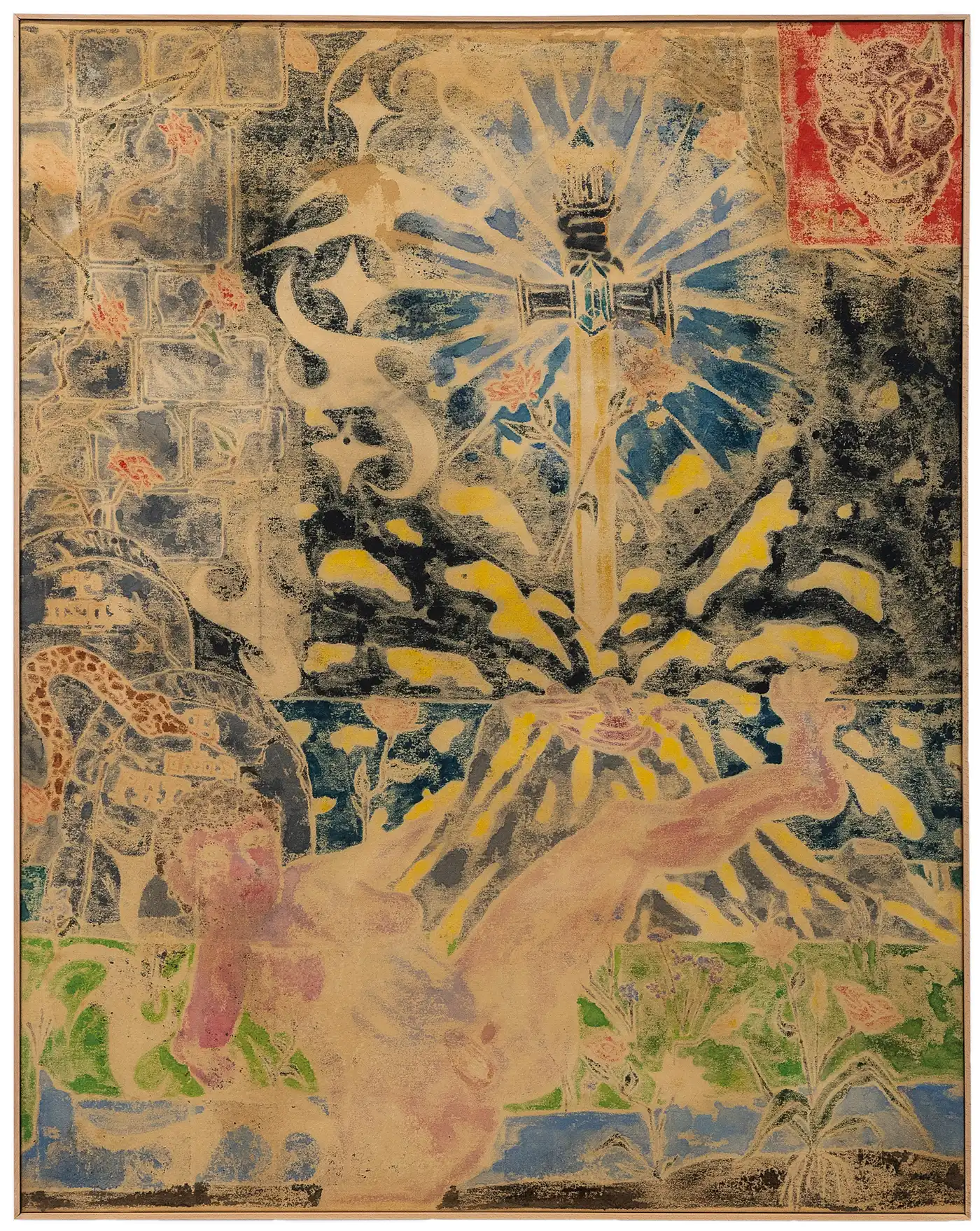
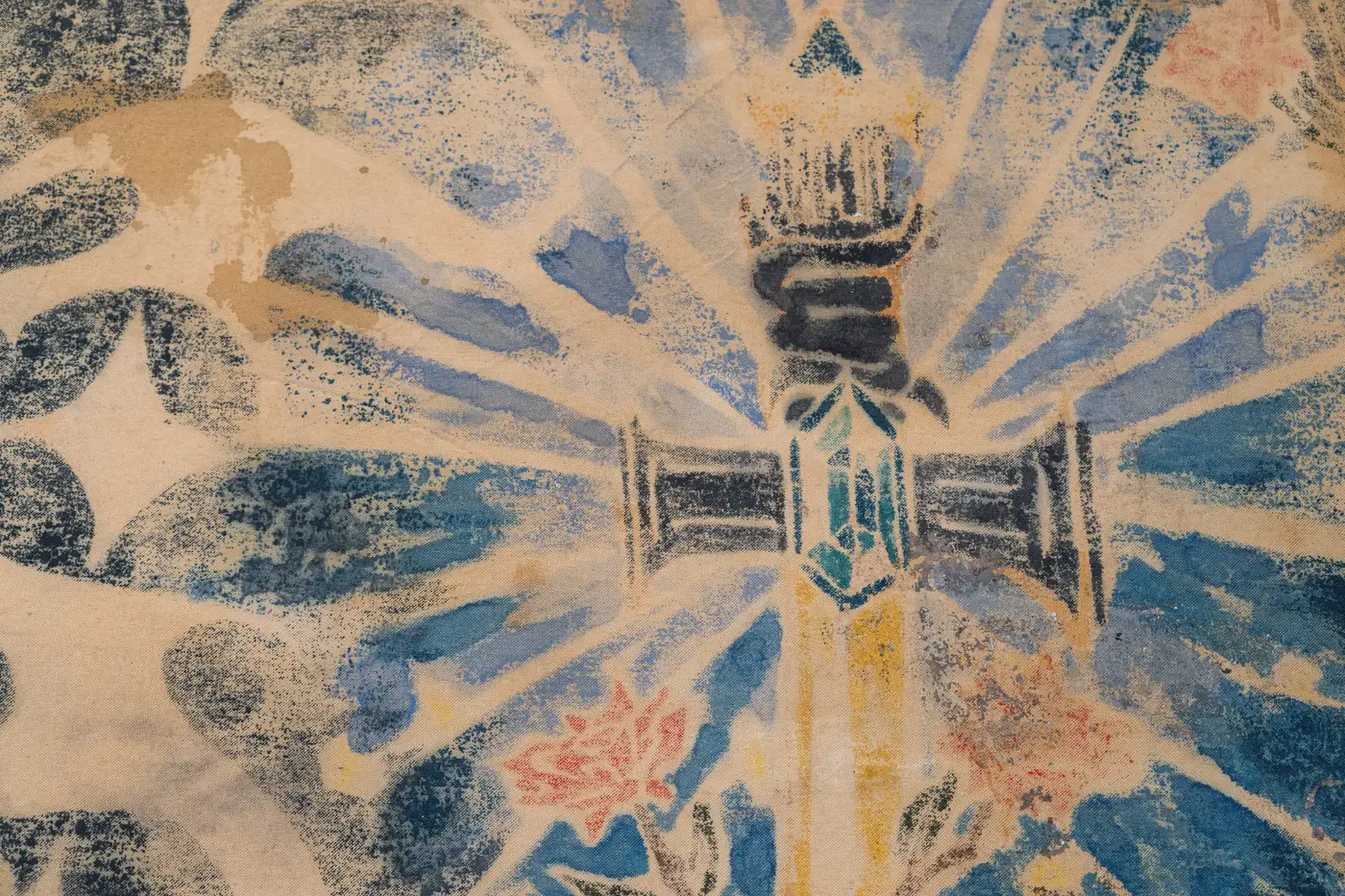
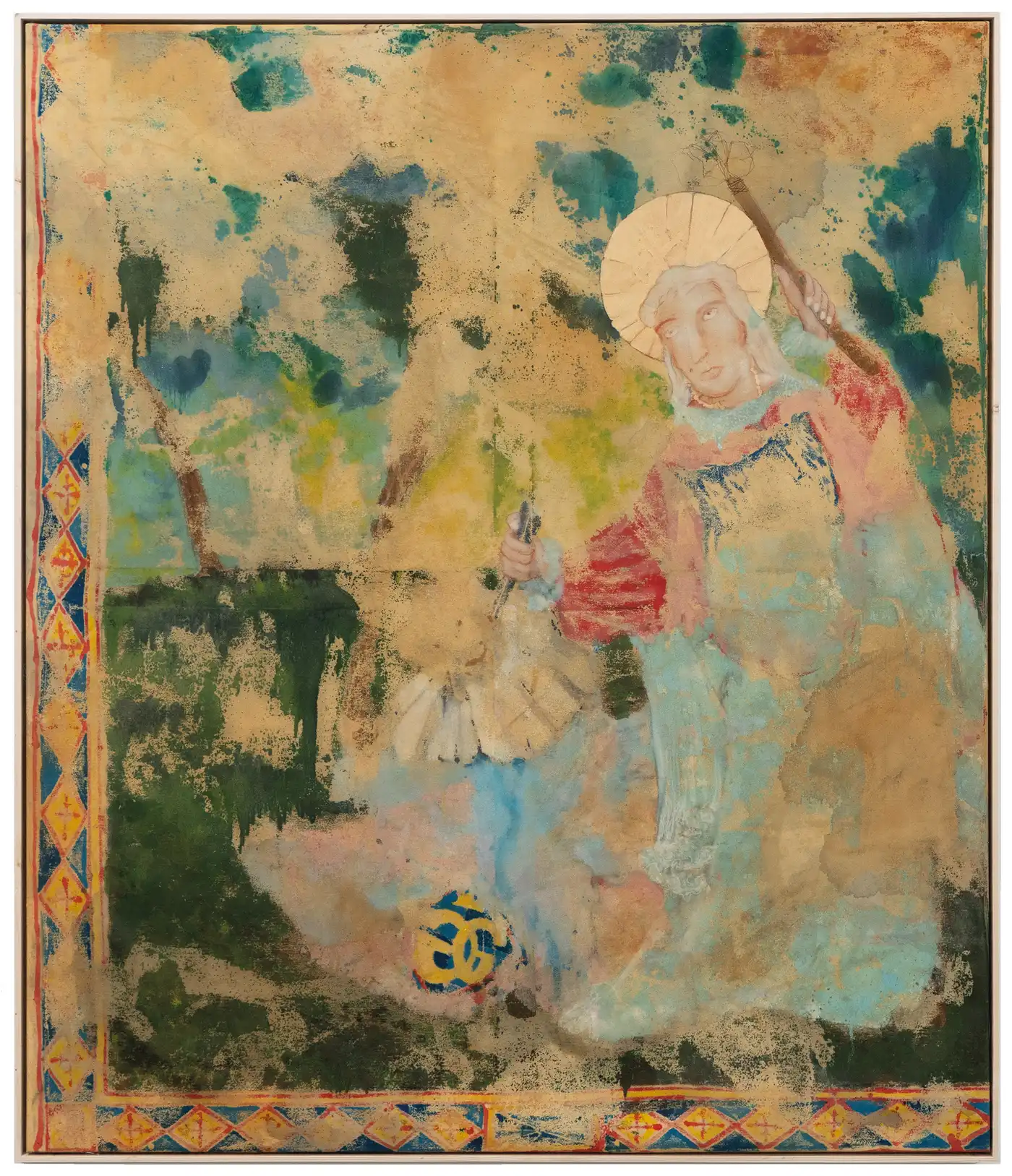
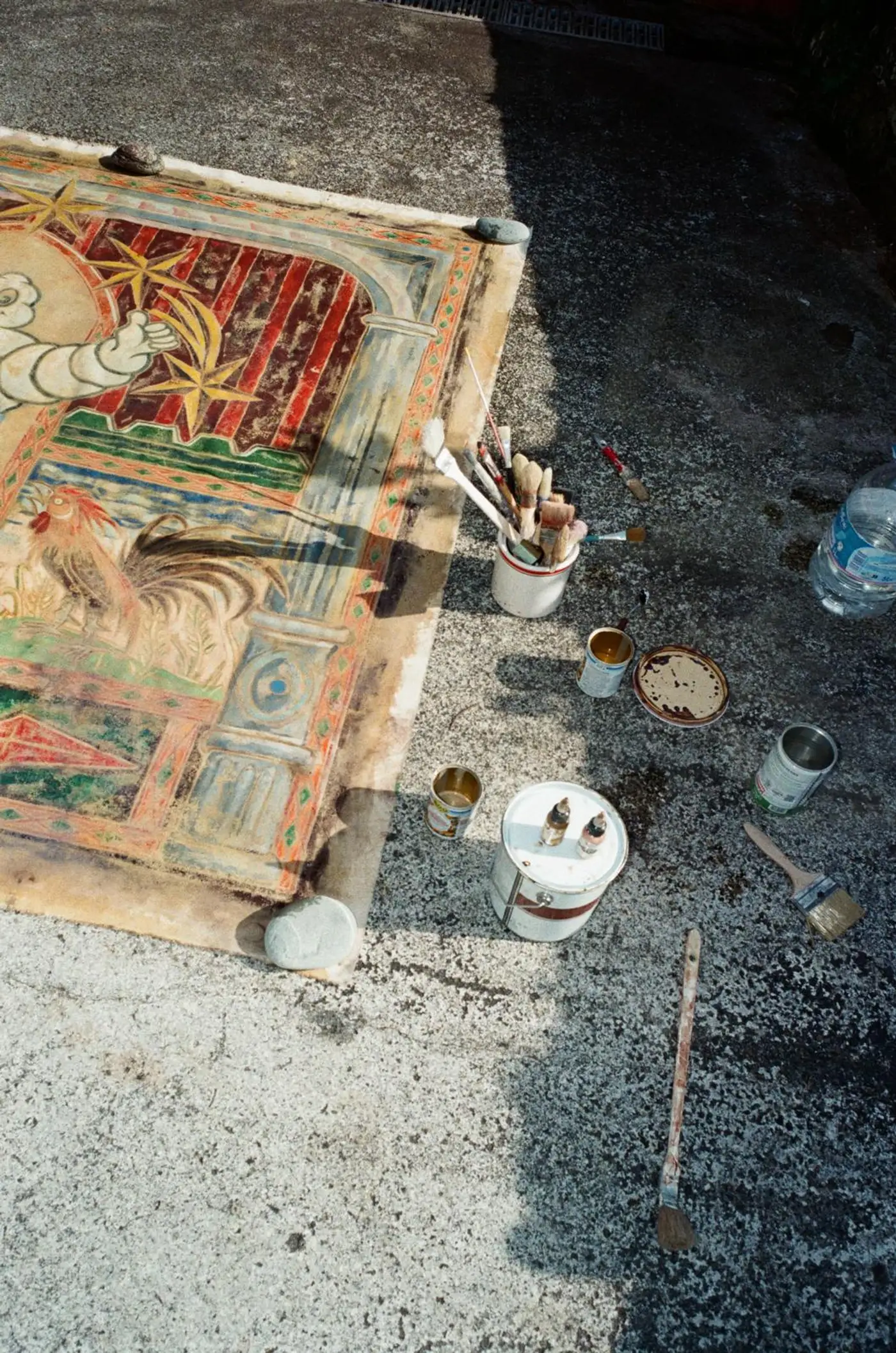
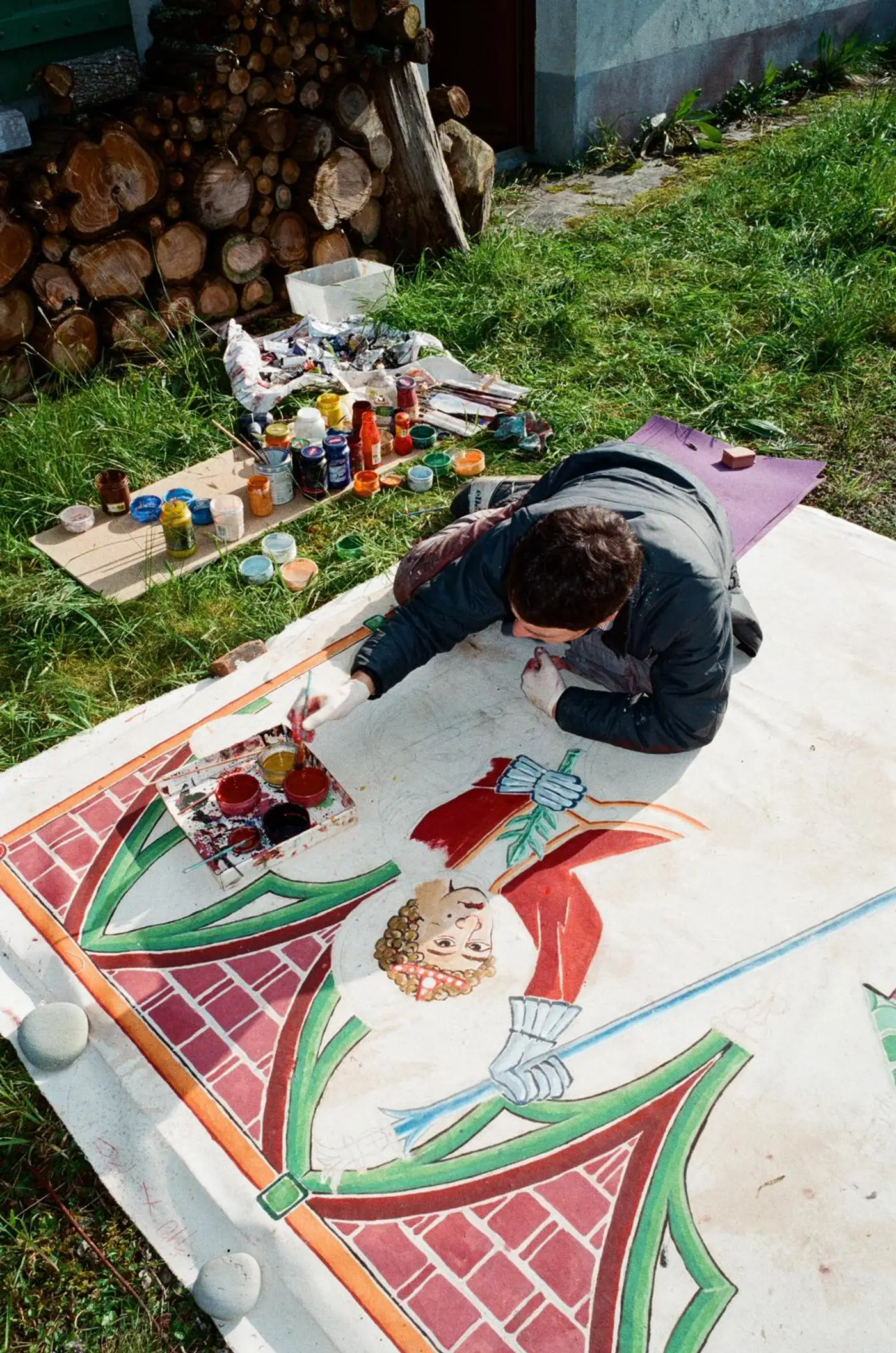
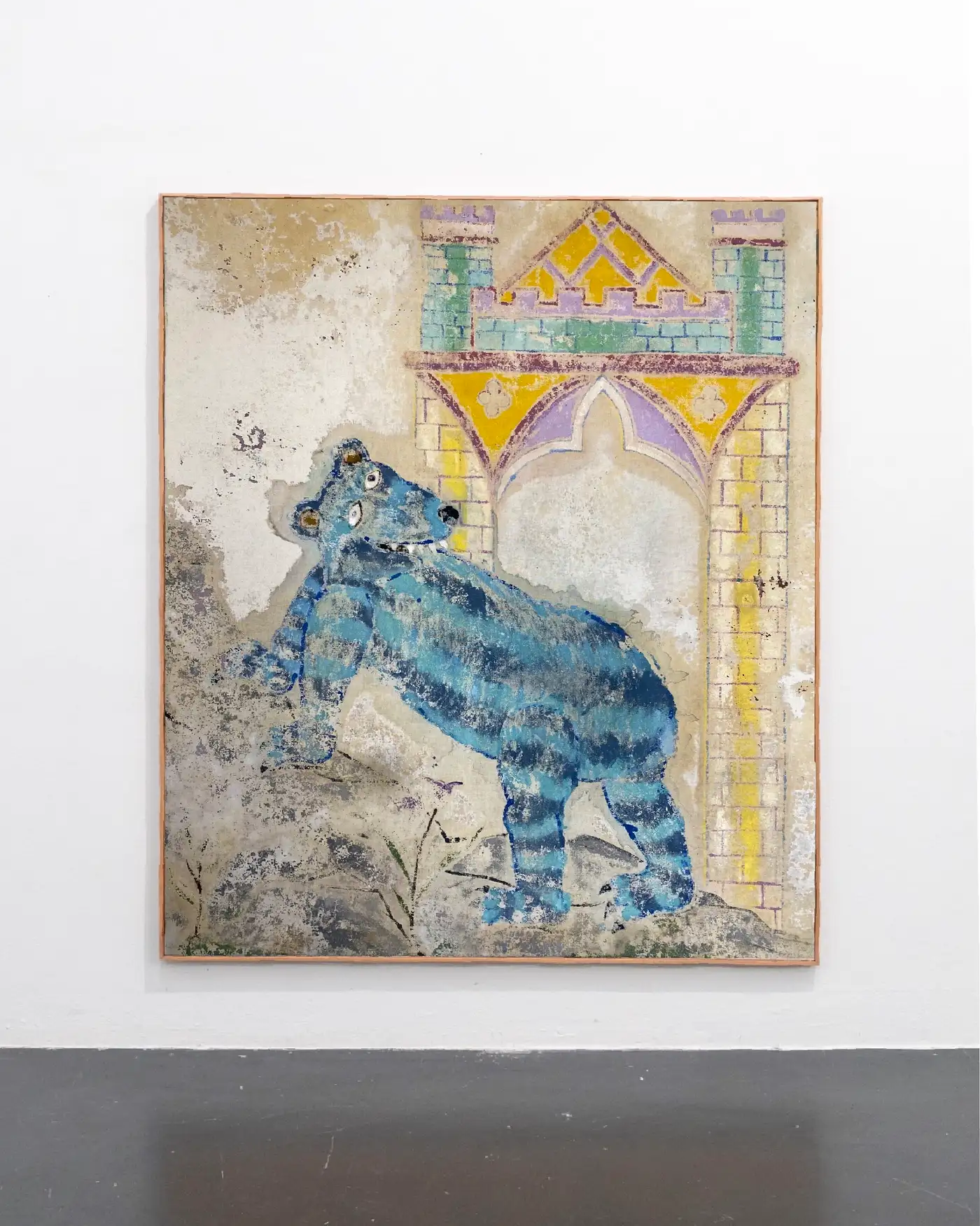
Einsmann’s paintings are built on coarse cotton linen, worked from the back and the front, allowing pigments to bleed through and reappear unpredictably.
In 2025, he presented a solo exhibition in Chile and participated in group exhibitions, including FORTUNE TELLER at V1 Gallery in Copenhagen.
He is represented by PlanX Gallery (Italy) and has taken part in international art fairs such as Art Dubai, SWAB Barcelona, and FERIA CAPITAL (Argentina).
Upcoming exhibitions include a solo show on February 25 at Gallery Drewes (Hamburg), as well as a ceramic exhibition in April in Mallorca.
Medieval logic, contemporary pressure
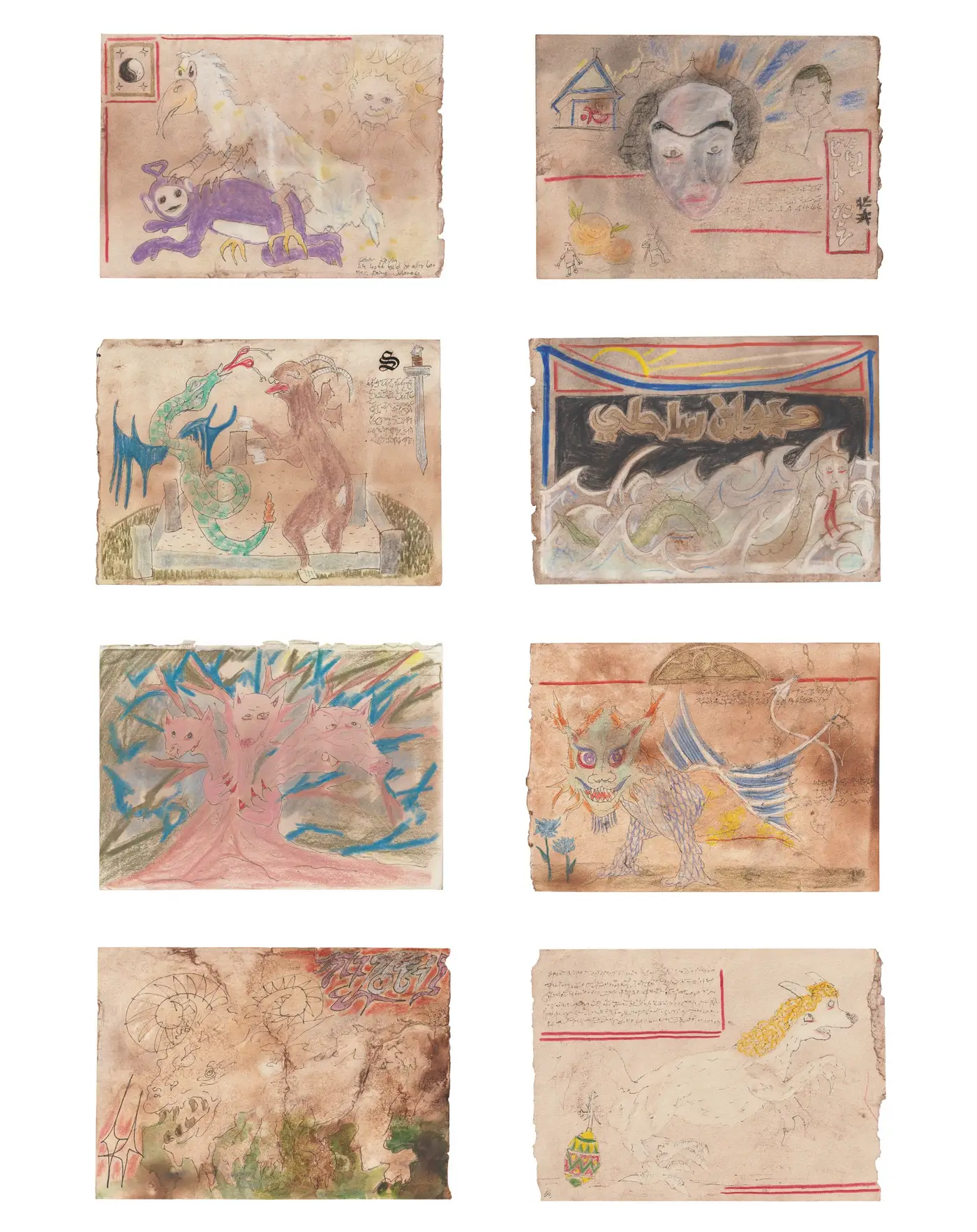
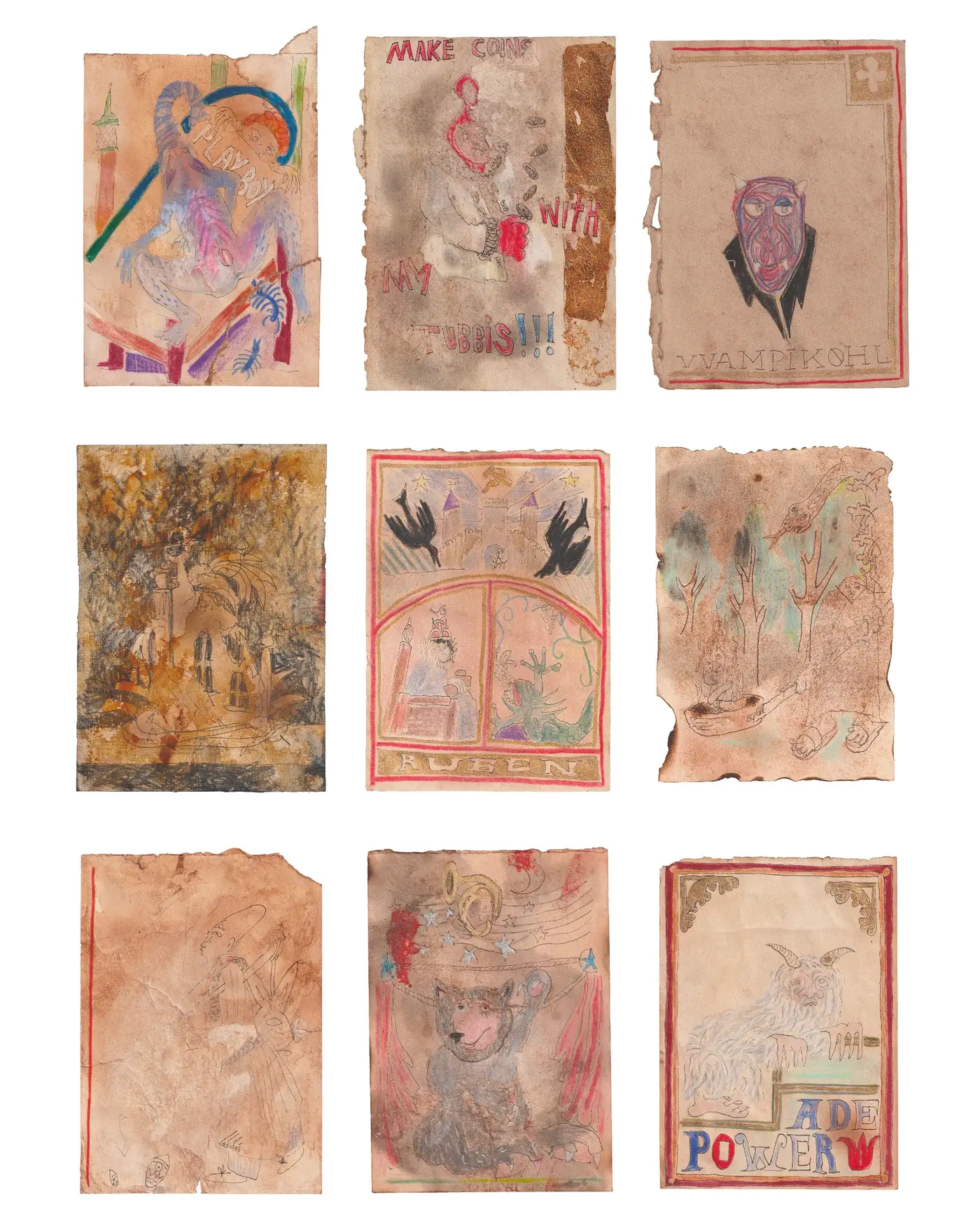
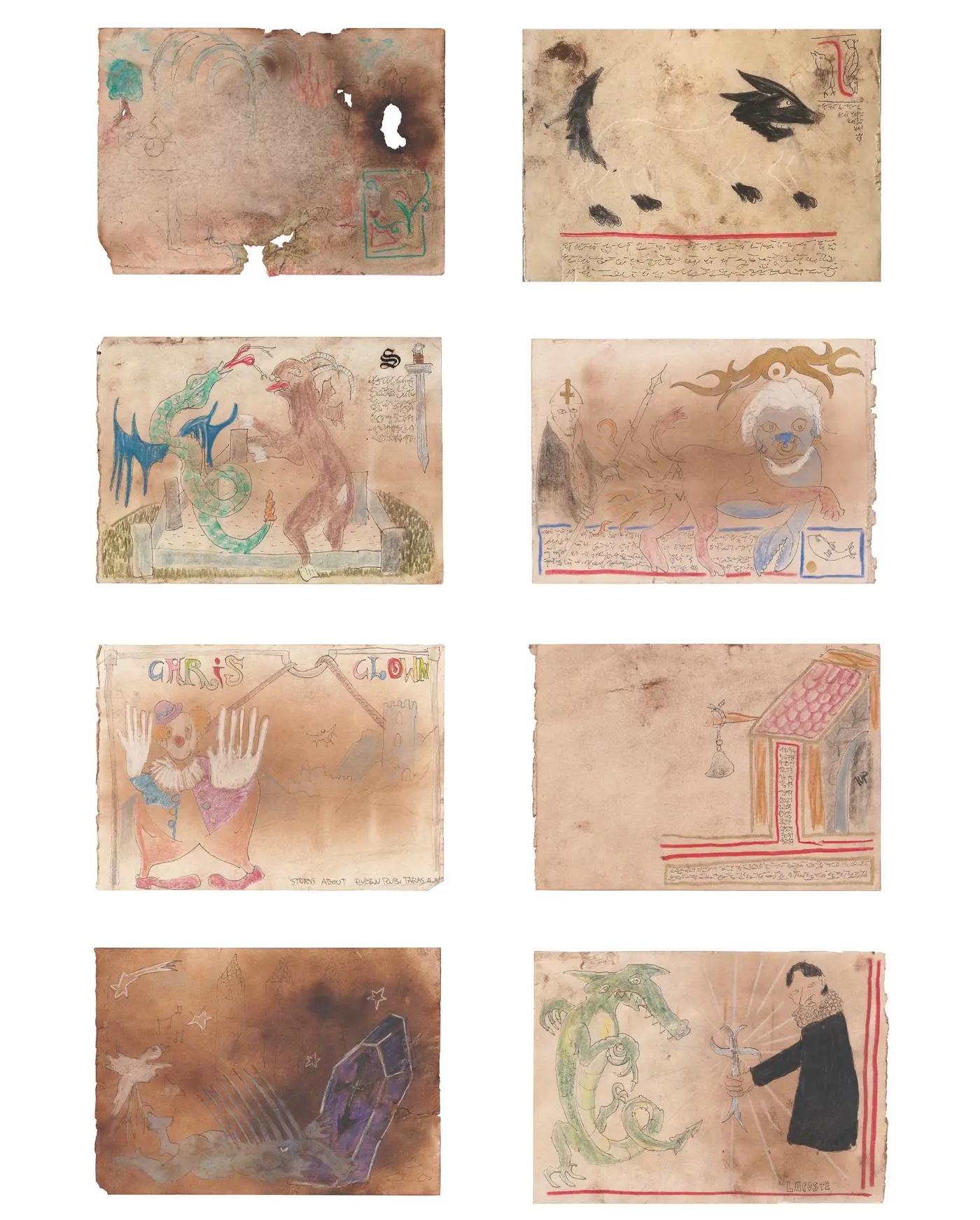
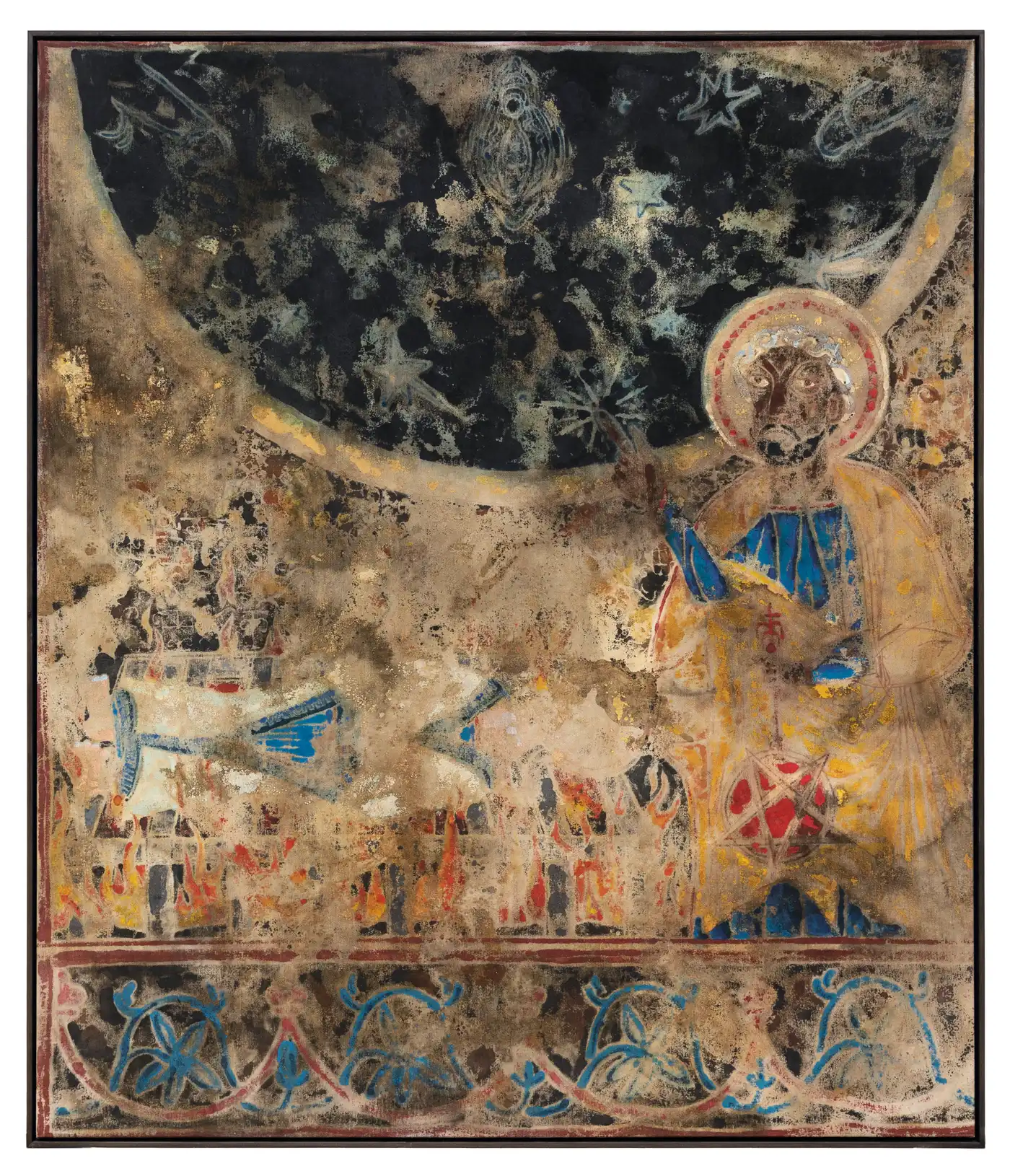
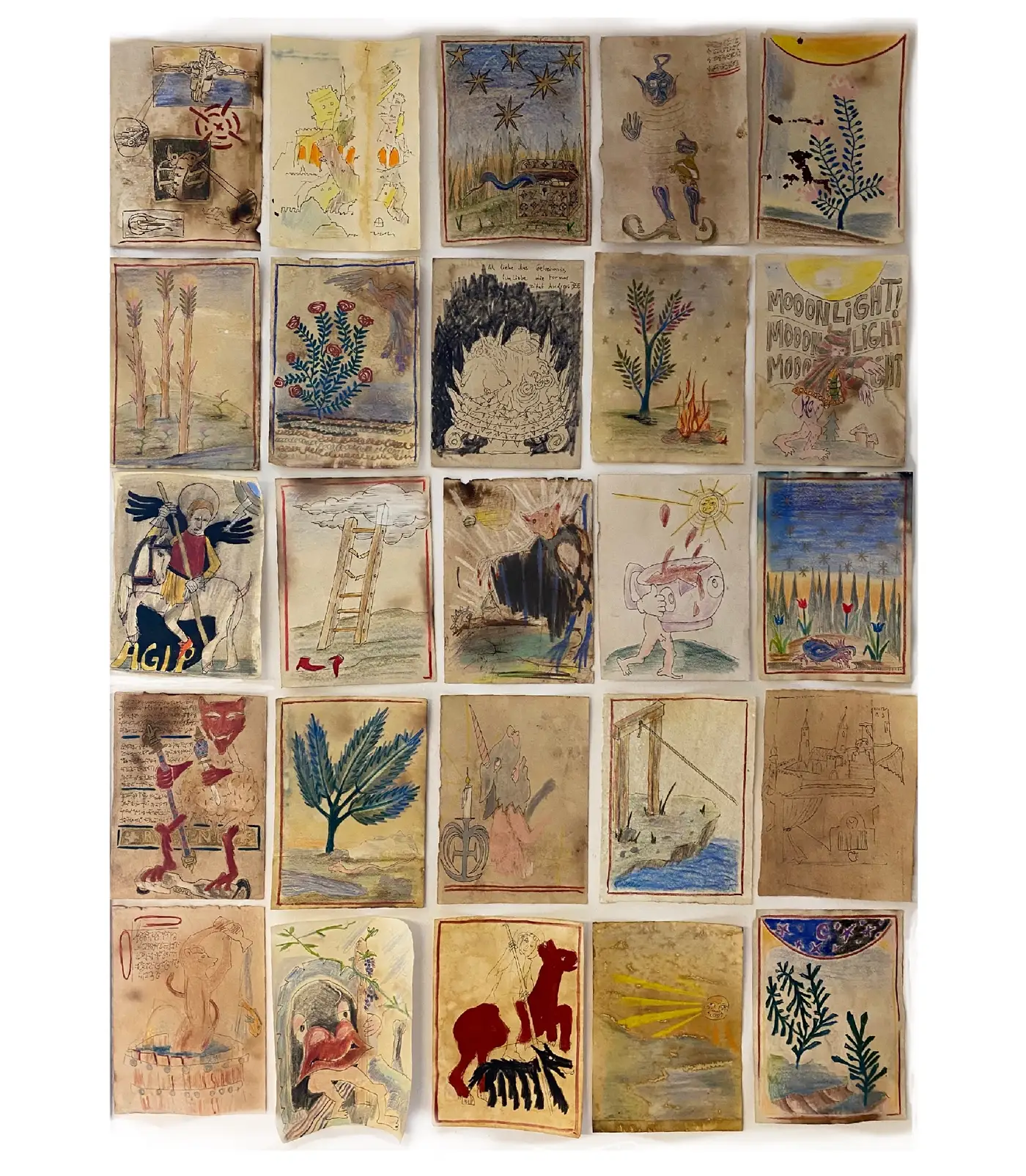
Einsmann’s imagery draws strongly from Romanesque frescoes, medieval manuscripts, and early book printing, especially their refusal of illusionistic depth.
Figures, symbols, and architectures are flattened, arranged hierarchically rather than perspectivally. At the same time, contemporary references enter quietly but insistently, from pop cultural signs to political and institutional critique.
These elements do not clash, they coexist, producing a visual language where different centuries speak at once without hierarchy.
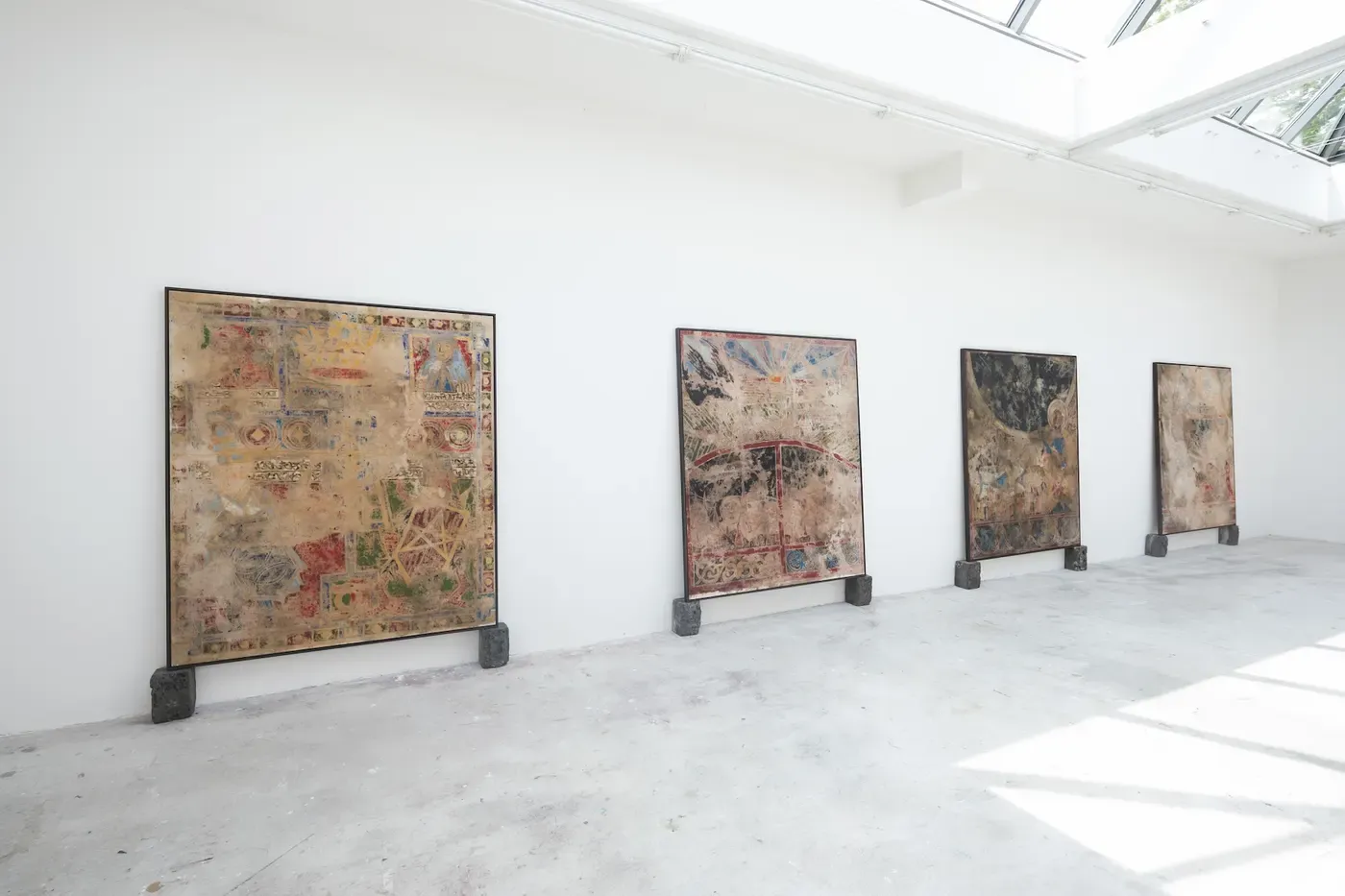
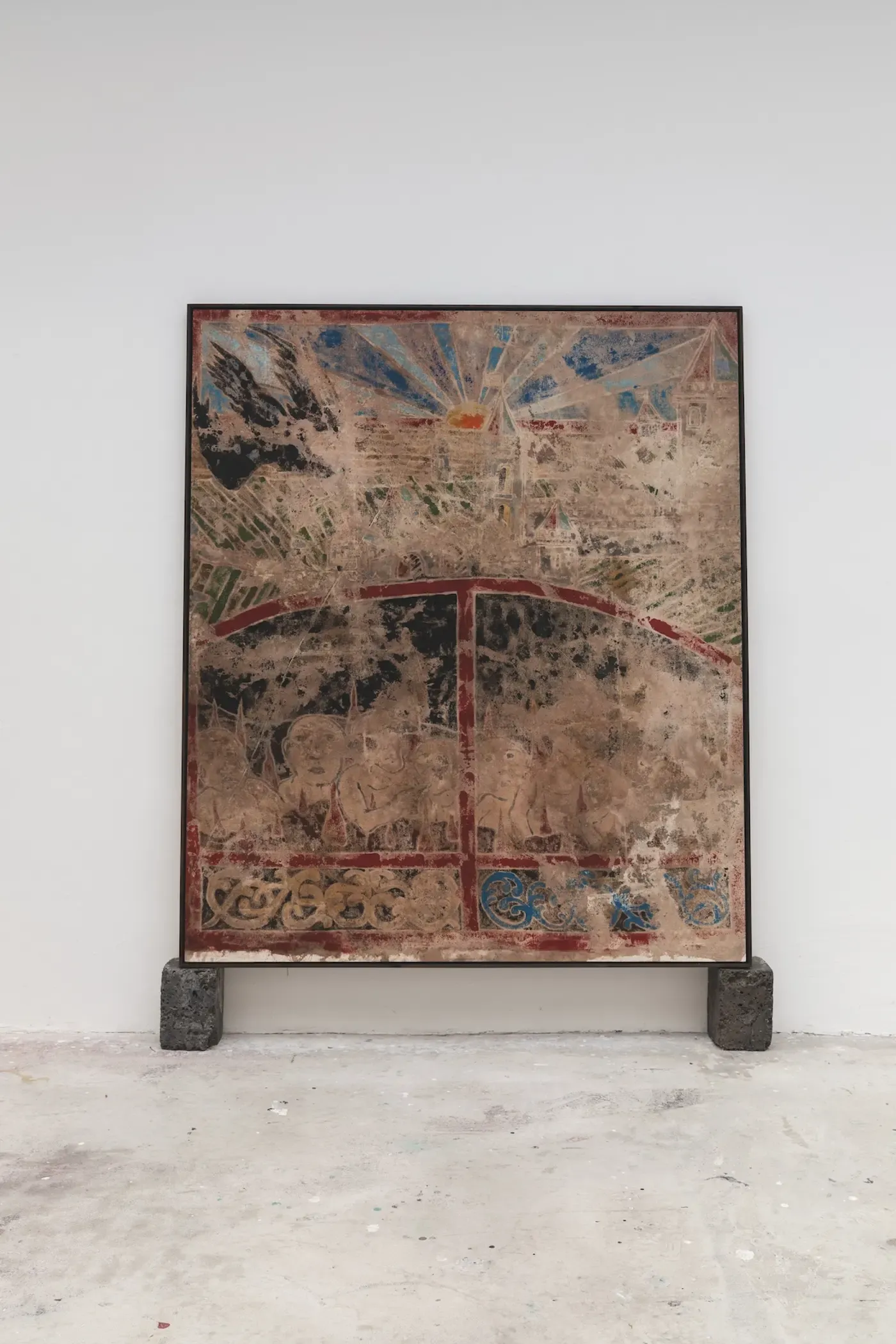
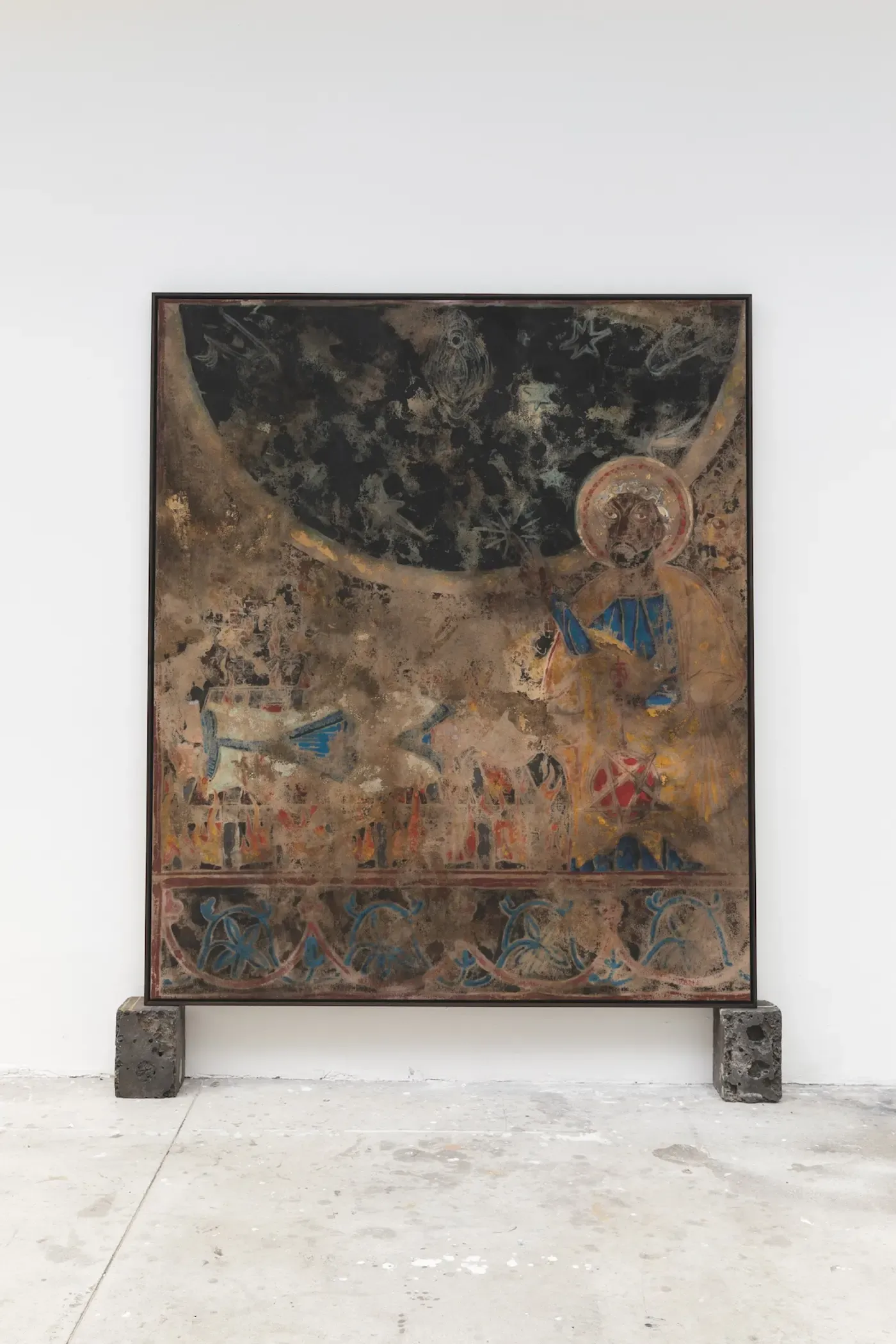
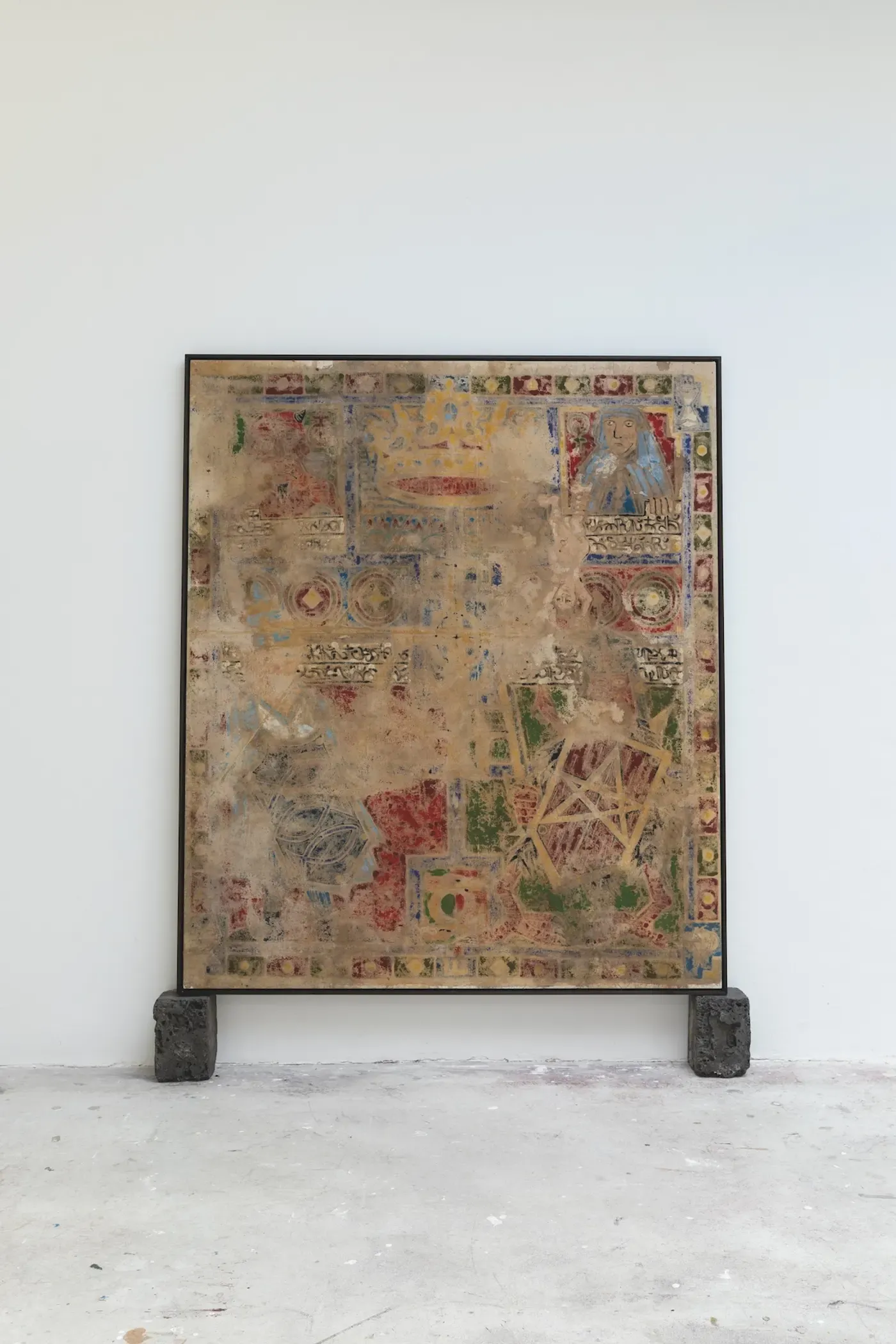
Ruben Einsmann: Renaître, exhibition view, 2022, Échange. Rights: Hannah Jung. Image courtesy of the artist.
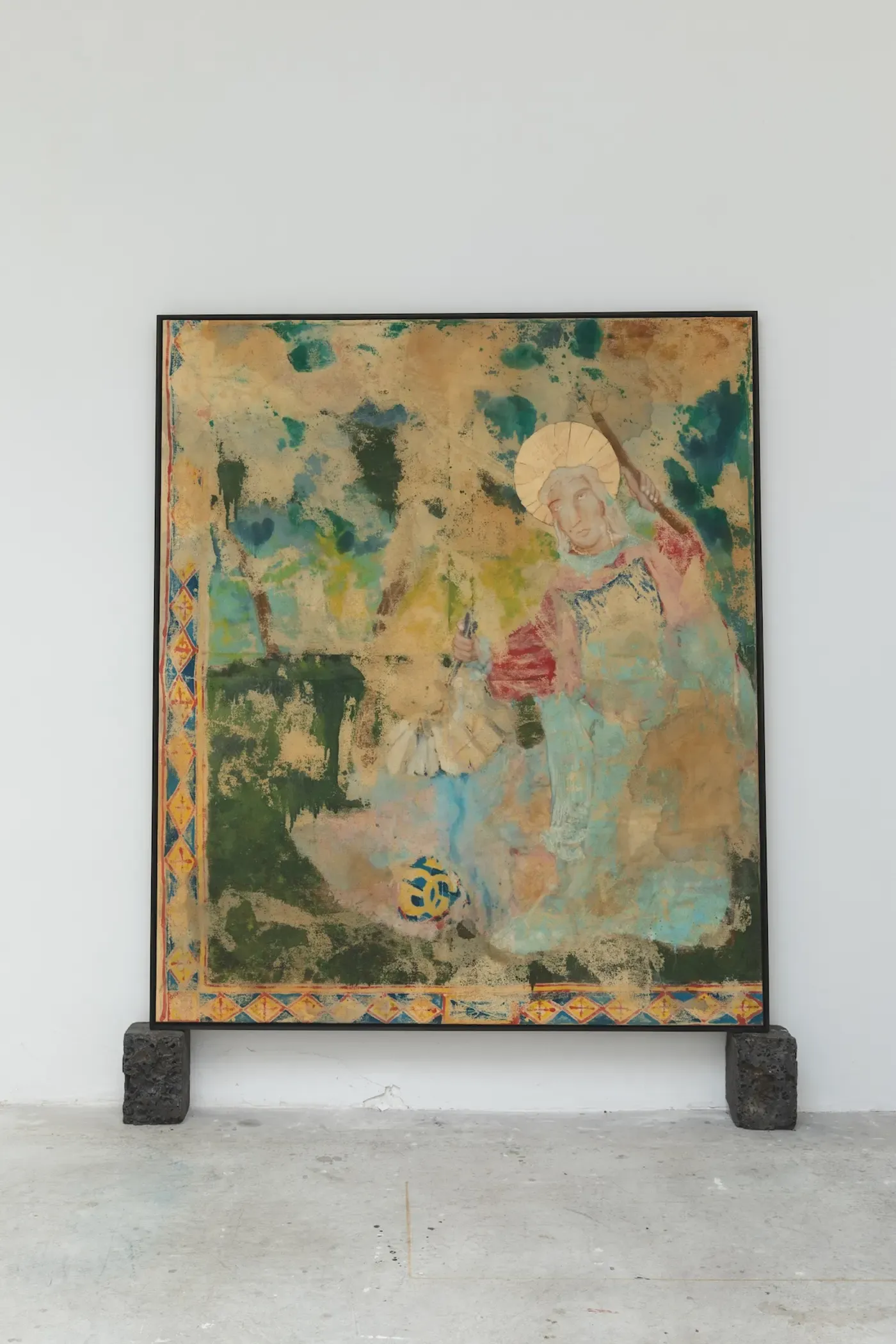
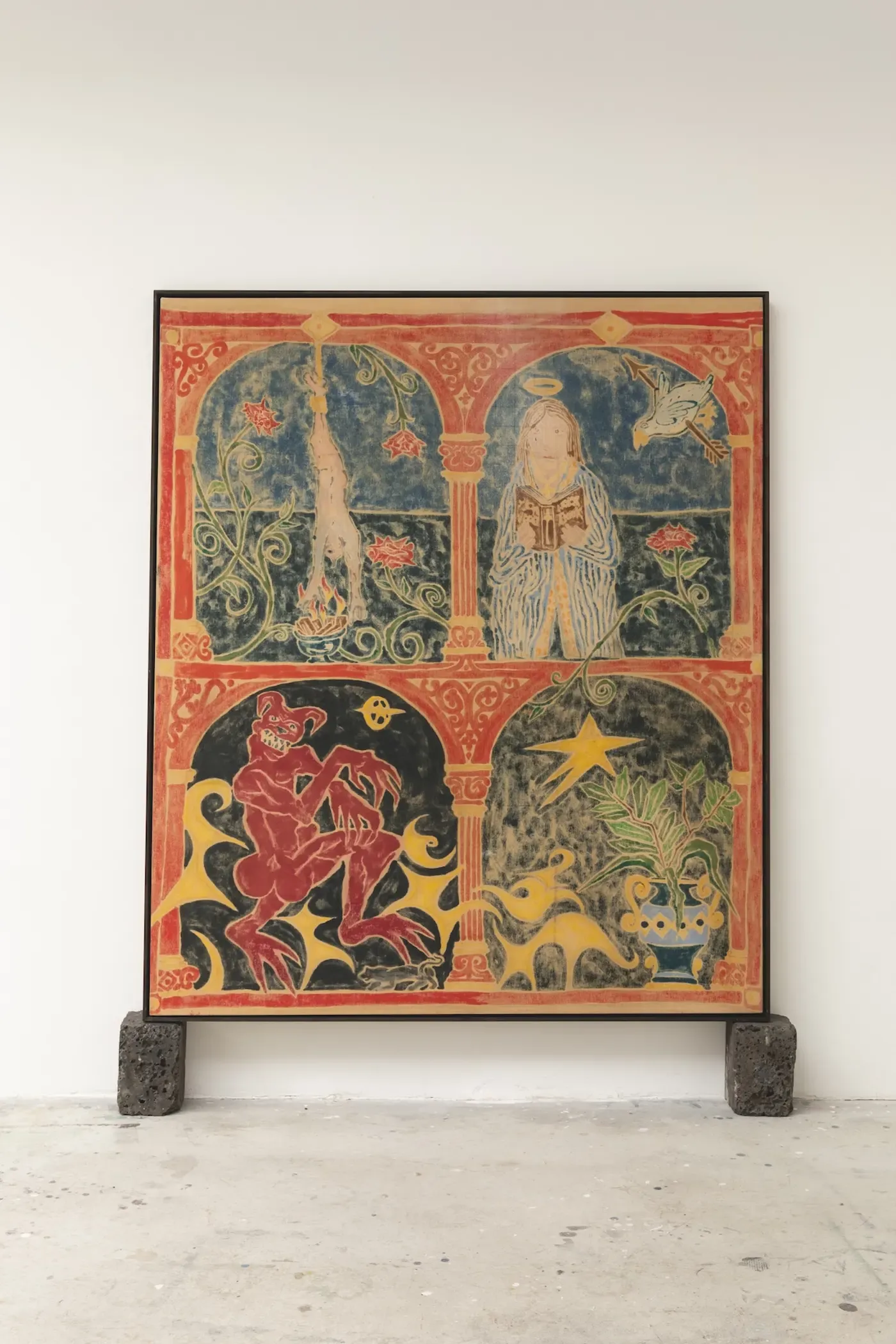
Renaître, exhibition view, 2022, Dame Et Gobelin, Juxtaposition. Rights: Hannah Jung. Image courtesy of the artist.
Painting as patina and process
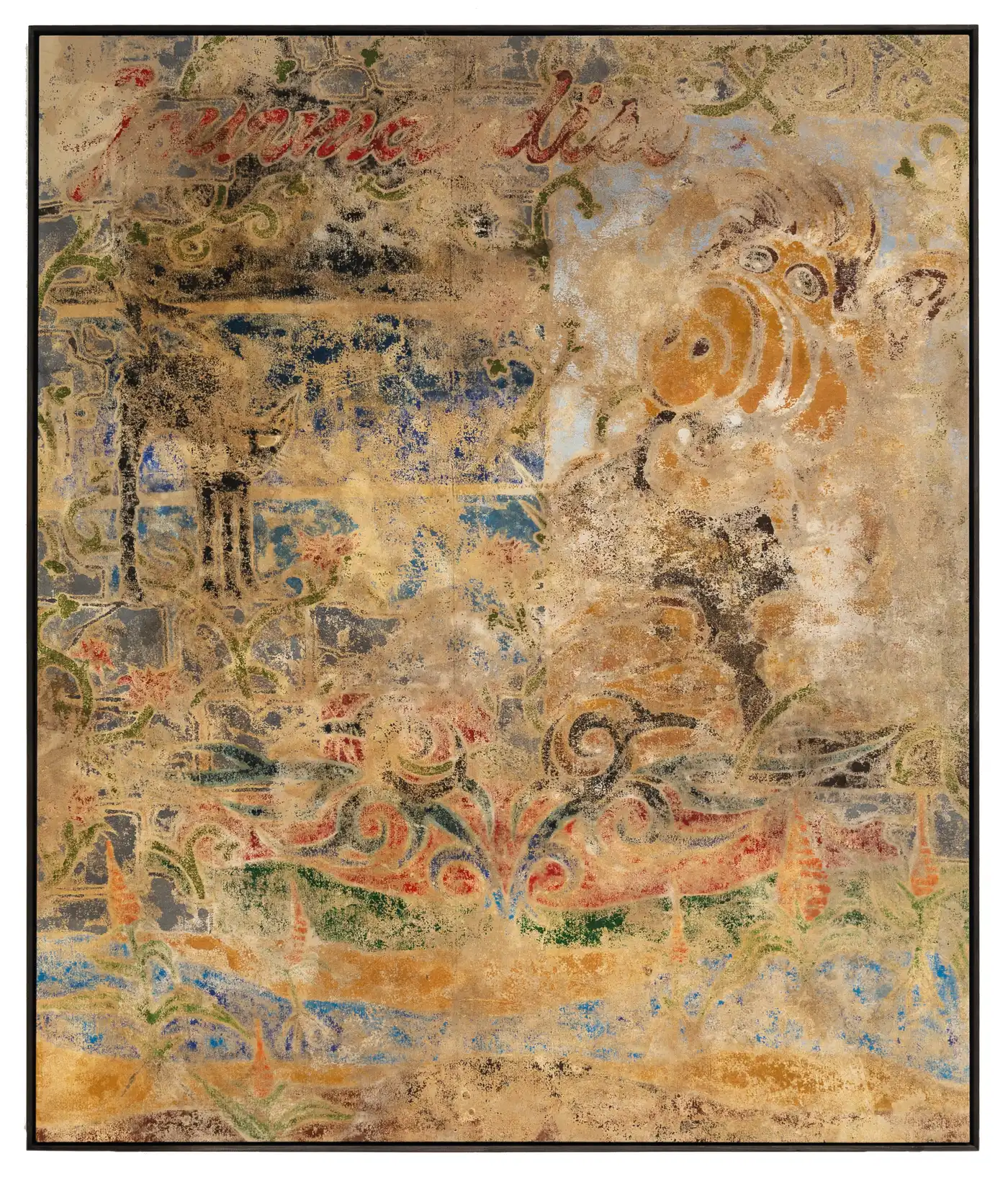
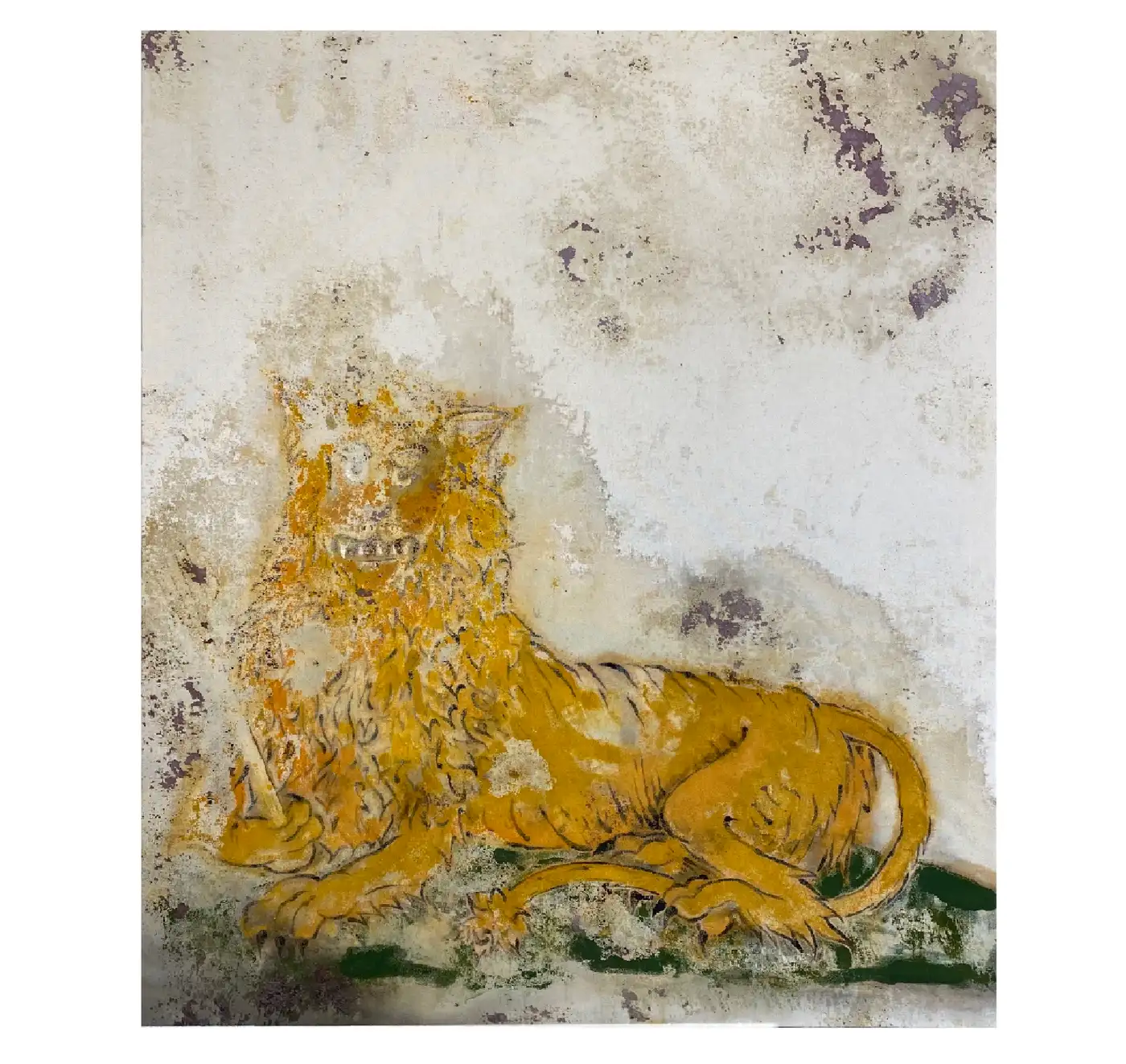
Texture is central to Einsmann’s work. Layers of dispersion paint mixed with additives are applied, absorbed, partially erased, and reactivated. The surface resembles weathered walls, faded parchment, or overpainted graffiti.
This process makes time visible not as narrative but as material fact. The paintings resist clean edges and stable contours, sometimes creating negative-like effects where forms seem to reverse or dissolve. What remains is a surface that records its own making.
Renaître and the logic of reappearance
The ongoing series Renaître frames much of Einsmann’s thinking. The title refers to revival and re-emergence, both visually and conceptually. Motifs return in altered form, colors resurface through erosion, and symbols shift their meaning depending on what is revealed or concealed.
Religious hierarchies, moral binaries, and social roles are destabilized, not overturned through provocation but worn down through repetition and decay. The images suggest cycles rather than conclusions.
Ambiguity as structure
Einsmann avoids fixed statements. His paintings do not instruct, accuse, or resolve. Instead they construct associative spaces where viewers move between utopia, dystopia, and something unresolved in between.
Erotic, political, and sacred references coexist without explanation. Meaning remains provisional, shaped by the viewer’s own reading of symbols that feel familiar and distant at the same time.
Looking without certainty
Encountering Einsmann’s work means slowing down. The absence of clear spatial depth and narrative direction shifts attention to surface, color, and rhythm.
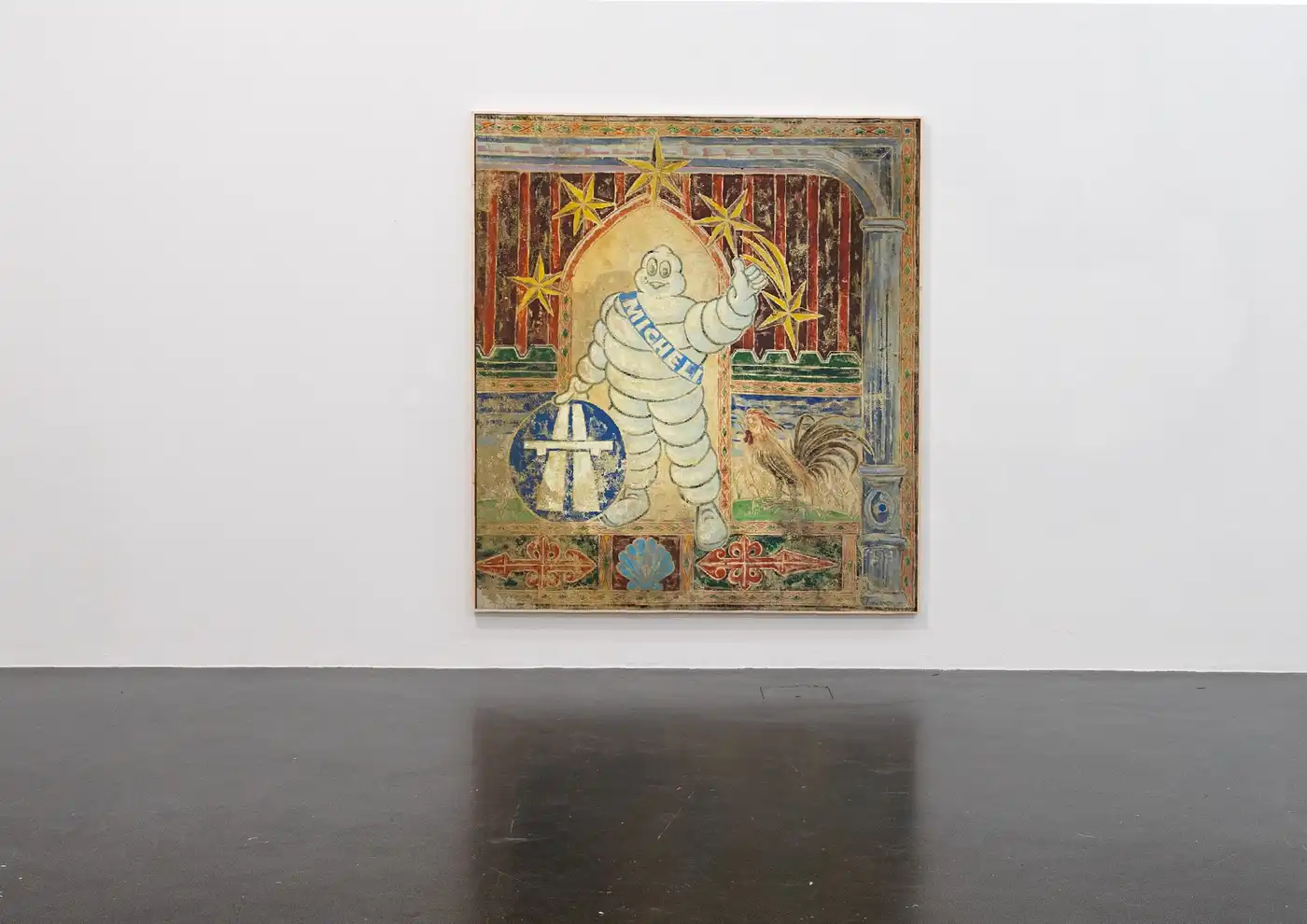
These paintings ask to be read across time, not as documents of a specific moment but as images that anticipate their own aging.
What seems fragmentary is intentional, leaving space for interpretation rather than closure.

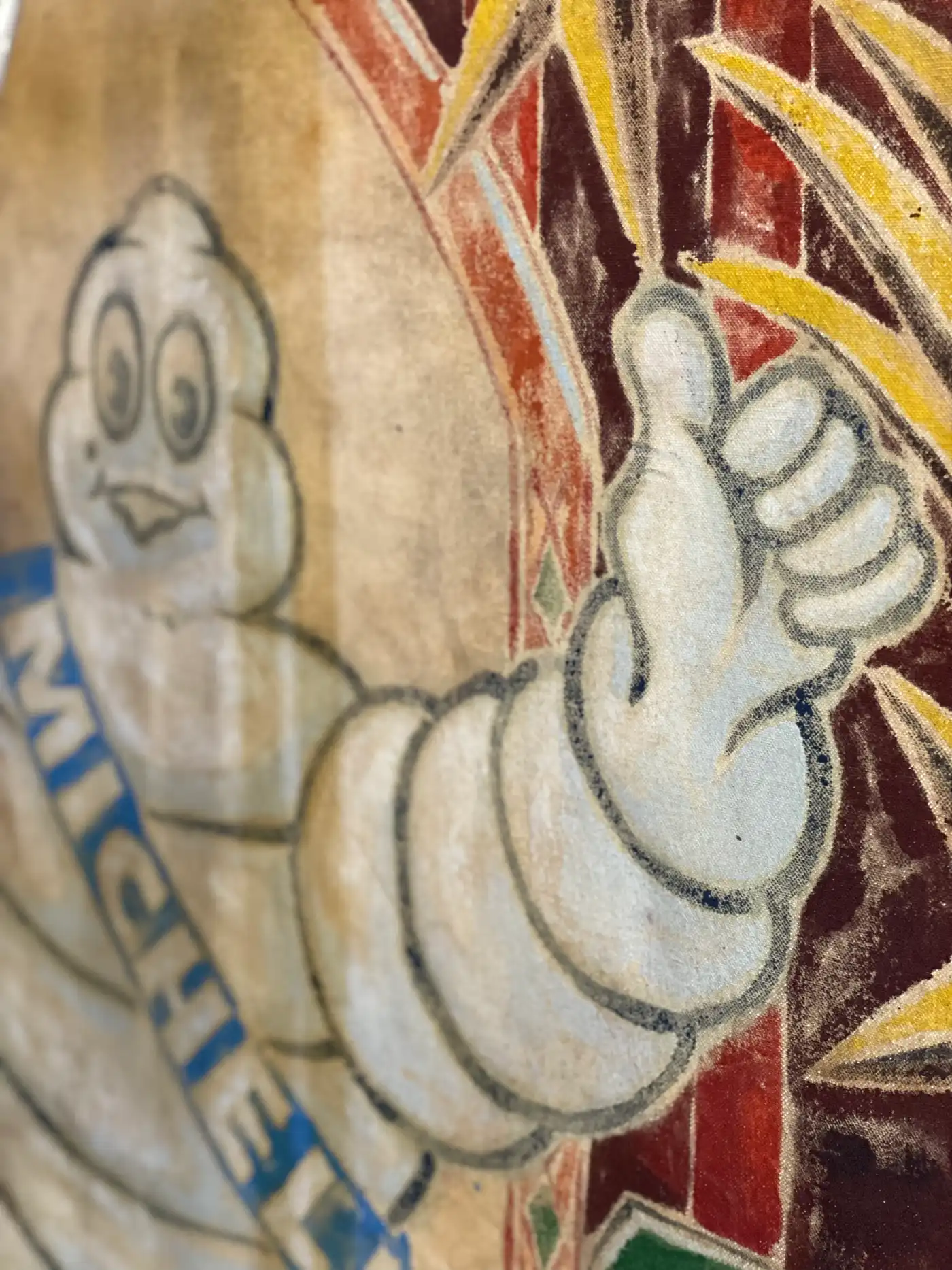
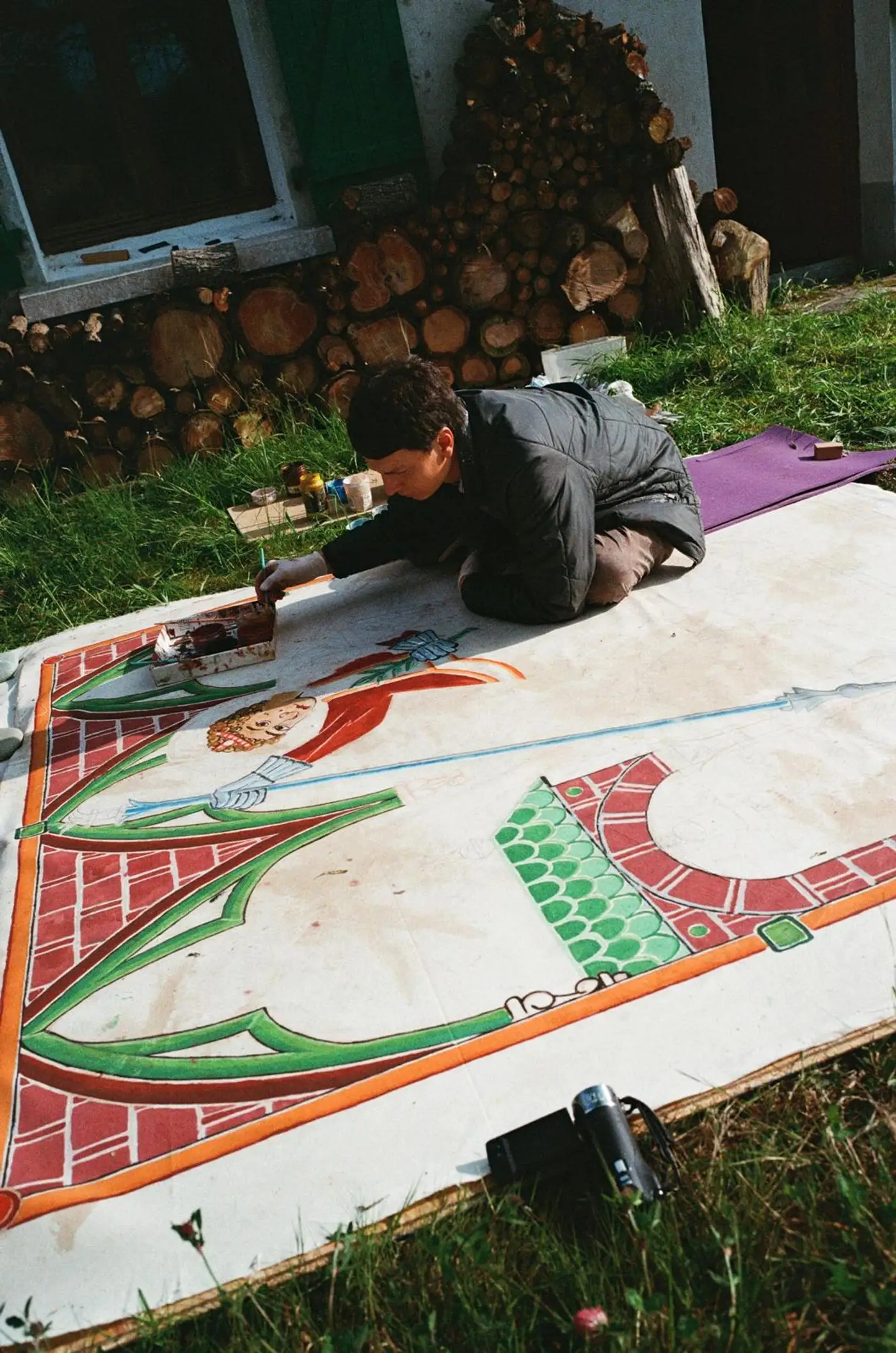
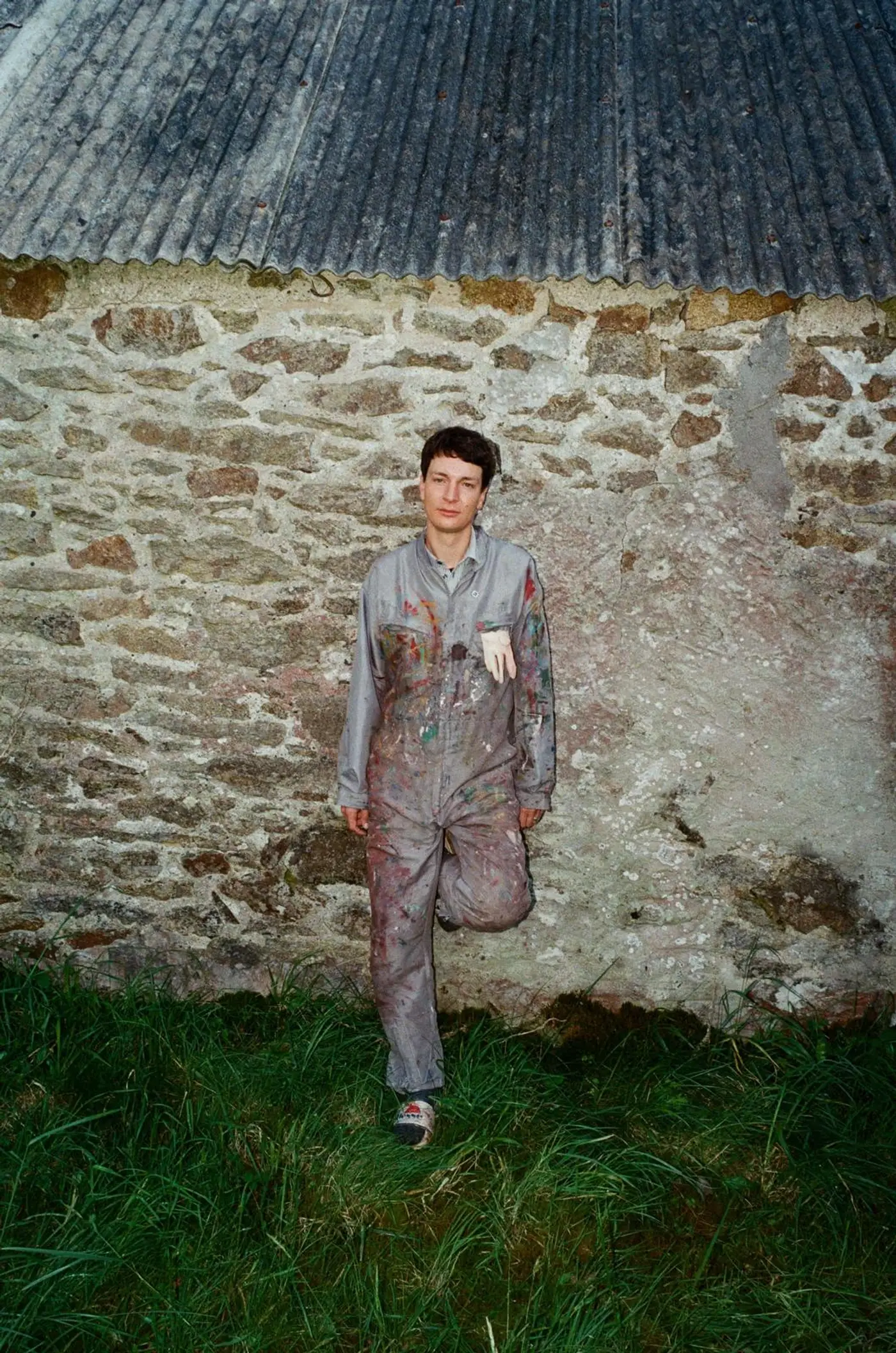
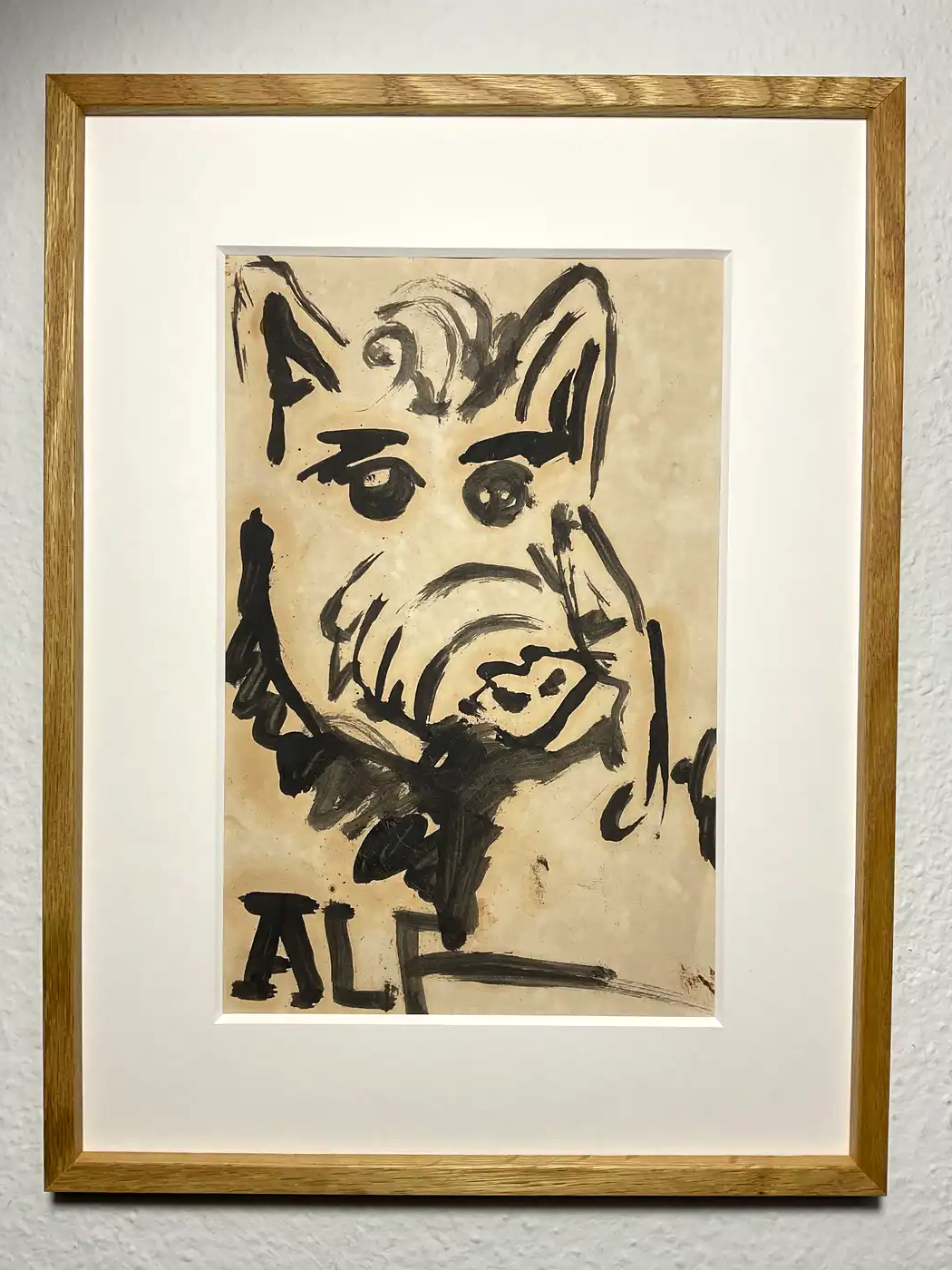
Ruben Einsmann: Portraits. Rights: Hometown Journal. Image courtesy of the artist.
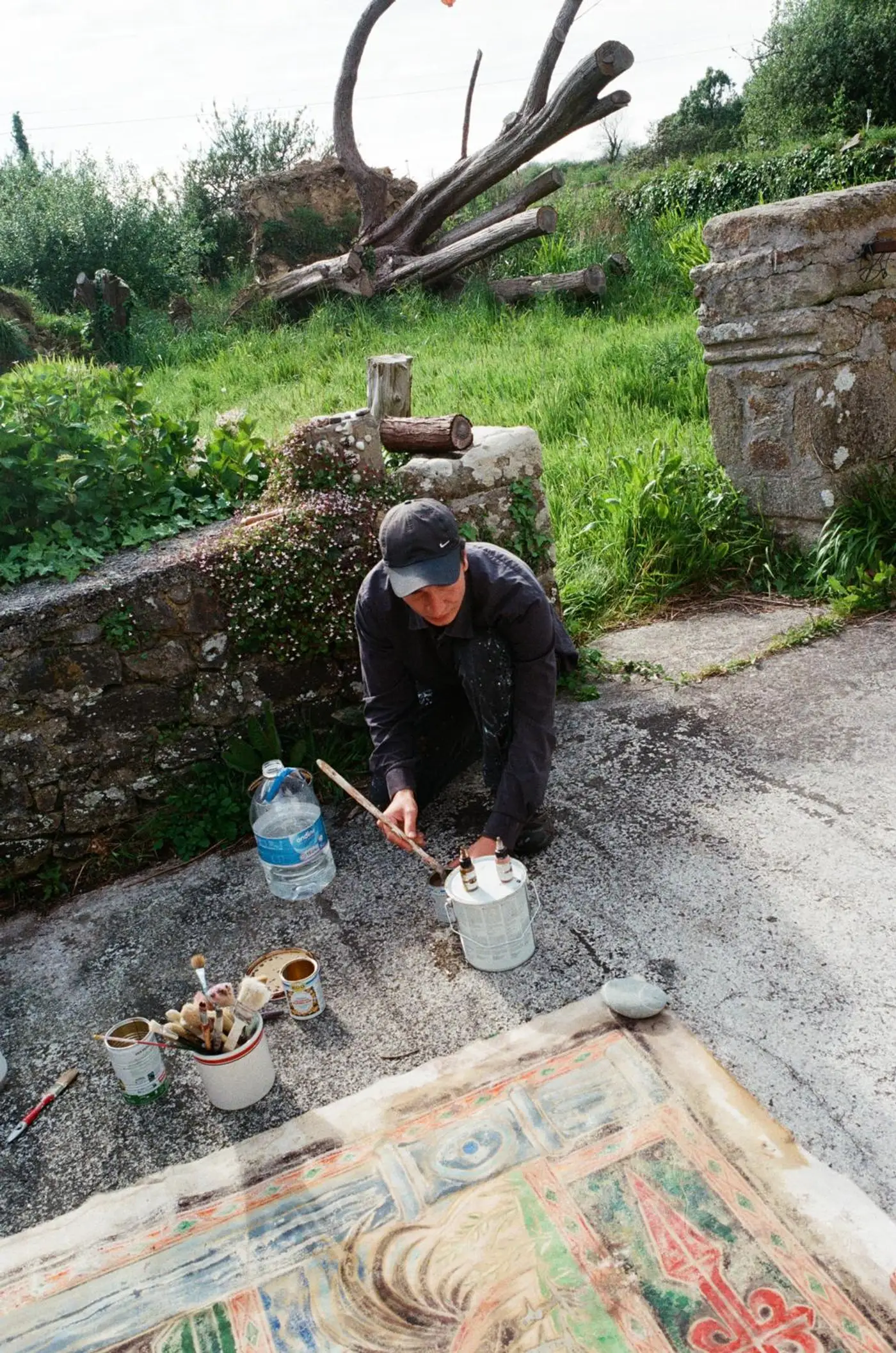
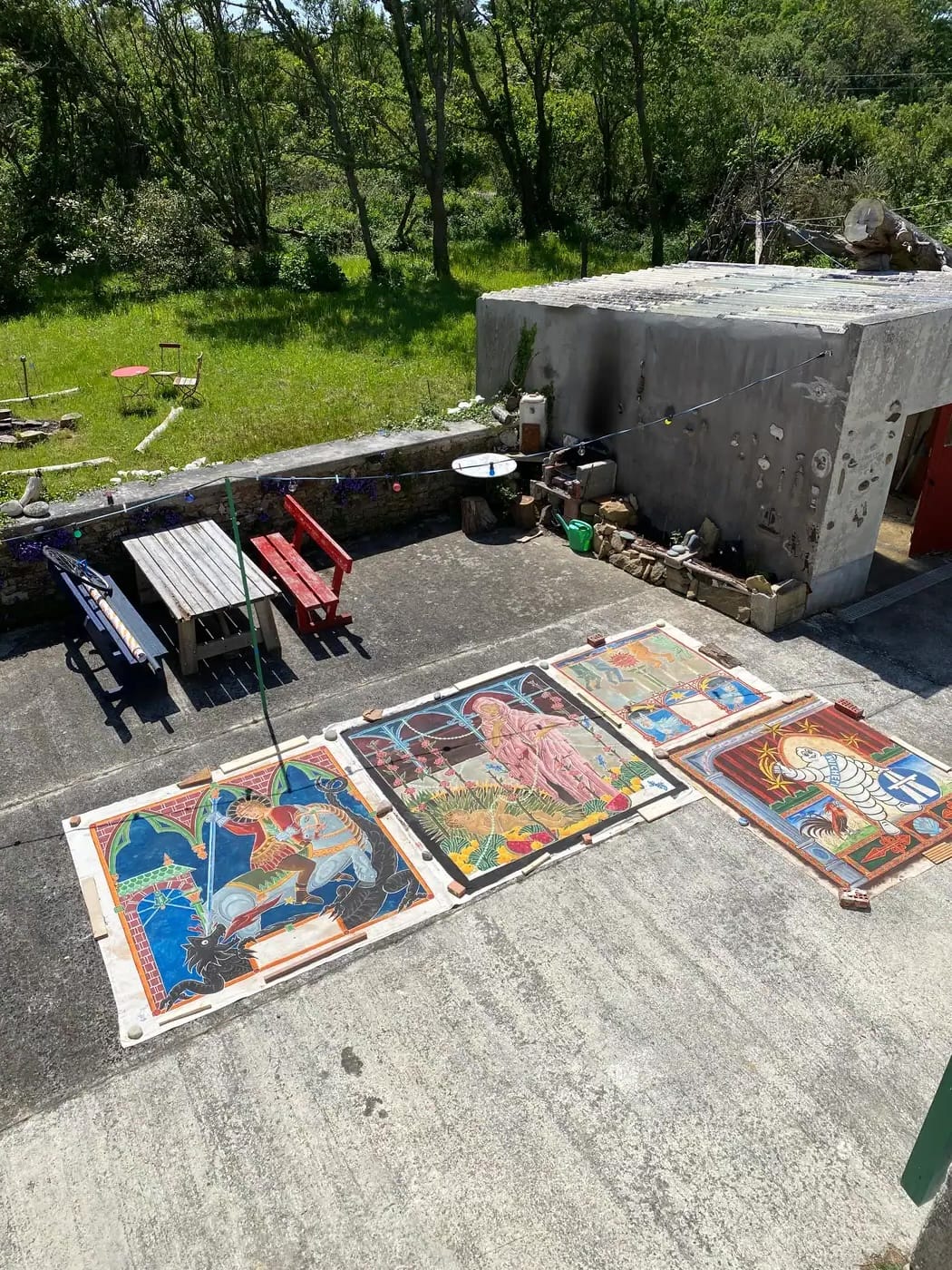
Ruben Einsmann at work. Rights: Hometown Journal. Image courtesy of the artist.
Why This Work Matters
Einsmann’s practice addresses how images persist, erode, and resurface in a present saturated with visual information.
By combining medieval visual logic with contemporary materials and references, his work reflects on memory, belief, and institutional power without fixing them in a single viewpoint. This openness allows the paintings to remain readable across different contexts and moments, resisting immediacy in favor of duration.
The work ultimately returns to a quiet question, whether images can hold complexity without resolving it, and whether painting can still function as a space where time remains visible rather than erased.
Follow Ruben Einsmann on Instagram @rubeneinsmann and visit his website, share this with someone who is interested in how images survive across centuries.
No spam, no sharing to third party. Only you and me.