Can Threads Hold History Without Becoming Narrative? Avraam Hirodontis in Focus
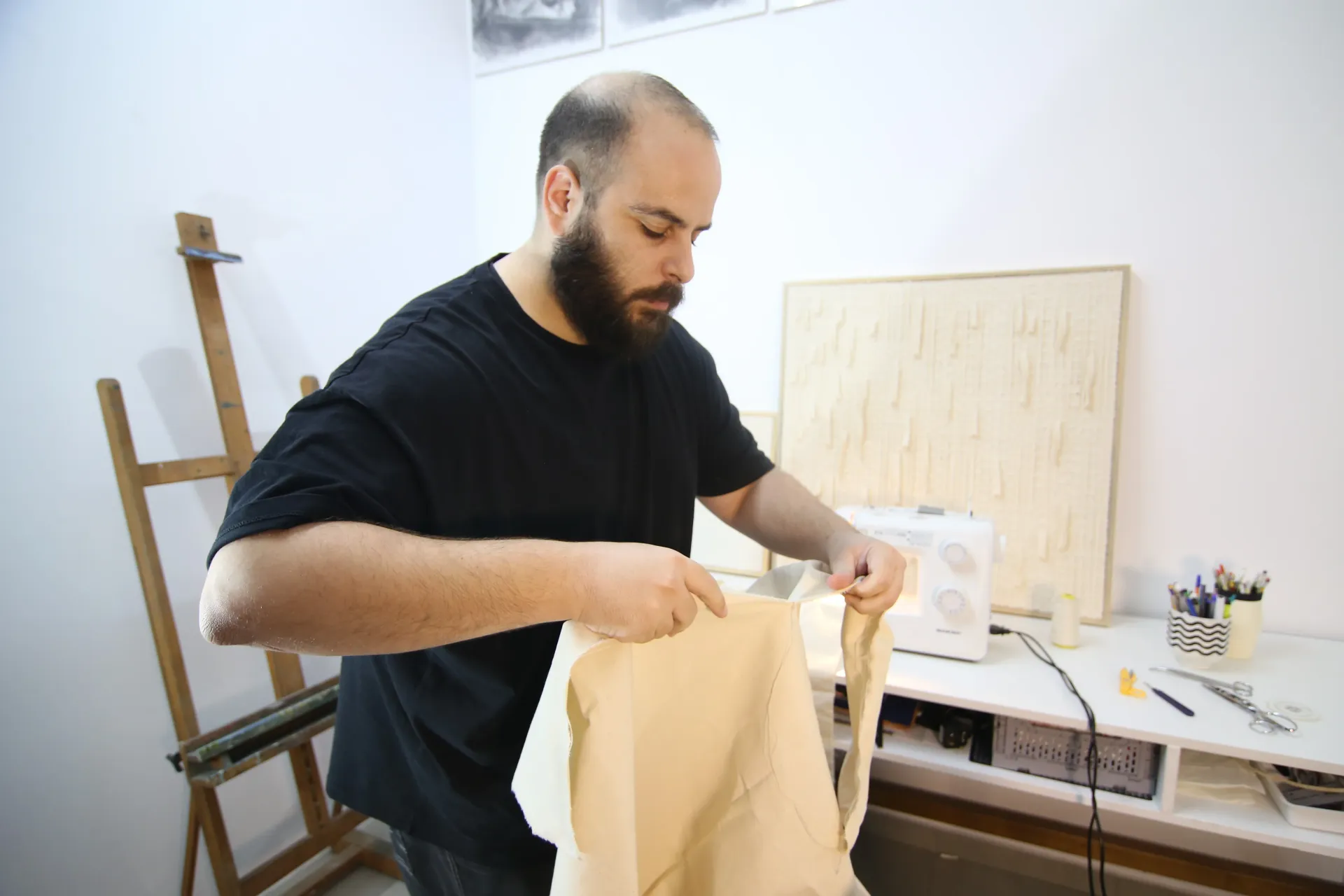
“The material knows something long before I do.”
Where Materials Begin to Think
Avraam Hirodontis, a Cypriot artist based in Limassol, works with materials that shift subtly the moment you encounter them.
He studied Fine Art in the United Kingdom and later researched Bauhaus pedagogy at Cyprus University of Technology.
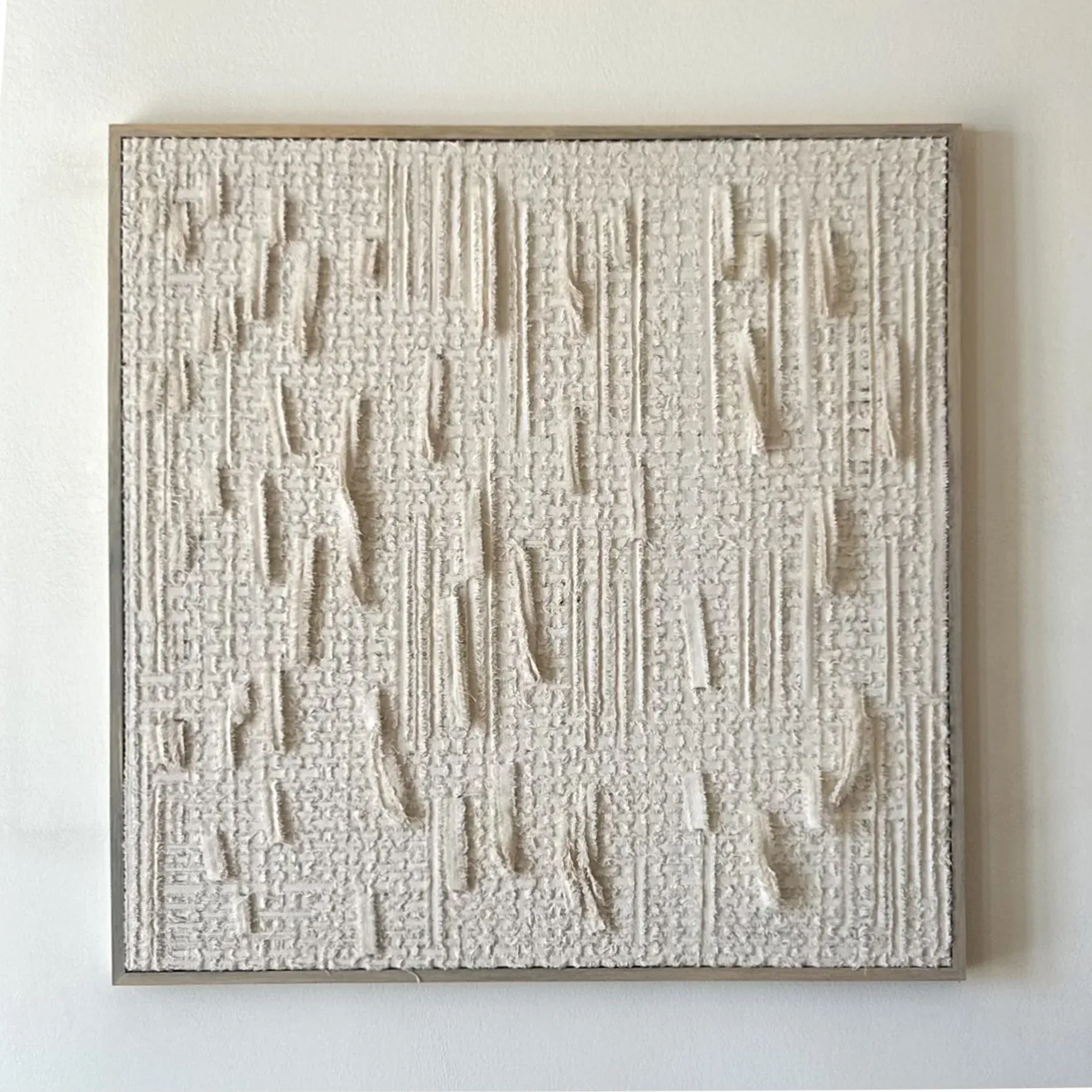
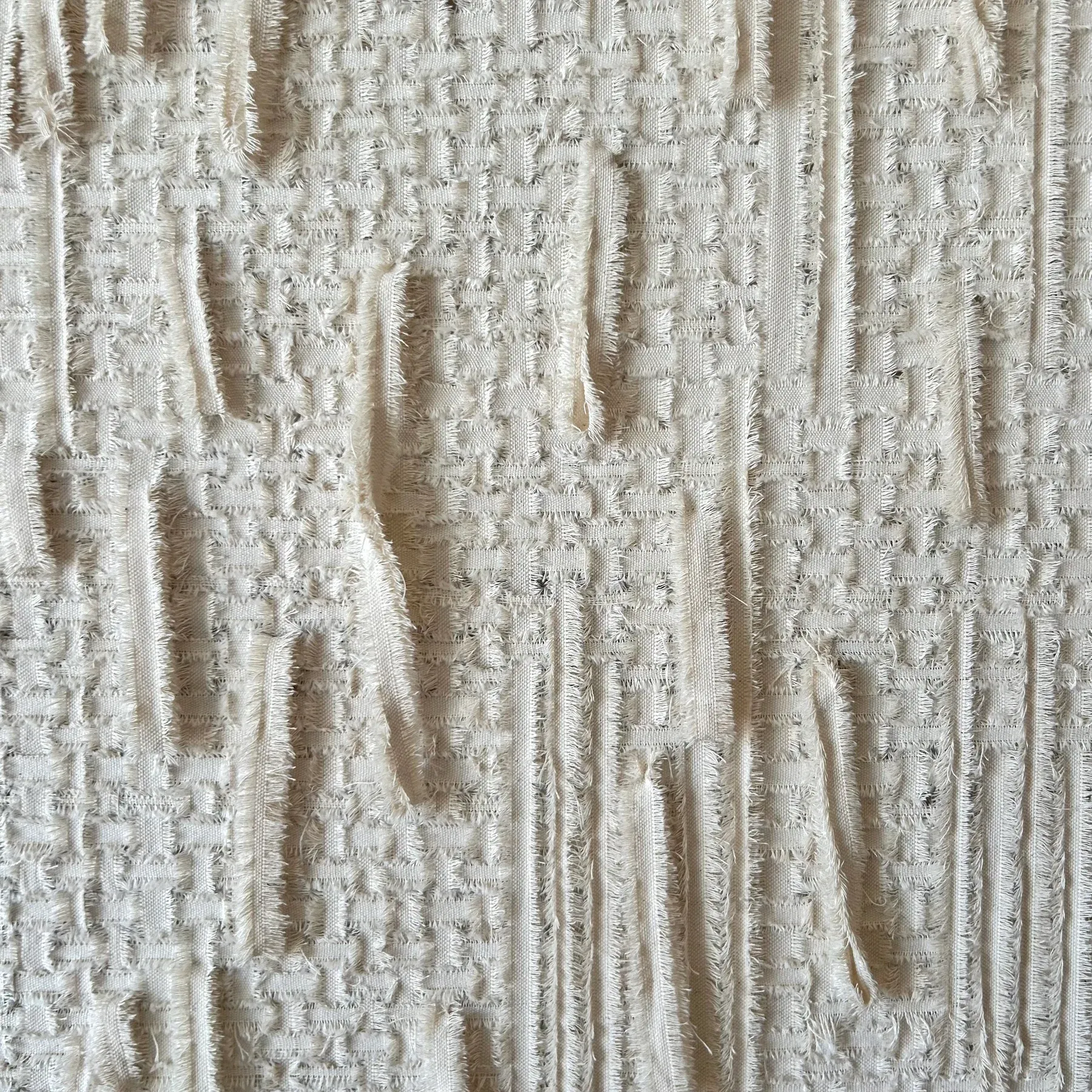
Recent presentations at Larnaca Municipal Art Gallery, Limassol Municipal Arts Centre and the artist-run space dzamaria frame his material-focused practice, while his inclusion in Weave Wave: Material Agencies in Motion at Central Slovak Gallery in Slovakia (2025) positions the work within broader conversations on textile-based agency, alongside his current participation in the 10th International Beijing Biennale at the Beijing Exhibition Center.
These exhibitions anchor his work in a context where material sensitivity carries weight without relying on story.
The materials remain the primary agents, not symbols of a geographic or biographical narrative.
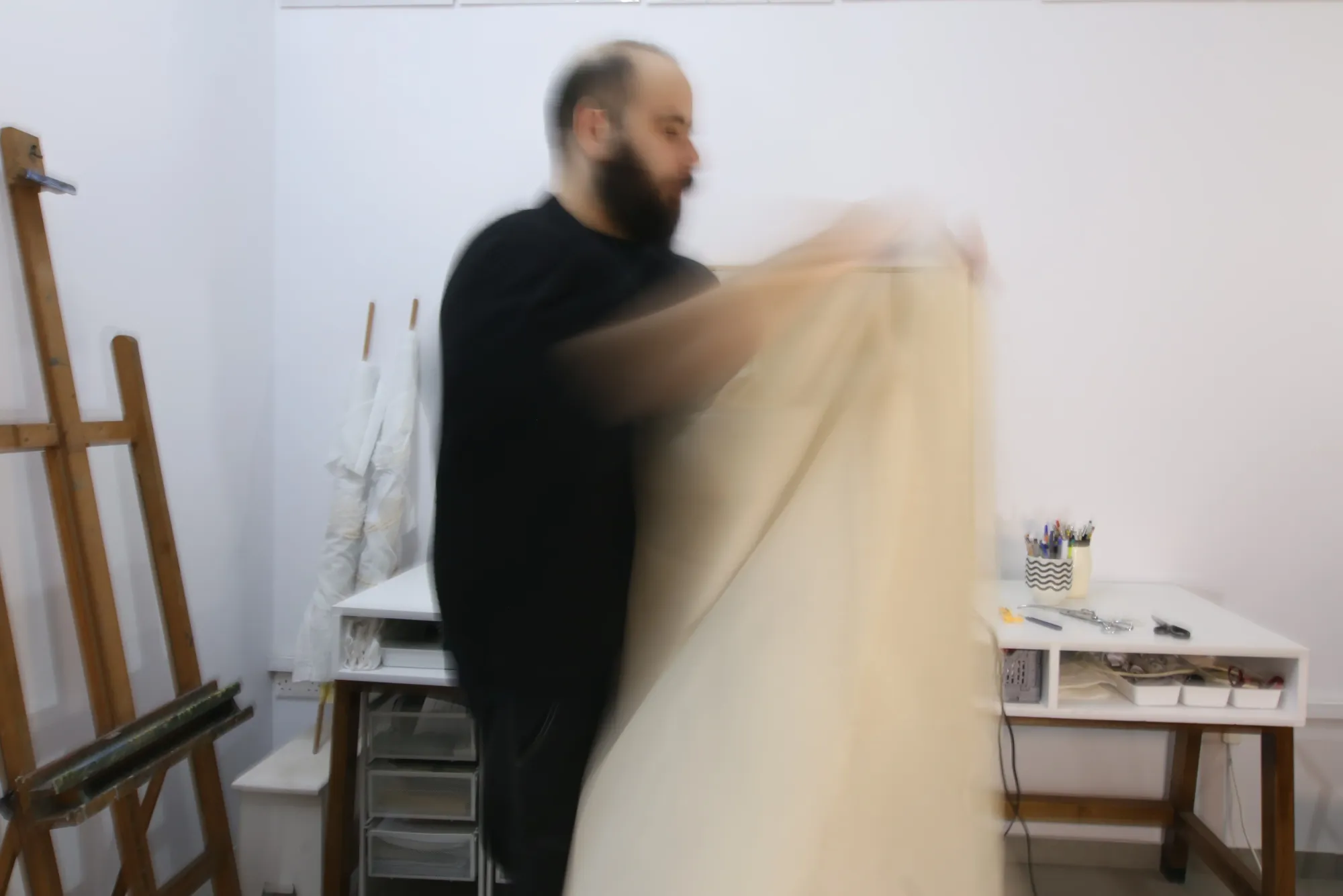
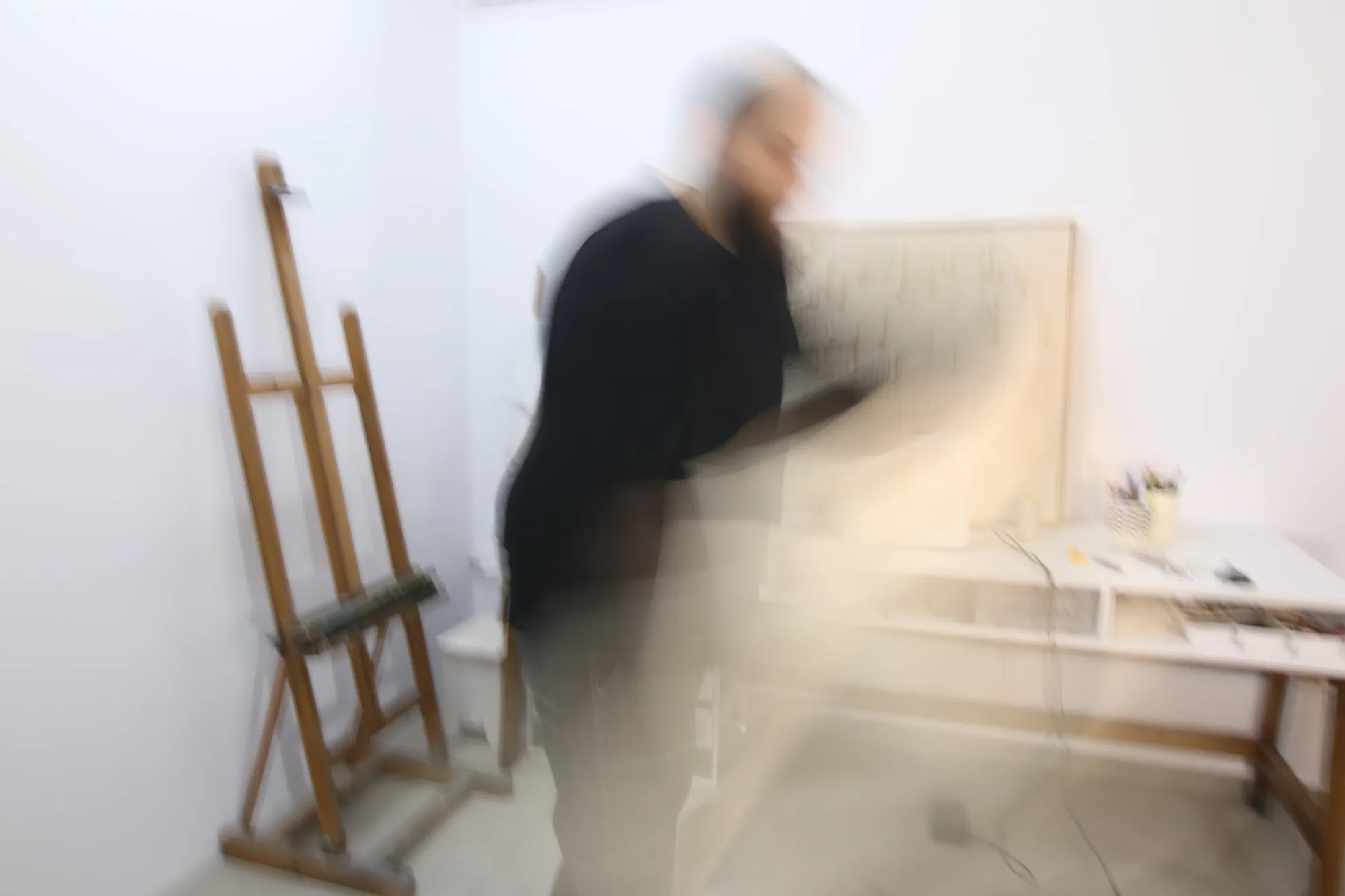
Counterpoint and the Quiet Logic of Construction
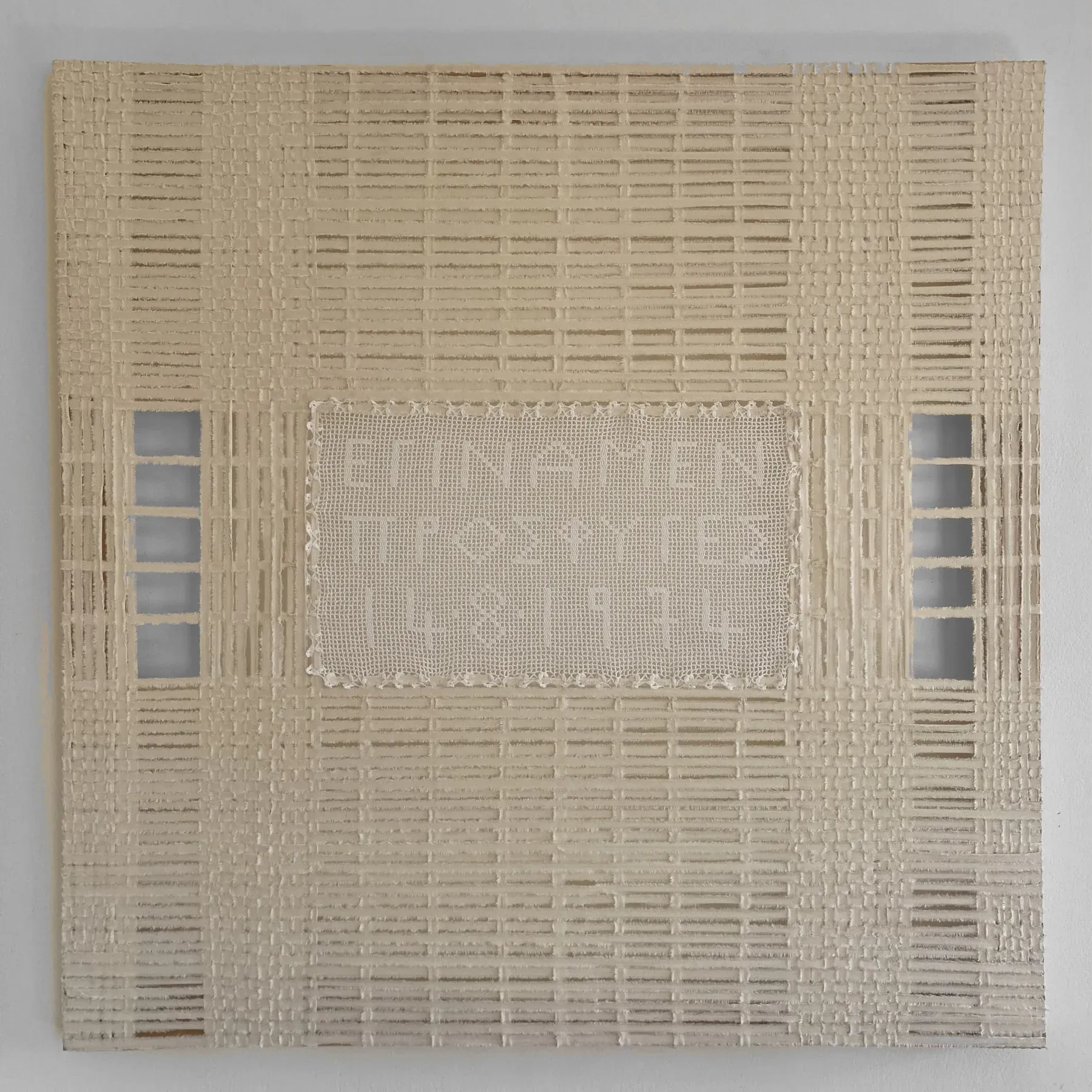
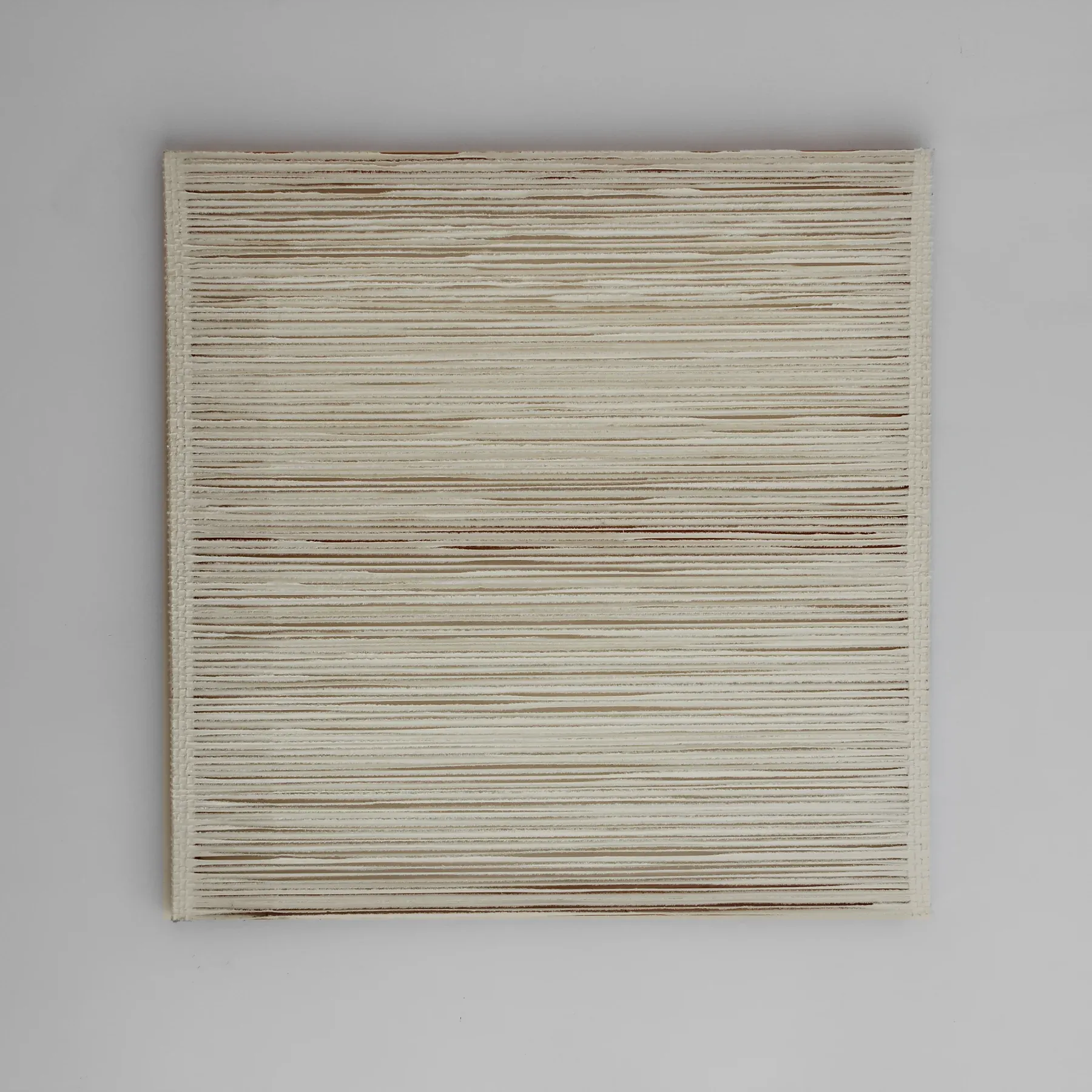
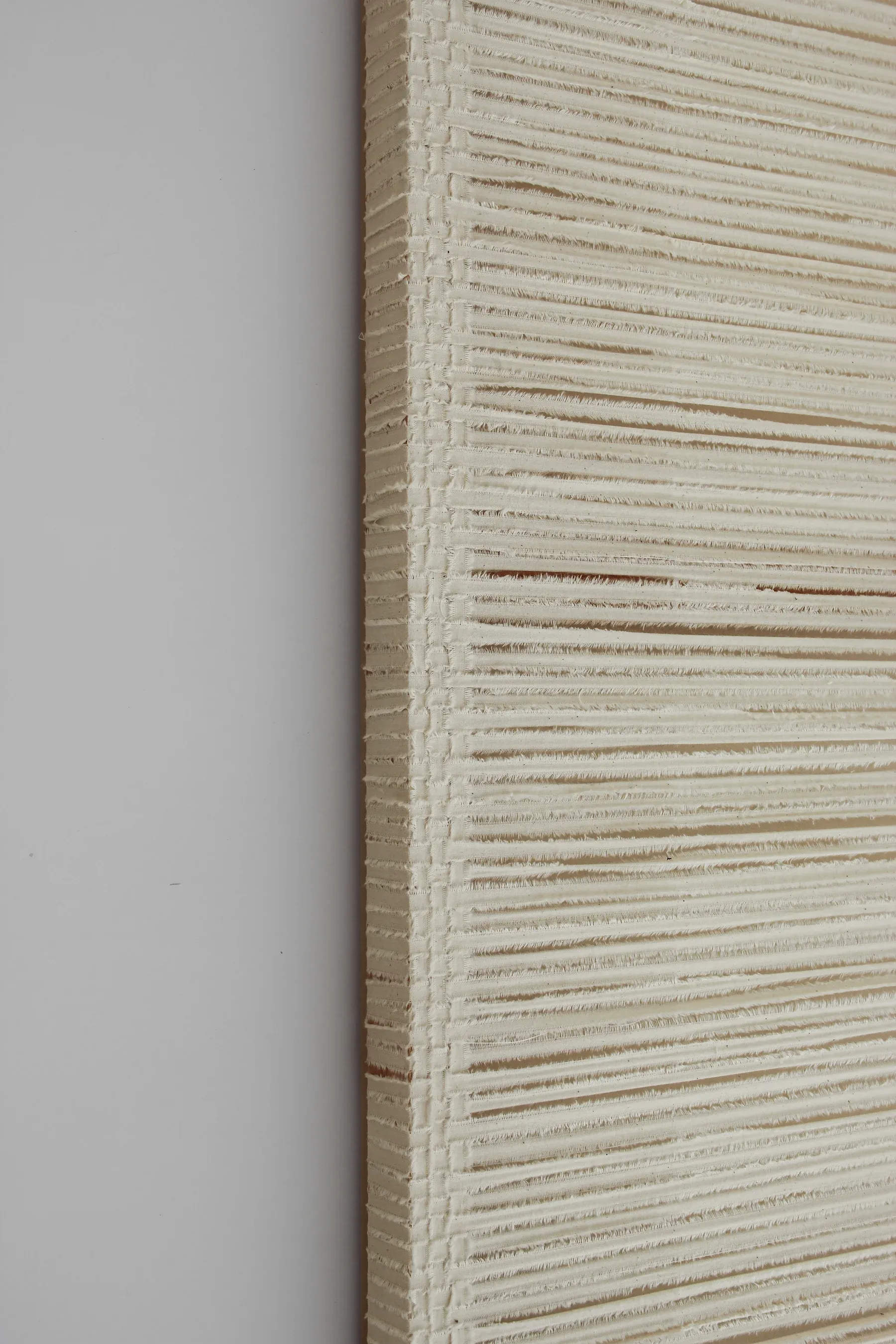
In Counterpoint, wood and straw rise into a vertical structure that holds tension without tightening it.
The woven sections shift between open and closed, letting air move through them in uneven intervals. The structure appears both held and holding itself, as if testing its own balance.
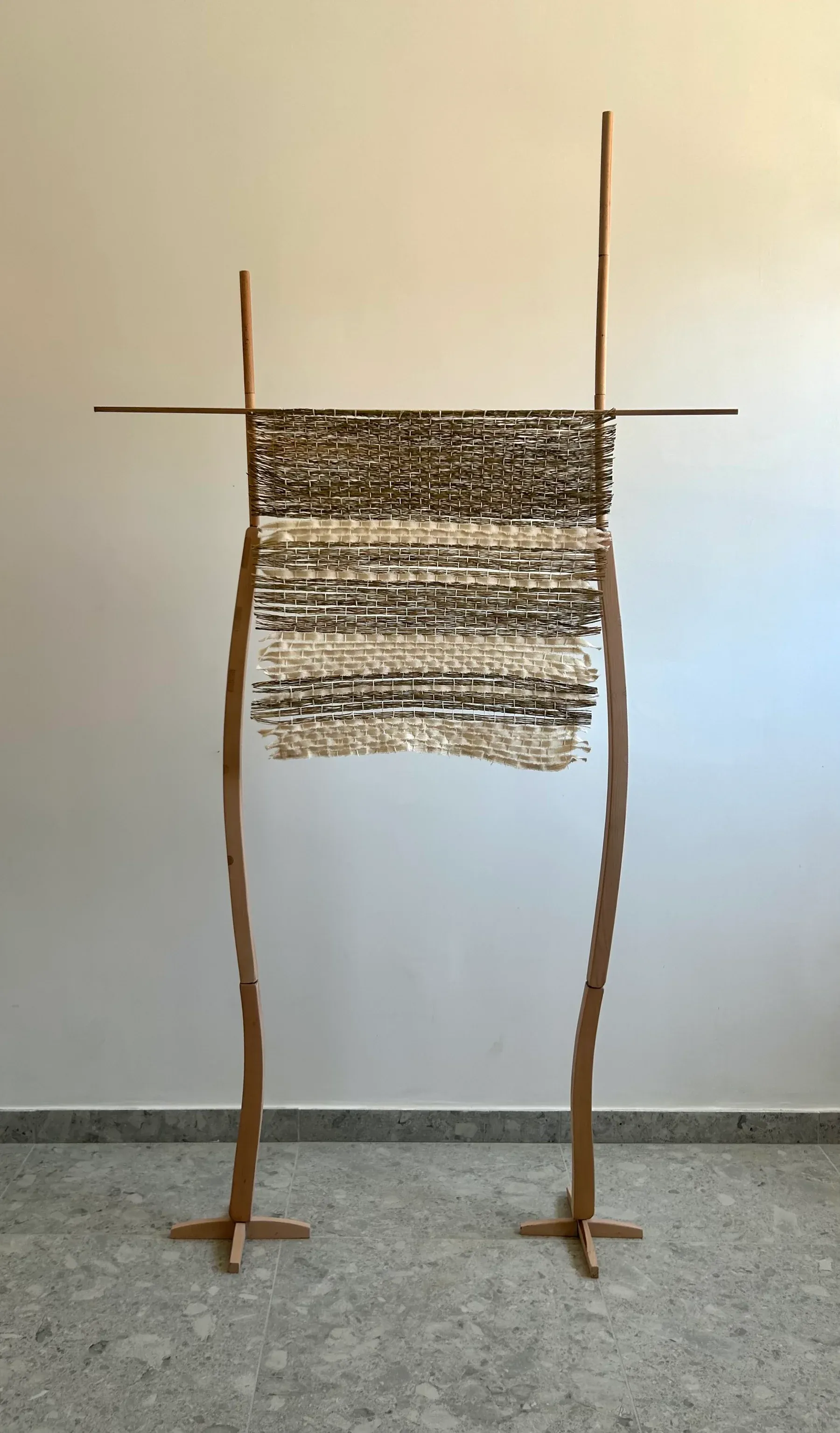
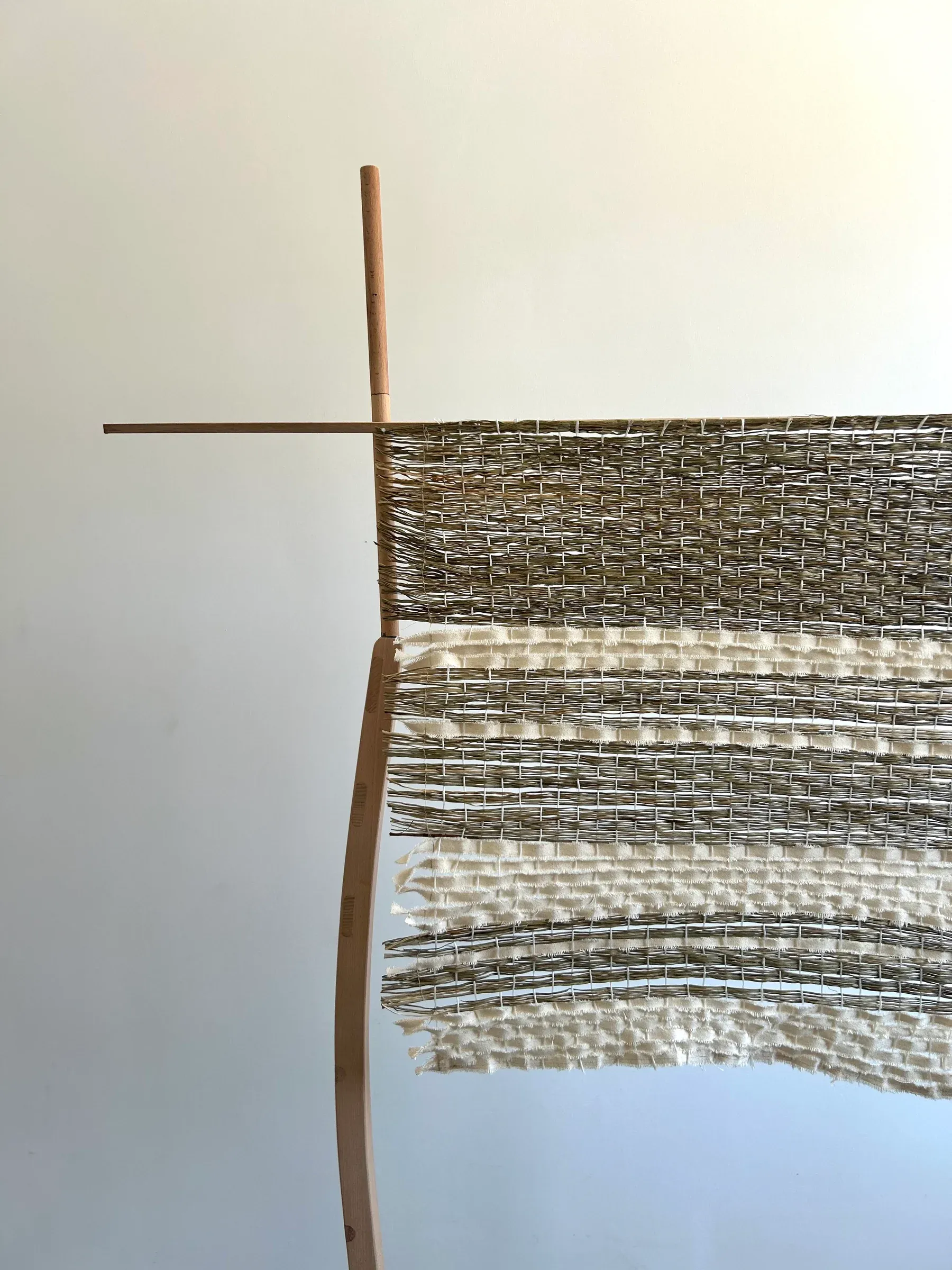
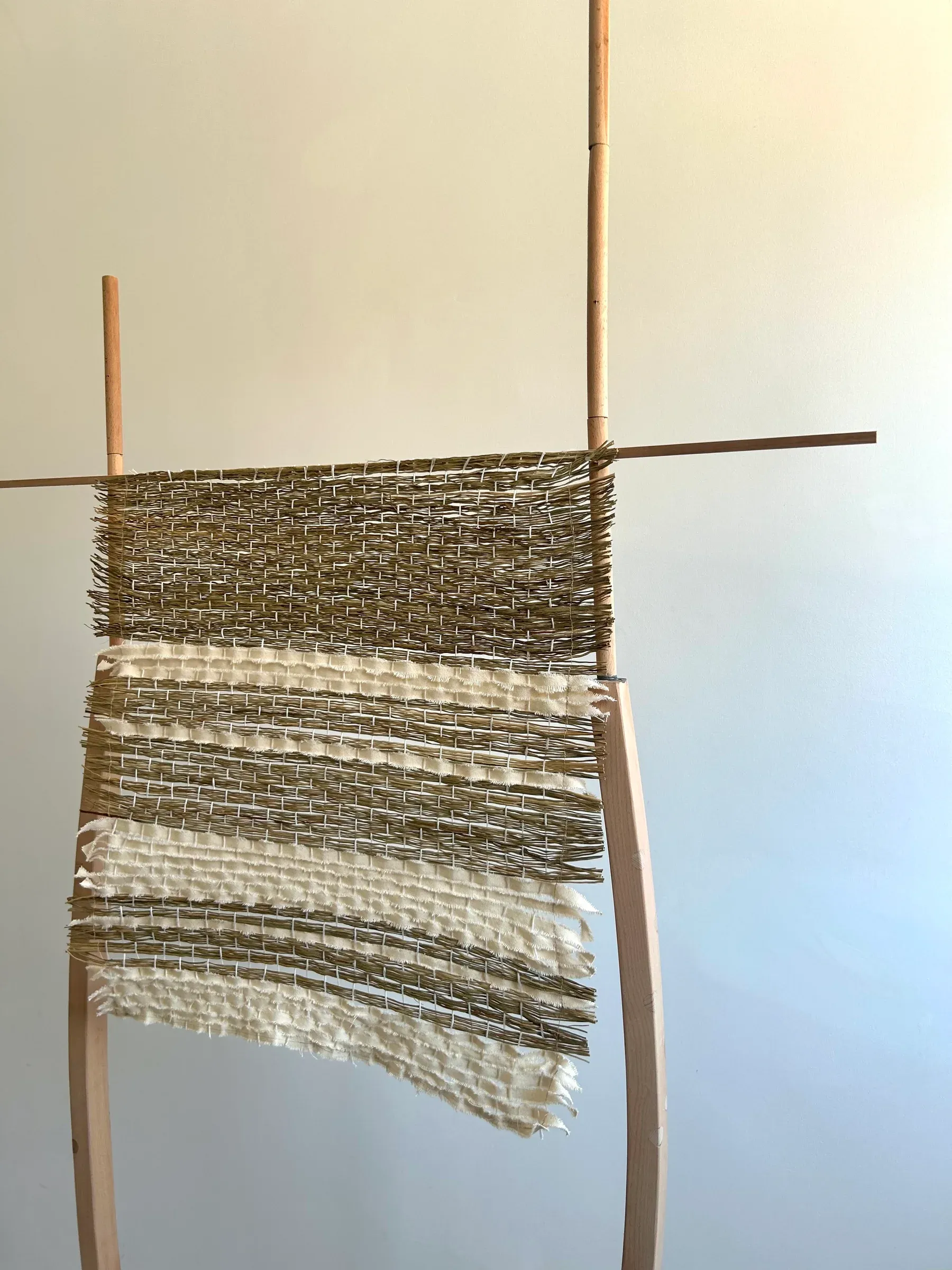
Avraam Hirodontis: Detail of Counterpoint, wood, straw, canvas fabric and thread, image courtesy of the artist.
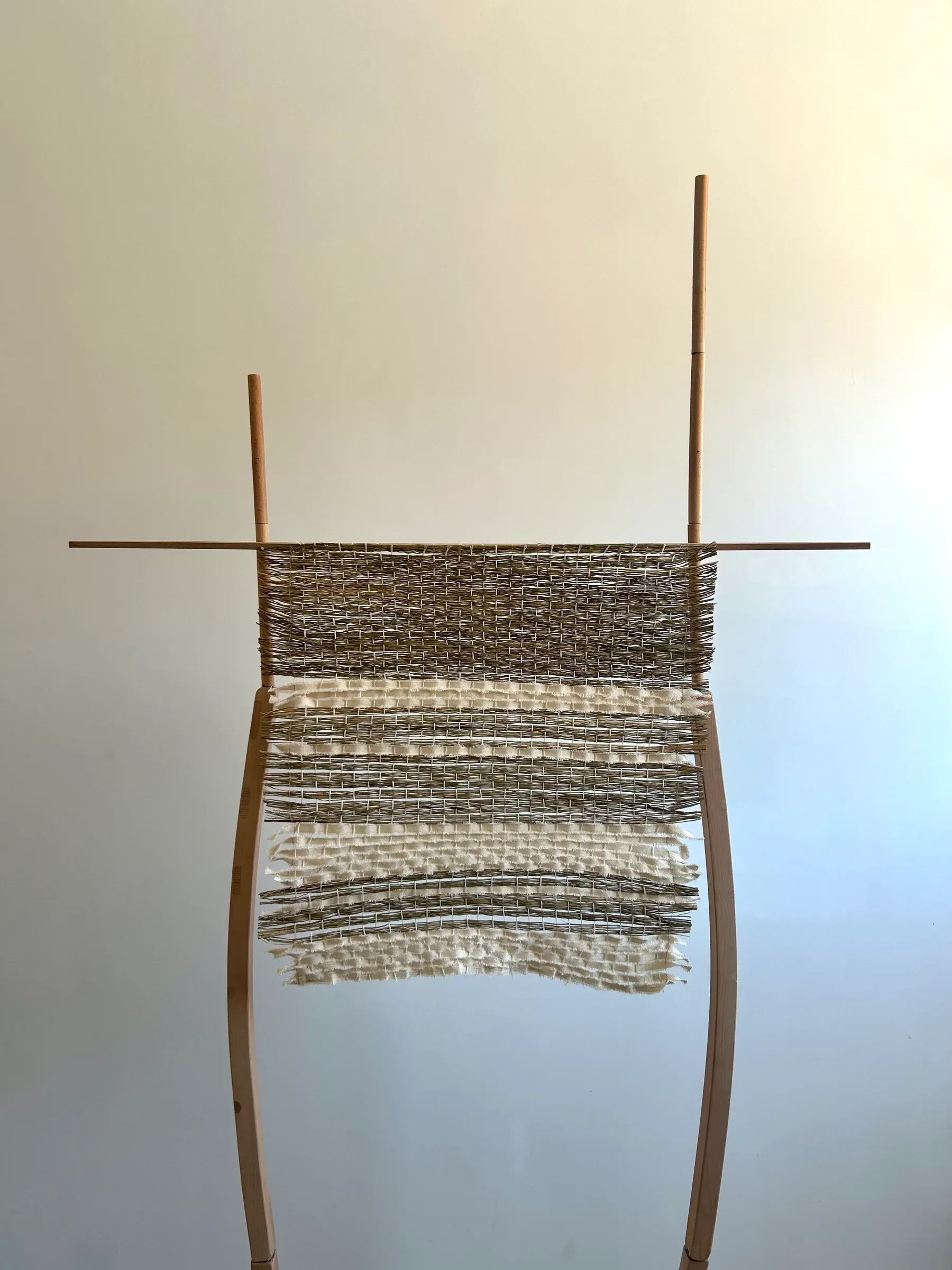
There is no imposed meaning here, only the invitation to consider how materials negotiate pressure and release.
A slight irregularity in the weave, a small shift in how the light catches the straw, becomes part of the thinking process. Hirodontis does not correct these tendencies. He follows them.
Landscape Without Depiction
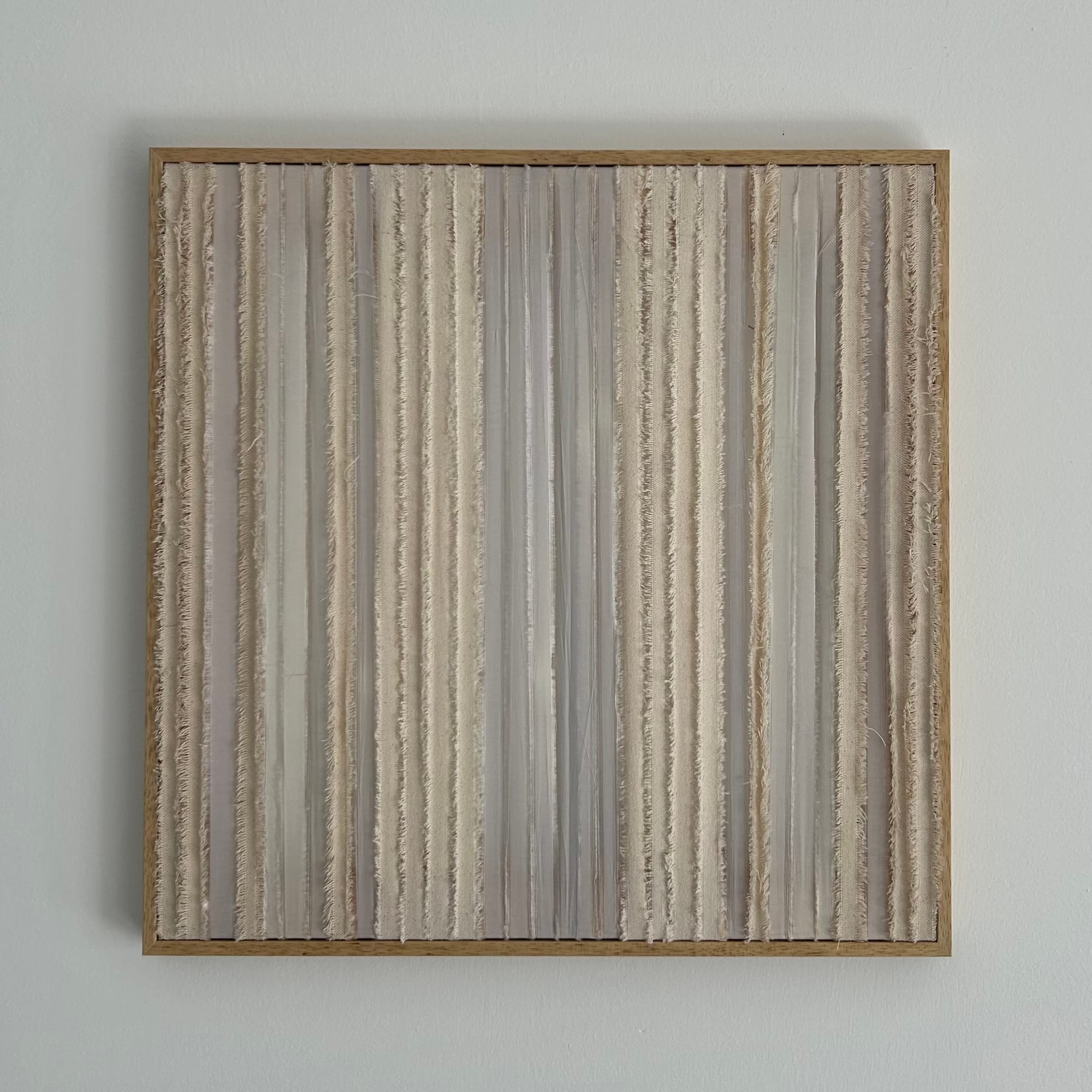
Landscape I uses soil dyes that settle slowly into the canvas, forming muted ochres, browns and quiet pinks. The work does not depict land. It behaves like something shaped by land.
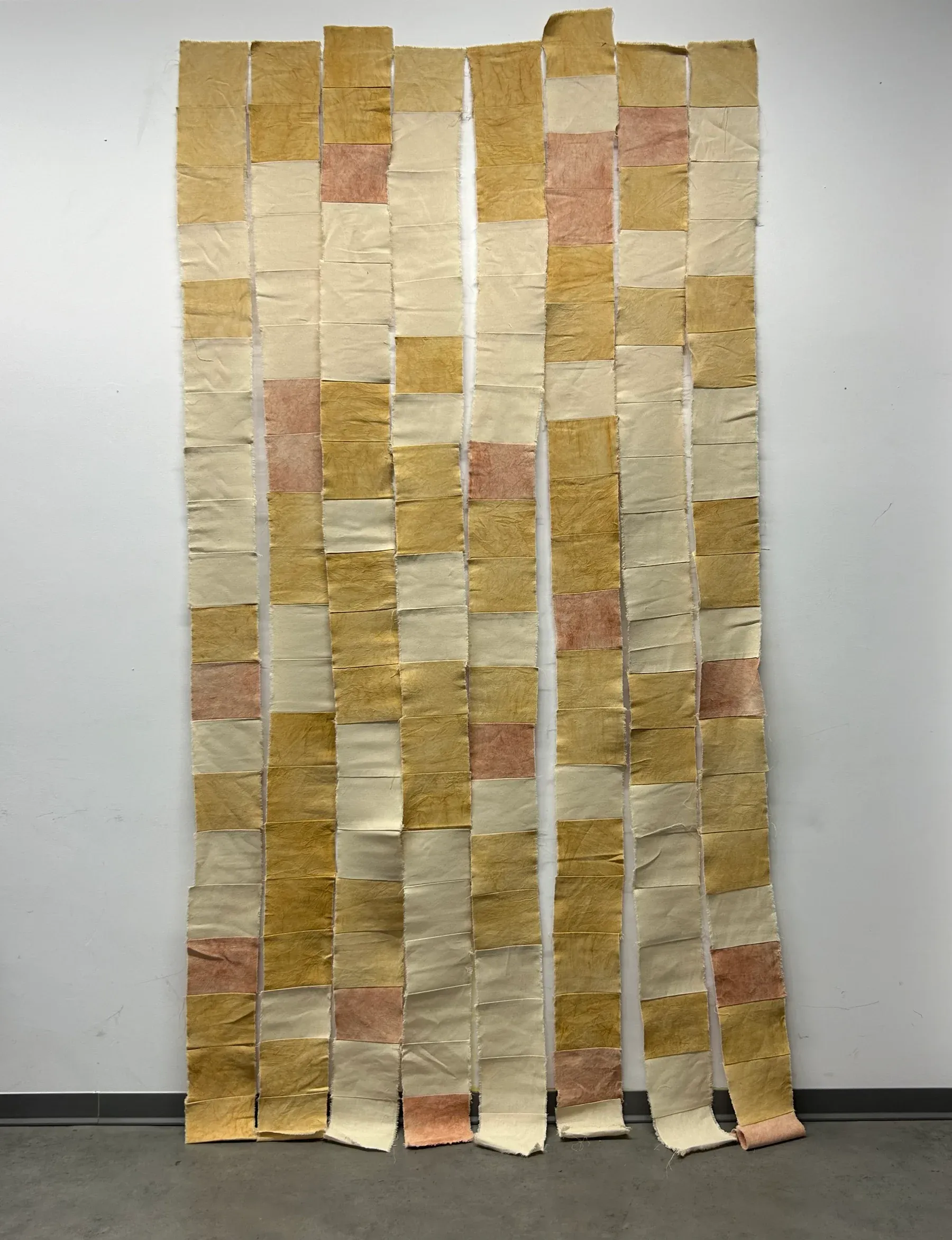
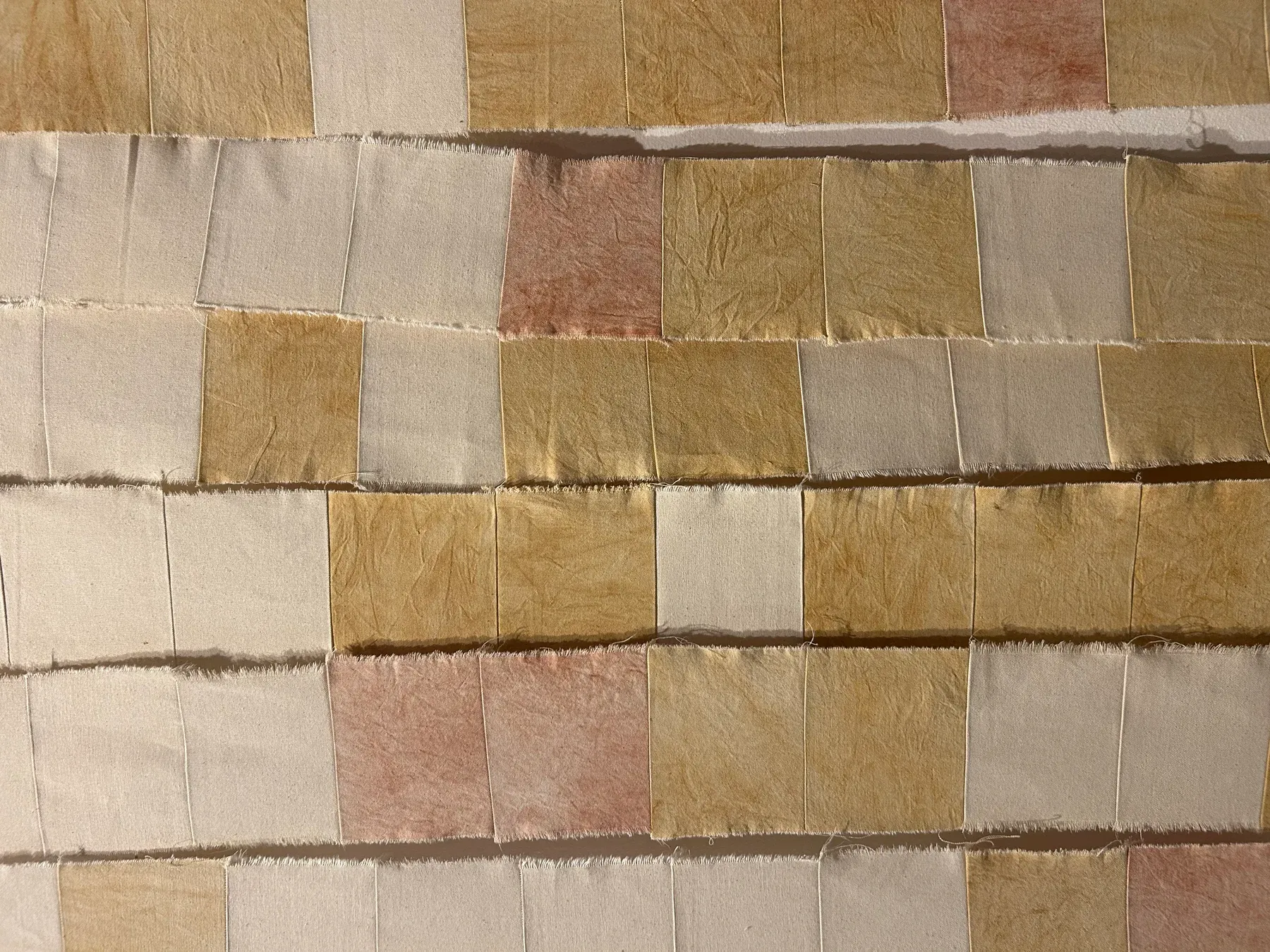
Vertical strips absorb pigment at different speeds, producing soft breaks where seams meet. Cyprus may come to mind, but only as an afterthought. The soil is not a symbol, it is a collaborator.
Hirodontis allows it to stain, drift and settle in ways that are not controlled by image-making. The result is a surface that feels like time accumulating, not a landscape attempting to speak.
Transparency, Light and the Fragile Surface
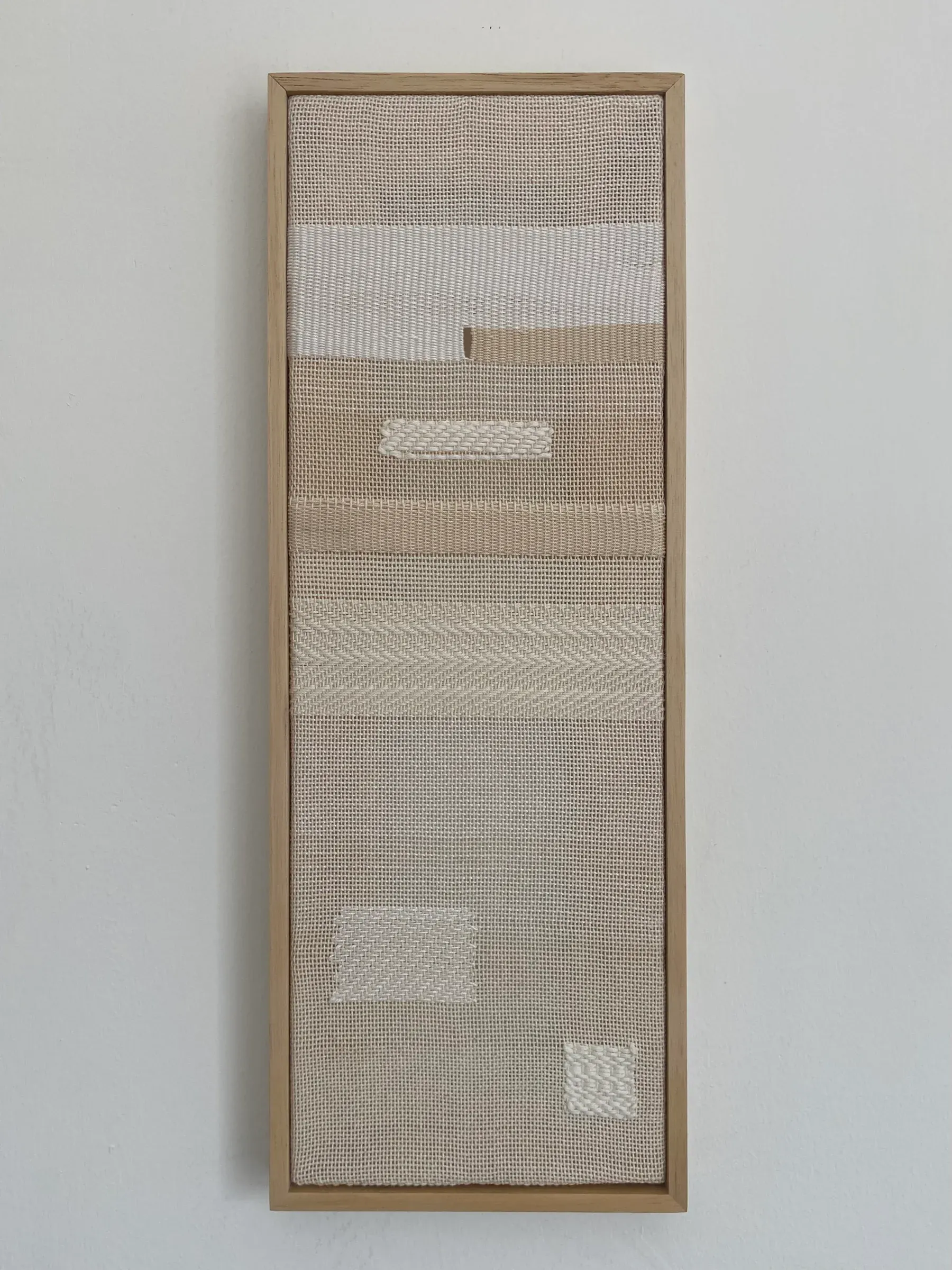
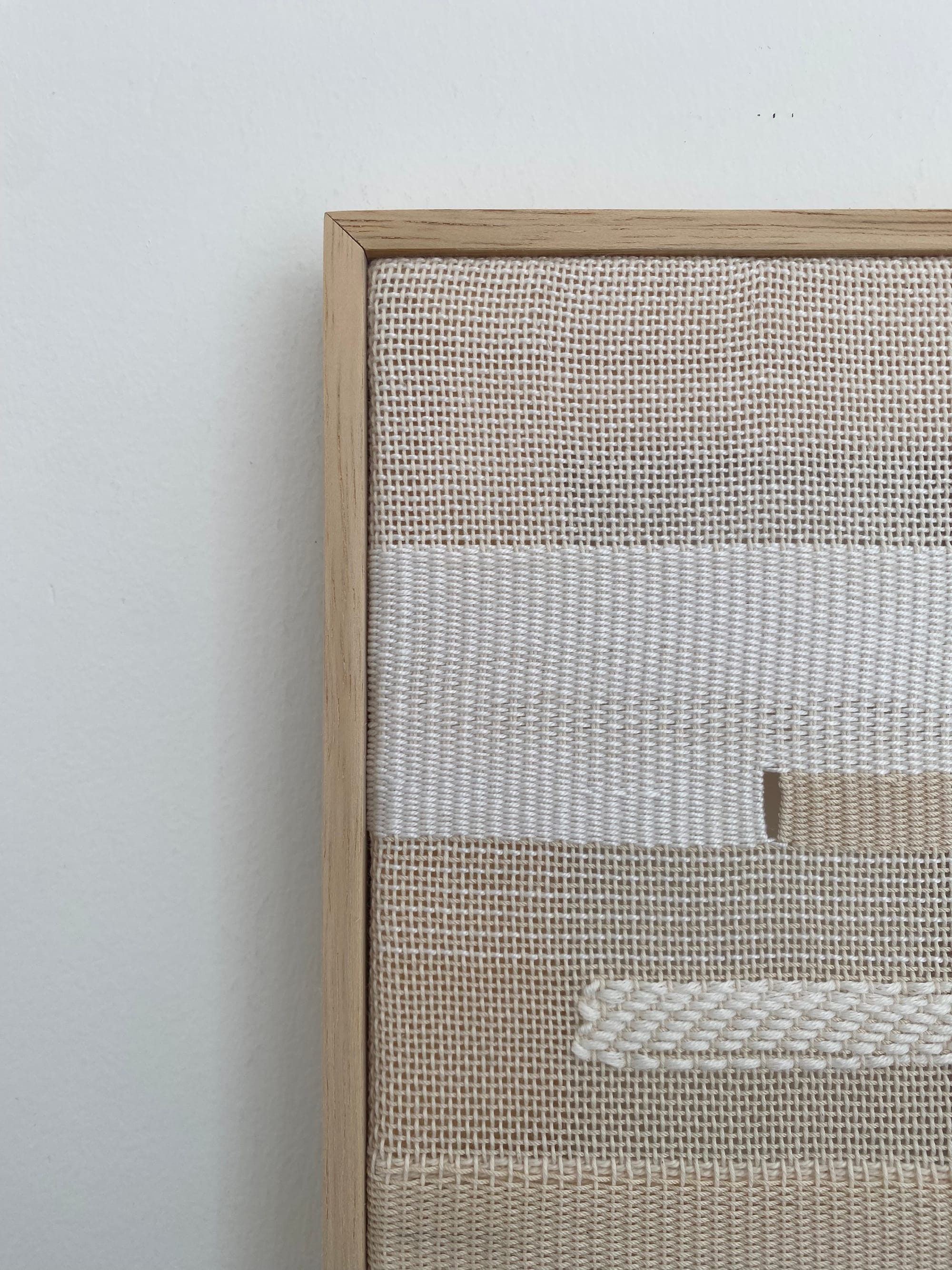
In Vestiges, sheer fabrics, cheesecloth and satin overlap in layers that respond to light with unpredictable clarity.
Some edges appear to float. Others fold slightly inward, catching highlights where the thread pulls. A seam sits a little off center, not intentionally disruptive but naturally imperfect.
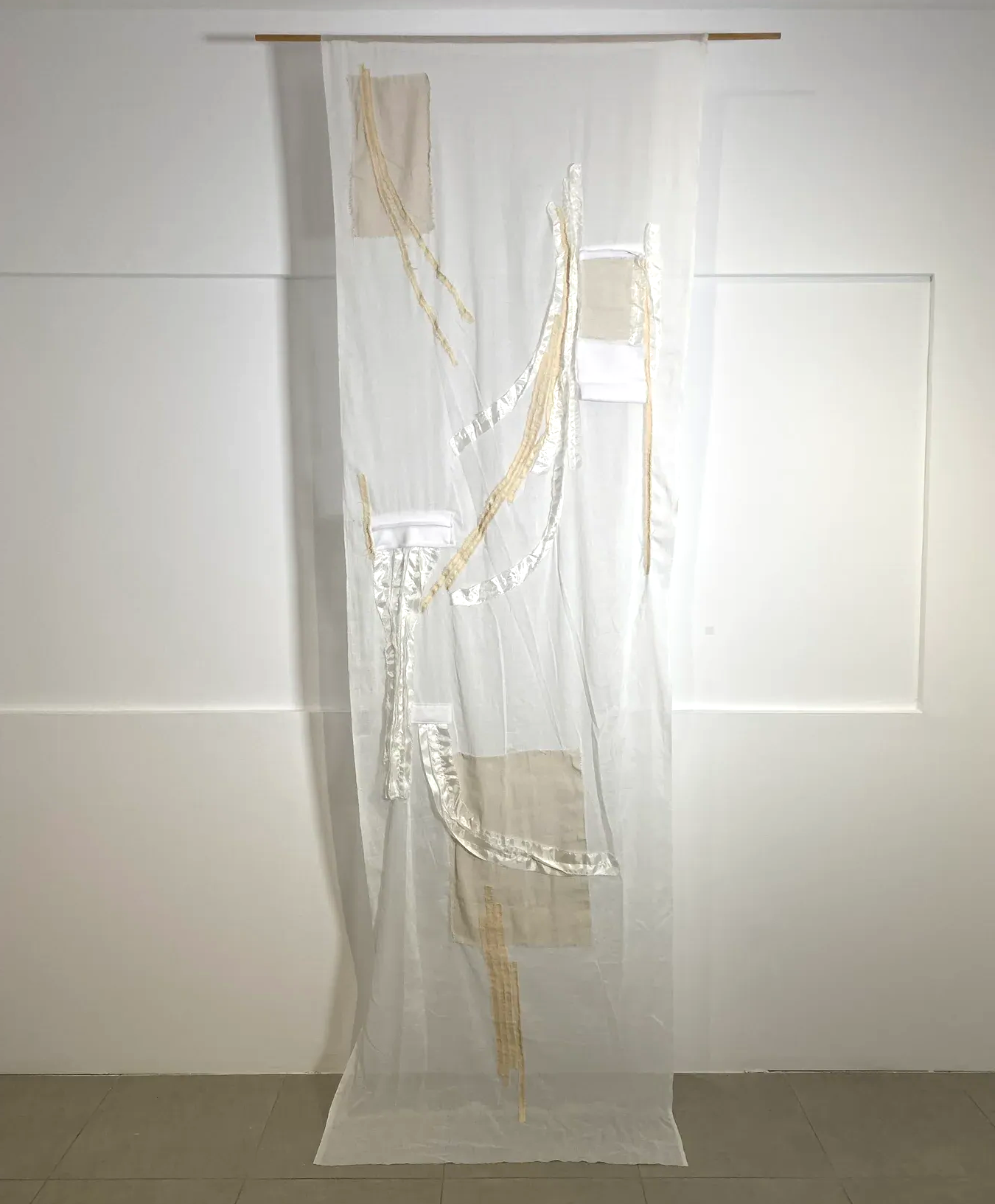
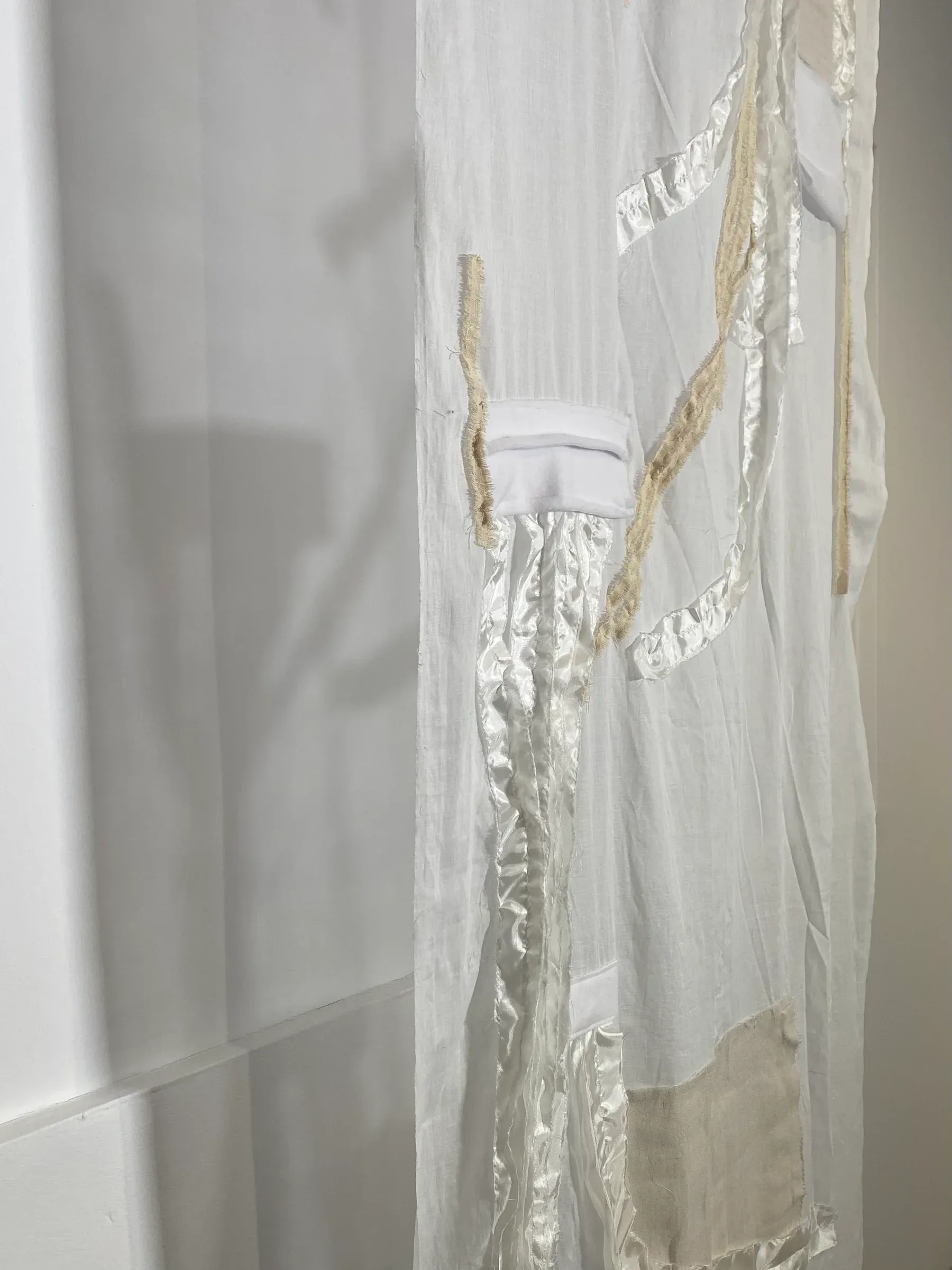
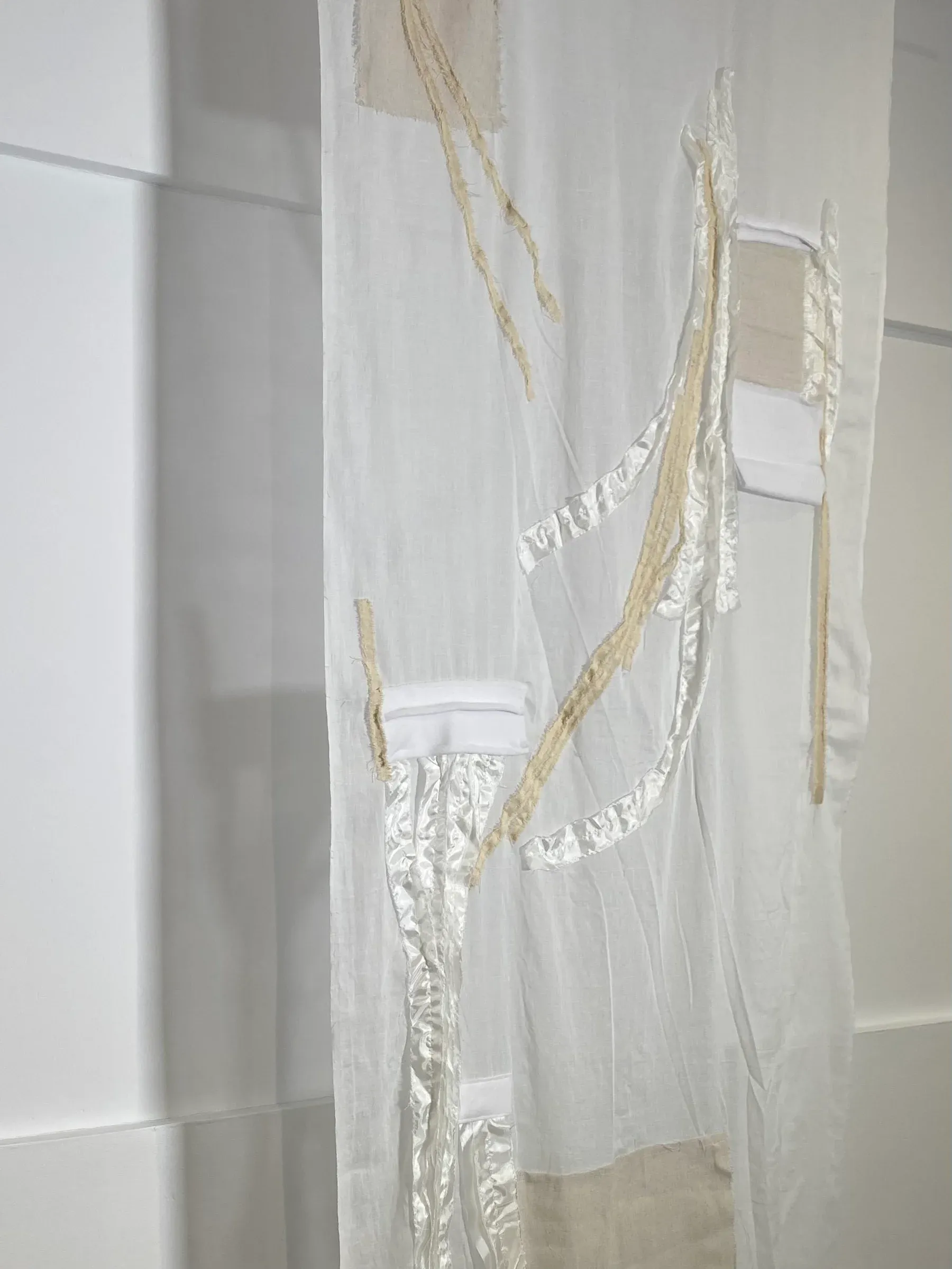
Avraam Hirodontis: Vestiges I (detail views), cheesecloth, canvas fabric, polyester, linen and fusible fleece, image courtesy of the artist.
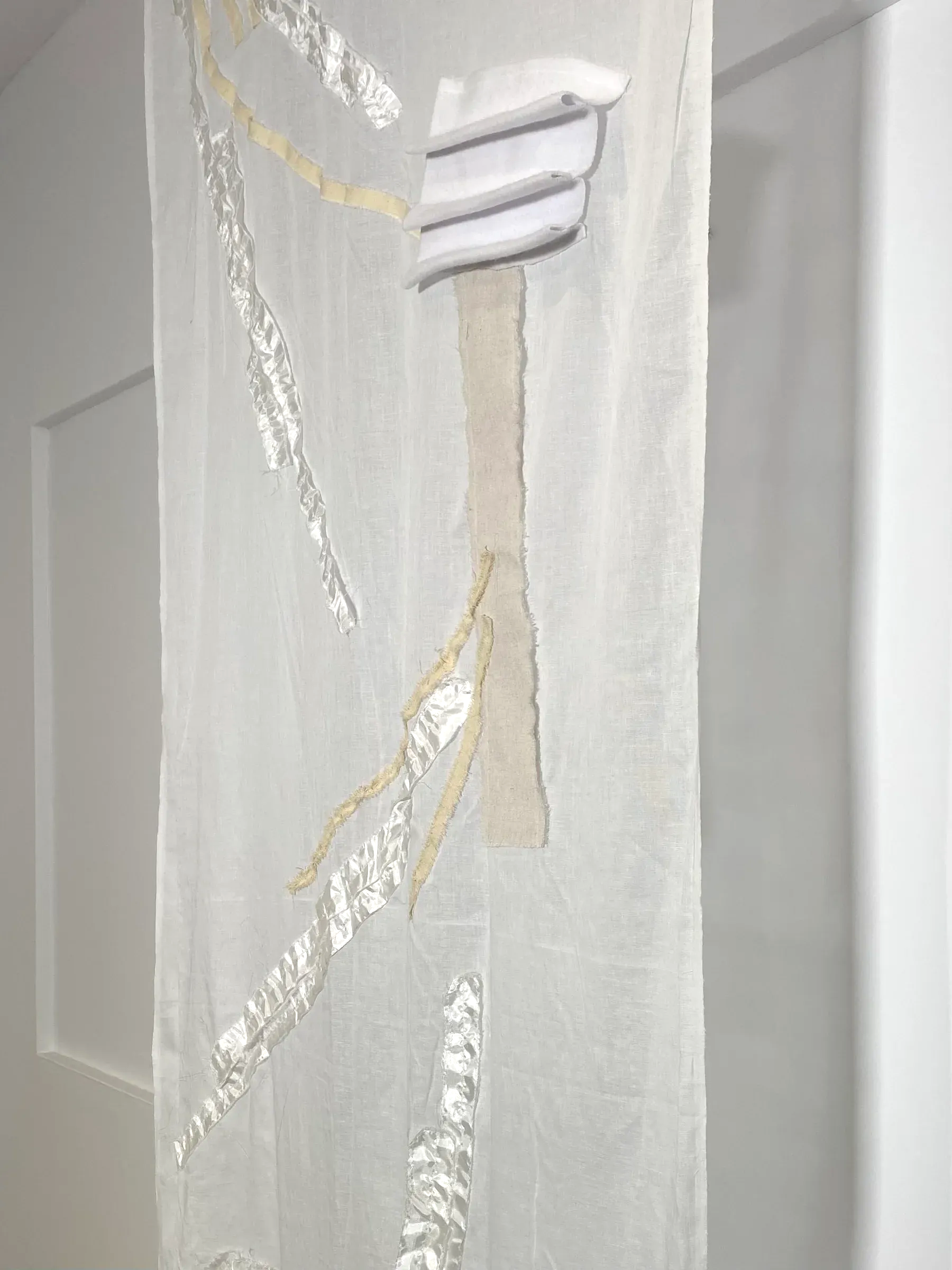
These deviations are not mistakes. They mark the work’s own internal logic. Light does not decorate these surfaces. It moves through them, becoming part of their structure. Viewers often find themselves shifting position, as if the work were adjusting itself in return.
Theoretical Undercurrents That Matter
The theoretical dimension of Hirodontis’ practice is subtle but present. His research into Bauhaus methods appears in the disciplined use of repetition and deviation. A pattern holds until it doesn’t. A rule persists until the material tests it.
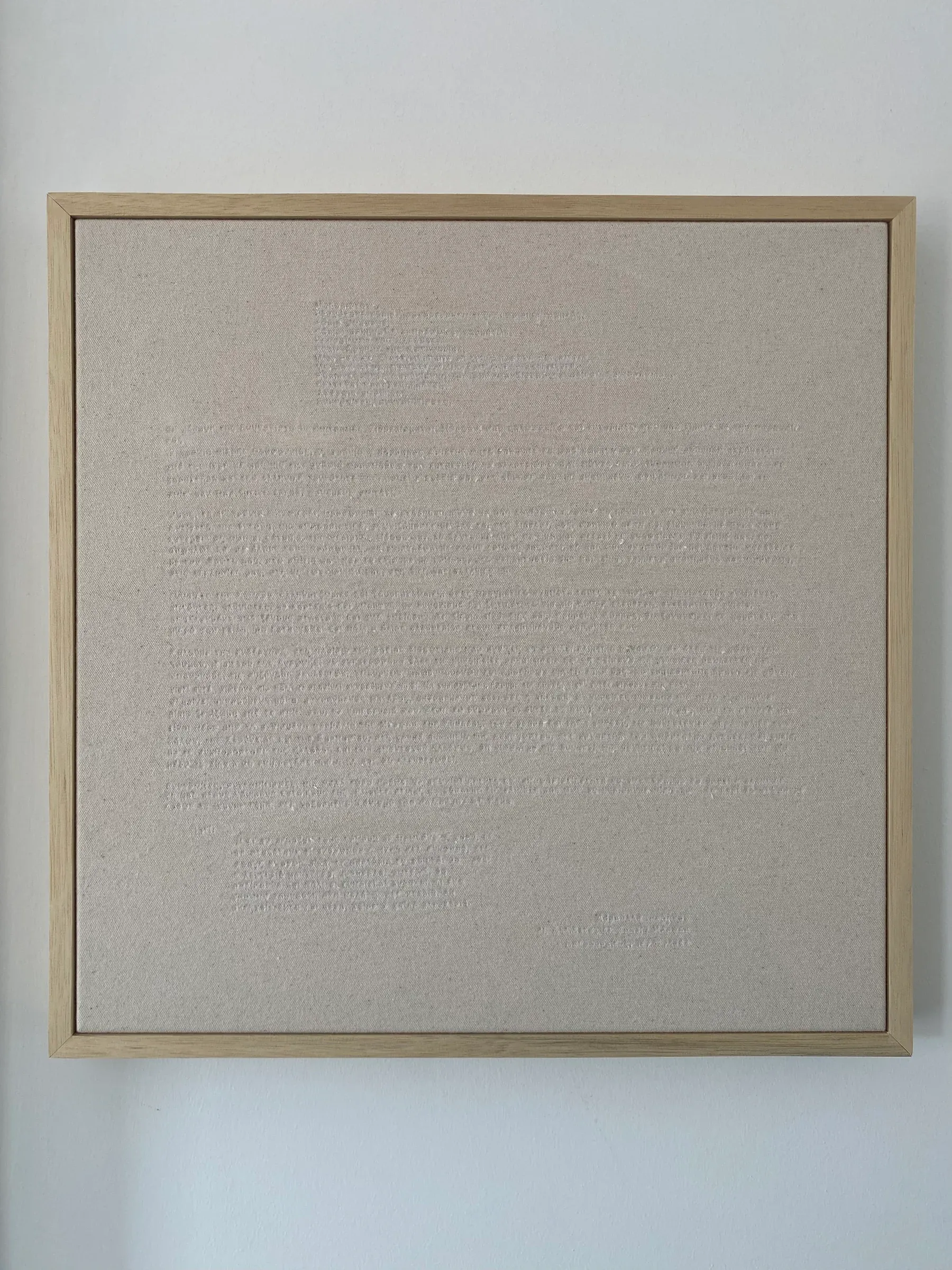
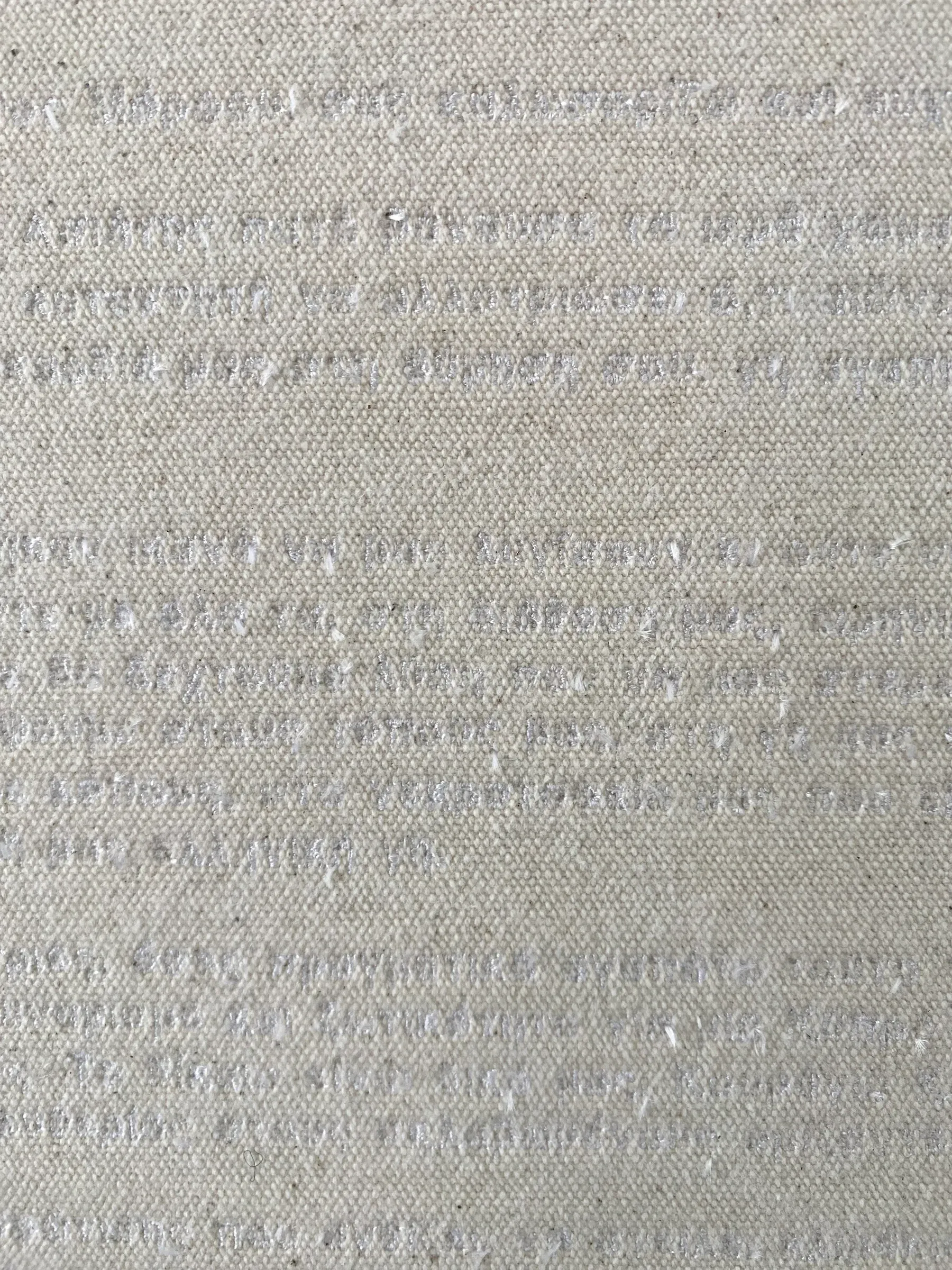
Theory operates implicitly within his practice: ideas of material agency emerge through the behaviour of the materials themselves, which are allowed to act, resist, and transform.
A dye insists on settling where it finds weight. A canvas strip twists slightly toward light. Hirodontis listens to these movements without translating them into metaphors or narratives. This restraint becomes part of the intellectual clarity of the work.
Why This Work Matters
Hirodontis contributes to a larger conversation in contemporary textile and material-based practices that shift attention away from representation and toward material behaviour itself.
In a moment when art is often asked to explain or resolve, his work insists on patient observation, slow processes and the intelligence of matter.
This positions his practice not as commentary but as a form of attunement, offering viewers a way of thinking through materials rather than through imposed meaning.
A Practice Shaped by Attention, Not Assertion
Across these works, Hirodontis returns to a simple but demanding question: what can materials hold without becoming narrative.
He allows soil to settle, allows thread to drift, allows structure to remain slightly unstable.
These gestures accumulate into a form of memory that is neither symbolic nor autobiographical. It is closer to the persistence of touch, or the return of light to a familiar surface.
Can threads hold history without becoming narrative. The works suggest the question remains open, but they carry their own quiet answer.
ABOUT THE ARTIST
Avraam Hirodontis is a Cypriot artist based in Limassol. His textile-based practice explores memory, material intelligence, and contested landscapes through layering, weaving, and natural dyeing with Cypriot soil.

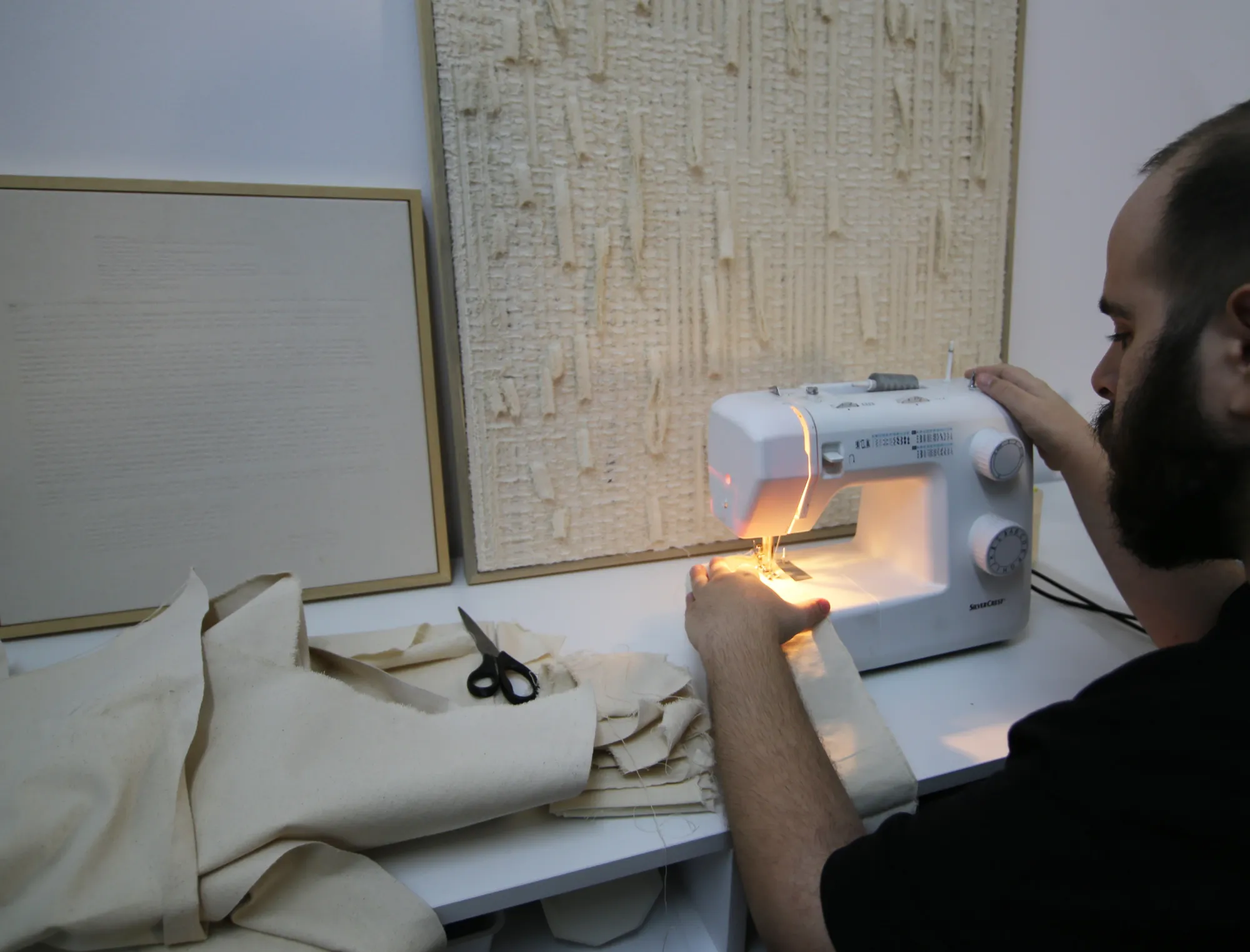
He researched Bauhaus pedagogy at Cyprus University of Technology. Currently showing in "Weave Wave: Material Agencies in Motion" at Central Slovak Gallery, Slovakia (through December 2025).
EXHIBITION DETAILS
Weave Wave: Material Agencies in Motion
Central Slovak Gallery
Banská Bystrica, Slovakia
Upcoming:
Residency at The Art Foundation, Athens, Greece (2026)
VISIT / ENGAGE
Follow Avraam Hirodontis on Instagram under @avraam.alkimos for studio process and new work.
Think materials have something to say? Share this with someone who listens to fabric before stories.
No spam, no sharing to third party. Only you and me.