Angelo Volpe: Splatter & Simmer
Discipline, Visibility and the Quiet Authority of Paint
In Angelo Volpe’s studio, painting is neither spectacle nor improvisation. It is structure. The canvas is approached with discipline, ritual, and an almost devotional sense of continuity.
References to Renaissance layering techniques sit next to reflections on contemporary visibility, creating a practice that resists both nostalgia and noise.
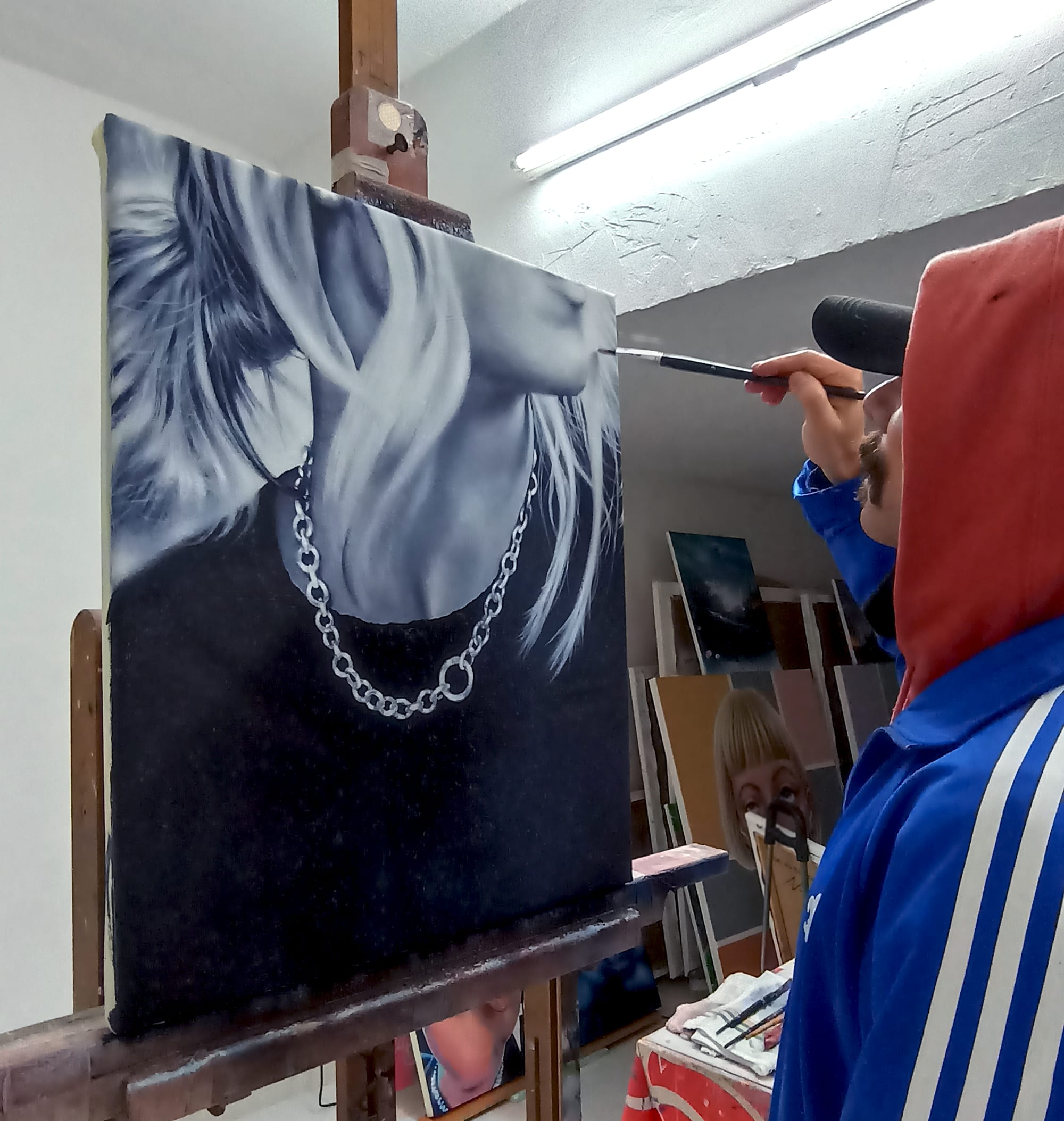
Volpe’s work carries tension without theatricality. His surfaces are built slowly, methodically, with an insistence on control that feels increasingly rare. In a time defined by acceleration and political overstatement, his paintings hold their ground through material rigor rather than rhetoric.
This conversation moves between technique and belief, between visibility and withdrawal, between politics and refusal.
In Conversation: Angelo Volpe and DiFranco
1. When we look at your work, there’s a strong physical presence. How would you describe your painting technique and your relationship with the canvas?
I like to master technique, I consider it a valuable support through which my ideas take shape. Painting plays an important role in my work; it is the synthesis of a long and constant learning process, through the study of numerous treatises on painting, such as those of Cennino Cennini (The Book of Art, 15th century) or Giorgio de Chirico (The short treatise of painting technique, 1928), to name a few.
I would describe my relationship with the canvas as constant and harmonious, a visceral love that has never led to betrayal, even if in love you should never say never.
2. The materials, gestures, and execution time seem essential in your work. Does technique come before the idea, or does the idea force the technique to happen?
The idea determines various aspects of my work, such as the choice of canvas size, the range of colors to use for the palette, etc. But there is no hierarchy between idea and technique; they are at the service of each other and in perfect harmony.
3. Looking back, when did you realize: “this is no longer just painting, this is a journey”?
I have never paid much attention to this question. Art has always determined the trajectory of my life, a path that I did not choose rationally but have always followed instinctively. I have always perceived art as an opportunity to explore my true self, a means through which to circumnavigate my soul.
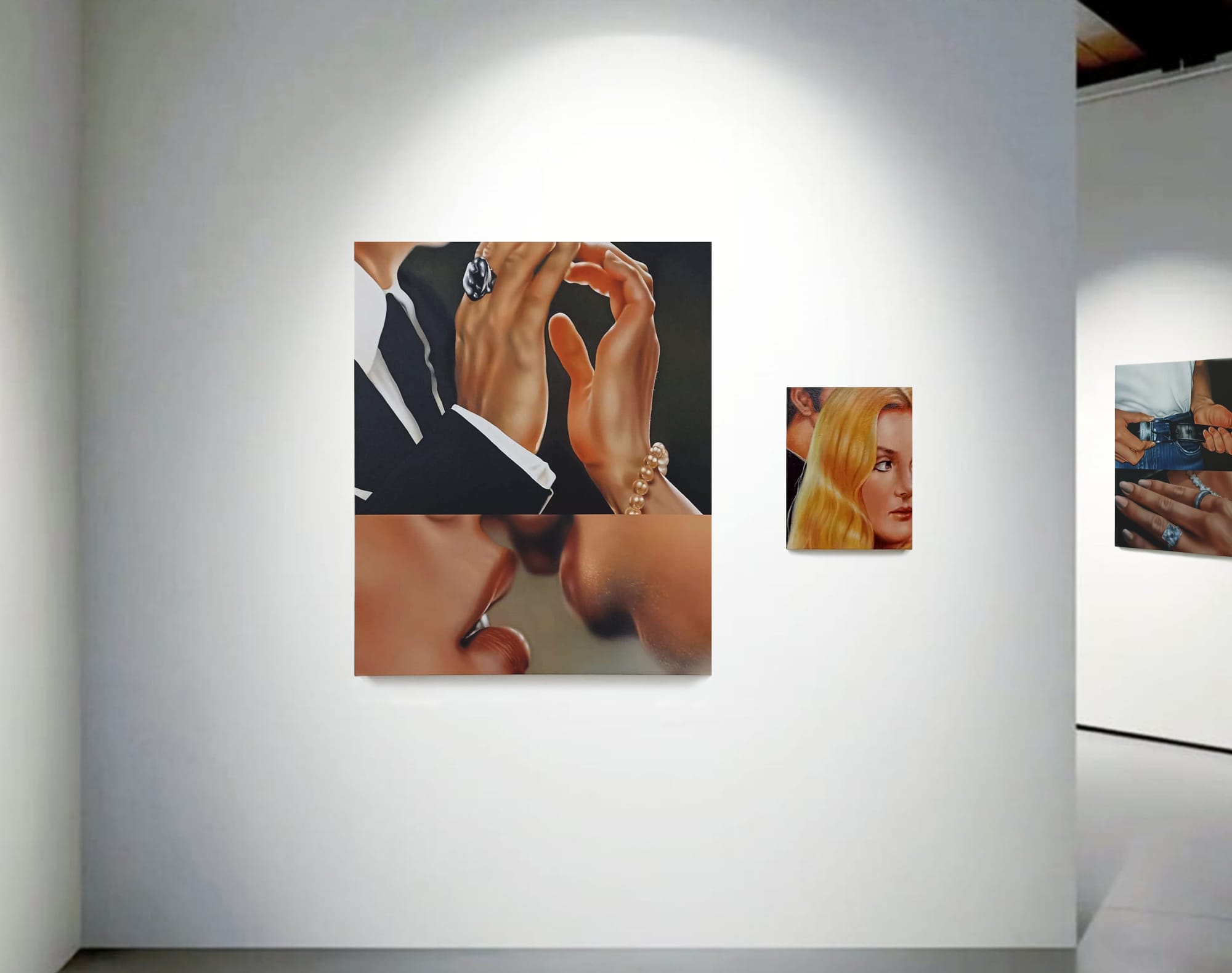
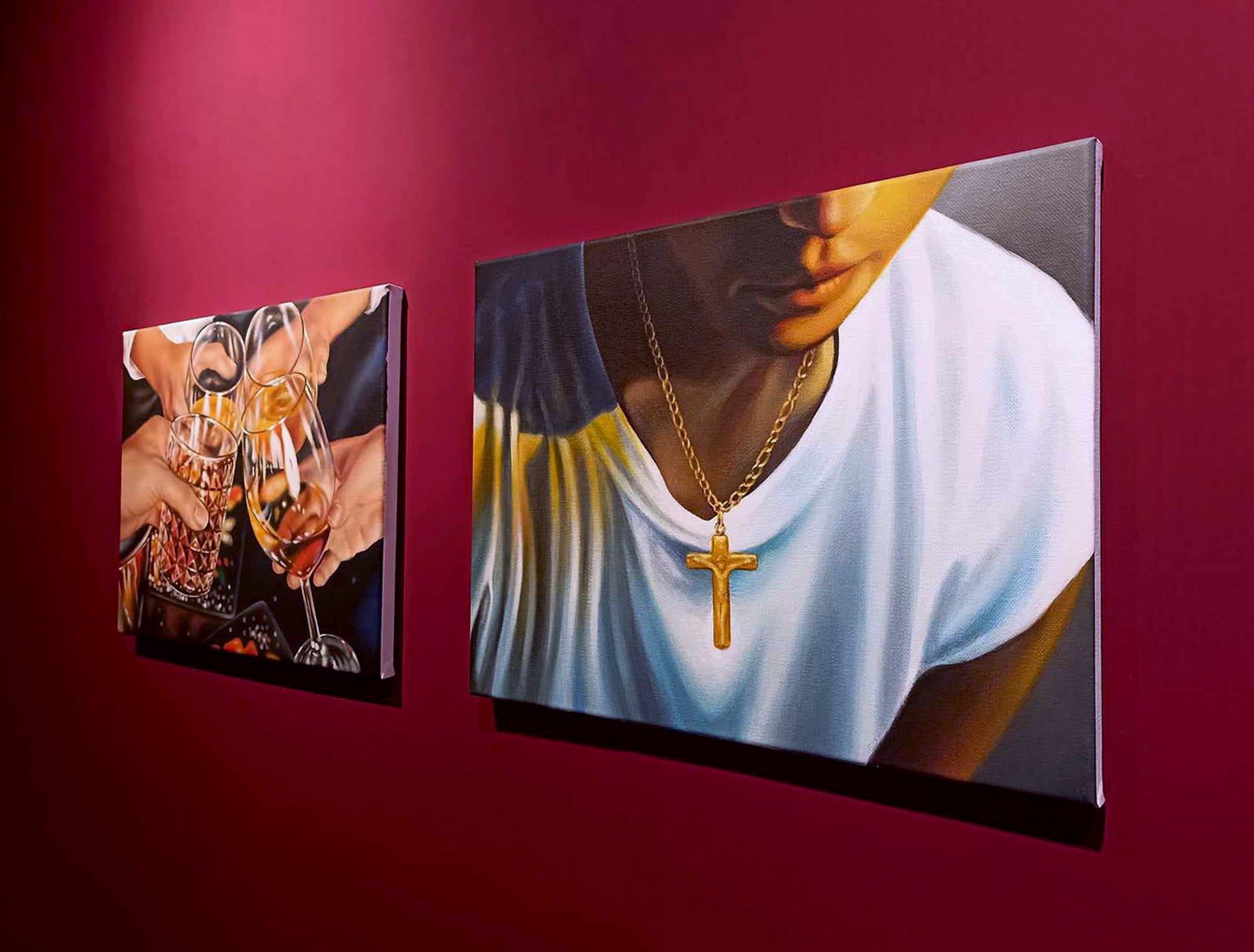
Angelo Volpe, *Appareo, ergo Sum exhibition / view [ArtNow Gallery] “I appear, therefore I am”: the ostentation of the ephemeral and the cult of visibility | Permission and courtesy of the artist and gallery / Angelo Volpe. “Appareo, Ergo Sum” exhibition view [ArtNow Gallery] “I appear, therefore I am”: the ostentation of the ephemeral and the cult of visibility | Permission and courtesy of the artist and gallery
4. Your paintings seem to carry memory, tension, and identity. Does this come more from your personal biography or from Italy’s historical and cultural DNA?
Both. My artistic research draws inspiration from everyday life. I find it intriguing to analyze aspects related to the pleasures of matter, the complexity of the soul, and the infinite nuances of memory. The conformism of the “society of appearances” greatly piques my curiosity.
5. Italy is a visually overwhelming country. Painting surrounded by this heritage is it inspiring or a constant pressure?
I have never felt any pressure. I believe that being surrounded by an artistic and cultural heritage of immense majesty and beauty, such as Italy's, can help raise people's awareness. It is a shame that the elite who manages our lives does everything they can to prevent this positive effect, relegating culture to the bottom of their political agenda.
6. Does Italian politics enter your work as anger, irony, silent critique, or just collective fatigue?
In the past, politics fervently fueled the sarcastic criticism that regularly found expression in my works. Today it plays a marginal role. My studies related to my interest in alchemy and gnosis have led me to understand how those who are part of government institutions are actually only executors of a hidden power. Political dialectics always presents the same old narrative, based on a false dualism, so I prefer to turn my interest to other activities.
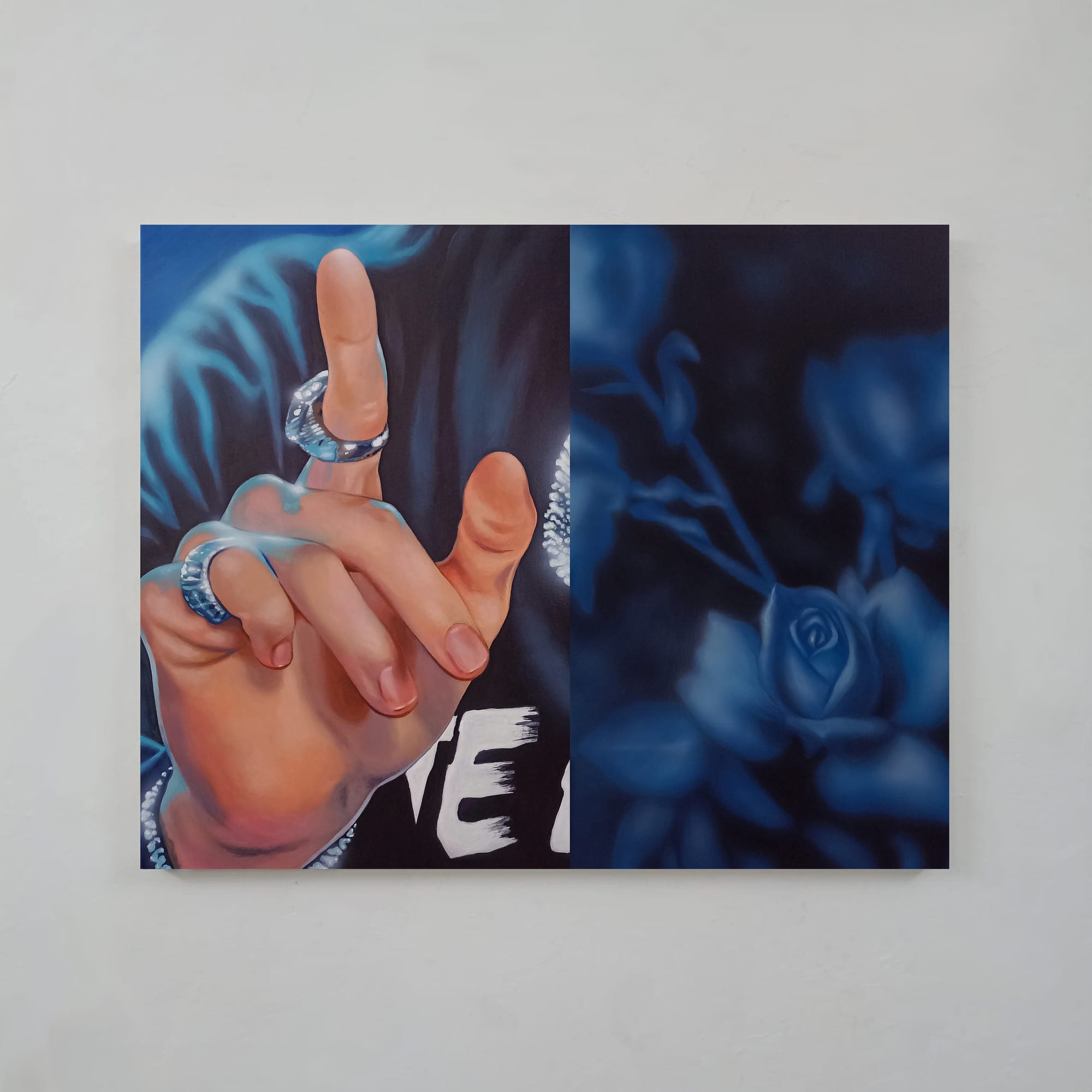
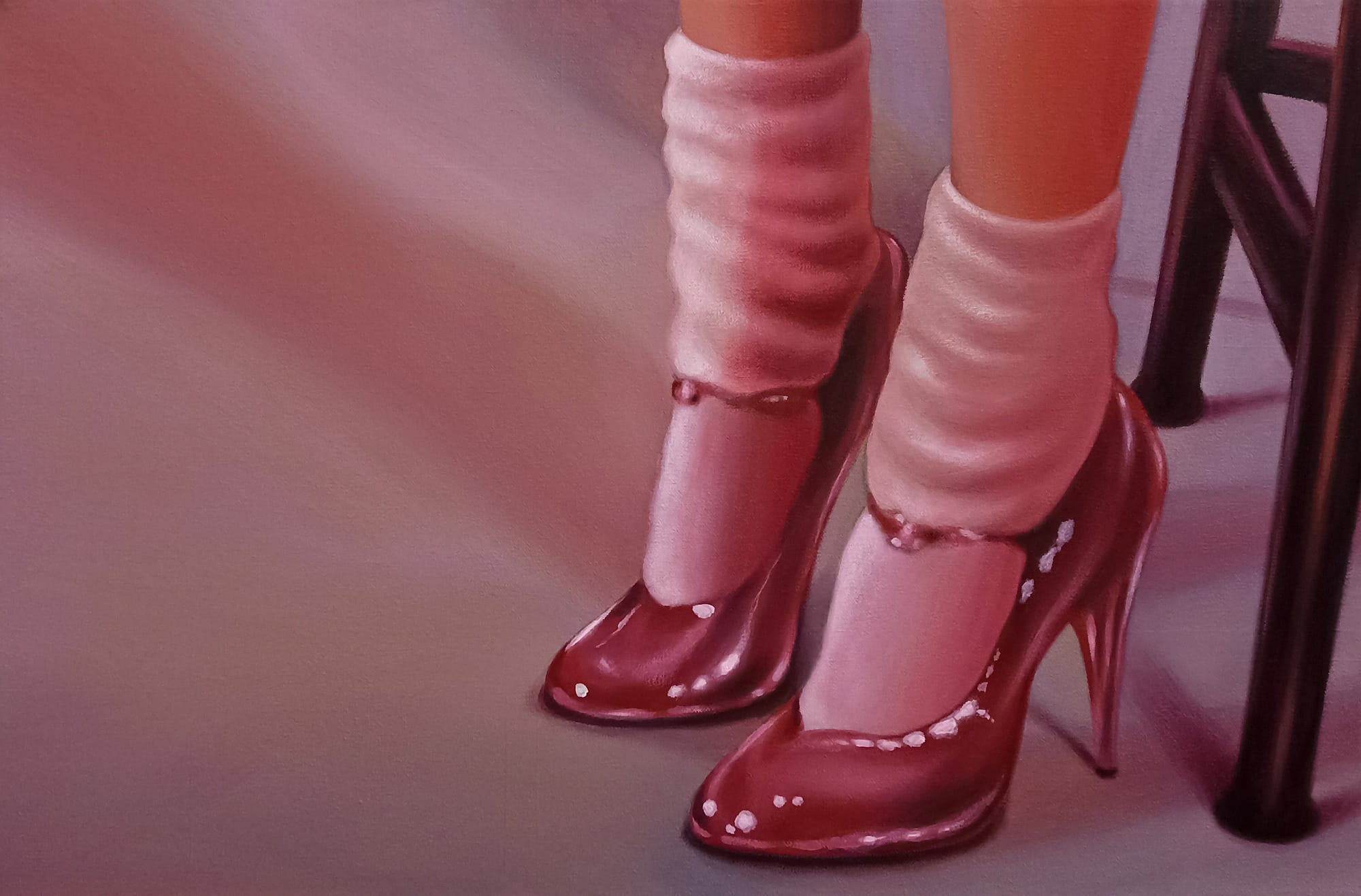
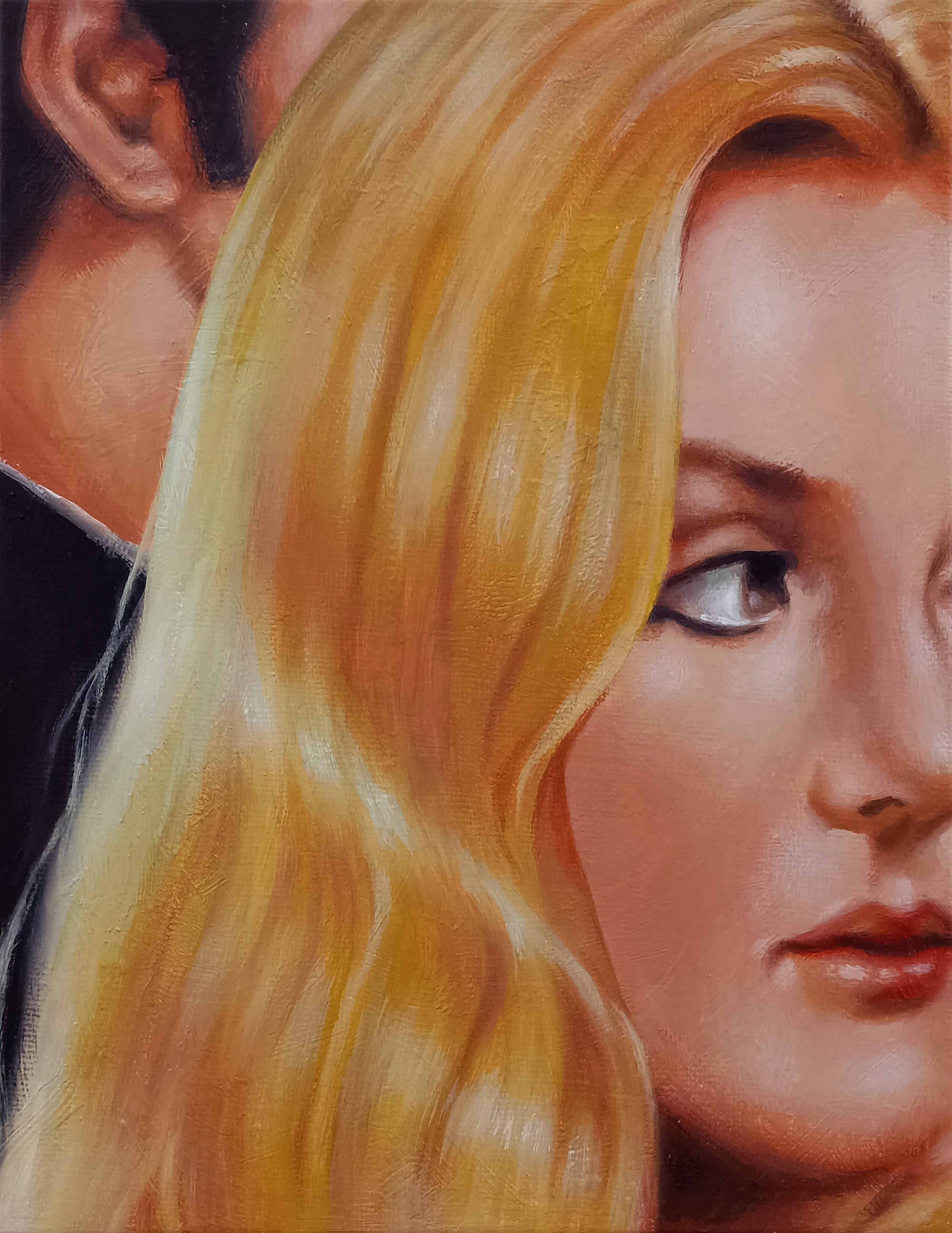
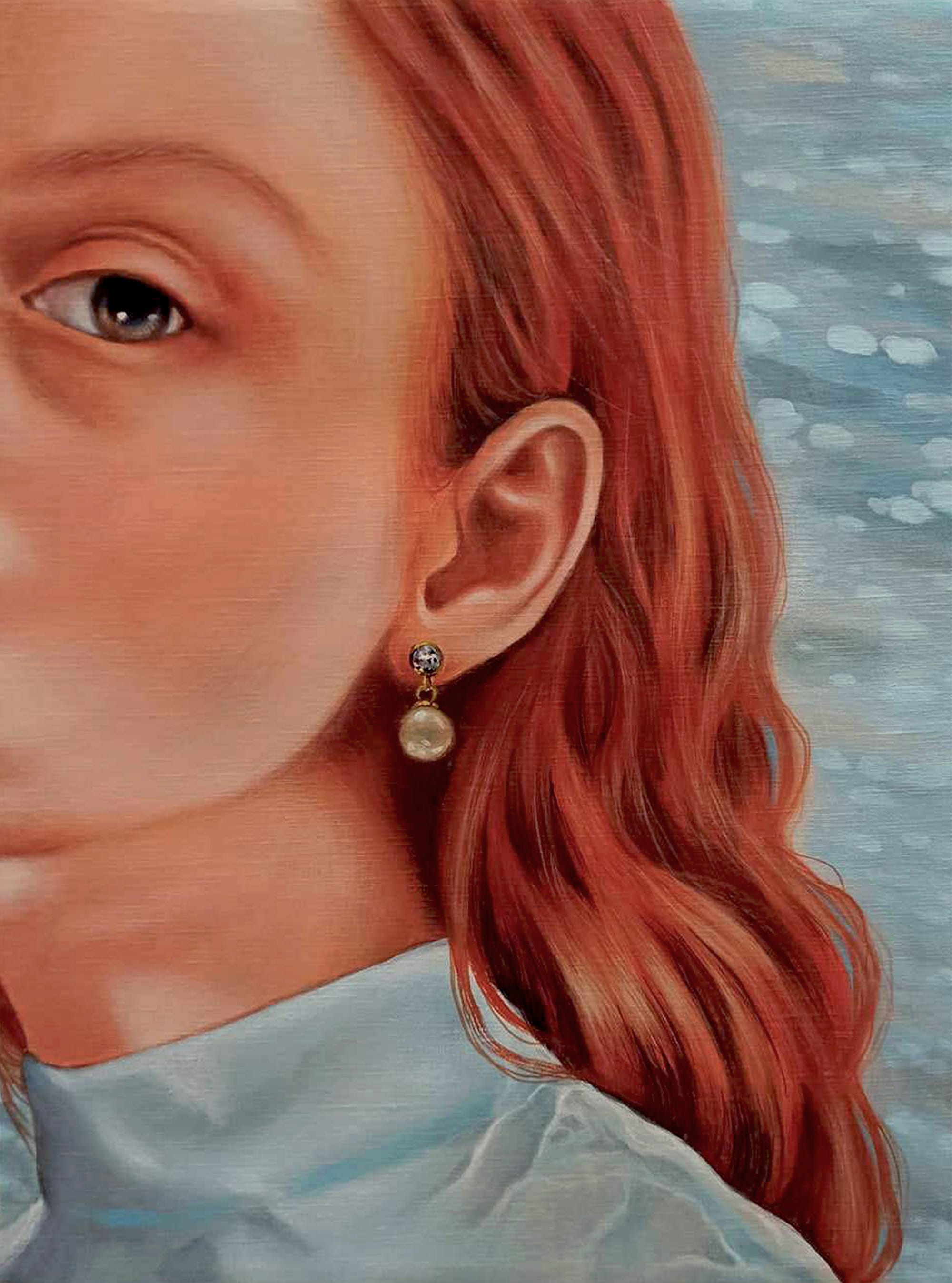
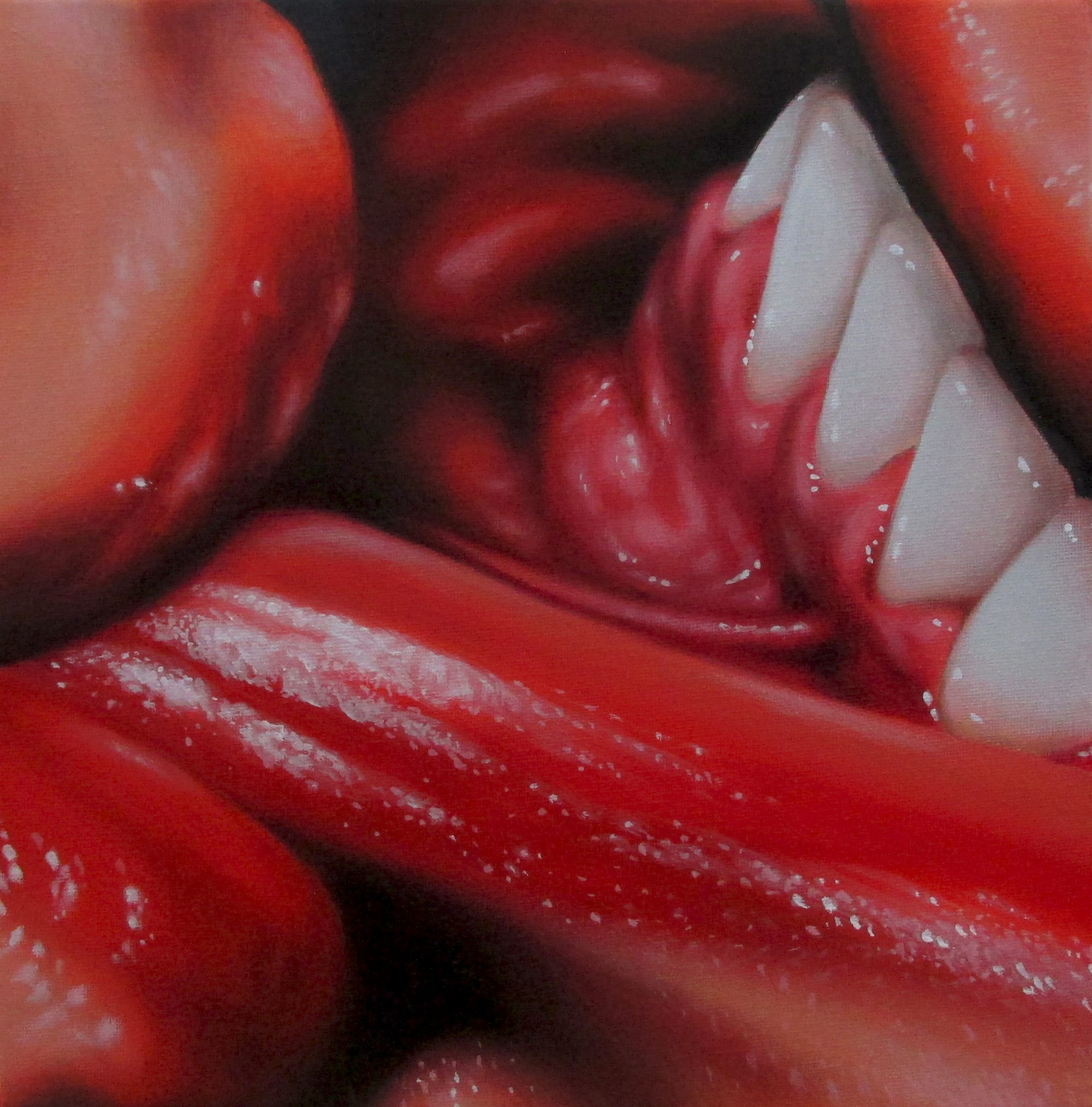
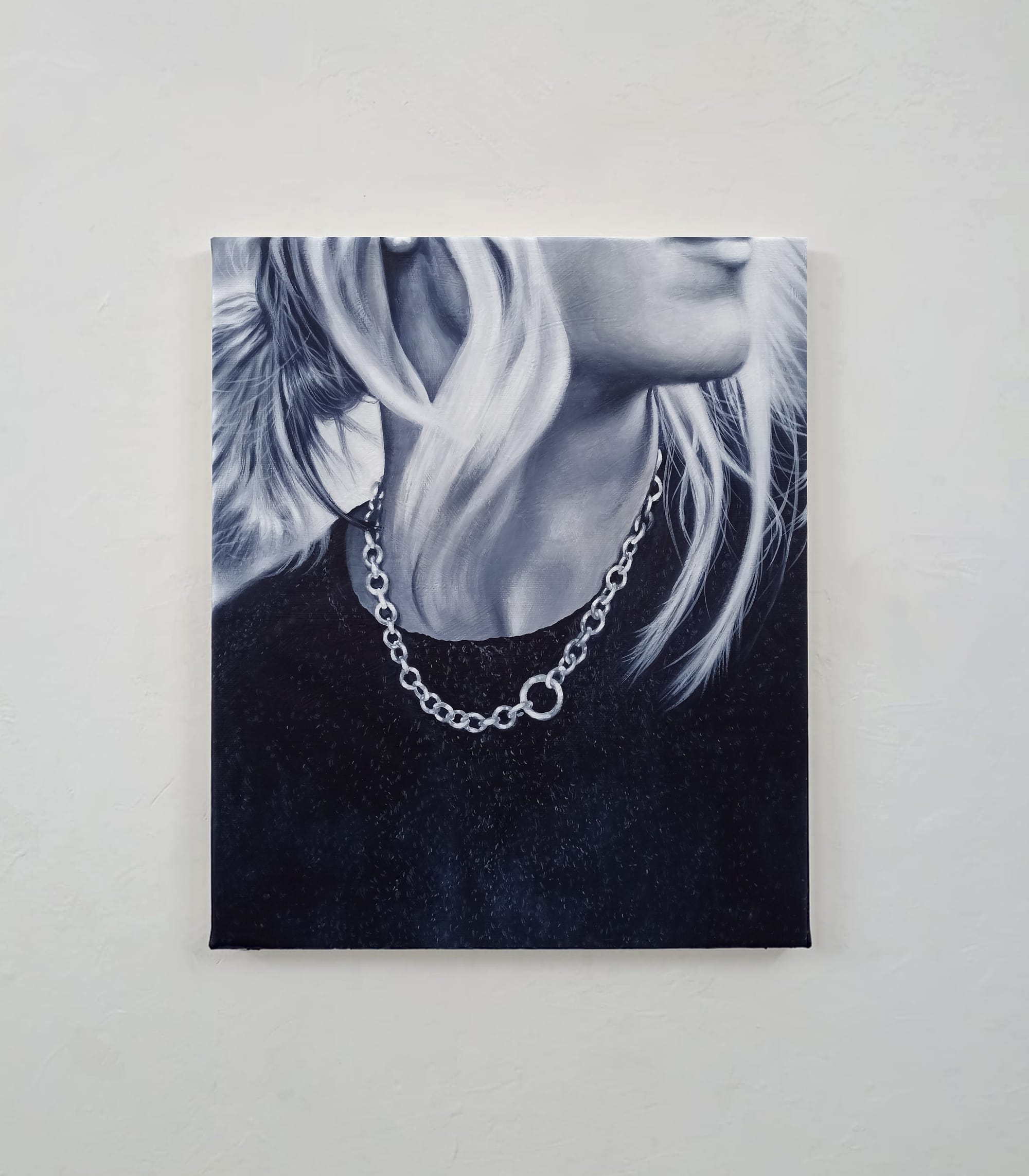
Angelo Volpe. In The Darkest Night Of The Soul, There Is Alway A Flower Ready To Bloom (2026), 80 x 100 cm. Courtesy of the artist / Angelo Volpe. Tomorrow We Will See (2025), 40 x 60 cm. Courtesy of the artist / Angelo Volpe. Take My Time (2025), 45 x 35 cm. Courtesy of the artist / Angelo Volpe. Sublime Blush (2025), 40 x 30 cm. Courtesy of the artist / Angelo Volpe. Wild Love (2024), 30 x 30 cm. Courtesy of the artist
7. If Italian politics were a color palette, which colors would dominate your paintings and why?
Given the regard I have for the current Italian political class, would be a poorly executed painting, whose failure would be determined by the illogicality of the work and the poor quality of the materials used.
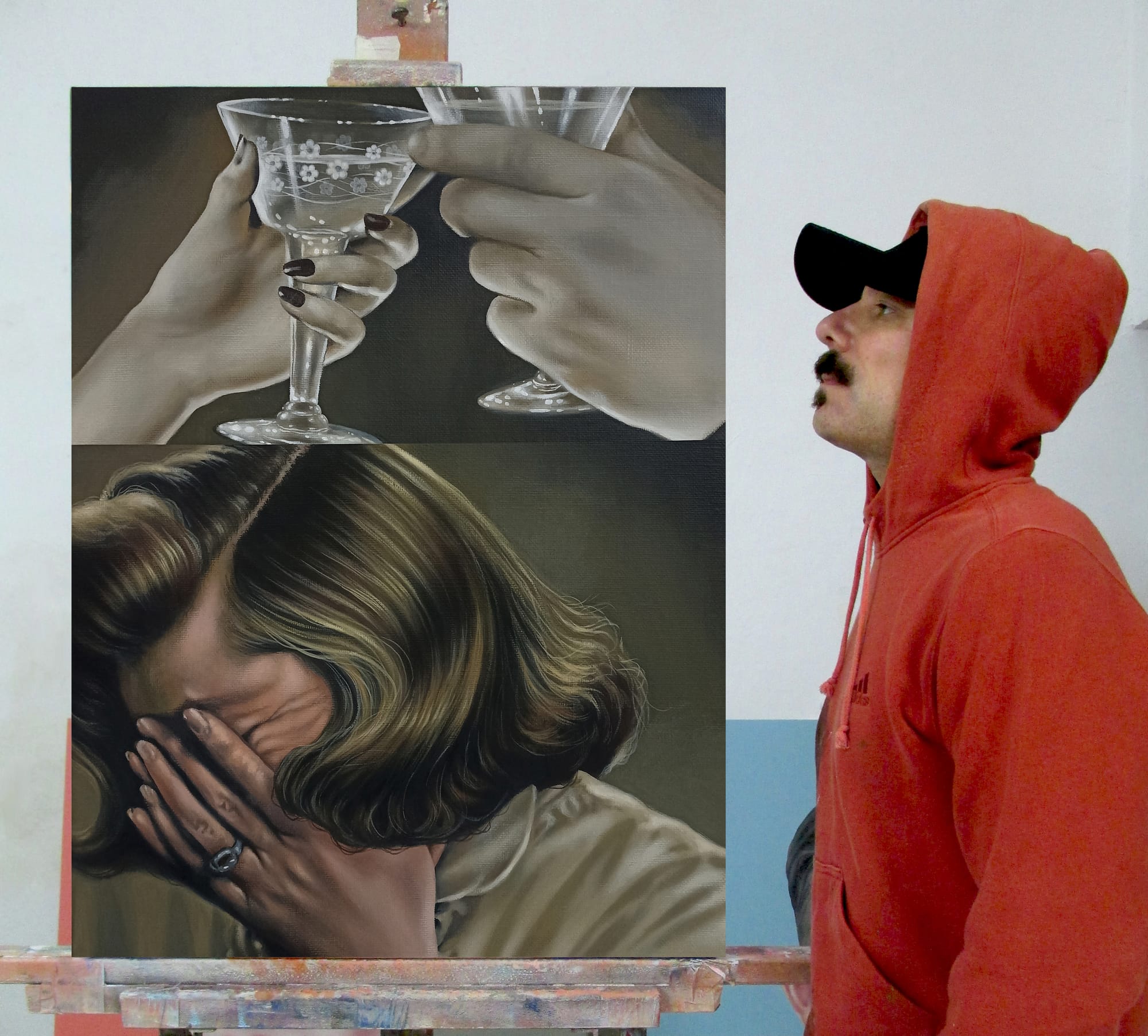
8. Do political and social instability in Italy shape the painter’s gesture, the rhythm of the work, or even the silence of the canvases?
I don't know how to answer this question. I have developed such a low opinion of politics that I believe the time has come to move beyond it with higher forms of governance, provided they are not linked to AI or other cybernetic inventions. The transhuman drift that seems to be looming on the horizon worries me.
9. Is painting every day in Italy different from painting in another country? What changes first: the eye, the body, or the mind?
Every artist carries within them their own cultural heritage, inherited through their genes. Globalisation has interconnected many aspects of our lives, including cultural traditions, and this has undoubtedly been one of its best aspects. I believe that painting in Italy or elsewhere today makes little difference.
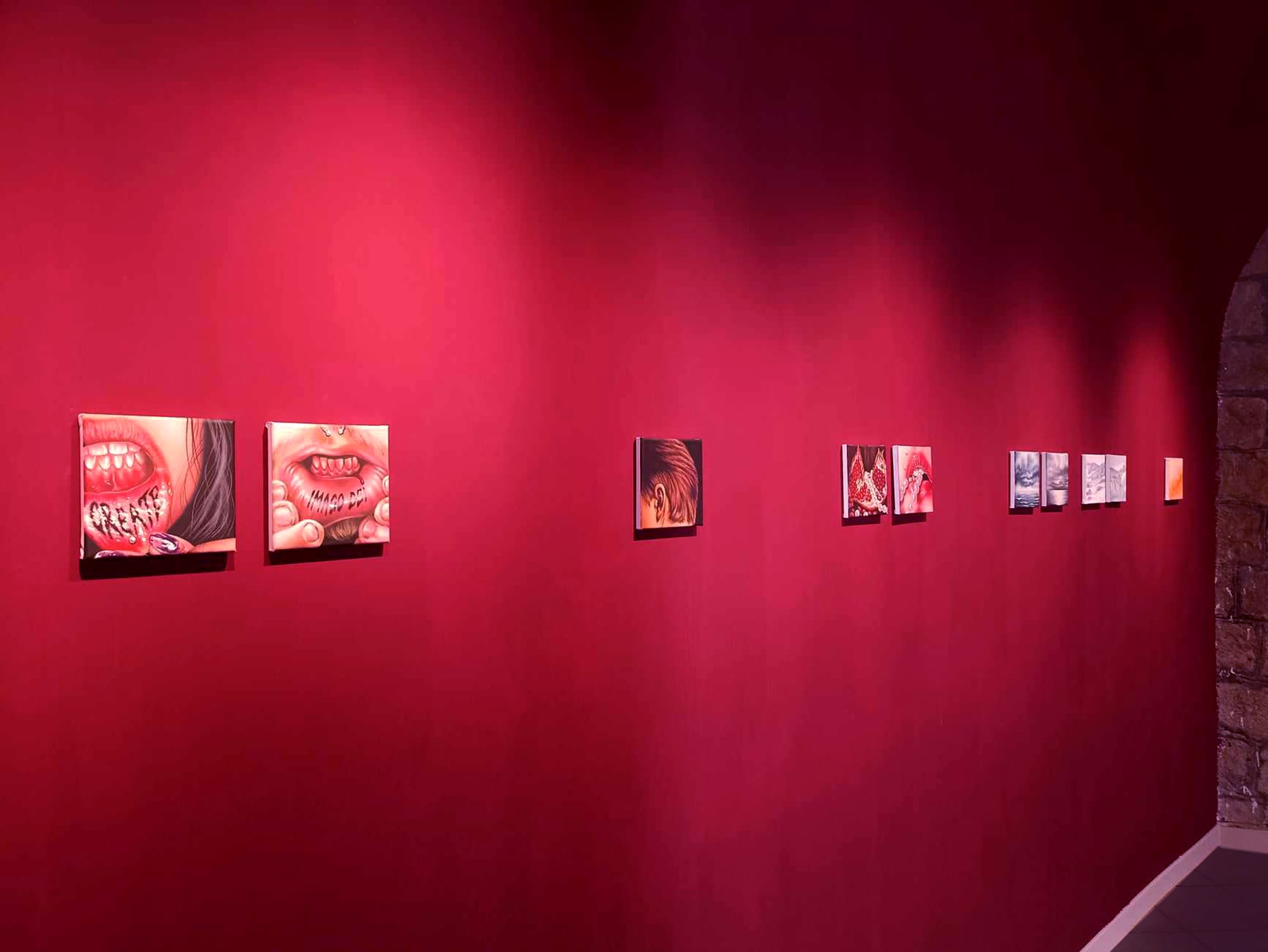
10. When working outside Italy, do you feel you paint with more freedom, or do you lose a certain necessary tension?
Leaving your country, your comfort zone, it’s always stimulating. I believe that getting to know other places, other cultures, and other customs is always a great source of enrichment for personal growth. Everything that is unusual or unknown holds a great fascination for me.
11. Is there something in Italy’s political landscape that pushes you toward figuration, symbolism, or distortion?
My interest in figurative art is innate. Probably that’s part of my genetic makeup. As an Italian, I am proud of my country's artistic history.
I particularly love the historical period from 1200 to 1600, which saw the emergence of great geniuses such as Hildegard of Bingen, Leonardo da Vinci, Michelangelo Buonarroti, Caravaggio, Giordano Bruno and many other prodigious human beings.
This particular historical period of our civilization expressed enormous initiatory knowledge; those who possess esoteric knowledge will understand what I mean.
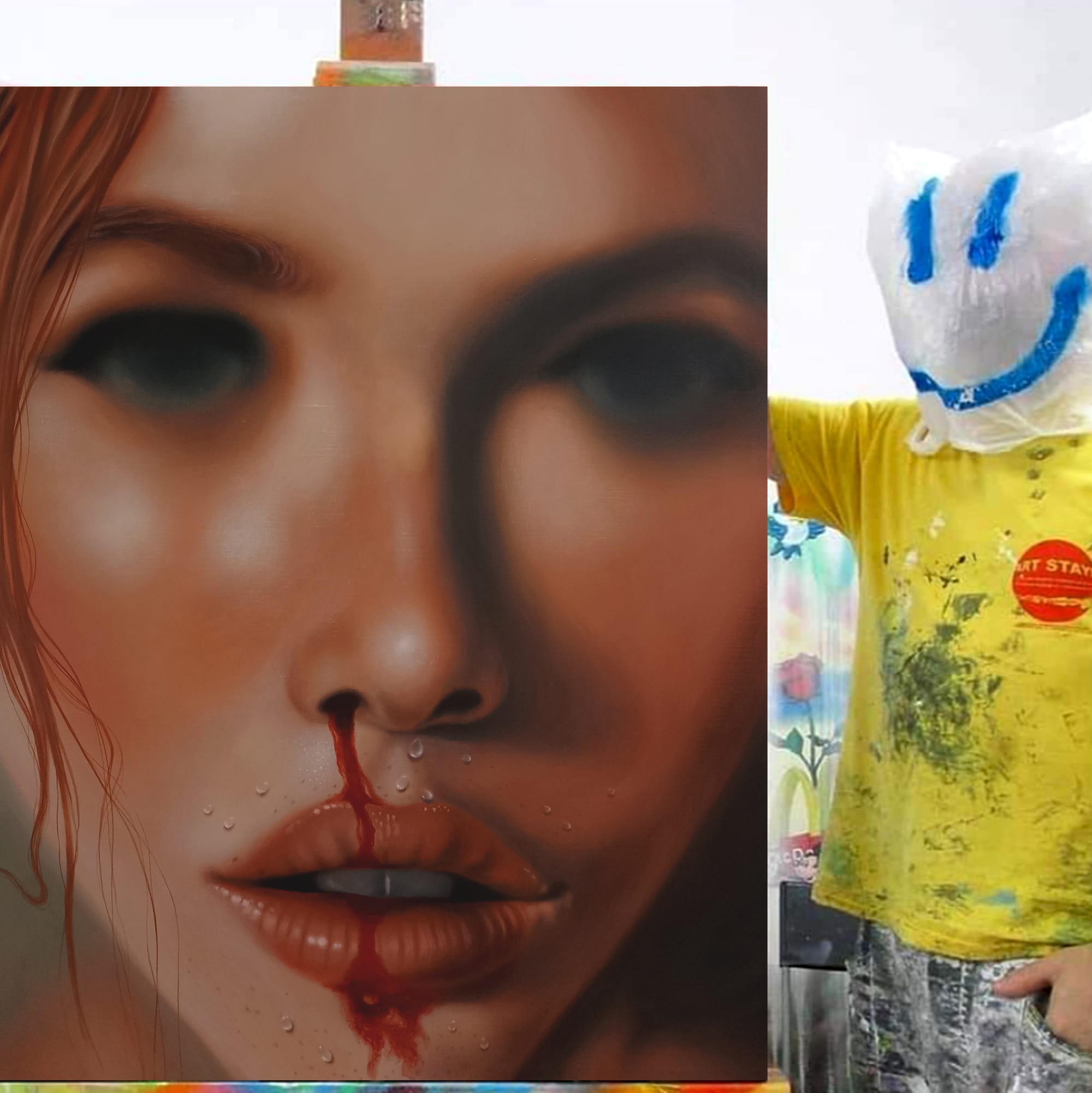
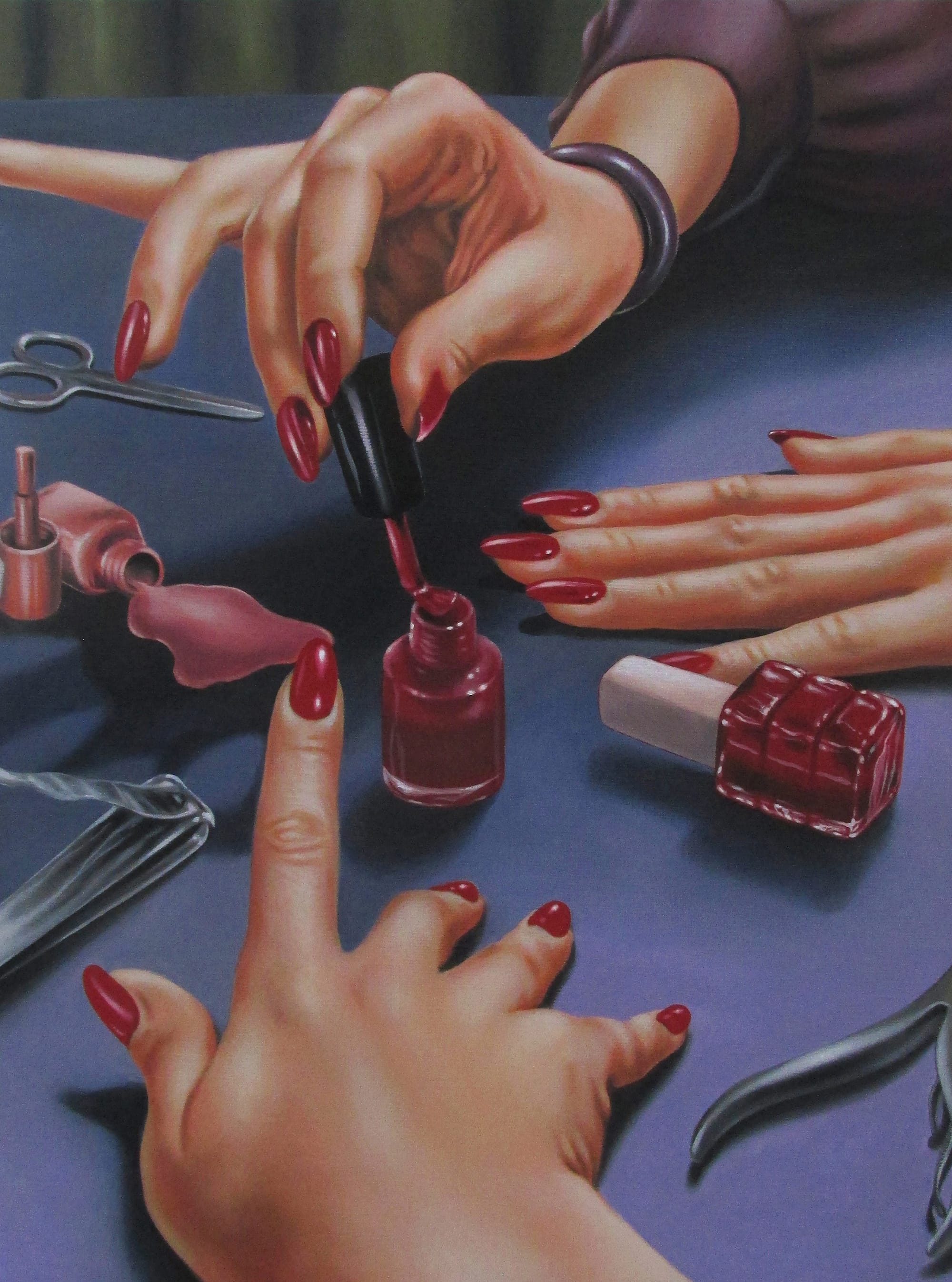
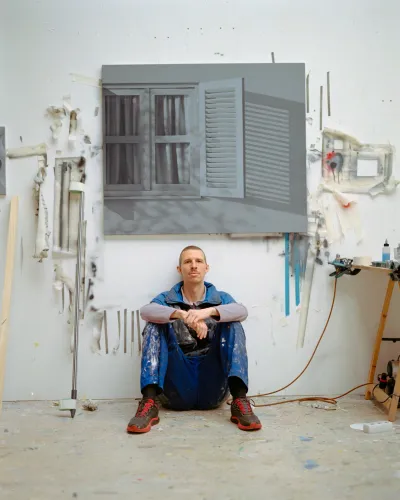
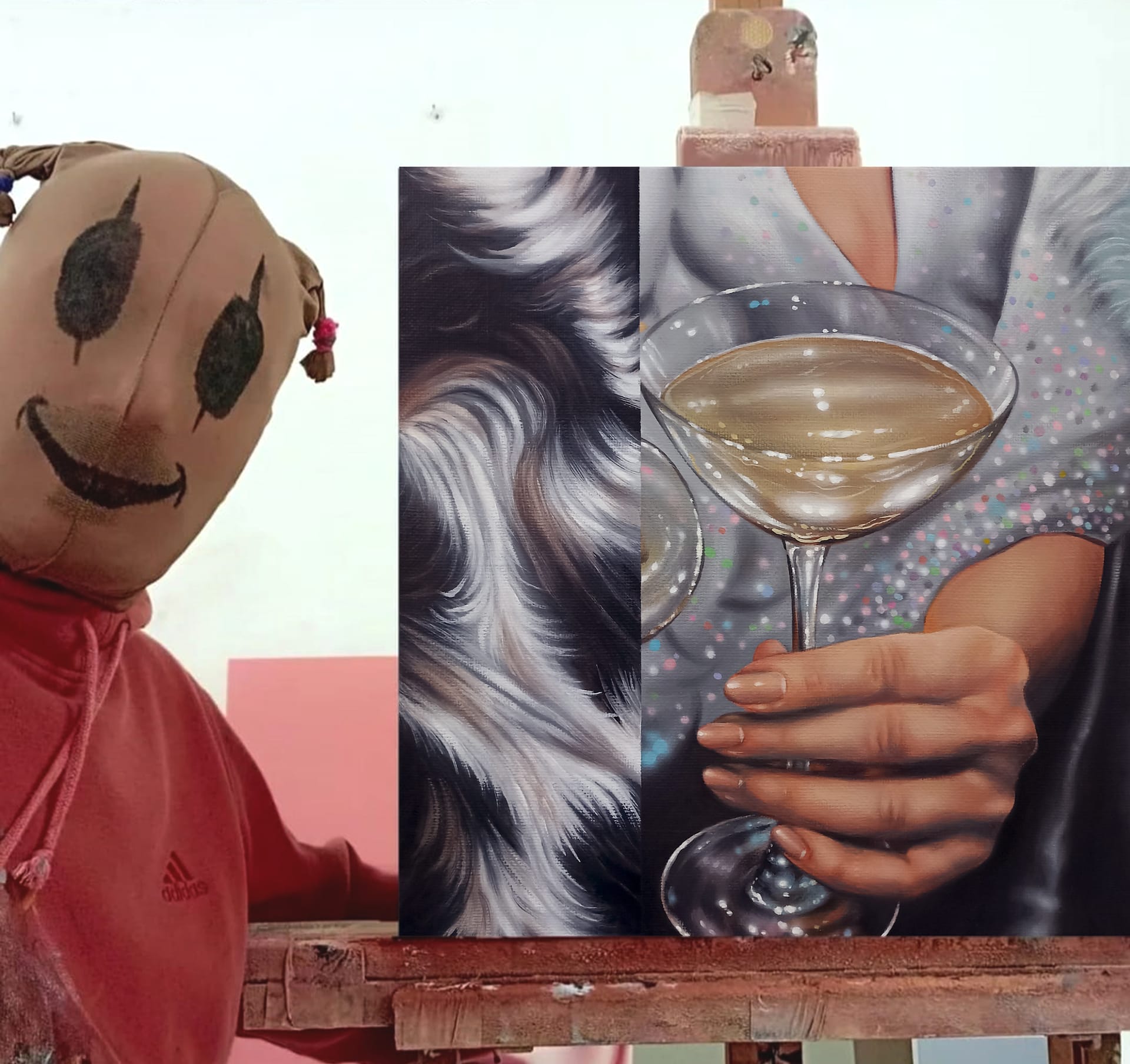
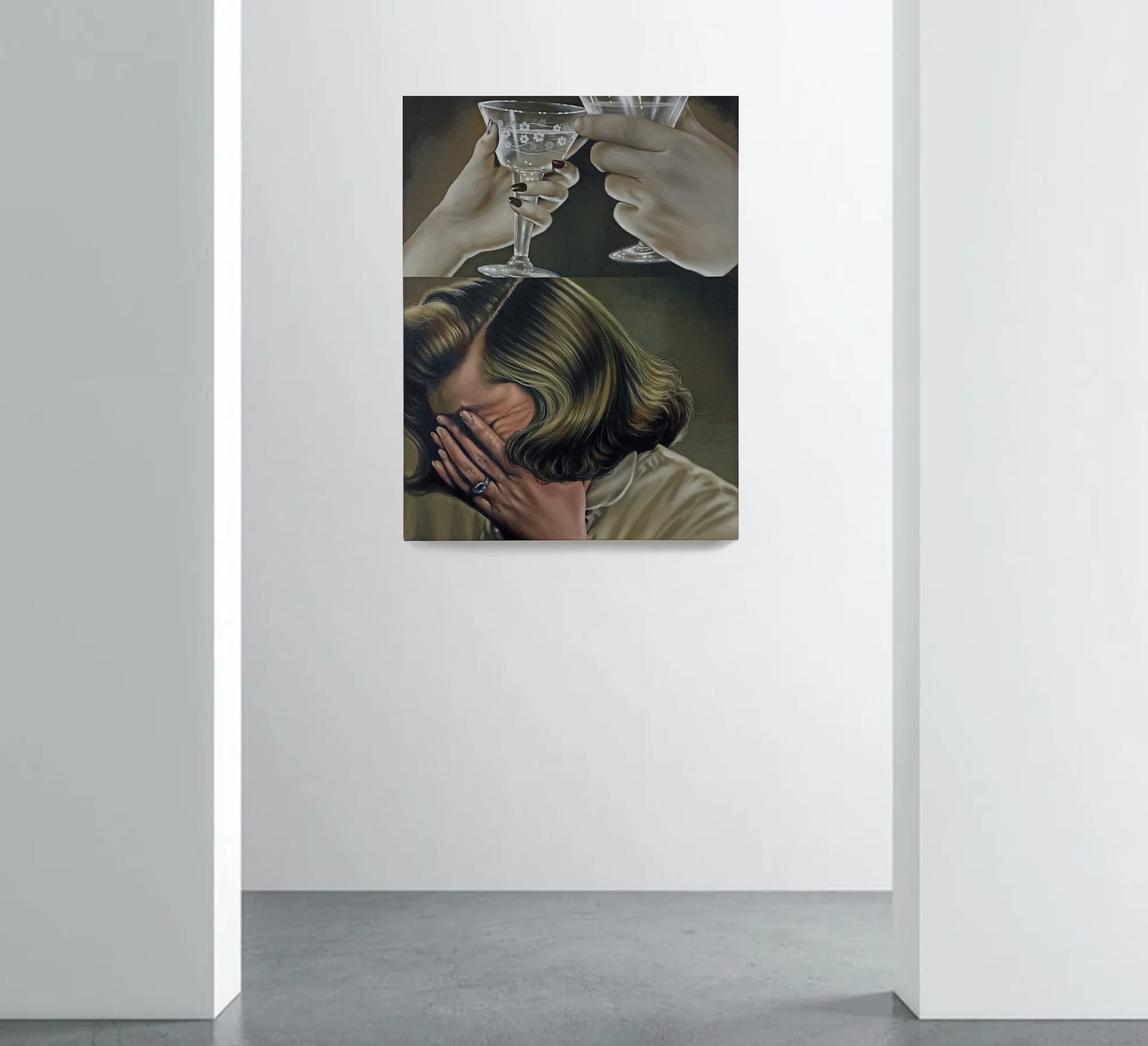
Angelo Volpe in his studio, standing next to one of his paintings on canvas, entitled “The Intoxicating Sensation Of A Shooting Star, 2024” | Courtesy of the artist / Angelo Volpe. Vanity (2024), 80 x 60 cm. Courtesy of the artist
12. Does your painting dialogue with Italian tradition, or do you prefer to “scratch over it” as an almost political gesture?
My painting practice is in constant dialogue with the Italian pictorial tradition. My paintings, in line with the technique of the Renaissance masters, are created through an elaborate process that consists of superimposing multiple layers of color, which give the pictorial rendering a sensual and realistic effect.
At the same time, I always try to remain rooted in my contemporaneity by exploring themes related to the “society of appearances.” "Today we are increasingly driven to live as consumers who, in the act of consuming, consume themselves".
13. Today, being a painter in Italy is it a romantic act, a political act, or a form of cultural resistance?
In my case, it determines a form of freedom and independence from the growing process of socio-cultural standardisation, to which the masses unconsciously adhere.
14. If you painted daily in another country for a year, do you think your work would change more in content, technique, or attitude?
I do not rule out that content adhering to social models derived from tradition may be subject to some changes. I do not believe that technique and attitude would change.
15. What is your day-to-day life in the studio like rituals, schedules, silences and how does that invisible routine enter your paintings?
Some gestures are constant. I always put on my work clothes in the same sequence, pour the thinners, then prepare the colours on the palette and always drink a glass of water before starting. These gestures are like little rituals for me and unconsciously serve to prepare my body for maximum concentration, causing a mental reset that helps to expel any thoughts or reflections that are not inherent to the work process.
As you can understand, painting is a form of meditation for me that connects me to my inner self. From time to time, when the work is well underway and needs to flow, I listen to some music.
I prefer to paint in daylight, so I arrive at the studio at 8:30 in the morning and work for an average of 7 hours. The studio is where my soul takes refuge, a place where, through my art, I can whisper the imminent need for an indispensable vital urgency.
16. Do you think the current gallery model still reflects a sense of artistic dignity, or has it become overly tense as a commercial agent — and isn’t the fact that many galleries are empty or closing their doors a clear sign of change in the art system?
The commercial aspect of the gallery is of fundamental importance for both the gallery owner and the artist. If art is considered a job in its own right, then it must be able to monetise. Any job can only be considered as such if it is able to produce an economic return.
Obviously, a work of art must exist beyond simple commercialisation, but I believe this is a condition dictated exclusively by the artist's sincere expressive urgency.
As for the closure of so many galleries you mentioned, I believe this is partly due to the deep economic crisis and partly due to the fact that, just as there are many improvised artists, there are also many improvised gallery owners. Improvisation often leads to approximation and, in the long run, this ends up causing some undesirable effects.
Angelo Volpe on Instagram
Angelo Volpe online
Team Catapult says thank you to the Artist Angelo Volpe and DiFranco
New on Catapult:
No spam, no sharing to third party. Only you and me.